
Tulisan ini belum tersedia dalam Bahasa Indonesia. Anda sedang membaca versi aslinya dalam bahasa Inggris.
Never Hire List and Logical Flaws: Ibrahim Arief and the Kawal Ibam Debate
Testing a permanent rejection list for logic, ethics, and law, with twenty-six pieces of evidence attached. The posts examined are public posts by Ibrahim Arief ("Ibam") on X about his "never-hire list". This is an analysis for founders, HR practitioners, and general readers that tests the argument, not the person, and is not legal advice.
RAHMAT WIBOWO, CEO INFRALOKA | 23 OCTOBER 2026
Executive Summary
Short answer
Choosing whom to hire is every employer's right. What fails the test is not that right, but the way a permanent rejection list is built, defended, and announced: the criteria are vague, the evidence cannot be checked, the judge is also the party who feels criticised, and there is no way back.
Between October 2023 and January 2025, a technology executive who is active on social media repeatedly discussed his "never-hire list". Twenty-six screenshot files record his statements and the public reaction. This report tests thirteen claims in them with the same five questions, then examines the list from the angles of ethics and law.
I write as three people at once. As someone who wants to be wise, I want judgements about people to be made slowly. As a startup founder, I know the temptation to protect a team from people who are "noisy", and I know the price of a wrong hiring decision in either direction. As someone who reads statutes, I check what is actually written in the text of the law, not what sounds right.
- 26: evidence files attached in full in Appendix A, coded E01 to E26
- 13: claims tested: 1 stands, 7 partly stand, 5 fail
- 7: recurring families of logical flaw, from equivocation to double standard
Core conclusion. The list-maker's strongest argument, that an employer may choose and is not obliged to share the reasons, stands. The arguments that fail are the leap from one pattern of comments to the verdict "toxic coworker", the use of the word "personal" with two meanings, and the demand that others prove the list is unfair. On the legal side, there is no evidence that the list has been used to reject an applicant, so no violation can be concluded. What can be concluded is that a list of this kind sits in the territory of the Personal Data Protection Law (UU PDP), the territory of employment non-discrimination, and the territory of propriety, and all three call for a process that is not visible in the evidence.
Five key findings
- Right and propriety are different things. The right to choose whom to hire is legitimate. A permanent list with no written criteria, no right of reply, and no expiry is not automatically proper (Section 5).
- "Personal" is used with two meanings. As a personal judgement, it is legitimate. As a personal activity under Article 2 paragraph (2) of the PDP Law, it stops applying once the list is used for organisational decisions (Sections 3 and 6).
- The judge is also the party being criticised. In August 2024 the basis for the character judgement was comments aimed at the list-maker himself. In law this is known as nemo iudex in causa sua (Section 3).
- The standard demanded of others is not visible in the list. In January 2025 the list-maker stressed the presumption of innocence and rejected blanket bans. The same principle is not visible in the criteria of the list (Section 3).
- A defensible list is possible. The five process steps in Section 7 make a list lawful, ethically proper, and useful to the team.
Limits of this report and disclosure of interest
This report tests arguments, not people. All quotations come from public posts captured in the evidence files. I do not assess anyone's intent, and I do not call anyone a liar, evil, or guilty.
Disclosure of interest. The author of this report is connected to two pieces of evidence (E01 and E08), namely the reference to "that guy who got fired from AWS". The author therefore has an interest. To keep things fair, every claim is quoted exactly from the evidence, the strongest arguments of the criticised party are presented first (Section 2), and claims that stand are said to stand. The termination of employment that is referred to is not disputed here.
Not legal advice. Articles are read from the official text where marked "read directly", and from secondary sources where marked as such in Section 6 and in the References. Consult a practising advocate for real cases.
Right of reply. The list-maker and anyone quoted may send corrections to admin@infraloka.co.id. Corrections that are proven will be published in the next version.
1. What Happened: A Chronology from the Evidence
1.1 Four moments
The evidence forms four moments. On 1 October 2023, Ibrahim Arief ("Ibam") announced on the platform X that he keeps a personal "never-hire list", and added one name to it that day (E01). On the same day and the next he answered questions about how the list works (E02, E06). On 23 August 2024, in a heated debate, he explained that his assessment of the people who judged him became the basis for a character judgement (E09, E10). On 23 January 2025 he wrote about the danger of blanket bans against employees of a startup that was in the spotlight (E24).
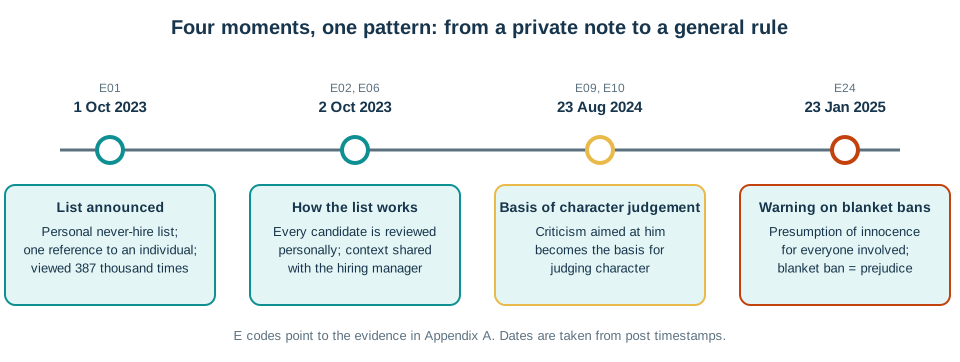
Figure 1. Four moments in the evidence. E codes point to Appendix A.
1.2 Evidence map
The twenty-six files come from a single bundle of screenshots. The original file names show that the bundle was created on 23 October 2026 between 02:56 and 03:05. Eight files date from October 2023, fifteen from August 2024, two from January 2025, and one from an April whose year is not visible.
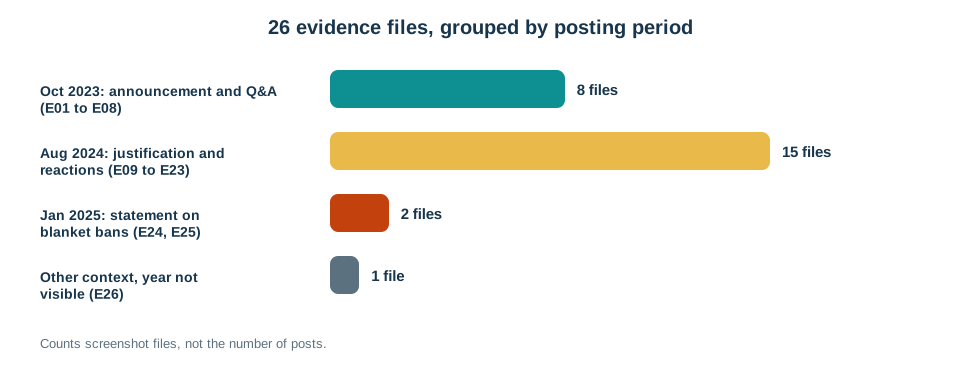
Figure 2. Distribution of the evidence by posting period.
1.3 Method: five questions
Every claim is tested with the same questions. What is the claim? What is the evidence? What logical flaw is present? Why does that flaw mean the conclusion does not follow? What does a version of the claim that survives look like? The fifth question is the most important, because criticism with no path to improvement only produces anger.
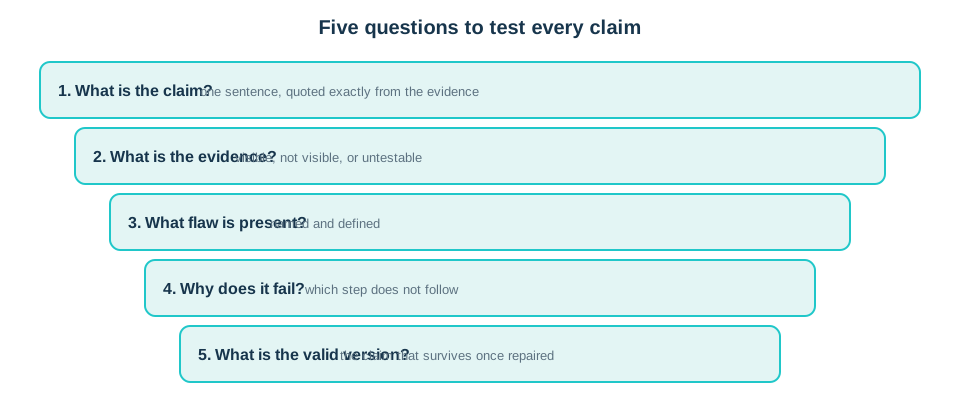
Figure 3. Five questions for every claim.
Each claim is rated with one of three words. Stands: the conclusion follows from the reasons. Partly stands: there is a legitimate core, but the leaps around it are not. Fails: the conclusion does not follow from the reasons visible in the evidence.
2. The List-Maker's Strongest Arguments
Before criticising, a good advocate builds the best version of the opposing side. As a founder, I also want to be honest that I hold many of these arguments myself.
- There is no right to be hired. No one has a right to one particular job at one particular company. Employers are free to choose, and freedom of contract is a basic principle of contract law.
- Character really is part of the qualifications. An interview of 30 to 60 minutes is not enough to judge character, and employers check references and backgrounds (E06). This is common practice, not an oddity.
- The list is not shared. The list-maker refuses to share the list, citing other people's right to earn a living elsewhere (E23) and legal risk (E01). This refusal keeps the list from becoming a shared blacklist.
- The criteria are described as behaviour, not opinion. He states that the list is 100 percent based on attitude, not opinion (E23).
- Symmetry is accepted. He accepts that others may keep a "no-apply list" (E11).
- Management responsibility is acknowledged. He says that managing employees seen as bringing toxicity is the responsibility of management (E12).
These six arguments stand as principles. What is tested next is how they are applied.
3. Claim-by-Claim Test
How to read this. Each part contains the exact quotation, the status of the evidence, the flaw found, the reasoning, and the legitimate version. English and Latin terms are explained in Appendix B.
K1. A "personal list" that refers to a specific person (E01)
Claim. "I have a personal 'never-hire list' ... Yes, including that guy who got fired from AWS a week ago." The list is called personal, but it was announced with 387 thousand views.
Evidence. Visible in E01. Evidence E08 shows that other readers could link the reference to one particular individual.
Flaw. Equivocation and a motte-and-bailey pattern. The word "personal" is used to mean "private note" when the list is defended, and as a public statement when it is announced. The easily defended territory (a private note) is used to protect the hard-to-defend territory (a public reference to a person).
Why it fails. A person does not need to be named in order to be recognised. What matters is whether readers can identify them, and E08 shows that they can.
Legitimate version. "I keep a personal note. I do not discuss its contents in public." This version needs no reference to anyone.
Rating: partly stands.
K2. "Legal advice" and "fiduciary duty" (E01)
Claim. "Per the legal advice I received, there will be liabilities if I share the list publicly ... I encourage leaders to maintain their version of the 'never-hire list' as a fiduciary duty to the company."
Evidence. Visible in E01. The content of the legal advice and the identity of whoever gave it are not visible.
Flaw. Appeal to unnamed authority and non sequitur. Advice that cannot be checked is used as a reason, and from "there is a fiduciary duty" it does not automatically follow that "a rejection list is mandatory".
Why it fails. A director's fiduciary duty is to act in good faith and with responsibility in the interest of the company. It does not make a rejection list the only way to do so. The same duty demands hiring decisions that are fair and accountable.
One important note. The statement "there is liability if shared, especially because some cases were never exposed to the public" is a useful admission. It means that part of the list rests on information that others cannot test.
Legitimate version. "Leaders need a hiring process that protects the team and is fair to applicants. A rejection list is only one tool, and it must be run with written criteria."
Rating: fails on the fiduciary claim; the caution about sharing the list still stands.
K3. "I review every candidate, privacy is protected" (E02)
Claim. "I do review every single candidate, so there's no need for me to share the list ... I do share the context of why we reject a certain candidate to the hiring manager."
Evidence. Visible in E02.
Flaw. Equivocation on the word "privacy". The list is not shared, but the context of the rejection is shared with the hiring manager. From the point of view of the person recorded, the difference is thin: information about them still changes hands.
Why it partly stands. Sharing the reason for a rejection with the responsible manager is normal practice. What must be ensured is that the reason is accurate and can be justified.
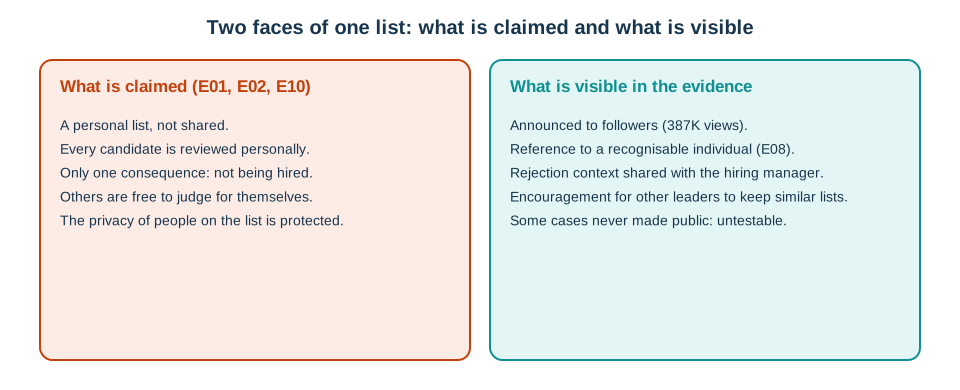
Figure 4. What is claimed about the list and what is visible in the evidence.
Legitimate version. "The list is not shared. The reason for a rejection is shared only with people who need to know, and contains only documented facts."
Rating: partly stands.
K4. Character references, background checks, and anonymous peer review (E06)
Claim. "We can't 100% check this during interviews. This falls into the purview of character references and background checks. Anonymized 360 degree peer reviews can be a good way to catch character issues."
Evidence. Visible in E06.
Analysis. There is no formal logical flaw. Interviews really are limited, and reference checks are standard practice. A caution: anonymous assessments can carry bias and cannot be confronted. They are safe as an early detection tool, but not sufficient as the sole basis for a permanent exclusion.
Rating: stands, on condition that anonymous assessments only trigger a check and do not decide the outcome.
K5. "Freedom of speech does not mean freedom from consequences" (E09, E10)
Claim. "I respect everyone's freedom to voice their opinion, but freedom of speech does not mean freedom from consequences."
Evidence. Visible in E09 and E10.
Flaw. Equivocation on the word "consequences". There are reasonable social consequences, such as being rebutted, not being followed, or not being chosen as a colleague. There are also consequences set by the criticised party himself, without process, that affect a livelihood. Both are given one name. On the other side, nemo iudex in causa sua: the consequence is set by the party who feels judged.
The legitimate part. Freedom of speech indeed does not free people from responses. An employer is not obliged to hire anyone.
Legitimate version. "I am not obliged to work with everyone. I weigh that decision against criteria that I write down and that others can review."
Rating: partly stands.
K6. "Why shouldn't I evaluate people's character?" (E09)
Claim. "If I'm being judged just because I want to keep my posts away from politics, why do you think I should not evaluate other's characters as well?"
Evidence. Visible in E09.
Flaw. Tu quoque and false equivalence. Being judged in public is one thing. Being pushed out of the job market by someone with more bargaining power is another. The bargaining power and the impact are not symmetrical.
The legitimate part. Everyone has the right to judge others.
Legitimate version. "I have the right to judge. Because the impact of my judgement is greater than the impact of my critic's judgement, I must be more careful."
Rating: partly stands.
K7. From "passive-aggressive" to "toxic coworker" (E09, E10)
Claim. "Those who only talk passive-aggressively behind one's back because they seek validation from their groupthink will generally be a toxic coworker."
Evidence. Visible in E09 and E10. The content of the comments being judged is not visible in the bundle.
Flaw. Three at once. Hasty generalization: from one pattern of comments to a conclusion about work behaviour. Fundamental attribution error: a fixed trait is inferred from one situation. Mind reading: the motive "seeking validation from groupthink" is written as fact. The word "toxic" also cannot be proven wrong, so it is unfalsifiable. One additional note: a comment in a public space is not the same as "behind someone's back". If what is meant is a no-mention or a subtweet (touched on in E11), the definition needs to be stated.
Why it fails. Behaviour on social media and behaviour in the office are two different contexts. A commenter in the evidence says the same thing (E20): a conversation on social media is being connected to the world of work, although the kind of relationship and the context are different.
Legitimate version. "If I see a pattern of behaviour that harms the team, such as slandering colleagues or sabotaging work, I weigh it as a signal. One comment is not a pattern."
Rating: fails.
K8. "Tell me how that is not fair and reasonable?" (E10)
Claim. "That's the only consequence from me ... Now, tell me how that is not fair and reasonable?"
Evidence. Visible in E10.
Flaw. Burden shifting and false dilemma. The burden of proving that the action is reasonable lies with the party who acts and who has the bargaining power. The question is framed as if there were only two options: accept that this is reasonable, or explain why not.
Legitimate version. "These are my criteria, this is their limit, and this is how people can raise an objection."
Rating: fails.
K9. "No-apply list: of course, that's only fair" (E11)
Claim. Responding to the idea that others may keep a list of employers they will not apply to: "Of course dong, that's only fair."
Evidence. Visible in E11. A similar idea from a commenter is also in E13.
Flaw. False equivalence on power structure. A no-apply list is a choice to stay out of one company. A no-hire list can close off access to a small job market, especially for people in a narrow industry.
The legitimate part. Accepting symmetry is a sign of consistent principle and deserves appreciation.
Rating: partly stands.
K10. "The company nearly went bankrupt, so its management was not good" (E12)
Claim. "Since, evidently, they're not doing a good job in managing the company and ran it to the ground, I'd say they're not that good either in managing and supporting you."
Evidence. Visible in E12. The story of the company nearly going bankrupt comes from the other person and cannot be checked.
Flaw. Post hoc and hasty generalization: the company's poor results are taken as proof that management was unable to handle one employee. A judgement is made about a party who is not present.
An honest note. The reply is warm and reassuring; he tells the other person that they were not at fault. One tension is worth noting: if toxicity can be managed by good management, the case for a permanent list becomes weaker.
Rating: fails on the inference about management; the empathetic tone stands.
K11. "100 percent based on attitude, not opinion" (E23)
Claim. "It's 100% on the attitude of the person, never on the opinion that they make ... Aku selalu nolak karena dia punya hak untuk rejeki di tempat lain." (The Indonesian sentence means: "I always refuse because that person has the right to earn a living elsewhere.")
Evidence. Visible in E23. A commenter on the same evidence asks for an example of the "attitude" meant, and the answer is not visible.
Flaw. The criteria are not defined, so the word "attitude" can hold almost anything, including the way an opinion is delivered. The line between "attitude" and "opinion" cannot be tested from the outside.
The strong part. Refusing to share the list because others have the right to earn a living elsewhere is a good ethical position and deserves to be noted as a strength.
Legitimate version. Write "attitude" as three to five observable behaviours, for example harassment, fraud, or breach of confidentiality.
Rating: partly stands.
K12. Presumption of innocence and blanket bans (E24)
Claim. "How we judge others is how we judge ourselves. Someone who loves to discard the presumption of innocence without evidence, assume guilt by association ... often does so because they think everyone else is doing the same to them ... I'm still applying the presumption of innocence until the evidence proves otherwise to everyone associated with the fiasco."
Evidence. Visible in E24. The post being referred to cannot be seen.
Flaw. First, mind reading: the psychological motive of other people is written as an explanation. Second, appeal to popularity: "Most hiring managers in our industry are mature enough". Third, double standard, which needs to be flagged carefully: the principle put forward (evidence, not association) is not visible in the criteria of the list (one pattern of comments). The two situations are not identical. One judges group association, the other judges an individual observed directly. What is the same is the principle, and that principle is strong.
The legitimate part. Rejecting guilt by association is the right position, in logic and in ethics. The sentence "how we judge others is how we judge ourselves" is a fair yardstick, and this report uses it.
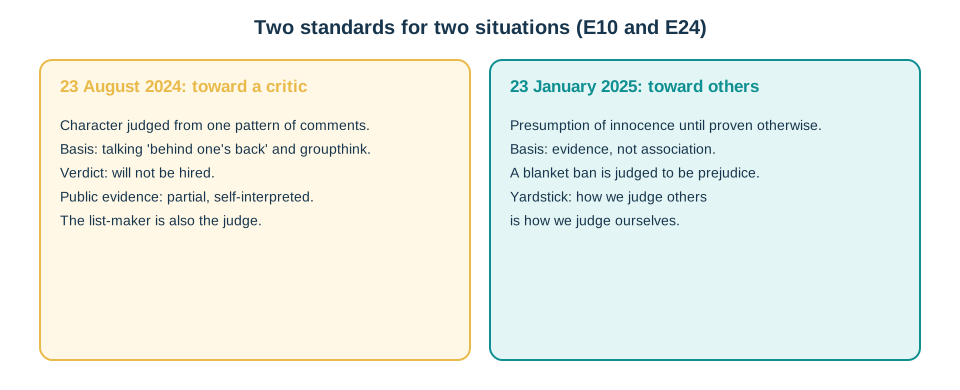
Figure 5. The principle stated in January 2025 and the criteria of August 2024.
Rating: fails on the psychological explanation; the principle stands.
K13. "I'm well aware of her antics" (E25)
Claim. Replying to a comment that calls the critic "always bitter": "Oh I'm well aware of her antics. I'm not writing the above for her, I wrote it for [another party] and anyone else in eFishery that may feel the same way."
Evidence. Visible in E25.
Flaw. A mild ad hominem: the critic's argument is bypassed and the critic is characterised. The "always bitter" comment from another party is also ad hominem.
The legitimate part. The explanation that the post was addressed to another audience is a reasonable explanation of intent.
Rating: partly stands.
Recap
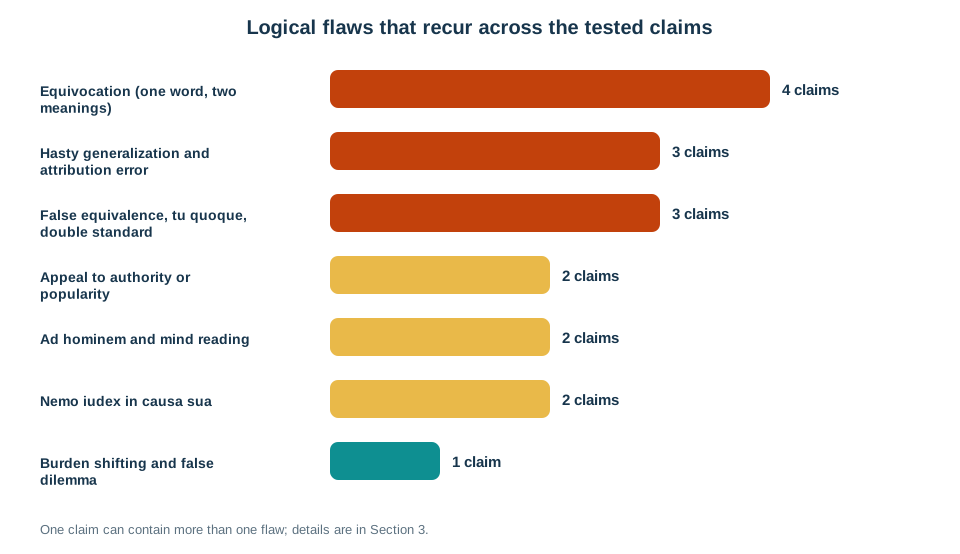
Figure 6. Recurring families of logical flaw across the 13 claims.
| Claim | Evidence | Main flaw | Rating |
|---|---|---|---|
| K1 Personal list that refers to a person | E01, E08 | Equivocation, motte-and-bailey | Partly stands |
| K2 Legal advice and fiduciary duty | E01 | Appeal to unnamed authority, non sequitur | Fails |
| K3 Review every candidate, privacy protected | E02 | Equivocation (privacy) | Partly stands |
| K4 Character references and anonymous peer review | E06 | No formal flaw | Stands |
| K5 Freedom of speech is not freedom from consequences | E09, E10 | Equivocation, nemo iudex in causa sua | Partly stands |
| K6 Why shouldn't I evaluate character | E09 | Tu quoque, false equivalence | Partly stands |
| K7 Passive-aggressive becomes toxic coworker | E09, E10 | Hasty generalization, attribution error, mind reading | Fails |
| K8 Tell me how that is not fair | E10 | Burden shifting, false dilemma | Fails |
| K9 No-apply list, that's only fair | E11, E13 | False equivalence (bargaining power) | Partly stands |
| K10 Company nearly bankrupt, bad management | E12 | Post hoc, hasty generalization | Fails |
| K11 Attitude, not opinion | E23 | Undefined criteria | Partly stands |
| K12 Presumption of innocence and blanket ban | E24 | Mind reading, appeal to popularity, double standard | Fails |
| K13 Her antics | E25 | Mild ad hominem | Partly stands |
4. Logical Flaws in the Reply Column, in Both Directions
The conversation around this list also contains logical flaws, from supporters and critics alike. The table below gives the clearest examples. The commenting accounts are not named, because what is tested is the form of the argument.
| Form of comment | Assessment | Evidence |
|---|---|---|
| "The critic must always be bitter" | Ad hominem | E25 |
| Calling the list-maker names or making identity accusations | Ad hominem, labelling | E18, E26 |
| "Since when did defending the country become toxic?" | Straw man and non sequitur: there is no evidence that the list is about that | E18 |
| "Poor him, he has become the target of people venting their anger" | Appeal to pity | E22 |
| "Enough, sir, better to stay quiet" | Tone policing | E19, E20 |
| "Responding is the same as giving them material" | Mild slippery slope | E20 |
| "Even someone who clearly raped can still work" | Whataboutism | E04 |
| "A personal list does not mean being blacklisted at every company" | Legitimate argument, not a flaw | E04 |
| "Democracy respects differences of opinion" | Equivocation: democracy governs the relationship between citizens and the state, not private hiring choices | E17 |
| "Consequences are an external action, they are not received just like that" | Legitimate argument about responsibility | E17 |
| "That is jumping too far to a conclusion, social media is being linked to the world of work" | Legitimate argument about context | E20 |
| "Friendly fire, horizontal conflict" | Legitimate observation, not a flaw | E21 |
Two patterns stand out. First, personal insults come from both camps and add nothing to the core question. Second, the sharpest arguments come from short, calm comments: that the context of social media and the context of work are different (E20), and that a personal list does not automatically become a shared blacklist (E04).
5. Ethics: Five Measures of Propriety
Law answers what is allowed. Ethics answers what is proper. The figure below makes the difference visible.
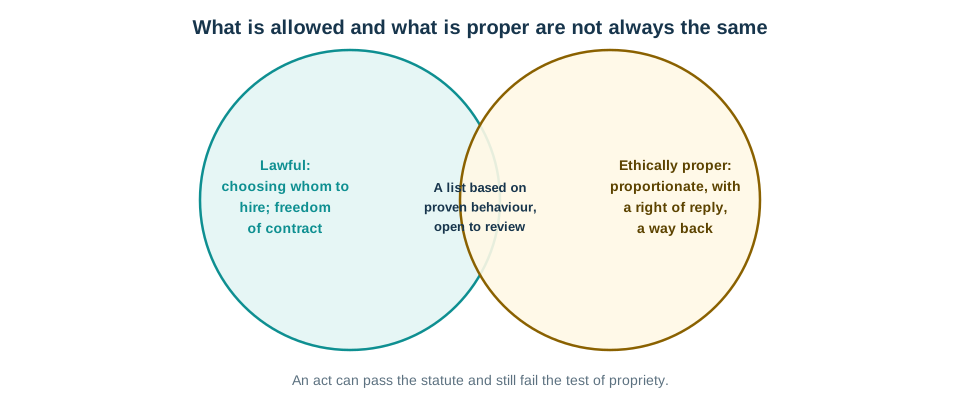
Figure 7. The overlap between what is lawful and what is proper.
1. Proportionality. A list marked "never" is permanent. Two incidents of different weight can lead to the same outcome. A commenter on E07 asks the most human question in the whole bundle: what if the person has repented? The list-maker does not answer that question in the screenshots available. A list with no expiry has no answer to that question.
2. Audi alteram partem (hear the other side). A person on the list does not know they are there, does not know the reason, and has no chance to respond. The list-maker himself says that some cases were never exposed to the public (E01). This means some decisions are made without any possibility of being examined.
3. Nemo iudex in causa sua (no one should be a judge in their own cause). If the basis for the list is comments aimed at the list-maker, the judge and the party who feels judged are the same person. In a healthy process, such a judgement is handed to a second person.
4. Bargaining power. An executive with hundreds of thousands of views speaks from a different position than an applicant. One post from him can lead many people to ask for the list to be shared (E05, E23). The list-maker refuses to share it, and that refusal deserves respect. But the signal that has been sent still travels on its own.
5. The mirror. In January 2025, the list-maker wrote that how we judge others is how we judge ourselves (E24). That sentence deserves to be used as a test for every decision, including our own: would I be willing to be judged in the same way?
A startup founder's perspective
From my desk as a founder, there are four things that are rarely discussed. First, the cost of false positives. Rejecting a person who was in fact good never shows up in the financial statements, but it narrows the talent pool and damages the company's reputation as a fair place. Second, culture is built by process, not by exceptions. Probation periods, structured feedback, and clear behavioural limits catch problems earlier than a list does. Third, the strong signal is behaviour that repeats and affects the work, not one comment on social media. Fourth, recruitment is not a court. Our job is to weigh risk fairly, not to hand down sentences.
6. Law: The Map and Its Limits
Warning. Nothing in this bundle shows that the list has been used to reject an applicant. This section therefore maps the relevant provisions and tests their elements. It does not conclude that a violation has occurred.
6.1 Map of provisions
| Issue | Provision | Reading status | Core |
|---|---|---|---|
| List as processing of Personal Data | Law 27/2022 Article 1 point 1, Article 2 paragraph (2), Article 16 paragraph (2), Article 20 paragraph (2) letter f | Read directly | Names and reasons for rejection are data about an individual. The exception applies only to personal or household activity |
| Rights of the recorded person | Law 27/2022 Articles 5 to 8, Article 12 | Read directly | Rights to information, correction, access, erasure, and to sue for compensation |
| Unlawful disclosure of data | Law 27/2022 Article 65 paragraph (2) and Article 67 paragraph (2) | Read directly | Imprisonment of up to 4 years for unlawfully disclosing Personal Data that does not belong to the person |
| Defamation | Law 1/2023 (Criminal Code) Articles 433, 434, 440, 441 | Read directly | Element of accusing someone of a matter so that it becomes publicly known; complaint-based offence; public interest exception |
| Transitional law | Law 1/2023 Article 3 paragraph (1) | Read directly | Acts committed before the new Criminal Code took effect are tested against the provision that is more favourable |
| Presumption of guilt by law enforcers | Law 20/2025 (Criminal Procedure Code) Article 91 | Read directly | Investigators are prohibited from acts that create a presumption of guilt when naming a suspect |
| Discrimination in employment | Law 13/2003 Articles 5 and 6 with elucidation | Secondary source | Equal opportunity without discrimination; the elucidation of Article 6 mentions sex, ethnicity, race, religion, skin colour, and political stream |
| Definition of discrimination | Law 39/1999 Article 1 point 3 | Secondary source | Includes distinctions based on political belief |
| Duties of company management | Law 40/2007 Article 97 | Secondary source | Good faith and responsibility; business judgment rule in paragraph (5) |
| Right to work | 1945 Constitution Articles 27 paragraph (2), 28D, 28I | Not re-read when this was prepared | Right to work and fair treatment; applies chiefly against the state |
6.2 The PDP Law: does a rejection list count?
Use the three-door test. Door one: the list contains names and reasons for rejection, which is data about an individual. Door two: the recorded person is identified or identifiable. Door three: Article 2 paragraph (2) exempts processing by an individual in a personal or household activity.
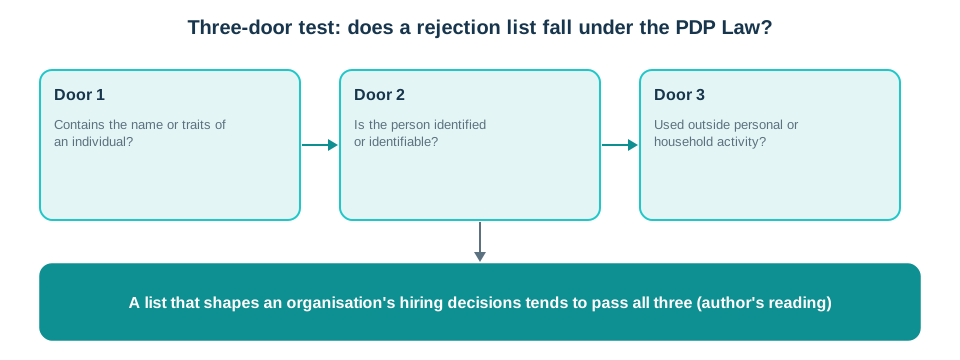
Figure 8. The three-door test for a rejection list.
This is where the word "personal" works with two meanings. As a personal judgement, the list is personal. As an activity, a list that is used to screen applicants for an organisation, and whose rejection context is shared with managers (E02), is a professional activity. In the author's reading, an activity of this kind tends to fall outside the household exemption. No court ruling has yet tested this reading, so it is an interpretation, not a certainty.
If the list enters the PDP regime, several provisions apply with it. Processing must have a basis (Article 20), and the basis of "other legitimate interests" requires a balance between the controller's interests and the rights of the recorded person (Article 20 paragraph 2 letter f). Processing must fit its purpose, be transparent, and be accurate, complete, not misleading, and up to date (Article 16 paragraph 2). The recorded person has the right to receive information, correct data, access it, request erasure, and sue for compensation (Articles 5 to 8 and Article 12).
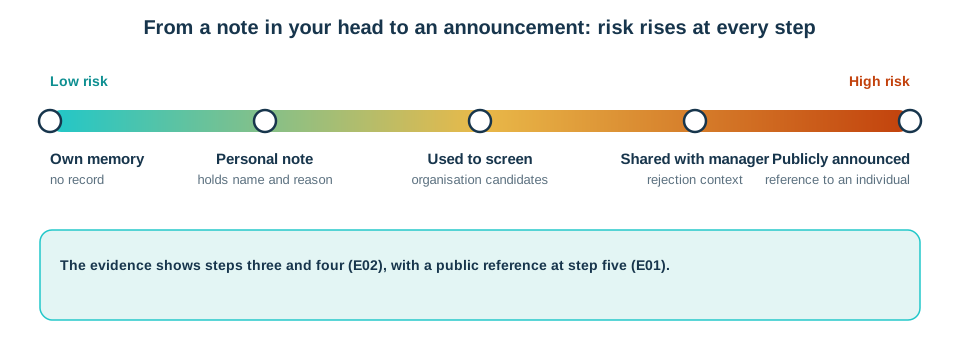
Figure 9. Risk rises at every step from memory to announcement.
6.3 Disclosure, and data that the owner published
A reference to a person who can be recognised from context (E01 and E08) can raise questions about disclosure. There is one fact that must be weighed: the event referred to had been announced by the person concerned in their own post (E08).
The author's view first: quoting what its owner published to the public, as it was and in the same context, is low risk. The conditions that protect that position are: the owner did the posting, the purpose is the same, no new identifier is added, and the use stays within that purpose. Keeping that fact in a list used to reject hires is a different purpose from the owner's purpose in posting it. Article 65 paragraph (2) does not expressly contain an exception for public data, and the basis of a defence lies in the element "unlawful". The author does not conclude that a violation has occurred. This element can only be tested if there is a complaint and an examination by the competent authorities.
6.4 Defamation: the elements to test
Article 433 paragraph (1) requires attacking another person's honour or good name by accusing them of a matter, with the intent that it become publicly known. The statement "I don't need people like him on my team" is a statement of preference, not an accusation of an act. The abbreviation "SH" in E01 points to an act, but the content of the case is not visible in the evidence and this report does not assess it. Article 433 paragraph (3) excepts acts done in the public interest or out of necessity in self-defence, and Article 434 paragraph (2) regulates proof of truth in limited cases. This is a complaint-based offence (Article 440) and the penalty can be increased by one third when committed through information technology (Article 441). Because the posts were made in 2023 and 2024, Article 3 paragraph (1) of the new Criminal Code governs which provision is used if the matter is examined later.
6.5 Employment and human rights: when criteria become discrimination
Article 5 of Law 13/2003 guarantees equal opportunity without discrimination in obtaining work. According to a secondary source, the elucidation of Article 6 mentions distinctions based on sex, ethnicity, race, religion, skin colour, and political stream. Law 39/1999 Article 1 point 3 mentions political belief in its definition of discrimination.
The list-maker states that his criterion is attitude, not opinion (E23). As long as that criterion truly measures behaviour related to work, it lies outside this prohibition. The problem arises if "attitude" becomes a substitute for political opinion. Two things in the evidence mean that this line needs guarding: the August 2024 conversation began from a debate with political overtones (E09), and the "attitude" criterion is not defined (K11). There is no evidence that the line was crossed, and no evidence that it was guarded in writing.
6.6 Presumption of innocence: for whom
The presumption of innocence is a principle of criminal procedure directed at the state. The new Criminal Procedure Code, for example, prohibits investigators from acts that create a presumption of guilt when naming a suspect (Article 91). The principle is not framed as a duty for private employers. But the list-maker himself made it an ethical yardstick in January 2025 (E24). The ethical question is therefore legitimate, and its answer does not depend on whether the law requires it.
6.7 Fiduciary duty
A company's directors must carry out their duties in good faith and with responsibility (Law 40/2007 Article 97). The business judgment rule in paragraph (5) protects business decisions taken in good faith, with care, without conflict of interest, and with preventive steps. That provision assesses the process of decision-making. That is why a written process that can be reviewed protects leaders, while a list without a process weakens that protection.
7. A Defensible List: A Protocol for Founders
If you lead a team, the need to keep the team healthy is real. Here are five steps that make a rejection list lawful, proper, and useful.
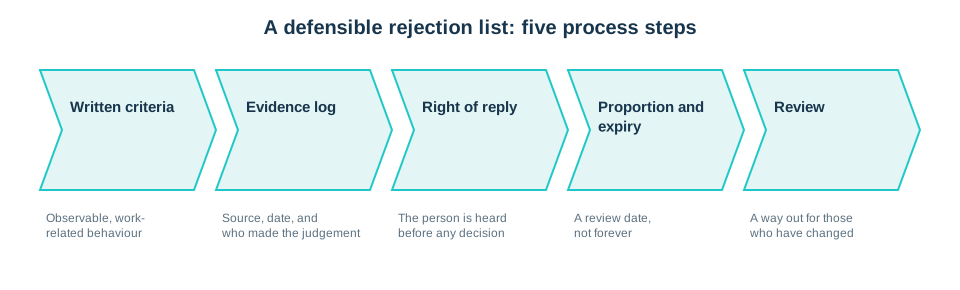
Figure 10. Five steps for a defensible list.
- Written criteria. Write down three to five observable, work-related behaviours, for example harassment, fraud, breach of confidentiality, or sabotage. Avoid words that cannot be measured, such as "toxic" or "noisy".
- Recorded evidence. Record the source, the date, and who made the judgement. If the judge is a party to the matter, ask a second person to assess.
- Right of reply. Hear the person before making a decision, unless there is a written security reason.
- Proportion and expiry. Set a review date, for example every two years. Avoid the word "never".
- Review and a way back. Provide a path for people who have changed, and an answer to the question "what if they have repented".
For critics. Criticise behaviour, not character. Leave out insults and identity labels, because both give the list-maker a reason to ignore the arguments that are right (E18, E26).
For the community. Avoid turning the list into a shared blacklist. That worry appears in the evidence (E05) and deserves to be guarded against.
8. Limits of the Evidence and Unanswered Questions
- The evidence is screenshots. The screenshots have not been compared with the original posts on the platform. Post links are not available in the bundle.
- Some content is not visible. The media box in the first post is empty (E01), the post quoted in E24 cannot be seen, and the trigger post for the August 2024 "Replying to" is not in the bundle.
- The "SH" case. Its content is not visible, and this report does not assess it.
- The year of E26. The timestamp only shows "Apr 19" with no year. That post touches on a legal case that is outside the scope of this report. The presumption of innocence applies to all parties.
- Application of the list. The bundle contains no example of an applicant rejected because of the list. The legal assessment is therefore a map and a test of elements, not a ruling.
- Questions that remain open. What definition of "attitude" is used? Who judges besides the list-maker? Is there an expiry? Is there a way back for people who change?
9. Conclusion and Recommendations
The right to choose is not the problem. A list built with the five steps in Section 7 is one I can defend in front of a judge, in front of a team, and in front of a mirror. A list built from one pattern of comments, judged by the person who feels criticised, with no right of reply and no expiry, is hard to defend in front of any of the three.
For list-makers: write down the criteria, invite a second person, set a review date, and answer the question about repentance. Keep the refusal to share the list, because that is the strongest part of your position.
For critics: improve the form of the criticism. The arguments about context (E20) and about the limits of a personal list (E04) are sharper than insults.
For other founders: build culture with process, not with exceptions. A decision that touches other people's livelihoods does not deserve to be made quickly.
About the Author
Rahmat Wibowo is Founder and CEO of Infraloka, a technology company that builds data and infrastructure products for Indonesian businesses. The author is connected to two pieces of evidence in this report and disclosed this in the opening section.
Appendix A. Full Evidence Gallery (E01 to E26)
Screenshots are presented in full, with no editing of their content. Rights in each post belong to the person who posted it. Third-party accounts that appear in the images are not named in the text of the report.
E01. Announcement of the list and the reason for not sharing it
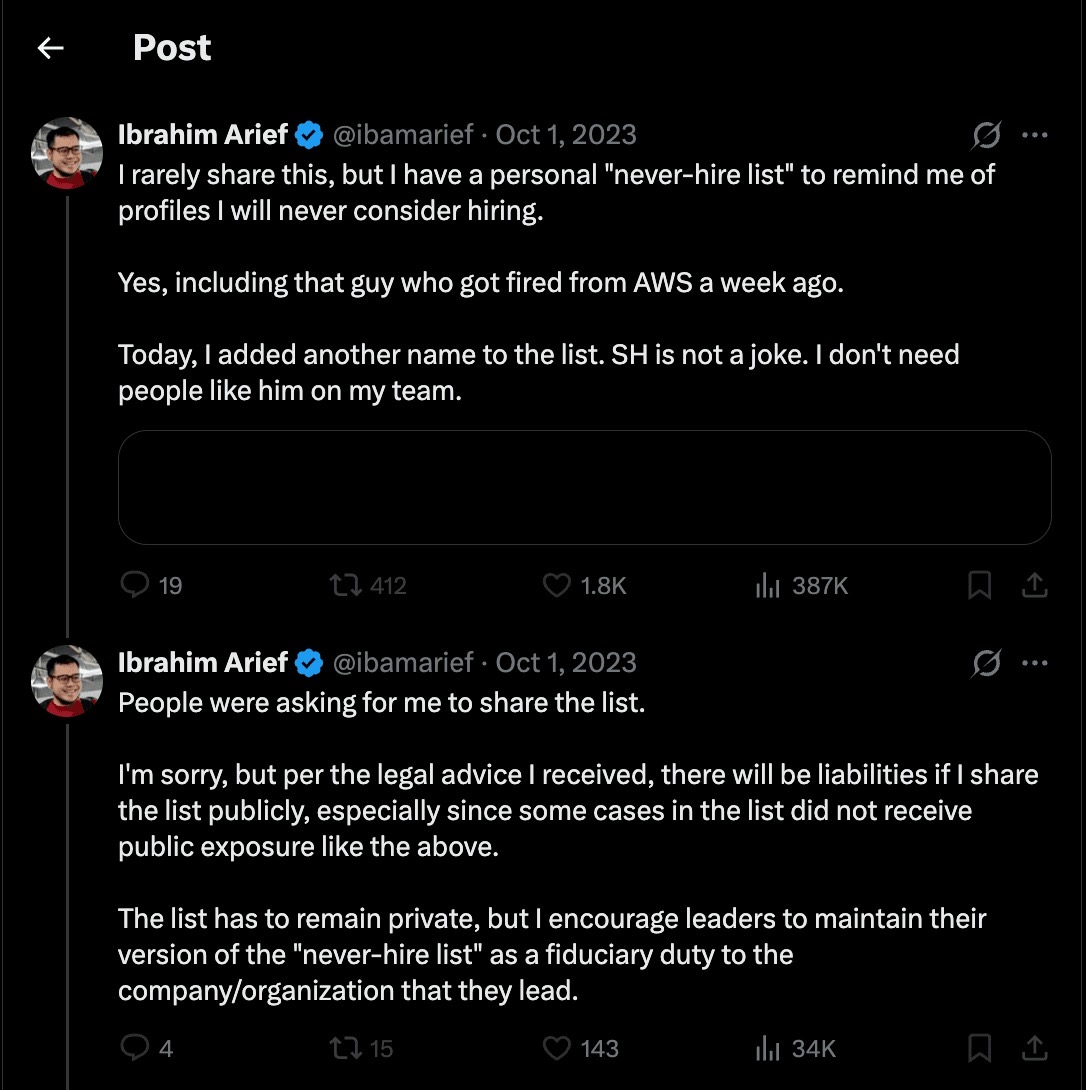
E01 | 1 Oct 2023
What is visible. Two consecutive posts by Ibrahim Arief. First: he has a "personal never-hire list", including someone who "got fired from AWS a week ago", and adds one more name ("SH is not a joke"); 387 thousand views, the media box appears empty. Second: he does not share the list because of legal advice, and urges leaders to keep a list as a "fiduciary duty".
Relevance. Primary source for K1 and K2.
E02. How the list is used in hiring
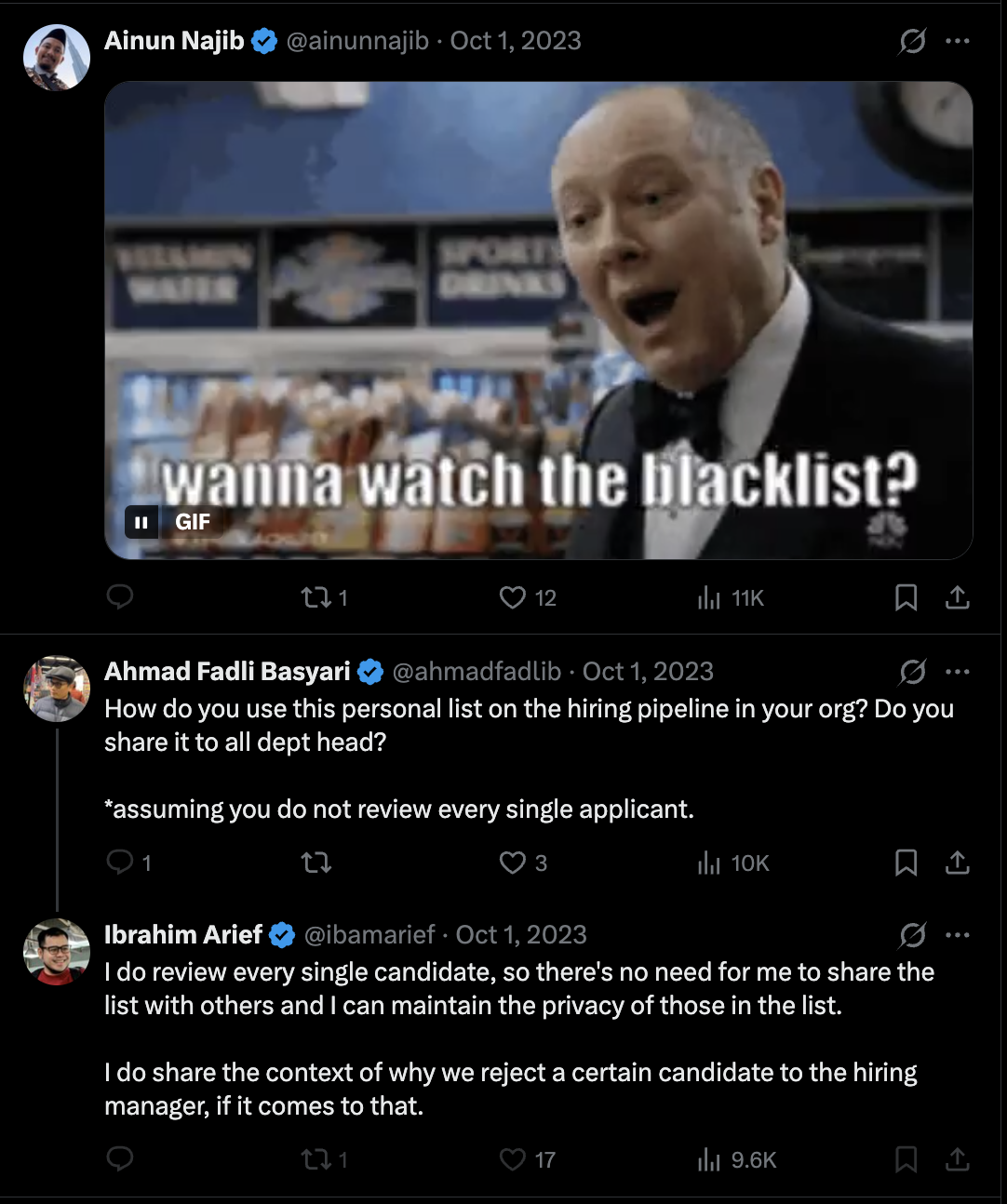
E02 | 1 Oct 2023
What is visible. A user asks how the list is used. Answer: he reviews every candidate himself and shares the context of a rejection with the hiring manager when needed.
Relevance. Source for K3.
E03. Critical reaction to the announcement
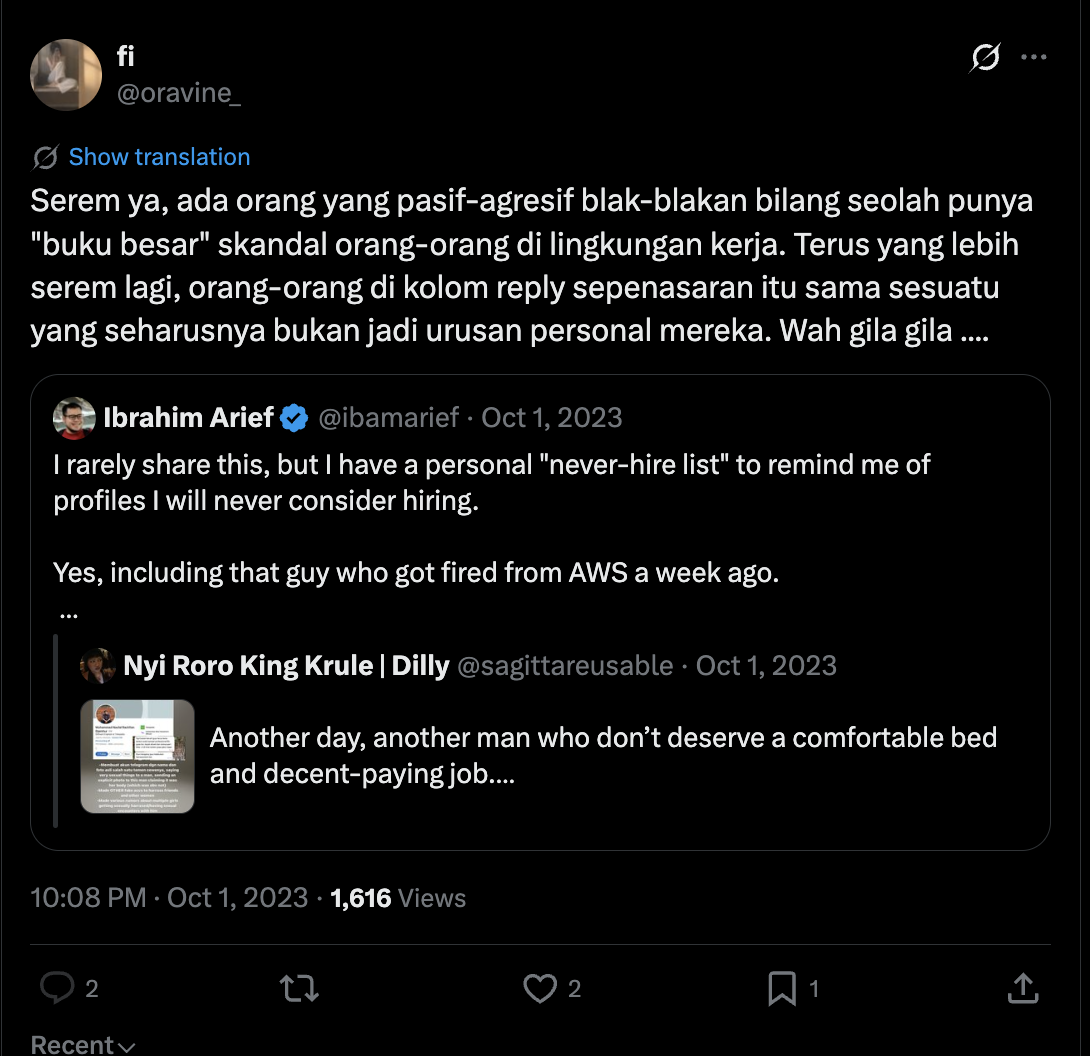
E03 | 1 Oct 2023
What is visible. A user calls the post "passive-aggressive" and judges readers' comments to be excessive curiosity; it includes a quote of the list-maker's post.
Relevance. Reader reaction; an example of a judgement about motive.
E04. Doubt and defence about the scope of the list
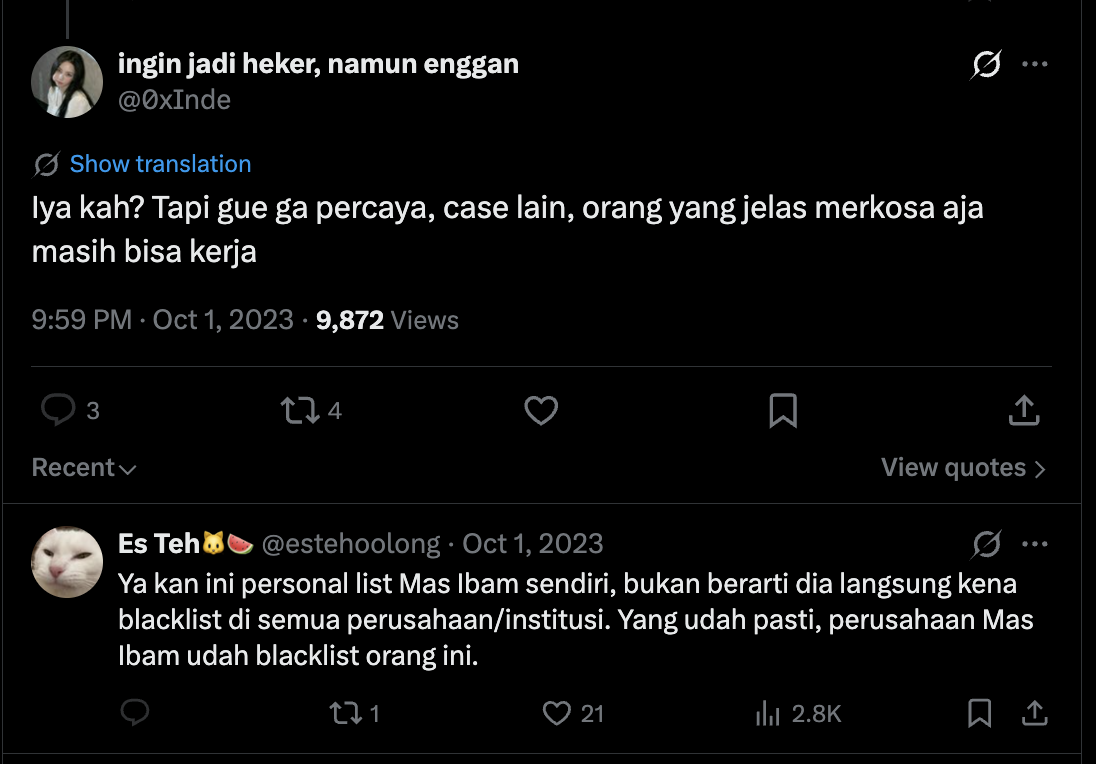
E04 | 1 Oct 2023
What is visible. One user doubts the claim by comparing another case. Another user explains that a personal list does not mean someone is blacklisted at every company.
Relevance. Example of whataboutism and a legitimate argument about scope (Section 4).
E05. Worry about a shared list
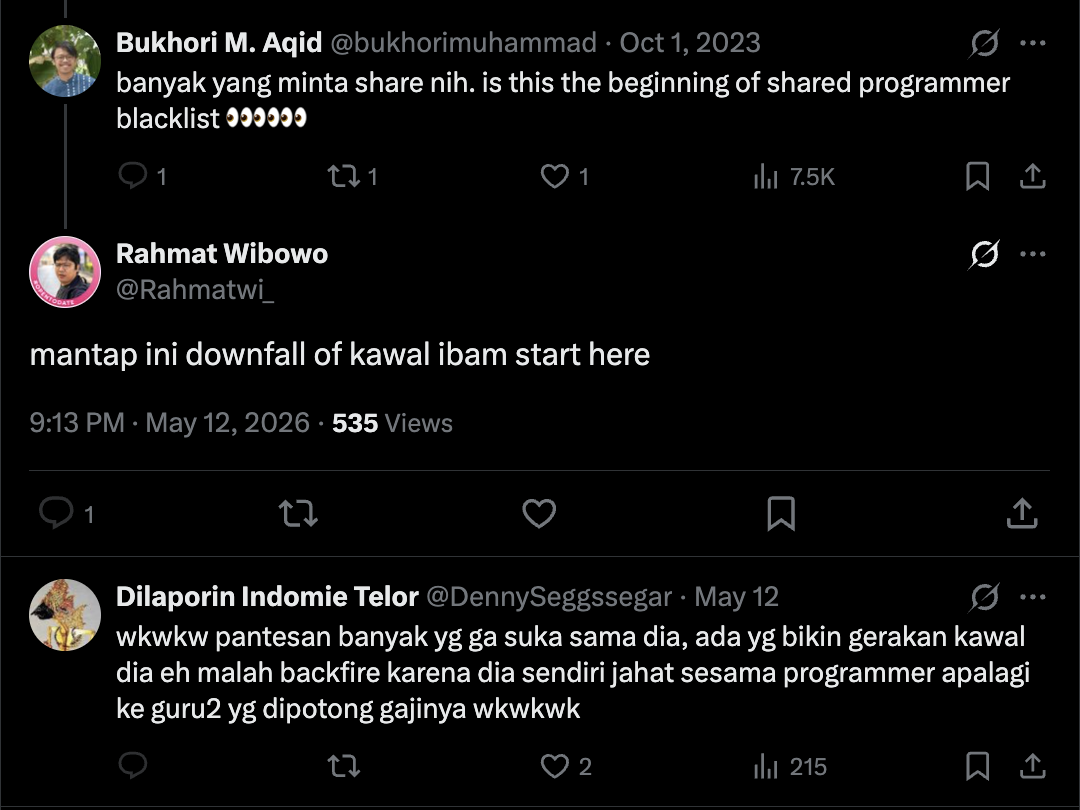
E05 | 1 Oct 2023
What is visible. A reply: "is this the beginning of shared programmer blacklist" and many requests to share the list. The capture also contains a post by the report's author dated 12 May 2026 and a reply to it; that part is not analysed.
Relevance. Basis for the worry about a shared blacklist (Sections 5 and 7).
E06. Character references and anonymous peer review
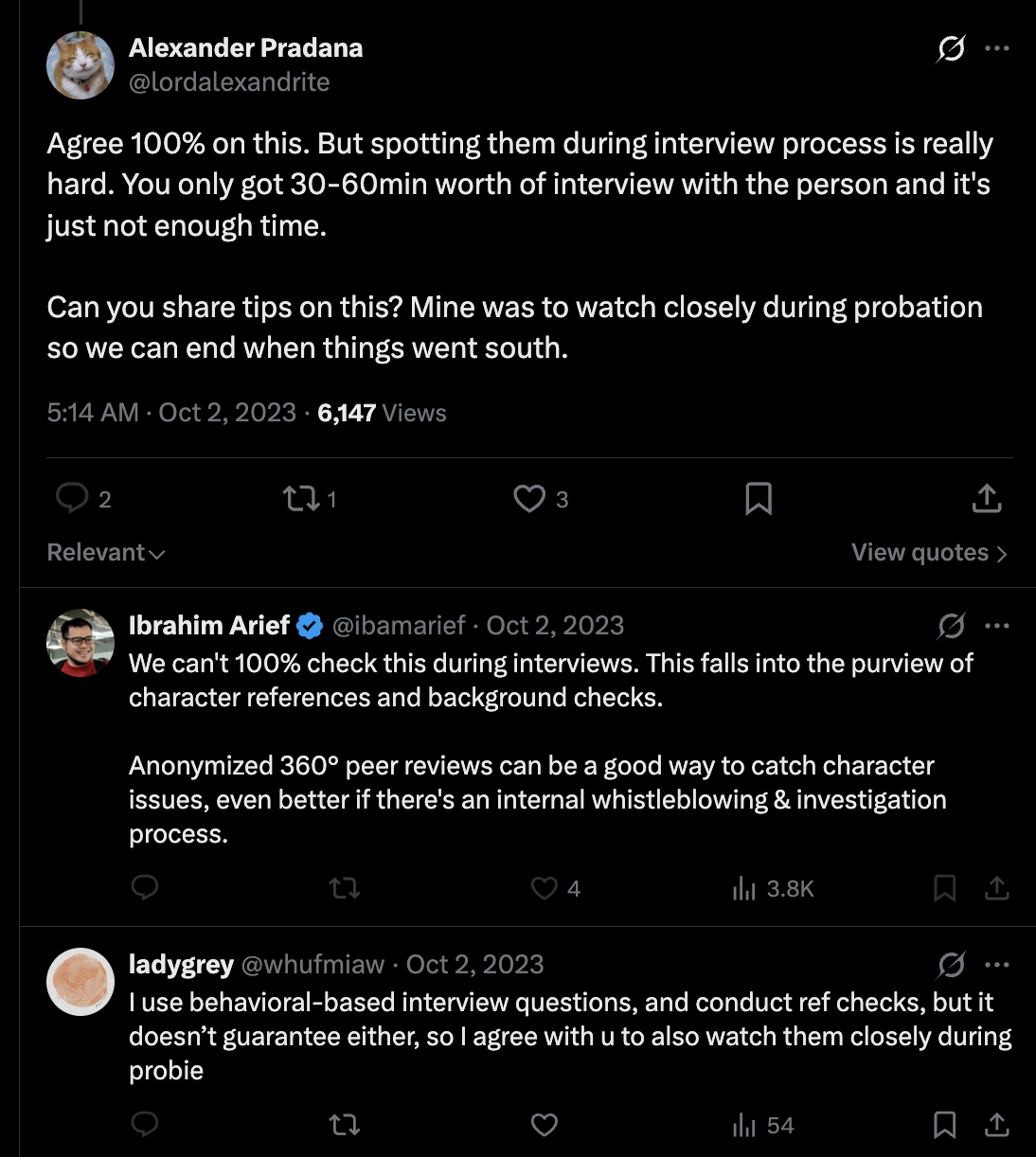
E06 | 2 Oct 2023
What is visible. A user asks how to assess character in an interview. Answer: it cannot be done 100 percent in an interview; use character references, background checks, anonymous 360 degree peer review, and whistleblowing.
Relevance. Source for K4.
E07. Question about a person who has repented
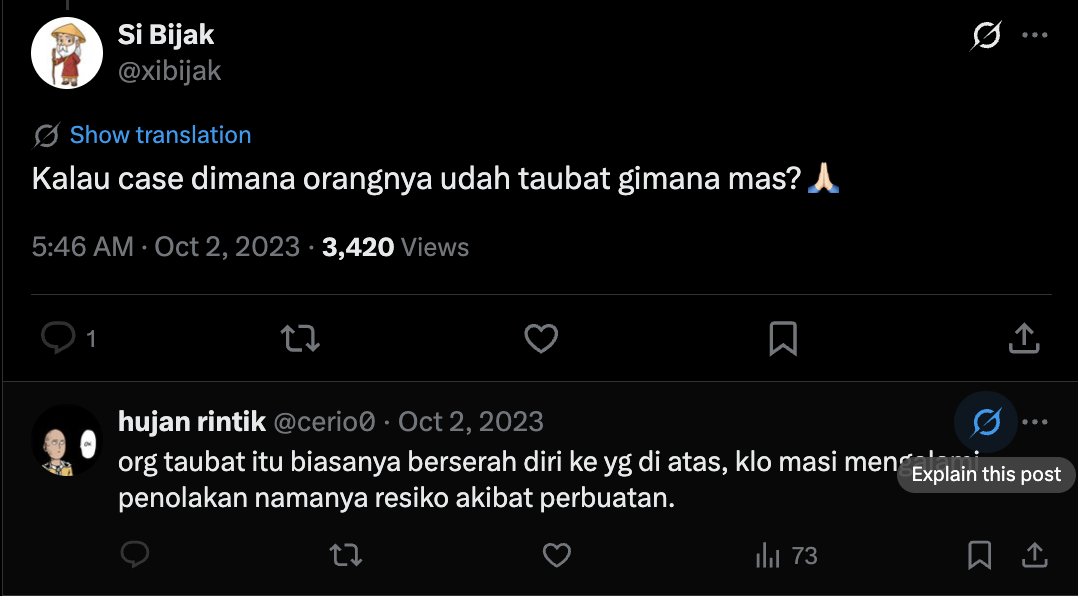
E07 | 2 Oct 2023
What is visible. A user asks what if the person has repented. Another user's reply describes the rejection as a risk that results from one's actions. No answer from the list-maker in this capture.
Relevance. Basis for the questions of proportionality and a way back (Section 5).
E08. Reference linked to an individual
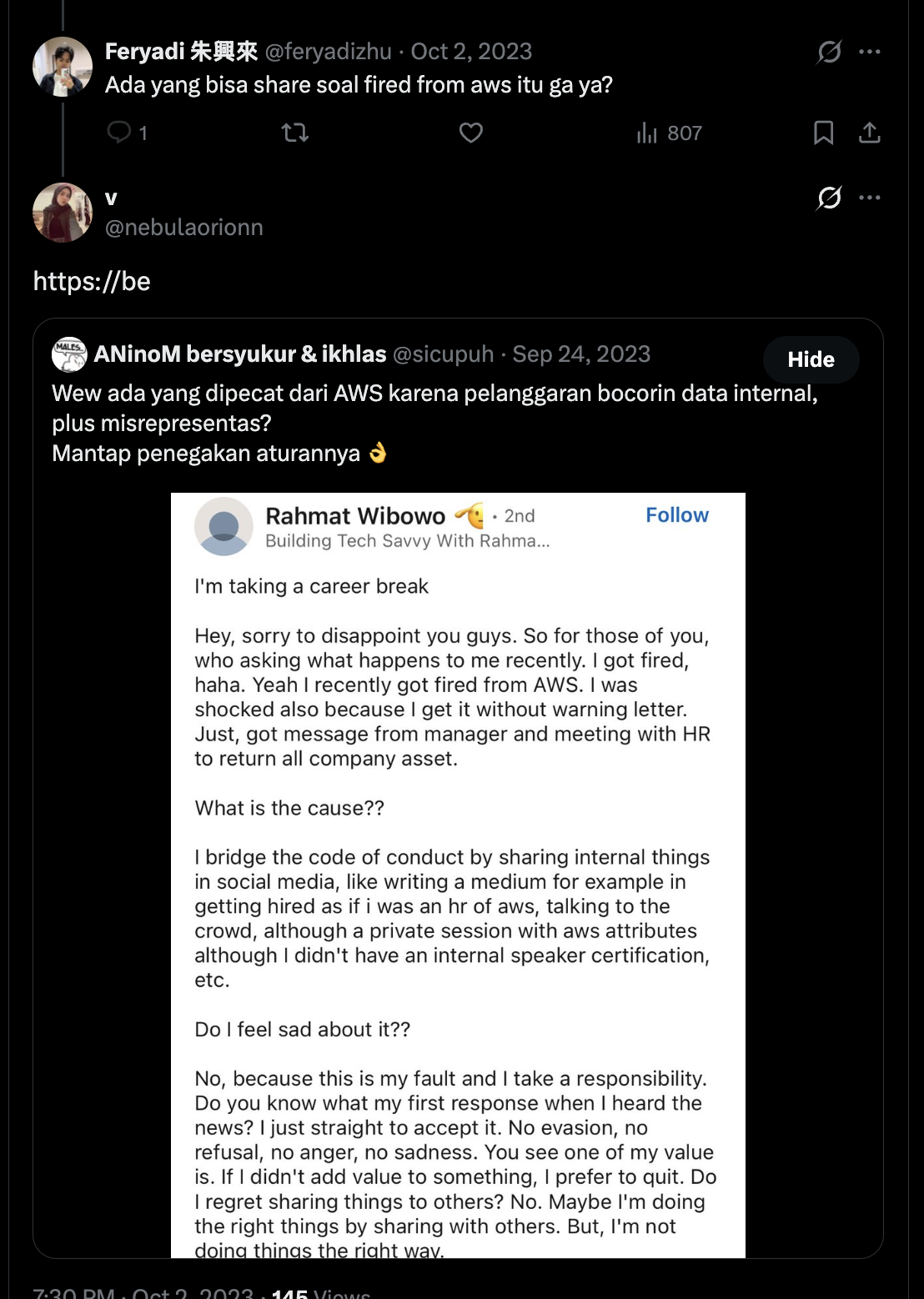
E08 | 2 Oct 2023
What is visible. A user asks who was fired; the answer is a link to a post containing a capture of the report author's LinkedIn post about the end of his employment. This includes the author's own post.
Relevance. Shows that a person can be identified through context; the data was announced by its owner himself (Section 6.3).
E09. "Just my personal list" and consequences
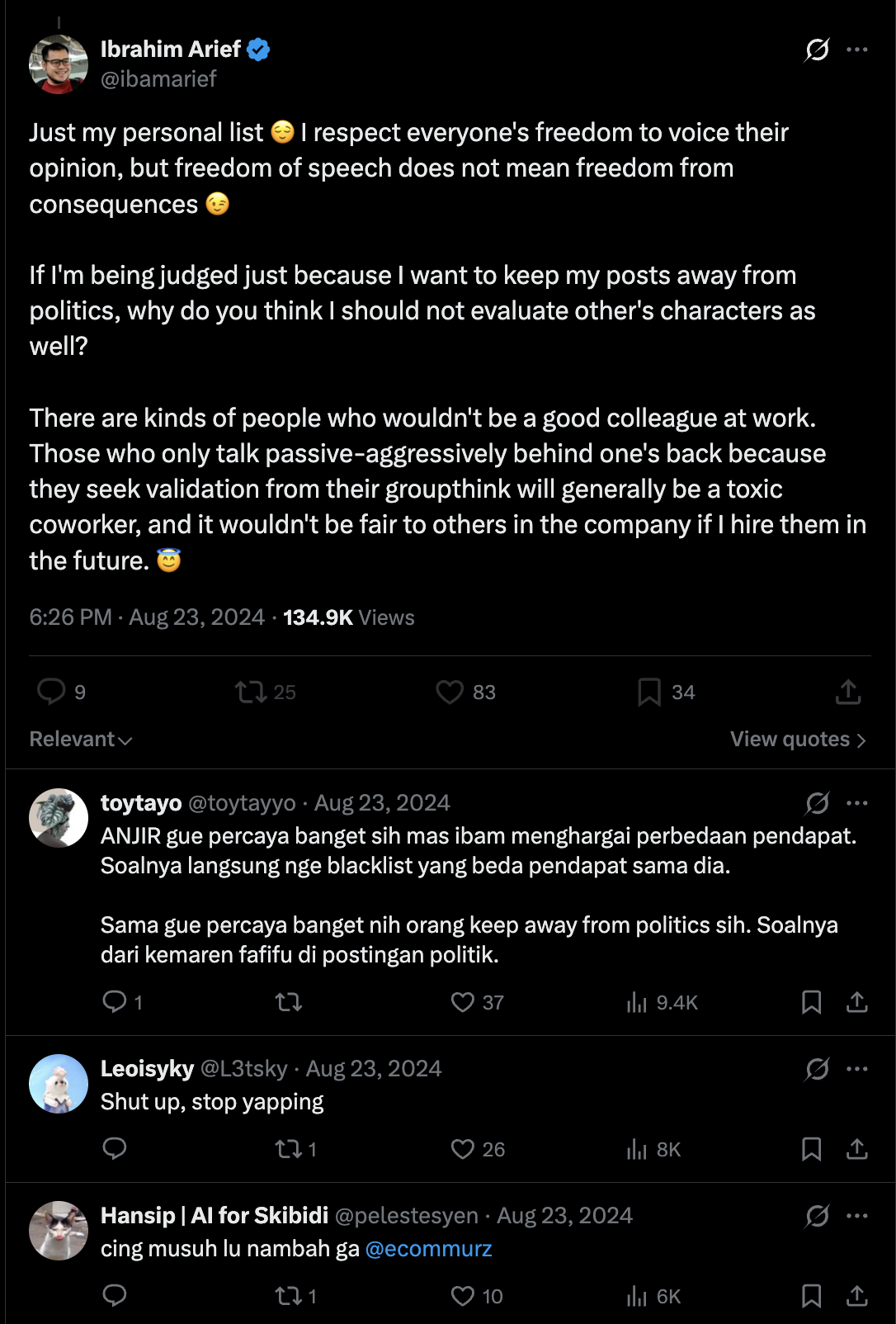
E09 | 23 Aug 2024
What is visible. The list-maker writes that freedom of speech does not mean freedom from consequences, and that people who talk passive-aggressively behind one's back for the sake of groupthink validation will be toxic coworkers; 134.9 thousand views. User replies below.
Relevance. Source for K5, K6, K7.
E10. "Tell me how that is not fair and reasonable?"
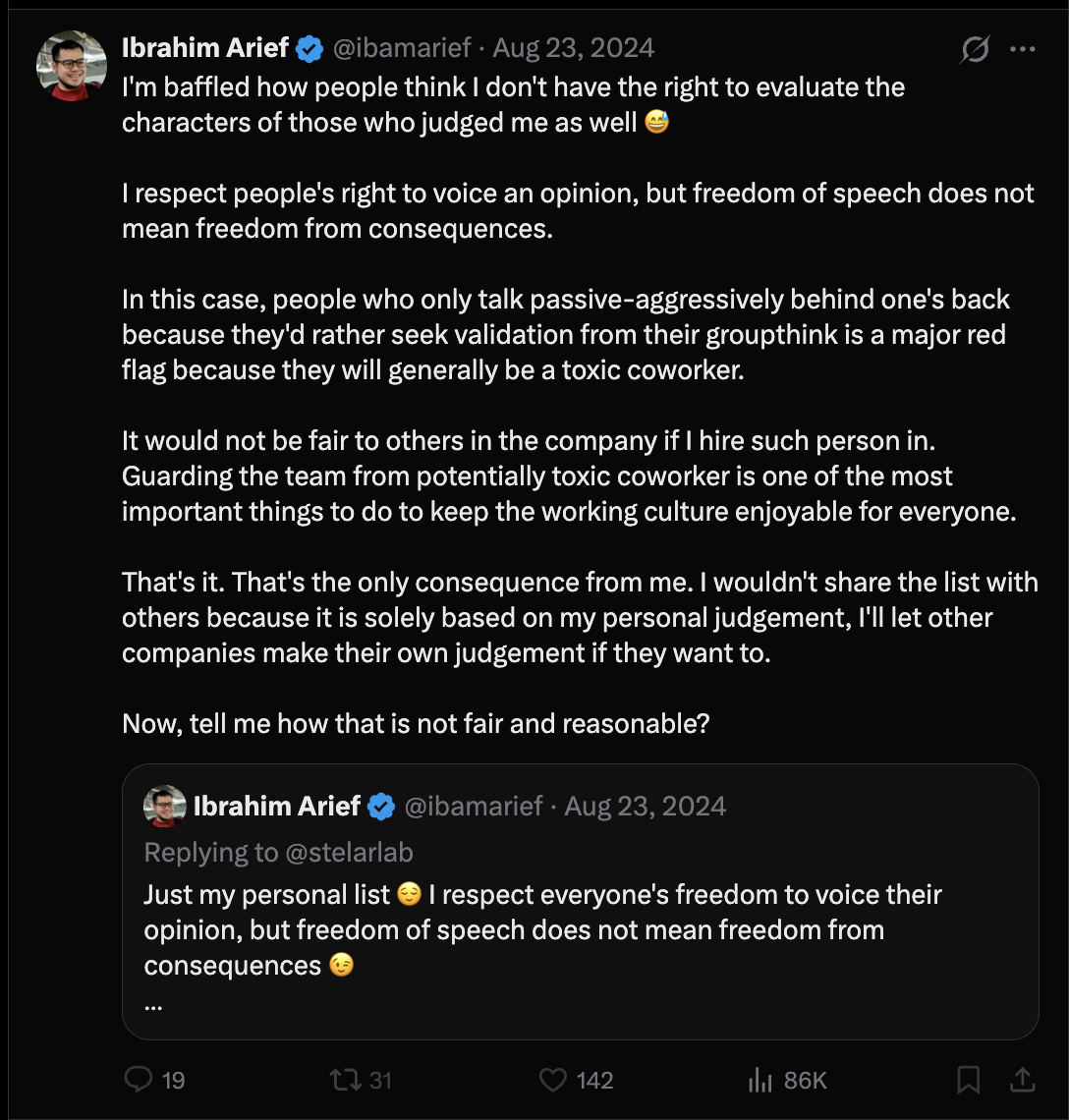
E10 | 23 Aug 2024
What is visible. The list-maker states his right to evaluate the character of people who judge him, says the list is not shared because it rests on personal judgement, and closes with a rhetorical question; 86 thousand views.
Relevance. Source for K5, K7, K8.
E11. No-hire list and no-apply list
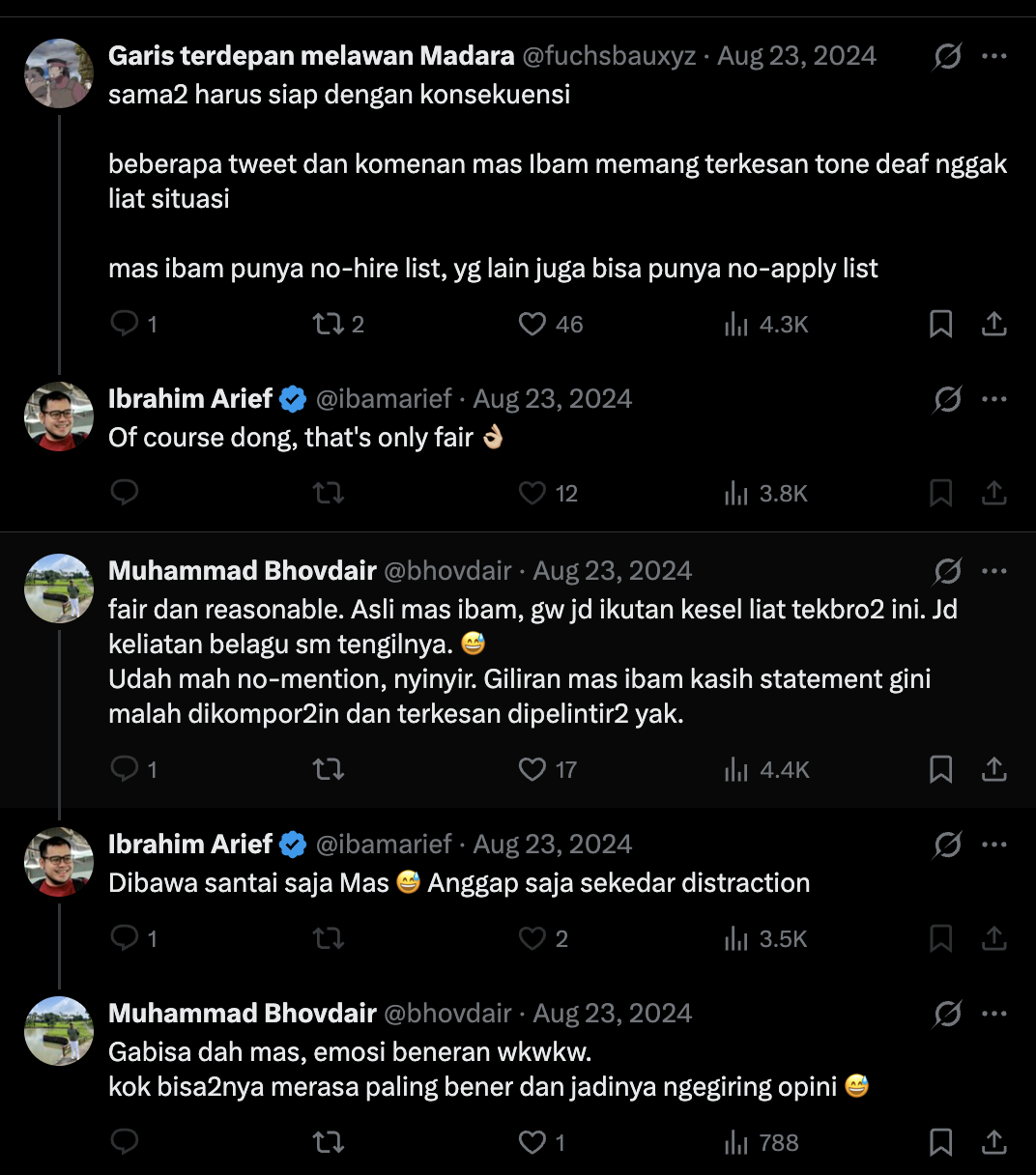
E11 | 23 Aug 2024
What is visible. A user writes that the list-maker has a no-hire list and others can have a no-apply list; answered "Of course dong, that's only fair". The follow-up conversation mentions no-mention and nyinyir (sniping).
Relevance. Source for K9; a clue about the meaning of "behind one's back" (K7).
E12. Reply to a person who resigned
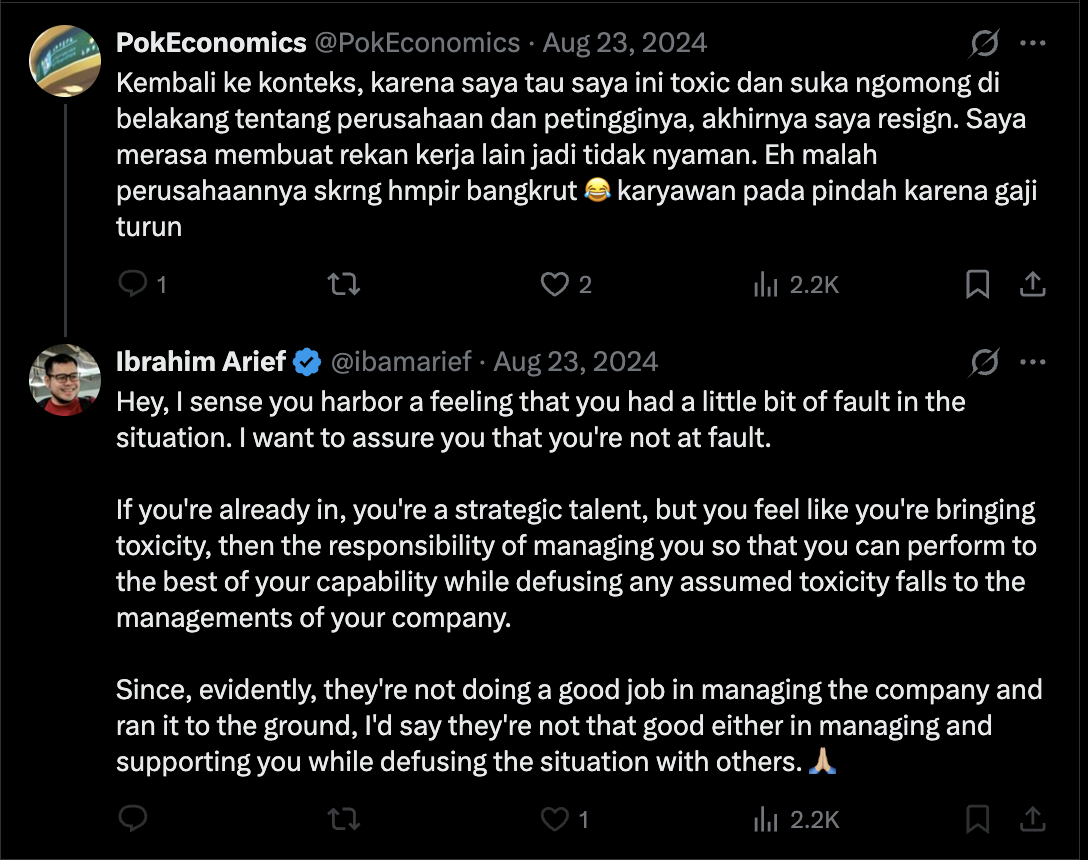
E12 | 23 Aug 2024
What is visible. A user tells that they resigned because they felt it was toxic and their company is now nearly bankrupt. The list-maker says they were not at fault and judges that the company's management was lacking in ability.
Relevance. Source for K10.
E13. A personal list as a reasonable choice
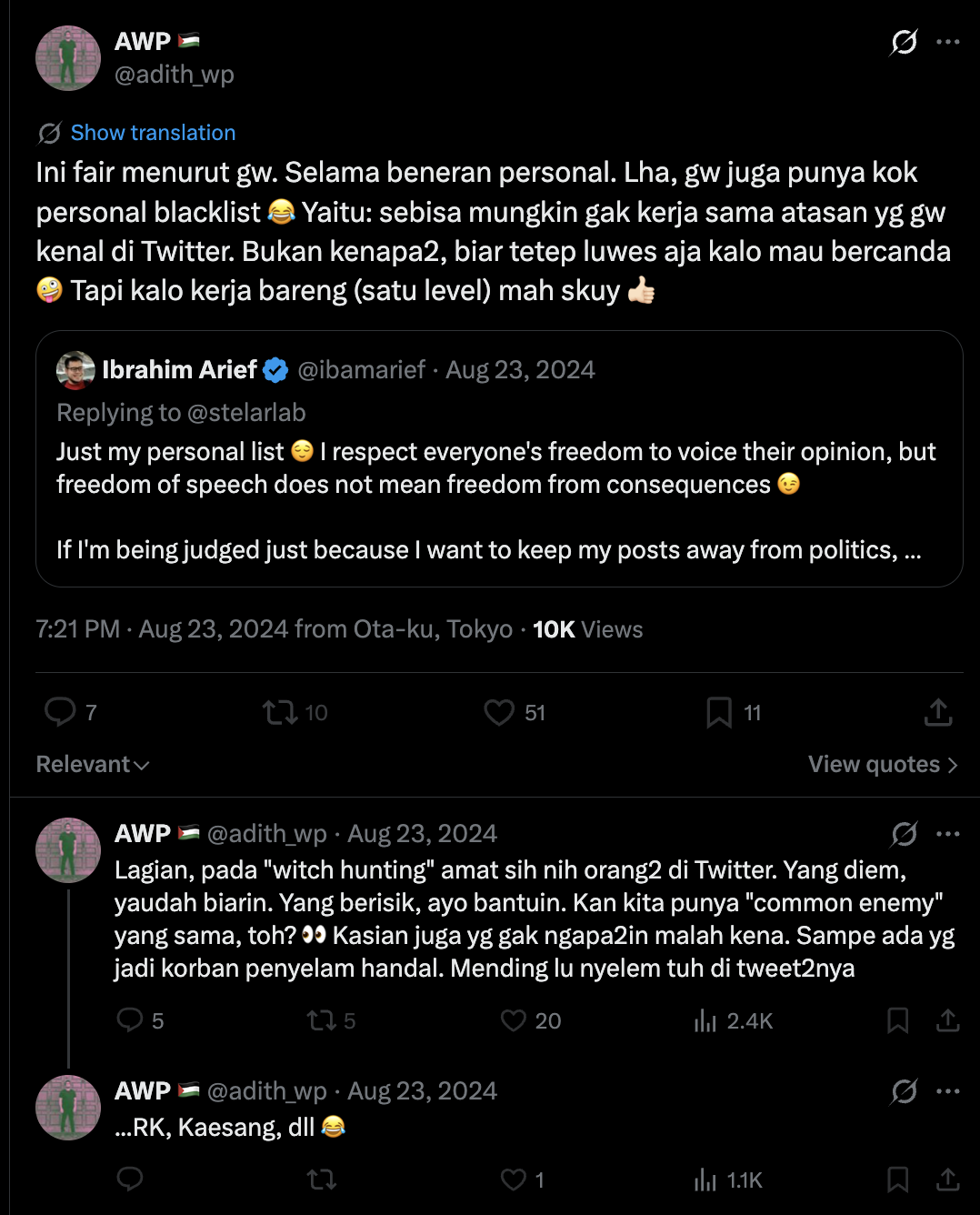
E13 | 23 Aug 2024
What is visible. A user judges the personal list to be reasonable and mentions their own personal list, namely avoiding working with bosses known from social media; touches on "witch hunting".
Relevance. Supports K9; an example of a personal list on the applicant's side.
E14. Reaction from the HR community
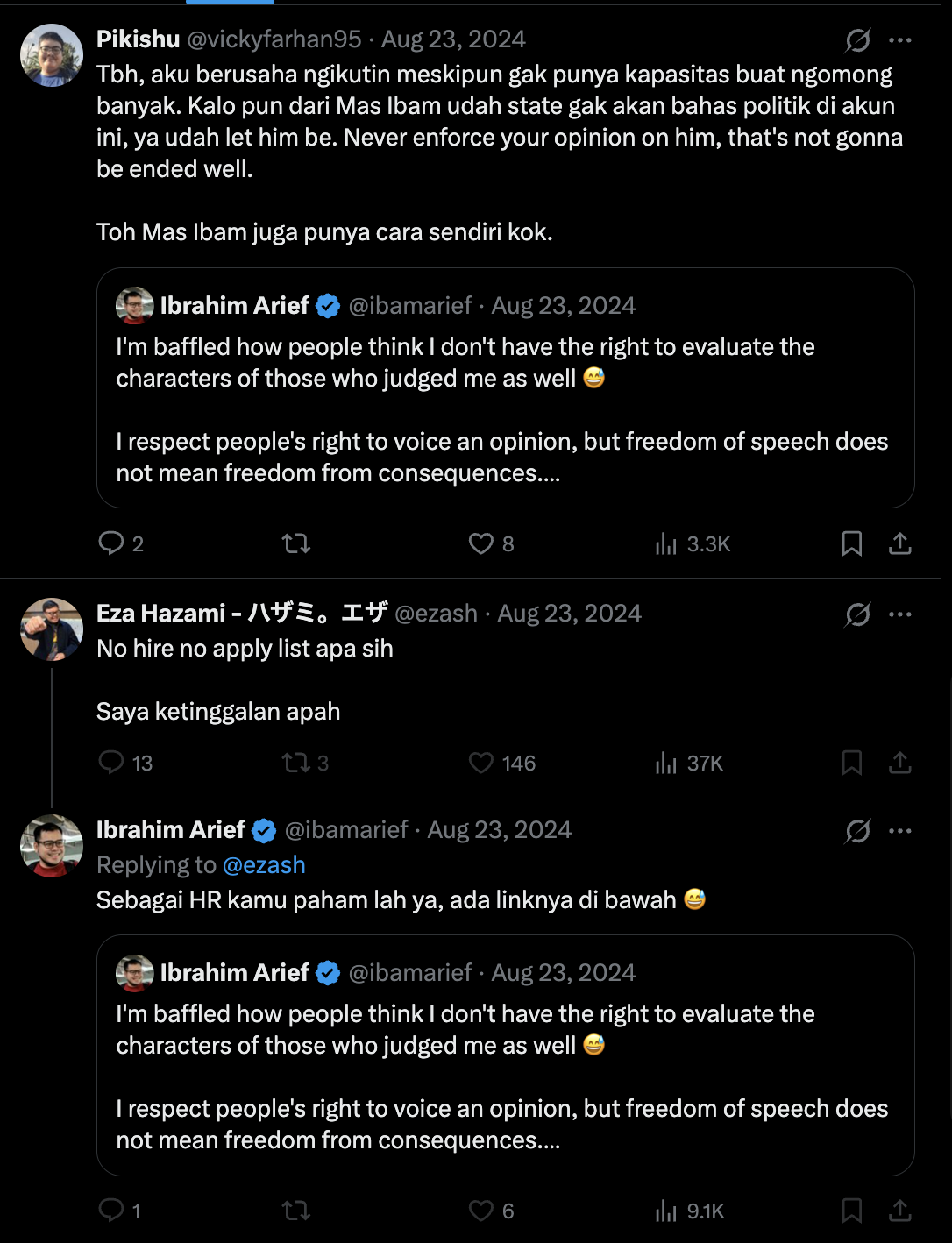
E14 | 23 Aug 2024
What is visible. An HR practitioner asks what a no-apply list is; answered with a link. A user suggests not forcing opinions; 37 thousand views.
Relevance. Scale of attention in the HR community.
E15. "What is going on with tech bros"
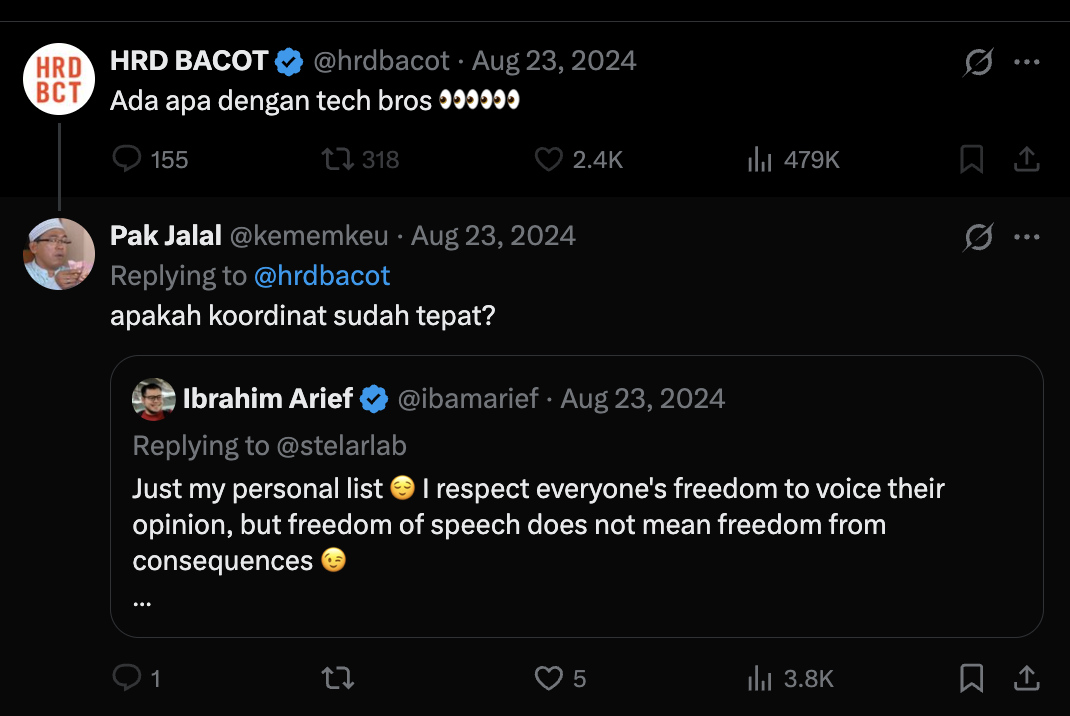
E15 | 23 Aug 2024
What is visible. An HR account asks what is going on with tech bros (479 thousand views); one reply quotes the list-maker's post.
Relevance. Scale of public attention.
E16. Response: having an opinion is not automatically toxic
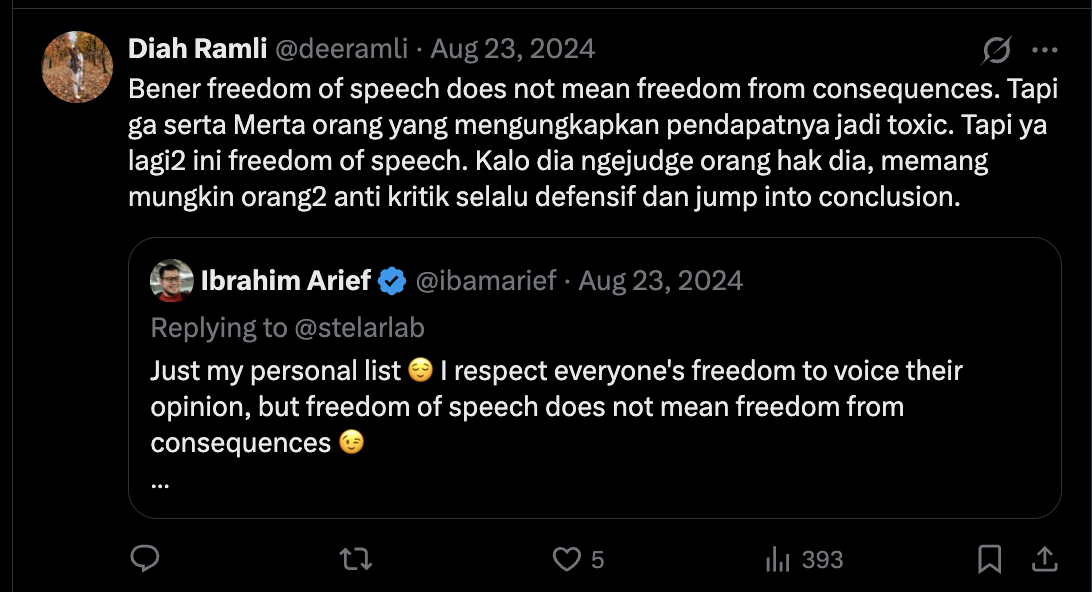
E16 | 23 Aug 2024
What is visible. A user agrees that freedom of speech is not free of consequences, but rejects that people who voice opinions are automatically toxic.
Relevance. Counterpoint to K7.
E17. Consequences and democracy
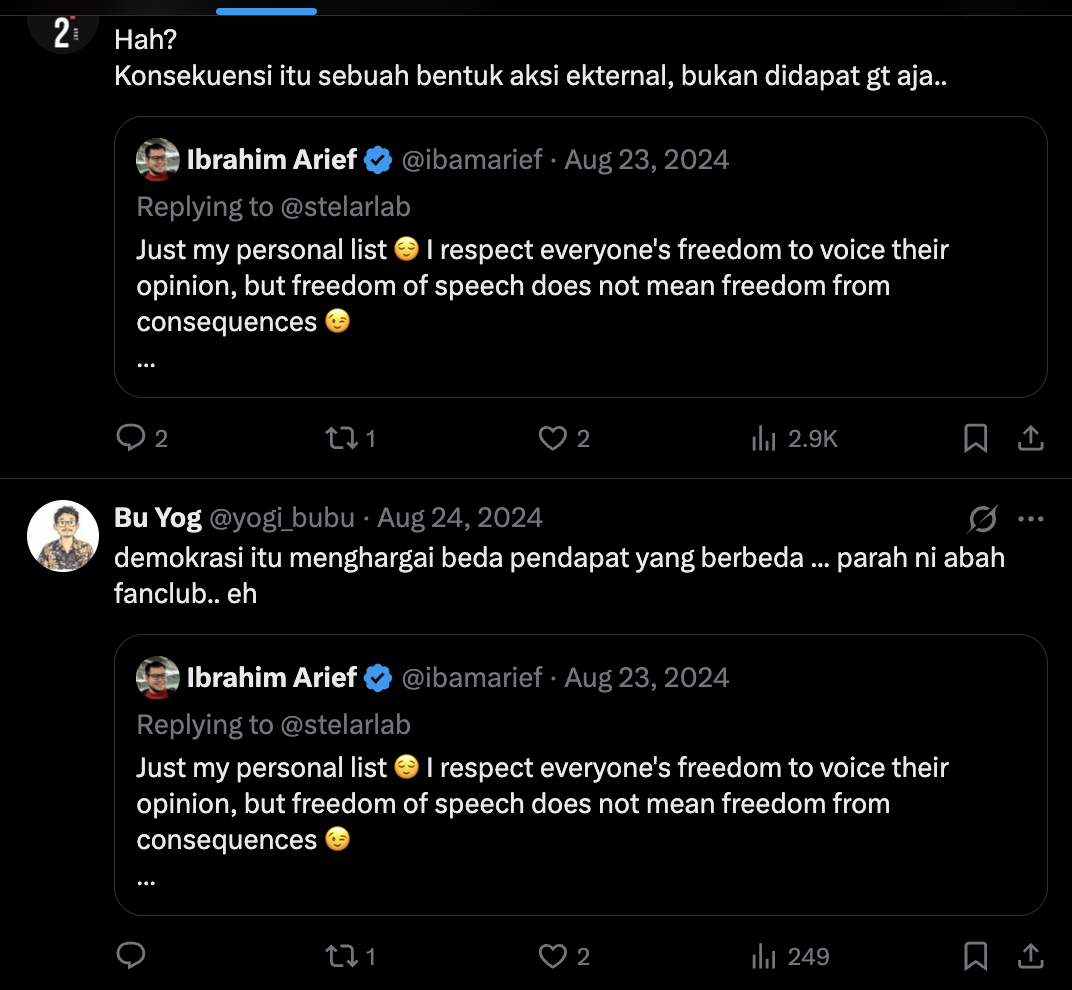
E17 | 23 Aug 2024
What is visible. Two responses: consequences are an external action, not something that simply arrives; and democracy respects differences of opinion.
Relevance. Examples of a legitimate argument and of equivocation (Section 4).
E18. Replies in a mocking tone
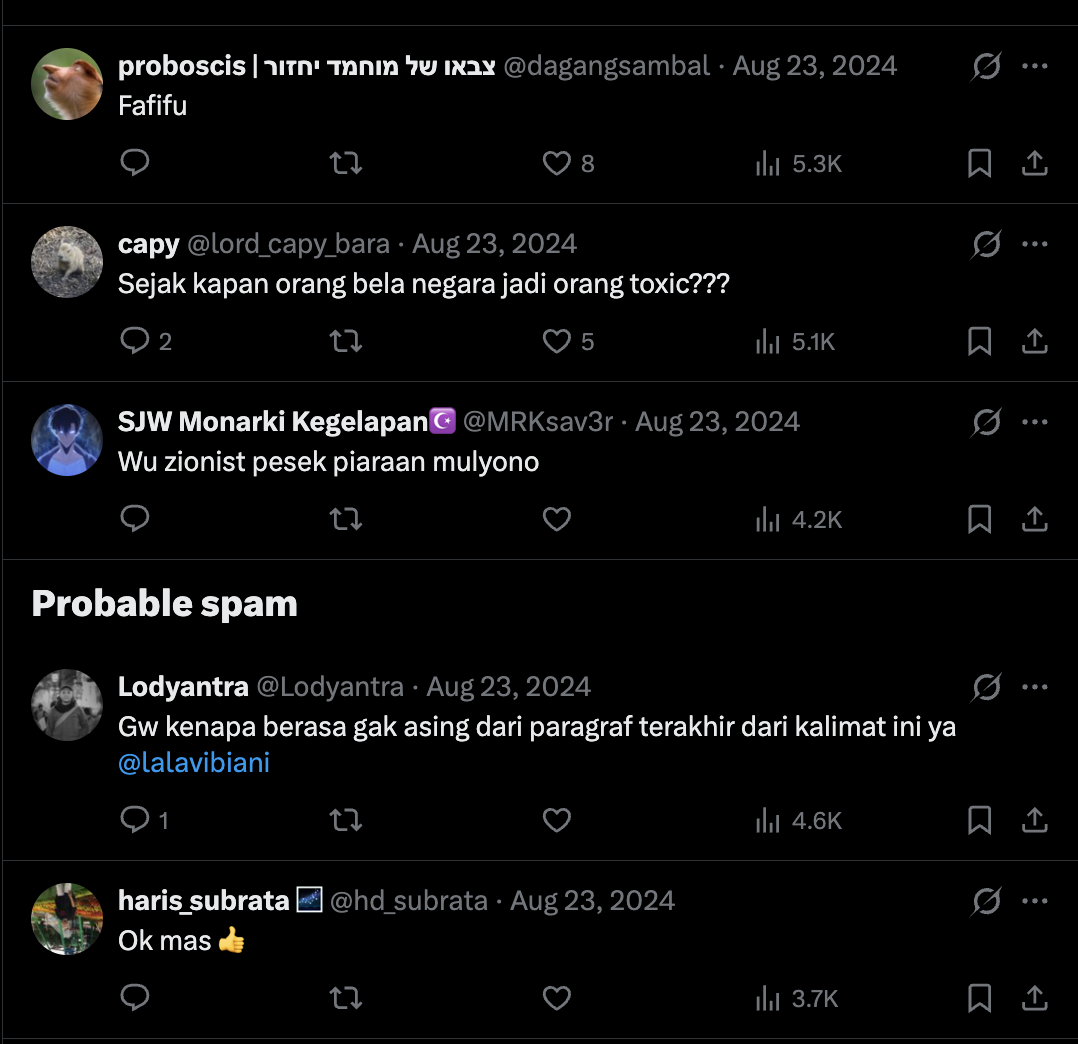
E18 | 23 Aug 2024
What is visible. A number of short replies, including mockery and identity accusations and the question "since when did defending the country become toxic"; two are flagged by the platform as probable spam.
Relevance. Example of ad hominem and non sequitur (Section 4).
E19. Sympathetic replies and advice to stay quiet
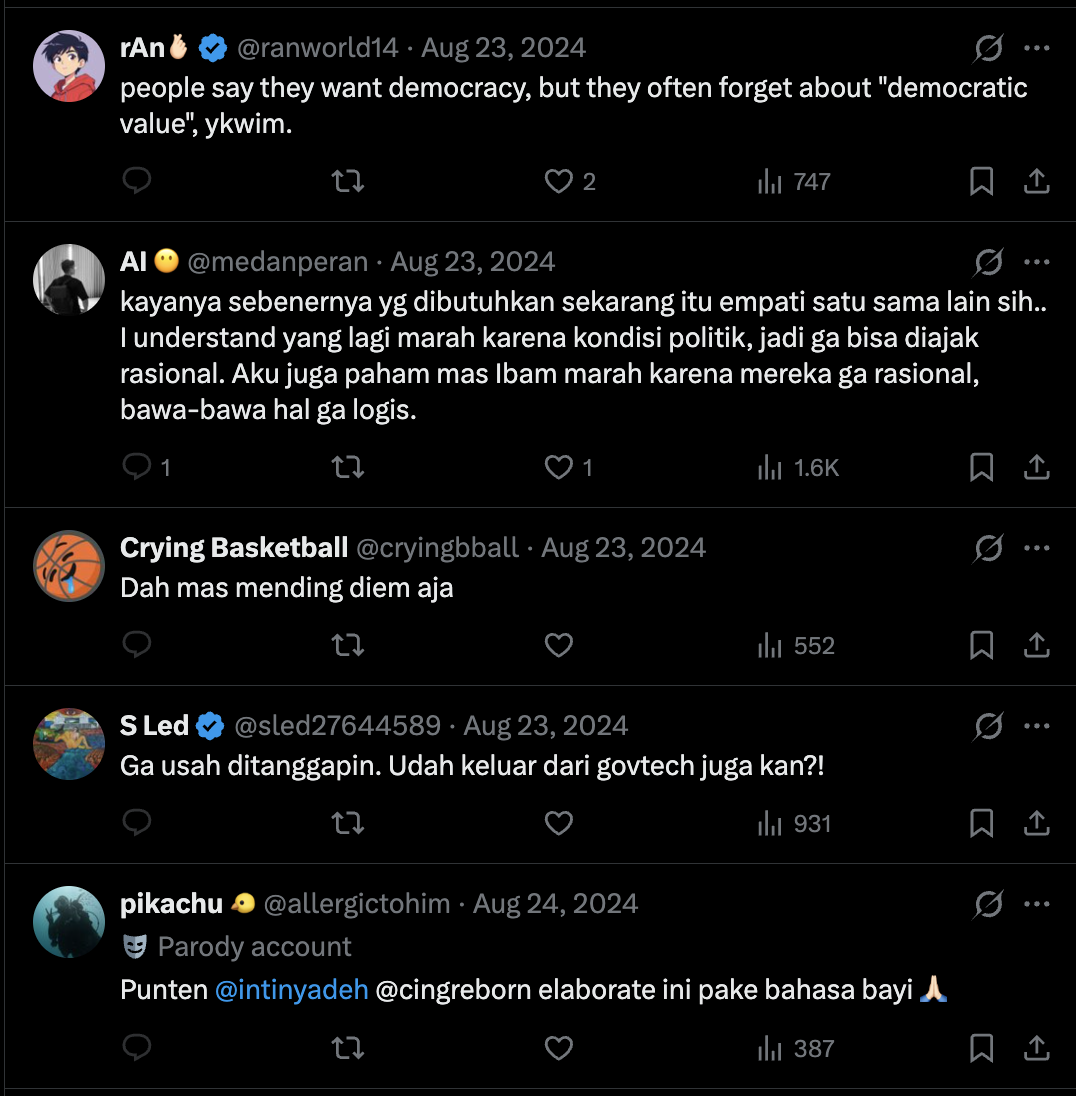
E19 | 23 Aug 2024
What is visible. Replies that ask for empathy, suggest staying quiet, and ask whether the list-maker has left govtech.
Relevance. Example of tone policing.
E20. Replies about context and groupthink
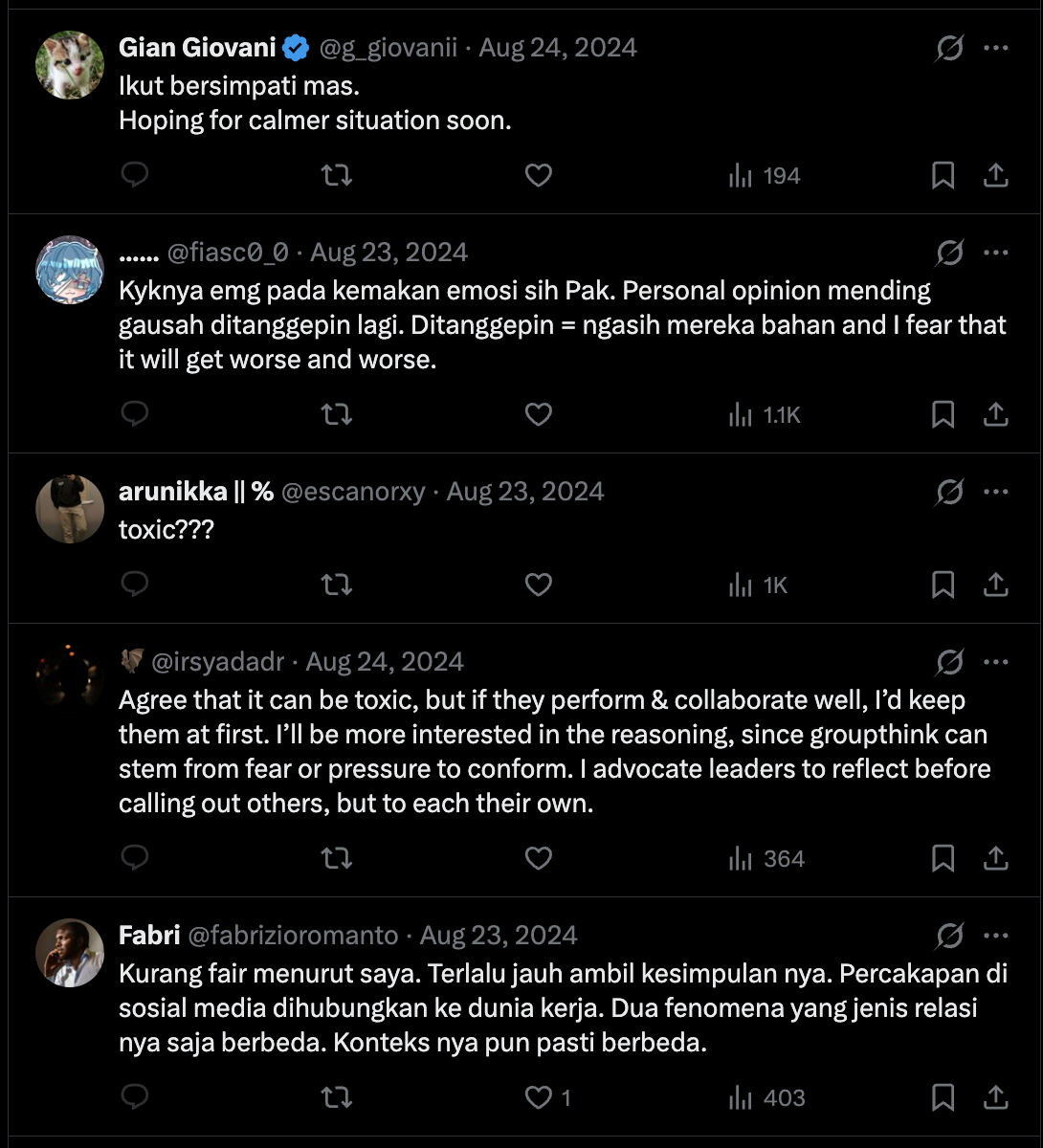
E20 | 23 Aug 2024
What is visible. Replies that show empathy, suggest not responding, invite reflection on the reasons for groupthink, and judge the conclusion to be too far because a social media conversation is being linked to the world of work.
Relevance. Sharp counterpoint to K7.
E21. Sequence of events from an observer's view
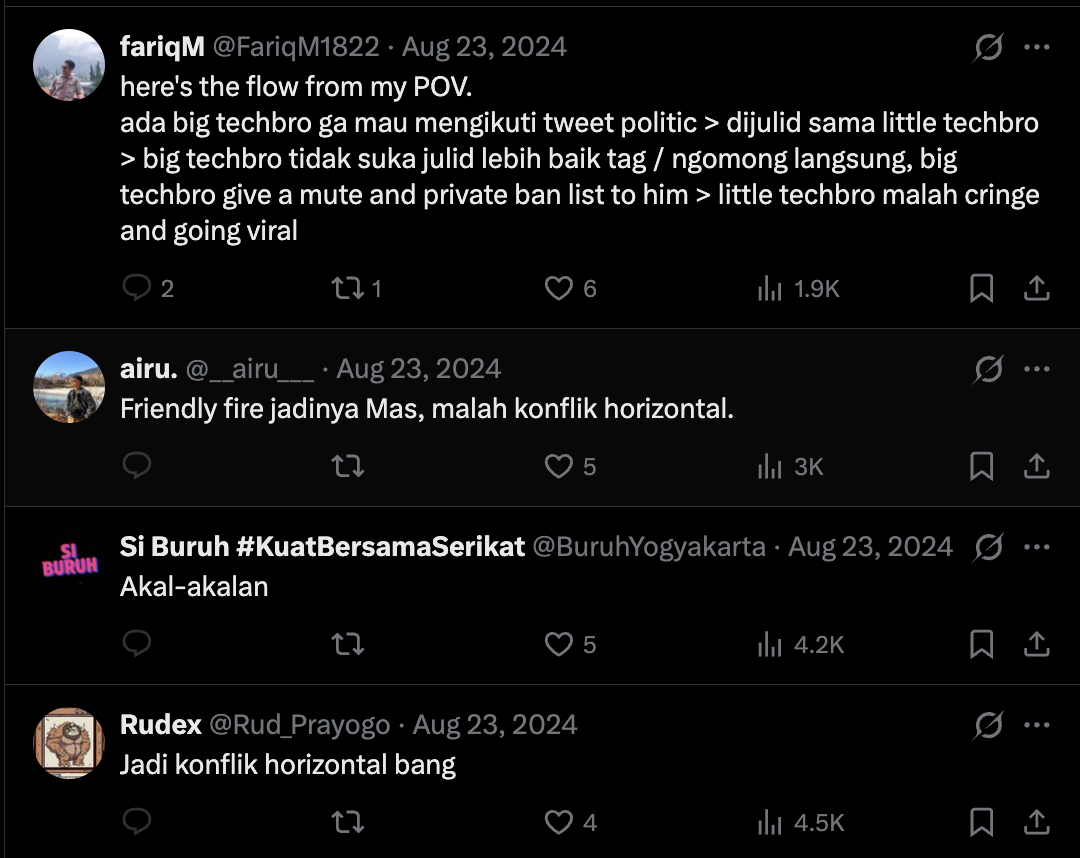
E21 | 23 Aug 2024
What is visible. One user lays out the sequence of events from their point of view; another user calls it friendly fire and horizontal conflict.
Relevance. Observation about group dynamics.
E22. Sympathy for the list-maker
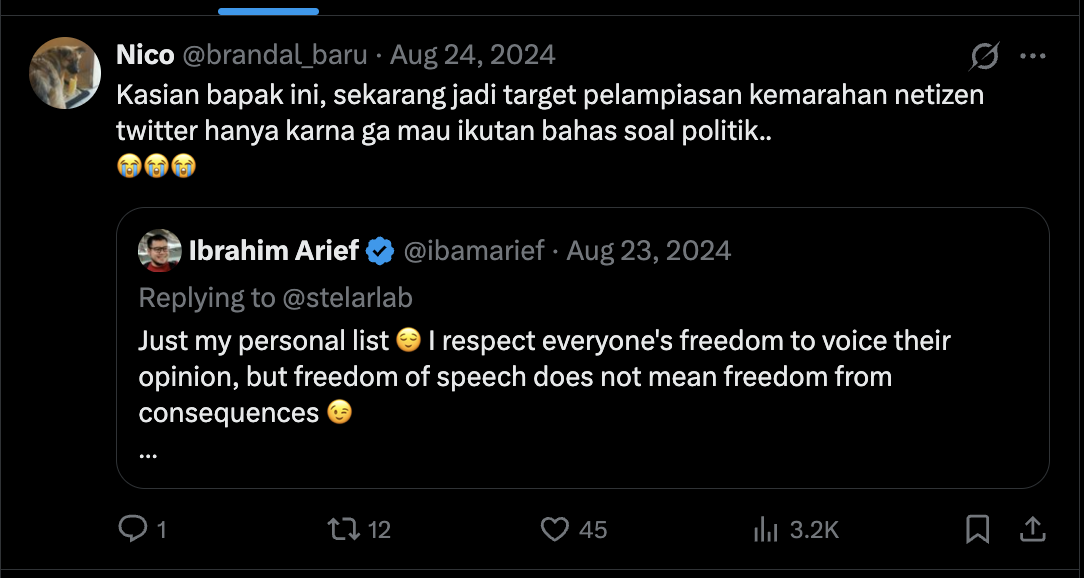
E22 | 24 Aug 2024
What is visible. A user says the list-maker has now become a target of anger just because he does not want to discuss politics; it includes a quote of the 23 August post.
Relevance. Example of appeal to pity (Section 4).
E23. "100% on the attitude, never on the opinion"
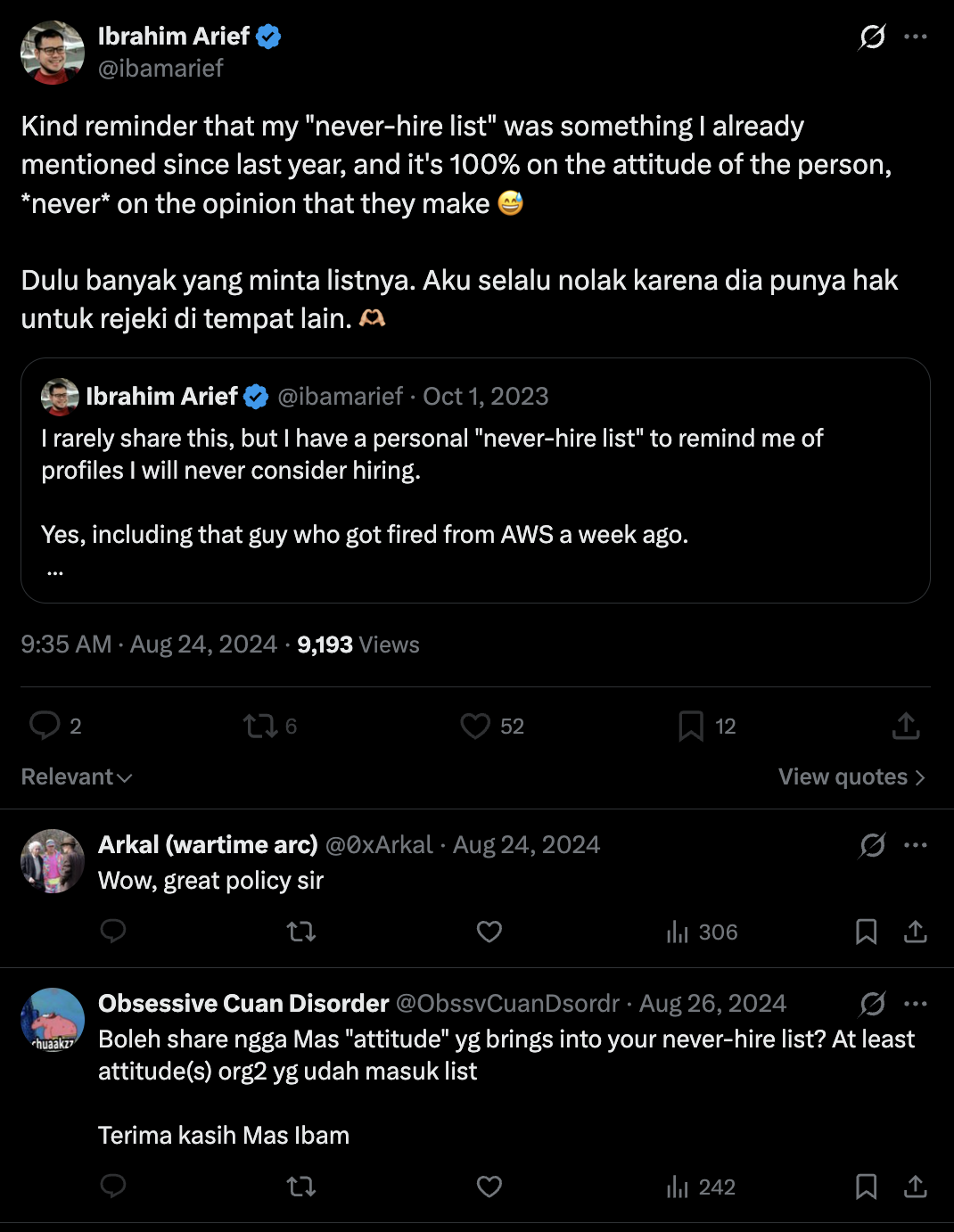
E23 | 24 Aug 2024
What is visible. The list-maker states that his list was already mentioned last year and is based entirely on attitude, not opinion; he refuses to share it because that person has the right to earn a living elsewhere. A reply praises this policy and asks for an example of the attitude meant.
Relevance. Source for K11; an ethical strength that deserves to be noted.
E24. Presumption of innocence and blanket ban
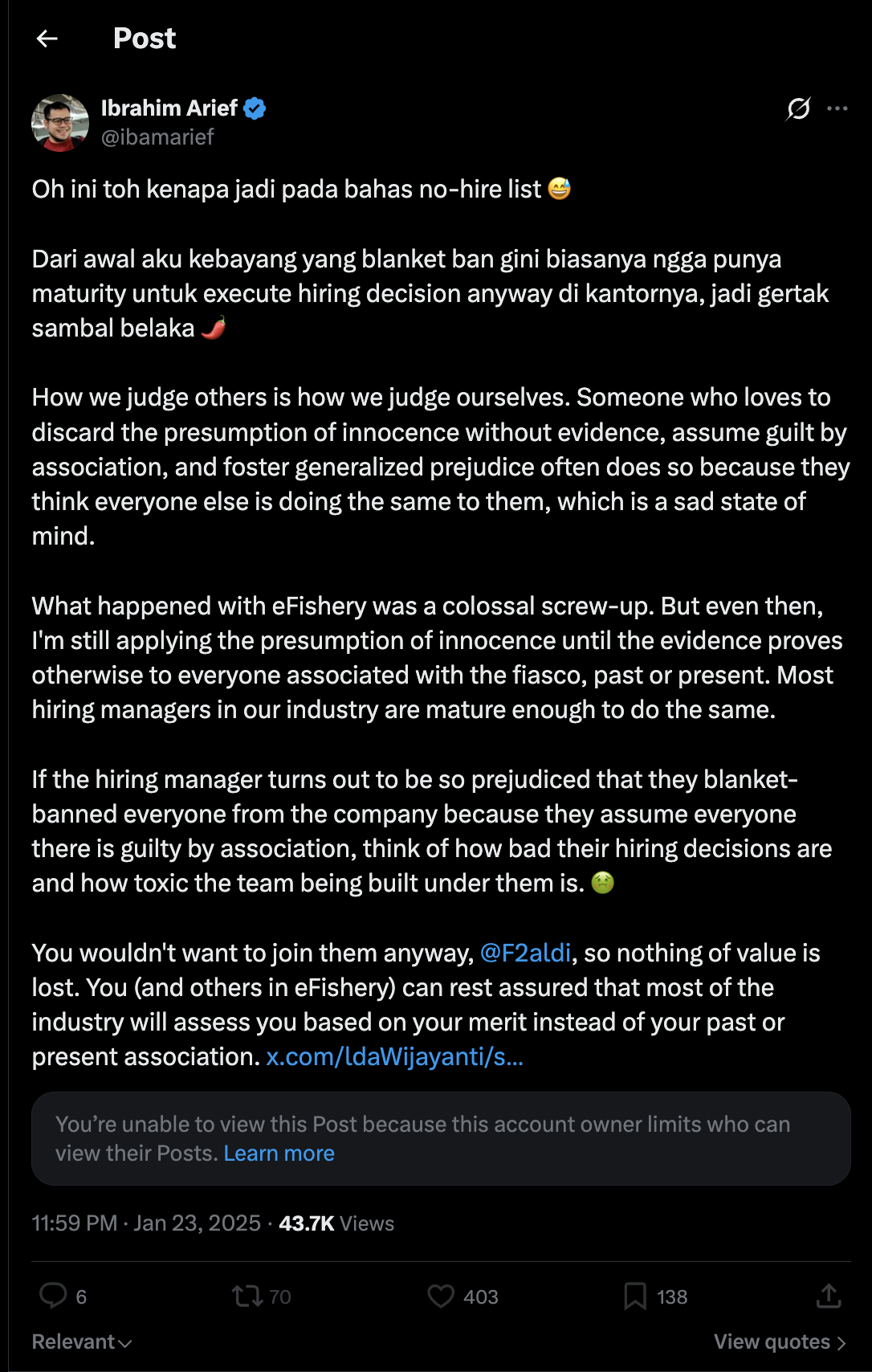
E24 | 23 Jan 2025
What is visible. The list-maker writes that a blanket ban on employees of a company in the spotlight is prejudice, affirming the presumption of innocence for everyone involved; 43.7 thousand views. The post being referred to cannot be seen.
Relevance. Source for K12.
E25. Reply to a critic's comment
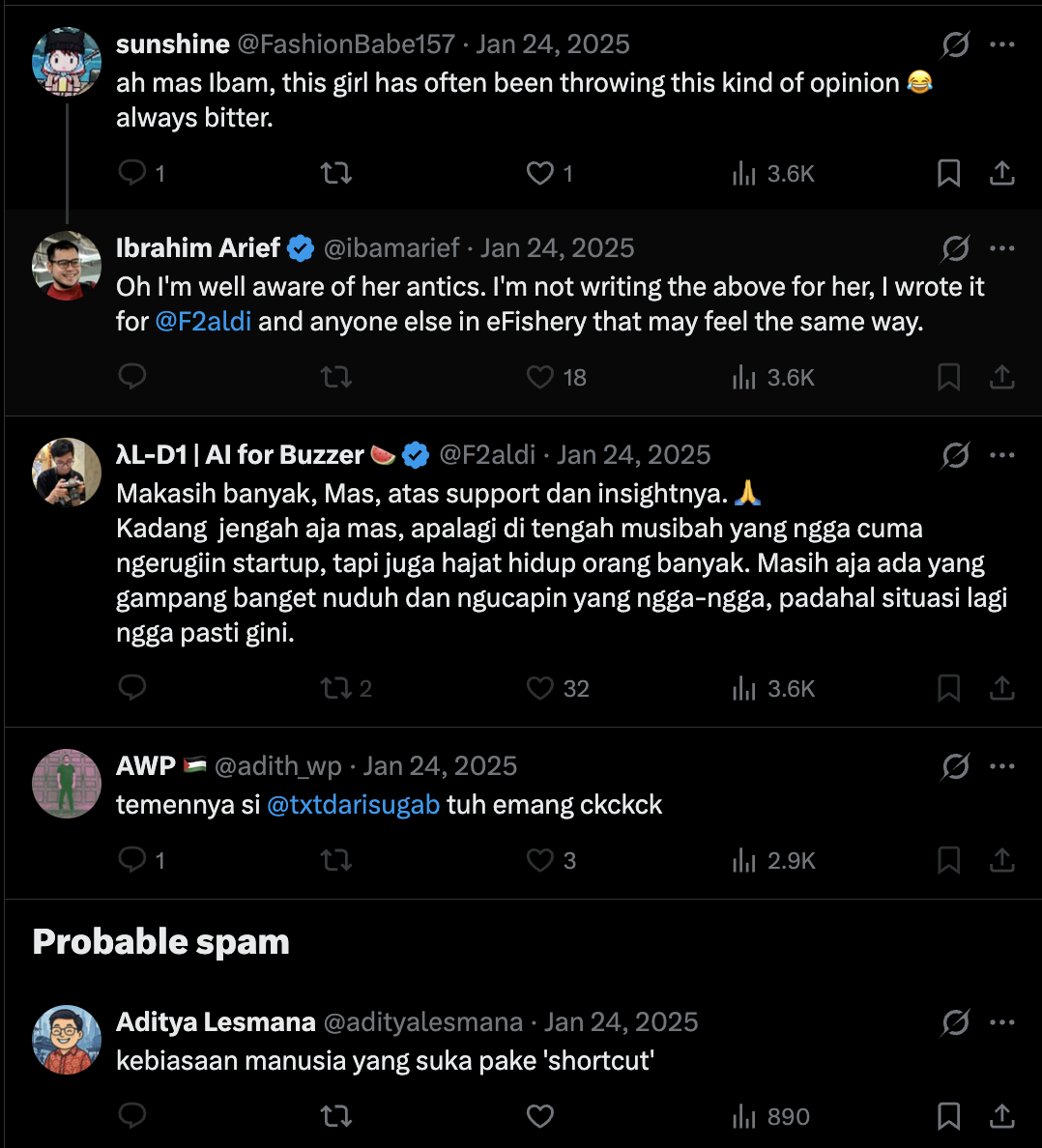
E25 | 24 Jan 2025
What is visible. A user calls the critic "always bitter"; the list-maker replies that he wrote for another party. The party addressed says thanks; another user chimes in.
Relevance. Source for K13.
E26. A 2024 post quoted again
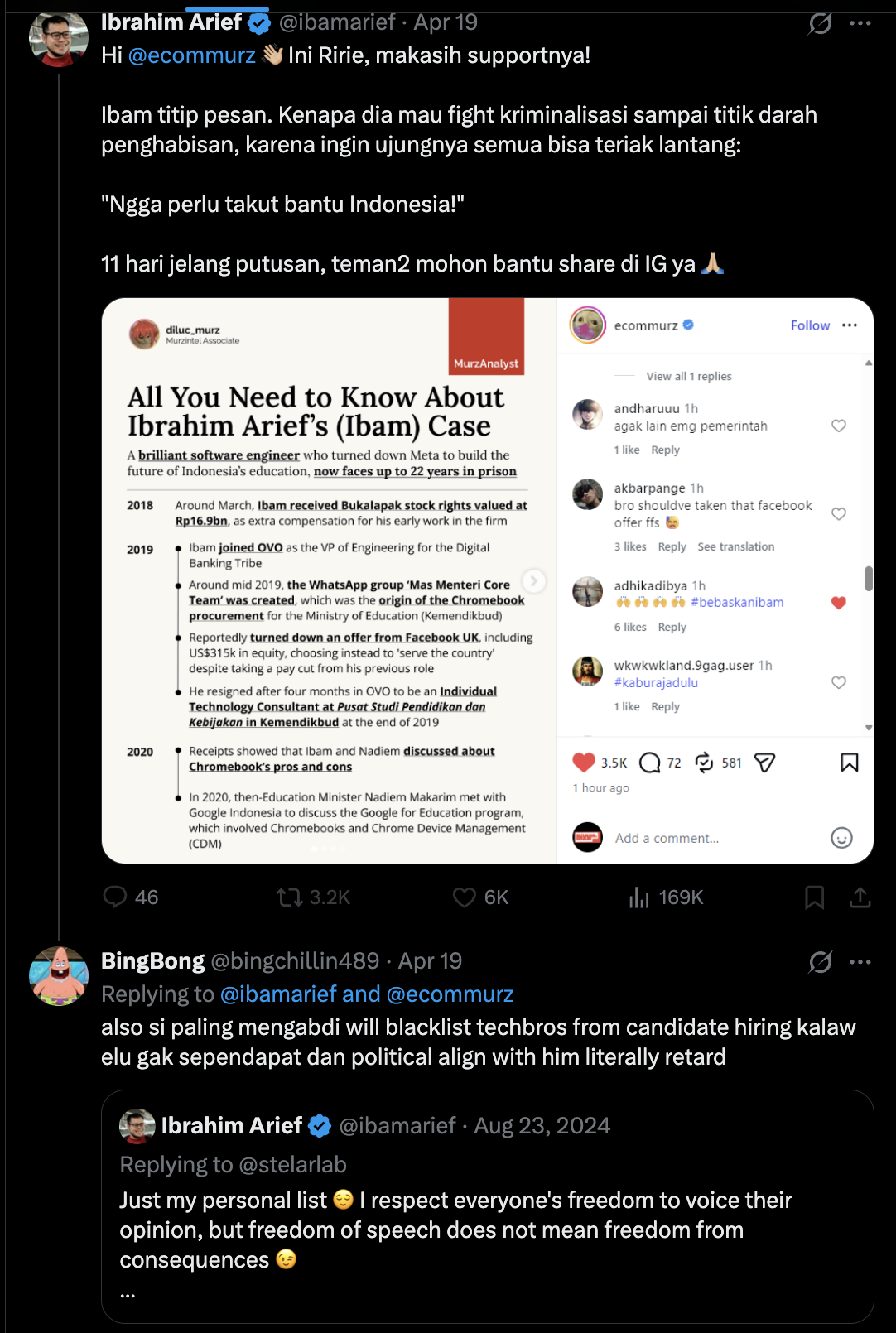
E26 | 19 Apr (year not visible)
What is visible. The list-maker invites people to share material about a legal case that has ensnared him; a reply quotes the August 2024 post with a word of abuse. That legal case is outside the scope of this report.
Relevance. Shows that the 2024 post continues to be referred to; not assessed.
Appendix B. Glossary of English and Latin Terms
| Term | Meaning |
|---|---|
| Ad hominem | Attacking the person, not the argument. |
| Appeal to authority | Using an authority that cannot be checked as a reason. |
| Appeal to popularity | Treating something as true because many people believe it. |
| Appeal to pity | Using sympathy in place of a reason. |
| Audi alteram partem | Latin: hear the other side before deciding. |
| Blanket ban | A sweeping prohibition against a group of people without assessing individuals. |
| Burden shifting | Moving the burden of proof onto the party who questions. |
| Double standard | Different standards for equivalent situations. |
| Equivocation | Using one word with two meanings within one argument. |
| False dilemma | Presenting two options when there are more. |
| False equivalence | Equating two things of different weight or context. |
| Fiduciary duty | The duty to act in good faith in the interest of the party served. |
| Fundamental attribution error | Inferring a person's fixed traits from one situational behaviour. |
| Groupthink | A group's tendency to follow the dominant opinion. |
| Hasty generalization | Drawing a general conclusion from too little evidence. |
| Mind reading | Writing another person's inner motive as fact. |
| Motte-and-bailey | Shifting between an easily defended position and the position actually wanted. |
| Nemo iudex in causa sua | Latin: no one should be a judge in their own cause. |
| Non sequitur | A conclusion that does not follow from the reasons. |
| Post hoc | Assuming the second event was caused by the first because of the order. |
| Presumption of innocence | Presumed innocent until proven otherwise. |
| Straw man | Turning the opponent's argument into a version that is easy to defeat. |
| Tone policing | Criticising how something is said, not what is said. |
| Tu quoque | Answering criticism by pointing to the critic's faults. |
| Unfalsifiable | A claim that cannot be proven wrong. |
| Whataboutism | Deflecting with an irrelevant comparison. |
References
- Law 27/2022. Republic of Indonesia (2022). Law Number 27 of 2022 on Personal Data Protection. Official copy; Articles 1, 2, 4, 5 to 8, 12, 16, 20 read directly.
- Law 1/2023. Republic of Indonesia (2023). Law Number 1 of 2023 on the Criminal Code. Official copy; Articles 3, 433, 434, 440, 441 read directly.
- Law 20/2025. Republic of Indonesia (2025). Law Number 20 of 2025 on the Criminal Procedure Code. Official copy; Article 91 read directly.
- Law 13/2003. Republic of Indonesia (2003). Law Number 13 of 2003 on Manpower, Articles 5 and 6 with elucidation. Read from secondary sources (hukumonline articles and a law journal); not yet checked against the primary text.
- Law 39/1999. Republic of Indonesia (1999). Law Number 39 of 1999 on Human Rights, Article 1 point 3. Read from a secondary source quotation and a copy from JDIH BKN; not re-checked.
- Law 40/2007. Republic of Indonesia (2007). Law Number 40 of 2007 on Limited Liability Companies, Article 97. Read from a secondary source (hukumonline); not yet checked against the primary text.
- 1945 Constitution. Articles 27 paragraph (2), 28D, 28I. Cited from general knowledge; not re-read when this was prepared.
- Evidence E01 to E26. Screenshots of public posts on the platform X, dated 1 October 2023 to 24 January 2025, and one post dated 19 April with no year. The bundle was created on 23 October 2026.