
Character Assassination in the ITB Alumni Network: The Case Against Oki Earlivan Sampurno Ikatan Alumni ITB's Politic Exposed
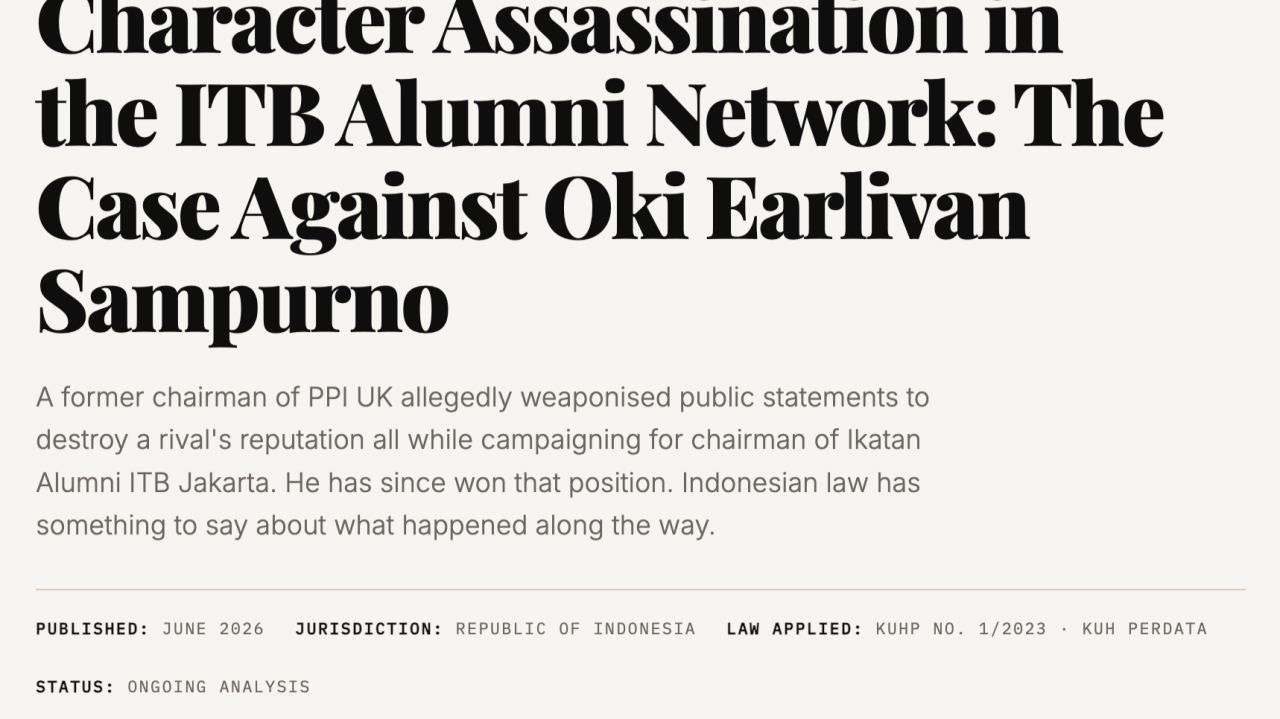
A former chairman of PPI UK allegedly weaponised public statements to destroy a rival's reputation all while campaigning for chairman of Ikatan Alumni ITB Jakarta. He has since won that position. Indonesian law has something to say about what happened along the way.
What Happened
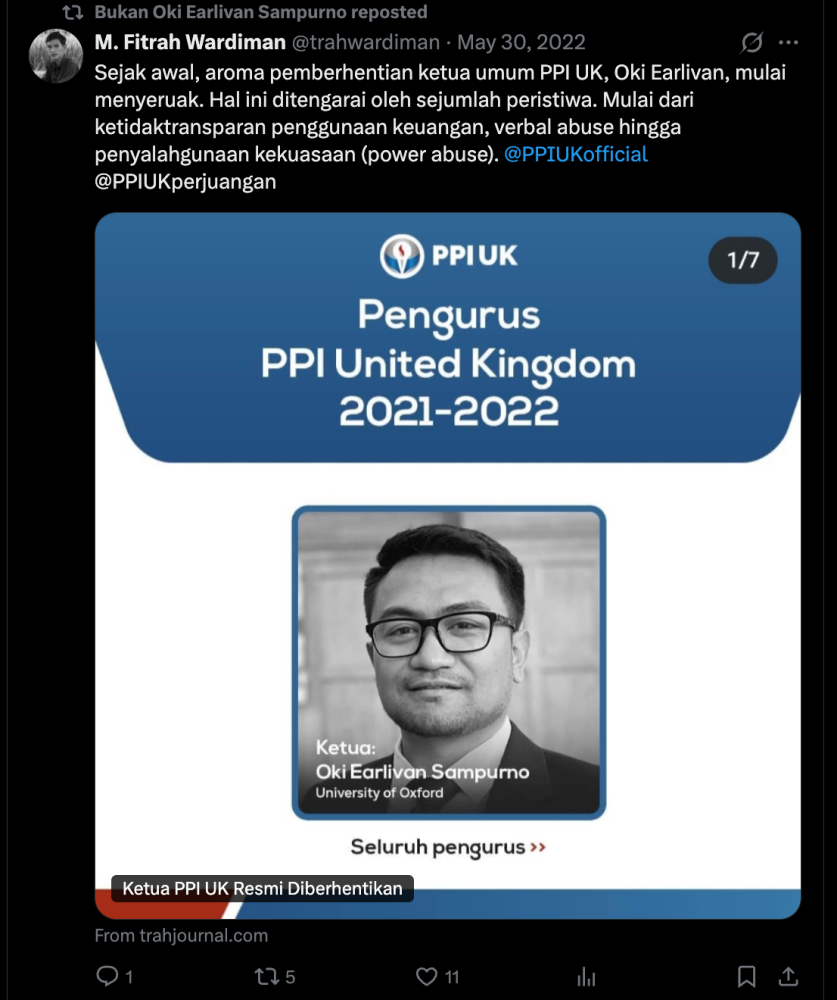
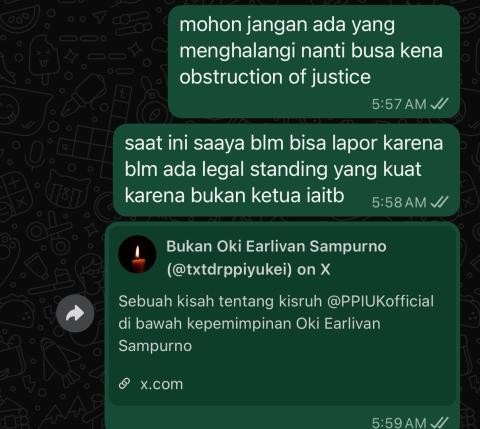
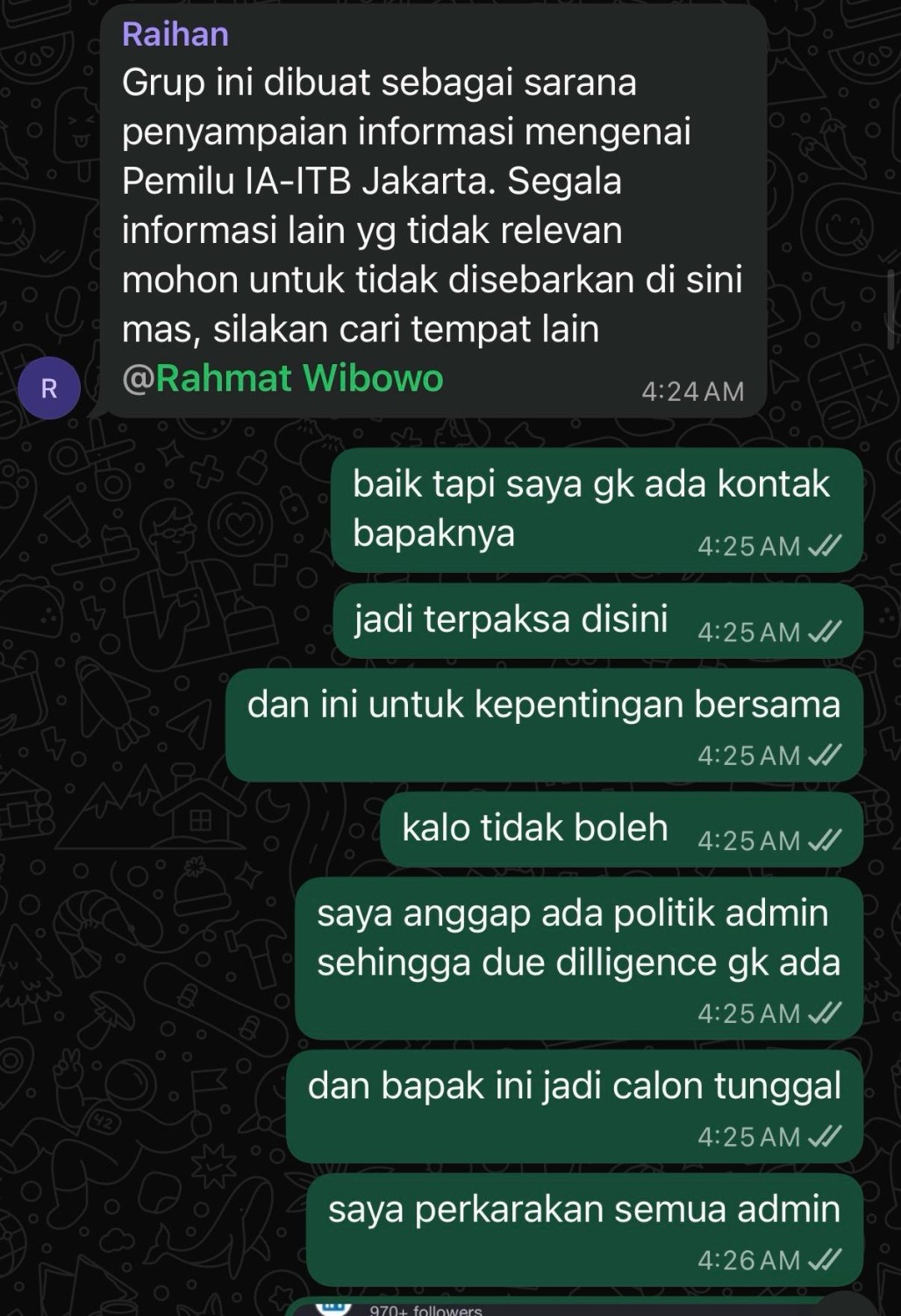
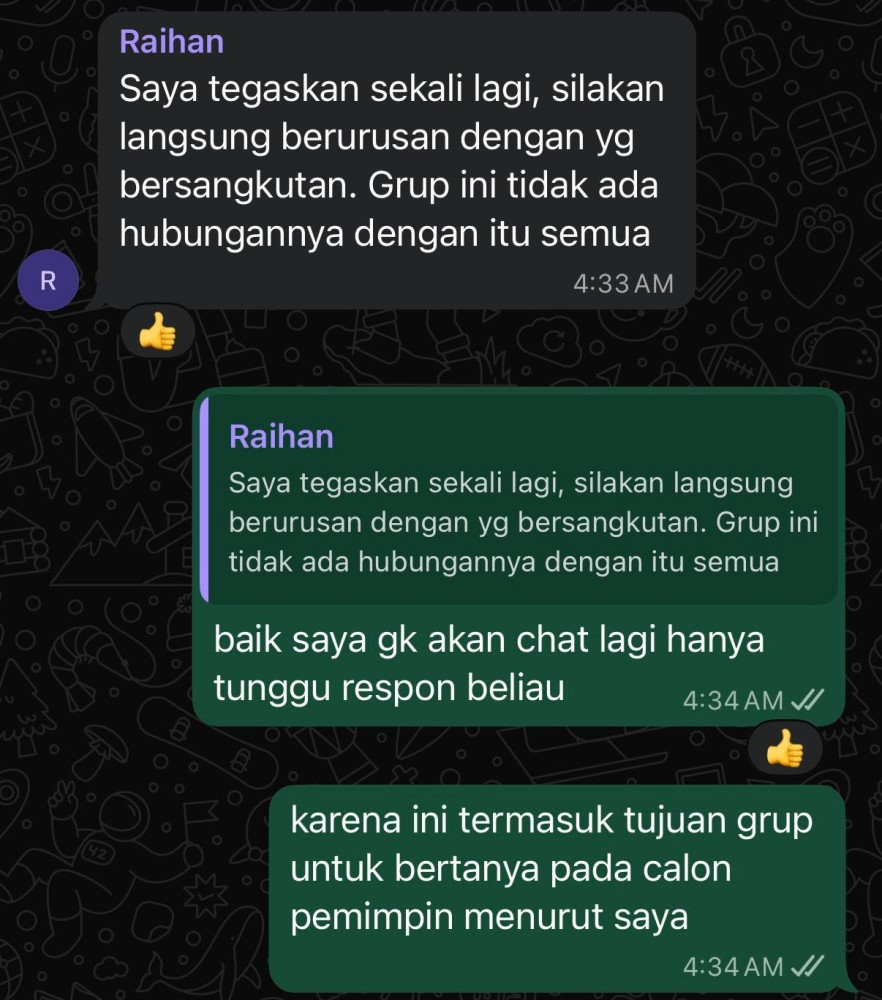
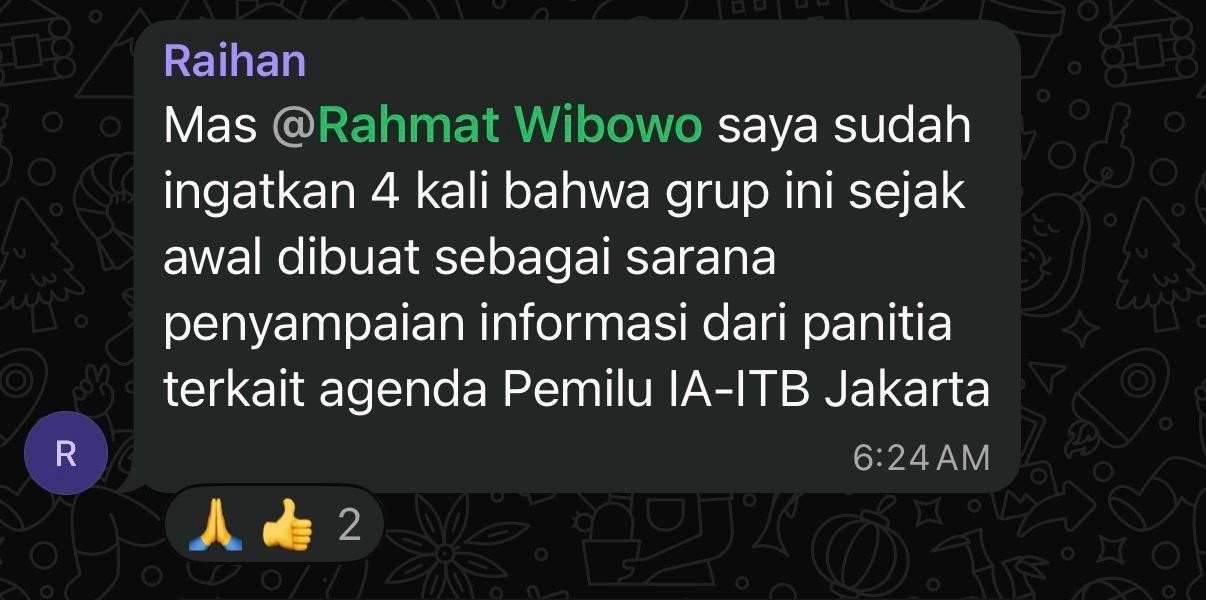
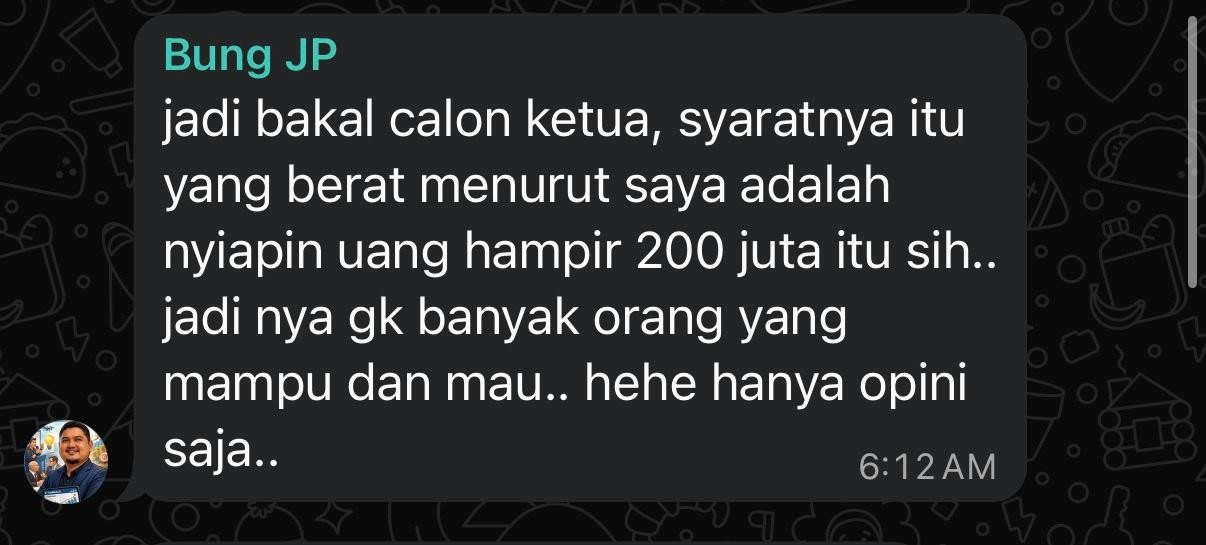
Following his resignation as Chairman of PPI UK (Persatuan Pelajar Indonesia United Kingdom) in May 2022, Oki Earlivan Sampurno ran as the sole candidate for Chairman of Ikatan Alumni ITB Jakarta a position he ultimately secured. During that candidacy period, The admins of the group conduct series of public statements targeting Rahmat Wibowo accusing him of conduct and character traits that, according to this analysis, were either unverified, exaggerated, or demonstrably false.
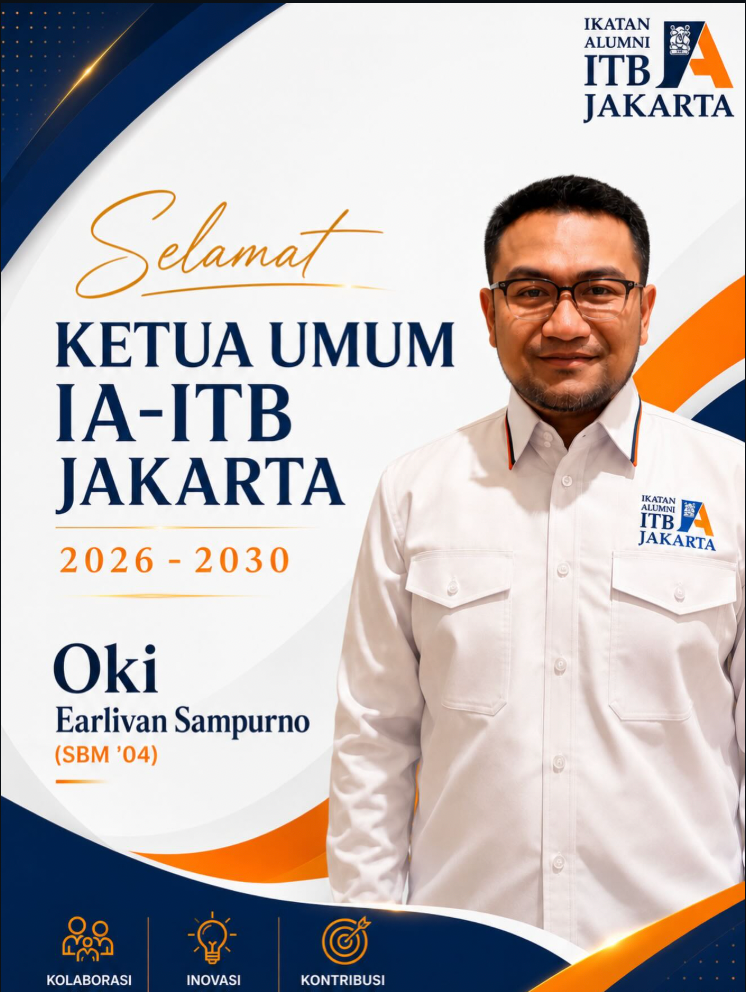
The fact that Oki has since assumed the chairmanship of Ikatan Alumni ITB Jakarta makes the alleged defamation more consequential, not less: the statements were disseminated precisely to shape member perception before the vote, and the reputational damage to Rahmat Wibowo within the very community now led by Oki remains unaddressed.
"Any unlawful act that brings loss to another person obligates the person who caused the loss, due to his wrongdoing, to compensate for such loss."
Why This Matters: The Legal Anatomy
Indonesian law distinguishes between defamation (penghinaan) and slander (fitnah). Defamation carries a maximum of 9 months imprisonment; slander where the accused cannot prove their accusations escalates to 3 years. The use of digital or information-technology channels adds a further one-third to any base sentence under Article 441.
Seven separate legal articles are activated by the alleged conduct:
KUHP 2023 Art. 433 Defamation by Public Accusation
Any person who by word of mouth attacks the honor or reputation of another person by accusing them of something, with the intention that such accusation be made known to the public, shall be punished for defamation with imprisonment for a maximum of 9 months or a maximum fine in Category II.
Why it applies: ITB Jakarta's admin during candidacy period attacked Rahmat's character and integrity before an organisational audience and Oki has since assumed the chairmanship of that same organisation.
KUHP 2023 Art. 434 Slander Unproven False Accusation
If any person as referred to in Article 433 is given the opportunity to prove the truth of the accusation but cannot prove it, and the accusation is contrary to what they know to be true, they shall be punished for slander with imprisonment for a maximum of 3 years or a maximum fine in Category IV.
Why it applies: Should Oki fail to substantiate each specific allegation against Rahmat, the charges escalate from defamation to slander tripling the maximum sentence.
KUHP 2023 Art. 441(1) Enhancement: Information Technology
Criminal penalties as referred to in Articles 433 to 439 may be increased by 1/3 if committed by means of information technology.
Why it applies: Statements disseminated via social media or electronic documents trigger this enhancement, adding up to one-third atop any base sentence.
KUH Perdata Art. 1372 Civil Damages for Defamation
Civil claims regarding insult are filed to obtain compensation for damages as well as restoration of honor and reputation. In assessing one another, the judge must consider the severity of the insult, as well as the rank, position and capacity of both parties and the circumstances.
Why it applies: Opens the door for Rahmat to seek both material compensation and a court-ordered restoration of his public reputation.
KUH Perdata Art. 1380 Statute of Limitations 1 Year
Claims in defamation cases expire with the passage of one year, calculated from the day the alleged act was committed by the defendant and discovered by the plaintiff.
Critical note: The clock starts from Rahmat's discovery of the defamatory act. Legal action should be initiated promptly to preserve all claims.
Probability Analysis
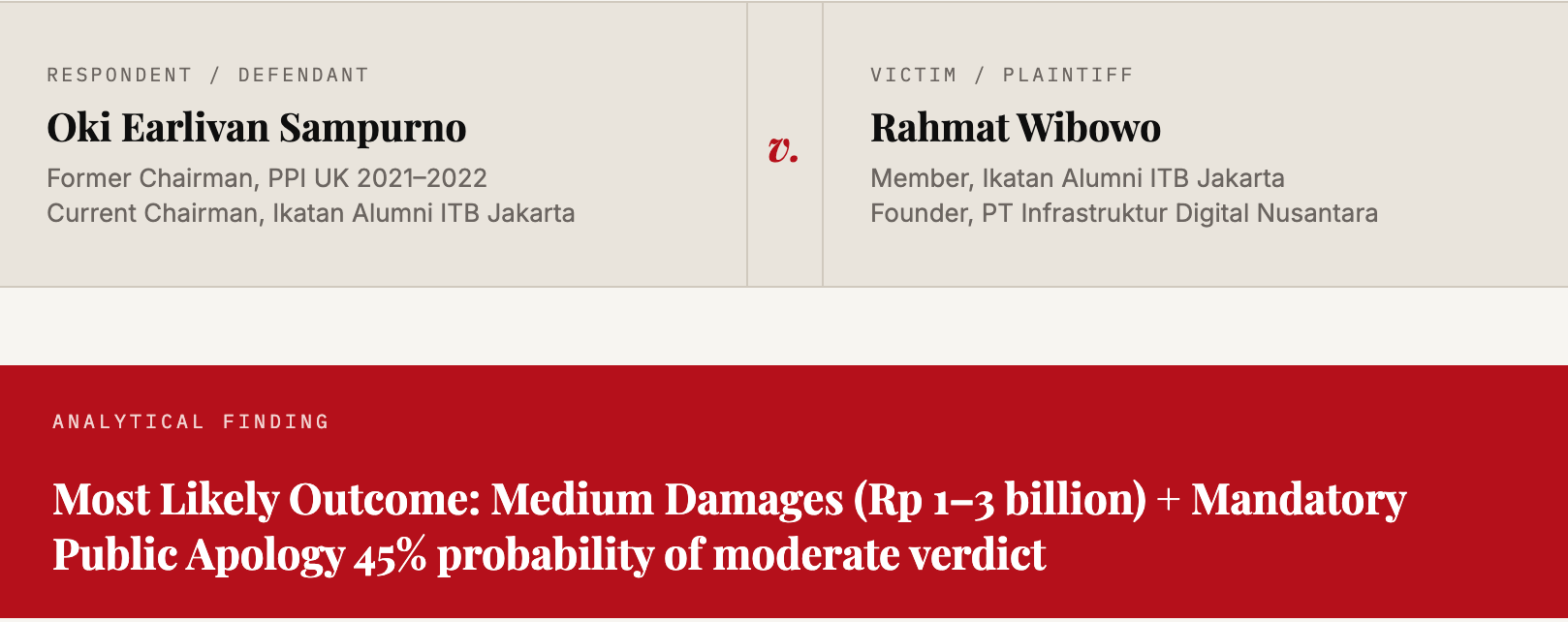
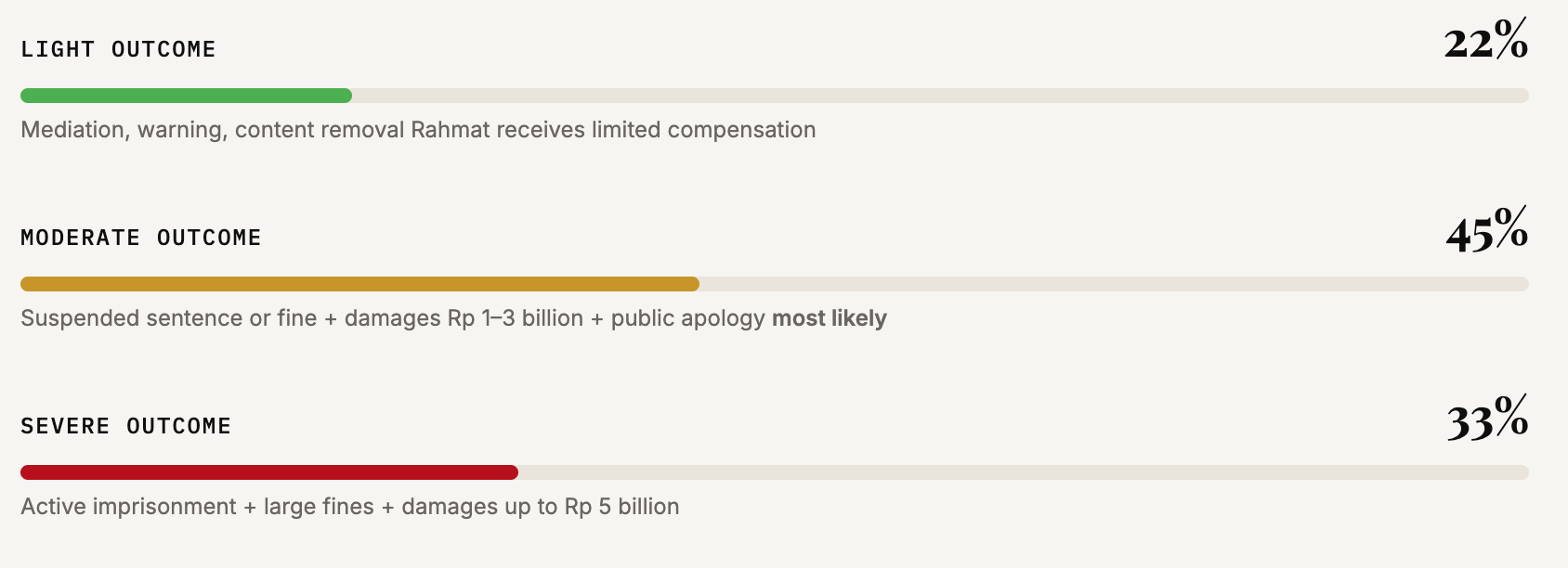
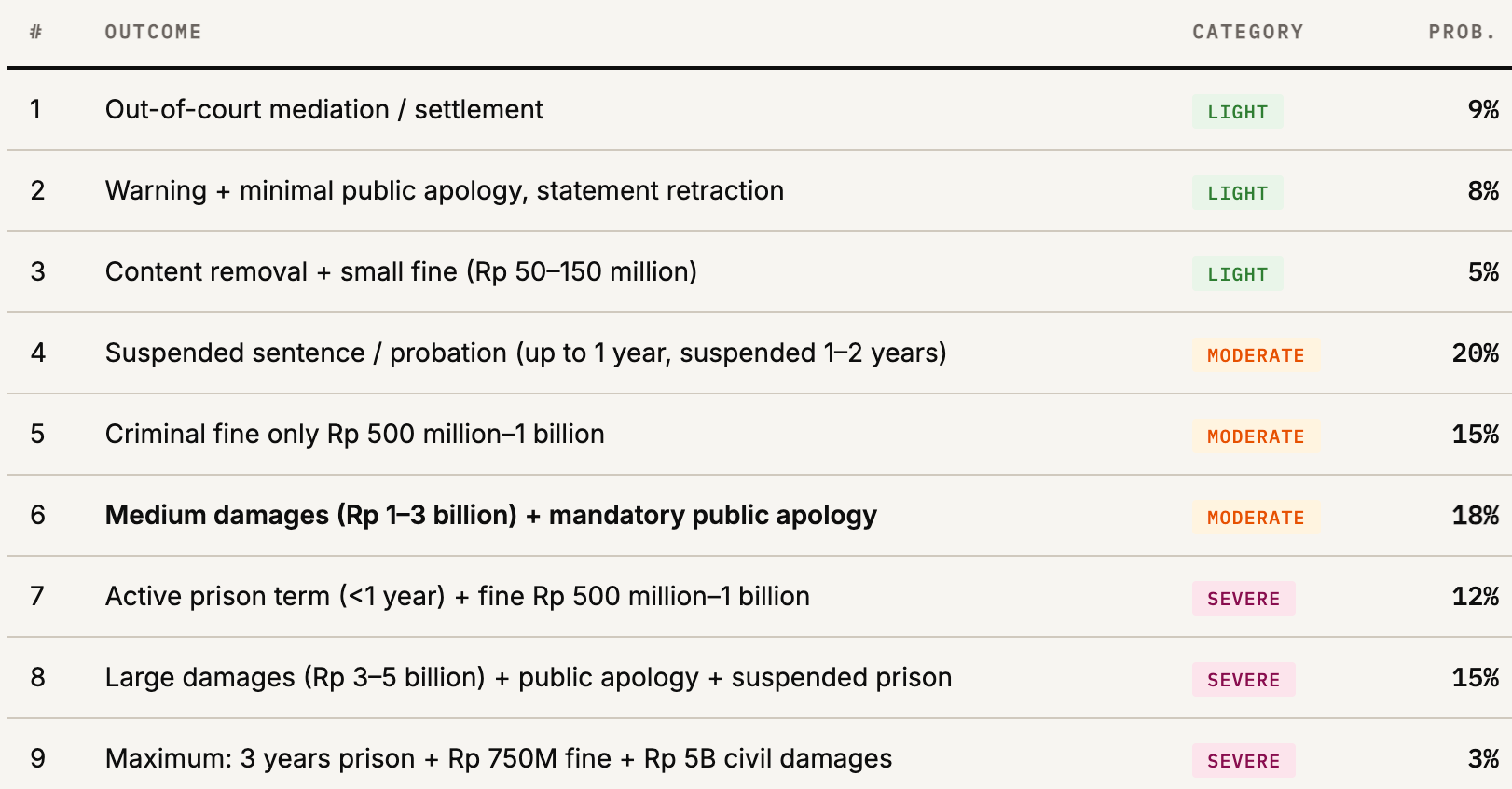
This forecast draws on Indonesian court judgment records from 2020–2026 for defamation and slander cases in organisational and digital contexts. Aggravating factors including the public nature of the statements, the serious nature of the allegations, the professional setting, and the pattern of conduct during a candidacy push toward moderate and severe outcomes.
All Nine Possible Verdicts
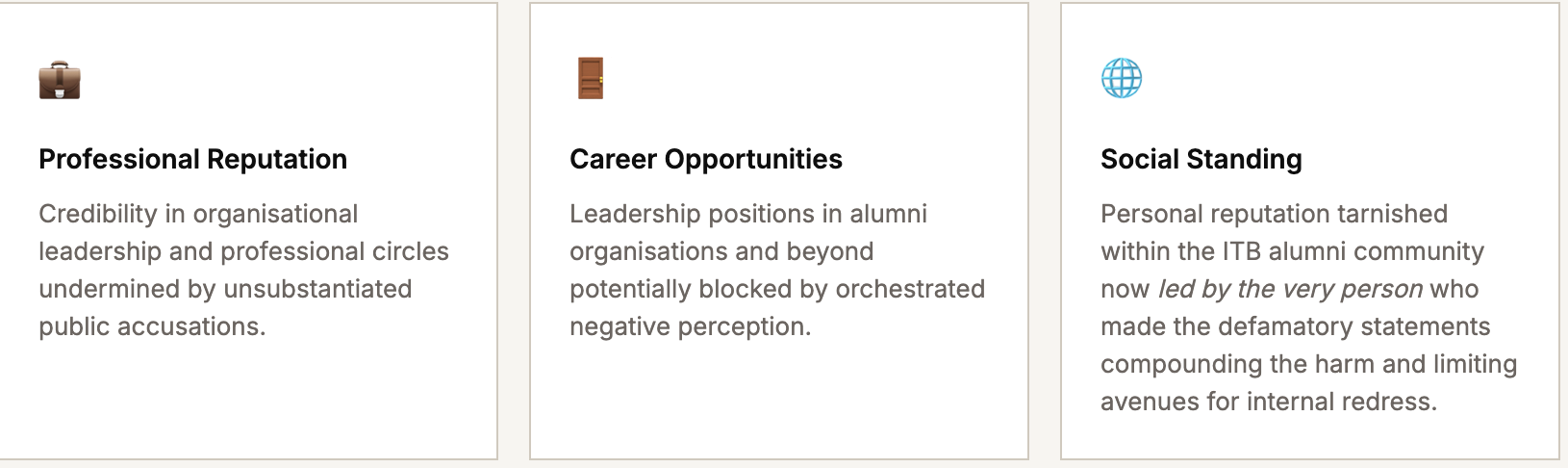
Impact on Rahmat Wibowo
Key Legal Notes
Statute of Limitations (Art. 1380). All civil claims must be filed within one year of the date Rahmat discovered the defamatory act. Given that the core documentation dates to June 2022, timing considerations are critical legal counsel should be engaged immediately.
Proof-of-Truth Defense (Art. 440). Oki may attempt to justify his statements by proving their truth. This defense applies only to objective, verifiable facts not subjective opinions or character assessments. Any allegation he cannot fully substantiate shifts the classification from defamation to the more serious crime of slander under Article 434.
Complaint-Based Crime. Articles 433 and 434 are delik aduan (complaint crimes). Criminal prosecution can only proceed if Rahmat files a formal complaint. Without it, the state cannot prosecute making Rahmat's decision to file decisive.
Disclaimer: This report is an independent analysis based on legal research, article verification, and Indonesian court judgment records. It is not formal legal advice. Any legal action must be taken in consultation with a licensed advocate (PERADI member) experienced in criminal and civil litigation. Probability estimates may change based on additional evidence, the credibility of witnesses, judicial discretion, and developments in Indonesian jurisprudence. Rahmat Wibowo should consult with a licensed attorney before taking any legal action.