
The Dunning-Kruger Curve of the AI Venture House: Measuring Raymond Chin's Genesis.ceo Against Rahmat Wibowo's InfraLoka
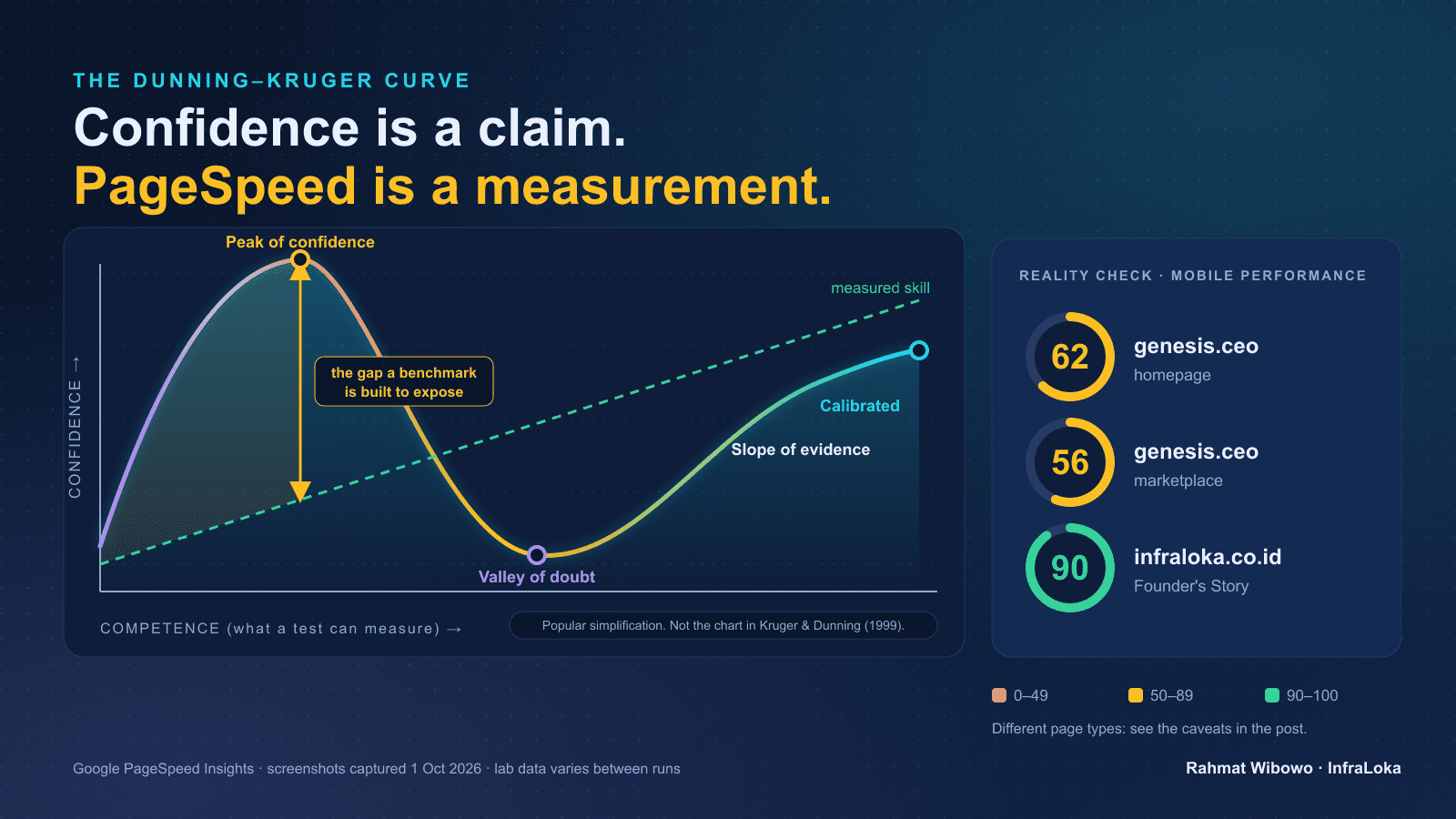
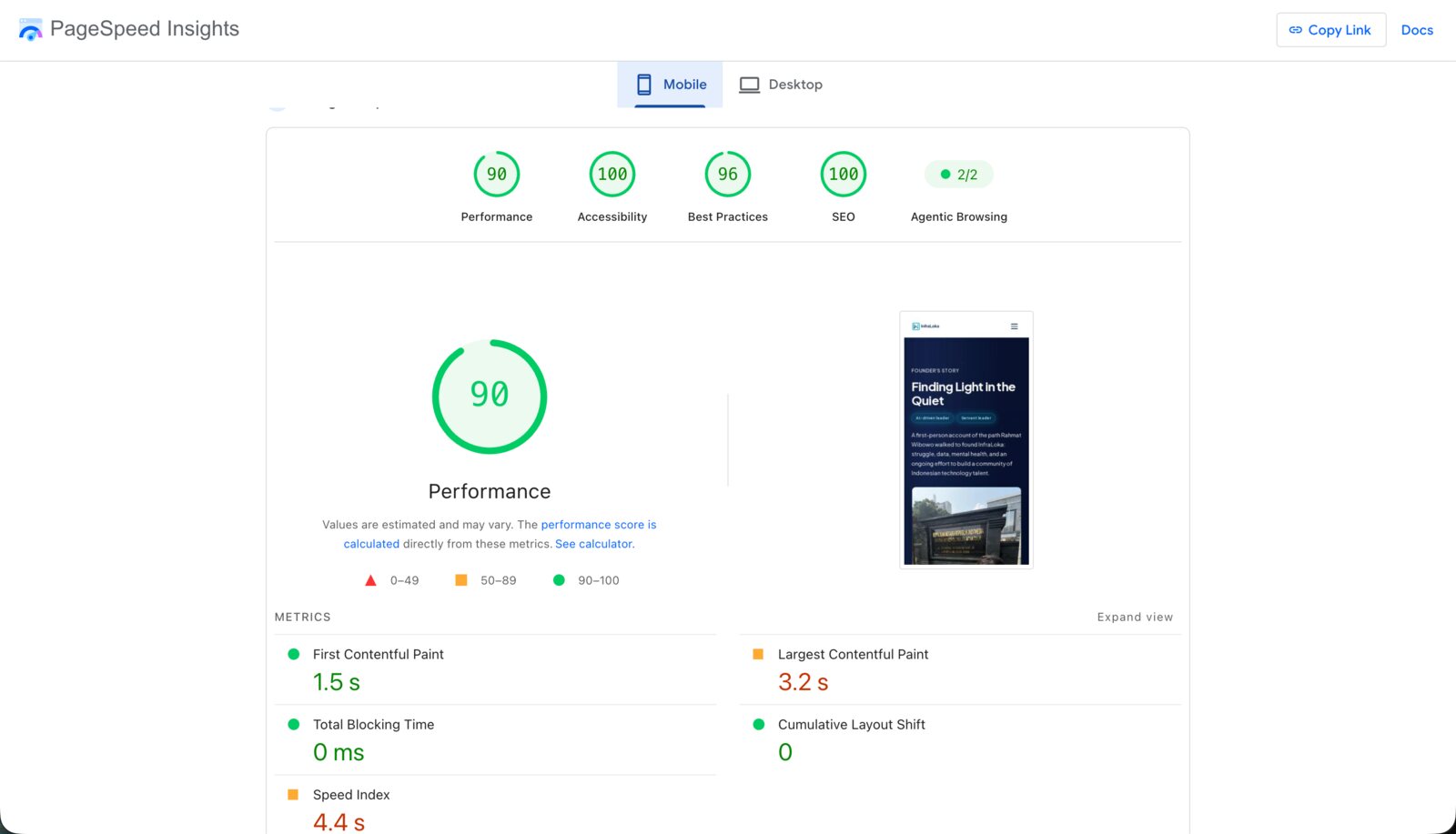
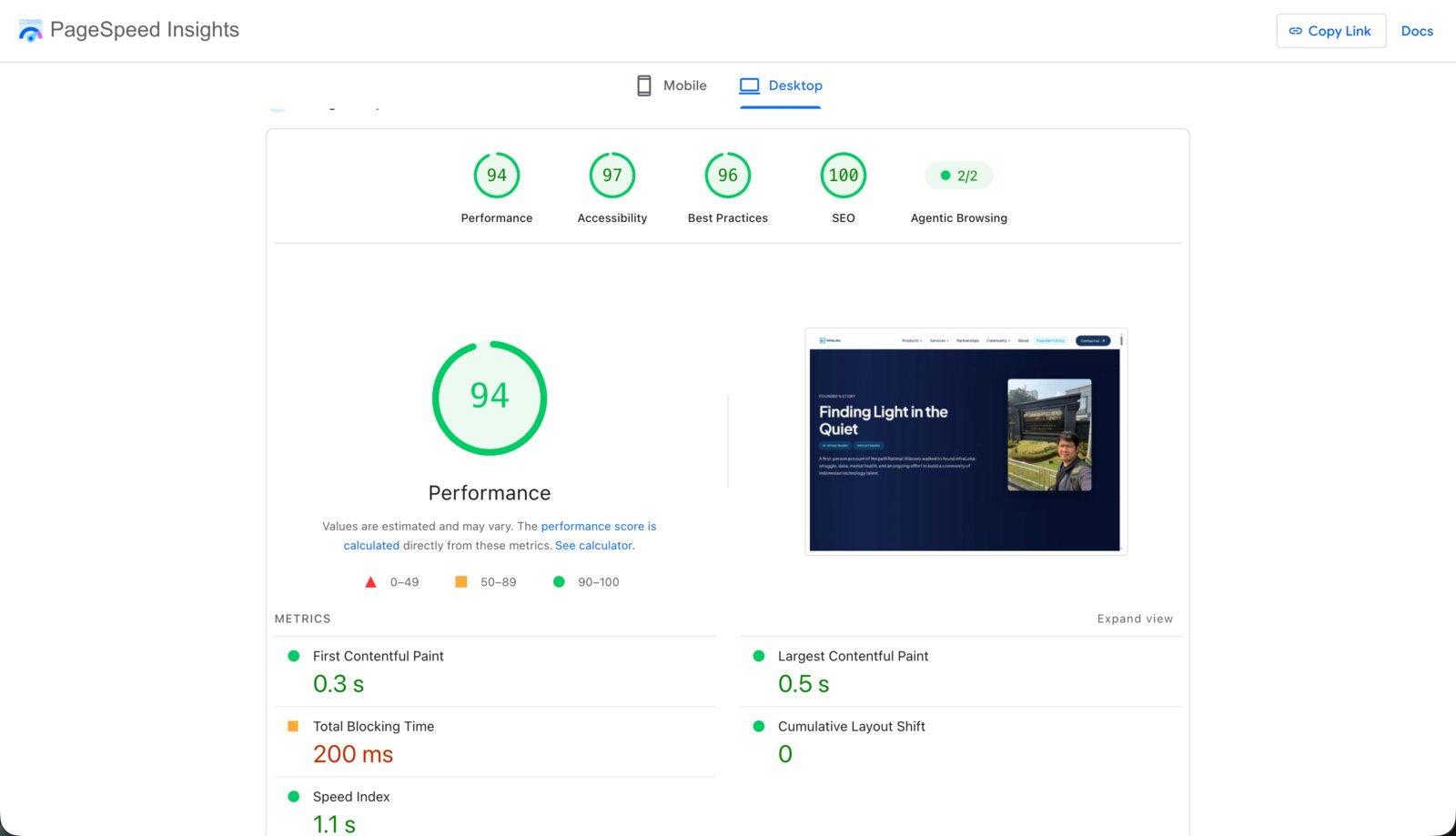
Genesis, the venture house of Raymond Chin, promises "measurable business results" from AI. So I measured its two public pages with the same free tool I used on my own company's page. On Google PageSpeed Insights, genesis.ceo scored 62 on mobile and 65 on desktop, its AI Service Marketplace scored 56 and 60, and InfraLoka's Founder's Story page scored 90 and 94. Both sites run Next.js and React, so the framework does not explain the gap. This post shows every number, credits what Genesis does well, and lists where InfraLoka falls short too.
This is my opinion and analysis of public material, taken from screenshots captured on 1 October 2026. I did not test rankings, traffic, revenue or client results. I run InfraLoka, which works in an adjacent space, and I have a public police complaint that names Mr. Raymond Surya Chin as a reported party (my account of why). That complaint is my account, not a finding, and nothing below depends on it. Judge the numbers, not me. Mr. Chin is invited to reply, and I will publish a substantive reply or correct any error.
The Dunning-Kruger curve, used honestly
In 1999, Justin Kruger and David Dunning reported that people who scored in the bottom quartile on tests of humour, grammar and logic rated their own ability far above their results. The popular chart of a "peak of confidence" followed by a "valley of doubt" is a later drawing, not a figure from that paper. Later work argues that part of the pattern is a statistical artefact (Gignac and Zajenkowski, 2020).
So I am not diagnosing anyone. A benchmark cannot see inside a person's head. What it can do is the part of the Dunning-Kruger story that holds up: replace a self-assessment with a measurement and look at the gap. A page that says "measurable" can be measured. That is what the rest of this post does.
Who and what is being compared
Raymond Chin (Raymond Surya Chin) is the founder of Genesis, described on his LinkedIn as "Founder at Genesis" in Jakarta, with 24,221 followers. His Instagram, @raymondchins, shows 1.3 million followers and the bio "Critical observer, frequent contrarian" with a link to genesis.ceo. I have masked the contact number in that bio.


Rahmat Wibowo, the author, is the CEO of InfraLoka, with 4,787 LinkedIn followers.
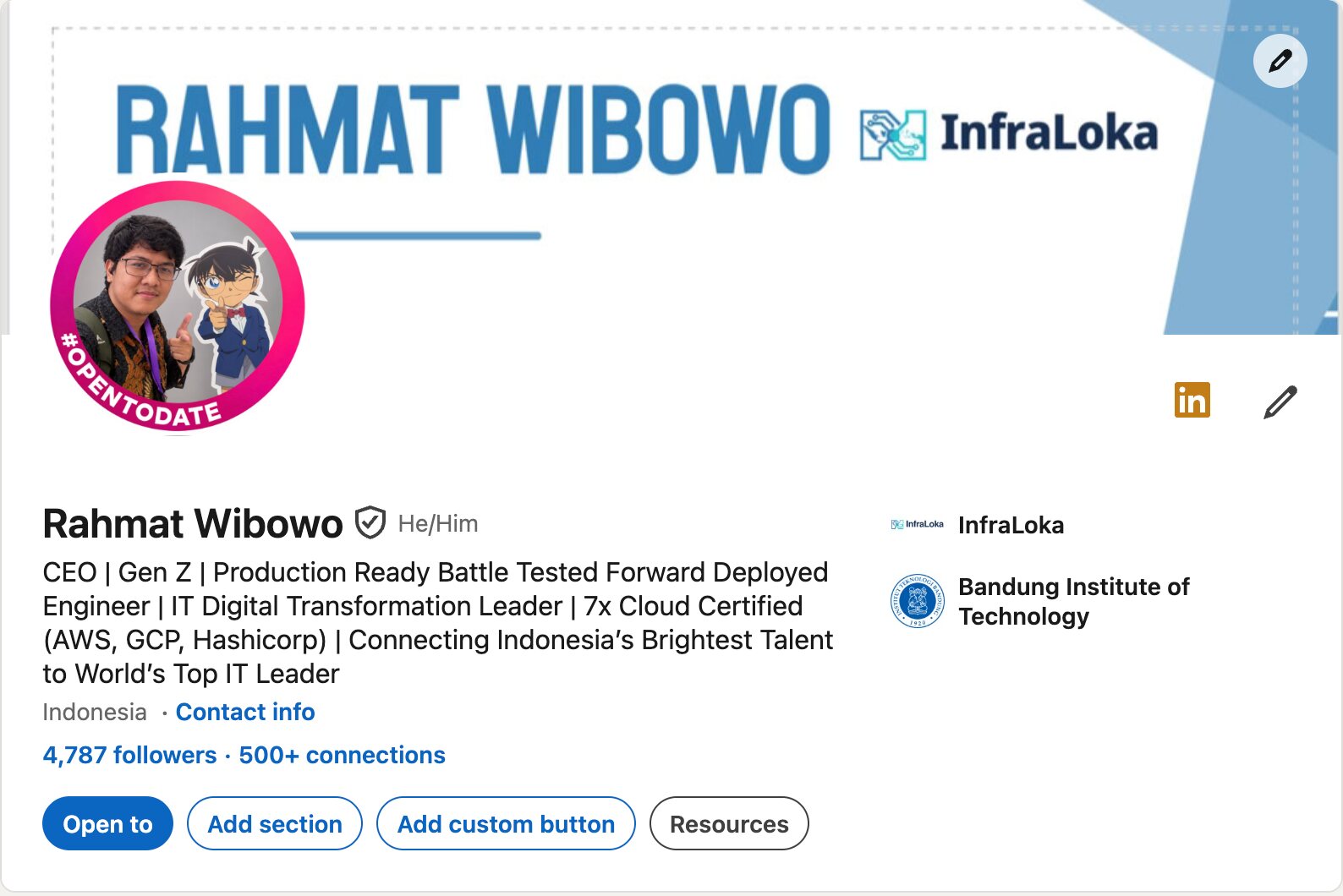
An audience of 1.3 million is a distribution fact. It is not a latency fact. The rest of this post is about latency.
What was measured
I ran Google PageSpeed Insights on three pages and captured the results on 1 October 2026:
- genesis.ceo homepage, a dark landing page with a large robot hero image.
- The Genesis AI Service Marketplace, an interactive directory.
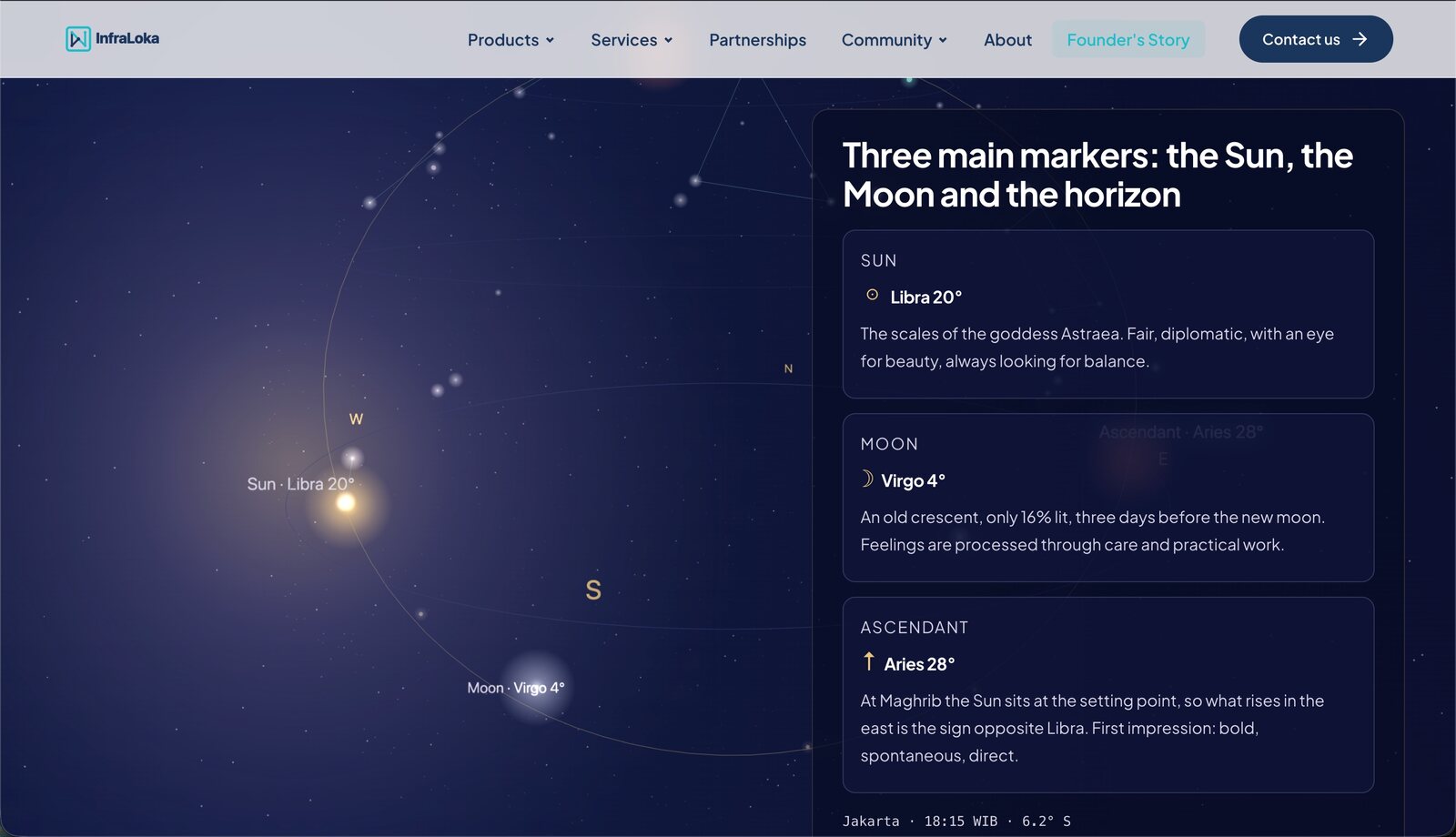
- InfraLoka's Founder's Story page, a long-form page with an animated night-sky scene.
These are not the same kind of page, so treat the comparison as indicative, not as a controlled test. Lab scores also vary between runs.

That sentence is on the Genesis AI Labs listing: "turn AI from experiment into measurable business results". Fine. Measuring it is fair play.
The scores
| Page | Device | Performance | Accessibility | Best practices | SEO |
|---|---|---|---|---|---|
| genesis.ceo homepage | Mobile | 62 | 100 | 100 | 100 |
| genesis.ceo homepage | Desktop | 65 | 100 | 100 | 100 |
| Genesis marketplace | Mobile | 56 | 96 | 96 | 100 |
| Genesis marketplace | Desktop | 60 | 96 | 96 | 100 |
| InfraLoka Founder's Story | Mobile | 90 | 100 | 96 | 100 |
| InfraLoka Founder's Story | Desktop | 94 | 97 | 96 | 100 |
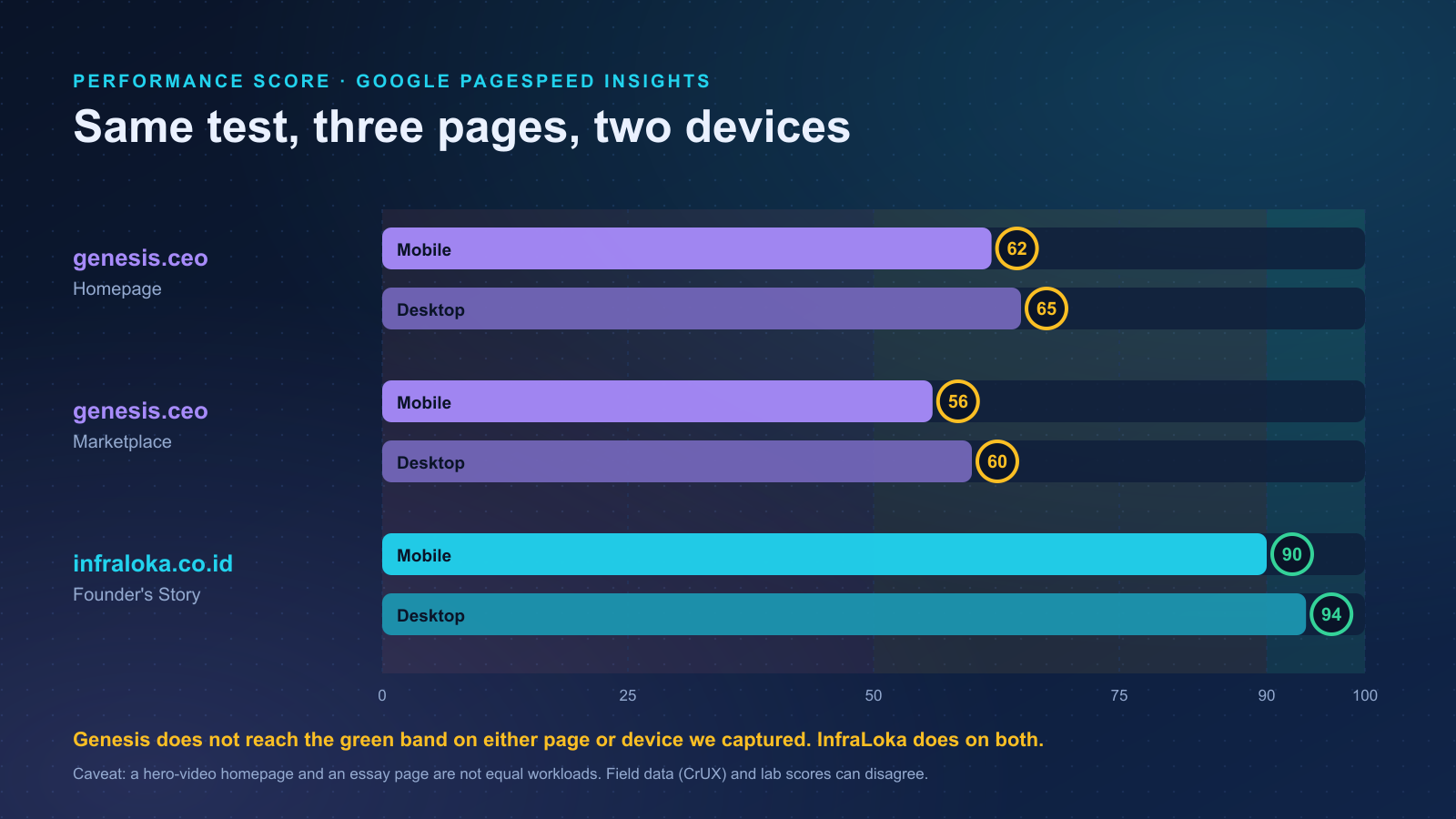
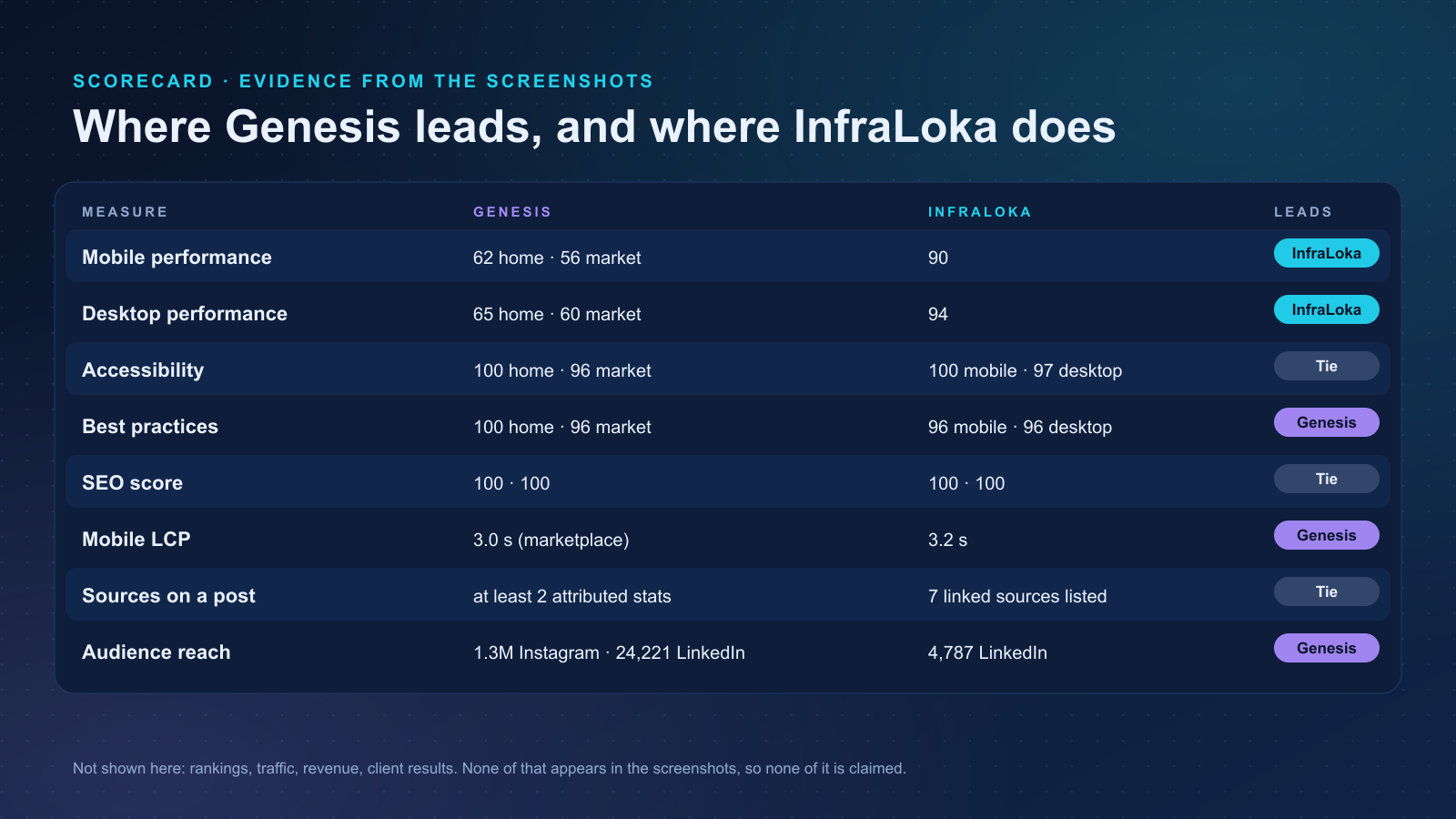
Genesis does not reach the green band (90 to 100) on any page or device I captured. InfraLoka does on both. On accessibility, best practices and SEO, Genesis is level with or ahead of us. That is real engineering work and it deserves credit.
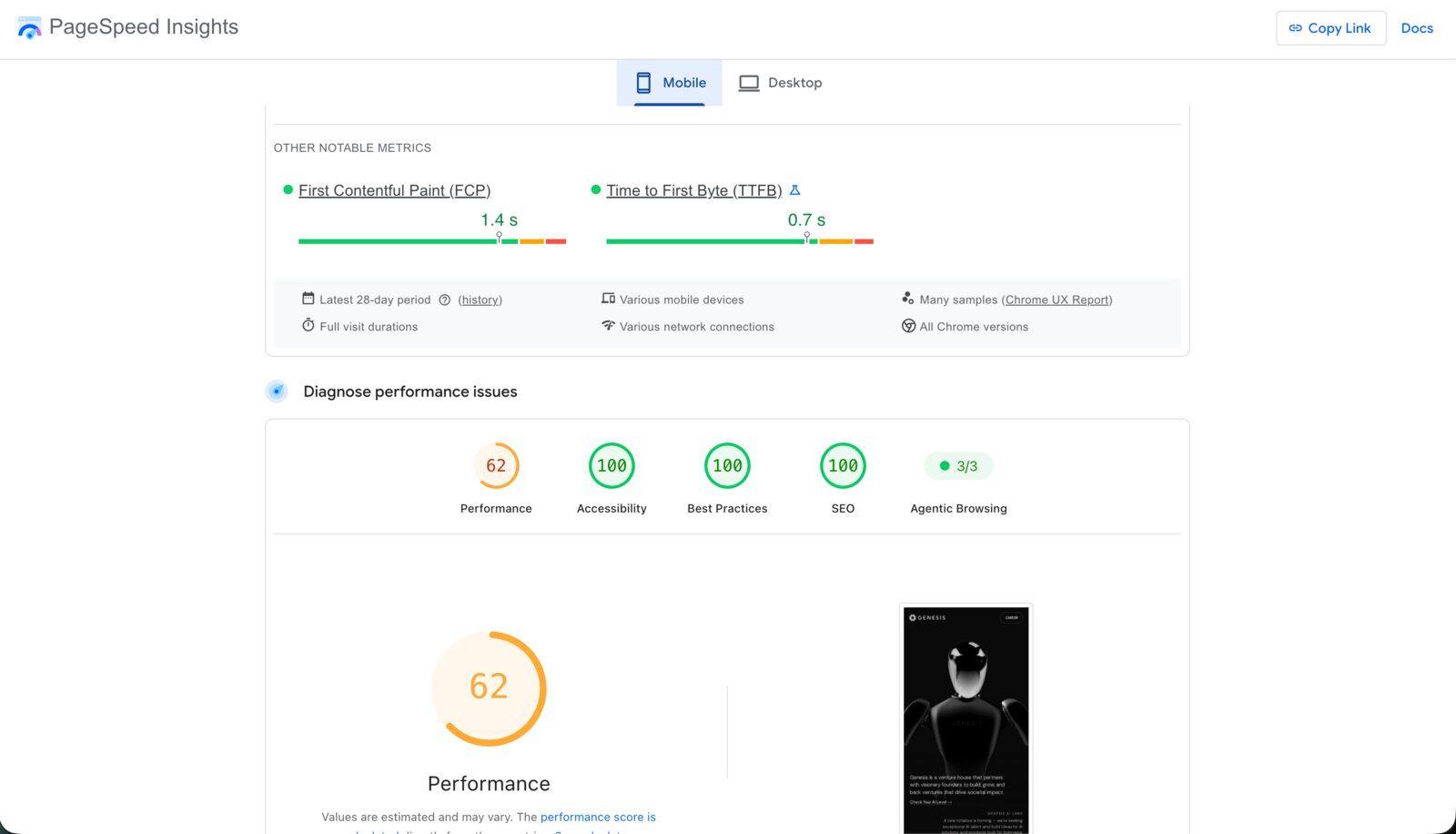
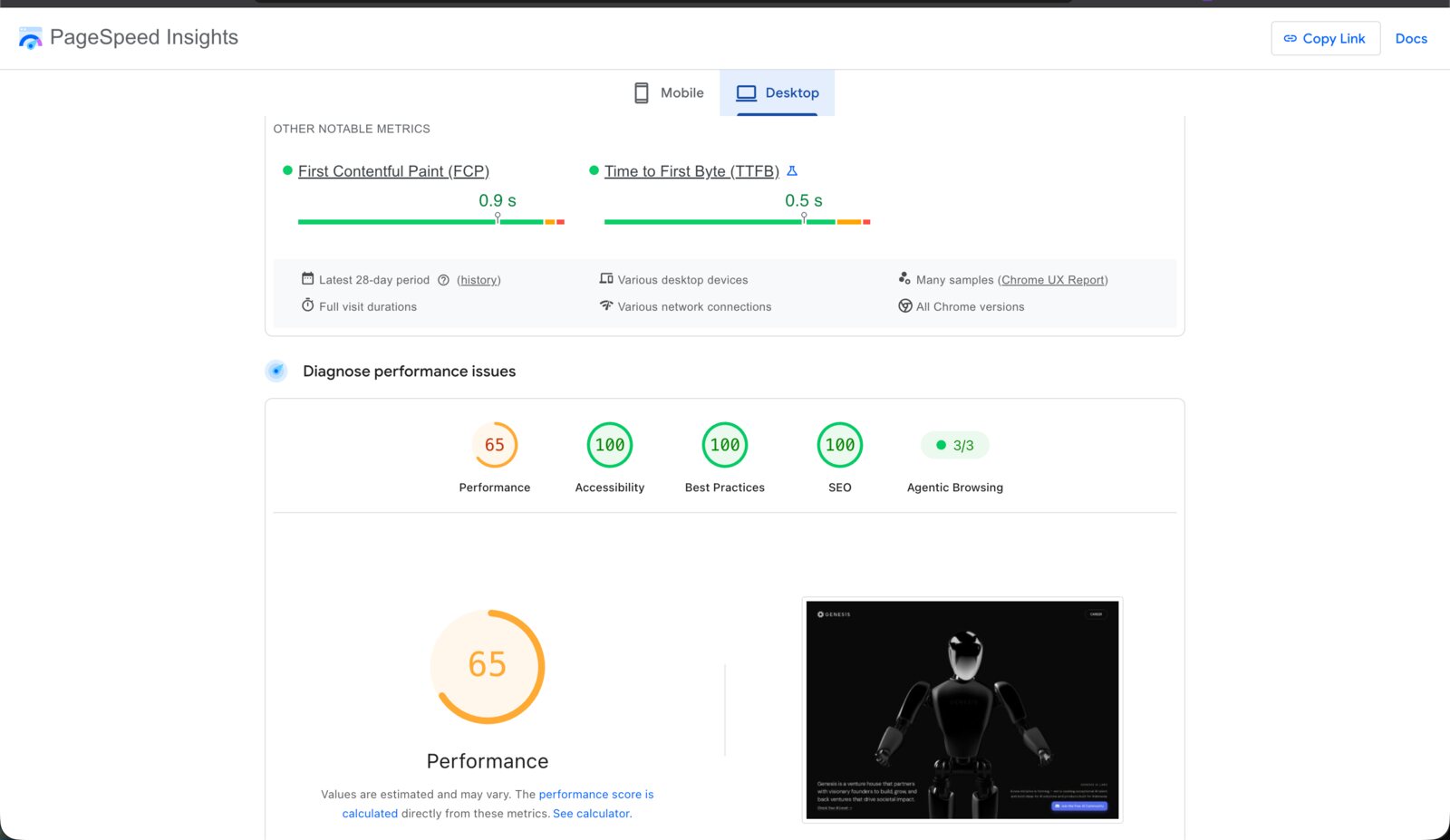
For the homepage, the field data (the Chrome UX Report, 28 days) shows a First Contentful Paint of 1.4 s with a 0.7 s time to first byte on mobile, and 0.9 s and 0.5 s on desktop. Those are healthy. I did not capture the homepage's lab Largest Contentful Paint or Total Blocking Time, so I make no claim about them.
Where the marketplace loses its score
The marketplace is where the numbers get severe.
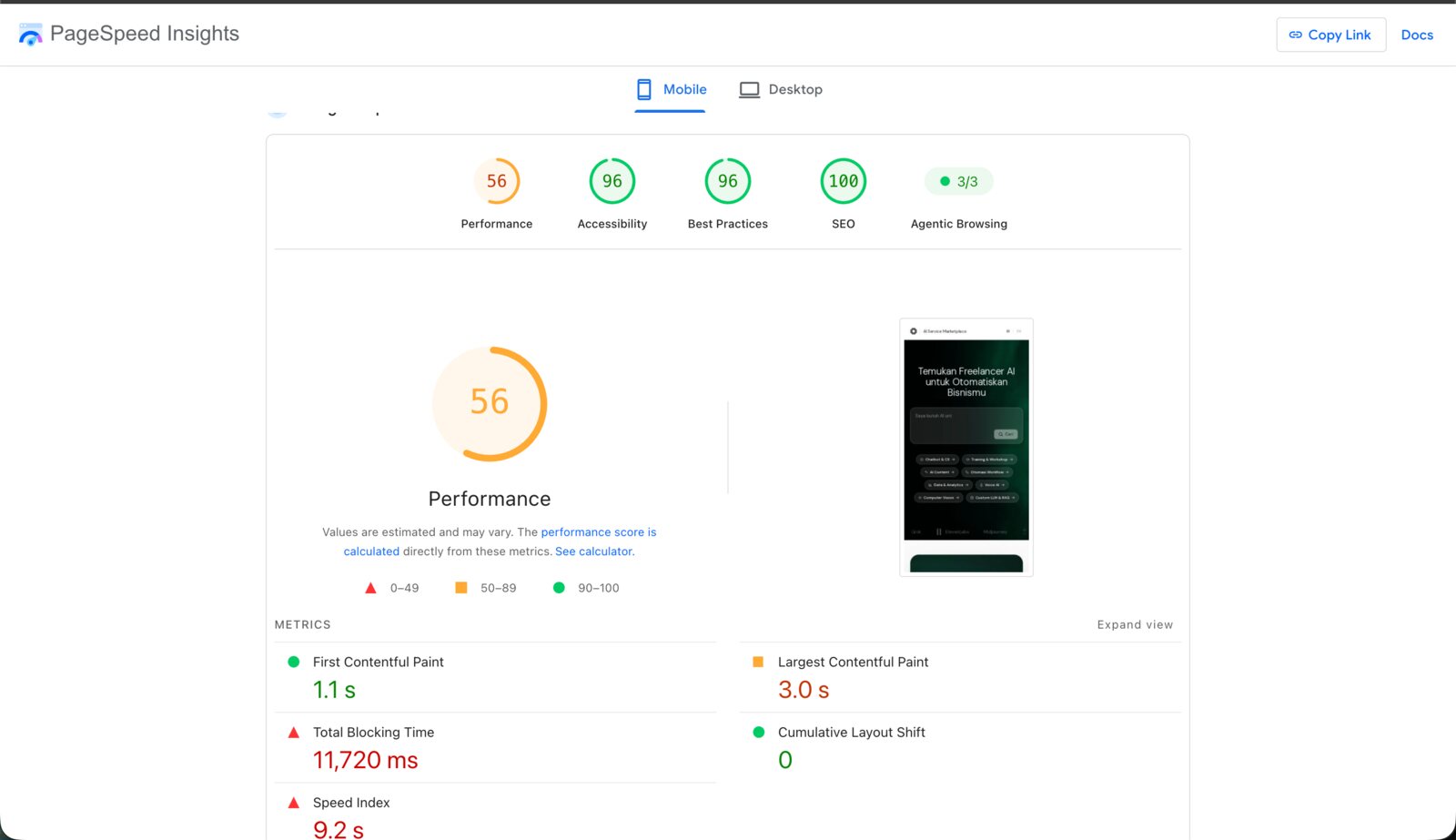
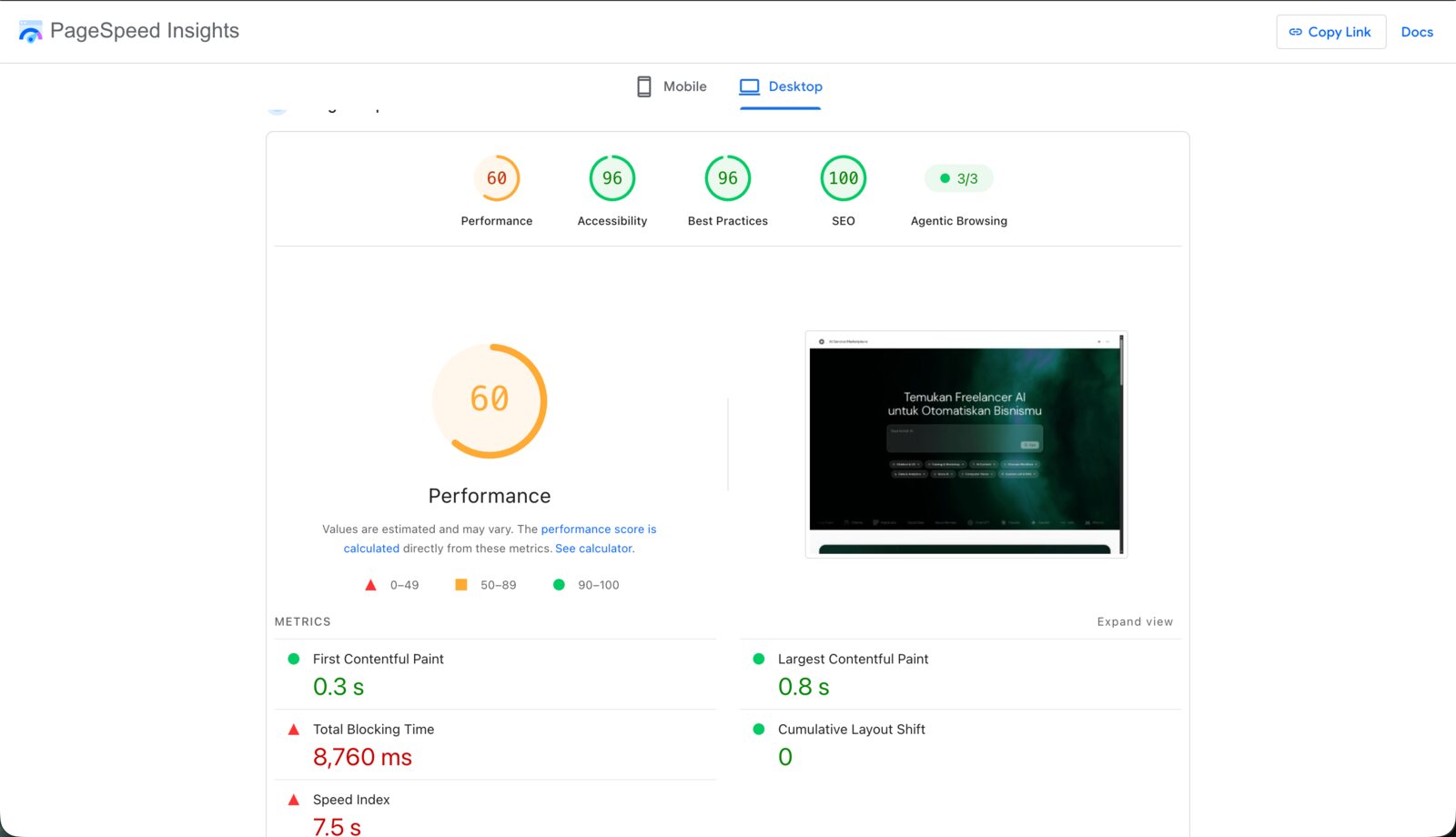
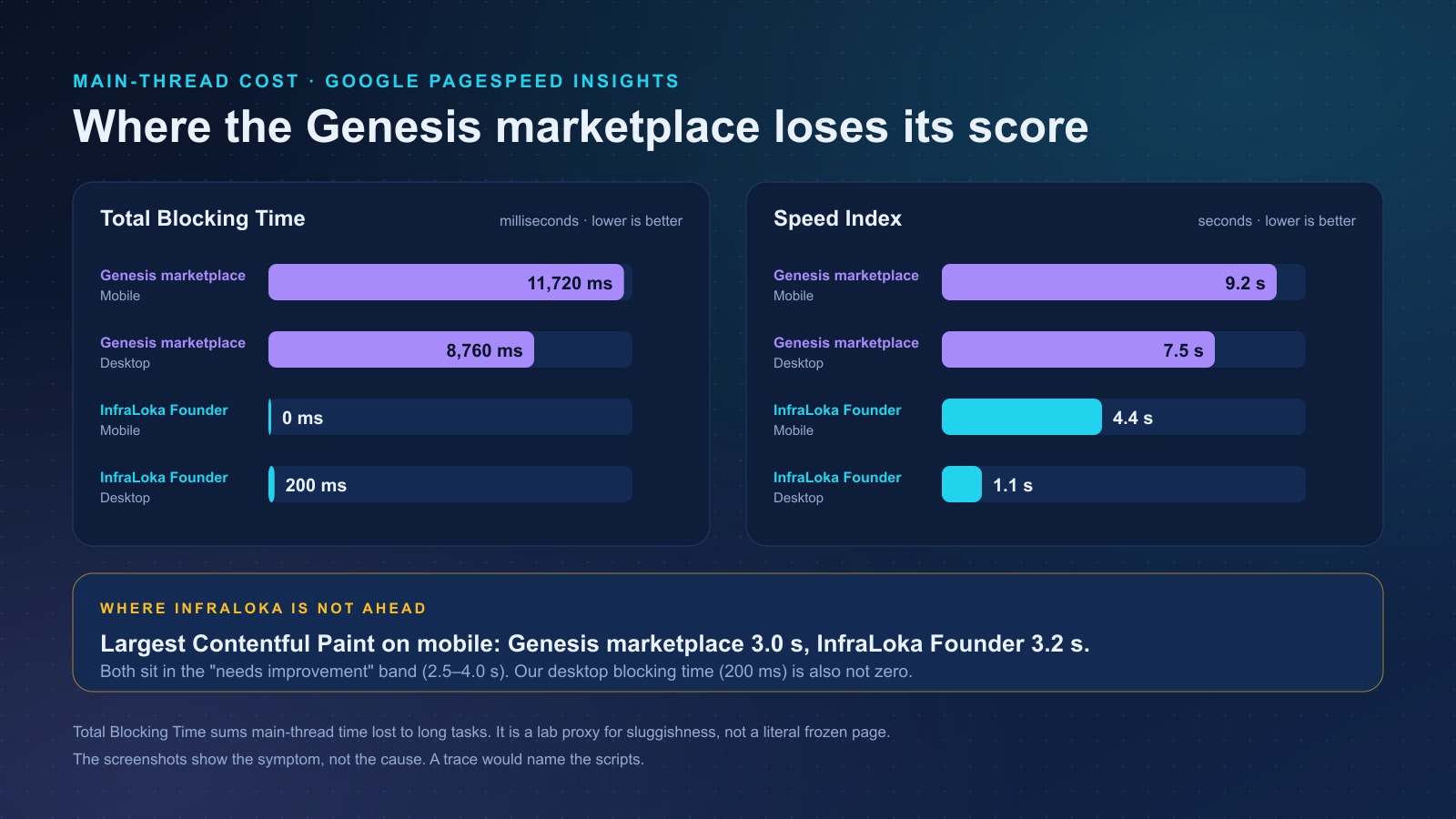
Total Blocking Time is 11,720 ms on mobile and 8,760 ms on desktop. Speed Index is 9.2 s and 7.5 s. Total Blocking Time sums the time the main thread was tied up by long tasks, so it is a lab proxy for a page that feels sluggish, not a literal frozen screen. The screenshots show the symptom, not the cause. I would like to see a performance trace of that page, because it would name the scripts responsible.
The stack: same family, different outcome
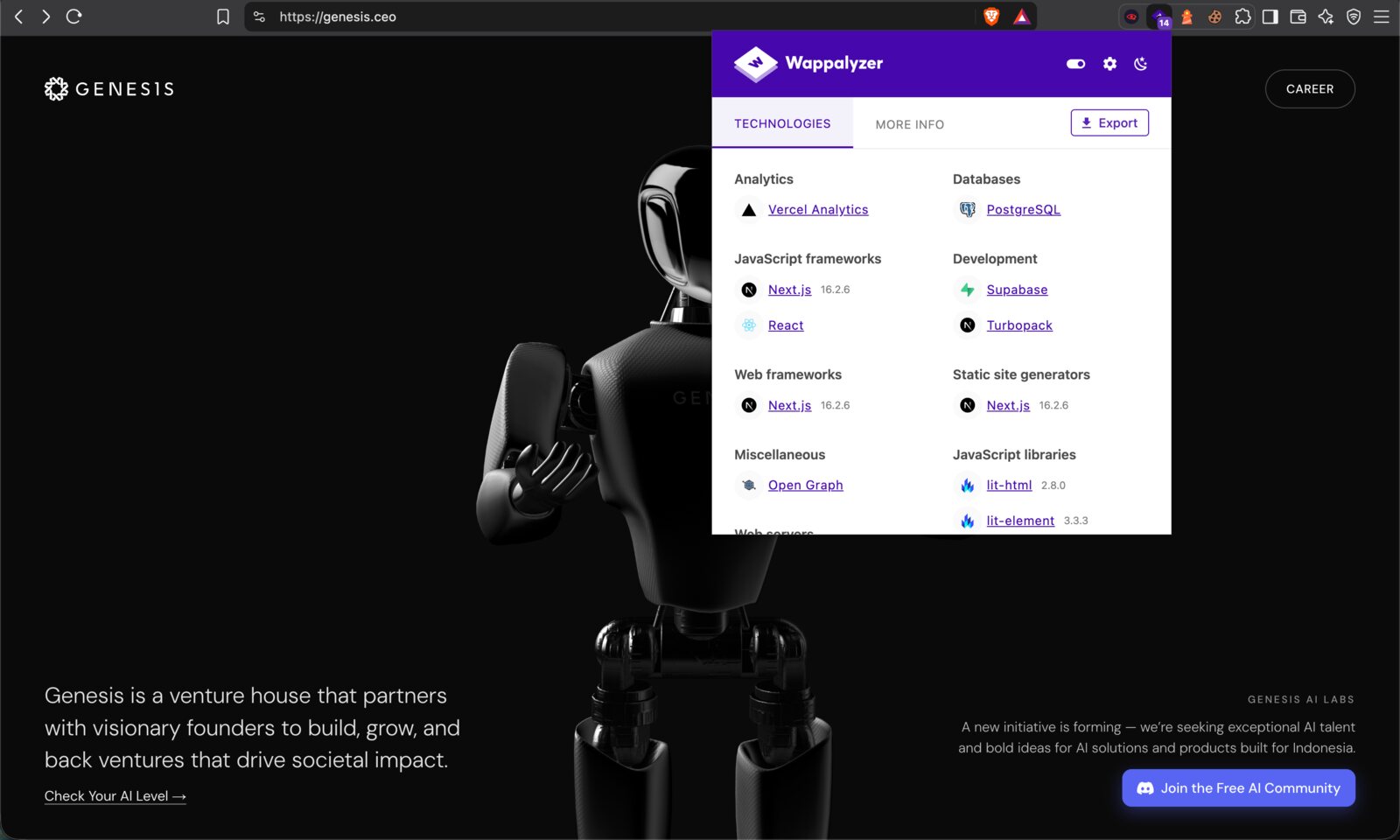
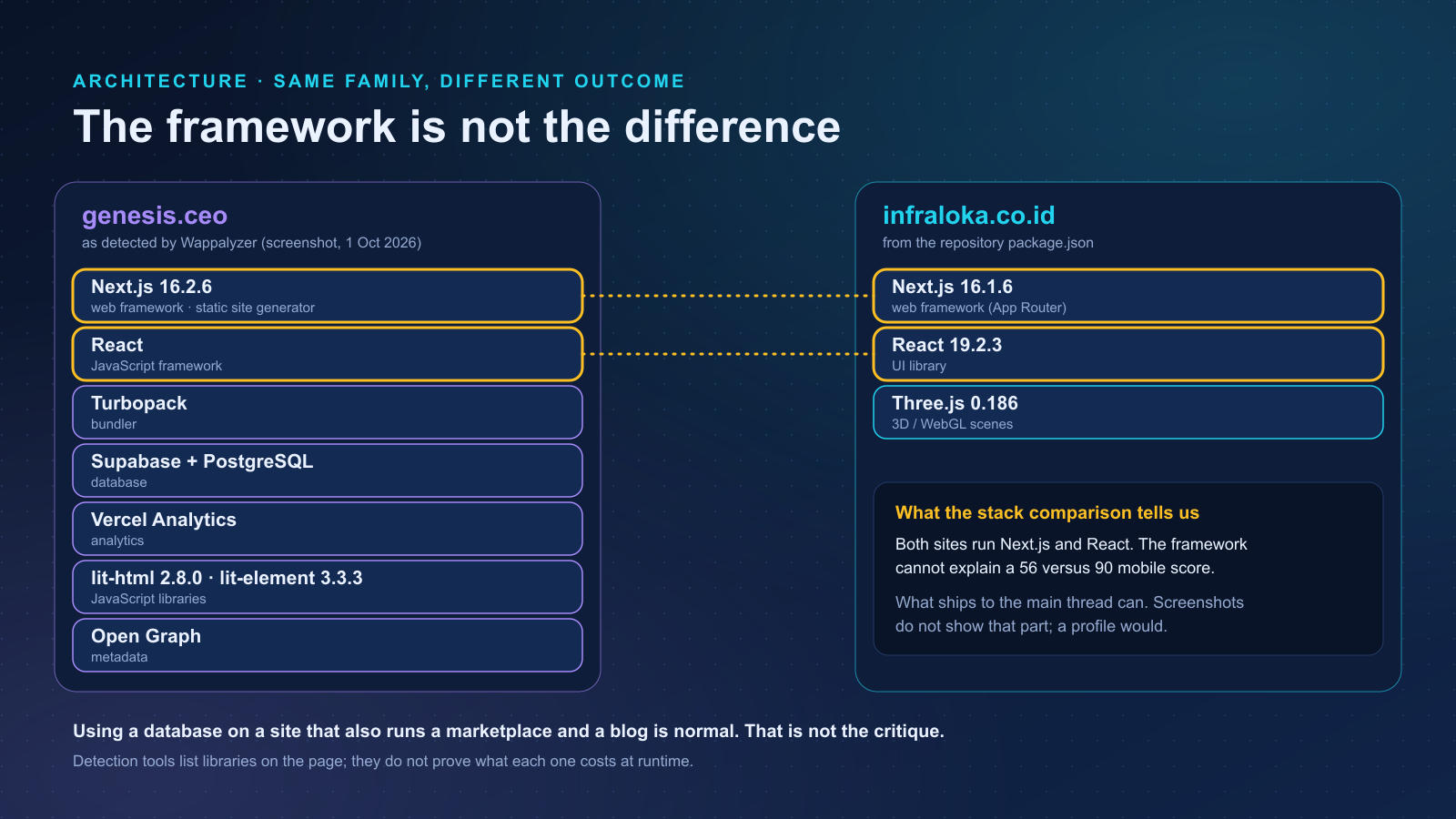
Wappalyzer lists Next.js 16.2.6 and React on genesis.ceo. InfraLoka runs Next.js 16.1.6 and React 19.2.3. The framework cannot explain a 56 versus a 90.
I am explicitly not criticising the database. A site that runs a marketplace and a blog needs one. Detection tools list libraries on a page; they do not show what each one costs at runtime. The critique is the main-thread cost, not the logo on the stack.
The content: what holds up, and what does not
I went looking for weak writing and did not find it. The Genesis "Insights" articles are cleanly designed, open with a TL;DR, close with an FAQ, and show attributed statistics.
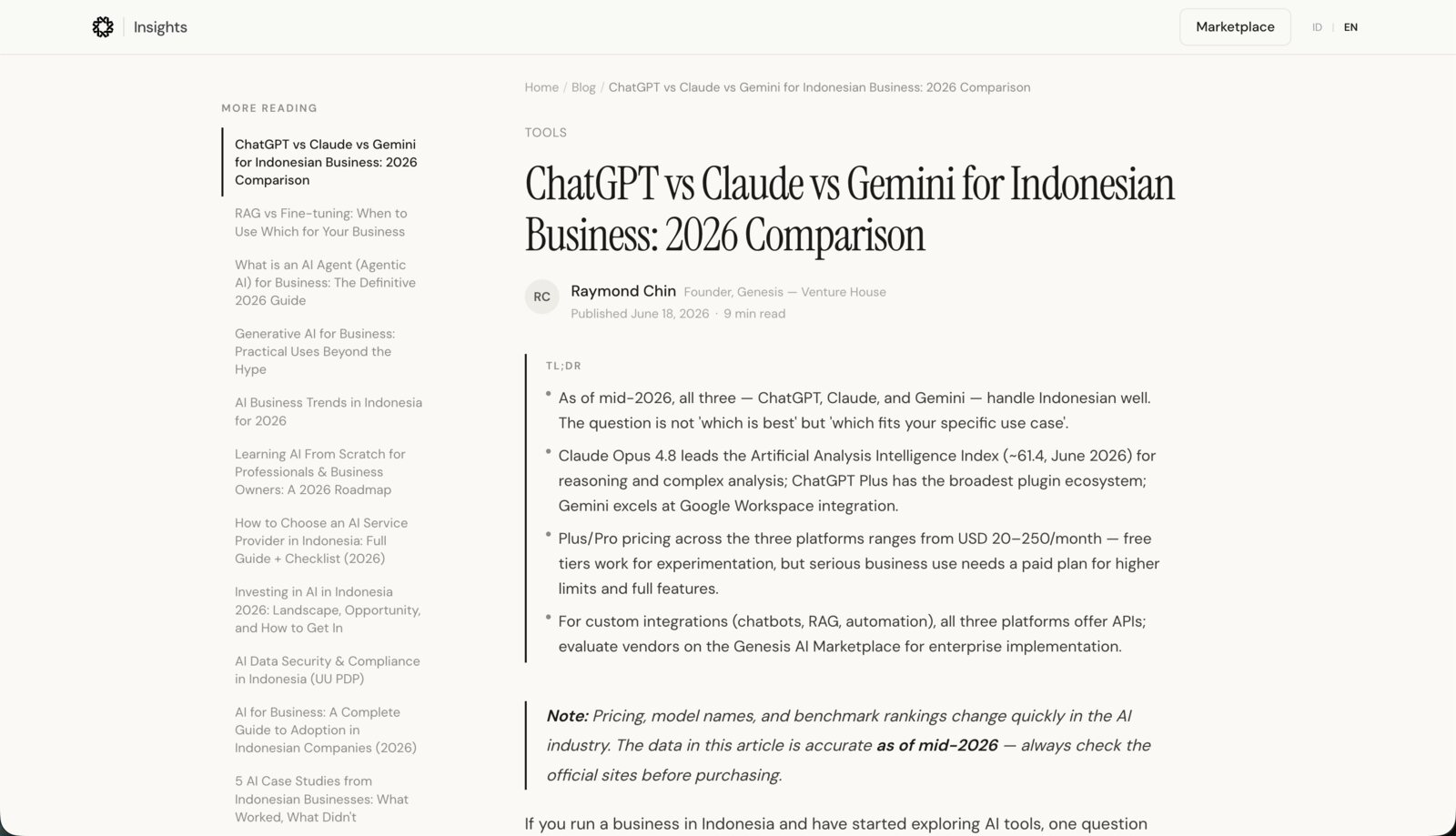
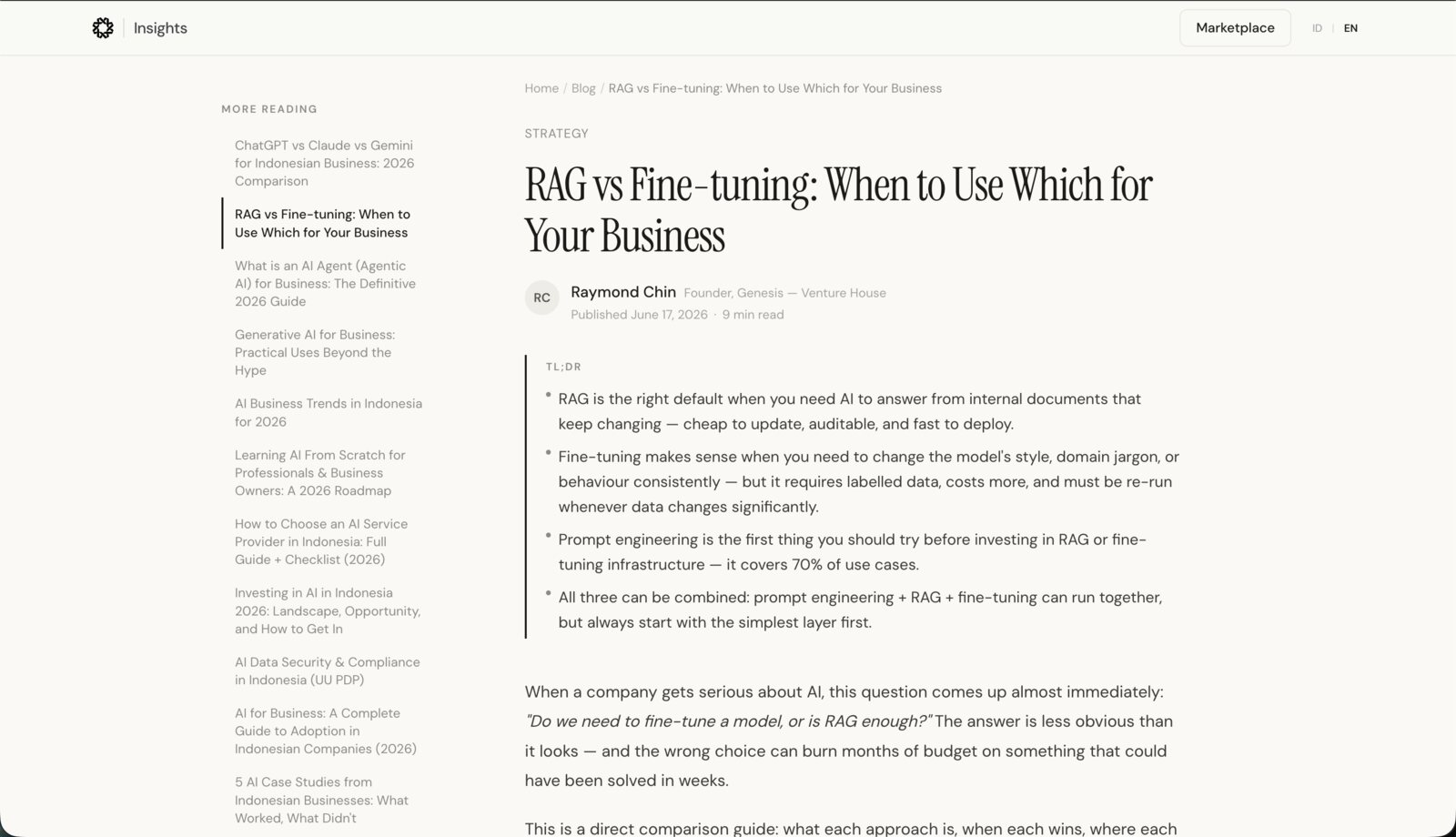
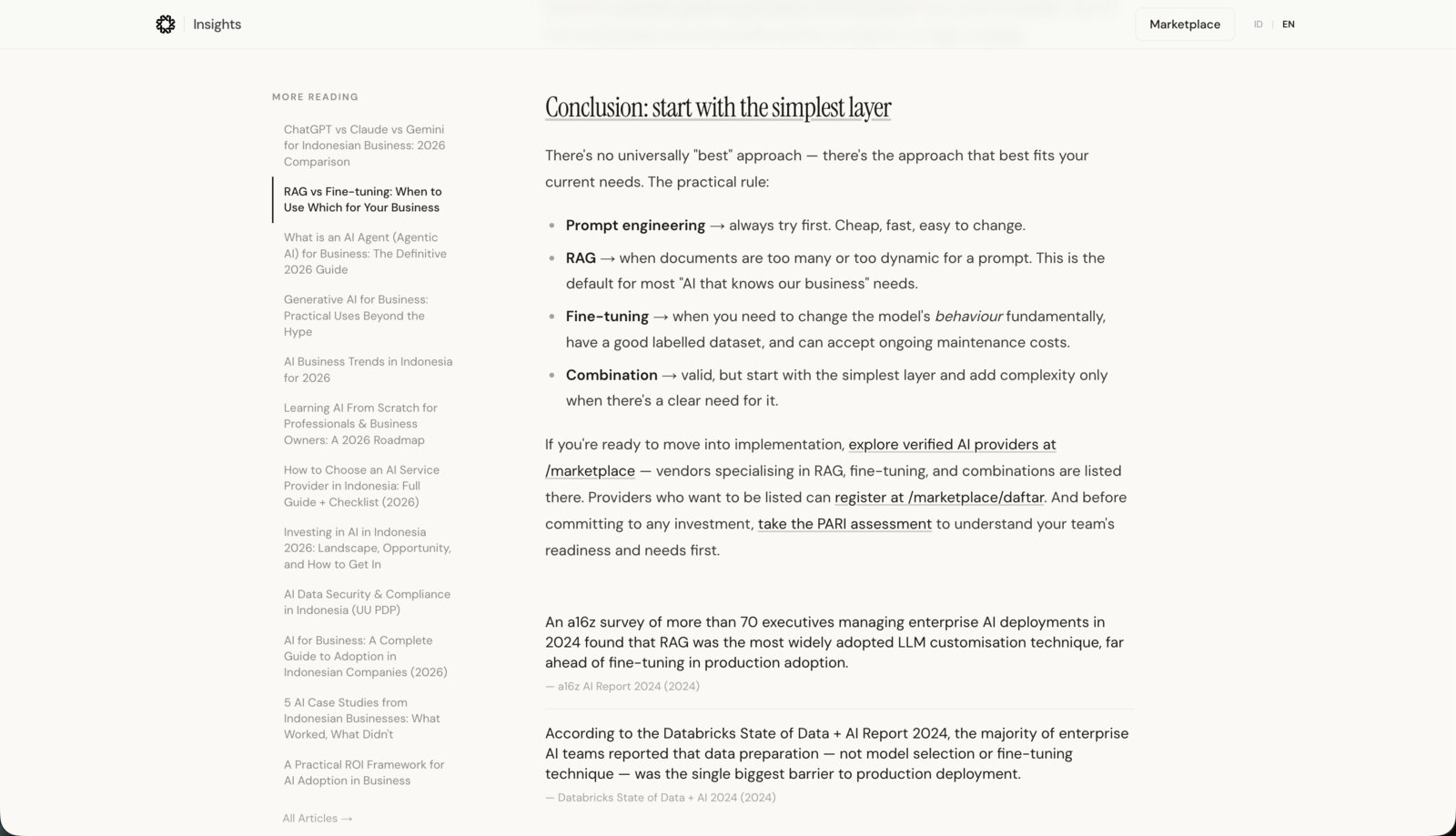

That is real sourcing, and I will not pretend otherwise. I read the full text of RAG vs Fine-tuning: When to Use Which for Your Business on 1 October 2026, not only the screenshots above. Three narrower observations:
- One headline number with no source. The article's TL;DR says prompt engineering "covers 70% of use cases". That figure appears once, in the TL;DR, and the article does not source it. The two attributed statistics it does cite are a16z on RAG adoption and Databricks on data preparation as the main barrier, and neither supports a 70% figure.
- Advice that routes to the author's own product. The RAG conclusion sends readers to the marketplace and to provider registration on the same site, and the "ChatGPT vs Claude vs Gemini" TL;DR ends by telling readers to "evaluate vendors on the Genesis AI Marketplace". In the RAG article, neither the text nor the author box says in so many words that the author's company runs that marketplace. I did not read the full text of the other article.
- A marketplace listing itself. The Genesis AI Labs listing sits on the marketplace Genesis operates. That is legal and common, and it is the kind of arrangement a reader would want flagged next to any ranking.
InfraLoka's side of the ledger
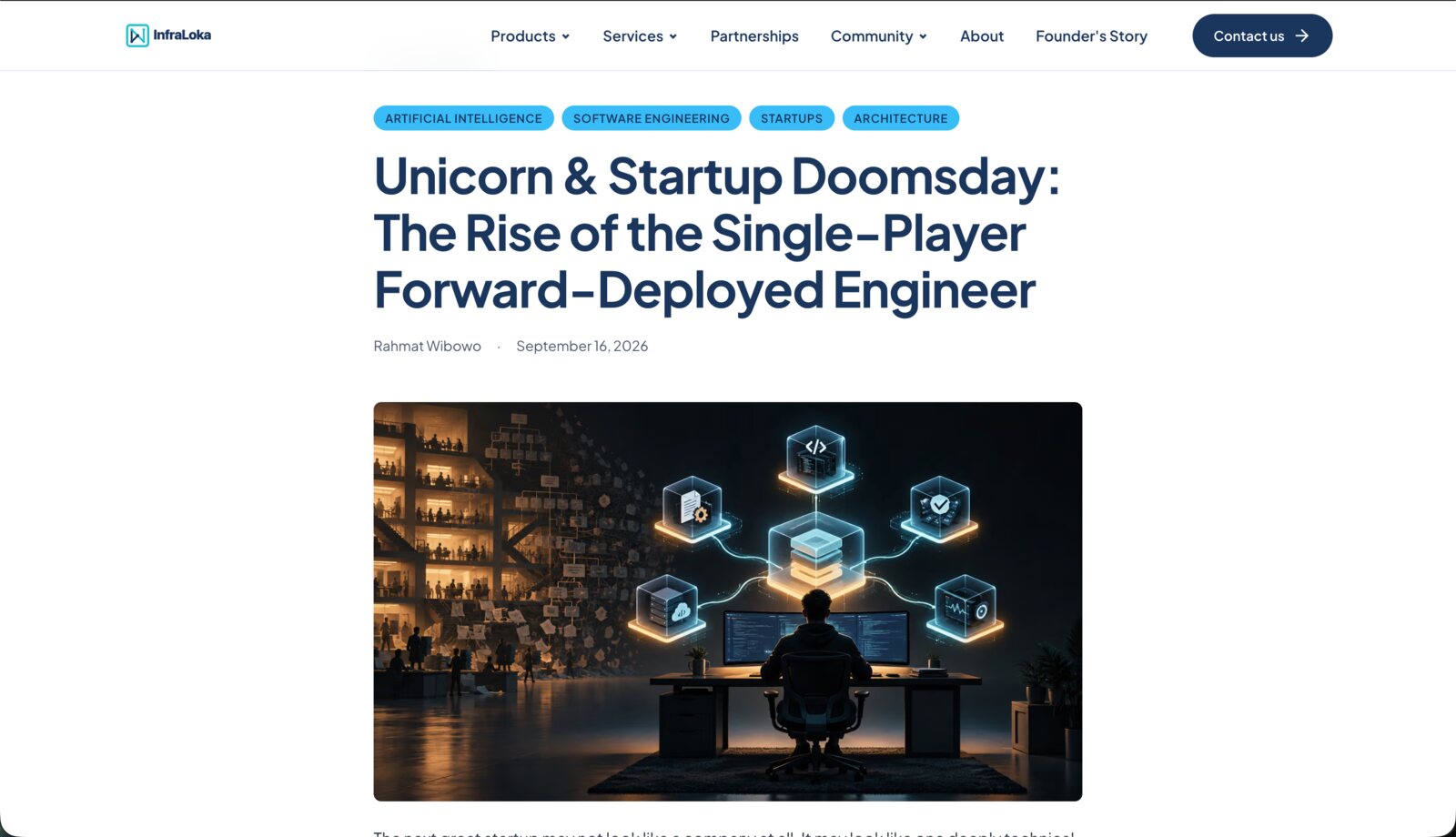
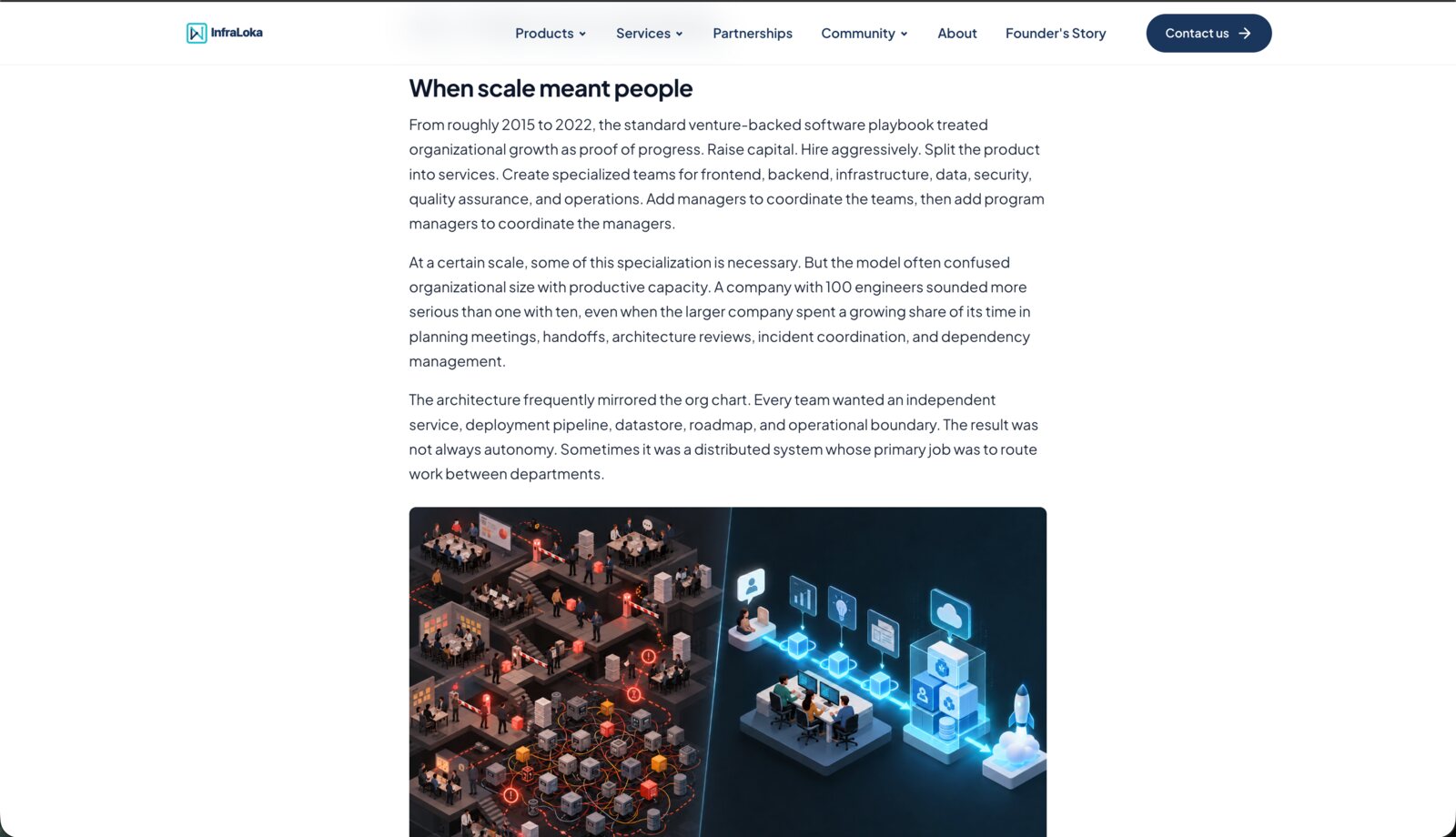
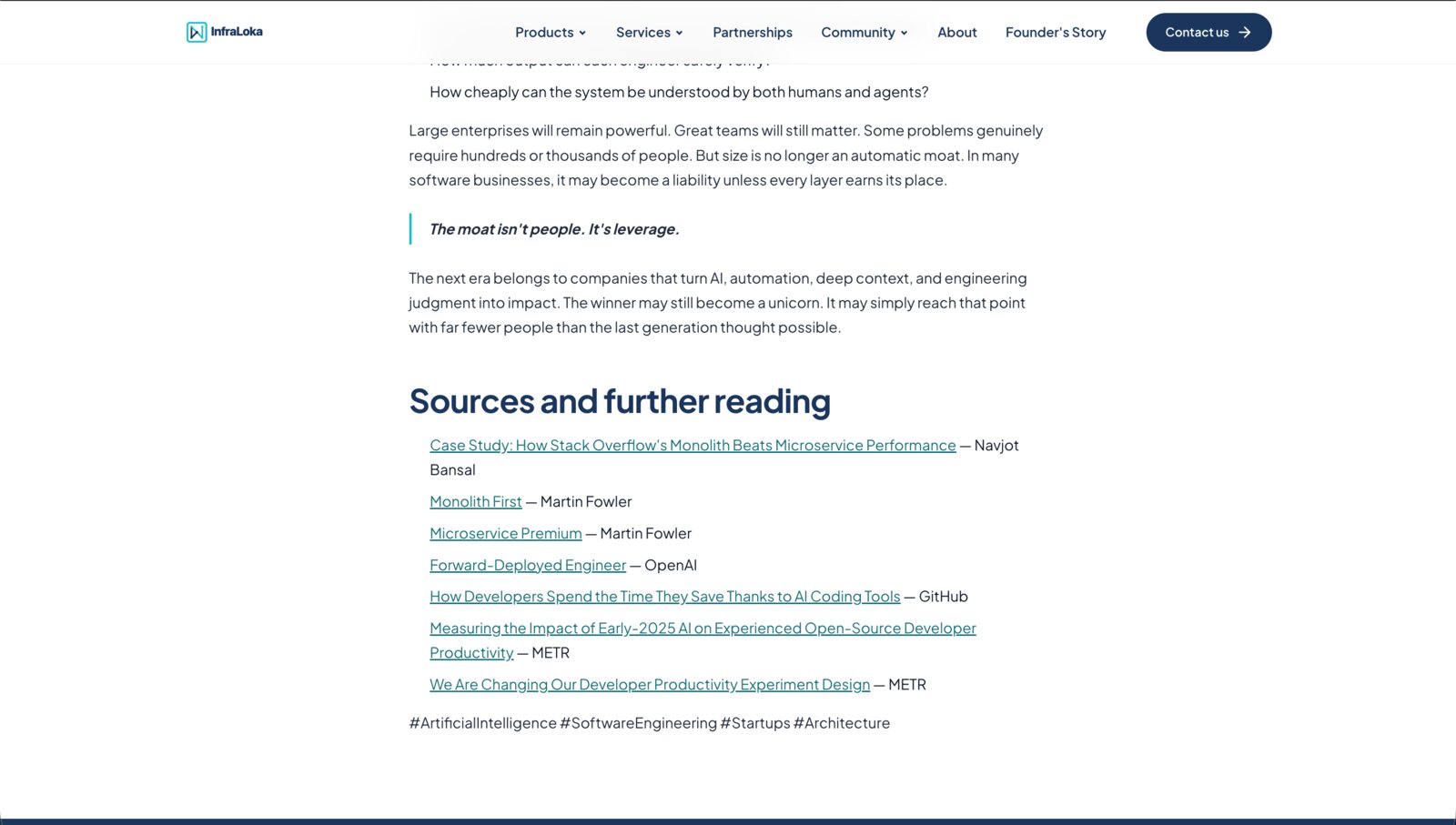
Our Unicorn & Startup Doomsday: The Rise of the Single-Player Forward-Deployed Engineer essay lists seven linked sources at the end, including Martin Fowler, OpenAI, GitHub and METR. That is the floor for an opinion piece, not a trophy.
Now the part where I do not flatter myself:
- Mobile LCP is 3.2 s, which is in the "needs improvement" band. The Genesis marketplace scored 3.0 s, so we are not ahead on that metric.
- Desktop Total Blocking Time is 200 ms and mobile Speed Index is 4.4 s, both amber.
- Best practices is 96, not 100.
- I picked a page I had recently tuned for load. The Founder's Story hero image was slimmed for LCP shortly before this test, so it flatters us. Our homepage may score differently.
- The charts in this post were drawn with AI assistance and generated from code. Every number on them is visible in a screenshot above.
What I am not saying
- I am not saying Raymond Chin is unskilled or unaware of his limits. A page score does not establish that.
- I am not saying the Genesis content is low quality. The screenshots show the opposite.
- I am making no claim about rankings, traffic, revenue or client outcomes. None of it is in the screenshots.
- I am not saying InfraLoka is faster in general. We are faster on one page type, with caveats above.
Reproduce it, or correct me
Run PageSpeed Insights on genesis.ceo, its marketplace, and our Founder's Story page. Run each a few times, because lab scores move. If your numbers differ materially from mine, tell me and I will publish them. If Genesis ships a fix, I will update this post with the new scores and say so. The point of a measurement is that it can be repeated and can change.
Read more about how I work in the Founder's Story.
Sources and further reading
- Kruger, J. and Dunning, D. (1999). Unskilled and unaware of it. Journal of Personality and Social Psychology, 77(6), 1121 to 1134.
- Gignac, G. E. and Zajenkowski, M. (2020). The Dunning-Kruger effect is (mostly) a statistical artefact. Intelligence, 80, 101449.
- Google PageSpeed Insights, the tool behind every score above.
- Total Blocking Time and Largest Contentful Paint, web.dev.
- Wappalyzer, the technology detector behind the stack screenshot.
- genesis.ceo, the Genesis homepage, its Insights articles and AI Service Marketplace, as captured on 1 October 2026.
- Genesis, RAG vs Fine-tuning: When to Use Which for Your Business, by Raymond Chin, published 17 June 2026.
- InfraLoka, Unicorn & Startup Doomsday: The Rise of the Single-Player Forward-Deployed Engineer, by Rahmat Wibowo, published 16 September 2026.
#Benchmarking #WebPerformance #ArtificialIntelligence #Startups