
Eid al-Adha: The Festival of Sacrifice, the Trials of Ibrahim, and the Sacred Journeys of Hajj and Umrah By Rahmat Wibowo From Infraloka
From a father's willingness to give up everything, to 1.8 billion people walking the same ancient footsteps every year. This is the full story.
Every year, Eid al-Adha arrives carrying the weight of one of the most extraordinary narratives in human spiritual history. It is not simply a celebration. It is a remembrance. A re-enactment of a life shaped by fire, exile, loss, and an unshakeable covenant with God.
To truly understand Eid al-Adha, you have to understand Ibrahim AS. And to understand Ibrahim AS, you have to begin long before the knife was ever raised.
The Name and Its Meaning
Eid al-Adha (Arabic: عيد الأضحى) translates to "Festival of the Sacrifice." It is also called the Greater Eid, falling on the 10th day of Dhul Hijjah, the final month of the Islamic lunar calendar, at the climax of Hajj. It is one of the two most sacred days in the Islamic year, and its roots go all the way back to a series of trials that God placed before one of His greatest Prophets.
The Trials of Ibrahim AS: A Lifetime of Surrender
Ibrahim AS did not arrive at the moment of sacrifice as a stranger to hardship. By the time God commanded him to raise the knife, he had already passed through a lifetime of tests, each one more demanding than the last. The sacrifice was not a punishment. It was the final examination of a man who had been in training his entire life.
Trial 1 :The Son Who Rejected His Father's Idols
Ibrahim AS was born into a family of idol makers. His own father, Azar, carved and sold the very idols that their people worshipped. From a young age, Ibrahim's mind could not accept this. He questioned, he reasoned, he looked at the stars and the sun and the moon and concluded: none of these can be God. There is only One. When he confronted his father and his community, he was rejected, mocked, and eventually declared an enemy of their way of life. He chose truth over family loyalty at the earliest stage of his life.
Quran, Surah Al-An'am 6:74
۞ وَإِذْ قَالَ إِبْرَٰهِيمُ لِأَبِيهِ ءَازَرَ أَتَتَّخِذُ أَصْنَامًا ءَالِهَةً ۖ إِنِّىٓ أَرَىٰكَ وَقَوْمَكَ فِى ضَلَـٰلٍۢ مُّبِينٍۢ ٧٤
And [mention, O Muḥammad], when Abraham said to his father Āzar, "Do you take idols as deities? Indeed, I see you and your people to be in manifest error."
— Saheeh International
Surah Al-An'am (6), Verse 74
Trial 2 : Cast Into the Fire by a King
Ibrahim's rejection of idolatry escalated. He smashed the idols of his people and left the largest one standing, placing the axe in its hand to make the point: if these things have power, let them speak for themselves. The king Nimrod, furious, ordered him to be thrown into a massive fire built over days. Ibrahim was cast in. But God commanded the fire to be cool and safe for His servant. Ibrahim walked out unharmed. The fire obeyed God, not the king.
Quran, Surah Al-Anbiya 21:69
قُلْنَا يَـٰنَارُ كُونِى بَرْدًۭا وَسَلَـٰمًا عَلَىٰٓ إِبْرَٰهِيمَ ٦٩
We [i.e., Allāh] said, "O fire, be coolness and safety upon Abraham."
— Saheeh International
Trial 3 : Leaving His Wife and Infant Son in the Desert
Years later, Ibrahim AS had a son, Ismail, with his wife Hajar. By divine command, he was instructed to leave them in the barren valley of Mecca, with nothing but a small amount of water and dates, and then to walk away. Hajar called after him: "Has God commanded you to do this?" Ibrahim nodded. She said: "Then He will not abandon us." Ibrahim walked away without looking back, and as he disappeared from sight, he prayed. Hajar ran between the hills of Safa and Marwa seven times searching for water for her dying infant. The spring of Zamzam miraculously burst from the earth. That run of a desperate mother is commemorated by every single Hajj and Umrah pilgrim to this day in the ritual of Sai.
Trial 4 ; Reunited with His Son, They Built the Kaaba Together
Years passed. Ismail grew up in Mecca. When Ibrahim returned, father and son together were commanded by God to raise the foundations of the Kaaba, the House of God, on that same sacred ground. It was an act of construction that was also an act of pure worship. The Kaaba that billions of Muslims face in prayer today was built by the hands of Ibrahim and Ismail AS.
Quran, Surah Al-Baqarah 2:127
وَإِذْ يَرْفَعُ إِبْرَٰهِـۧمُ ٱلْقَوَاعِدَ مِنَ ٱلْبَيْتِ وَإِسْمَـٰعِيلُ رَبَّنَا تَقَبَّلْ مِنَّآ ۖ إِنَّكَ أَنتَ ٱلسَّمِيعُ ٱلْعَلِيمُ ١٢٧
And [mention] when Abraham was raising the foundations of the House and [with him] Ishmael, [saying], "Our Lord, accept [this] from us. Indeed, You are the Hearing, the Knowing.
— Saheeh International
Trial 5 — The Final Test
The Dream Command to Sacrifice His Son
After everything, after the fire, after the exile, after years of separation from his son, Ibrahim AS received a dream in which God commanded him to sacrifice Ismail. A dream from a Prophet is divine revelation. He told his son. And Ismail, the child of the desert who had grown into a man, answered with complete peace. This is where the story reaches its summit.
Quran, Surah As-Saffat 37:102
فَلَمَّا بَلَغَ مَعَهُ ٱلسَّعْىَ قَالَ يَـٰبُنَىَّ إِنِّىٓ أَرَىٰ فِى ٱلْمَنَامِ أَنِّىٓ أَذْبَحُكَ فَٱنظُرْ مَاذَا تَرَىٰ ۚ قَالَ يَـٰٓأَبَتِ ٱفْعَلْ مَا تُؤْمَرُ ۖ سَتَجِدُنِىٓ إِن شَآءَ ٱللَّهُ مِنَ ٱلصَّـٰبِرِينَ ١٠٢
And when he reached with him [the age of] exertion, he said, "O my son, indeed I have seen in a dream that I [must] sacrifice you, so see what you think." He said, "O my father, do as you are commanded. You will find me, if Allāh wills, of the steadfast."
— Saheeh International
As Ibrahim AS prepared to carry out the command, God intervened. The test was complete. He had already given everything in his heart. A ram was sent from heaven as the sacrifice, and Ibrahim was praised for his sincerity.
Quran, Surah As-Saffat 37:103-107
فَلَمَّآ أَسْلَمَا وَتَلَّهُۥ لِلْجَبِينِ ١٠٣ وَنَـٰدَيْنَـٰهُ أَن يَـٰٓإِبْرَٰهِيمُ ١٠٤ قَدْ صَدَّقْتَ ٱلرُّءْيَآ ۚ إِنَّا كَذَٰلِكَ نَجْزِى ٱلْمُحْسِنِينَ ١٠٥ إِنَّ هَـٰذَا لَهُوَ ٱلْبَلَـٰٓؤُا۟ ٱلْمُبِينُ ١٠٦ وَفَدَيْنَـٰهُ بِذِبْحٍ عَظِيمٍۢ ١٠٧
103.And when they had both submitted1 and he put him down upon his forehead, **104.**We called to him, "O Abraham, 105.You have fulfilled the vision." Indeed, We thus reward the doers of good. **106.**Indeed, this was the clear trial. **107.**And We ransomed him with a great sacrifice,
Hajj: Walking the Footsteps of Ibrahim
Hajj is one of the Five Pillars of Islam and is obligatory for every Muslim who is physically and financially capable of undertaking it at least once in their lifetime. It takes place during Dhul Hijjah and culminates on the day of Eid al-Adha. Its rites are not symbolic in a vague, decorative sense. They are precise re-enactments of the trials of Ibrahim, Hajar, and Ismail.
Quran, Surah Al-Hajj 22:27-28
وَأَذِّن فِى ٱلنَّاسِ بِٱلْحَجِّ يَأْتُوكَ رِجَالًۭا وَعَلَىٰ كُلِّ ضَامِرٍۢ يَأْتِينَ مِن كُلِّ فَجٍّ عَمِيقٍۢ ٢٧ لِّيَشْهَدُوا۟ مَنَـٰفِعَ لَهُمْ وَيَذْكُرُوا۟ ٱسْمَ ٱللَّهِ فِىٓ أَيَّامٍۢ مَّعْلُومَـٰتٍ عَلَىٰ مَا رَزَقَهُم مِّنۢ بَهِيمَةِ ٱلْأَنْعَـٰمِ ۖ فَكُلُوا۟ مِنْهَا وَأَطْعِمُوا۟ ٱلْبَآئِسَ ٱلْفَقِيرَ ٢٨
**27.**And proclaim to the people the ḥajj [pilgrimage]; they will come to you on foot and on every lean camel; they will come from every distant pass - **28.**That they may witness [i.e., attend] benefits for themselves and mention the name of Allāh on known [i.e., specific] days over what He has provided for them of [sacrificial] animals.1 So eat of them and feed the miserable and poor.
Umrah: The Lesser Pilgrimage, No Less Meaningful
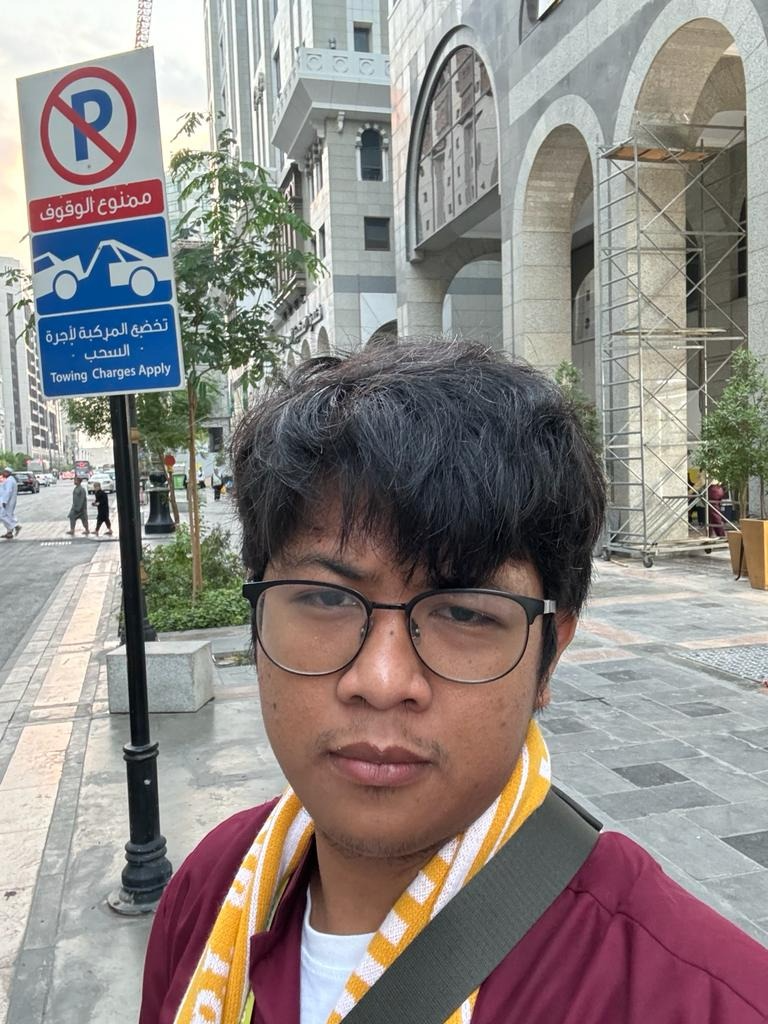
Umrah (Arabic: عُمْرَة), which literally means "to visit a populated place," is an Islamic pilgrimage to Mecca that can be undertaken at any time of the year. Unlike Hajj, which follows a strict schedule in Dhul Hijjah, Umrah is open year-round. It is not obligatory, but it is one of the most beloved acts of worship a Muslim can perform.
Before entering the sacred precincts, every pilgrim must assume Ihram, a state of ritual purification achieved through cleansing, wearing prescribed white garments, and abstaining from certain actions. This must be entered at a Miqat, a designated boundary point around Mecca. For those travelling by air, Ihram must be observed once the plane enters the perimeter of the sacred zone.
The Three Core Rituals of Umrah
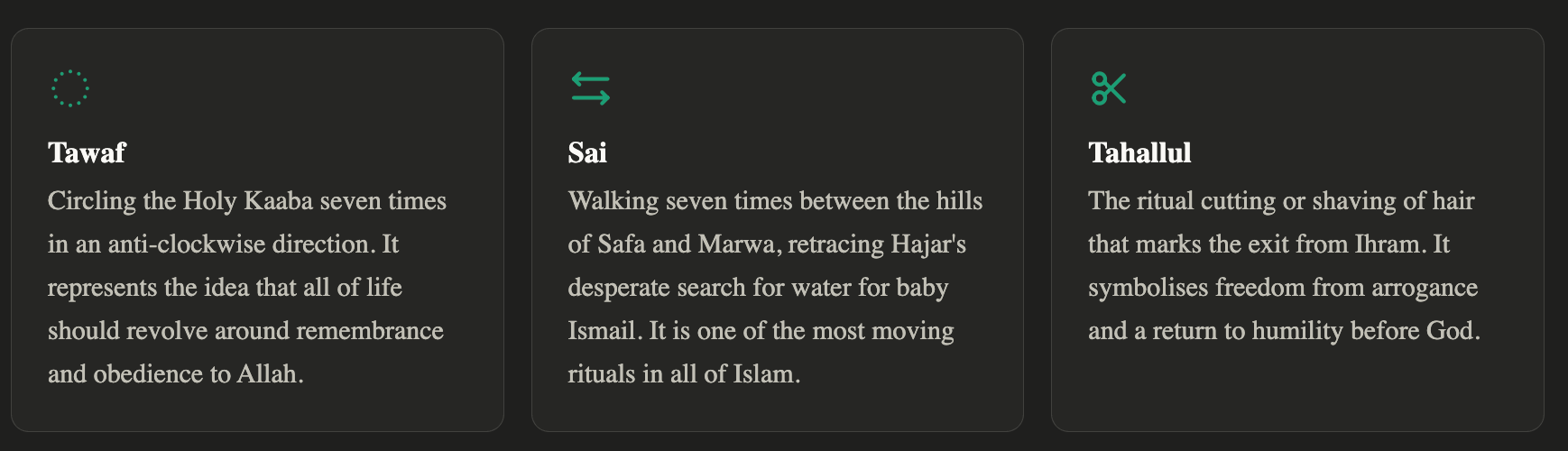
Tawaf is perhaps the most iconic of all. The word itself means "to walk around" or "to encircle something." Seven circuits of the Kaaba, counter-clockwise, in the direction that mirrors the movement of the universe. Among the Sunnah acts within Masjid al-Haram is the kissing of the Hajar Aswad (the Black Stone), praying within Hijr Ismail, and touching the Rukun Yamani. One prayer inside Masjid al-Haram carries the reward of 100,000 prayers offered elsewhere.
Sai is the walk of a mother's love made sacred. Hajar ran between Safa and Marwa not in despair but in action, trusting God while doing everything within her human power. Every pilgrim who performs Sai steps into that same act of striving.
Tahallul, the exit from Ihram through the cutting of hair, is far more than a grooming act. It is a shedding. The hair is the adornment, the crown of the self. To give it up is to give up arrogance. Every Hajj and Umrah pilgrim who undergoes Tahallul emerges a little lighter, a little more humble.
Sacred Places of Makkah and Madinah
The pilgrimage is inseparable from its geography. Masjid al-Haram in Mecca is the largest mosque in the world, with the Holy Kaaba at its centre. Jabal al-Nour houses the Cave of Hira, where the Prophet Muhammad SAW received his first revelation. The City of Mina, known as the Tent City, is where Hajj pilgrims stay overnight during the days of Tasyrik. The plain of Arafat is where pilgrims stand in the most powerful act of collective supplication on earth.
In Madinah, Al-Masjid An-Nabawi is the Prophet's Mosque, built by the Prophet Muhammad SAW himself in the first year of Hijra. Quba Mosque, just 6 km from the city centre, is believed to be the first mosque ever built in the history of Islam. Masjid al-Qiblatayn is the mosque where the direction of prayer was changed by divine command from Jerusalem to Makkah. And Mount Uhud stands as a reminder of sacrifice in the path of God.
The Udhiyah: What the Sacrifice Actually Means
On the 10th of Dhul Hijjah, after the Eid prayer, Muslims who are able to do so perform the udhiyah, the ritual sacrifice of a livestock animal. The meat is divided into three equal parts: one third for the family, one third for relatives and friends, and one third for those in need. It is an act of generosity made mandatory, an institutionalised redistribution of provision.
But the Quran is clear about what God actually receives from this act.
The Pilgrimage (22:37)
لَن يَنَالَ ٱللَّهَ لُحُومُهَا وَلَا دِمَآؤُهَا وَلَـٰكِن يَنَالُهُ ٱلتَّقْوَىٰ مِنكُمْ ۚ كَذَٰلِكَ سَخَّرَهَا لَكُمْ لِتُكَبِّرُوا۟ ٱللَّهَ عَلَىٰ مَا هَدَىٰكُمْ ۗ وَبَشِّرِ ٱلْمُحْسِنِينَ ٣٧
Their meat will not reach Allāh, nor will their blood, but what reaches Him is piety from you. Thus have We subjected them to you that you may glorify Allāh for that [to] which He has guided you; and give good tidings to the doers of good.
— Saheeh International
A Legacy Across Faiths and Cultures
The story of Ibrahim is shared across Judaism, Christianity, and Islam, with variations in detail but a common core: a man asked to give up the most precious thing he had, and who said yes. In Islam, Ibrahim holds the title Khalilullah, the Friend of God, and his legacy of pure monotheism forms the very foundation of the final divine message.
In Indonesia, Idul Adha is marked by mass prayers held in open fields, communal preparation and distribution of qurban meat, and a profound spirit of gotong royong. Families, neighbourhoods, and communities come together in a way that makes the ancient story feel completely alive and present. In my own journey performing Umrah, walking between Safa and Marwa, standing before the Kaaba for the first time, everything that I had understood intellectually about Ibrahim's story became something I felt in my body. The rituals are not abstract. They are physical memory.
What Eid al-Adha Asks of Us Today
In a world where we are trained to accumulate, to hold on, to secure and protect what we have built, the message of Eid al-Adha cuts through with radical simplicity. Ibrahim was thrown into fire and walked out. He left his family in a desert and trusted God to provide. He raised the Kaaba with his own hands. He raised the knife for the one he loved most. At every point, he let go.
And at every point, God gave back more than was surrendered.
That is the pattern Eid al-Adha asks us to recognise, and to live by. Not just once a year in a ritual, but in the daily choices about what we hold too tightly, and what we are willing to release in trust.
Eid Mubarak to everyone celebrating. May your sacrifice, in every form it takes, be accepted. And may what is returned to you be far greater than what you gave.
#EidAlAdha#EidMubarak#IedulAdha#ProphetIbrahim#Islam#Hajj#Umrah#Quran#Tawaf#Sai#Ihram#Tahallul#FestivalOfSacrifice#IslamicHistory#DhulHijjah#MasjidAlHaram#Kaaba#Udhiyah#Faith#Indonesia#IedulAdhaIndonesia#GotongRoyong#TravelTheWorldWithRahmat#Infraloka#RahmatalilAlamin