
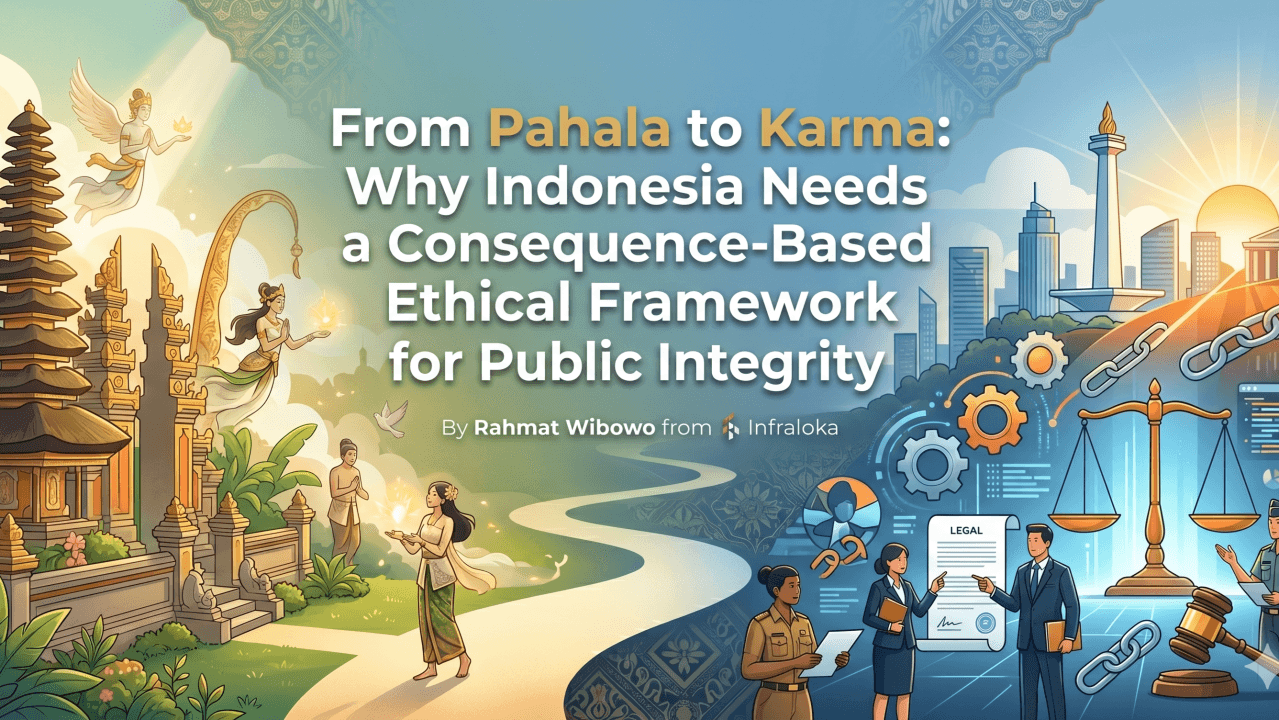
From Pahala to Karma: Why Indonesia Needs a Consequence-Based Ethical Framework for Public Integrity" By Rahmat Wibowo From InfraLoka
Introduction: The Commodification of Piety
1.1 The Paradox of Religiosity and Corruption

Indonesia consistently ranks among the most religious nations globally. According to various international surveys (such as the Pew Research Center), nearly 100% of Indonesians consider religion "very important" in their lives. However, this high degree of religiosity coexists paradoxically with persistently high levels of corruption. The Corruption Perceptions Index (CPI) repeatedly places Indonesia in the lower-middle tier, indicating endemic public sector corruption.
This paradox necessitates a critical sociological inquiry: If religious teachings unequivocally condemn theft, deceit, and the abuse of power, why does a highly religious society fail to curb systemic corruption? The answer, as analyzed by AEGIS, lies in the epistemological framing of sin and reward.
1.2 Pahala and Dosa as a Spiritual Ledger

In popular Indonesian religious discourse, Pahala and Dosa are frequently reduced to a dualistic accounting system.
- Pahala is accumulated through specific, often ritualistic or formal acts (prayer, fasting, almsgiving, pilgrimage).
- Dosa is incurred through violations of religious law.
Crucially, this system is often interpreted as transactional. Just as a financial ledger can be balanced by offsetting liabilities with assets, spiritual deficits (Dosa) are believed to be erasable by acquiring spiritual credits (Pahala). This interpretation is loosely derived from theological doctrines suggesting that good deeds wipe out bad deeds (based on specific scriptural interpretations).
However, when applied to severe social crimes like corruption, this logic mutates into a dangerous justification mechanism: "Spiritual Money Laundering."
2. Historical Genealogy: The Roots of Formalism
To understand the current state of transactional religion, we must trace its historical and political roots.
2.1 The New Order (Orde Baru) and the Institutionalization of Religion

During President Suharto's New Order regime (1966-1998), the state sought to control and depoliticize Islam. The strategy was to encourage ritualistic piety while aggressively suppressing political Islam or any religious interpretation that challenged state authority.
- The Ministry of Religion standardized curricula, focusing heavily on ritual obligations (fiqh and ibadah) rather than substantive social ethics or political morality.
- Religion became a formal identity marker (mandatory on the KTP, or identity card) to differentiate citizens from atheistic communists (PKI).
- The Result: Several generations were educated in a paradigm where being a "good Muslim" was defined almost entirely by adherence to ritual and formal identity, rather than ethical governance or social justice.
2.2 The Post-Reformasi Era and the Commercialization of Piety
Following the fall of Suharto in 1998, the deregulation of the media and the economy led to a massive surge in the public expression of religion.
- Televangelism and Consumer Piety: Islamic preachers became celebrities, and piety became a consumer lifestyle. Halal tourism, Islamic banking, and modest fashion boomed.
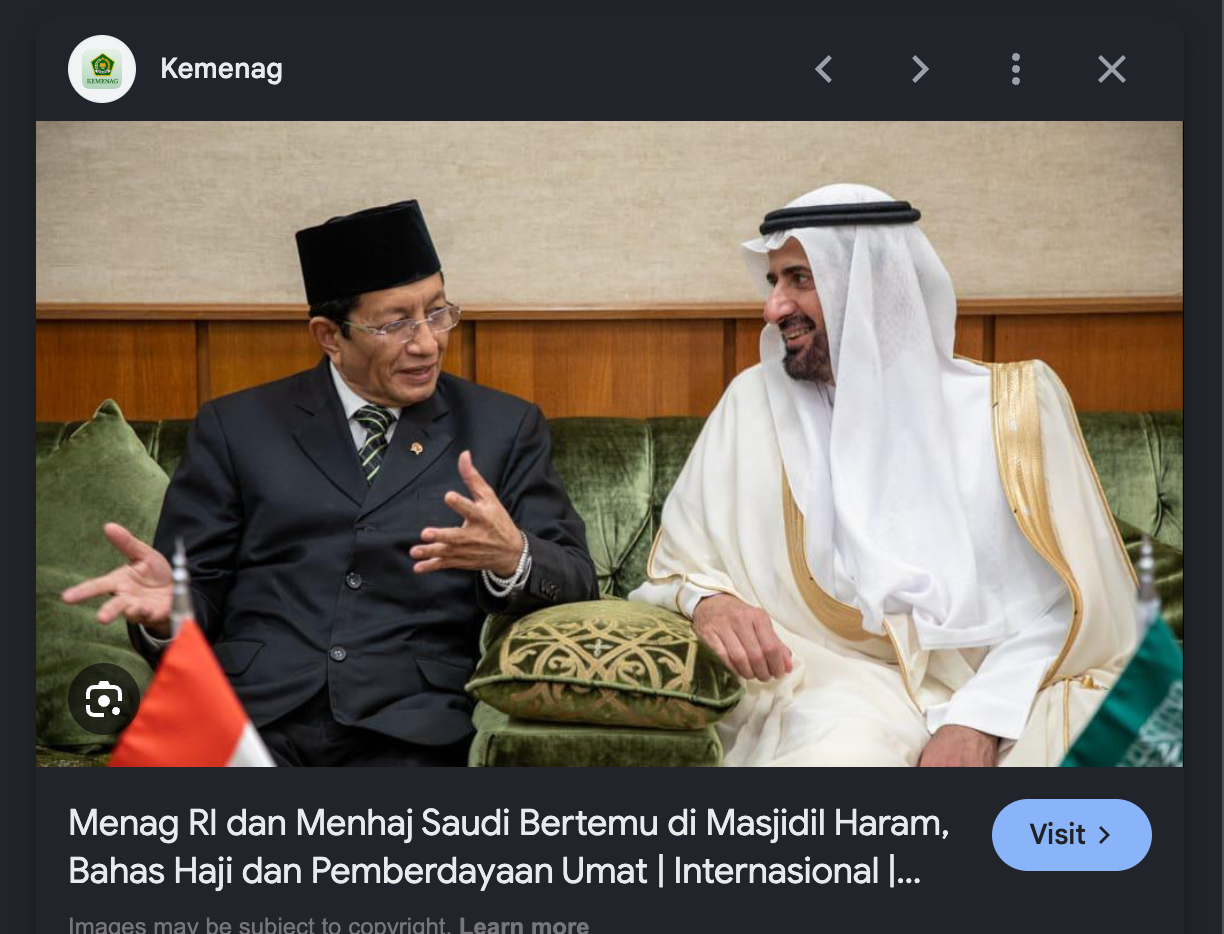
- The Hajj and Umrah Industry: The pilgrimage to Mecca transformed into a massive, multi-billion-dollar industry. Due to multi-decade waitlists for the obligatory Hajj, Umrah (the lesser, non-obligatory pilgrimage) exploded in popularity among the middle and upper classes.
- Umrah became not just a spiritual journey, but a status symbol and, critically, a highly visible mechanism for demonstrating piety and seeking sudden absolution.
3. Sociological Audit: Spiritual Money Laundering
3.1 The Mechanism of Moral Licensing
In behavioral psychology, "moral licensing" occurs when individuals who have performed a good deed feel justified in subsequently performing a bad deed, or vice versa. In the Indonesian context, this operates on a macro-social level.
A corrupt official may experience cognitive dissonance: they know corruption is wrong, but the financial and political incentives are overwhelming. To resolve this psychological discomfort, they turn to the transactional Pahala/Dosa system.
- The Crime: Engaging in bribery, mark-ups, or extortion.
- The Rationalization: "The system requires this for survival, and I am not physically harming anyone."
- The Compensation: Donating a portion of the illicit funds to build a mosque, sponsoring orphans, or taking extended family on Umrah.
- The Absolution: The official, validated by the gratitude of the community and the completion of the ritual, feels spiritually cleansed. The "dirty hands" are washed.
3.2 Case Studies in Religious Optics
The Indonesian judicial record is replete with examples of high-profile corruptors adopting religious optics upon their arrest or conviction.
- The Courtroom Wardrobe: Defendants who previously never wore religious attire suddenly appear at the KPK (Corruption Eradication Commission) wearing peci (caps), hijab, or holding prayer beads. This is a deliberate attempt to signal to the public that despite administrative "errors," they remain spiritually grounded people whose core is good.
- The Umrah Defense: Prior to arrest, many targets of investigation flee to Mecca for Umrah, framing their evasion of justice as a spiritual retreat to "seek guidance from God."
3.3 The Disconnect Between Hablum Minallah and Hablum Minannas
Classical Islamic theology divides obligations into two spheres:
- Hablum Minallah: The relationship with God (rituals, prayer).
- Hablum Minannas: The relationship with fellow humans (ethics, social justice).
The transactional paradigm severely distorts this balance. It operates on the fallacy that violations of Hablum Minannas (stealing public funds) can be repaired exclusively through acts of Hablum Minallah (ritual prayer or Umrah). Classical jurisprudence strictly states that sins against humanity require the forgiveness of the specific humans harmed (or restitution of the stolen wealth to the public). However, the popular, commodified version of religion conveniently ignores this strict requirement.
4. Theological Scrutiny: The Illusion of the Clean Slate
4.1 The Misinterpretation of Repentance (Taubah)
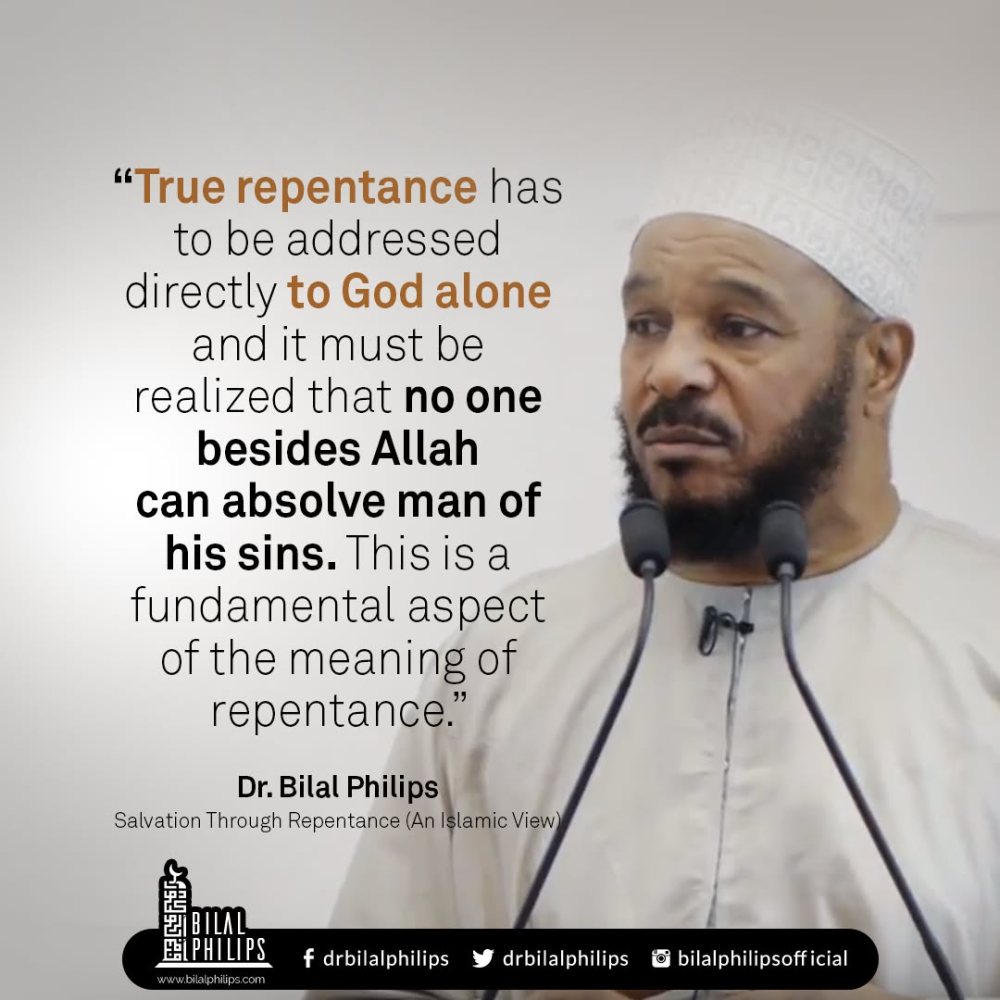
The concept of repentance (Taubah) in Islam is rigorous. True Taubah requires:
- Immediate cessation of the sin.
- Deep, genuine remorse.
- A firm resolution never to repeat the sin.
- Crucially: If the sin involves the rights of others (such as theft or corruption), the stolen property must be returned.
The transactional religion model observed in Indonesia often bypasses step 4. A corruptor may feel remorseful, perform Umrah, and weep at the Kaaba, believing their slate is wiped clean. Yet, they return to Indonesia and retain the accumulated wealth from their corruption. Theologically, this is an invalid transaction.
4.2 The Concept of Ghulul
In Islamic jurisprudence, corruption involving public assets falls under the category of Ghulul (treachery or misappropriation of public spoils/funds). The Prophet Muhammad explicitly warned against Ghulul, stating that those who engage in it will carry the stolen assets on their backs on the Day of Judgment. Despite this severe theological condemnation, the modern Indonesian focus on formal, ritualistic sin (e.g., dietary restrictions, dress codes) often overshadows the gravity of Ghulul.
5. The Karma Paradigm: A Consequence-Based Alternative

5.1 Moving Beyond Binary Accounting
The user's philosophical preference leans toward a system analogous to Karma—a framework where "there is no absolute humanly-defined right or wrong, only God knows best, but there will be inevitable consequences for each action."
Why is this framework potentially more effective as a social deterrent?
- Non-Negotiability: Unlike the Pahala/Dosa system, which allows for "bailouts" via ritual acts, a Karma-based paradigm views cause and effect as an immutable law of physics. If you steal, you introduce a structural instability into your life and society. No amount of ritual can intercept the trajectory of that consequence.
- Focus on Outcomes over Optics: In a consequence-based system, building a mosque with corrupt money does not "cancel out" the corruption. The act of theft has its consequence (degradation of societal trust, eventual exposure, psychological paranoia), and the act of building the mosque has its consequence (infrastructure is built, but rooted in illicit funds). They run on parallel tracks; they do not cancel each other out on a ledger.
5.2 The Ethics of Inevitability
In this paradigm, the universe (or the Divine will) operates through perfect equilibrium. Every action creates a ripple.
- Doing Wrong: Corruption inherently rots the systems it touches. It creates poverty, poor infrastructure, and societal resentment. The "consequence" is not necessarily lightning striking the corruptor from the sky, but the inescapable degradation of the environment they and their descendants must inhabit.
- Doing Right: True social acts build genuine trust, robust institutions, and sustainable prosperity.
This view aligns with the concept of Sunnatullah in Islamic philosophy—the immutable laws of nature and society established by God.
5.3 Eliminating the "Clean Dirty Hands" Loophole
The most powerful aspect of the Karma paradigm is the elimination of the "spiritual laundry" loophole. You cannot "clean dirty hands" by doing an unrelated good act. If a person corrupts billions of Rupiah, the only action that addresses that specific karmic debt is returning the billions of Rupiah and facing the judicial consequences. Going on Hajj does not address the vector of the corruption; it is a non-sequitur in the causal chain.
6. AEGIS Devil's Advocate Stress Test
The AEGIS panel rigorously challenges its own findings to ensure objectivity.
6.1 Is the Karma System Immune to Transactionalism?
Counter-Argument: The concept of Karma originates in Dharmic religions (Hinduism, Buddhism), which have their own histories of transactionalism. In many traditional Asian societies, "merit-making" (donating to temples, feeding monks) is practiced in a highly transactional way to accumulate good Karma for the next life. Thus, human nature will always attempt to game any ethical system, whether it is labeled Pahala/Dosa or Karma.
AEGIS Response: This is a valid critique. However, the philosophical ideal of Karma (as articulated by the user: inevitable consequences rather than a negotiable point system) strips away the institutional intermediaries. It forces the individual to confront the direct results of their actions rather than hiding behind clerical approval or ritual completion.
6.2 The Role of Grace
Counter-Argument: A purely deterministic Karma system leaves no room for Divine Mercy or Forgiveness, which are central tenets of Abrahamic faiths. If consequences are absolute, despair may follow.
AEGIS Response: The user's prompt brilliantly mitigates this: "only God knows the best but there will be consequences." This acknowledges Divine sovereignty and ultimate judgment, while insisting that on the human, societal plane, actions must bear natural consequences. God may forgive the soul, but the societal damage of corruption still requires societal consequences (prison, restitution).
7. Structural Recommendations
Based on this deep research, AEGIS proposes the following paradigm shifts for Indonesian civic and religious education:
- Redefining Piety in Curricula: Ministry of Religion and Ministry of Education curricula must elevate Hablum Minannas (social ethics, anti-corruption, public integrity) to the same level of obligatory importance as ritual Hablum Minallah.
- De-legitimizing Spiritual Money Laundering: Religious leaders and institutions must systematically refuse donations from known corrupt sources, publicly stating that Ghulul cannot be cleansed through charity.
- Promoting Consequence-Based Ethics: Civic education should emphasize the inevitable social and economic consequences of corruption (the Karma paradigm of cause-and-effect) rather than relying solely on the fear of post-mortem Dosa, which has proven easily rationalizable.
- Separating Judicial and Ritual Outcomes: The judicial system must ignore religious optics. A defendant's display of sudden piety should have zero mitigating effect on sentencing.
8. Conclusion
The conceptualization of Pahala and Dosa as a transactional point system has severely hampered Indonesia's fight against corruption. It provides a psychological escape hatch for systemic theft, allowing individuals to engage in "spiritual money laundering" via high-profile social acts and pilgrimages.
Shifting toward a paradigm of inevitable consequences—where actions generate unalterable effects, and where right and wrong are not mere points on a ledger to be traded—offers a profound remedy. It demands extreme accountability: the understanding that you cannot buy your way out of the damage you have caused, neither in the courts of men nor in the mechanics of the universe.
#Indonesia #Sociology #Ethics #AntiCorruption #Integrity #Philosophy #ResearchReport #InfraLoka #SocialJustice