
How I Used AI, Embedded Systems, and Intentional Design to Find — and Win — My Partner's Heart By Rahmat Wibowo
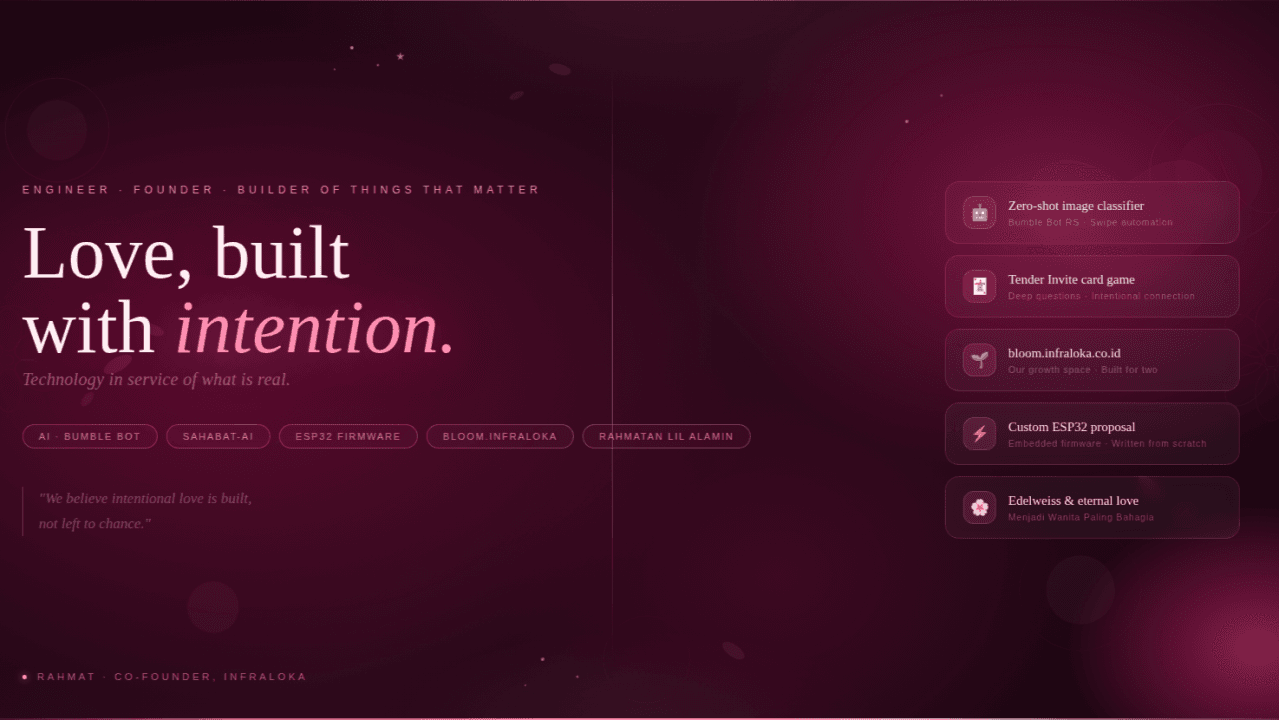
A software engineer's love story, told honestly.
There's a question I get asked a lot now: "Did you really use a bot to find her?"
Yes. And no. Let me explain.
The Problem Nobody Talks About: Attention Fatigue in Digital Dating
Online dating in 2026 is a UX nightmare.
Bumble alone can serve you hundreds of profiles a week. Your brain wasn't designed for this kind of high-volume, low-context decision-making. Studies in behavioral economics call it choice overload — the more options you face, the worse your decisions become, and the less satisfied you feel with what you choose.
I'm an engineer. I solve problems by building systems.
So I built one.
Chapter 1: The Bot That Wasn't Just a Bot
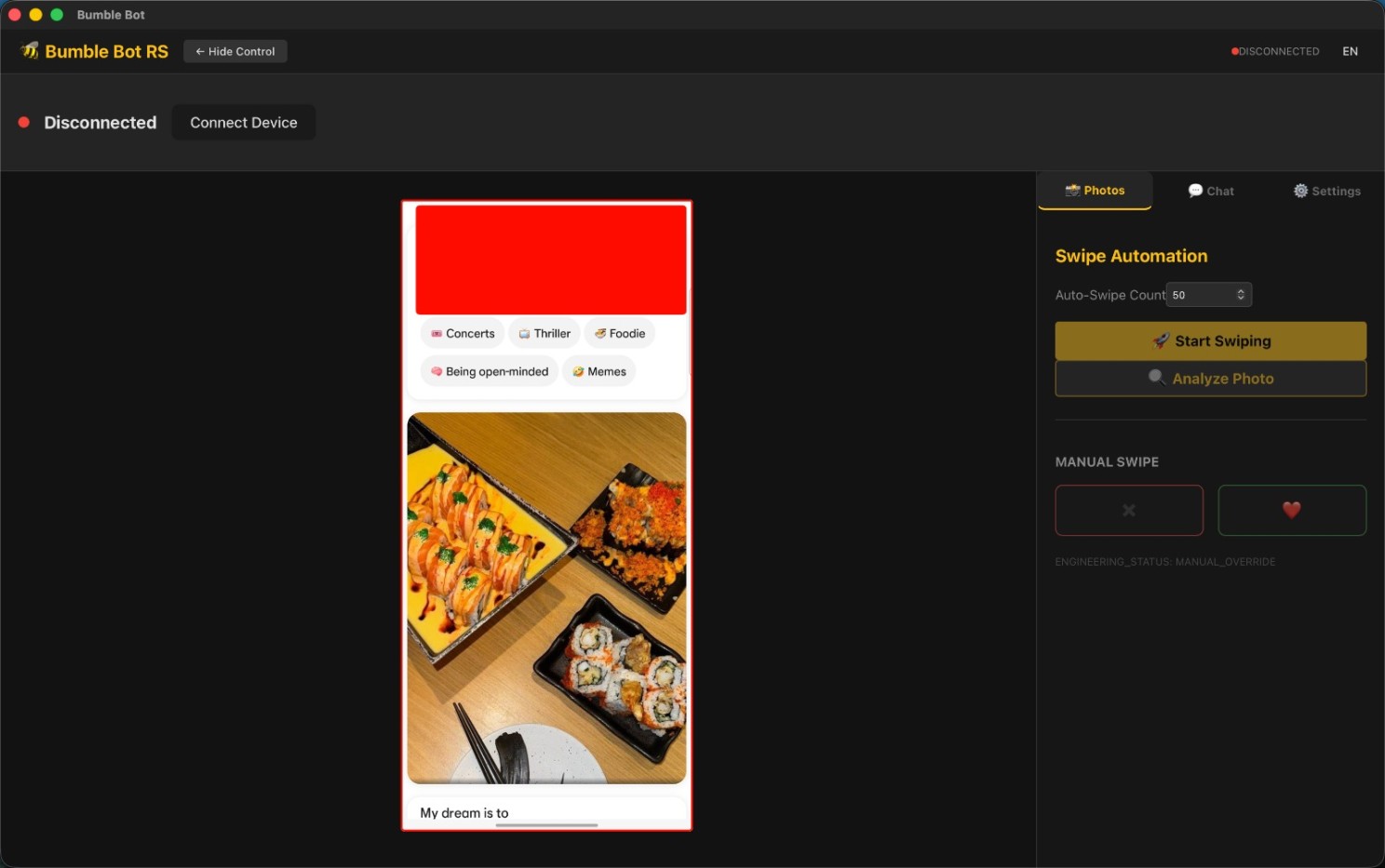
Bumble Bot RS — my own desktop tool — used zero-shot image classification on profile photos, cross-referenced against a handcrafted keyword set representing what I was genuinely looking for: intellectual curiosity, warmth, creativity, faith-adjacent values.
Profiles that passed the threshold got a right swipe. Those that didn't, didn't.
But here's what people miss: the bot didn't choose anyone. It filtered signal from noise. Once a match happened, I reviewed every single one manually.
And for replies? I integrated Sahabat-AI, a language model fine-tuned for Bahasa Indonesia — because language is culture, and culture is everything. Responding in a way that felt native, warm, and unforced matters infinitely more than being grammatically correct in a foreign register. It is assisted reply not automatic, the purpose is to make me the user know how to properly answer woman's question without being a dry texter.
The bot handled volume. I handled meaning.
This is not so different from how we use CRMs in sales, or recommendation engines in product design. The technology didn't replace human judgment — it protected my attention so I could spend it where it mattered.
Chapter 2: The Conversation Deck That Changed Everything
Getting a match is easy. Creating genuine intimacy with a stranger over a screen is not.
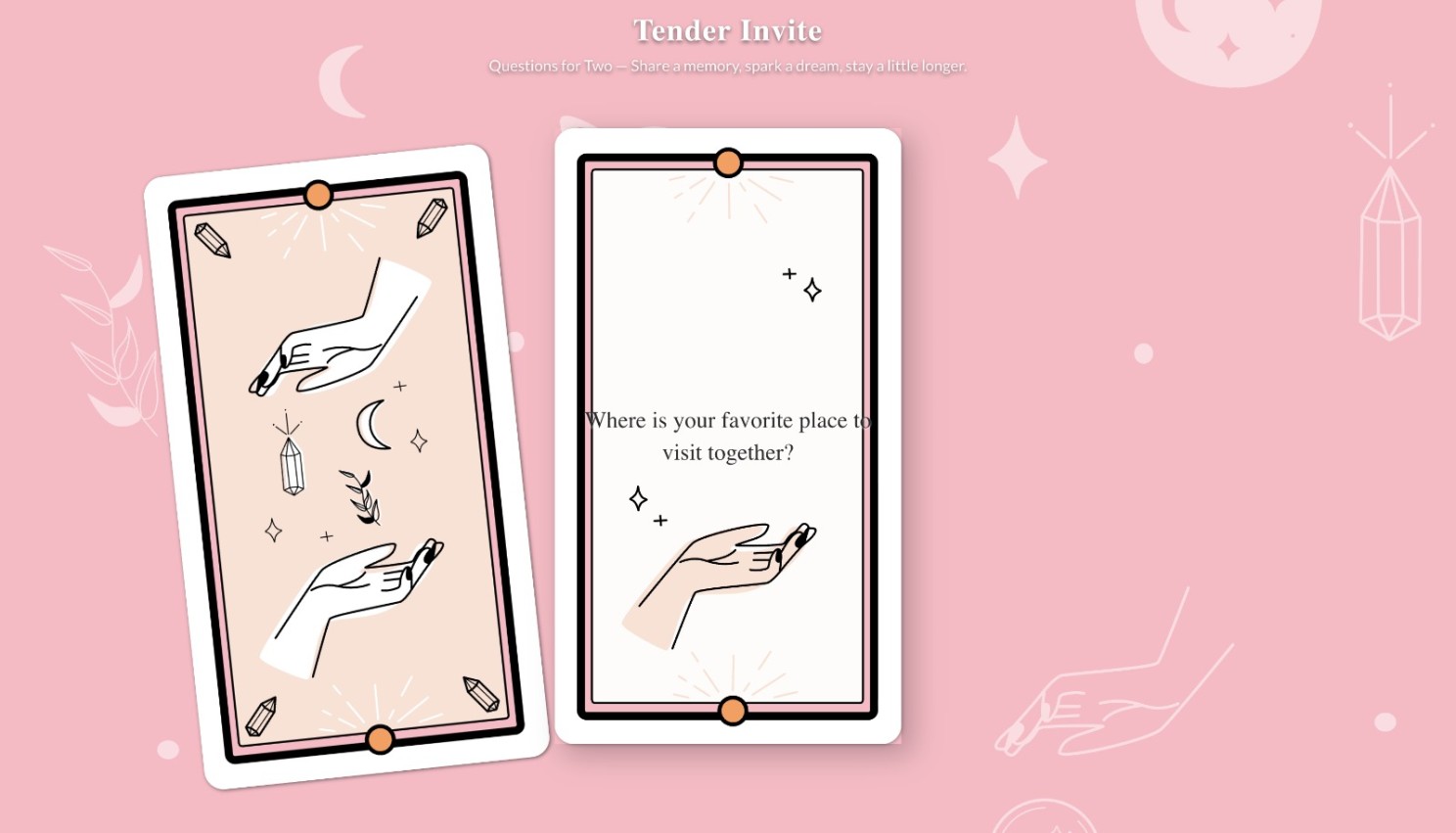
I introduced Tender Invite — a digital card game I designed specifically for two people getting to know each other online. Each card carries a question: "Where is your favorite place to visit together?" or "What's a dream you've never said out loud?"
The game did something neither of us expected: it made vulnerability feel safe. It turned small talk into real talk. It gave us a structure for going deep, quickly, without it feeling weird or forced.
We spent hours on it. We laughed. We got quiet. We learned things about each other that most couples don't discover until months in.
Intentionality creates intimacy faster than time does.
Chapter 3: Showing Her I Was Serious — With a Platform
Anyone can say they're serious about a relationship. I wanted to demonstrate it.
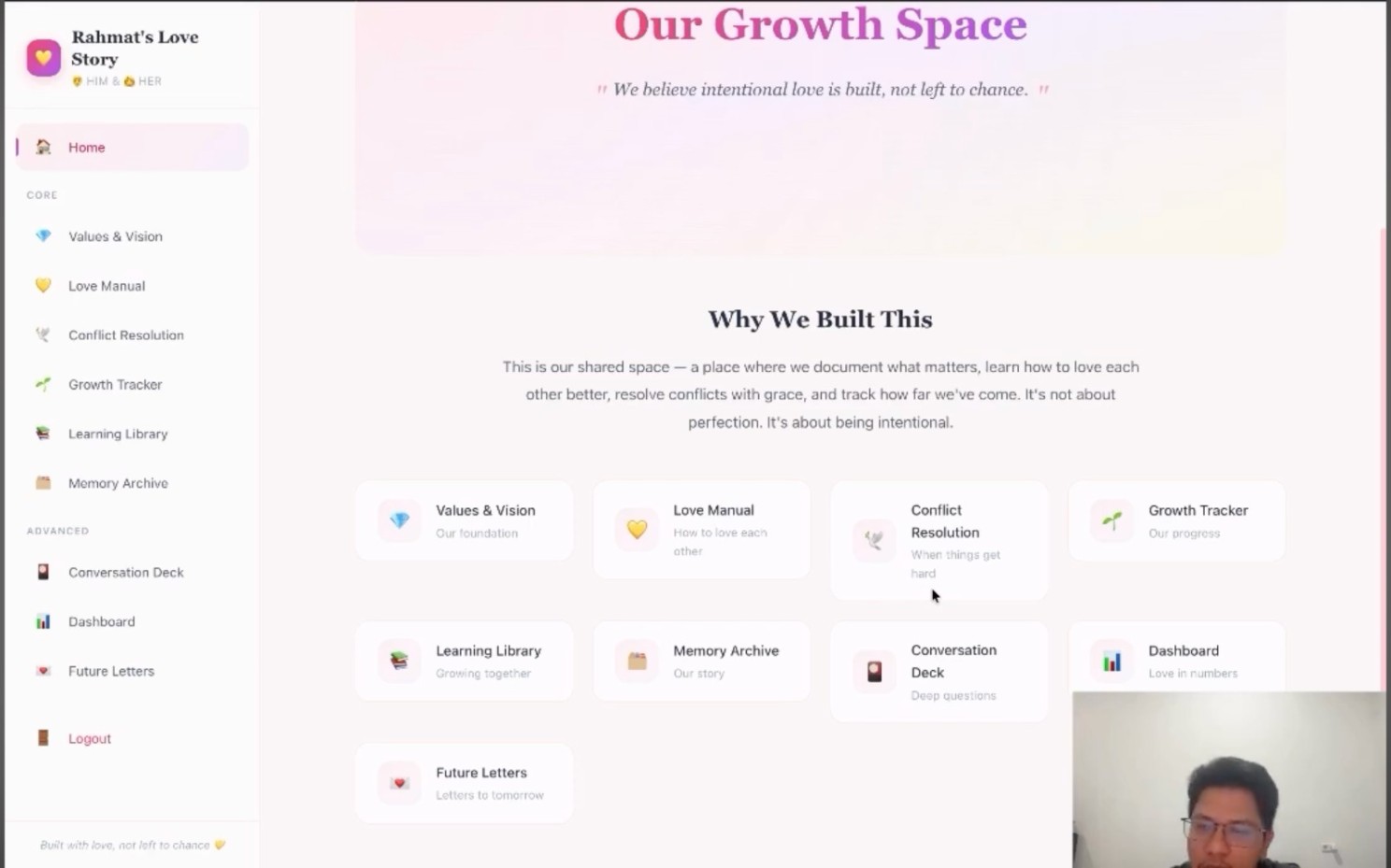
I built bloom.infraloka.co.id — a private couples' platform, co-branded from the first day as "Rahmat's Love Story — HIM & HER."
It contains:
- Values & Vision — our shared foundation, written together
- Love Manual — how we each feel loved, what we each need, what our blind spots are
- Conflict Resolution — a structured process for when things get hard (because they will)
- Growth Tracker — our progress, measurable and visible
- Learning Library — books, articles, ideas we're exploring together
- Memory Archive — our story, documented and searchable
- Conversation Deck — deep questions, always available
- Future Letters — words we write to each other for tomorrow
The tagline on the homepage: "We believe intentional love is built, not left to chance."
That's not marketing copy. That's my actual thesis about relationships.
She opened that link and understood, immediately, that I wasn't playing around.
Chapter 4: The Proposal That Ran on Custom Firmware
When the time came to make things official, I didn't go to a store.
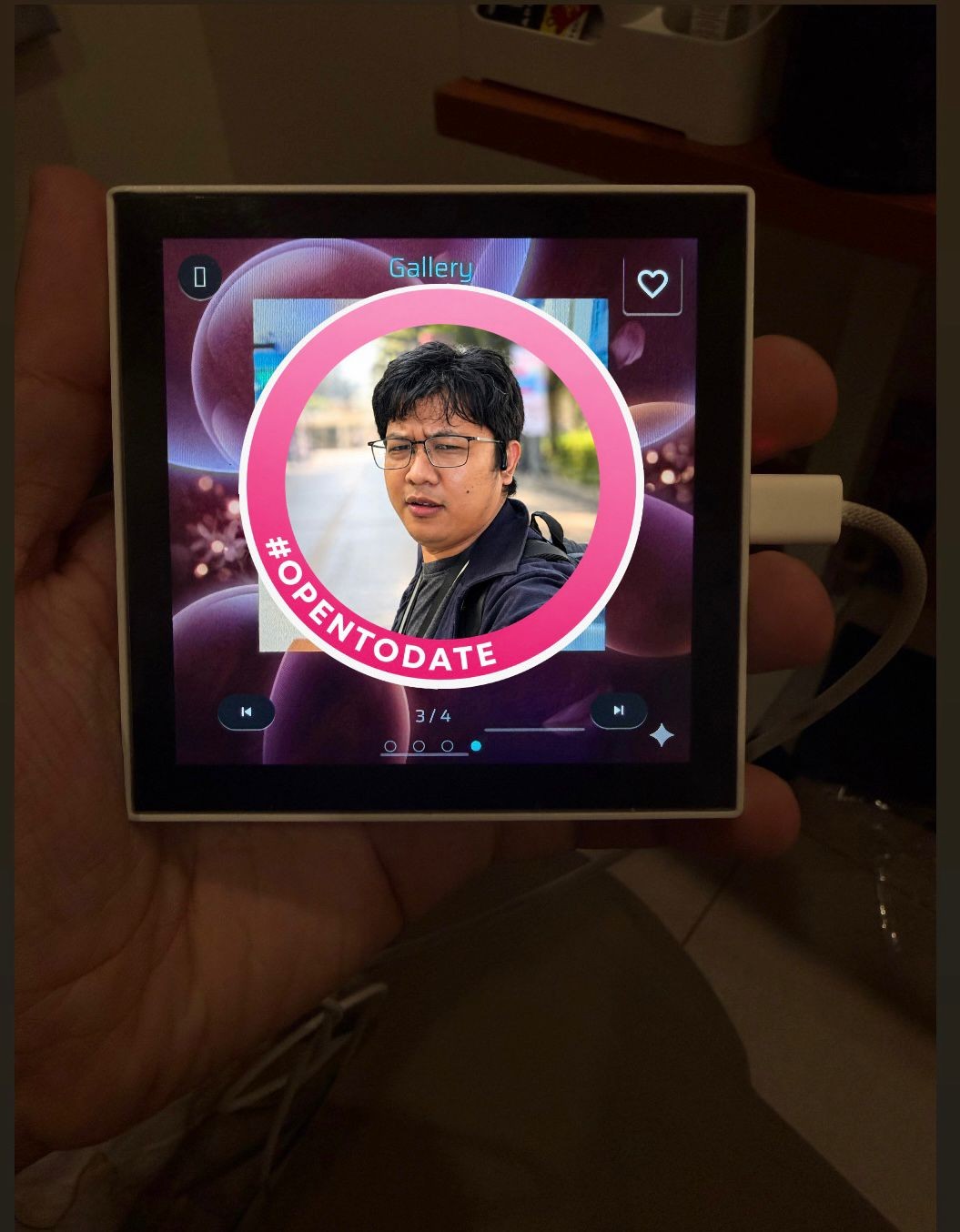
I wrote firmware.
I designed a custom ESP32 board — programmed directly at the embedded level — that powered a proposal experience she would never forget. The hardware was mine. The code was mine. The moment was ours.
There's something irreducibly personal about a declaration written in C that runs on a chip you soldered yourself. No template. No off-the-shelf romance. Just engineering in service of love.
Chapter 5: The Gift That Meant Everything
I gave her two things.
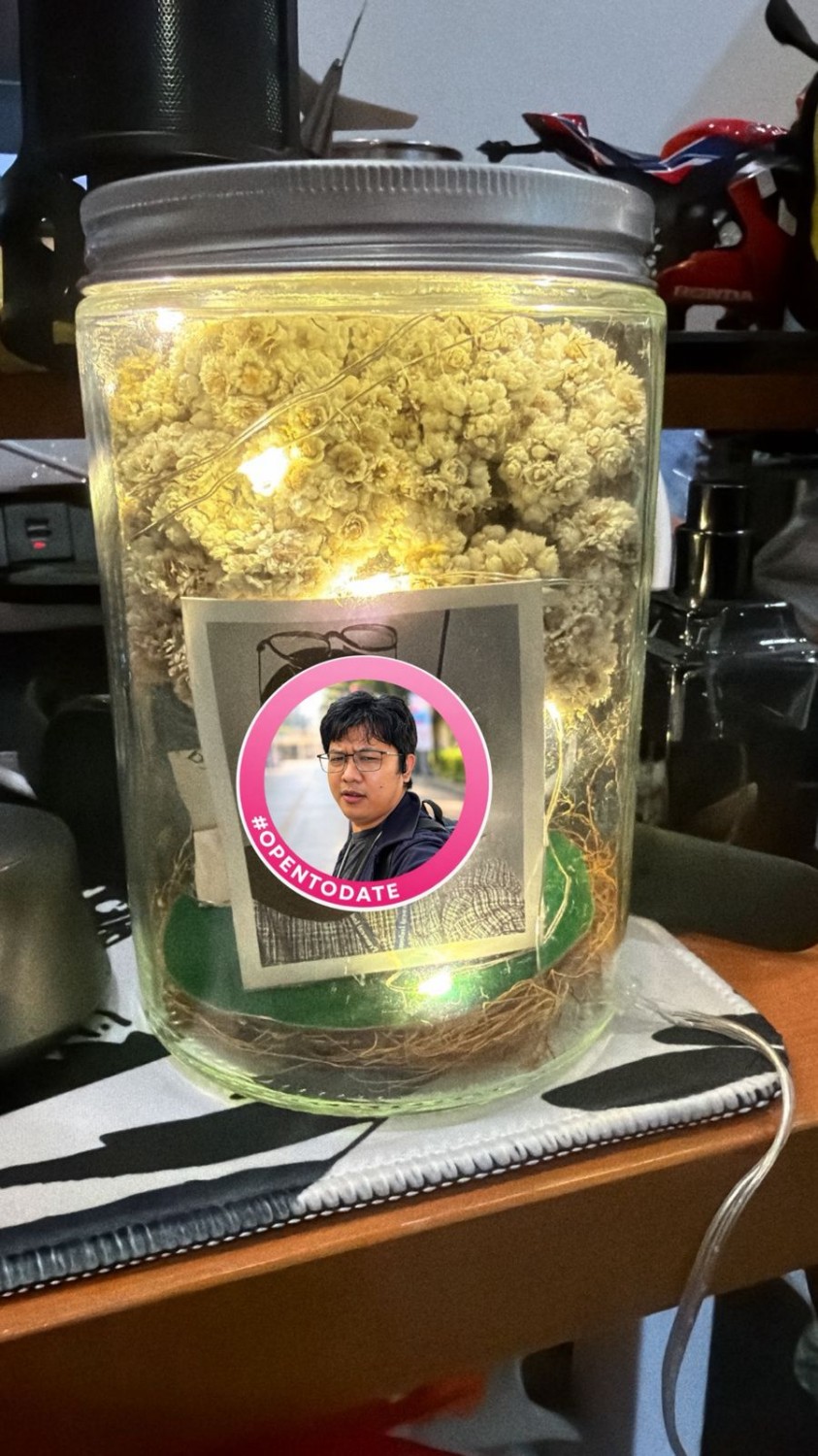
First: a mason jar filled with dried edelweiss, warm fairy lights, and a Polaroid of her — glowing, luminous, permanent. Edelweiss doesn't wilt. It's the flower of eternal love, indigenous to the highlands of Java and Sumatra, a symbol Indonesians recognize instantly.
Second: a book — Menjadi Wanita Paling Bahagia by Dr. 'Aidh al-Qarni.
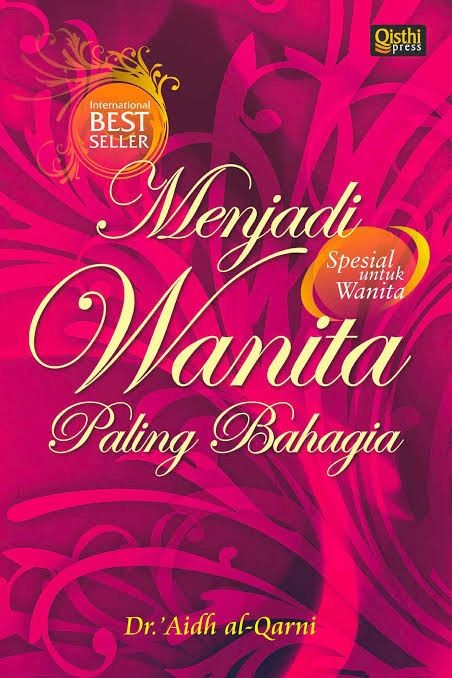
I chose it deliberately. Because she chose me — and in choosing me, she chose to trust that I would show up for her, care for her, and grow with her. That book is my promise in paper form: I want to be the kind of partner who makes her the most joyful version of herself.
Not just happy. The most happy.
What I Actually Learned
A lot of people will read this story and think it's about technology.
It's not.
It's about intentionality.
The bot was intentional. The card game was intentional. The platform was intentional. The proposal was intentional. The gift was intentional.
Every step was a deliberate act of saying: you matter enough for me to think carefully about this.
In a world where most people half-swipe and ghost and leave things unsaid, intentionality is the rarest gift you can give someone.
A Note on What This Is — and Isn't
I'm not publishing this as a tutorial. I'm not suggesting everyone build a Bumble bot (though the engineering is genuinely interesting).
I'm sharing this because I believe we're in a cultural moment where technology and love feel like opposites. Where "authentic" means analog. Where digital tools are seen as shortcuts that cheapen genuine connection.
I disagree.
Tools are neutral. Intention is everything.
I used every tool available to me — code, design, language models, embedded systems — in service of something real. And it worked. Not because the tools were impressive, but because they were honest expressions of who I am and how I love.
She said yes — not to the ESP32, not to the platform, not to the bot.
She said yes to the person who built all of it.
Rahmat is co-founder of Infraloka — a technology company working to democratize access to education, healthcare, legal protection, and economic opportunity in Indonesia. He also documents his journeys on YouTube at Travel The World With Rahmat.
If this resonated with you, I'd love to hear your thoughts in the comments.