
How to Get Hired: The Complete Playbook From ex-Solutions Architect at AWS By Rahmat Wibowo From Infraloka
[Getting Hired] Everything I have learned from reviewing hundreds of resumes, running interviews, and building a team at AWS, condensed into one guide.
I have reviewed over 50 resumes in the past two years.
Most of them did not excite me. The candidates had achievements. They had GPAs. Some had certifications. But I closed the tab in seconds because nothing in the document made me want to know the person behind it.
This guide is everything I wish job seekers understood before applying. It covers five phases: your resume, your pre-application strategy, the interview, the intern-to-full-time track, and what scaled startups actually look for. Treat it as a playbook, not a list of tips.
Part 1: Write a Resume That Convinces a Stranger
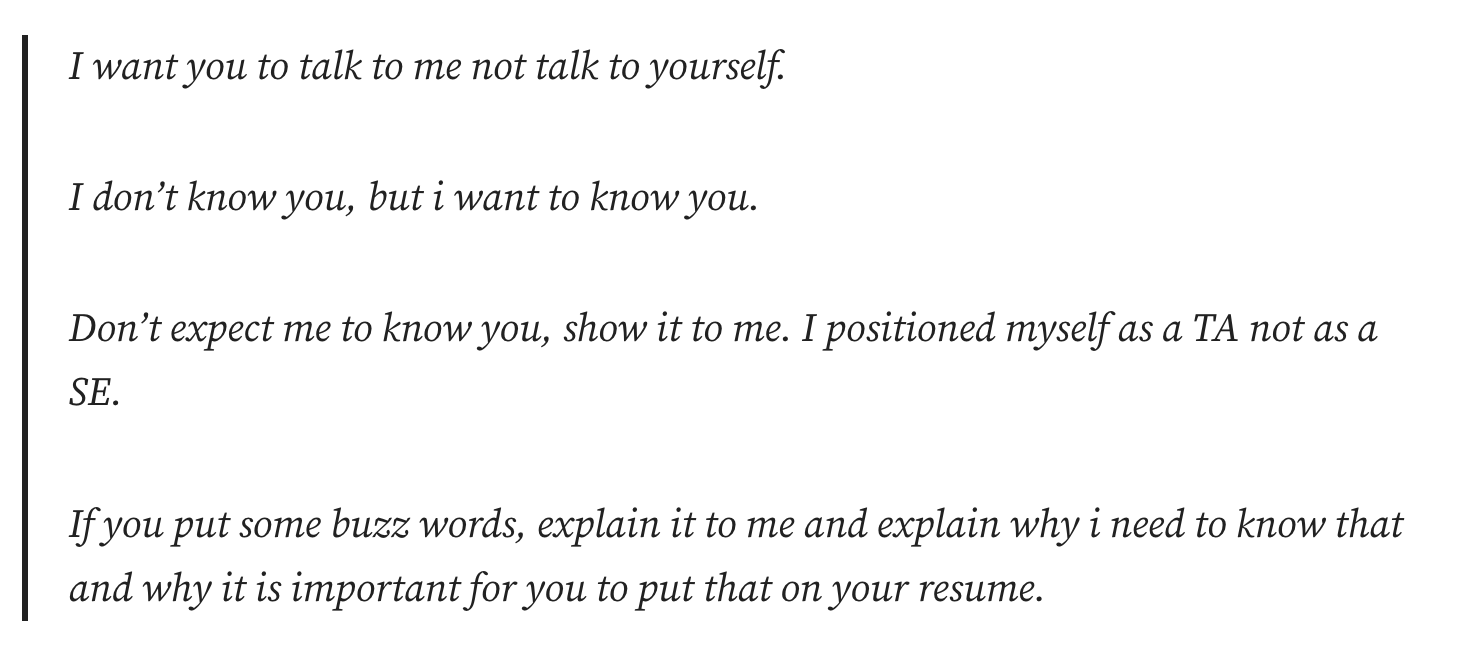
The first and most important mindset shift: write your resume as if the reader has never met you. Because they have not.
You are not a celebrity. No one is waiting for your resume. You are an unknown variable, and your document has to do the entire job of making someone believe you are worth their time.
Here is how to do that.
Step 1: Use an ATS-friendly format
Most companies use an Applicant Tracking System to filter resumes before any human reads them. If your formatting breaks the parser, you will not make it through regardless of your qualifications. Use clean, single-column templates without tables, text boxes, or unusual fonts. Save as PDF. Use the exact keywords from the job posting in your experience and skills sections.
Step 2: Write for your audience
Your reader may be an HR professional with no technical background. If you write "built a model with 0.87 F1 score," they do not know whether that is remarkable or mediocre. Your job is to explain what the number means and why it matters to the business.
Bad: "Developed ML model with 0.87 F1 score."
Better: "Developed a fraud detection model (F1: 0.87) that reduced false positives by 34%, saving the operations team 12 hours of manual review per week."
Like a dog that does not know how much a diamond is worth, a non-technical reader cannot value what you do not explain. Translate your work into impact.
Step 3: Make it achievement-based, not task-based
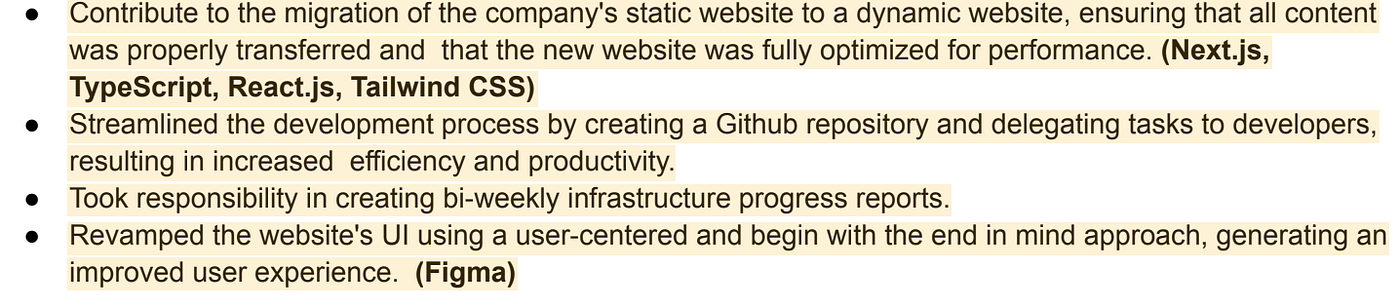
Most resumes describe what someone was supposed to do. The ones that get people hired describe what someone actually changed.
Task-based: "Responsible for backend API development using Node.js."
Achievement-based: "Rebuilt three core API endpoints that reduced average response time from 420ms to 65ms, enabling the mobile team to remove a loading screen they had worked around for eight months."
For every bullet point, use the STAR framework: Situation, Task, Action, Result. This forces your experience into a story with a beginning, a decision, and an outcome. When you write this way, the reader understands not just what you did but what kind of thinker you are.
Step 4: Add numbers to everything
A bullet without a number is a claim. A bullet with a number is evidence. Before finishing any line, ask yourself these questions:
- How much faster, more reliable, or more scalable was the result?
- How many users or transactions did this affect?
- What did this save in money, time, or engineering headcount?
- What changed in the business because of this work?
If you reduced churn, by what percentage? If you increased revenue, by how many dollars? The more specific you are, the more credible you become.
Step 5: Ask WHY before writing each line
Before adding anything to your resume, run it through a simple filter: Why is this important to show? Why does it belong on this document?
Use the 5 Whys technique if you are stuck. Start with "I built X." Then ask why that matters, and keep asking why five times. By the fifth answer, you will find the actual reason the work was valuable. That reason belongs in your resume. The surface-level task does not.
Step 6: Show initiative
The difference between a resume I close in seconds and one I save for a second read is usually a single line that shows the candidate did something nobody asked them to do.
Show that you were curious. Show that you improved something beyond your scope. Show that you left a project better than you found it. That is what ambition looks like on paper.
Step 7: Let your personality come through
I can only know you through your writing. If your resume reads like a generic job description, I have learned nothing about who you are. Give your writing your personal traits. If you care deeply about reliability, that should be obvious. If you are obsessed with performance, show it in the specific choices you made.
The resumes that excite me have energy. I can feel the person behind them. The ones I close have none.
Part 2: What to Do Before You Apply
The 2020 to 2023 cohort is facing a specific and structural disadvantage. GPA inflation during COVID made grades meaningless as a differentiator. Companies over-hired during the pandemic, over-corrected afterward, and the job market now defaults to senior hires because training budget has been cut.
This is genuinely unfair. It is also the environment you are operating in. Here is the door through the wall.
Get certified before you apply
A certification does what a GPA no longer does: it proves you can meet a standard that applies uniformly across all universities and all batches.
One company I know had a strict two-year experience requirement for an engineering role. They waived it for a fresh graduate who had passed the AWS Solutions Architect Associate exam. The cert was not magic. It was a signal that this person was not waiting around to be discovered.
If you are pursuing cloud roles, start with AWS Cloud Practitioner, then AWS Solutions Architect Associate. For security roles, CompTIA Security+. Search "best certification for [target role]" and work backwards from the job descriptions you actually want.
Identify your skill gaps before applying
Do not blindly apply to roles you are not ready for. Compare the job requirements against your current skills. List the gaps honestly. If the gap is large, postpone applying and spend three to six months closing it through structured learning.
Failing an interview before you are ready costs you the opportunity twice: once when you fail, and again when the company remembers the rejection for the next opening. Use AI tools to generate a learning roadmap, create practice exercises, and simulate interview questions. This is how modern candidates outlearn the competition.
Build your network before you need it
Companies hire through referrals at three to five times the conversion rate of cold applications. This is not nepotism. From the company's perspective, hiring someone known to the team is a safer bet than hiring a stranger.
Connect to people on LinkedIn with genuine, substantive writing. Not "Hi, I am a fresh graduate looking for opportunities." Show your thinking. Comment on ideas with real opinions. Share work you are proud of.
I have extended opportunities to people I have never met in person because their writing showed me they were hungry and thoughtful. A mentor relationship does not require a formal introduction. It requires you to show up as someone worth investing in.
Send a high volume of applications and fail fast
If you are not applying to hundreds of companies, you are not collecting enough signal to understand what is working. Fail big. Fail publicly enough that people remember you tried.
When you are rejected, do not disappear. Ask for feedback. Most candidates do not ask. The ones who do get a free coaching session on exactly what is holding them back. Connect with the interviewer on LinkedIn afterward. Turn every rejection into a relationship and a lesson.
Choose your environment deliberately
Not all job environments shape you the same way. Know what you are choosing.
Startups offer fast learning, high ownership, and real accountability. They also carry higher risk of layoffs and inconsistent processes.
Corporates offer stability, structured career tracks, and larger systems to learn from. They often mean slower growth and more repetitive work.
State-owned enterprises offer long-term stability for permanent employees. Avoid outsourced roles within SOEs as they carry fewer protections and less career mobility.
One underrated path: enterprise tech stacks. Java, .NET, and PHP power most of Indonesia's financial and government infrastructure. The talent supply for senior engineers in these stacks is low. Demand is high. Compensation is strong. Do not overlook legacy technology because it feels less exciting.
Part 3: How to Win the Interview
The interview is not a test. It is a conversation designed to answer one question: do I trust this person enough to work with them?
Here is how to make the answer yes.
Build connection in the first two minutes
You are talking to a person, not a system. Smile. Make eye contact. Find common ground. Ask a genuine question about their work before the formal questions start.
People hire people they like and trust. The first two minutes set the tone for everything that follows. If you show up stiff and transactional, that impression is very hard to reverse.
Structure your answers with STAR
For every behavioral question, use this framework:
Situation: what was the context and why did it matter? Task: what were you specifically responsible for? Action: what did you do, and what alternatives did you consider? Result: what changed because of your decision?
This structure keeps you focused, keeps the interviewer engaged, and prevents you from rambling. It also forces you to tell the truth in a way that shows your thinking, not just your outcome.
Balance "I" and "We" carefully
Use "I" to show ownership of specific decisions and results. Use "We" to show that you can collaborate and attribute credit fairly.
Candidates who say "we" for everything sound like they contributed nothing. Candidates who say "I" for everything sound like they cannot function on a team. The right ratio shows someone who leads when needed and follows when appropriate.
Turn the interview into a discussion
If you are doing a technical or coding interview, talk through your reasoning out loud. In real engineering work, you do not solve problems alone. Show the interviewer how you think: what assumptions you are making, where you are uncertain, what you would do to validate your approach.
If the interview runs over its scheduled time, that is not a problem. That is you winning. It means the conversation was engaging enough that the interviewer did not want to stop.
Adapt your communication to your audience
Technical interviewer: go deep on specifics, show you understand the trade-offs, be honest about what you do not know.
Engineering manager: focus on how you handled ambiguity, how you worked with others, and what you shipped.
Executive: lead with business outcomes, not implementation details.
HR: show culture fit, values alignment, and your genuine interest in the company's mission.
Show your energy
Energy is contagious. Low engagement, monotone delivery, and visible anxiety are all signals that the candidate does not actually want to be there. Be present. Be curious. Ask questions that show you researched the company before the call.
Close the interview actively
Most candidates fail here because they are relieved it is almost over. Top candidates use the last five minutes to separate themselves.
First, state your interest specifically. Not "this sounds great." Something like: "I want this role because the scale problem you described is exactly the domain I have been building depth in for the past year. I would like to be part of solving it."
Second, ask the question most candidates are too afraid to ask: "Is there anything in my background that gives you pause?"
That question is uncomfortable to ask. That discomfort is exactly why you should ask it. It signals confidence and self-awareness. It gives you a real-time chance to address the last obstacle between you and an offer.
Third, ask what success looks like in the first 90 days. This signals that you are already thinking about delivering impact, not just receiving a salary.
After a rejection: learn and stay connected
Ask the interviewer for feedback immediately after the rejection call. Connect with them on LinkedIn. Most candidates disappear. The ones who learn, improve, and reconnect are the ones who eventually get hired.
Part 4: The Intern-to-Full-Time Playbook
I got my full-time offer at AWS from the intern track. I skipped the loop interview. I skipped the bar raiser. This is not luck. It is what happens when you treat the internship as the real interview from day one.
Become proactive
Show up in meetings even when you are not required to. Ask questions in team channels. Make your presence felt without being loud. Proactive does not mean aggressive. It means the team is engaged by you being there, not just aware that you exist.
Be easy to work with
This is the most underrated career advantage in engineering. Being kind, responsive, low-drama, and reliable creates a reputation that compounds over time. It opens doors that technical skill alone cannot open. Be the person who solves problems for others, not the person who creates more work.
Take initiative beyond your assigned task
You do not need to do something enormous. Write the meeting notes when no one else is. Ask your manager for more work when your project is finished. Shadow senior engineers on client calls and document what you observe. Ask to join the post-incident review even though you were not involved in the incident.
Initiative is proof of ownership. And ownership is what converts an intern into a permanent hire.
Build something that outlives you
Create an artifact the company will depend on after you leave. A runbook that documents a process that only lived in one engineer's head. A reusable module that three other engineers adopt. An automation that removes a manual step from the deployment pipeline.
When you are the maintainer of something valuable, the company has a concrete reason to keep you. That is not manipulation. That is engineering value creation.
Hold yourself to production standards
AWS has a leadership principle: Insist on the Highest Standards. Apply it to your own work at every level. Write tests. Document edge cases. Flag risks before someone asks about them. Review your own pull requests before submitting them.
The most powerful thing you can do as an intern is behave like someone who already belongs on the team permanently. The conversion decision then becomes obvious, not difficult.
The one question to ask yourself every week
Would this team notice if I were not here?
If the answer is no, change what you are doing. When the answer becomes yes, conversion from intern to full-time becomes an inevitability rather than a decision.
Part 5: What Scaled Startups Actually Want
If you want to work at a unicorn or a digital-native company, understand that they are not looking for someone who can use many tools. They are looking for someone who knows how to do one thing extremely well and can be trusted with production systems that directly affect business outcomes.
Stop stacking frameworks. Start doing things right.
Most portfolios list React, Vue, Docker, Spring Boot, and ten other tools. That does not impress anyone at a scaled company. Here is why: they have their own internal frameworks and tooling. Your familiarity with public tools is largely irrelevant.
What they actually need is engineers who know how to write code that will not break production. Learn these things instead:
Test Driven Development. Write the test before the implementation. This forces you to think about the interface before the internals, and it makes your code inherently testable.
Unit testing and mocking. Know how to isolate components, simulate dependencies, and verify behavior at the function level.
Design patterns. Understand the common structural solutions to recurring problems: factory, observer, strategy, repository. Not to use them everywhere, but to recognize when they fit.
System design. Understand how to think about scale, failure modes, consistency trade-offs, and distributed state. Mission-critical systems have SLAs. A payment disbursement system promising 99.9% uptime settled under two seconds cannot tolerate careless design.
Develop T-shaped skills
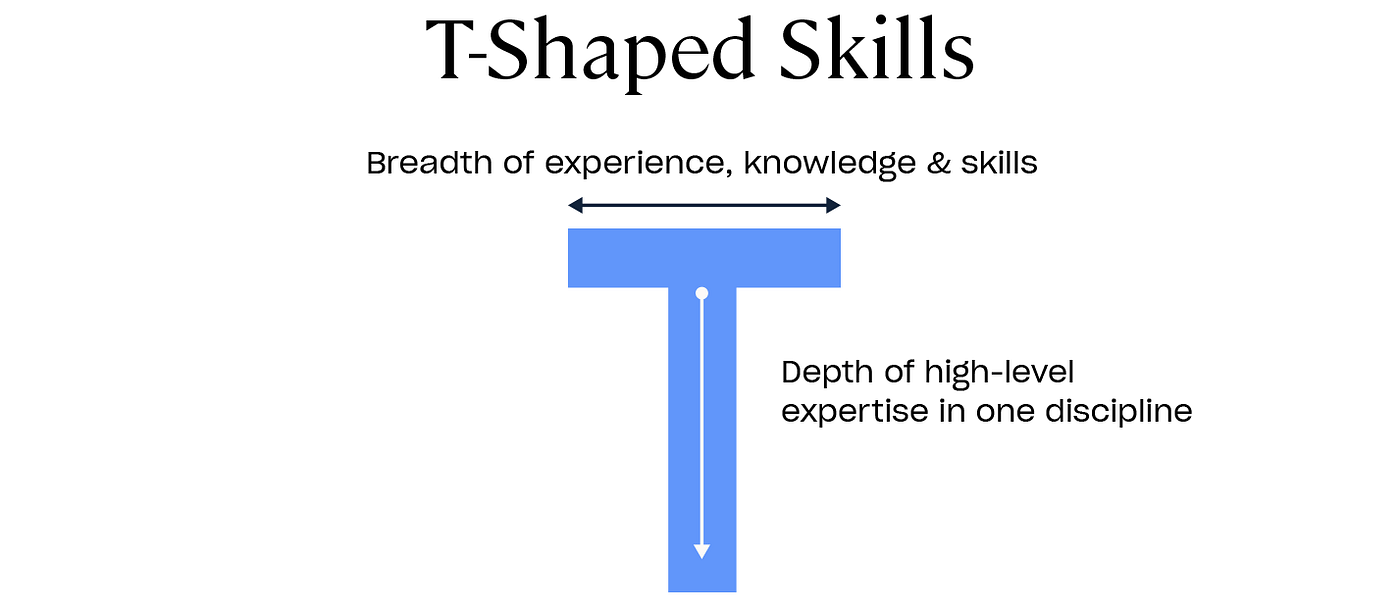
The vertical bar of the T represents deep expertise in one domain. The horizontal bar represents enough breadth to collaborate effectively with engineers in adjacent areas.
Pick your vertical. Go deep. Backend? Go deep on databases, caching, and asynchronous processing. Infrastructure? Go deep on reliability, observability, and deployment patterns.
Then learn enough about adjacent domains to be useful in cross-team conversations. The vertical gets you hired. The horizontal gets you promoted.
Read books, not just tutorials
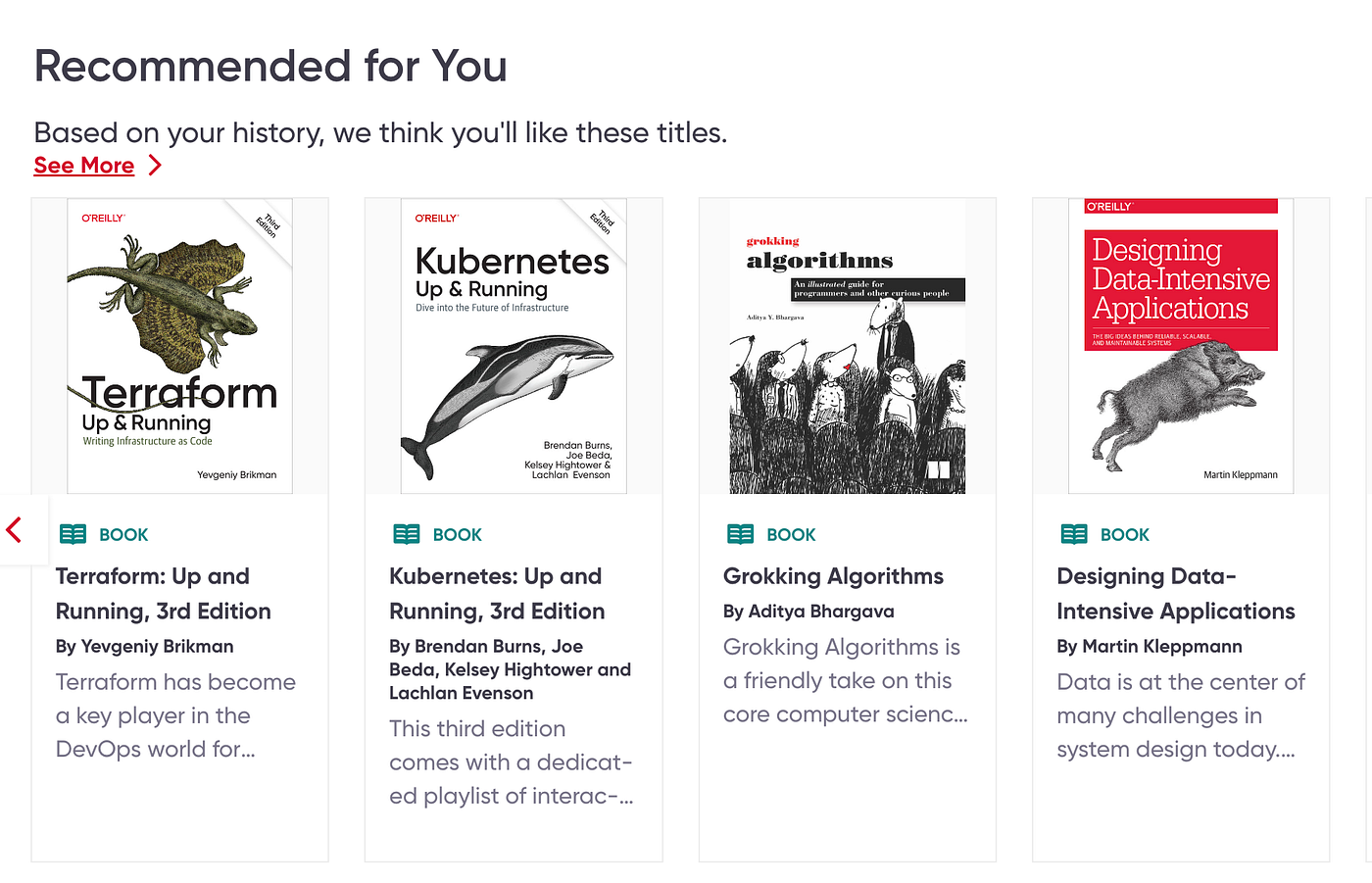
Tutorials teach you what and how. Books teach you why.
The engineer who has read "Designing Data-Intensive Applications" by Martin Kleppmann is not necessarily smarter than the one who has not. But they are asking different questions, and those questions are worth money in architecture discussions and system design interviews.
Einstein said: "If you can't explain it simply, you don't understand it well enough." To explain something simply, you need to know the why. Read books to find the why.
Do not over-engineer
Your job is to support the business, not to satisfy your architectural preferences. Simple systems that work reliably are worth more than sophisticated systems that might work eventually.
Every additional service has a cost. Every abstraction has a maintenance burden. Every dependency is a potential failure point. Before adding complexity, ask whether the business actually needs this level of sophistication right now. The answer is usually no.
Follow a roadmap
Do not explore randomly. Use my open source project Pathway-AI. It will help you do gap analysis and create a roadmap personalized based on your current skill and the job requirements that you are going to apply.
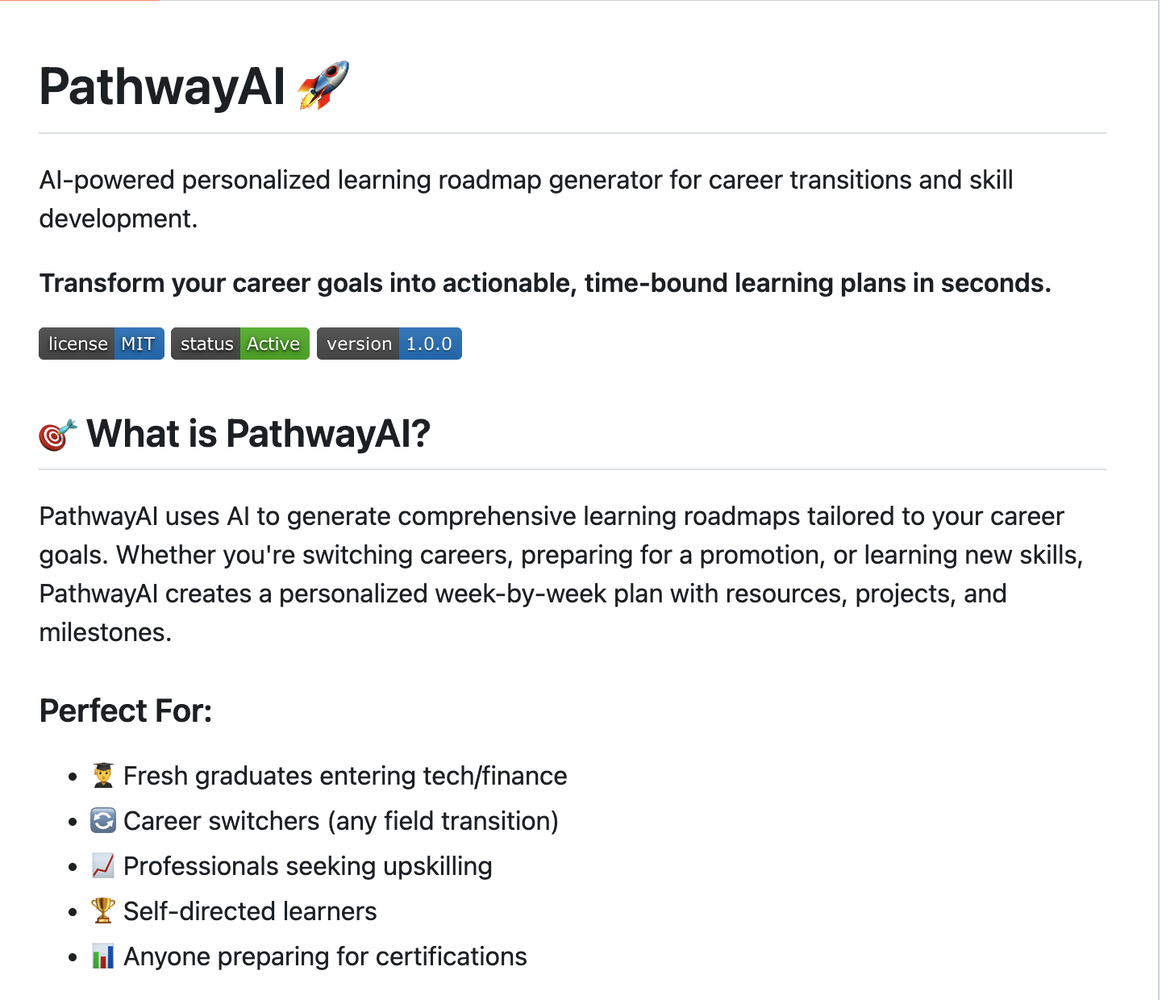
Checkout here : https://github.com/InfraLoka/Pathway-AI
The Through-Line Across All Five Phases
Reading back through everything above, the same idea keeps appearing in different forms.
Stop performing the role of a job seeker. Start behaving like someone who already does the work at a high level.
Your resume should prove you changed something, not just that you showed up. Your network should show you invested in relationships before you needed them. Your interview should demonstrate that you can think and collaborate, not just recall memorized answers. Your internship should leave something behind that the team depends on. Your craft should reflect standards that survive production.
The companies worth joining are trying to hire the person you will be in three years. Your job is to show them that person exists right now.

There is a concept called Ikigai, a Japanese framework for finding purpose at the intersection of four things: what you love, what you are good at, what the world needs, and what pays well. When your career aligns with all four, growth stops feeling like effort and starts feeling like momentum.
Find that intersection. Build toward it deliberately. Apply with conviction, not desperation.
The people I hire are writing their own story.
Start writing yours.