
How to Improve Your English Speaking Level By Rahmat Wibowo From InfraLoka
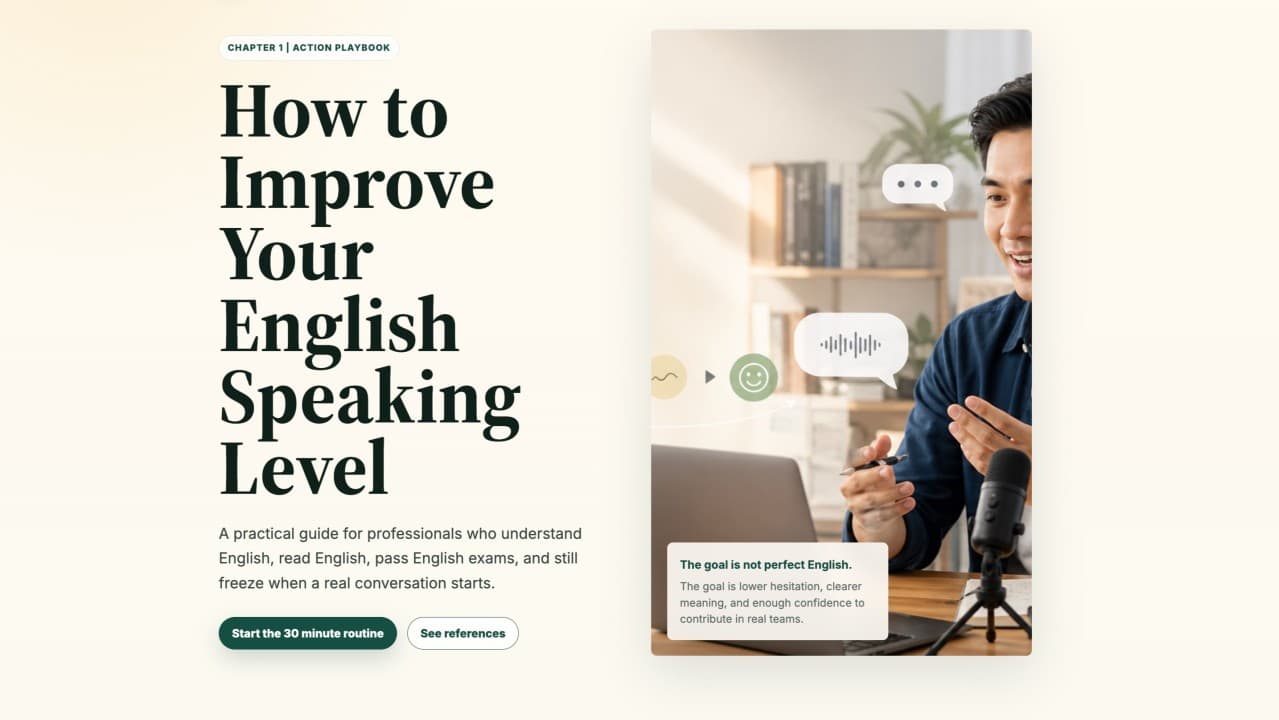
A practical guide for professionals who understand English, read English, pass English exams, and still freeze when a real conversation starts.
I came from Indonesia, a country where many students meet English early in school. For years I wondered why I could learn English for more than a decade and still feel uncomfortable speaking it. The answer was painful but useful: I had trained comprehension more than communication.
School made me good at recognizing grammar patterns, choosing answers, and understanding text. Work required something else. In a multinational internship with teammates across ASEAN, I needed to respond quickly, clarify ideas, and join discussion while my confidence was still catching up.
This playbook turns that experience into a practical system. It keeps the personal lesson, then adds research from second-language acquisition, CEFR proficiency descriptors, and speaking practice guidance.
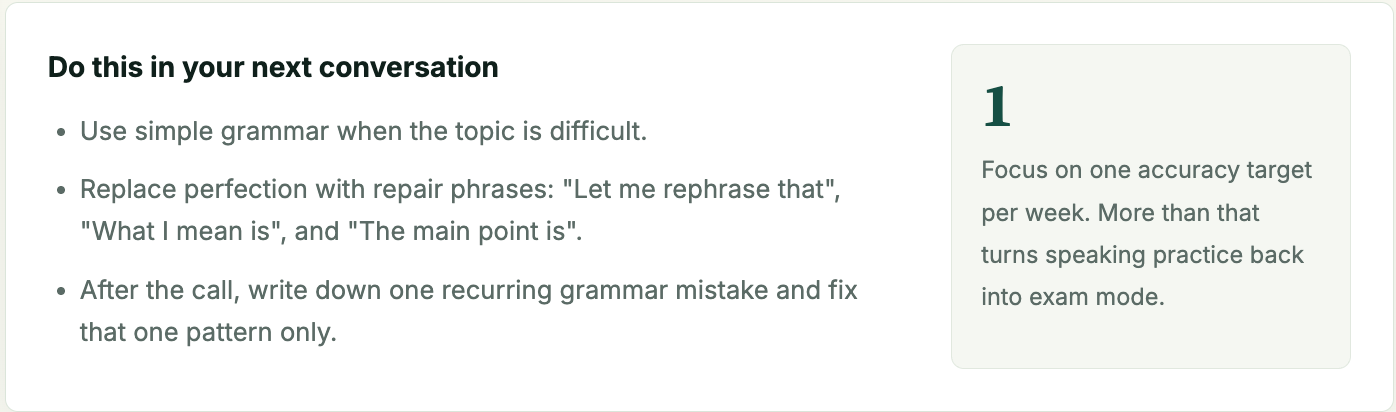
Stop treating grammar as the gatekeeper of speech.
When we speak Bahasa Indonesia or another mother tongue, we do not usually run a grammar audit before every sentence. We focus on meaning first. English speaking improves when you give yourself the same permission: communicate, notice the gap, then refine.
This does not mean grammar is useless. It means grammar should support communication instead of blocking it. The CEFR treats spoken ability as a combination of range, accuracy, fluency, interaction, and coherence. Accuracy matters, but it is only one part of speaking.
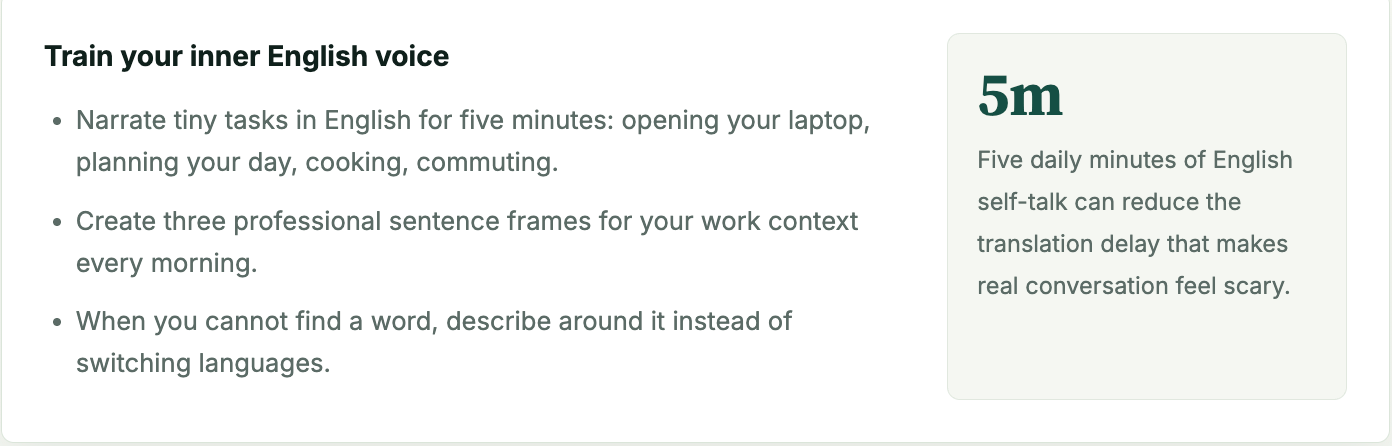
Build the habit of thinking directly in English.
Many learners lose time because they create an idea in their first language, translate it word by word, then panic when a word is missing. Fluency grows when common ideas become automatic enough that you can speak from meaning, not from translation.
Automaticity is built through repeated retrieval. Instead of memorizing isolated vocabulary, prepare ready-to-use thought patterns: "I agree because", "My concern is", "From my experience", "Could we clarify", and "The trade-off is". These sentence frames become mental shortcuts during pressure.
Understand that the struggle is normal.
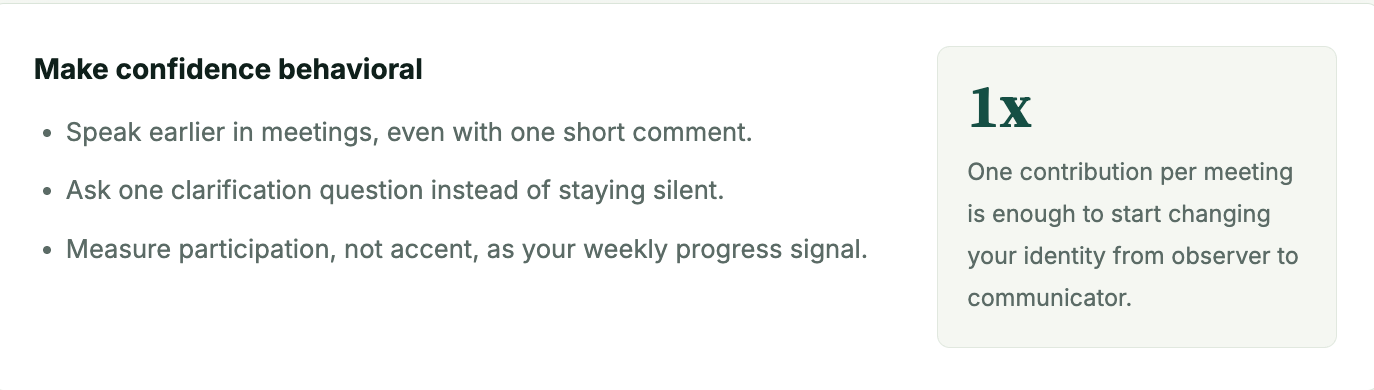
It is easy to feel alone when friends appear fluent. In international environments, you quickly discover that many smart people from Korea, China, Vietnam, Thailand, Indonesia, and beyond carry the same anxiety. The issue is not intelligence. The issue is exposure, practice, identity, and fear of judgment.
Foreign language anxiety is a real research topic. Learners often worry about mistakes, evaluation, and looking less competent than they are. Confidence improves when you stop interpreting hesitation as proof that you are weak and start treating it as a normal signal from a skill under training.
Language barrier is no longer the wall when you stop using it as evidence against yourself.
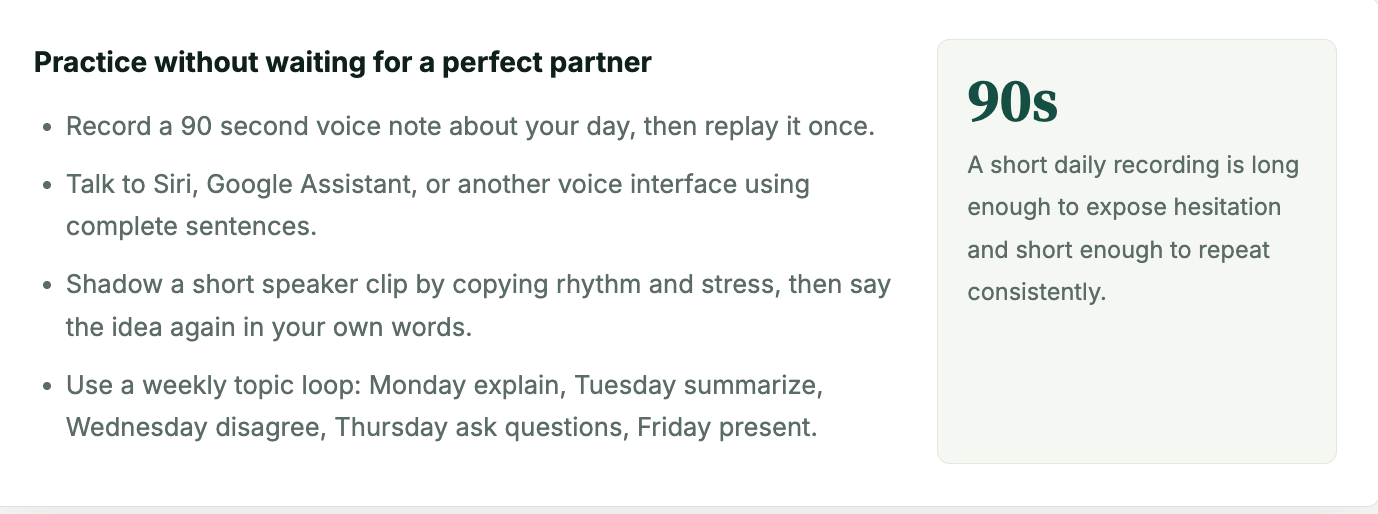
Practice speaking where sound actually leaves your mouth.
Understanding English and speaking English are related, but they are not the same skill. Speaking requires retrieval, pronunciation, timing, breath control, self-correction, and interaction. You cannot fully train those abilities by reading silently or answering multiple choice questions.
Second-language research gives special importance to output because producing language forces learners to notice what they cannot yet say. That noticing is useful. It tells you exactly what to practice next.
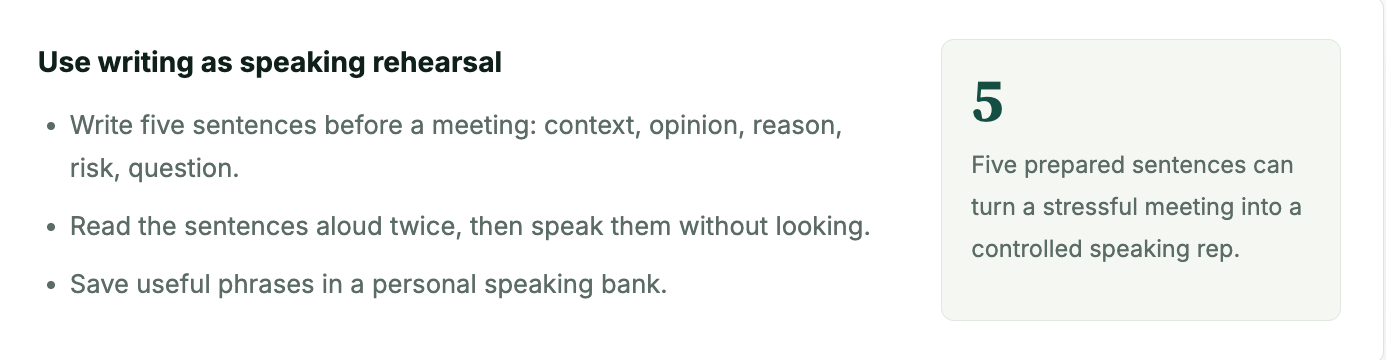
Learn to write because writing sharpens speaking.
Writing slows your thinking down so you can see it. It helps you organize ideas, expand vocabulary, and build phrases that later become easier to say. For professionals, writing is also a rehearsal space for speaking in meetings, interviews, and presentations.
The habit does not need to be academic. Write a short reflection, a meeting summary, a LinkedIn draft, or an answer to a common interview question. Then read it aloud. Your writing becomes a script, and your script becomes spoken confidence.
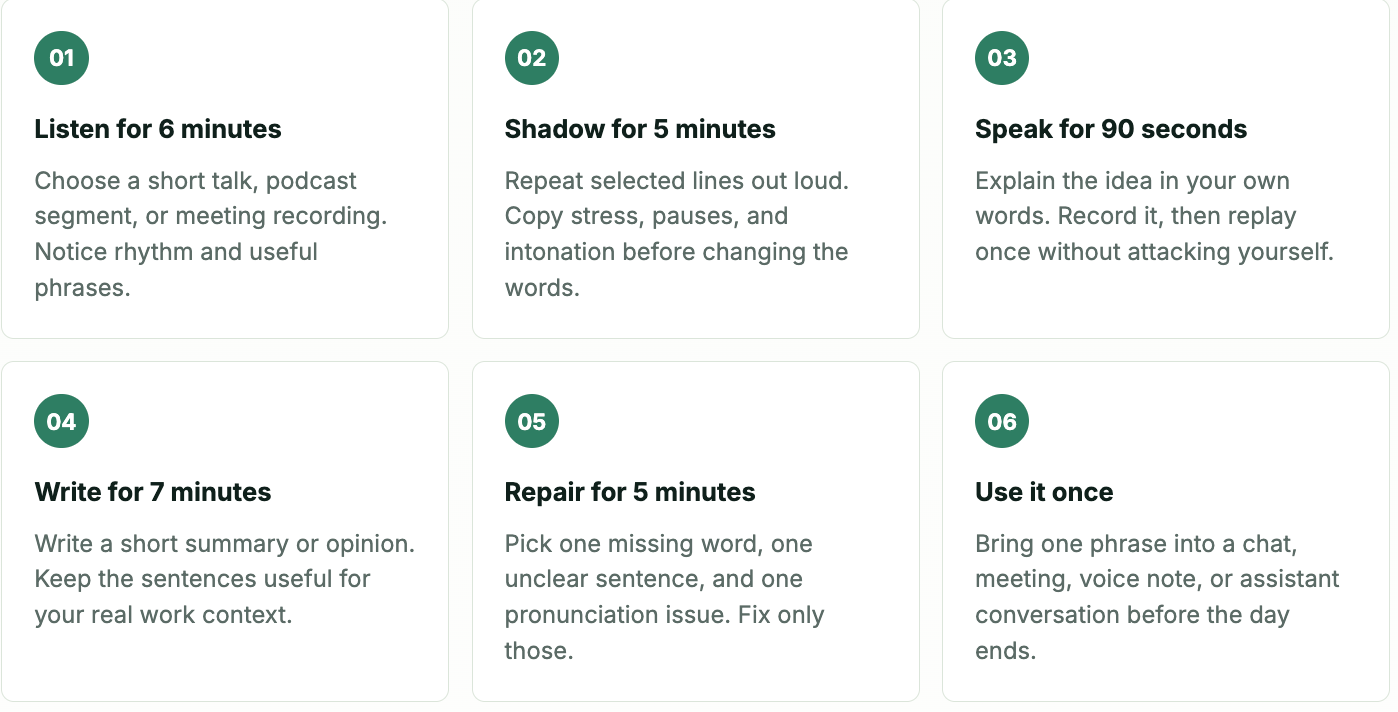
30 minute system - A daily routine for busy professionals.
This routine combines input, thinking, output, feedback, and writing. It is simple enough to keep, but complete enough to train the parts of speaking that exams often ignore.
Reference List
- Council of Europe. Common European Framework of Reference for Languages. Used for the idea that speaking level includes range, accuracy, fluency, interaction, and coherence.
- British Council LearnEnglish. Speaking skills practice. Used for the practical emphasis on regular speaking tasks by level.
- Cambridge English. Activities for learners. Used for the principle of targeted, level-aware practice.
- Swain, M. (1985). Communicative competence: Some roles of comprehensible input and comprehensible output in its development. In S. Gass and C. Madden, Input in Second Language Acquisition.
- Swain, M. and Lapkin, S. (1995). Problems in output and the cognitive processes they generate. Applied Linguistics, 16(3), 371-391.
- Horwitz, E. K., Horwitz, M. B. and Cope, J. (1986). Foreign language classroom anxiety. The Modern Language Journal, 70(2), 125-132.
- Schmidt, R. (1990). The role of consciousness in second language learning. Applied Linguistics, 11(2), 129-158.
- Nation, I. S. P. (2007). The four strands. Innovation in Language Learning and Teaching, 1(1), 2-13.