
Indonesia's Blind Spot: The Foreign Degree Loophole That Lets Fraud Thrive in Plain Sight, Abil Sudarman and Marchel Shevchenko
When a degree comes from abroad, Indonesia's entire verification infrastructure goes silent. The Abil Sudarman and Marchel Shevchenko case is not the problem. It is the symptom.
There is a crack in Indonesia's education credentialing system wide enough to drive a career through. And it has been there for years, largely ignored by the very ministry whose job it is to close it.
Let us talk about what happened with Abil Sudarman and Marchel Shevchenko.
The Abil Sudarman Case: A Mirror for a Systemic Problem
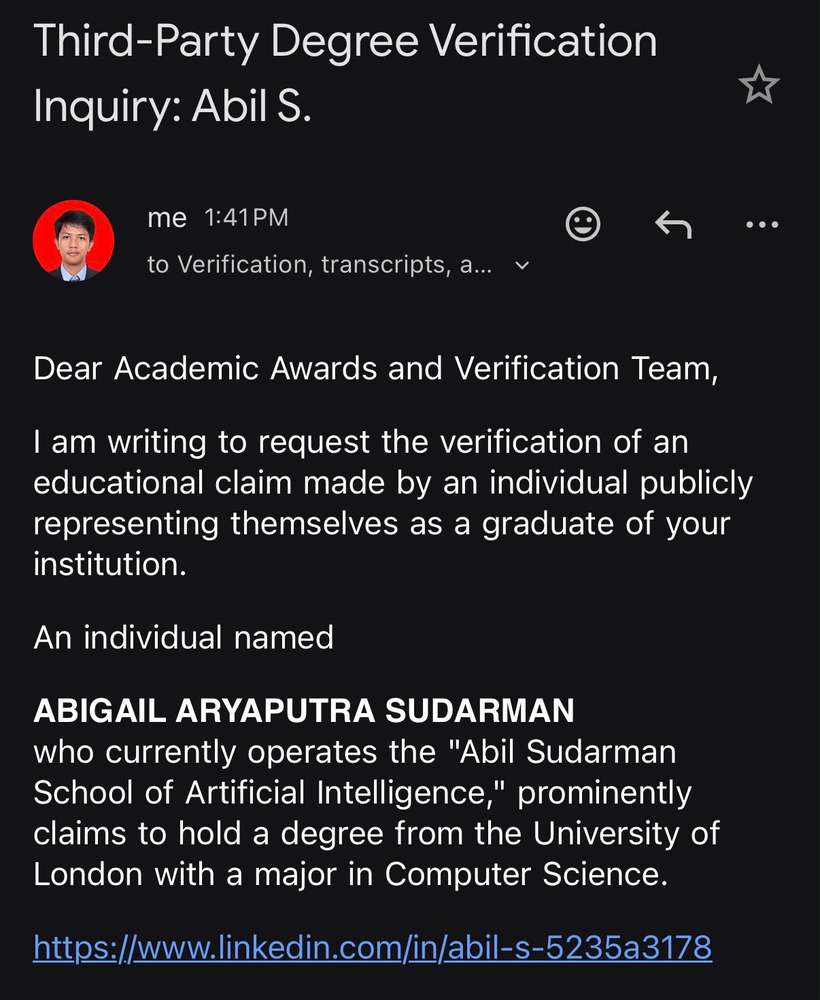
Abil Sudarman, whose full name is Abigail Aryaputra Sudarman, rose to significant public prominence in 2026. He built an AI-powered procurement monitoring dashboard called Nemesis Assai, received coverage from major outlets including Tempo.co, and positioned himself publicly as an AI expert, career counselor, Executive Director at KORIKA (Kolaborasi Riset dan Inovasi Industri AI Indonesia), a UNESCO AI project manager, and a Responsible AI Fellow at the Stimson Center in Washington D.C.
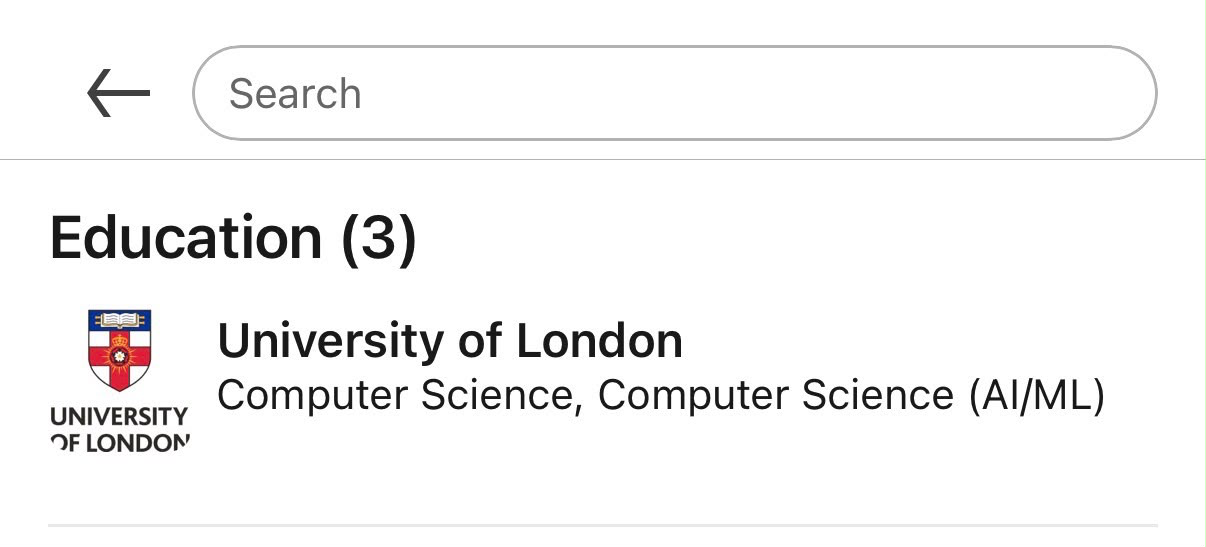
His public profiles listed his education as Computer Science at the University of London.
Other sources cited the University of Liverpool.
There is a difference between those two institutions. They are not the same university. The University of London is a federated system encompassing multiple colleges. The University of Liverpool is a separate, standalone Russell Group institution ranked in the top 150 globally by QS World University Rankings 2026. These are not interchangeable, and casually swapping them in a professional profile is, at the very minimum, a red flag worth scrutinizing.
Now here is the question that exposes the real problem: Can you verify whether Abil Sudarman actually graduated from either of those institutions through any Indonesian government system?
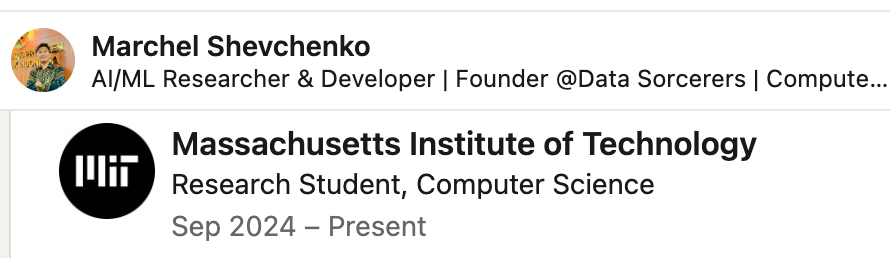
Also Marchel Shevchenko claim he was a research student at Massachusetts Institute of Technology
PDDIKTI: Excellent for Domestic Degrees, Silent on Foreign Ones
Indonesia's Pangkalan Data Pendidikan Tinggi, or PDDIKTI, is genuinely impressive for what it was designed to do. Any employer, institution, or member of the public can visit pddikti.kemdikbud.go.id and search for a student by name, student number, institution, or study program. The system returns graduate status, study period, and degree information for every registered Indonesian higher education graduate. It is free, publicly accessible, and relatively comprehensive for domestic institutions.
The moment the claimed degree comes from a foreign university, however, PDDIKTI goes completely dark.
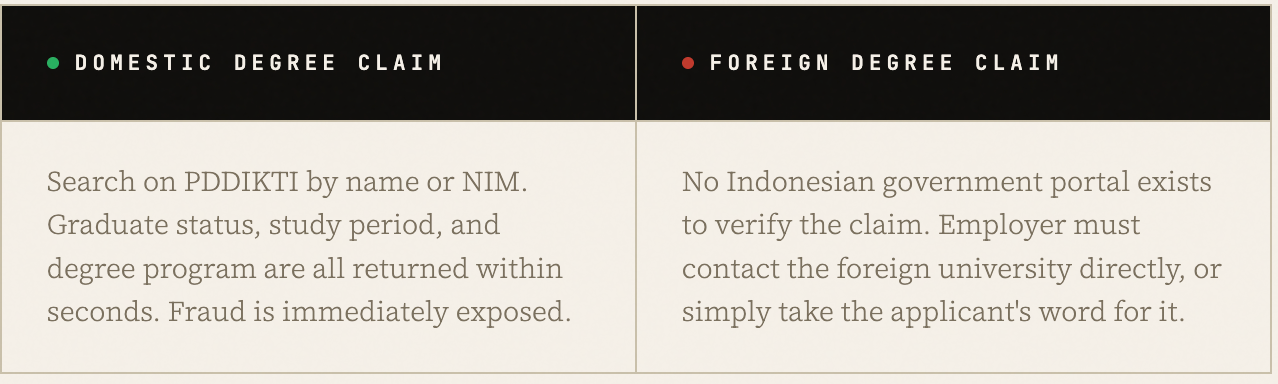
There is no searchable database of foreign degree holders in Indonesia. There is no integration between the domestic PDDIKTI system and foreign credential verification. An employer in Jakarta cannot go to any single government portal and confirm that someone who claims a degree from the University of Liverpool, the University of Manchester, RMIT, or Cornell actually holds that credential.
This is the gap that fraud walks through every single day.
A Degree Equivalency System That Exists But Is Not Enforced
To be fair to Kementerian Pendidikan Tinggi, Sains, dan Teknologi (Kemendiktisaintek), a foreign degree equivalency process does exist. It is called Penyetaraan Ijazah Luar Negeri, managed through the portal piln.kemdiktisaintek.go.id. The process requires submitting a colored scan of the original diploma, an academic transcript, passport pages from the study period, a Letter of Acceptance from the foreign university, accreditation documents from the institution abroad, and a curriculum or syllabus from the program attended.
When completed, the applicant receives a Surat Keputusan Penyetaraan, an official government decree confirming that the foreign degree is recognized and equivalent to an Indonesian qualification at the appropriate level.
This sounds thorough. On paper, it should solve the problem.
In practice, it does not, because the process is voluntary.
"Urgensi proses ini dikembalikan kepada masing-masing individu disesuaikan dengan kebutuhannya."Official language from Kemendiktisaintek on the equivalency process
Translation: the urgency of this process is left to each individual based on their own needs.
There it is. Indonesia's government built an equivalency system, made it optional, and then wondered why credential fraud involving foreign degrees is difficult to detect.
The prestige halo is the fraud vector. The more internationally renowned the institution, the higher the probability that the claim goes unchallenged.
If you claim Harvard, MIT, Cambridge, or Liverpool, the average Indonesian recruiter is less likely to verify because the name itself triggers deference. The checking, in the absence of a unified database, is inconsistent, dependent on individual HR departments, and easily skipped when the institution named sounds prestigious enough to discourage scrutiny.
The Prestige Premium and Why Foreign Degrees Are Perfect Vehicles for Fraud
Indonesia has a deeply documented culture of credential fetishism. As the Indonesian Academy of Sciences chairman Sangkot Marzuki stated bluntly, the fake degree phenomenon exists because market demand for it exists. When career advancement, civil service promotions, and professional legitimacy are tied so heavily to formal educational credentials, the market for fraudulent ones follows naturally.
Foreign degrees amplify this dynamic in a specific way. They carry a prestige premium that domestic degrees often cannot match in perception. A degree from a recognizable British university, even one cited inconsistently across different public profiles, triggers a social response of assumed legitimacy that is very difficult to override without evidence.
This is not unique to Indonesia. Credential fraud exploiting foreign university names is documented globally. But what is specific to Indonesia is that the verification infrastructure for catching it is almost entirely absent.
Compare this to domestic degrees. If someone falsely claims a degree from Universitas Indonesia, Universitas Gadjah Mada, or Institut Teknologi Bandung, any HR professional with internet access can check PDDIKTI within minutes. The fraud is immediately exposed. The system works exactly as intended for domestic credentials.
But claim a degree from the University of Liverpool or the University of London, and you have entered a verification vacuum. The burden of proof shifts entirely to the party trying to disprove the claim, which is a near-impossible evidentiary standard in a professional context.
What the Ministry Must Do: A Concrete Policy Demand
The solution is not complicated. It requires political will, administrative coordination, and the willingness to demand accountability from every Indonesian who claims a foreign degree in a professional, public, or government capacity.
Here is what Kemendiktisaintek must implement:
- **Make Penyetaraan Ijazah Luar Negeri mandatory for anyone exercising public influence.**This should apply to any Indonesian citizen who holds a publicly recognized role in a government institution, state-owned enterprise, national organization, or publicly funded body. If you represent yourself as an expert with a foreign degree in a capacity that influences other Indonesians, the state has a legitimate interest in verifying that credential.
- **Create a publicly searchable PDDIKTI extension for verified foreign degree holders.**Every Surat Keputusan Penyetaraan that has been issued should be indexed in PDDIKTI alongside domestic graduates. An employer should be able to search a name and university and receive either a confirmed equivalency record or nothing. That absence of a record should itself be prominently flagged.
- **Establish a time-bound mandatory registration window for existing foreign degree holders in public roles.**Anyone currently occupying a position of public influence who claims a foreign degree should be required to complete the equivalency process within twelve months of policy implementation, or relinquish the credential claim in their public representation. This is not retroactive punishment. It is a simple administrative requirement: prove what you claim.
- **Coordinate with Indonesian diplomatic missions to establish direct verification channels with foreign universities.**Indonesian embassies in the United Kingdom, Australia, the United States, the Netherlands, Germany, Japan, South Korea, and Malaysia should establish formal verification liaison protocols with their countries' higher education quality bodies. The British university system has extensive alumni verification infrastructure. Australia maintains the TEQSA register. These systems exist. Indonesia simply needs to build a bridge to them.
- **Create legal consequences for misrepresentation of foreign credentials in professional and public contexts.**Indonesia already has UU No. 20 Tahun 2003 on the National Education System and applicable Criminal Code provisions on document falsification. What is lacking is specific, targeted application to foreign credential misrepresentation, particularly in digital professional profiles like LinkedIn, where claims are published to audiences of tens of thousands with zero verification requirement.
The Circular Irony of Abil Sudarman
Irony on Record
Abil Sudarman gained national prominence by building tools to detect fraud in government procurement. He positioned himself as someone who exposes systems that operate without accountability. He named his procurement dashboard Nemesis Assai, a reference to the Greek goddess of retribution against arrogance and wrongdoing.
And yet, the education credentials he publicly claimed could not be verified through any Indonesian government system. The institution he attended shifted between sources. His public biography cited Computer Science at the University of London. Other media cited the University of Liverpool. These are not synonyms. They are different universities with different locations, different accreditation structures, and different records systems.
If a government official had listed inconsistent degree information across official sources, the same public accountability instinct that animated the Nemesis Assai project would demand verification. The standard cannot be applied selectively based on whether the credential claimant is on the side of public interest or not.
This is not a personal indictment of Abil Sudarman. He may hold entirely legitimate credentials from a legitimate British institution. But the point is that no one can verify this through any Indonesian public system, and that is the scandal. Not the individual. The absence of a mechanism that would make the question answerable at all.
Closing
What Indonesia Loses Without This Reform
Every year, Indonesian employers make hiring decisions based on foreign degree claims they cannot verify. Every year, public figures with unverified foreign credentials shape discourse, policy, and professional education markets. Every year, Indonesian graduates who did the real work of earning legitimate foreign degrees and completing the equivalency process compete in the same professional market as people who may have fabricated or exaggerated those credentials.
The legitimate overseas graduates are, in a sense, penalized for their compliance. They went through the passport documentation, the sworn translations, the LoA verification, the PILN portal process. They did everything right. And they receive no public verification benefit from having done so, because no one can see the record.
The Surat Keputusan Penyetaraan sits in a file. PDDIKTI remains silent. And the fraud continues.
Indonesia deserves better than this. The students who studied abroad legitimately deserve better than this. The employers who need to make informed hiring decisions deserve better than this. And the Indonesian public, which is increasingly asked to trust experts, influencers, educators, and policymakers whose qualifications cannot be independently confirmed, absolutely deserves better than this.
The foreign degree loophole is not a minor administrative oversight. It is a structural integrity failure in Indonesia's credentialing infrastructure, and Kemendiktisaintek has both the authority and the obligation to close it.
The question is whether the political will to do so actually exists.
#HigherEducation #Indonesia #CredentialFraud #PDDIKTI #Kemendiktisaintek #ForeignDegree #PolicyReform #DigitalTransformation #Accountability #Education#HRIndonesia #LinkedInIndonesia #AkuntabilitasPublik #IjazahLuarNegeri #AIIndonesia