
Indonesia's Invisible Crisis: 56 Million Neurodivergent People, Zero Infrastructure By Rahmat Wibowo From InfraLoka
A comprehensive research report on autism, ADHD, dyslexia, and dyscalculia in Indonesia and the five-tier roadmap to make them visible to the systems that should support them.
Indonesia, a nation of 278 million people, faces a largely invisible crisis. Neurodivergence, encompassing autism spectrum disorder (ASD), ADHD, dyslexia, dyscalculia, and related cognitive profiles, affects an estimated 10 to 20% of any population. Applied to Indonesia, this implies between 28 and 56 million people living with some form of neurodivergent profile.
Yet Indonesia's policy apparatus, its education system, healthcare referral chains, workplace law, and social safety net, remains built around neurotypical assumptions, rendering the vast majority of neurodivergent Indonesians invisible to the state and unsupported by public systems.
"Neurodivergence is not a welfare problem. It is a human capital problem."
The binding constraint is not the existence of neurodivergence, but the near-total failure of diagnostic infrastructure outside a handful of urban tertiary hospitals. Indonesia's Puskesmas network recorded only 5,500 child developmental disorder cases in 2020 to 2021, well below 1% of estimated neurodivergent children. The detection rate is approaching zero.
Part I: The Epidemiological Evidence Base
No nationally representative Indonesian neurodivergence survey exists. What we have are fragments: urban sentinel sites, global benchmarks applied to local populations, and a survey methodology (BPS Susenas Washington Group Short Set) that is structurally incapable of detecting neurodivergent profiles.
Autism Spectrum Disorder
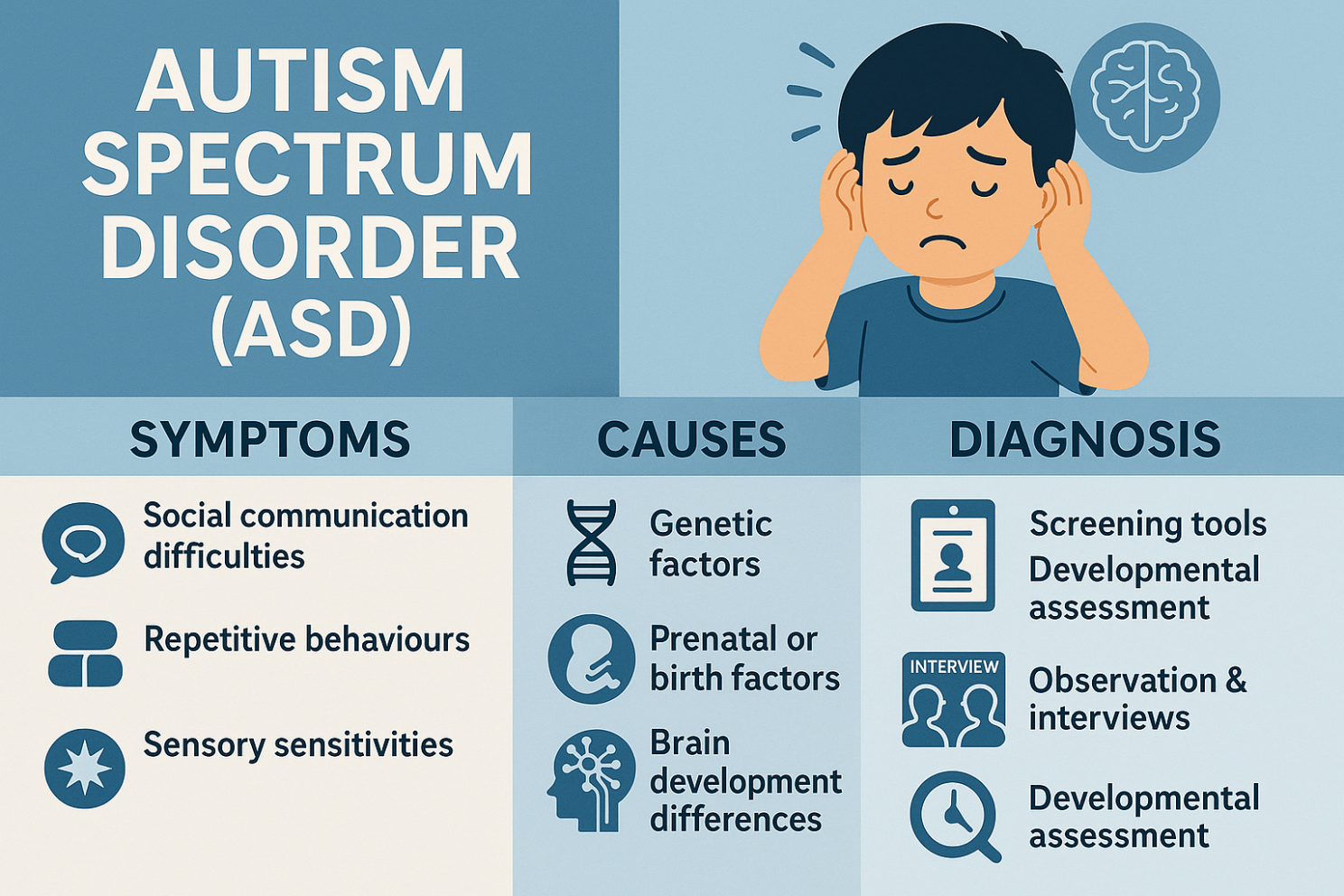
The Ministry of Health projects 2.4 million Indonesians have ASD ESTIMATED. The WHO's 1-in-100 benchmark applied to Indonesia's 75 million under-18s yields a working estimate of 750,000 children with ASD. Indonesia's Puskesmas recorded 5,500 developmental disorder cases in 2020 to 2021 SETTLED, representing less than 1% of that estimate.
ADHD
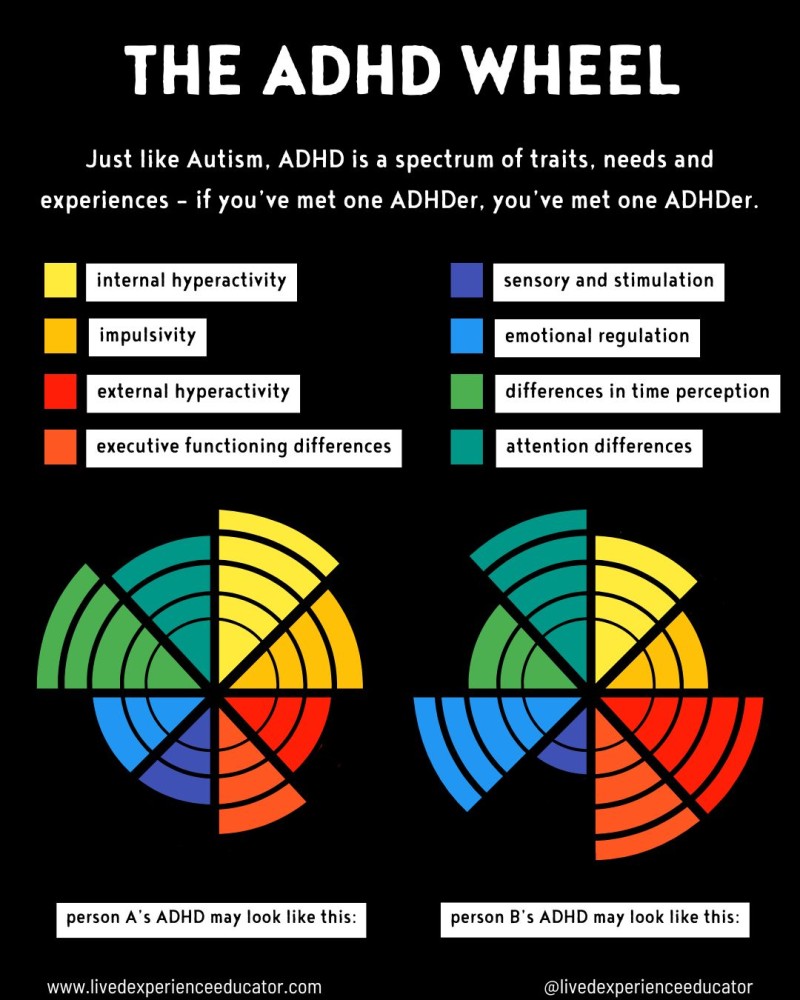
Regional studies in Yogyakarta found 5.47 to 7.48% prevalence SETTLED for sample. A Surabaya community study found 13.3% of screened children at risk. For policy modeling, this report uses the WHO global benchmark of 5 to 7% applied to approximately 50 million school-age children ESTIMATED.
Dyslexia and Dyscalculia
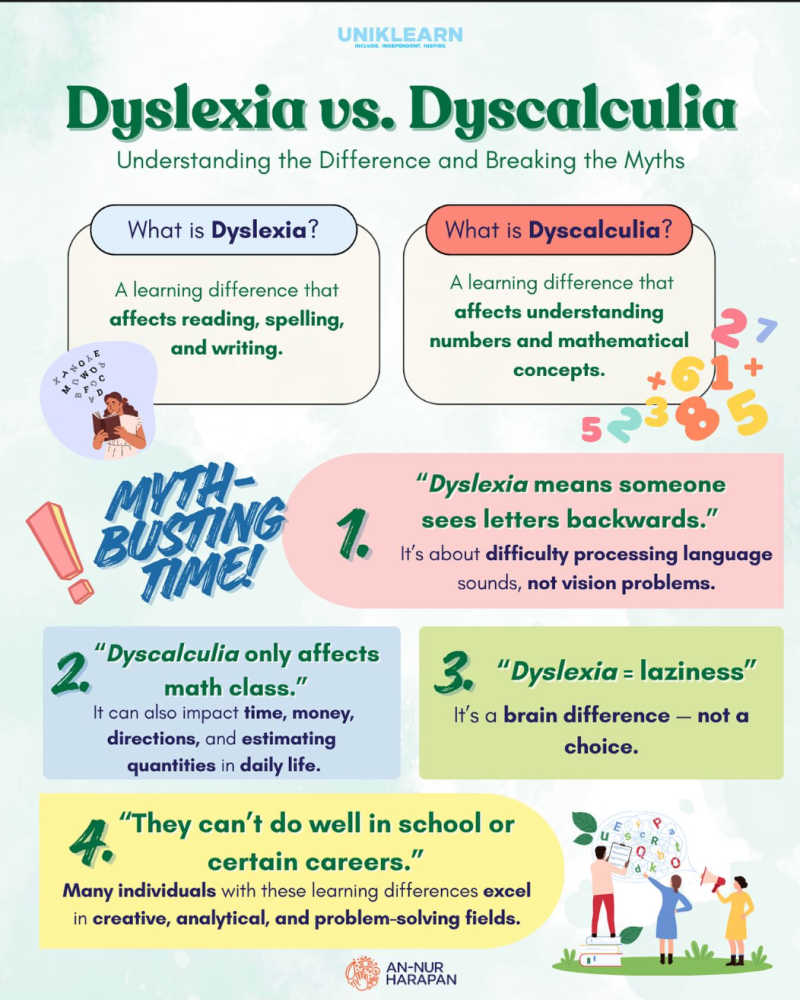
Indonesia-specific figures cite 5 to 10% of school-aged children for dyslexia ESTIMATED. No Indonesia-specific dyscalculia prevalence study was identified; the international benchmark is 3 to 6.5% ESTIMATED via international analog.
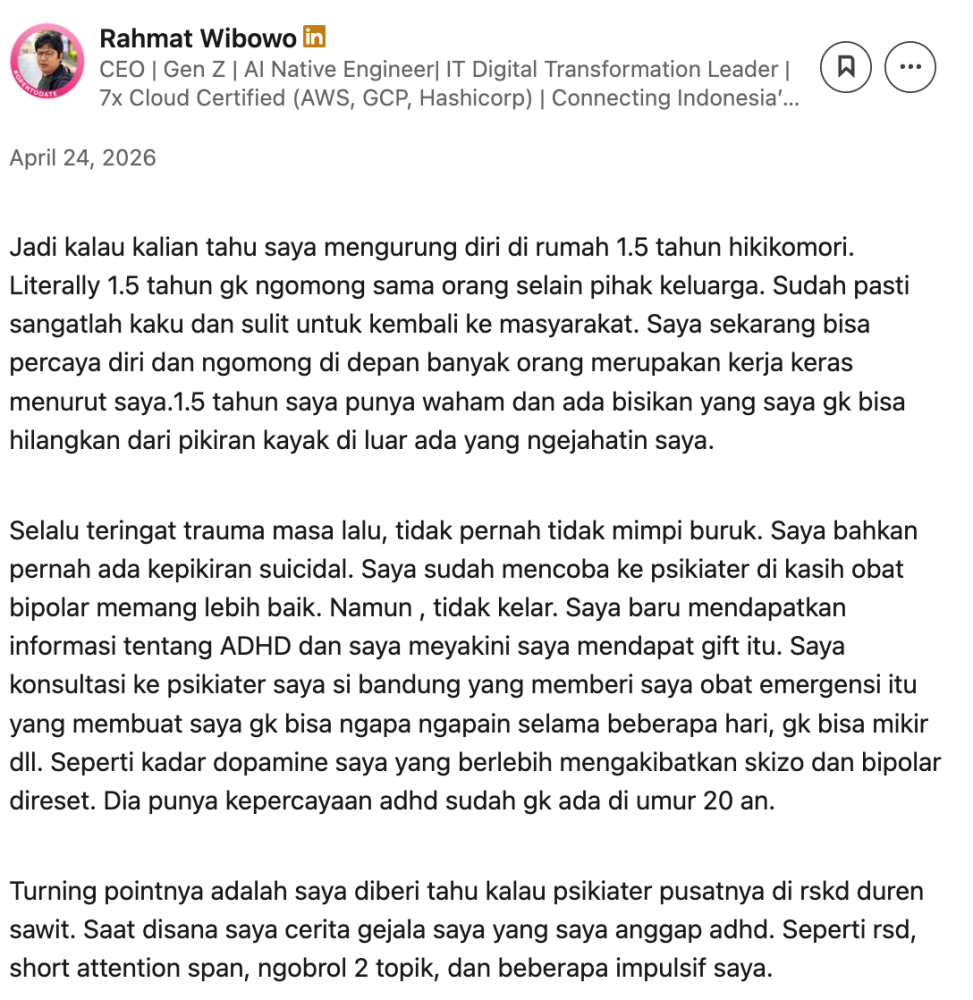
Why the detection rate approaches zero
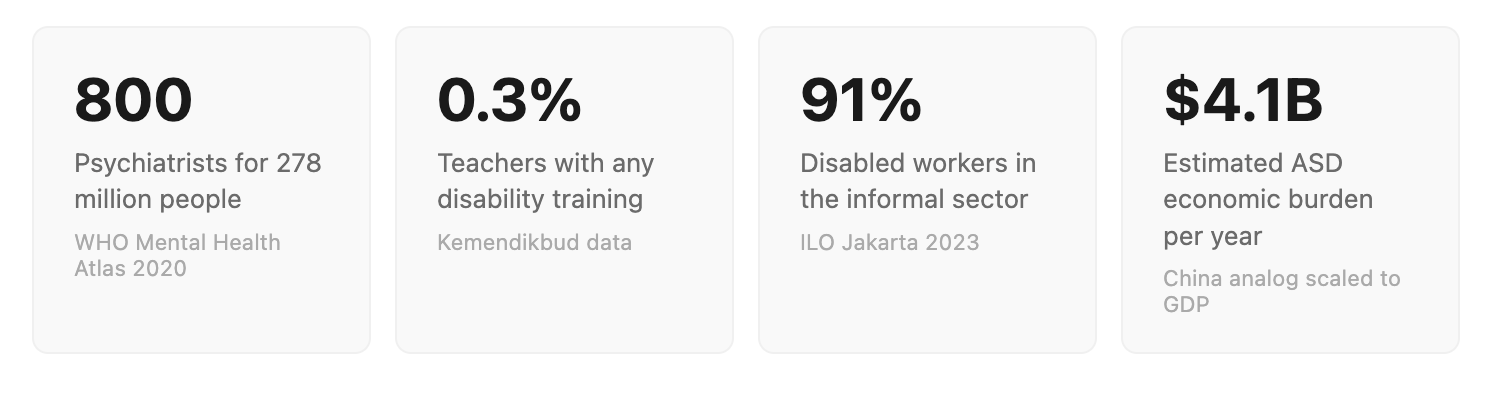
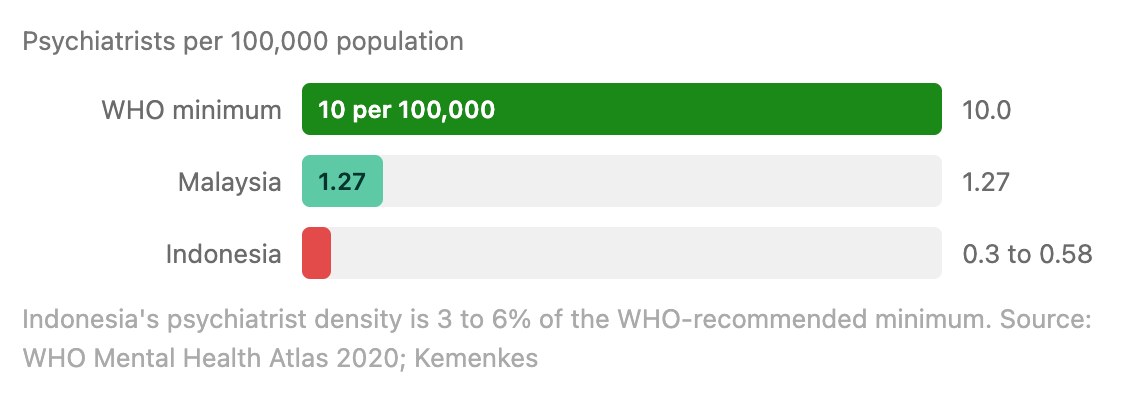
Indonesia has approximately 800 to 1,200 psychiatrists for 278 million people (0.3 to 0.58 per 100,000), which is 3 to 6% of the WHO-recommended minimum. About 50% are in Jakarta. Child and adolescent psychiatrists number fewer than 100 to 150 nationally. The ADEC autism detection tool was only validated in Bahasa Indonesia in 2025, meaning no standardized community-level autism screening existed until last year.
Economic cost of exclusion
Applying China's 0.3% GDP ratio to Indonesia's 2023 GDP of approximately USD 1.37 trillion yields an ASD-alone economic burden of approximately USD 4.1 billion per year MODELED. This does not include ADHD, dyslexia, or dyscalculia costs. The ILO (2023) documents that only 18.7% of persons with disabilities in Indonesia are employed, with 91% in the informal sector.
Part II: The Education Gap
The Sekolah Luar Biasa system
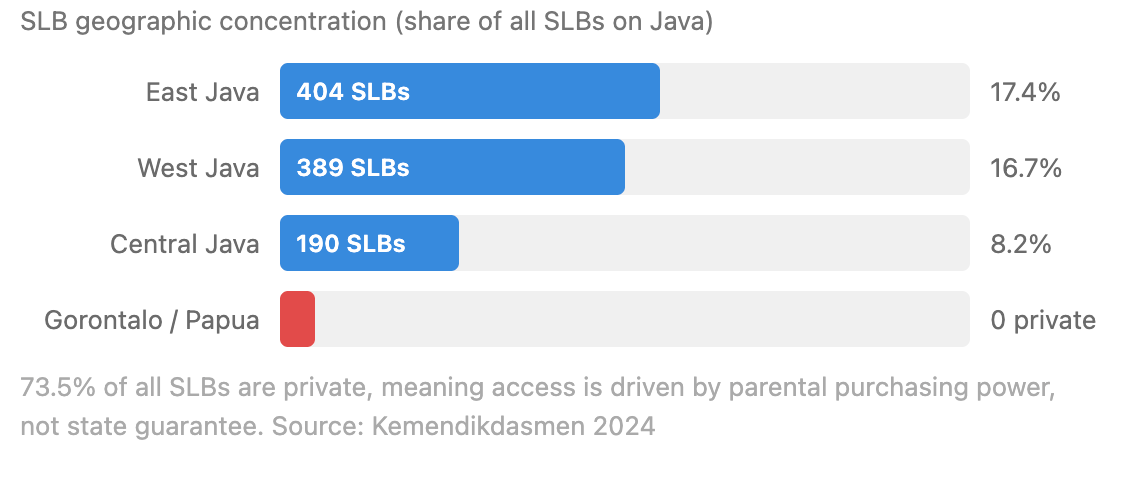
Indonesia's primary infrastructure for children with disabilities is the Sekolah Luar Biasa (SLB), special schools parallel to the mainstream. As of 2023/2024: 2,326 SLBs nationally, serving 152,756 registered students. Only approximately 18% of disabled children are in any form of formal schooling ESTIMATED. An estimated 700,000 or more children with disabilities are entirely outside the education system.
The shadow teacher crisis

The guru pendamping (shadow teacher) is the primary support mechanism for neurodivergent children in Indonesian schools. There are 4,695 trained shadow teachers nationally, serving 135,874 students, an effective ratio of 1 trained shadow teacher per 29 students SETTLED. No nationally standardized shadow teacher certification program exists.
Of Indonesia's approximately 3.3 million teachers, only about 10,244 have received any disability training, representing approximately 0.3% of the teaching workforce SETTLED.
Mandate vs. reality
40,164 schools are classified as "implementing inclusive systems," but only 5,956 of these have any shadow teacher on staff. The Ombudsman RI has formally documented that inclusive education is "anak tiri" (stepchild) of the education system.
Part III: The Healthcare Gap
Mental health workforce density
BPJS coverage gaps
ABA therapy, the primary evidence-based intervention for autism, is not covered by BPJS. No INA-CBGs code exists for ABA. At recommended intensity (20 to 40 hrs/week), ABA costs Rp 6 to 44 million per month, which is 2 to 9 times the median Indonesian household monthly income. Evidence-based autism intervention is economically inaccessible for approximately 90% of families.
Referral pathway bottlenecks
The path from Posyandu screening to tertiary-level diagnosis runs through Puskesmas, RSUD, and finally RSCM, with a 6 to 12 month wait for a new child psychiatric consultation at the tertiary level SETTLED. ADOS-2 is available at fewer than 10 centers nationally, all on Java. For eastern Indonesia (Papua, Maluku, NTT), the referral pathway effectively terminates at the RSUD level.
Part IV: Employment and Economic Inclusion
Only 18.7% of persons with disabilities in Indonesia are employed (ILO, 2023), dropping to 13.5% for women. 91% work in the informal sector. UU No. 8/2016's 2% government quota and 1% private-sector quota exist in law but are unenforced in practice. Legal scholars confirm: "There is no law enforcement against those who do not meet the quota."
Autism, ADHD, and dyslexia are absorbed into the "mental" or "intelektual" disability categories. There is no standalone legal concept of "neurodivergensi" in Indonesian statute. An Indonesian worker diagnosed with ADHD has no automatic legal right to workplace accommodations.
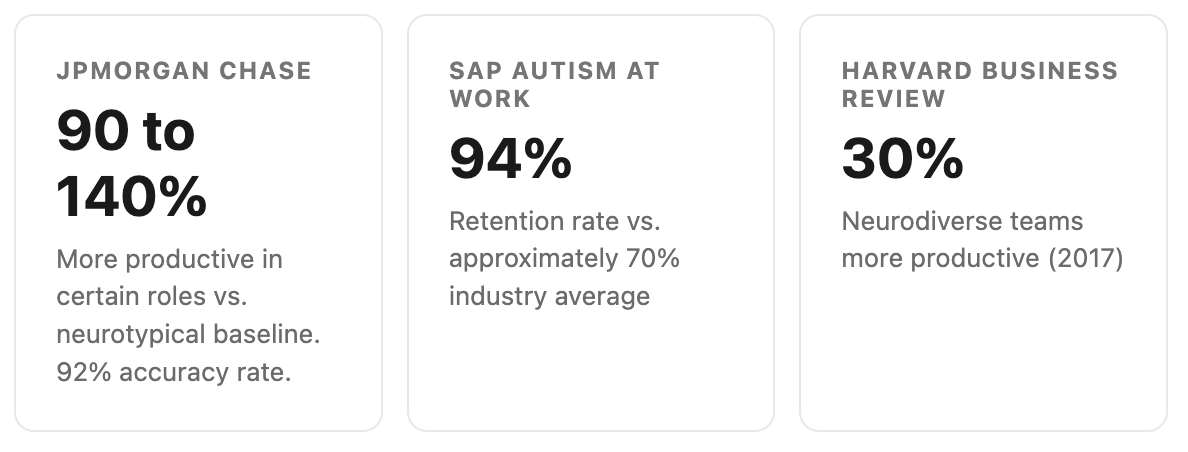
The business case is clear
Part V: What Works — International Comparators
Singapore (primary positive comparator)
Singapore's Enabling Employment Credit (EEC), a wage offset of up to 20% of monthly wages capped at SGD 400/month, helped raise the share of persons with disabilities employed from 14% (2019) to 33.6% (2024). The transition took more than 15 years across four Enabling Masterplan cycles. The core mechanism is one trained Allied Educator embedded in every mainstream school.
UK (cautionary case)
549,000 people are waiting for an ADHD assessment; 224,382 are waiting for an autism assessment, with average waits exceeding 14 months and worst cases reaching 550 or more weeks. The root cause: diagnosis was made the gatekeeper to all support, but no diagnostic workforce pipeline was built to meet demand.
Core architectural principle
Indonesia must not replicate the NHS diagnosis-gated model. With 800 psychiatrists for 278 million people, building a system where support access depends on clinical diagnosis would produce not a 14-month wait but a permanent queue. The solution: screen widely, provide support based on functional need, and reserve clinical diagnosis for the most intensive interventions.
Australia (cautionary case)
The NDIS costs AUD 50 billion per year for 26 million people, with autism alone at AUD 10.3 billion annually, nearly doubling from 2022. An uncapped legal entitlement is fiscally incompatible with Indonesia's framework. The most transferable Australian innovation is the iBASIS-VIPP parent-mediated early intervention: a 5 to 6 month program for infants showing early autism signs, costing AUD 2,000 to 5,000 per family, the lowest-cost and highest-ROI intervention identified in this research.
Part VI: The Five-Tier Roadmap
This roadmap is built around one architectural principle: screen widely, support on functional need, reserve clinical diagnosis for intensive interventions. Indonesia cannot build a diagnosis-gated system. The psychiatrist workforce does not exist to support one.
Visibility and Diagnosis
0 to 12 months
- National M-CHAT-R/F rollout at Puskesmas for all tumbuh kembang visits at 18 and 24 months, already validated in Bahasa Indonesia
- BPJS benefit package amendment: add neuropsychological assessment and ADHD screening at secondary level
- Five-city multidisciplinary diagnostic hub pilot in Jakarta, Surabaya, Medan, Makassar, and Denpasar
- Kemenkes to Kemendikbud data bridge: automated notification to Dinas Pendidikan when a neurodevelopmental diagnosis is made
- National stigma reduction campaign through NU, Muhammadiyah, and Persis networks
Education and Healthcare Integration
12 to 36 months
- Mandatory 6-week neurodivergence module in all PPG pre-service teacher training: Universal Design for Learning, M-CHAT recognition, IEP writing
- District Resource Center model: one specialist center per kabupaten/kota serving 5 to 10 schools (Philippines/Vietnam model, not Singapore's per-school model)
- National minimum salary for certified shadow teachers: Rp 5 million/month; ASN pathway for S1 PLB graduates
- BPJS neurodevelopmental therapy coverage: ABA-based intervention capped at 40 sessions/year for children under 12 with confirmed diagnosis
- Parent-mediated early intervention pilot via Posyandu/PKK in three provinces, the highest-ROI intervention in the evidence base
Employment and Economic Inclusion
24 to 60 months
- PP amendment to UU 8/2016: explicitly list ASD, ADHD, dyslexia, and dyscalculia; establish standard reasonable accommodation menu
- Disability employment fund: employers with 100 or more staff who fail the 1% quota pay a levy (Germany model), which is self-financing
- Neurodivergent wage subsidy: 15 to 20% offset for employers hiring workers with neurodivergent diagnosis for the first 12 months
- 10 neurodivergent-inclusive BLK Komunitas pilot sites in tech/digital clusters with UDL curriculum and job coaching
Architectural System Deepening
48 to 84 months
- Perpres STRANAS Neurodivergence: Presidential Regulation defining neurodivergence in Indonesian law with cross-ministerial coordination under Kemenko PMK
- Indonesia Disability Data Platform: interoperable across Kemenkes, BPS, Kemensos, Kemendikbud, and Kemnaker with Dukcapil linkage
- Telehealth neurodevelopmental network: hub-and-spoke connecting RSJ/RSUD specialists to Puskesmas, targeting eastern Indonesia
- Rp 50 billion/year research endowment: fund Indonesia's first nationally representative ASD/ADHD/dyslexia prevalence survey
Governance and Accountability
Ongoing
- KND budget restoration to minimum Rp 50 billion/year, currently cut to Rp 500 million (a 93% cut) under Inpres 1/2025
- Annual Neurodivergence Inclusion Index published by BPS: diagnostic access rates, teacher training rates, and employment rates by province
- CRPD Optional Protocol ratification, enabling individual complaints to the CRPD Committee
- Civil society partnership: DPO representation on the STRANAS cross-ministerial Technical Team
Conclusion
Indonesia stands at a choice point. The neurodivergent population, conservatively estimated at 28 to 56 million Indonesians, is the country's largest invisible human capital reserve. The tools to unlock this reservoir exist: validated screening instruments already in Bahasa Indonesia, evidence-based early intervention with RCT evidence from low-resource settings, proven employment incentive models from Singapore and Malaysia, and a constitutional and treaty basis for action.
"The cost of inclusion is far lower than the cost of exclusion. The binding constraint has never been the absence of knowledge. It has been diagnostic invisibility."
The United States spends USD 122.8 billion per year managing the consequences of unaddressed ADHD in adults. Australia's NDIS is overwhelmed by belated demand for autism support that was never provided in childhood. The UK's NHS is processing 549,000 ADHD assessment referrals because diagnosis was made the gatekeeper and no workforce was built to meet demand.
Indonesia has the opportunity to learn from these failures before replicating them. The five-tier roadmap presented here is not a welfare strategy. It is a human capital strategy for a nation that cannot afford to leave 56 million minds behind.