
Jakarta: The Living Replica of Indonesia By Rahmat Wibowo From InfraLoka
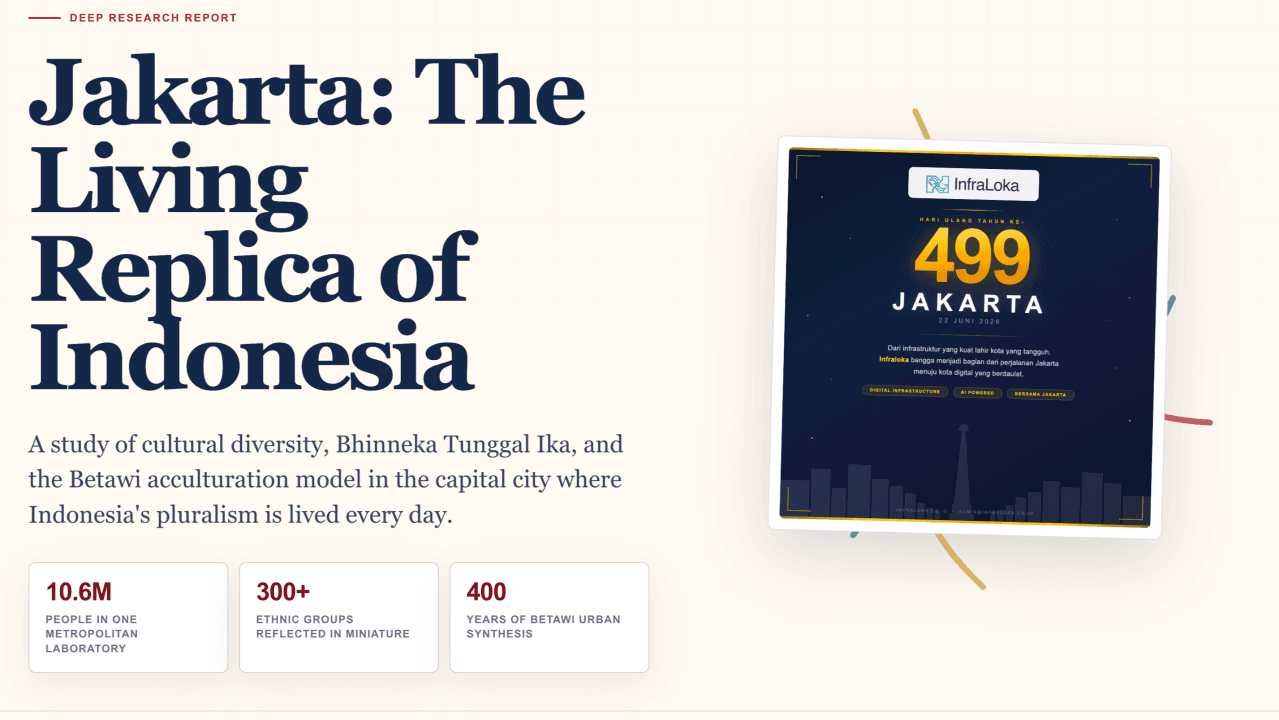
A study of cultural diversity, Bhinneka Tunggal Ika, and the Betawi acculturation model in the capital city where Indonesia's pluralism is lived every day.
Indonesia Concentrated Into One Urban Space
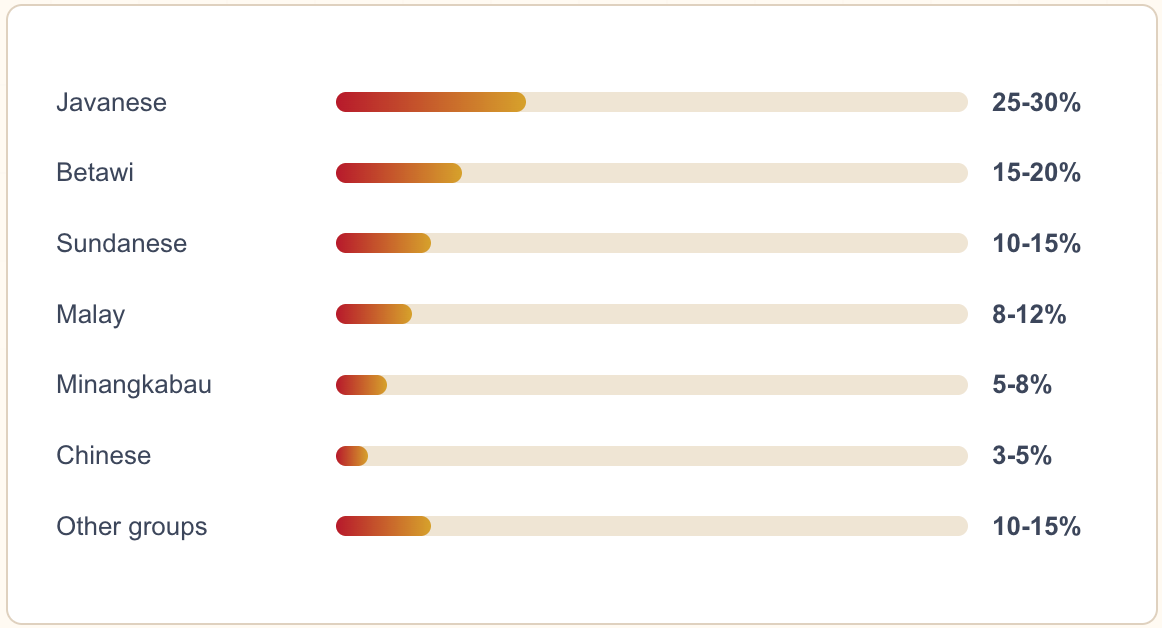
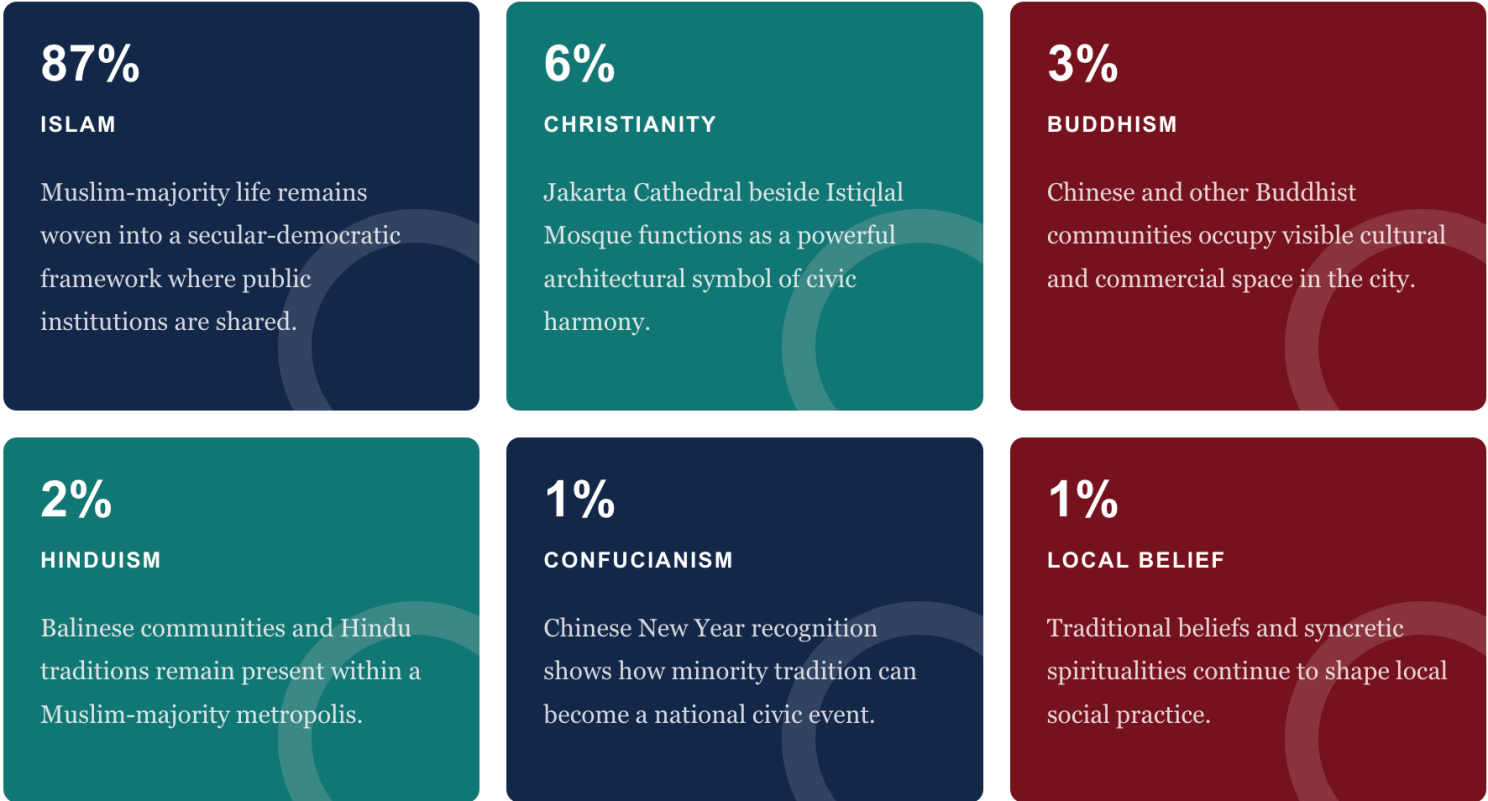
Jakarta is not simply Indonesia's capital. It is a demographic, religious, linguistic, and cultural cross-section of the archipelago compressed into a single city.
The report frames Jakarta as a national mirror: Javanese, Betawi, Sundanese, Malay, Minangkabau, Banjarese, Chinese, Arab, Balinese, Buginese, Madurese, and hundreds of other groups share neighborhoods, offices, markets, public institutions, and transport corridors.
Its daily language practice is equally layered. Indonesian operates as the civic lingua franca, while Javanese, Sundanese, Betawi, Minangkabau, Mandarin, Arabic, English, and other languages continue as identity markers. Code-switching is not noise in this city; it is urban intelligence.
Jakarta concentrates Indonesia's diversity into a single urban space, making it the country's most representative city.
Bhinneka Tunggal Ika As Urban Practice
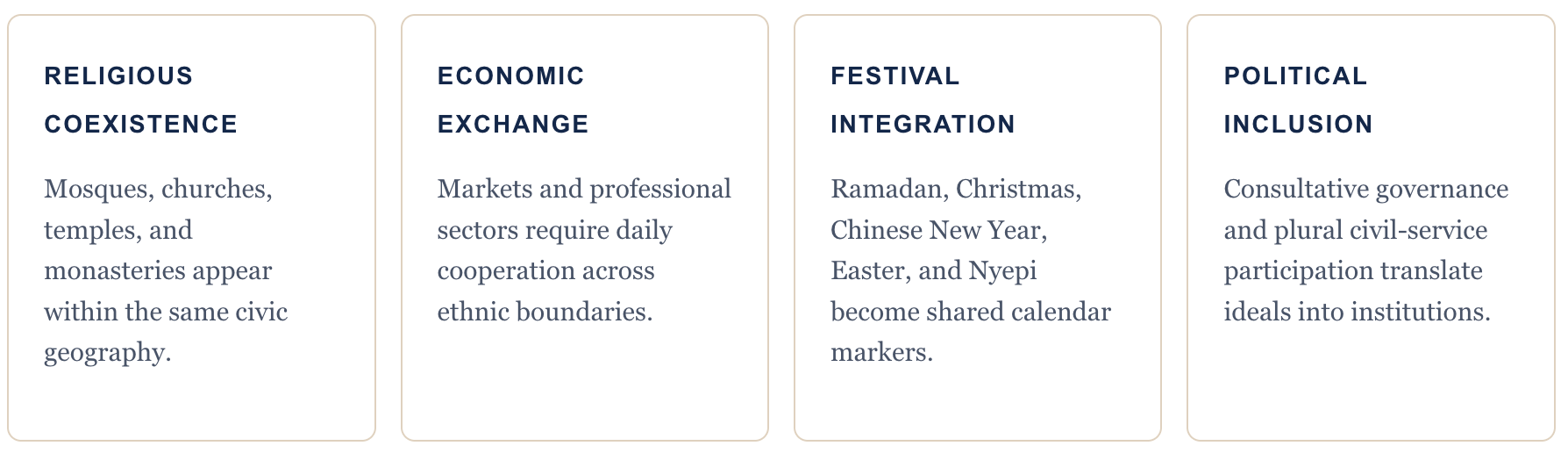
The national motto, drawn from Mpu Tantular's Sutasoma, becomes visible in Jakarta through religious coexistence, economic interdependence, shared festivals, and plural governance.
Betawi Culture As The Acculturation Model
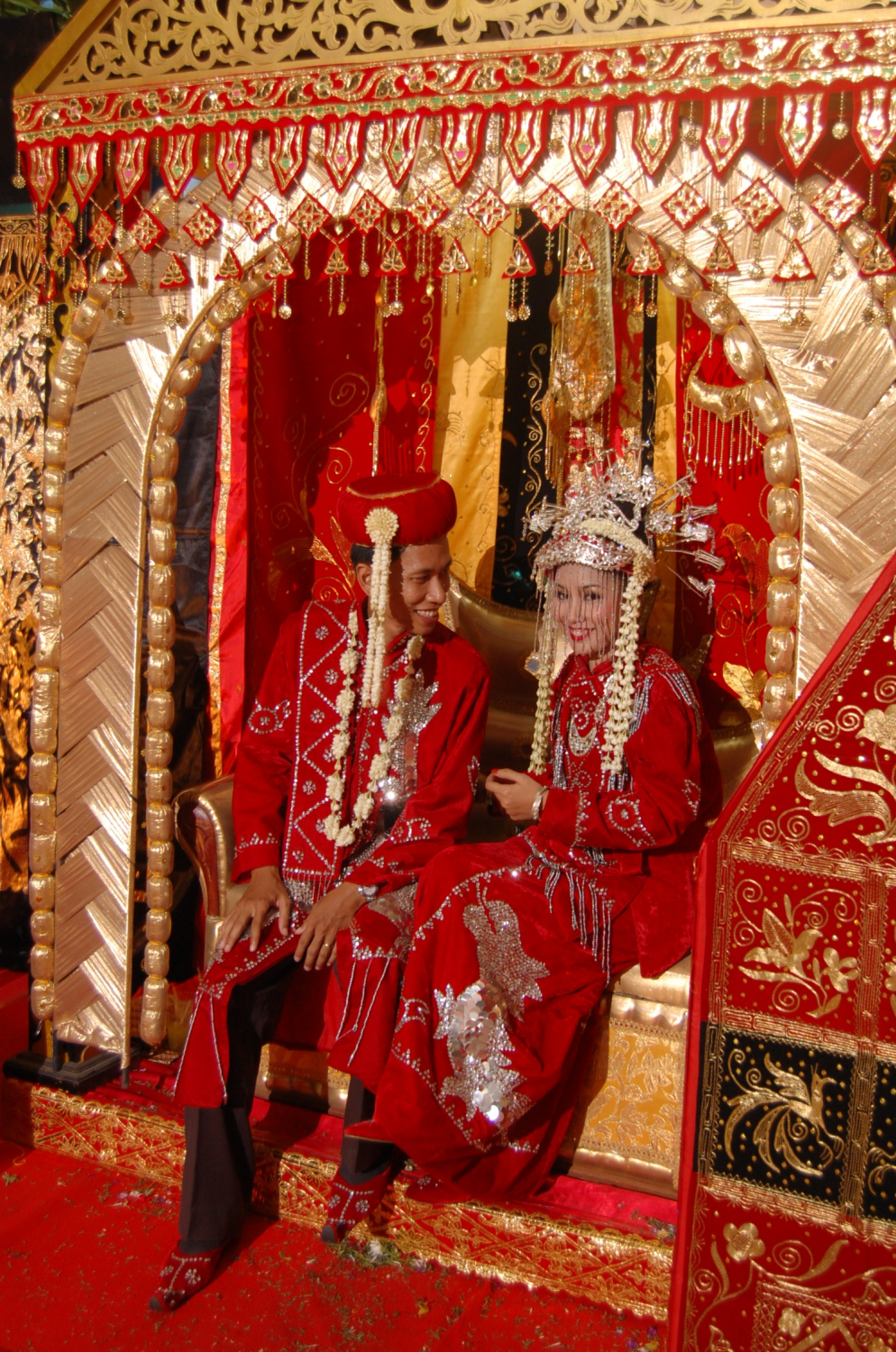
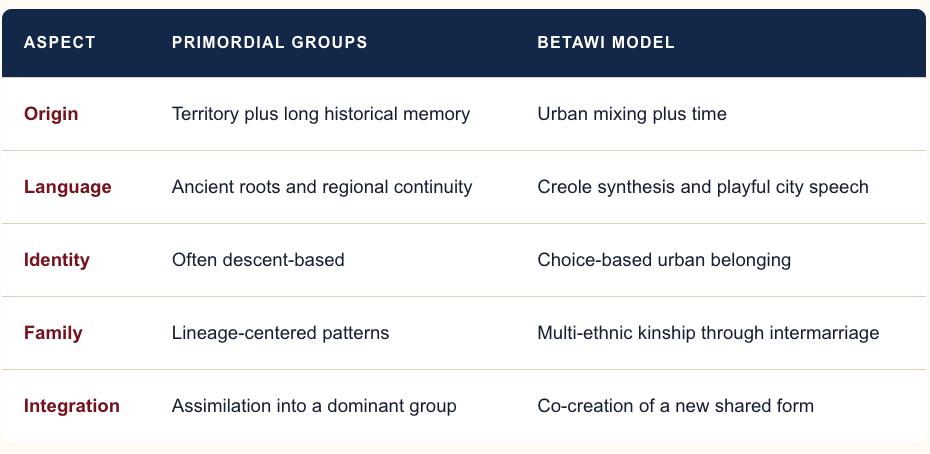
Betawi identity is the report's central proof that ethnicity can be made through encounter, memory, neighborhood, language, food, music, and shared urban belonging.
The Betawi are not presented as an ancient sealed ethnicity. They emerged in Batavia through centuries of Malay, Javanese, Sundanese, Arab, Chinese, Dutch, Portuguese, and broader maritime interaction.
This makes Betawi culture a model of inclusion: identity is not only inherited from a distant origin but also created through living together.
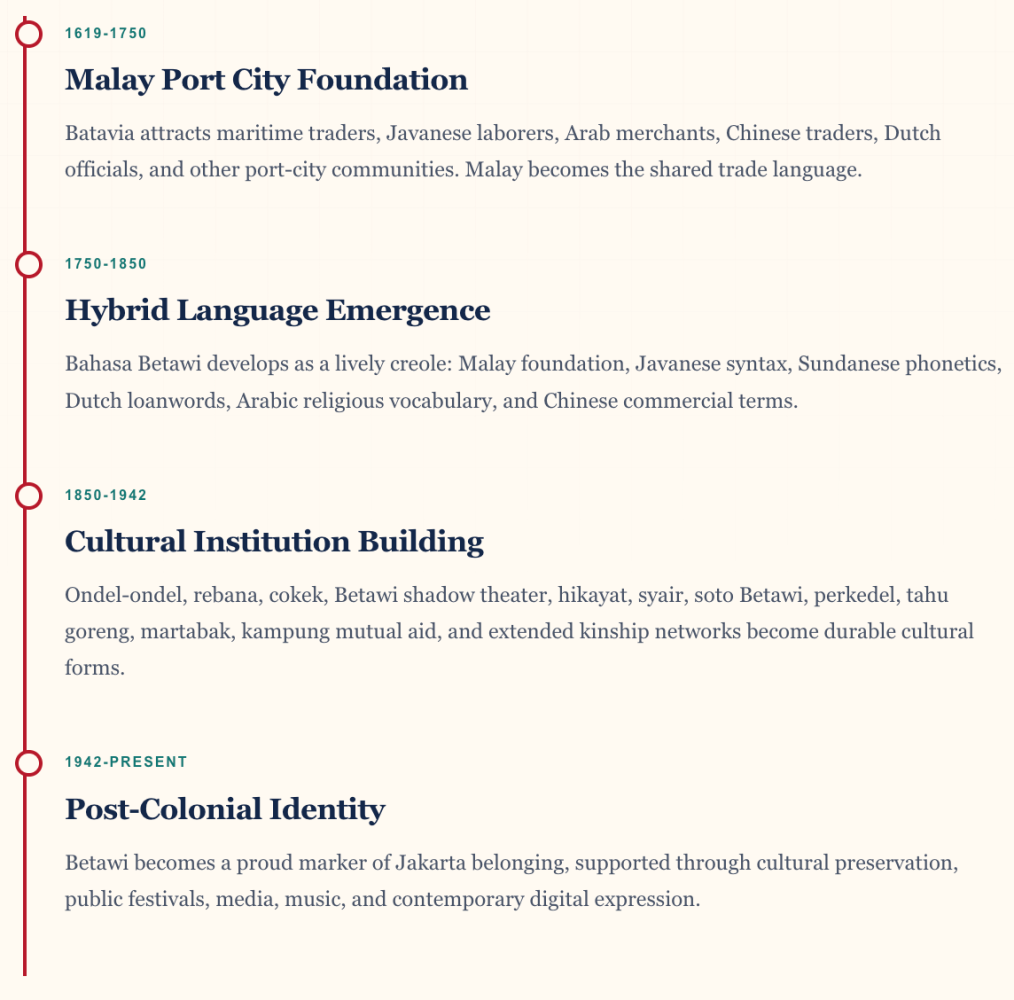
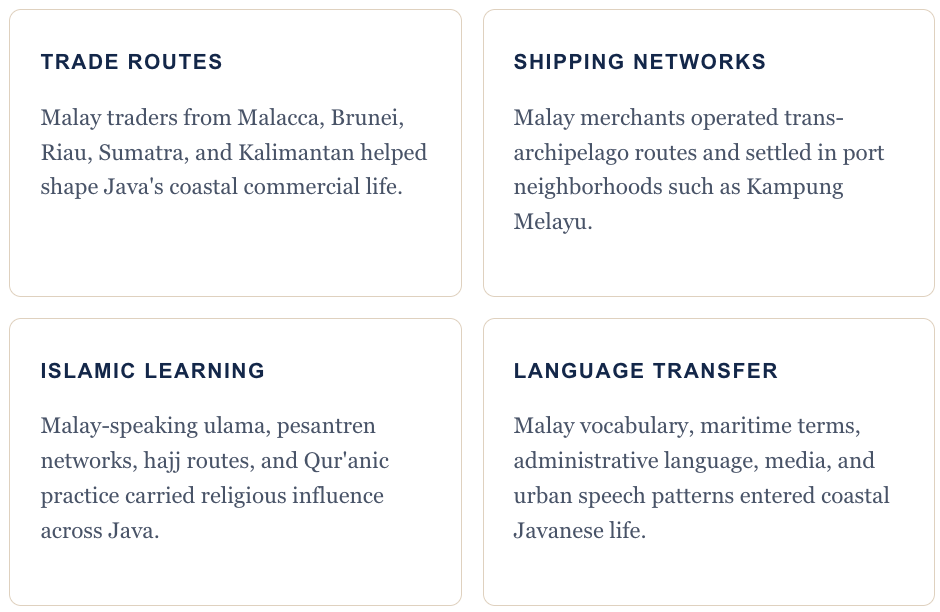
Malay Presence On Java Explains The Port-City Logic
The report separates Malay as ethnicity from Malay as linguistic and maritime infrastructure. That distinction matters because Jakarta's hybridity was built through ports, trade, Islam, labor migration, and language exchange.
By the third generation, many Malay-descended communities on Java no longer remain separate enclaves. They often identify as Javanese, Betawi, or simply Jakarta residents while retaining traces of older maritime ancestry.
This is why the report treats Jakarta's pluralism as integration rather than erasure: cultural memory persists, but civic belonging expands.
How Jakarta Operationalizes Diversity
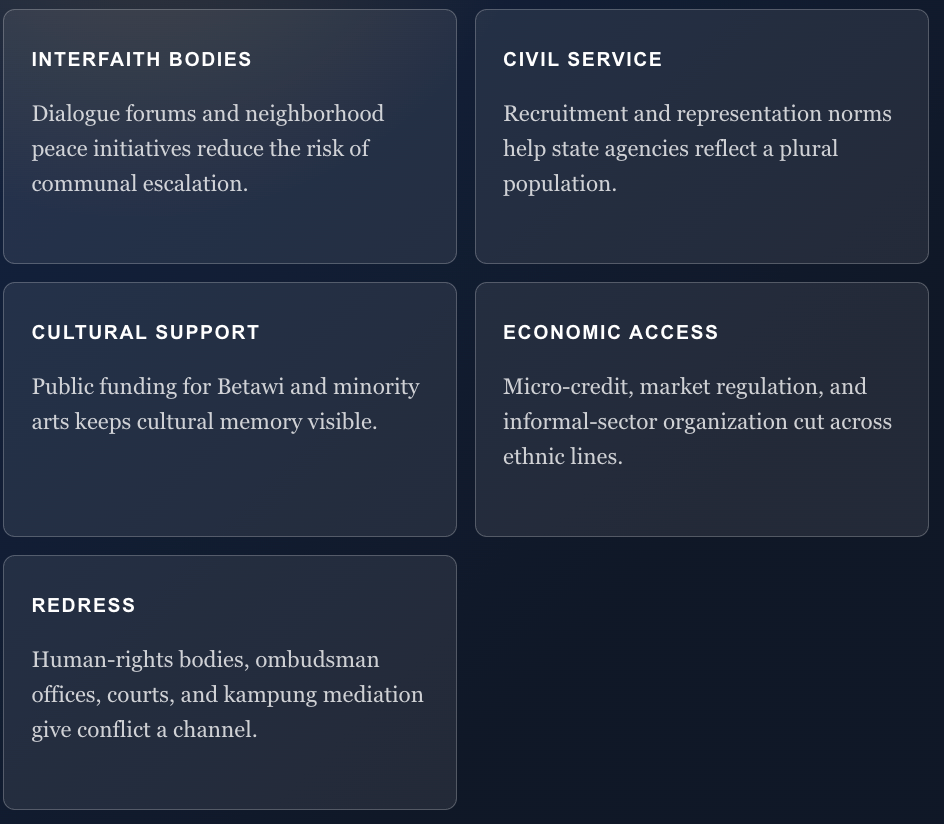
Jakarta's pluralism depends on institutions, not sentiment alone. Law, governance, civil society, market life, and kampung-level ethics all carry part of the load.
The Mirror Is Powerful, But Not Perfect
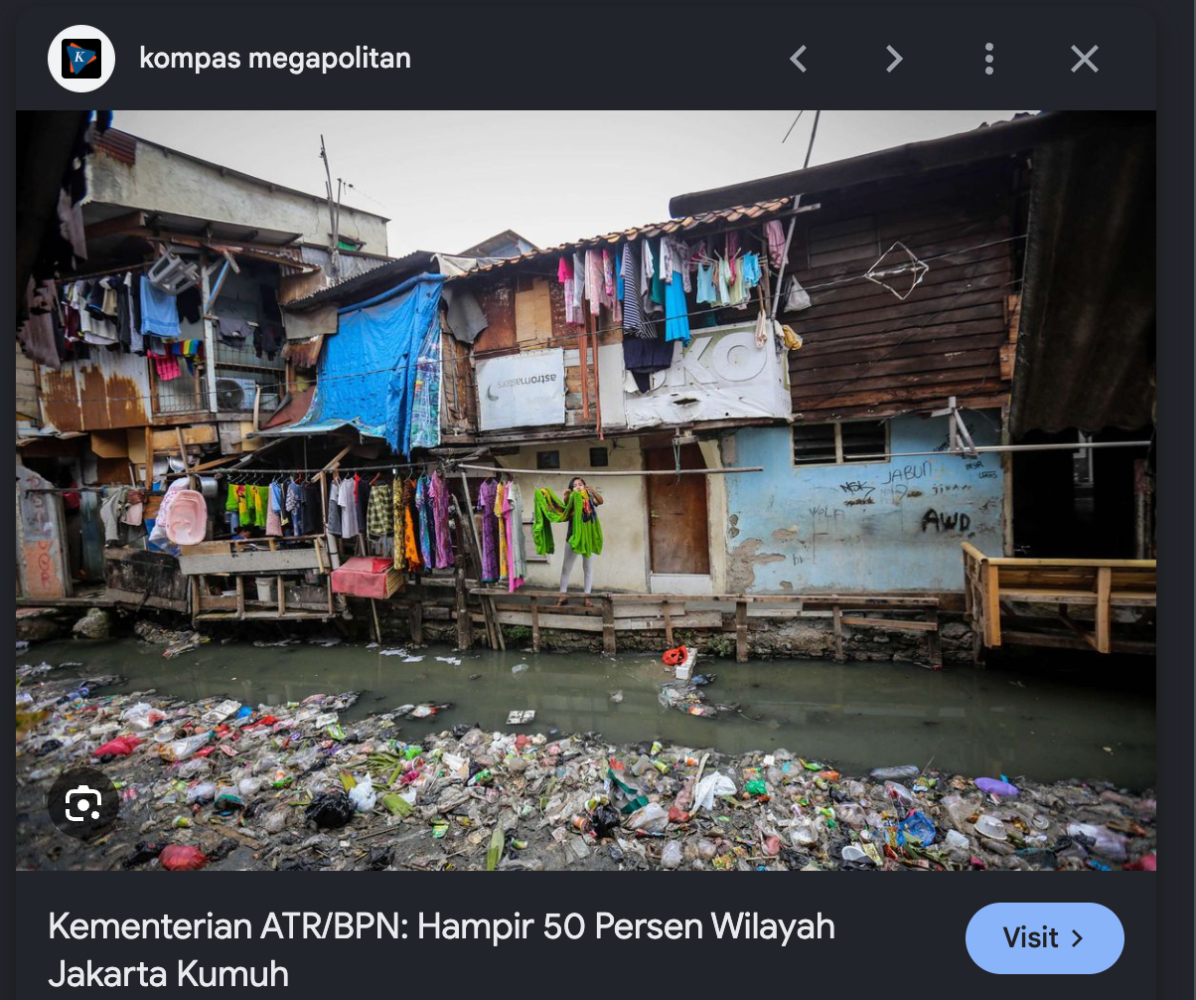
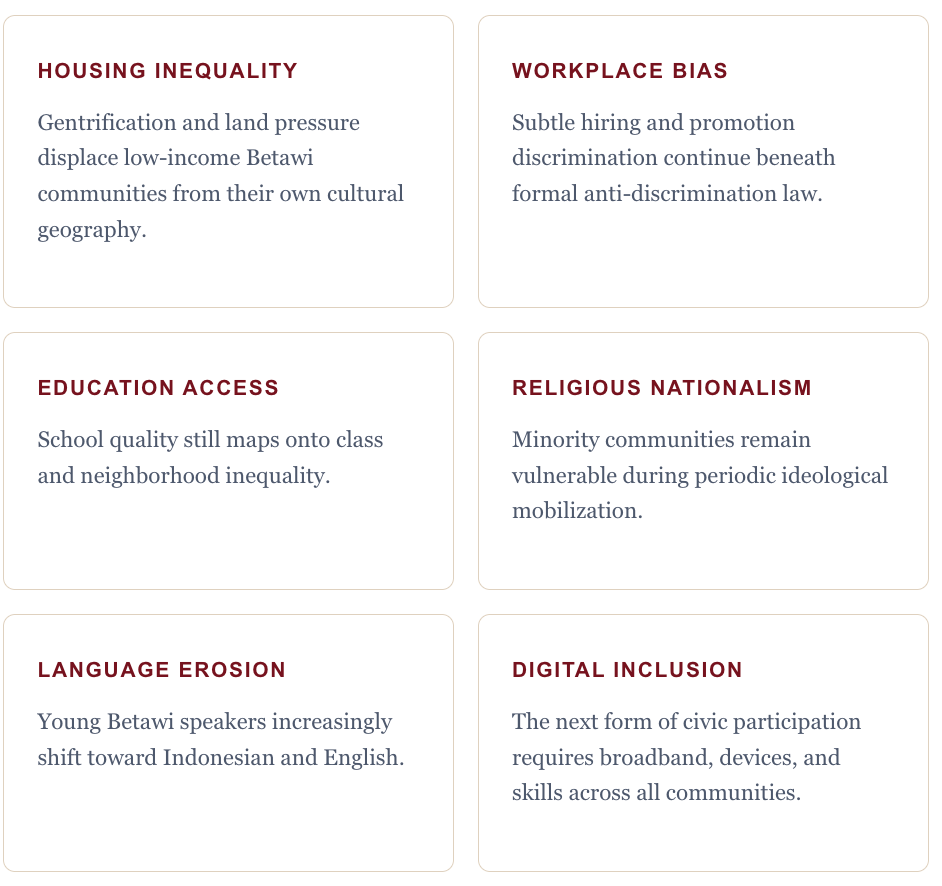
The report is careful: Jakarta is a working model of pluralism, not a finished utopia. Inclusion must be continuously rebuilt.
Conclusion : Unity Is A Daily Urban Choice
Jakarta stands as Indonesia's mirror because Indonesia's identity is not an ancient primordial unity. It is a modern decision to remain unified while honoring difference.
In Jakarta's streets, markets, mosques, churches, temples, schools, homes, and digital corridors, Bhinneka Tunggal Ika is not a slogan on a crest. It is a civic practice renewed every day.
#Jakarta #Indonesia #BhinnekaTunggalIka #Betawi #CulturalHeritage #Pluralism #Inclusion #UrbanStudies #PublicPolicy #CulturalDiversity #HeritagePreservation #CreativeEconomy #Tourism #UNESCO #InfraLoka