
Laughter Is Not a Rebuttal: A Logic Audit of the Fuadit Muhammad and Plus62.ai Threads Debate
A logical-fallacy review of two Threads posts by @fuaditrockz dated 12 October 2026, and of the SonarQube dashboard shared by a teammate. It evaluates arguments, not people. The author is a party to the thread; see Limits, disclosure and right of reply below.
RAHMAT WIBOWO | 13 OCTOBER 2026
What happened
On 12 October 2026 I (account @rweebs21) questioned the evidence for the existence and engineering quality of plus62.ai, a project associated with Fuadit Muhammad (@fuaditrockz). I asked for two things: empirical facts anyone can check, not testimonials, and proof of unit tests and CI/CD on two of Fuadit's public repositories.
A teammate of Fuadit's replied with a screenshot of a SonarQube dashboard. Later that day Fuadit wrote two posts: one asking people to "tag the experts" in mental health to deal with someone, naming mental-health diagnosis labels, and one laughing at the phrase "Somasi as a service & Professional Troublemaker".
The original question was about evidence of engineering quality. The answer moved to the mental state, behaviour and nickname of the person asking it. This post uses the thread as study material for how a technical debate slides into a personal one.
Two short conclusions:
- Neither of Fuadit's posts answers the original question. Of seven core statements, three contain strong fallacies and four contain moderate weaknesses.
- The best evidence in the thread came from the middle. The SonarQube dashboard from Fuadit's teammate is better than a testimonial, even though its scope is limited and some readings of it, including meta.ai's, need correcting.
The posts under review
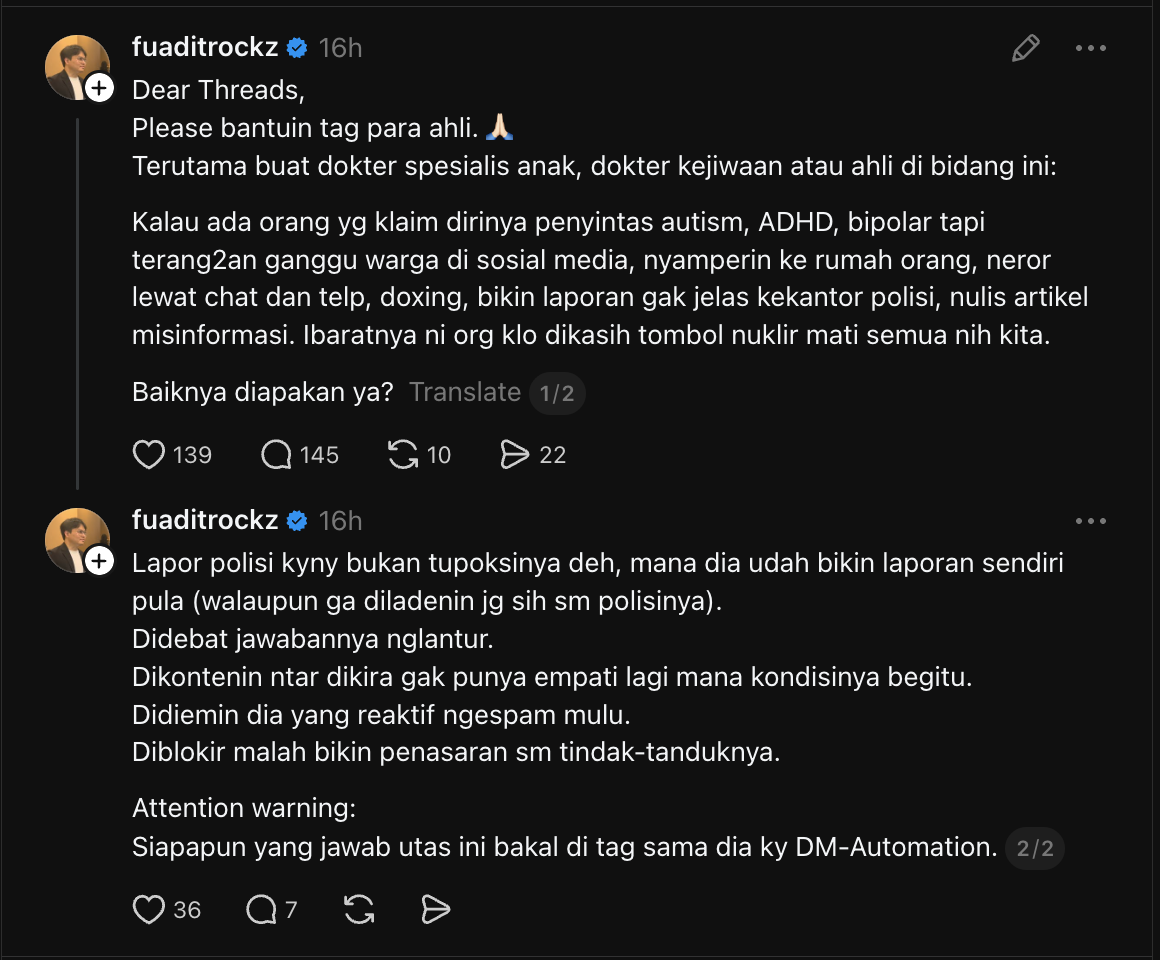
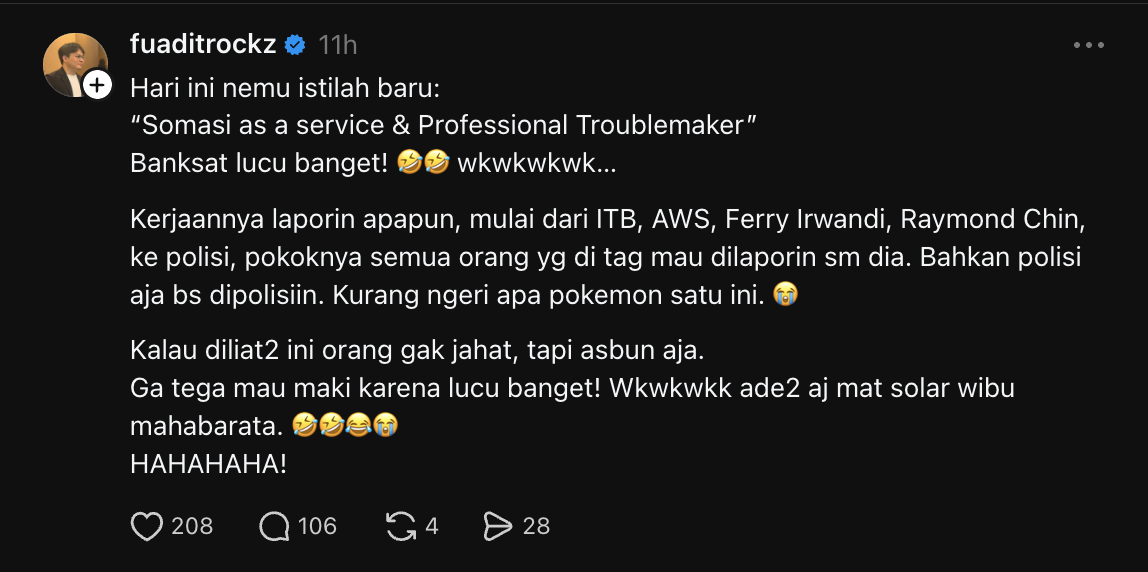
Figure 1. Fuadit's two posts (139 likes and 145 replies; 208 likes and 106 replies at the time of capture). All quotations below come from these public posts. The screenshots are in Indonesian, as posted.
Three promises before criticising
First, the argument is judged, not the person. Nothing here assesses the intent, character or engineering ability of Fuadit or his team. They may be excellent engineers. That is a different question.
Second, we use the distinction the thread itself asked for: "Please separate fact, accusation, suspicion and opinion."
| Type of statement | How to weigh it |
|---|---|
| Fact | Show the source |
| Accusation | Demand evidence proportionate to its weight |
| Suspicion | Call it a suspicion, leave it open to rebuttal |
| Opinion | Respect it, do not treat it as fact |
Third, we credit what is right, from every side. The burden of proof sits with whoever makes the claim. That applies equally to "this repo has no unit tests" and to "this person terrorises residents".
Map of the conversation: from the work to the person
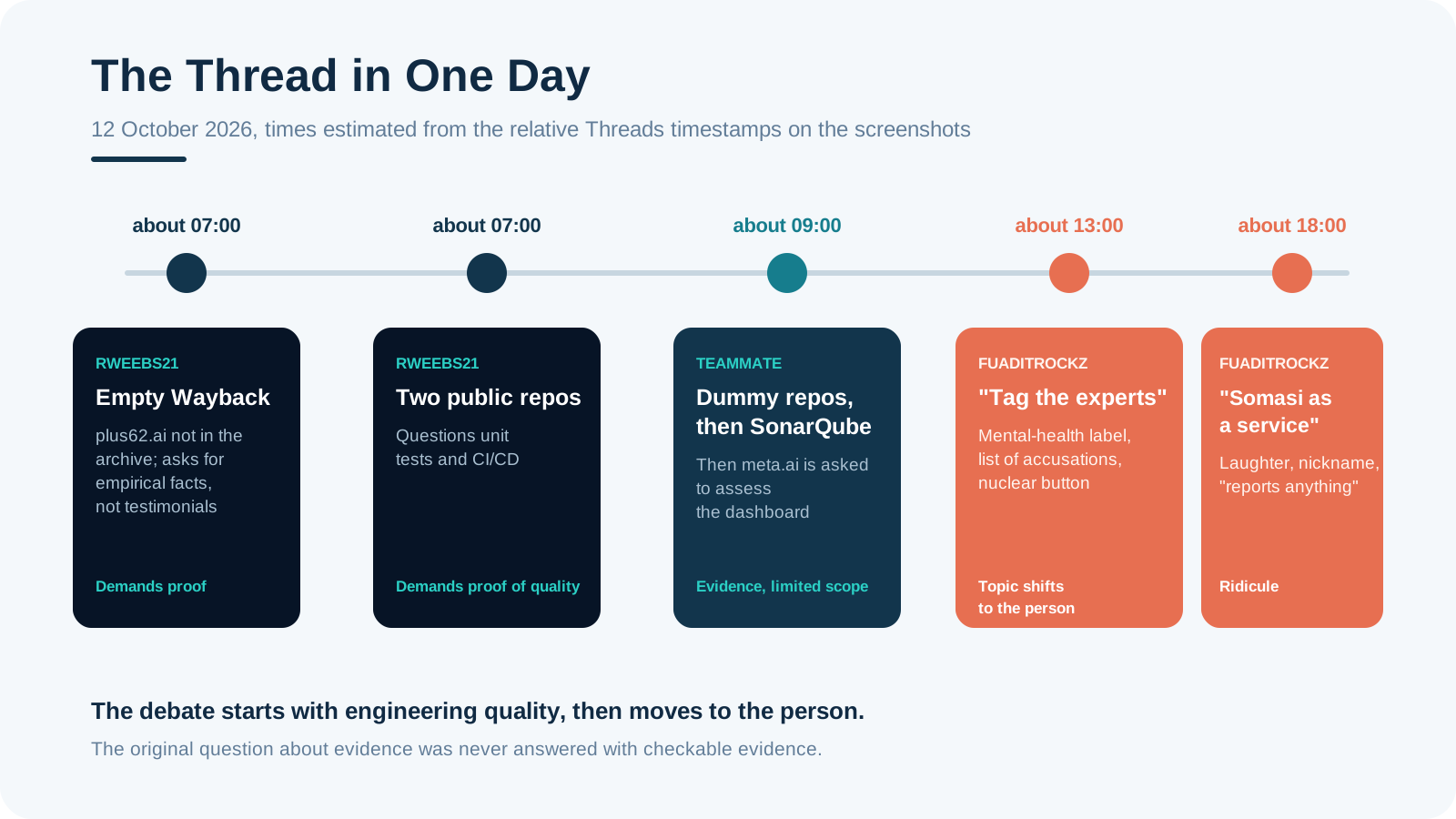
| Time (estimated) | Account | Content |
|---|---|---|
| 07:00 | @rweebs21 | plus62.ai not found in the Wayback Machine; asks for empirical facts |
| 07:00 | @rweebs21 | Two public Fuadit repos: questions unit tests and CI/CD |
| 09:00 | Teammate | The repos are dummies; here is the SonarQube dashboard for plus62 |
| 09:00 | @rweebs21 and meta.ai | Questions evidence from a private repo; meta.ai asked to assess the dashboard |
| 13:00 and 18:00 | @fuaditrockz | "Tag the experts" on mental health; "Somasi as a service" |
Two questions are both legitimate. First, is this work tested? Second, is the way someone argues in public fair? Each has its own evidence. The trouble starts when the first is answered with the second.
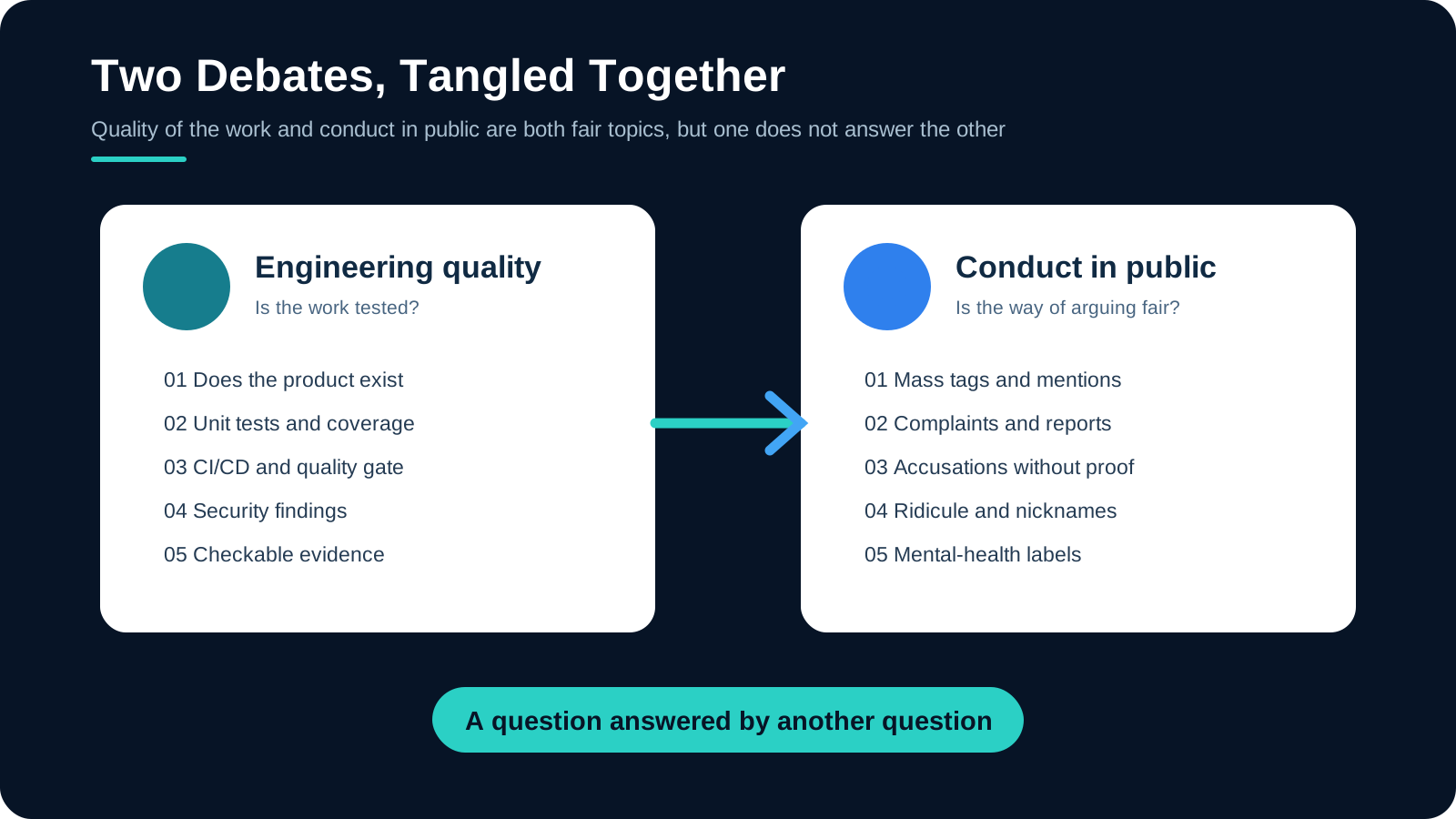
That pattern is human, especially when someone feels harassed, and that is exactly why it is worth training ourselves to spot it.
Seven statements, weighed one by one
| No | Statement | Type of weakness | Weight |
|---|---|---|---|
| 1 | "People who claim to be survivors of [diagnosis label] but..." | Mental-health label as a substitute for rebuttal (ad hominem circumstantial) | Strong |
| 2 | "Harassing residents, visiting homes, terrorising, doxing, unclear reports, misinformation articles" | Heavy accusations with no evidence (proof by assertion) | Strong |
| 3 | "If you gave this person a nuclear button we'd all be dead" | Frightening hyperbole (appeal to fear) | Moderate |
| 4 | "Report to police... debate... make content... ignore... block..." | False dilemma | Moderate |
| 5 | "Anyone who replies to this thread will be tagged by them" | Poisoning the well | Moderate |
| 6 | "So funny..." plus a nickname | Ridicule in place of argument (appeal to ridicule, ad hominem abusive) | Strong |
| 7 | "Their job is reporting everything... everyone they tag" | Hasty generalisation | Moderate |
The most instructive ones:
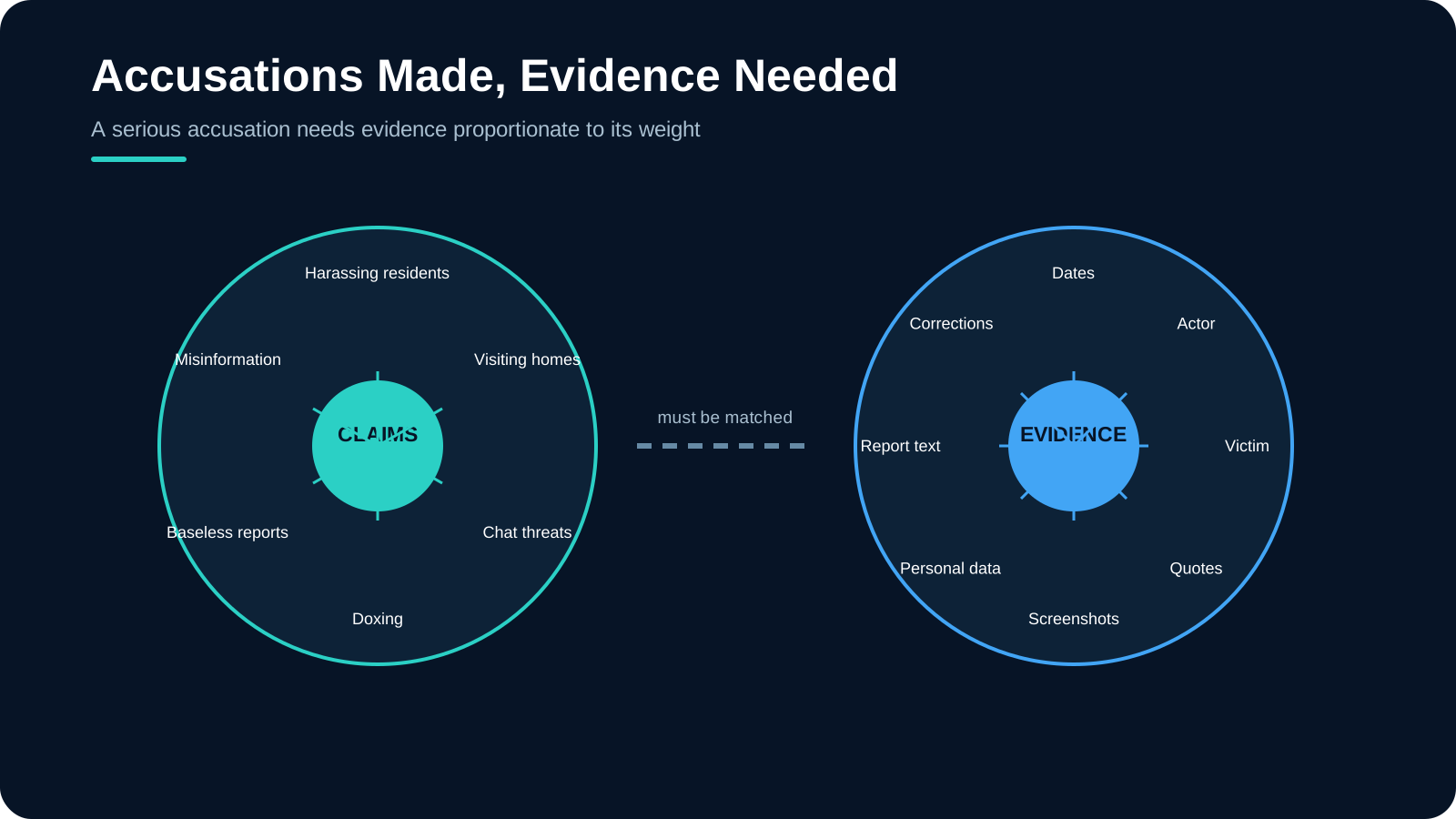
Heavy accusations with no evidence (no. 2). These are six separate accusations, some legally serious, such as doxing and threats. None comes with a date, a victim, a quotation or a screenshot. In the same thread I had already stated "I do not spread personal information... I only review PUBLIC sources." The doxing accusation did not answer that with evidence; it simply repeated the accusation. The heavier an accusation, the more evidence must accompany it. An accusation liked by 139 people still carries zero evidence.
The nuclear button (no. 3). This is plainly a figure of speech and reads as exasperation. But it turns someone who sends mentions, complaints and articles into a threat to many lives. A metaphor describes the writer's feelings, not the real size of a danger.
Every road is a dead end (no. 4). Five options are named and all declared failures, none tested. The simplest option goes unmentioned: answer the original question with evidence, as the teammate had already done.
A warning before anyone replies (no. 5). The warning works before anyone has replied. Readers are taught that any response from the person being discussed is a nuisance. The person discussed has a right of reply, and a right of reply is not spam.
Laughter replaces rebuttal (no. 6). Fuadit himself wrote "this person isn't evil" and "I can't bring myself to curse them", a more restrained stance than the earlier post, and worth recording. "Somasi as a Service" is indeed the name of a service I use, so quoting it is fair. But the post does not discuss whether that service is wrong, unlawful or harmful to anyone. There is only laughter and a nickname. Making people laugh is easier than giving them reasons to be convinced.
"Reports anything" (no. 7). I have indeed raised criticism or complaints against some of the parties named, and I acknowledge that. But from a few examples the post leaps to "anything" and "everyone they tag". The number of reports says nothing about whether each one is well-founded. Reporting suspected misconduct by officers to their internal oversight is also a legitimate right of citizens.
A side note: likes are not evidence. Hundreds of likes show how many people reacted, not how true the content is. Believing an accusation because many people like it is argumentum ad populum. That is not the author's fault, but it is a pattern readers should watch for.
A mental-health label is not an argument
This section is kept separate on purpose. The diagnosis labels are not repeated here; the original text is in Figure 1.
- A debate was turned into a medical matter. Disagreement over the quality of a repo and the proof behind a product is a question of evidence. Moving it into the psychiatric domain says the thing to examine is the person's head, not the argument. No doctor can assess someone from a social-media thread, and the Goldwater Rule in psychiatric ethics asks psychiatrists not to give professional opinions about people they have not examined.
- The label lands on many other people. A sentence that pairs a diagnosis label with "openly harassing residents" is easily read as: people with this condition tend to harass. For the many people who live with that condition and harass no one, that adds stigma. The WHO identifies stigma as a major barrier to seeking mental-health care.
- The word "claim" casts doubt without basis. Someone being open about their condition does not make that condition something to question in public.
Anyone may question another person's conduct in public, with evidence. No one has the right to make another person's mental-health condition material for argument, ridicule or spectacle. If you yourself are distressed by an online argument, step away and talk to someone you trust or a professional. Emergency line in Indonesia: 119. This post is not medical advice.
Weighing the SonarQube evidence
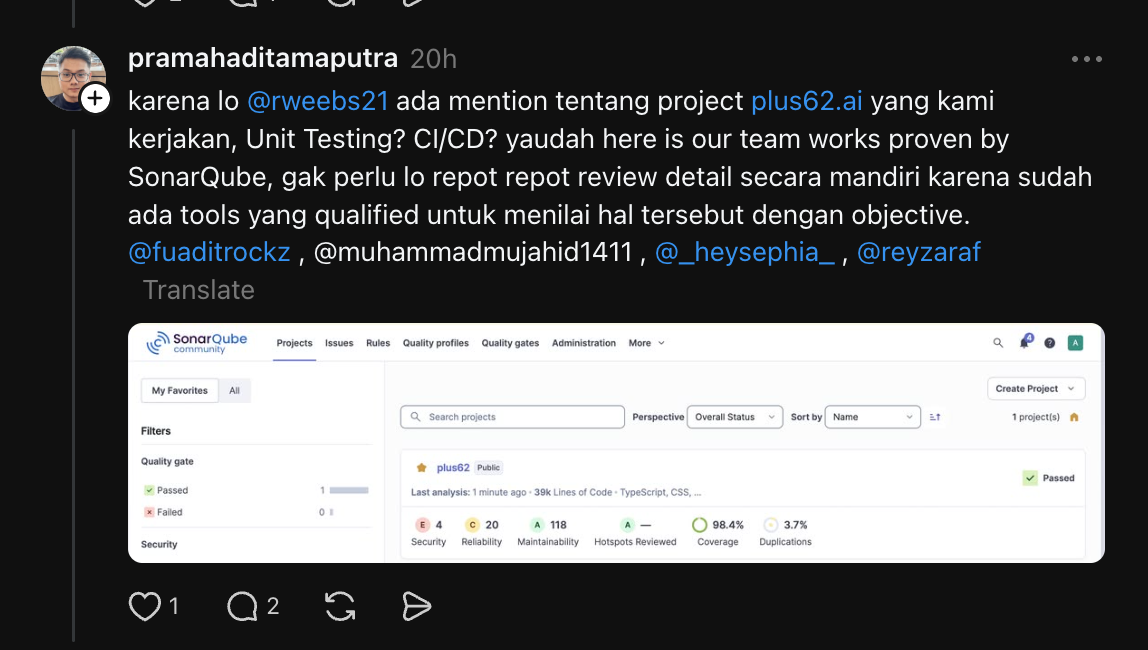
The dashboard shows: Quality Gate Passed, 39k lines of code, Security E (4), Reliability C (20), Maintainability A (118), Coverage 98.4%, Duplication 3.7%. Of everything in the thread, this is the evidence closest to the original question. It shows that a project called plus62 exists with about 39 thousand analysed lines, and that a test-coverage report was imported at 98.4 percent. That answers part of the question about unit tests.
But the sentence "here is our team works proven by SonarQube, no need to bother reviewing the details... because there are qualified tools to assess that objectively" asks the dashboard to prove more than it can.
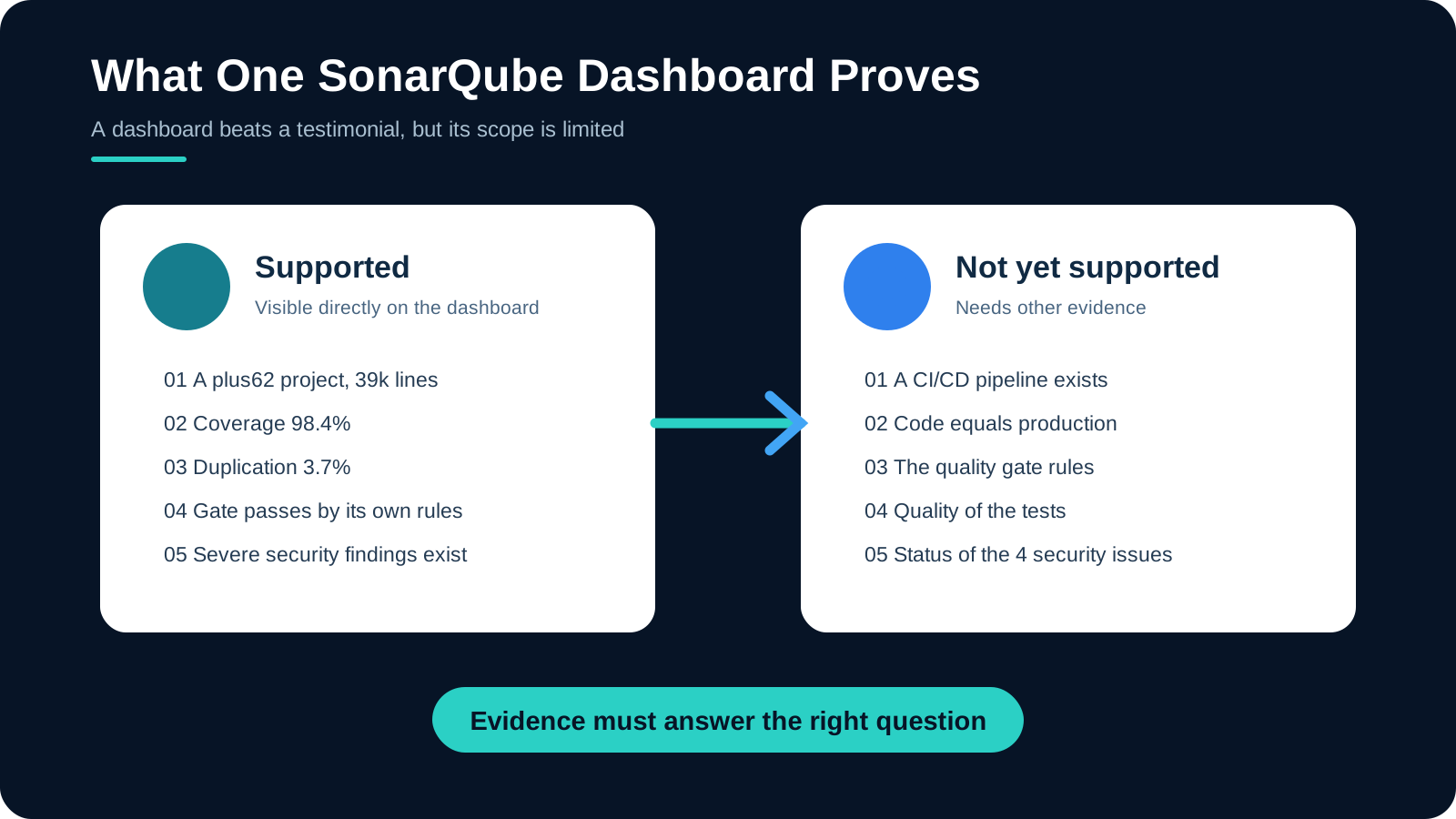
| Claim | Status | Reason |
|---|---|---|
| Unit tests exist and run | Supported | 98.4% coverage only appears if a test report is imported |
| A CI/CD pipeline exists | Not yet supported | SonarQube can be run manually; "last analysis: 1 minute ago" does not show automation |
| This code is the plus62.ai running in production | Not yet supported | The dashboard does not link to a production release |
| Quality is objectively proven | Partly | Objective by the rules installed; the rules are not visible |
| It is secure | Not supported | Security E means at least one blocker-level finding is still open |
My objection that evidence from a private repo cannot be checked by others also stands: a screenshot from a closed system can be trusted, but not reproduced.
Correcting meta.ai's reading
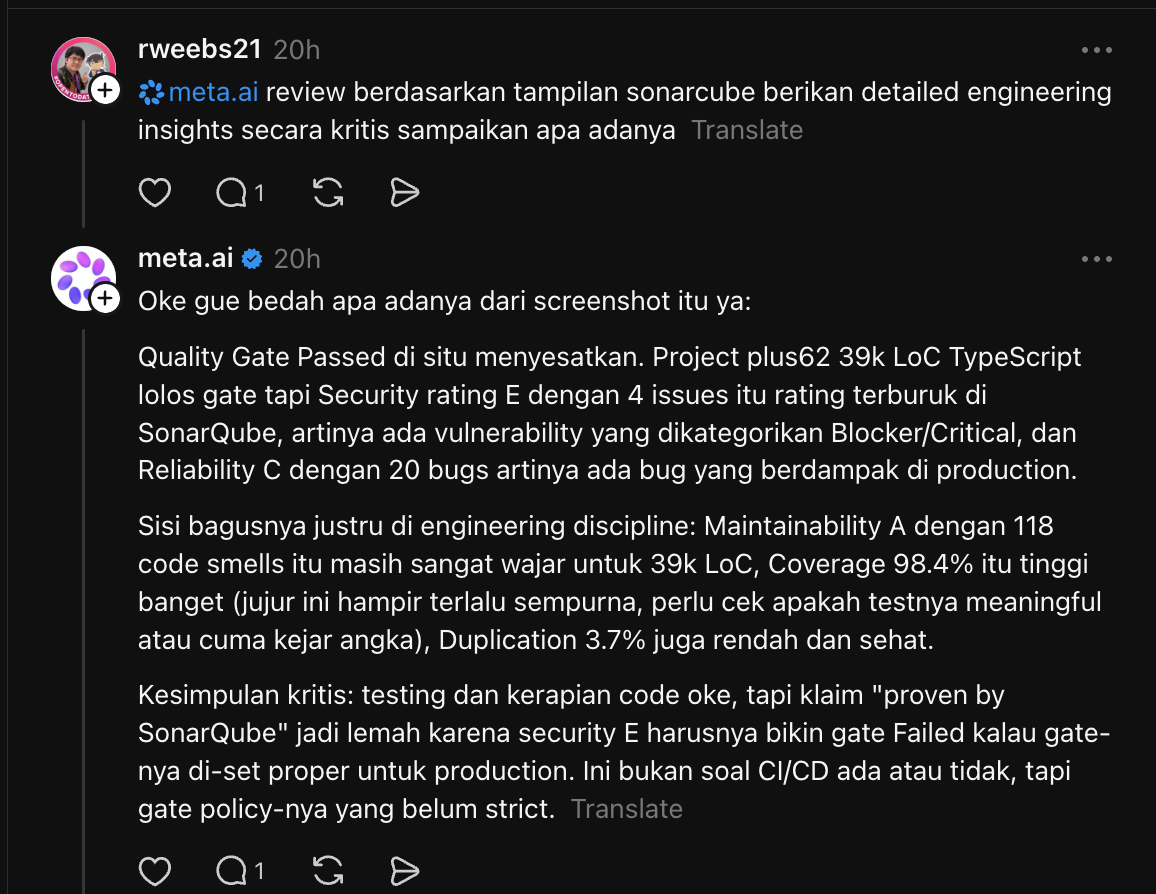
| meta.ai statement | Assessment | Basis |
|---|---|---|
| Security E is the worst rating; there are Blocker/Critical vulnerabilities | Partly right | Per SonarQube documentation, E means at least one blocker finding. Critical alone yields D |
| Reliability C with 20 bugs "means bugs that impact production" | Overstated | C means at least one major-severity bug. That does not prove production impact |
| 98.4% coverage: "check whether the tests are meaningful" | Right | Coverage measures lines touched by tests, not the quality of the testing |
| "Quality Gate Passed is misleading" because Security E "should fail the gate" | Overstated | The default "Sonar way" gate only judges new code. Old findings can remain while the gate passes. That is by design, though a team may choose a stricter gate |
| "This is not about whether CI/CD exists, but the gate policy" | Right | The most useful distinction in the whole thread |
A good measuring tool answers the right question. A dashboard does not replace inspection, and AI does not replace reading the documentation.
What deserves credit from each voice
- Fuadit may express that he felt bothered, and he himself wrote that the person he was discussing "isn't evil". Asking experts is better than acting alone.
- His teammate answered the challenge with data, and the explanation about practice repos is reasonable.
- I demanded checkable evidence and asked for fact, accusation, suspicion and opinion to be separated.
- meta.ai was right about what an E rating means and about checking test quality.
As a learning aid I also scored Fuadit's two posts on a 1 to 5 scale: empirical evidence 1.2; logical consistency 2.0; relevance to the topic 1.4; respect for dignity 1.0; honesty of position 3.0. Average 1.7. This is the view of one party to the thread, not a verdict on any person or on the quality of their work. Readers are welcome to re-score with the same evidence.
The Dunning-Kruger lens: when confidence outruns evidence
In 1999 Kruger and Dunning showed that participants with the lowest ability tended to overestimate their ability the most, because the skill needed to judge an answer is often the same skill needed to give it. The effect itself is still debated: Gignac and Zajenkowski (2020) showed part of the pattern can arise from statistical artefacts, and Dunkel et al. (2023) replicated it and found the effect real but small. So the lens is used cautiously. Pinning a "Dunning-Kruger" label on anyone would repeat the mental-health-label mistake in more scientific vocabulary. This lens is not aimed at people, only at sentences: how confident a sentence sounds compared with how much evidence comes with it.
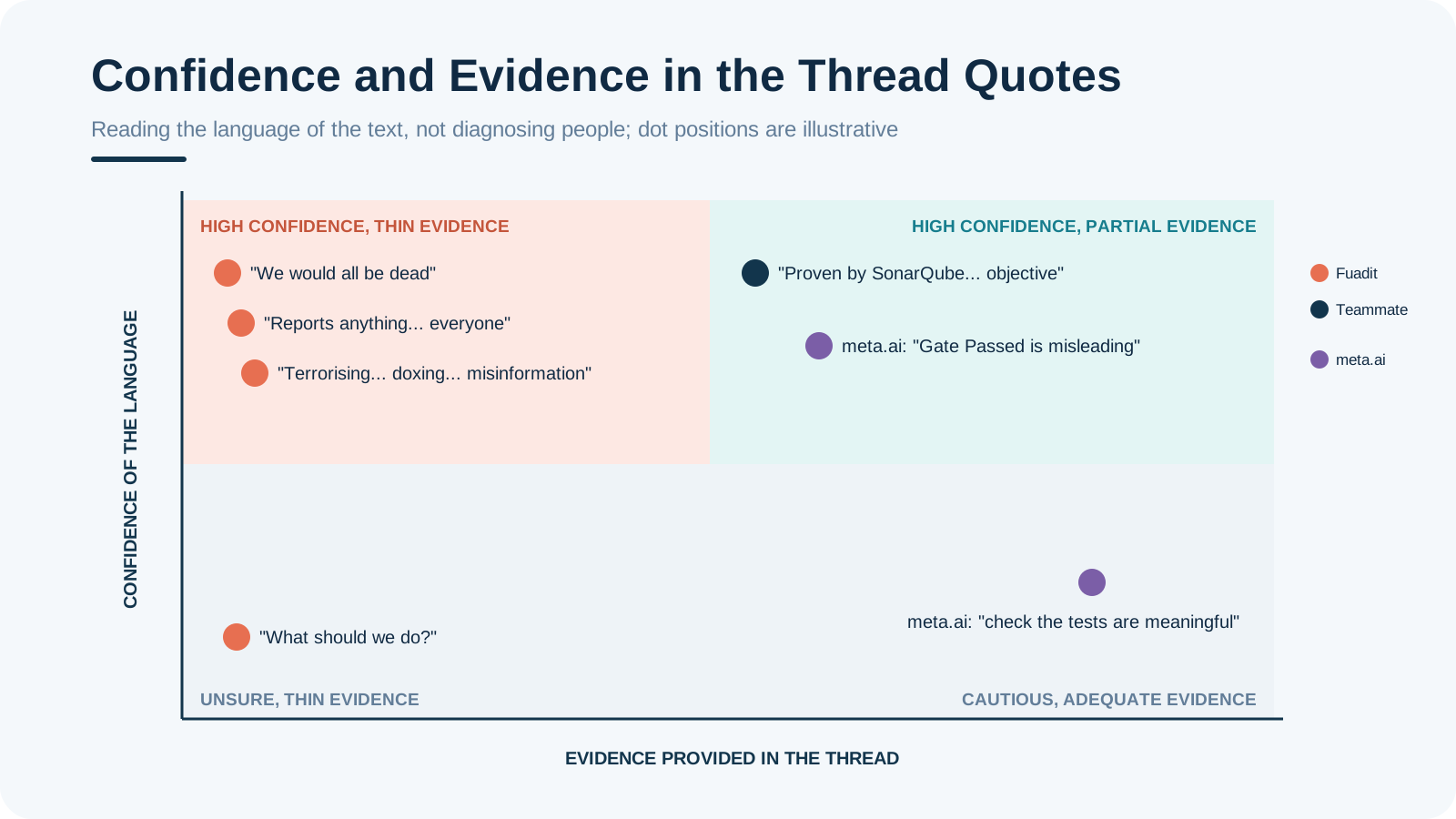
The pattern is confidence not calibrated by evidence. In Fuadit's posts the highest confidence attaches to the heaviest accusations, which carry no evidence at all. In "proven by SonarQube... objective", one dashboard is asked to prove more than it measures. meta.ai declared the gate "misleading" with confidence, even though the default gate is designed to judge only new code. A fluent language model can sound like an expert without checking the documentation.
This pattern can appear in anyone, experienced engineers included, when annoyed or speaking to an audience. It is not a sign of stupidity but of one missed step: asking "how confident may I be, given the evidence I have?"
Two lessons about the authority of tools and AI must be held together. Numbers from a tool do not automatically settle a debate: a passing gate means the code meets the rules installed, not that it is secure or that CI/CD exists. An AI asked to be "critical" will sound critical: treat its answer as a suspicion to check against the documentation, not a ruling.
Five simple tests before trusting an engineering claim
| Test | Question | Warning sign |
|---|---|---|
| Checkable | Can others open the evidence themselves? | Only screenshots from a closed system |
| Matches the question | Does the evidence answer the claim being debated? | Coverage evidence used to answer a CI/CD question |
| Rules visible | Are the measurement rules stated? | "Passed" without naming the gate used |
| Comparable sample | Does the sample represent the claimed work? | A practice repo used to judge a production project |
| Willing to be checked | Does the author invite others to check? | "No need to bother reviewing the details" |
Five questions rhetoric cannot answer
- Evidence of conduct. What specific events, with dates and evidence, underlie the accusations of threats, doxing and "unclear reports"?
- Relevance. What is the connection between someone's mental-health condition and whether their question about engineering quality is right or wrong?
- Openness. Can plus62's analysis report or pipeline history be opened publicly, so the claim "proven" can be checked by anyone?
- Representativeness. If the public repos are only practice projects, what public evidence represents the team's ability on production projects?
- Rules. Which quality gate does plus62 use, and what is the plan to close the blocker findings behind Security E?
If these five questions are answered, this debate will end far better than with laughter or mass tagging.
Toolkit: arguing without demeaning
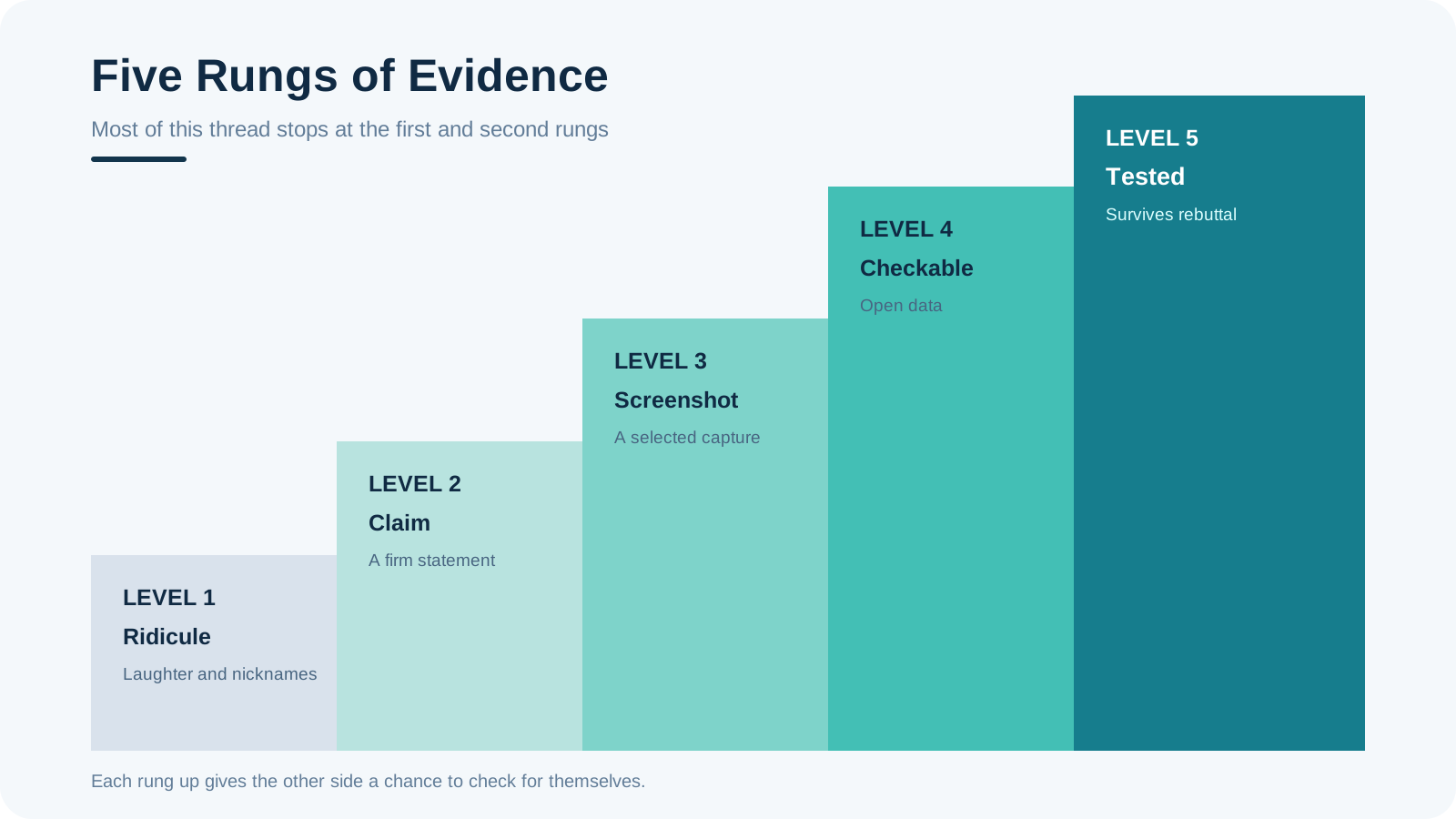
Most of this thread stops at the first and second rungs; the SonarQube dashboard reaches the third. Reaching the fourth takes only a few steps: the plus62 side can open a public link to the analysis report or pipeline history, and the accusing side can name one specific event with its evidence, or withdraw the accusation.
Six steps for arguing without demeaning:
- Calm down. Do not write when you are most upset.
- Separate. Mark what is fact, accusation, suspicion and opinion, including in your own writing.
- Prove. Bring evidence others can check, not just trust.
- Check. Re-read your evidence before posting, then read your opponent's evidence seriously.
- Acknowledge. Say clearly which part of the other side is right.
- End. When the debate turns to mental state, looks or nicknames, that is the sign to stop.
Closing
The thread began with a good question: what is the evidence? Eleven hours later that question was buried under diagnosis labels, a list of accusations, a nuclear metaphor and laughter. The best evidence that surfaced, a SonarQube dashboard, was never fully discussed by either side.
When asked about your work, answer with your work. When you want to challenge someone's conduct, bring evidence of that conduct. Someone's mental-health condition is never part of the answer.
Limits, disclosure and right of reply
- Limits. This review reads screenshots from one public Threads conversation. There were no interviews, no access to private repositories, and no check on whether the behavioural accusations in the thread are true. It does not decide whether those accusations are true or false; it only assesses whether they came with evidence in the place they were made. It does not discuss anyone's health. The scores above are the author's illustrative judgement, a learning aid and not a verdict.
- Disclosure. I own the account @rweebs21, a party to the thread, and I wrote the article The Dunning-Kruger Effect in EdTech (Wibowo, 2026) cited above. Fuadit's two posts can be read as responses to me, and "Somasi as a Service" is the name of a service I use. For that reason I rely on quotations and screenshots that readers can check for themselves.
- Right of reply. Any party quoted may send a correction or response. A well-founded correction will be added to the next version.
This post complements the analysis of claims versus the verifiable record for Fuadit Muhammad and Plus62.ai.
References
- fuaditrockz. (2026, 12 October). Dear Threads, please bantuin tag para ahli [Thread, 2 parts]. Threads.
- fuaditrockz. (2026, 12 October). Hari ini nemu istilah baru: "Somasi as a service & Professional Troublemaker" [Post]. Threads.
- rweebs21. (2026, 12 October). Four posts in the thread on plus62.ai, public repos and SonarQube. Threads.
- plus62 teammate. (2026, 12 October). Two replies on dummy repos and the SonarQube dashboard. Threads.
- meta.ai. (2026, 12 October). Reply analysing the SonarQube dashboard. Threads.
- Sonar. (2026). Metrics definition: Security rating and Reliability rating. SonarQube Server Documentation.
- Sonar. (2026). Introduction to quality gates: the Sonar way quality gate. SonarQube Server Documentation.
- Copi, I. M., Cohen, C., & McMahon, K. (2014). Introduction to Logic (14th ed.). Pearson.
- Walton, D. (2008). Informal Logic: A Pragmatic Approach (2nd ed.). Cambridge University Press.
- Kruger, J., & Dunning, D. (1999). Unskilled and unaware of it. Journal of Personality and Social Psychology, 77(6), 1121-1134.
- Gignac, G. E., & Zajenkowski, M. (2020). The Dunning-Kruger effect is (mostly) a statistical artefact. Intelligence, 80.
- Dunkel, C. S., Nedelec, J., & van der Linden, D. (2023). Reevaluating the Dunning-Kruger effect. Intelligence, 96.
- American Psychiatric Association. (2013). The Principles of Medical Ethics with Annotations Especially Applicable to Psychiatry, Section 7.3.
- World Health Organization. (2022). World Mental Health Report: Transforming Mental Health for All.