
PESTEL Framework and the Art of Reading a Market Before You Enter It By Rahmat Wibowo From InfraLoka
A field note from a Sunday morning in Jakarta, where a familiar acronym was put to the test against the realities of doing business in the archipelago.
Notes inspired by: Brian Cathcart from GLOBIS University - Graduate School of Management
Every MBA student eventually meets PESTEL: Political, Economic, Social, Technological, Environmental, and Legal. It is one of the oldest tools in the strategy classroom, and one of the most quietly abused. On Sunday, sitting in a GLOBIS trial class in Jakarta, I was reminded why the framework still matters, and why it can also become a trap for the very thinking it is meant to sharpen. Here is the deep dive, applied honestly to the country I call home.
🧭 What PESTEL Actually Asks of You
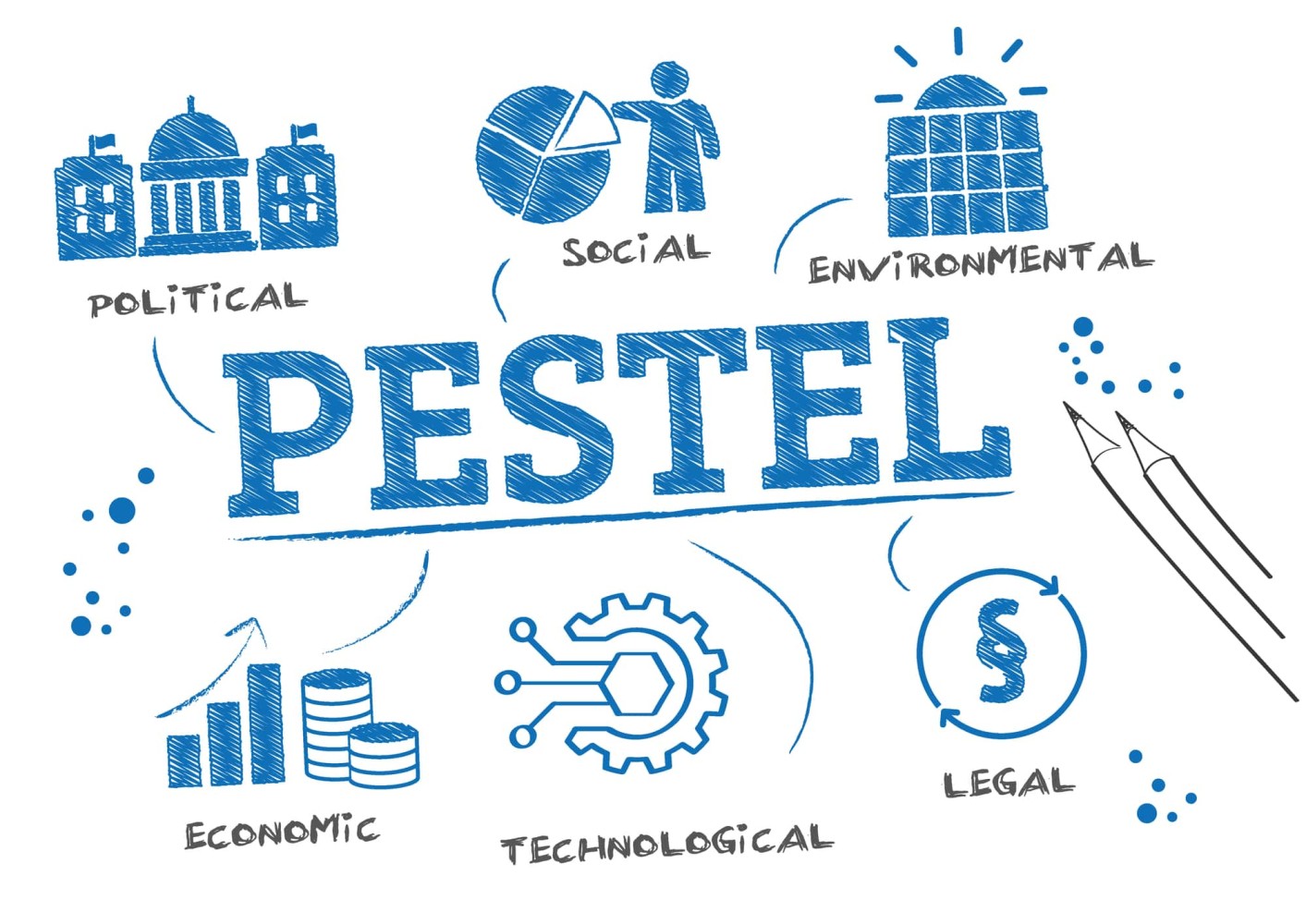
PESTEL is not a checklist to be filled in for a slide. It is a discipline for asking one uncomfortable question six different ways: what, outside of my control, could make or break this market entry? A government policy, a currency swing, a generational shift in consumer taste, a new platform, a flood, a contract that cannot be enforced, any of these can quietly decide whether a market entry succeeds long before the business plan does. For a company eyeing Indonesia, the largest economy in Southeast Asia and the world's fourth most populous nation, the framework is less optional and more a survival habit.
Political
Decentralization, regulation, and the unpredictability of policy direction
Indonesia runs as a presidential republic with strong regional autonomy, which means the national government in Jakarta is only half the picture. A new administration's policies can differ significantly from its predecessor, shifting infrastructure projects, tax structures, and industry-specific incentives, while political rhetoric during election campaigns can already move investor sentiment. Beyond Jakarta, decentralization has promoted provincial-level development but also introduced regulatory inconsistencies across regions, since local governments hold significant policymaking power and some provinces court investment aggressively while others prioritize local enterprises.
- National-level incentives (tax holidays, special economic zones) do not always translate evenly at the provincial or municipal level.
- Investors must track both the central regulatory agenda and the local Dinas-level bureaucracy that actually issues permits.
- Corruption remains widespread in government institutions and business, which businesses must price into their risk models alongside concerns about political stability.
Economic
Scale, a rising middle class, and a state that still owns a lot of the playing field
Indonesia's economy grew substantially over the past two decades after recovering from the Asian financial crisis, and private companies and foreign investors dominate the economy even though the government remains one of the largest business owners in the country. It is the largest economy in Southeast Asia, the world's 10th largest by purchasing power parity, and a G20 member with a population trending toward roughly 287 million by 2027.
- Domestic demand is the real prize: a young, large population means market entry can be justified on local consumption alone, without depending on exports.
- State-owned enterprises (BUMN) still dominate strategic sectors, so private entrants often need partnership rather than pure competition.
- Currency and current-account swings matter: Indonesia's current account balance was positive in 2022 but projected to turn negative by 2027, signalling Indonesia could become a net borrower from the rest of the world.
Social
Religious diversity, youth, and an archipelago of micro-cultures
Indonesia is not one market; it is hundreds layered on top of each other. It is a diverse archipelago nation of more than 300 ethnic groups, and social factors that matter to strategy include the nation's youthful population, cultural diversity, urbanization trends, and rapidly changing consumer behavior.
- Religion shapes consumption patterns directly: halal certification, modest fashion, and Ramadan seasonality are not niche considerations, they are mainstream demand drivers.
- Javanese, Sundanese, Bataknese, and dozens of other cultural identities mean a single national campaign rarely lands the same way twice.
- A large youth cohort drives fast adoption of digital-first products, but also fast abandonment of brands that feel out of touch.
Technological
Mobile-first adoption racing ahead of physical infrastructure
Indonesians are among the world's most active users of social platforms, with strong adoption of YouTube, WhatsApp, Facebook, Pinterest, and Instagram, and the government has pursued a "Making Indonesia 4.0" agenda to push technology adoption across food and beverage, automotive, textile, electronics, and chemicals, with specific focus on the internet, AI, human-machine interfaces, 3D printing, and robotics.
- Mobile penetration outpaces fixed broadband; any digital product must be designed mobile-first, low-bandwidth tolerant, and app-store light.
- Fintech and e-commerce have leapt ahead of traditional banking infrastructure, particularly outside Java.
- Talent for advanced manufacturing and R&D is concentrated in a handful of cities, creating a hiring bottleneck for tech-intensive entrants.
Environmental
Climate exposure, resource dependence, and a green policy still finding its feet
Indonesia sits at a genuine crossroads: it is simultaneously a major exporter of natural resources, a country highly exposed to flooding, deforestation pressure, and sea-level rise, and a government attempting to build green credentials around renewable energy and the new capital project in Nusantara. Environmental due diligence is no longer cosmetic; supply chains touching palm oil, nickel, coal, or forestry now face real export-market scrutiny (EU deforestation rules, ESG-linked financing) on top of domestic regulation.
- Jakarta's own subsidence and flooding risk is a literal, physical constraint on where logistics and retail infrastructure should be sited.
- Mining and palm oil entrants face the highest environmental compliance burden and the highest reputational exposure.
- Green financing and ESG reporting are becoming a precondition for foreign capital, not a marketing add-on.
Legal
Protective on paper, slow and uneven in practice
Employment rights are protected by law, with specific rules around leave, overtime pay, working hours, religious holiday allowance, and social security, but opening a business in Indonesia as a foreign entity remains a complex and time-consuming process. High labor costs, poor enforcement of the law, and restrictive control of foreign direct investment are recurring risks, even though Indonesia's WTO membership protects exporters from major trade barriers.
- The "negative investment list" (now folded into the Job Creation Law / Omnibus Law) still restricts foreign ownership in select sectors.
- Contract enforcement through the courts is slow; most serious commercial disputes are routed to arbitration (BANI or international) by design.
- Labor law gives strong protection to employees, which is good for social stability but raises the cost and complexity of workforce flexibility for new entrants.
🗣️ Critique One: The Political Pillar Often Doesn't Hold
When the "P" in PESTEL assumes a logic that isn't there
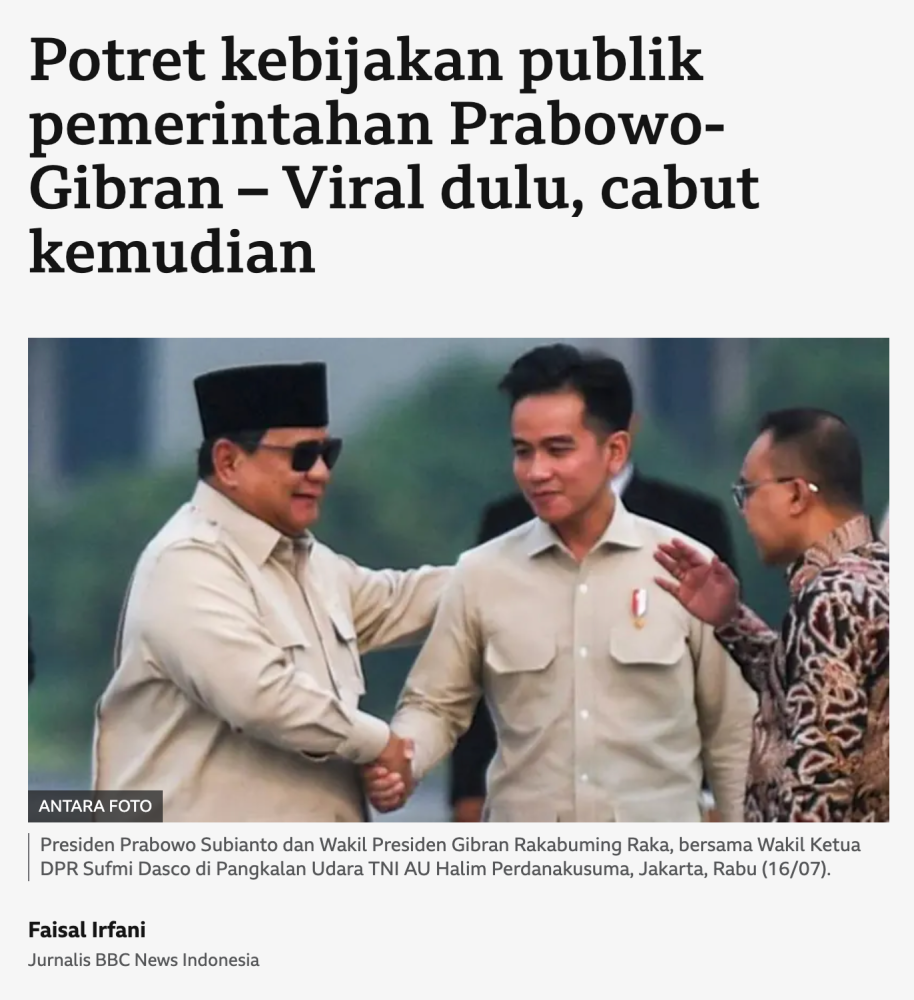
Most PESTEL templates ask you to assess the political pillar as if policy in Indonesia follows a discoverable logic: read the regulation, model the incentive, predict the direction. In practice, the political variable in Indonesia is frequently the least usable input in the entire framework, not because information is unavailable, but because policymaking itself often does not follow a consistent rationale. Regulations get issued, reversed, reinterpreted by a different ministry, or enforced selectively depending on which official is in the room.
A tax incentive announced with fanfare can be quietly walked back six months later; a permit requirement can tighten in one province and evaporate in the next. Strategy frameworks are built on the assumption that political behavior, even if adversarial, is at least internally coherent enough to model. When the coherence itself is missing, "political analysis" stops being forecasting and becomes closer to weather-watching: you can describe the current conditions, but you cannot reliably predict the next move.
For founders, this means political risk in Indonesia is better treated as a permanent operating cost to be hedged (through local partnership, diversified provincial presence, and flexible structuring) rather than a variable to be solved through better research.
🧠 Critique Two: A Framework Can Speed You Up and Box You In
Lesson From the GLOBIS Trial Class
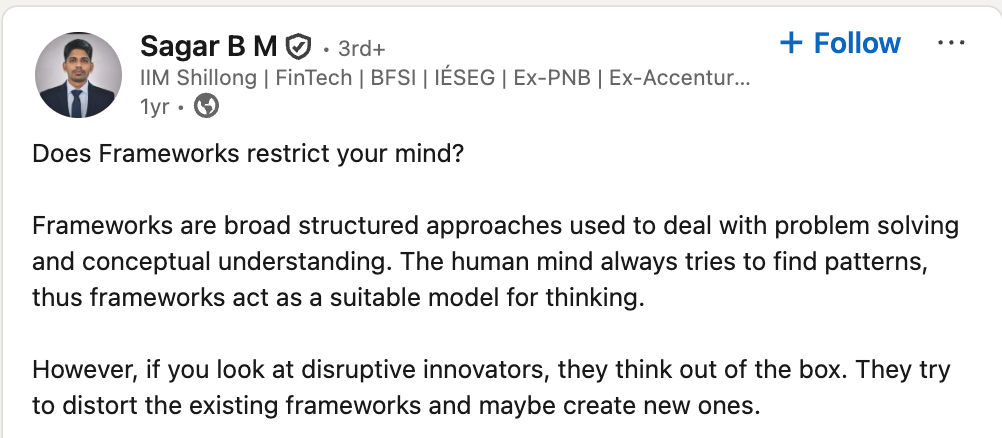
The same tool that organizes your thinking can also limit it
This was the sharpest takeaway from Sunday's session: frameworks like PESTEL exist to compress a messy reality into six labelled boxes so a room full of strangers can reach a shared understanding quickly. That compression is the entire value proposition, and it is also the trap. Once a market force gets filed under "Social" or "Technological," the mind tends to stop looking for it anywhere else. Real-world dynamics rarely respect categorical lines. Is Indonesia's halal-economy momentum a Social factor, a Legal one (certification regulation), an Economic one (a multi-billion-dollar consumption segment), or all three feeding each other? PESTEL invites you to pick a box and move on, when the more useful instinct would be to notice the interaction between boxes. A framework should be a starting scaffold for thought, not a finishing line. The discipline worth borrowing from the classroom is to run PESTEL fast to get oriented, then deliberately set it aside and ask the unstructured question the acronym cannot: what is happening at the seams between these six categories that no single label fully captures?
"Frameworks compress reality so a room can think together quickly. The danger is mistaking the compression for the truth itself." — reflection from the Business Strategy MBA Trial Class, Jakarta, 21 June 2026.
✅ The Practical Takeaway for Market Entry
Used honestly, PESTEL is still worth the fifteen minutes it takes to run through it: it forces a founder to look beyond the product and the customer toward the forces that can quietly end a business before product-market fit even gets tested. The discipline is in treating it as a first pass, not a verdict, especially in Indonesia, where the political pillar resists clean modelling and where the most important risks usually live in the overlap between categories rather than inside any single one of them. Companies that succeed here tend to combine the structure of PESTEL with the patience to sit with ambiguity that the framework cannot resolve for them.

References
- Gerbang Bisnes. Political Factors Indonesia: PESTLE Analysis. Available at: https://gerbangbisnes.com/en/political-factors-in-pestle-analysis-for-indonesia/
- How and What. PESTEL Analysis of Indonesia. Available at: https://www.howandwhat.net/pestel-analysis-indonesia/
- NAVADHI Market Research. Indonesia Snapshot — PESTLE, SWOT, Risk and Macroeconomic Trends Analysis. Available at: https://www.navadhi.com/publications/indonesia-snapshot-pestle-swot-risk-and-macroeconomic-trends-analysis
- GlobalData. Indonesia PESTLE Insights — A Macroeconomic Outlook Report. Available at: https://www.globaldata.com/store/report/indonesia-pestle-macroeconomic-analysis/
- Research and Markets / MarketLine. Indonesia In-depth PESTLE Insights. Available at: https://www.researchandmarkets.com/reports/4701564/indonesia-in-depth-pestle-insights
- IvyPanda. Indonesian Business Environmental PESTLE Analysis. Available at: https://ivypanda.com/essays/indonesian-business-environmental-pestle-analysis/
- ResearchGate. PESTE Analysis — Indonesia. Available at: https://www.researchgate.net/publication/390731899_PESTE_ANALYSIS_-_Indonesia
- Cathcart, B. Business Strategy MBA Trial Class, GLOBIS University — Graduate School of Management, Jakarta, 21 June 2026 (in-person lecture, personal notes).