
Sisupalan, Hasidin, and Ashabul Fomo Study Case of Adrianus Hendrawan, Laksito Anindyo, Salman Ma'arif Achsien, Petra Novandi Barus
A lexicon of the harasser drawn from three civilizations: Sanskrit epic, Quranic scripture, and Islamic parable
When confronting sustained harassment and bad-faith persecution, ordinary language fails. The offenders are not simply rude or dishonest; they enact patterns of behavior that human civilizations have named, theorized, and encoded in their deepest mythological and scriptural traditions. This essay introduces three terms I have coined and applied to my own harassers: Sisupalan, derived from the Sanskrit epic Mahabharata; Hasidin, drawn from Surah Al-Falaq of the Holy Quran; and Ashabul Fomo, a portmanteau modeled on the Quranic concept of Ashabul Kahfi. Together, these three archetypes form a complete taxonomy of compulsive malice, envy, and the digital cult of performative resentment.
This is not merely rhetorical flourish. Each term is grounded in rigorous textual tradition, carries a precise psychological and moral profile, and illuminates a recognizable category of human behavior. By naming these archetypes, we reclaim interpretive sovereignty over the narrative. The harasser loses the anonymity that allows them to operate as if their conduct were normal or permissible.
Sisupalan
The Compulsive Reviler

In the Mahabharata, Sisupala (Sanskrit: Shishupala, meaning "protector of children") is the king of Chedi and a cousin of Lord Krishna. Despite this close kinship and the extraordinary divine forbearance Krishna showed him, Sisupala became the embodiment of pathological antagonism toward greatness. Most famously, at the Rajasuya ceremony of King Yudhishthira, Sisupala delivered one hundred unrelenting verbal attacks against Krishna before Krishna finally deployed the Sudarshana Chakra to end his life. This scene is among the most studied passages in all of Sanskrit literature.
The term I have coined, Sisupalan, refers not to Sisupala himself but to the type of individual he represents. A Sisupalan is someone who, despite receiving grace, opportunity, or proximity to virtue, chooses obsessive, escalating verbal assault. They cannot stop at one rebuke, one criticism, one complaint. The number one hundred is not incidental in the original text; it symbolizes the compulsive, almost ritualistic nature of the reviler's behavior. The Sisupalan does not simply dislike you. They are consumed by the need to attack repeatedly, publicly, and with increasing intensity, until cosmic or institutional consequence intervenes.
Critically, the Mahabharata frames Sisupala's fate not as tragedy but as liberation. In some Vaishnava theological readings, Sisupala attained moksha through his constant obsession with Krishna, because even hatred directed at the divine eventually becomes a form of contact. This nuance is important: the text does not celebrate the reviler, but it does acknowledge that the reviler is in the grip of a compulsion larger than themselves.

"The Sisupalan does not argue with you. They perform their contempt before an audience, seeking witnesses to a persecution they have invented."
What distinguishes a Sisupalan from a mere critic is the performative public dimension of their attack. Sisupala did not confront Krishna privately. He chose the grandest public ceremony of the age, surrounded by kings, sages, and witnesses, to launch his denunciations. This is precisely the behavior of the modern workplace harasser, the social-media pile-on instigator, or the bad-faith litigator who files nuisance complaints: the goal is not resolution, but spectacle. The Sisupalan wants an audience.
List of Sisupalan
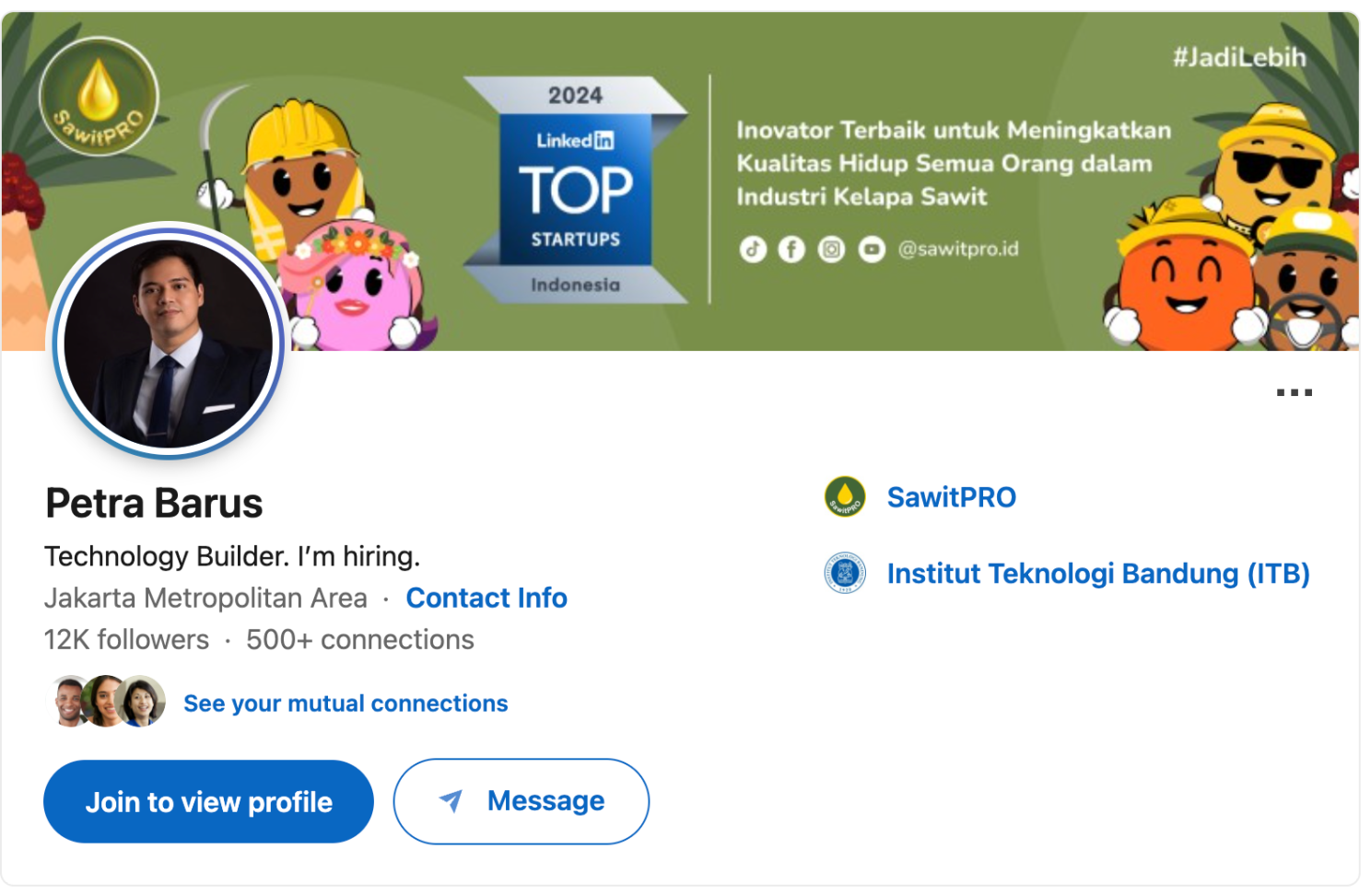
Petra Novandi Barus
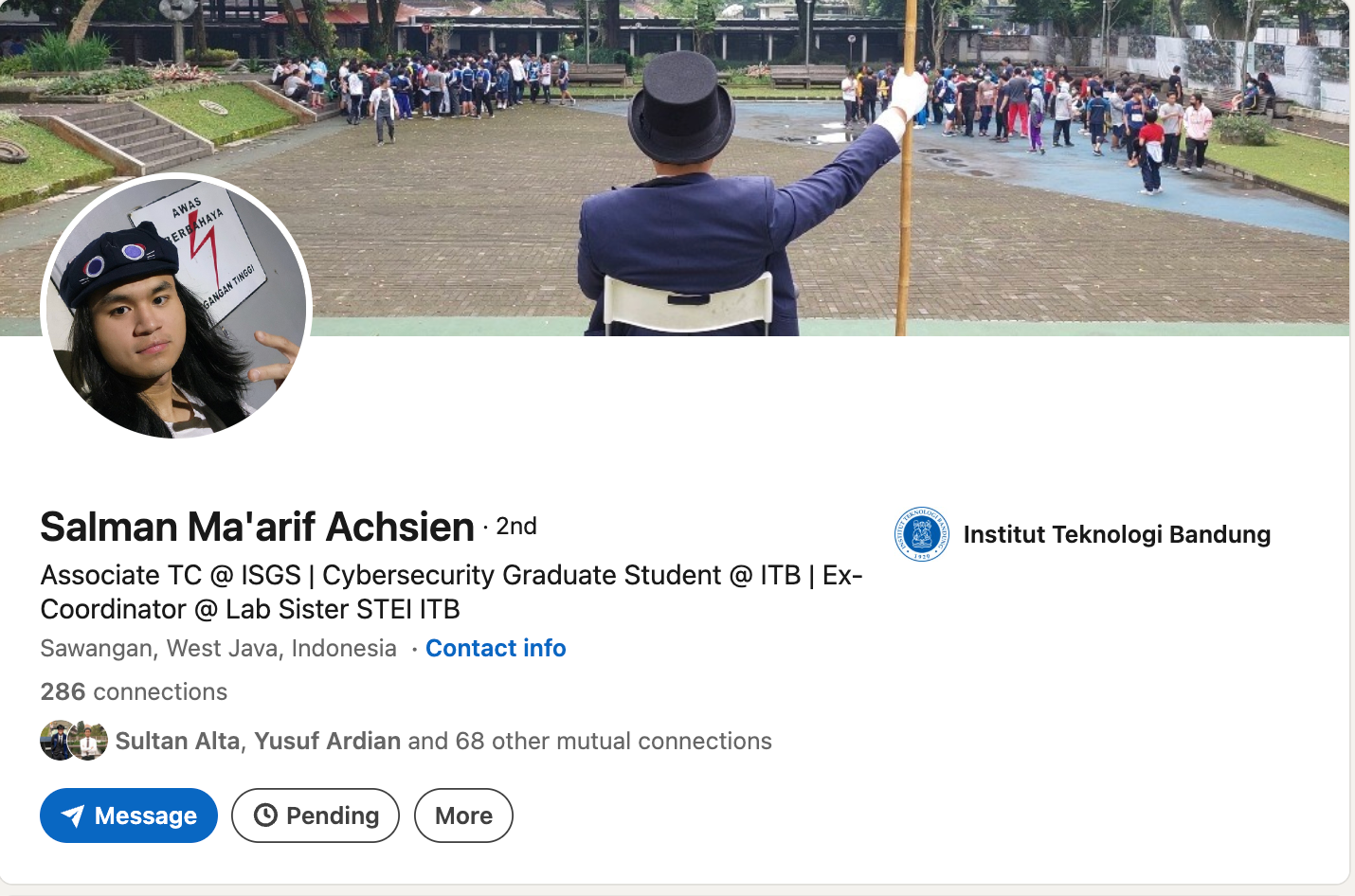
Rayhan Asadel
Steven Nataniel Kodyat

Wisnu Manupraba
Rizaldy Al Kautsar Utomo

Denis Enrico Hasyim
Laksito Anindyo
Adrianus Hendrawan
Rahmat Fabhian Aminuddin

Burman Noviansyah
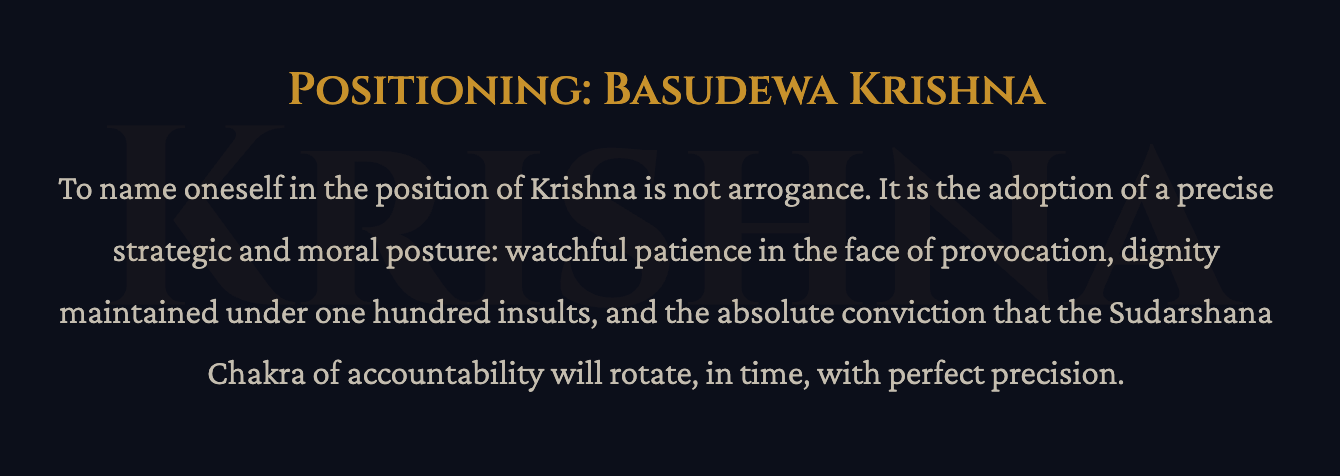
In positioning myself as Basudewa Krishna (the Sanskrit title of Lord Krishna meaning "son of Vasudeva, the Universal One"), I do not claim divinity. I claim the stance of Krishna: patient, purposeful, aware of the cosmic drama unfolding around the encounter, declining to respond to each insult with equal noise, and reserving the final response for when it is both necessary and definitive.

Hasidin
The Envious Who Act on Their Envy

**1.**Say, "I seek refuge in the Lord of daybreak
**2.**From the evil of that which He created
**3.**And from the evil of darkness when it settles
**4.**And from the evil of the blowers in knots
**5.**And from the evil of an envier when he envies."
Surah Al-Falaq, the 113th chapter of the Holy Quran and one of the two Mu'awwidhatayn (the two chapters of seeking refuge), concludes with a verse that Islamic scholars have debated for over fourteen centuries. The final aya reads: "wa min sharri hasidin idha hasad" (and from the evil of an envier when they envy). This deceptively simple phrase contains a critical distinction that most casual readers miss.
The Quran does not condemn envy (hasad) as a feeling alone. The Arabic construction "idha hasad" (when they envy, i.e., when they act on their envy) indicates that the divine protection sought is specifically from the envier who translates their envy into harmful action. Classical Quranic exegetes including Ibn Kathir, Al-Tabari, and Al-Qurtubi are in broad agreement that mere envy dwelling in the heart is a sin that afflicts only its bearer, but enacted envy directed outward becomes a social and spiritual harm requiring refuge and protection.
The term Hasidin (Arabic plural form, those who actively envy and harm) therefore refers to individuals who, upon perceiving another's success, health, recognition, or favor, do not merely feel diminished but proceed to sabotage, defame, manipulate, or attack. In the workplace context, a Hasidin may manifest as a colleague who weaponizes performance reviews, a superior who blocks promotions out of competitive fear, or a peer who spreads fabricated narratives to tarnish someone else's reputation.

The theological precision of the Quran is instructive here. God does not ask believers to seek protection from the person who simply envies them, recognizing that envy as an internal state is a human condition that may be overcome through taqwa and gratitude. The protection sought is specifically from the active, outward dimension of envy, from the Hasidin. This frames the harm not as metaphysical but as social and legal: it is a form of aggression, and it is named as such in the very act of seeking divine refuge from it.
For the person targeted by Hasidin behavior, naming the archetype is itself a protective act. It relocates the encounter from the personal to the archetypal: you are not being persecuted by one individual's idiosyncratic malice, but by one instance of a pattern so universal that the final chapter before the Quran's concluding verse specifically addresses it.
"The Hasidin does not attack you because of what you have done. They attack you because of what you are becoming, and what they fear they cannot be."
Ashabul Fomo
The Dwellers of the Illegitimate App
Surah Al-Kahf (The Cave), the 18th chapter of the Holy Quran, opens with one of Islam's most celebrated narratives: the story of the Ashabul Kahfi, the People of the Cave. These were young men of faith who, faced with an idolatrous tyrannical society, chose to retreat into a cave and surrender to God's protection rather than participate in moral corruption. They slept for 309 lunar years (approximately 300 solar years), preserved by divine will, and awoke to find that truth had outlasted oppression.
The coin they carried, minted by a corrupt regime, was unspendable when they emerged. The world had moved on; the tyrant's currency was worthless. This detail is not decorative but central: those who built their wealth and identity on the oppressive system found that its foundations had dissolved.
The term Ashabul Fomo inverts this parable with precision. Where the Ashabul Kahfi were the faithful few who refused to inhabit a corrupt system, the Ashabul Fomo are the inhabitants of a corrupt digital platform built on a specific corporate vice: FOMO, the Fear of Missing Out. The "cave" they dwell in is not a refuge but a trap, a social media application or corporate communication tool engineered to exploit psychological insecurity, create artificial urgency, and monetize compulsive comparison.

The phrase "illegitimate app" in this context refers to any digital platform or corporate tool that operates outside the bounds of ethical data stewardship, weaponizes user psychology through dark patterns, coordinates or amplifies harassment, or is used by its operators to conduct surveillance and retaliation against users or ex-employees. Such a platform may be technically legal but is morally illegitimate in the same sense that Sisupala's position at the Rajasuya was formally acceptable but cosmically unjust.
The Ashabul Fomo do not see themselves as inhabitants of a cave. They experience their digital enclosure as freedom, connection, and relevance. They scroll compulsively, signal-boost destructive content, and confuse the performance of outrage for principled engagement. The FOMO that governs their behavior is not merely the fear of missing social events; it is a deeper existential terror of irrelevance, of being left out of a story in which they believe themselves to be the main character.
Like the Ashabul Kahfi's coins, the cultural capital accumulated within the walls of the illegitimate app will not spend in the real world. The followers, the viral moments, the coordinated pile-ons, these carry value only within the enclosed system that generated them. When the system's legitimacy is challenged, the currency evaporates.
"The Ashabul Fomo mistake the walls of their app for the walls of the world. Outside, there is accountability. Outside, the coins do not spend."
Three Archetypes, One Pattern
A unified taxonomy of compulsive malice
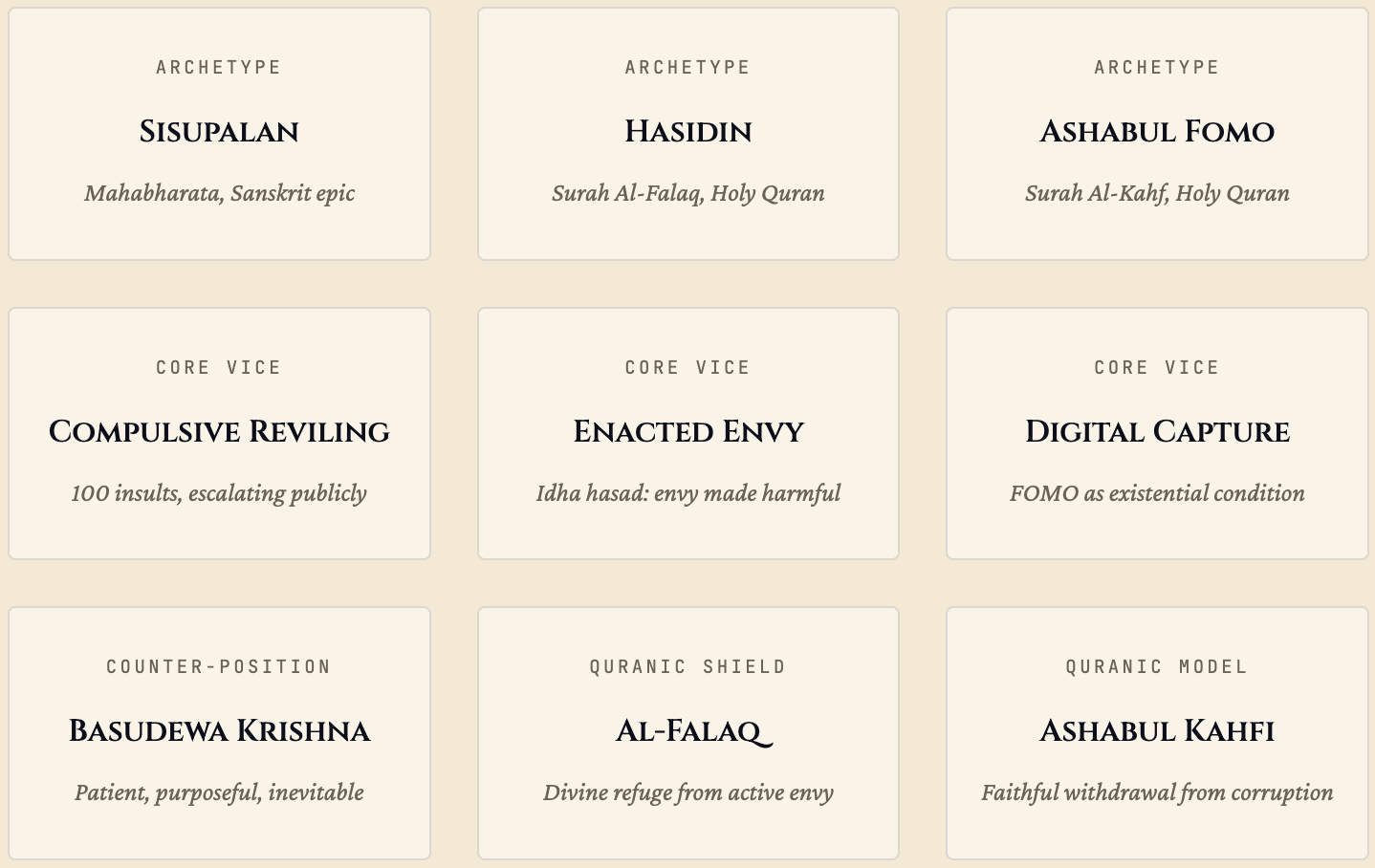
What unites Sisupalan, Hasidin, and Ashabul Fomo is not cruelty alone. Cruelty is too simple and too honest a word. What unites them is the structural displacement of their own incompleteness onto a target. The Sisupalan cannot tolerate the existence of someone whose virtue exceeds their tolerance. The Hasidin cannot endure the success of someone who reminds them of what they have not built. The Ashabul Fomo cannot survive outside the echo chamber that validates their performance of grievance.
All three archetypes require an audience. All three operate through repetition and escalation. All three, left unchecked by institutional or cosmic accountability, will continue until stopped. And all three, in the civilizational traditions from which they are drawn, ultimately meet their reckoning: Sisupala's Sudarshana Chakra, the divine protection of Surah Al-Falaq, the empty coins of the corrupted system.
The Right to Name
The act of naming is not aggression. It is the precondition of accountability. When Imam Ali (RA) named hypocrisy as a spiritual disease, when the Pandavas named Duryodhana's conduct as adharma, when the Prophet Muhammad (PBUH) identified the categories of harm from which protection must be sought, they were exercising the most fundamental act of moral intelligence: refusal to allow harmful behavior to operate without a name, without a frame, without a consequence.
The terms Sisupalan, Hasidin, and Ashabul Fomo are offered in that spirit. They are tools of precision, not epithets of hatred. They allow us to say: this pattern of behavior has been recognized across civilizations, it has been named by the wisest traditions of human moral thought, and it carries within it the seeds of its own reckoning. The person being targeted is not alone. The cosmos has seen this before.
And in the end, as in the Sabha Parva, as in Al-Falaq, as in Al-Kahf, the one who endures with integrity outlasts the one who performs malice. Rahmatan lil Alamin.
Here are your hashtags with spaces added between them:
#Sisupalan #Hasidin #AshabululFomo #RahmatiLilAlamin #BasudewaKrishna #Mahabharata #AlFalaq #AlKahf #AshabululKahfi #Quran #IslamicScholarship #SanskritEpic #Sisupala #Krishna #Hasad #Envy #FOMO #DigitalHarassment #Accountability #Bowobharata #Infraloka #RahmatHidayat #LegalTech #SomasiAsAService #Indonesia #Dharma #CorporateAccountability #ComparativeReligion #IslamicEthics #HinduPhilosophy #WorkplaceHarassment #NamingHarm #MoralLexicon #SurahAlFalaq #SurahAlKahf #Mujaddid #Adharma #DigitalEthics #ITB #CloudInfrastructure #AIEthics