
Sriwijaya & the Will of D By Rahmat Wibowo From Infraloka
What if the Ancient Kingdom lives not only in Palembang's soil,but in Eiichiro Oda's imagination?
The Kingdom That Never Was?

Ridwan Saidi's pirate thesis provocative, contested, and strangely poetic
In 2019, Jakarta-based cultural figure Ridwan Saidi ignited a firestorm across Indonesian social media when he declared, bluntly and without evident regret, that Sriwijaya was not a kingdom at all but a pirate fleet based on the Coromandel Coast. Not only that: he called it fiktif fictional. For a civilization that once commanded the Strait of Malacca, ruled the sea lanes from Sumatra to the South China Sea, and whose Buddhist scholars influenced the entire Sanskrit-speaking world, this was fighting words.
The controversy, documented extensively by Detik News in February 2020, was not merely academic. Palembang city officials expressed formal disappointment. South Sumatran cultural scholars pushed back with archaeological counter-evidence. Budayawan Erwan Suryanegara pointed out that the period of actual piracy in the Nusantara seas coincided precisely with Sriwijaya's collapse the pirates came after the kingdom fell, not before it existed.
"Sriwijaya ini kan kerajaan fiktif. Itu kan bajak laut yang berpangkalan di Koromandel." Ridwan Saidi, as quoted in Detik News, August 2019
The mainstream historical consensus is firm: Sriwijaya was real. The 7th-century inscriptions found at Kedukan Bukit (683 CE), Talang Tuwo, and Kota Kapur authenticate a Malay-speaking Buddhist maritime polity centered in present-day Palembang, South Sumatra. Chinese Tang dynasty chronicles describe a powerful kingdom called Shih-li-fo-shih sending tribute missions. Arab geographers called it Zabaj, placing it at the center of global spice trade routes.
And yet what if we suspend the historical consensus for a moment, not to agree with Saidi, but to ask a more interesting question?
What If Sriwijaya Was Never a Conventional Kingdom?
What if Sriwijaya was something more extraordinary than a kingdom with a palace and a king on a throne what if it was a maritime confederation, a network of sea peoples, traders, monks, and yes, privateers, bound not by land but by control of straits and trade winds? A kingdom without walls. A realm measured not in territory but in thalassocracy power over the sea itself.
In that reading, Ridwan Saidi is not entirely wrong. He is simply describing Sriwijaya by its most visible feature to outside observers: its warships, its toll-collecting, its aggressive policing of the Malacca Strait. To enemies and rivals, Sriwijaya looked like organized piracy. To Sriwijayans, it was statecraft.
This reframing the borderless maritime empire, the state built on water is the conceptual key that unlocks an extraordinary parallel with a 25-year-old Japanese manga series that has sold over 530 million copies worldwide.
The Grand Line & the Strait of Malacca
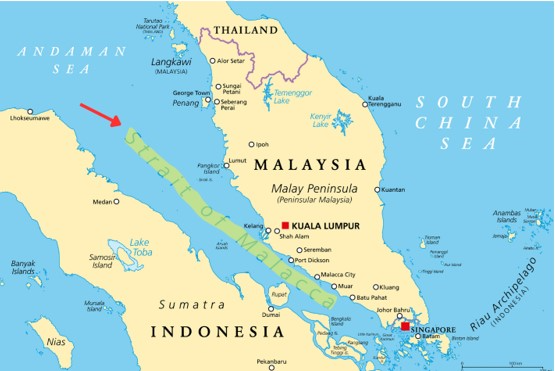
How Eiichiro Oda's world-ocean mirrors the ancient maritime geography of Southeast Asia
Eiichiro Oda began serializing One Piece in Weekly Shōnen Jump in 1997. By his own admission in interviews, he was fascinated by the age of exploration particularly the real-world piracy and maritime empires of the Caribbean and Atlantic. But as the series deepened across decades, an unmistakably Southeast Asian texture began to emerge in its world-building: the oppressive World Government controlling sea lanes, ancient civilizations erased from official history, the figure of Joy Boy leaving behind messages encoded in indestructible stone tablets.
Consider the structural parallels between the One Piece world and the ancient maritime world centered on Nusantara:
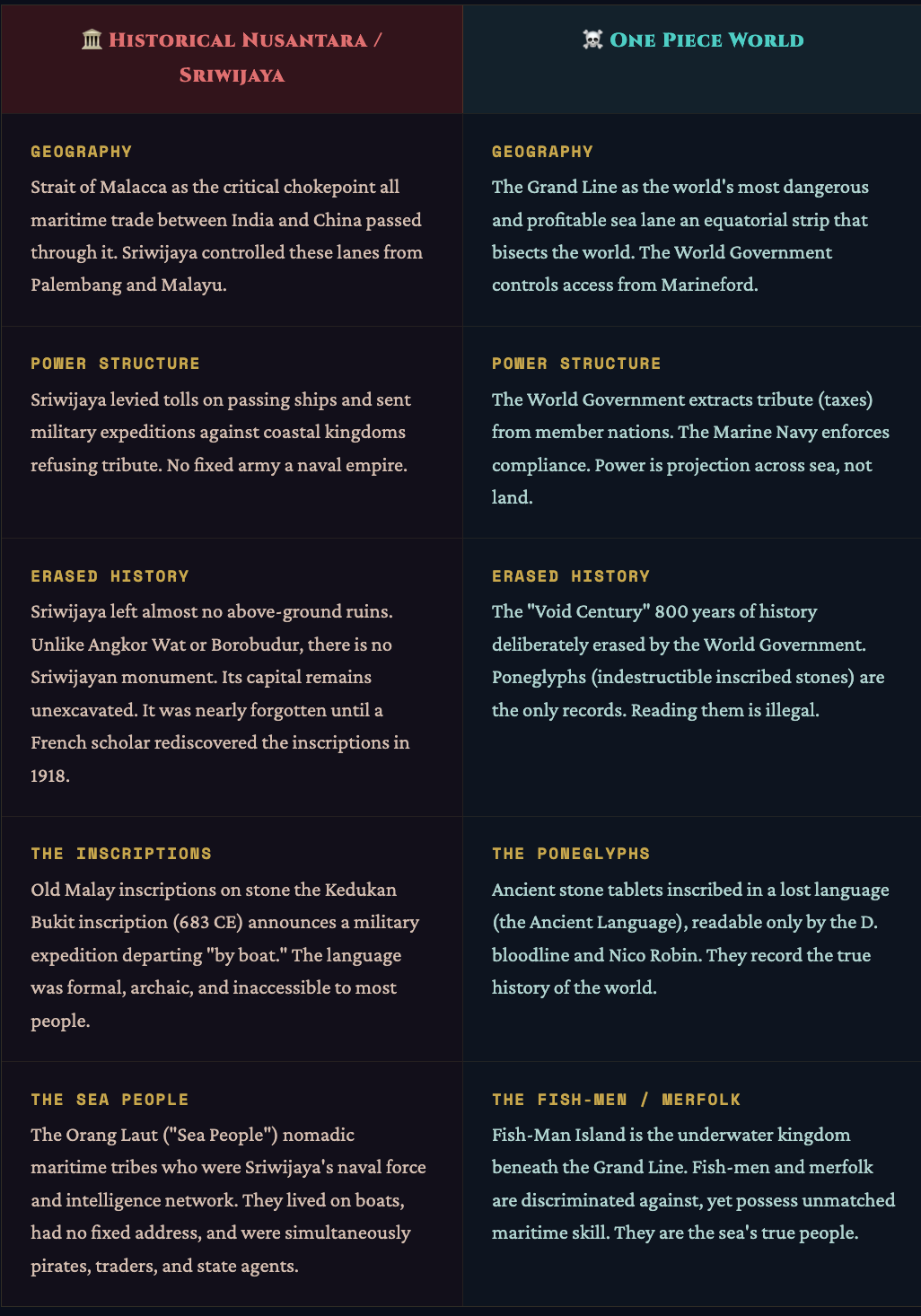
None of these parallels proves deliberate inspiration. What they reveal is something more profound: the same civilizational problems generate the same mythological solutions. A society built on the sea will always imagine its golden age as one where the sea was free, and its tragedy as the moment when power enclosed the ocean.
Sriwijaya's territory was not defined by land borders but by mandala a fluid sphere of influence radiating from the capital, growing and shrinking with political power. This is fundamentally different from a European-style territorial state. Scholars like O.W. Wolters coined the term "theatre state" for this model. The One Piece world operates on nearly identical logic: the World Government's power is strongest near Marineford (the capital), weakest at the edges of the New World.
Joy Boy and Jayabaya
The prophecy-making king who sleeps beneath history waiting to return
Of all the parallels between Indonesian history and One Piece mythology, none is more startling than the convergence between One Piece's Joy Boy and Java's prophetic king Jayabaya.

◆ Etymology Note
In Javanese pronunciation, "Jayabaya" collapses naturally toward "Joyoboyo" or even "Joy-uh-buh-yo." The first two syllables Joy-a / Joy-o are phonetically adjacent to Joy Boy in any Indonesian-accented English reading.
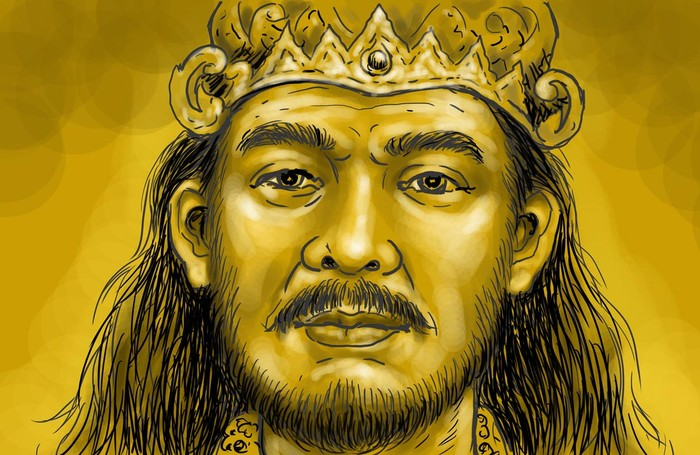
Jayabaya (also spelled Joyoboyo) was a king of the Kediri Kingdom in East Java, who ruled approximately 1135–1157 CE. He is historically documented as a patron of Javanese literature the great Kakawin Bharatayuddha was composed during his reign. But his enduring fame comes from the Ramalan Jayabaya the Prophecies of Jayabaya a corpus of prophetic poetry attributed to him that has shaped Javanese political consciousness for nearly a millennium.
The prophecies describe an age of darkness (Kali Yuga), followed by the arrival of a righteous king who will restore justice the Ratu Adil, the Just Ruler. Jayabaya himself is said to be sleeping beneath Mount Lawu or beneath the sea, waiting to be reborn at the moment of Indonesia's greatest need.
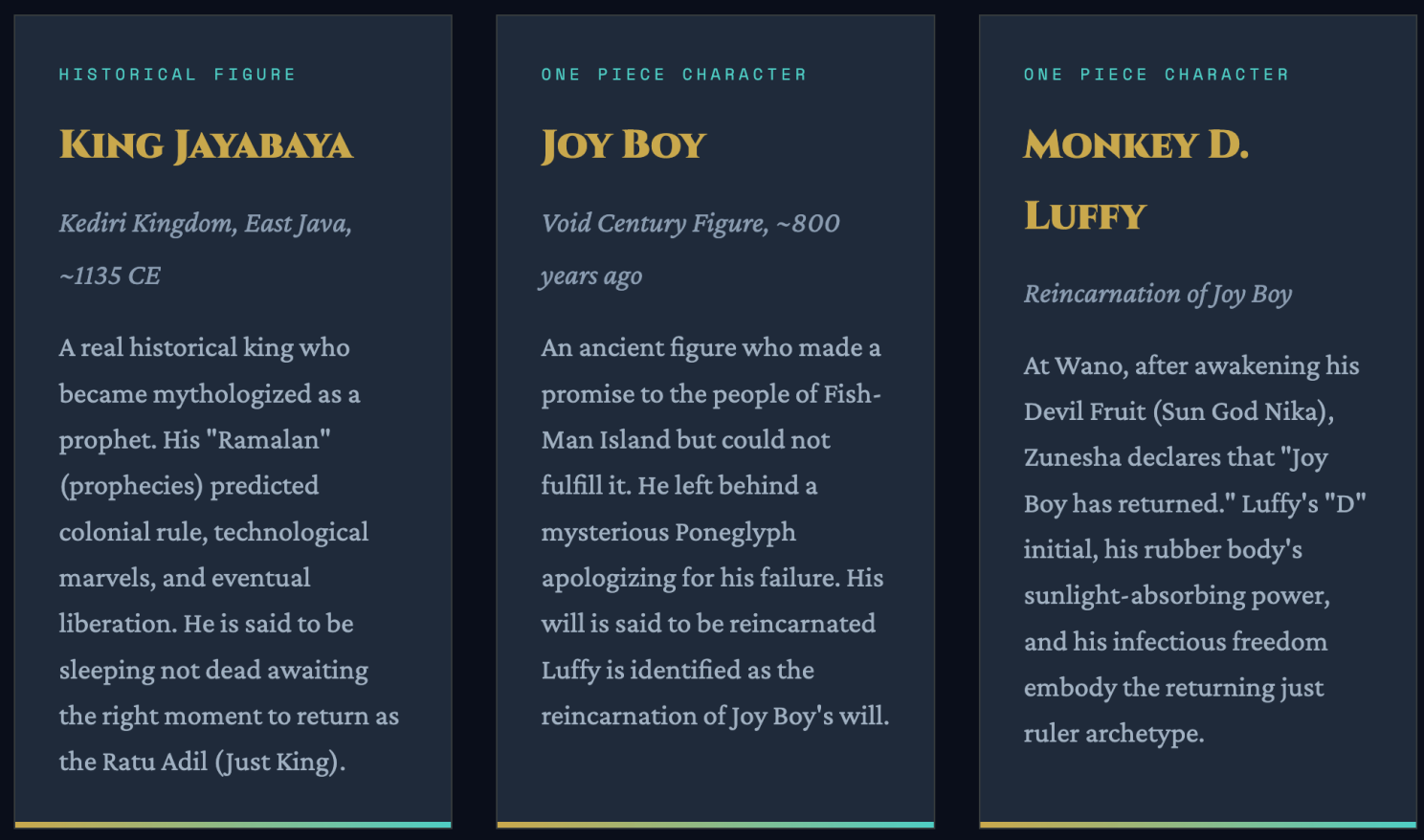
The Phonetic Bridge: "Jayabaya" in modern Javanese is often romanized as "Joyoboyo." Indonesian speakers encountering the name "Joy Boy" in One Piece would find it acoustically familiar almost a homophone. Whether this is coincidence, unconscious influence through pan-Asian cultural currents reaching Oda, or pure serendipity matters less than what it reveals: both cultures independently generated the same mythological need.
The sleeping king who will return. The promise that was broken and will be restored. The stone inscriptions that carry the truth no empire can erase. These are not Japanese or Indonesian ideas alone they are the universal grammar of civilizations that have been conquered, erased, and that dream of resurrection.
There is a deeper structural resonance worth noting. Jayabaya's prophecies explicitly describe a period when Java would be ruled by foreigners, when ships made of iron would sail without wind, when iron birds would darken the sky all fulfilled, Javanese traditionalists say, by Dutch colonialism and modernity. The prophecies encoded resistance in poetic form that could survive censorship because they spoke in metaphor.
Joy Boy's Poneglyphs serve the same function in One Piece. The World Government has suppressed the truth but truth encoded in indestructible stone, in a language that requires the right bloodline to read, cannot be permanently silenced. The parallel is almost too perfect to be accidental. Almost.

Sriwijaya as the Ancient Kingdom
The Void Century's lost civilization and what a Buddhist maritime empire erased from official history looks like
In One Piece's lore, the "Ancient Kingdom" is the civilization that existed during the Void Century 800 years of history that the World Government destroyed and made illegal to research. What we know: it was powerful enough to threaten the twenty kings who founded the World Government. It used Poneglyphs to preserve its truth. Its people used the initial "D" as a surname and the "D" carriers throughout history keep fighting against oppressive institutions.
Now consider what we know of Sriwijaya's historical fate. After dominating maritime Southeast Asia for nearly 700 years, it was attacked by the Chola Empire of South India in 1025 CE a devastating naval raid that broke its hegemony. It was then gradually eclipsed by Singhasari and later Majapahit, Java-based land empires with very different political philosophies. The Javanese literary tradition which became the dominant cultural memory had little reason to celebrate Sriwijaya, a Sumatran Buddhist thalassocracy that had once demanded tribute from Java.
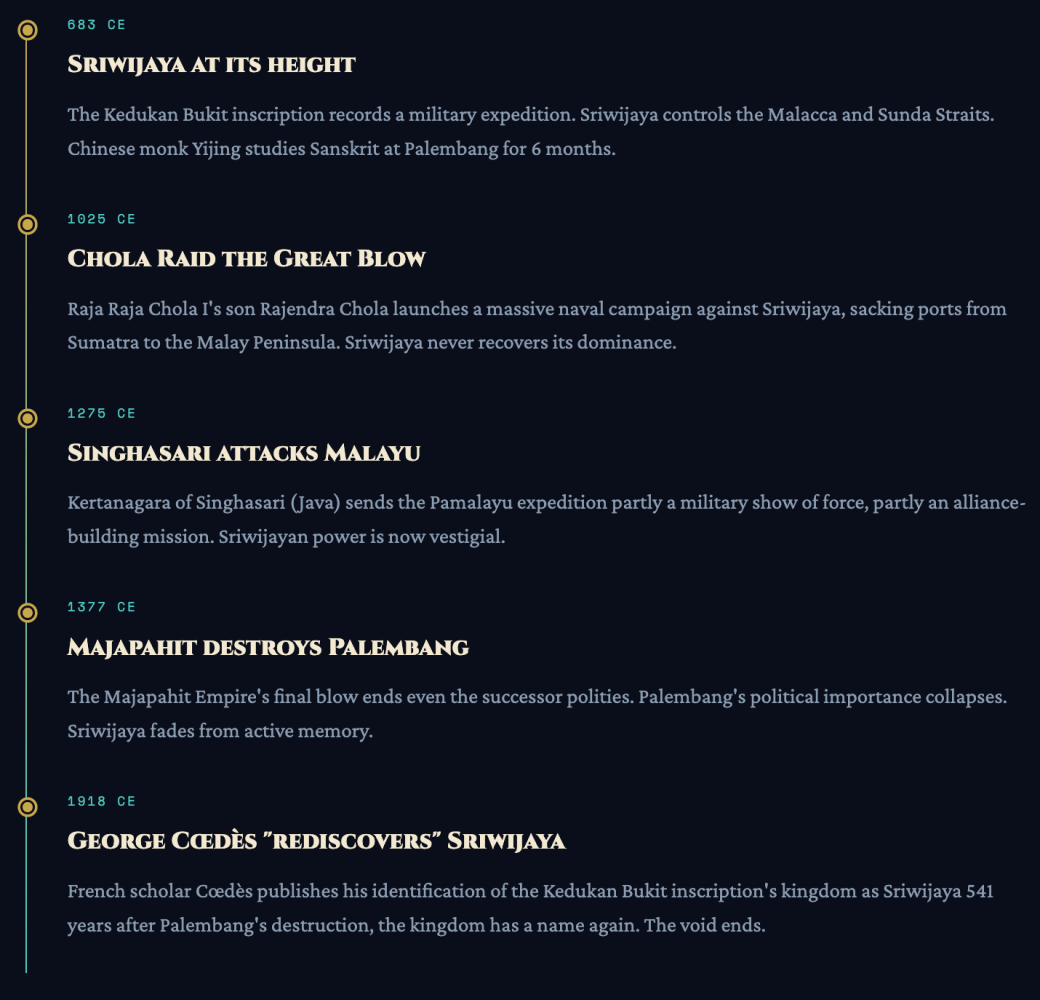
Sriwijaya spent over five centuries in the equivalent of a Void Century not erased by deliberate conspiracy, but by the accumulated weight of competing civilizational narratives, colonial archival priorities, and the simple fact that it built in wood and water rather than in stone. When Ridwan Saidi calls it fictional, he is, paradoxically, describing the result of this erasure: Sriwijaya is so absent from visible ruins that it feels like a ghost kingdom.
The Orang Laut (Sea People) were the human foundation of Sriwijayan power maritime nomads who navigated the straits without maps, who owed loyalty to the Sriwijayan ruler but lived outside any fixed territory. They were the equivalent of One Piece's Fish-Men: indispensable to maritime civilization, feared and looked down upon by land-based kingdoms, and utterly essential to any thalassocratic empire. When Sriwijaya fell, the Orang Laut dispersed. Some became the "pirates" of the post-Sriwijayan era which may be what Ridwan Saidi's sources were actually describing.
What If Sriwijaya IS the Ancient Kingdom?
Imagine reading One Piece's lore as an Indonesian: a once-great civilization that controlled the world's sea lanes, whose history was deliberately suppressed by a new world order (the twenty kings / the Majapahit-to-colonial transition), whose people spread across the seas carrying an inherited "will" that the powerful want extinguished and whose truth is preserved in ancient stone tablets that only certain bloodlines can interpret.
The Ancient Kingdom of the Void Century is never named in One Piece. Oda has kept this secret for 25 years. Perhaps it doesn't need to be named. Perhaps it already has a name, spoken in Old Malay on a 7th-century stone in Palembang: Sriwijaya the Glorious Victory.
Nusantara Echoes Across One Piece
A catalogue of Indonesian cultural DNA embedded in Oda's world
Even setting aside the macro-structural parallels, One Piece is threaded through with details that resonate with Indonesian cultural geography. These may be coincidental Oda draws from world mythology broadly but for Indonesian readers, the recognition is visceral.
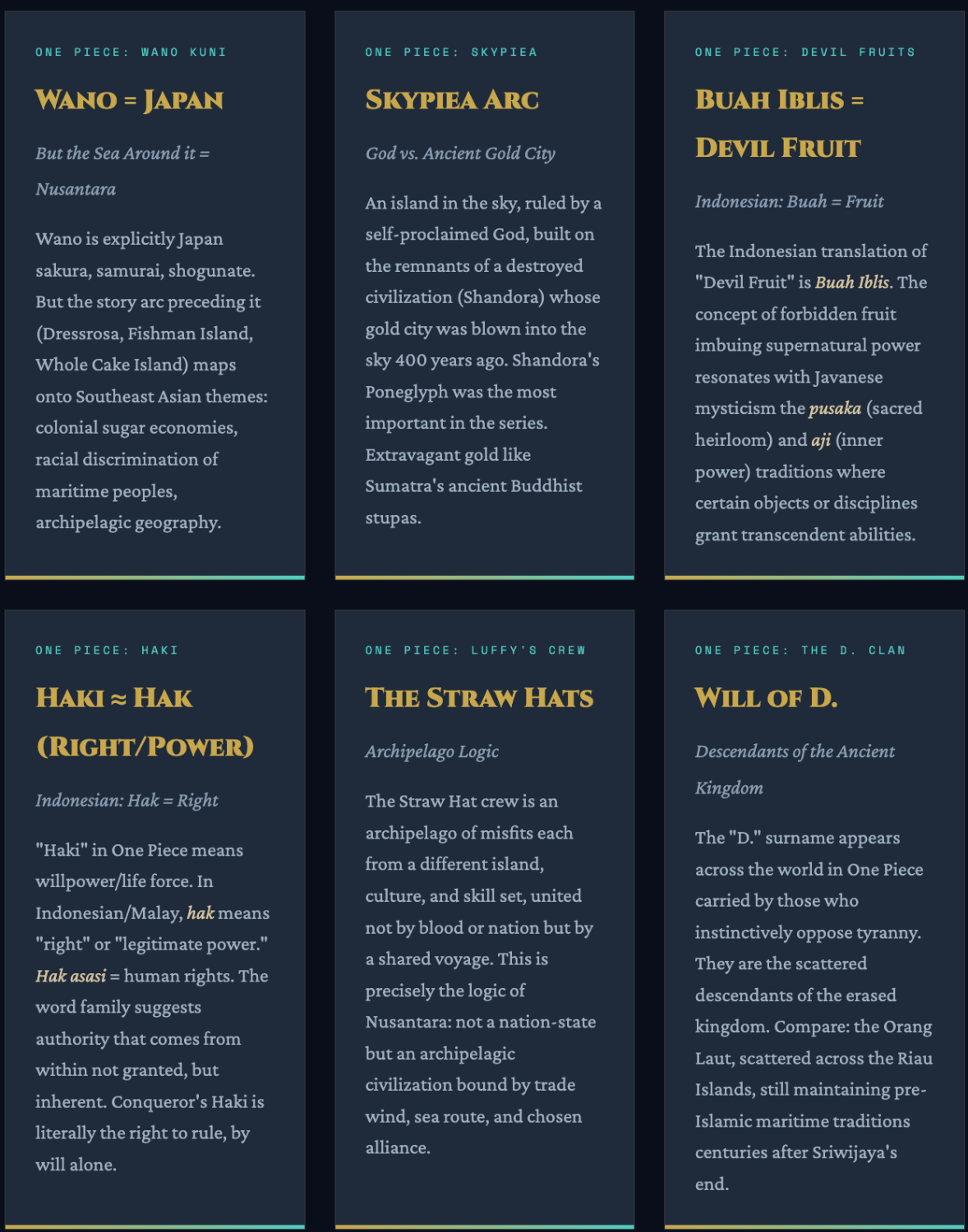
One detail deserves special attention: the island of Laugh Tale the final island in One Piece, where the One Piece treasure is hidden, and where Joy Boy's true history is recorded. The name itself is a translation of the Japanese Rafuteru originally written in the story as "Raftel," which many fans read as a reference to Raffles, Sir Thomas Stamford Raffles, the British colonial administrator who founded Singapore and crucially was one of the first Europeans to seriously study Javanese culture, translating the Ramayana and documenting Borobudur before it disappeared back into jungle.
Raffles wrote The History of Java (1817) after British colonial administration of Java from 1811–1816. He documented traditions, temples, and inscriptions that Dutch administrators had largely ignored. In a sense, Raffles was doing what Robin does in One Piece reading the stones that power wants to leave buried. Whether Oda was aware of this resonance is unknown. But the echo is there.
Indonesia × Japan Mutual Understanding Through Story
Why this conversation matters beyond fan theory
Indonesia and Japan share more than geography and economic partnership. They share a particular historical experience: the lived memory of civilizations that were more powerful in the past than the 19th-century colonial world order allowed them to appear. Japan experienced this through forced modernization under Meiji; Indonesia experienced it through 350 years of Dutch colonialism that relentlessly suppressed local historical narratives.
One Piece is, at its core, a story about restoring a world that was stolen. It is about the twenty kings who handed over their kingdoms' best weapons (the Ancient Weapons Pluton, Poseidon, Uranus) to found a peace built on control, not freedom. It is about an agreement made in good faith (Joy Boy's promise) that was broken not by evil intent but by the simple fact that the world wasn't ready.
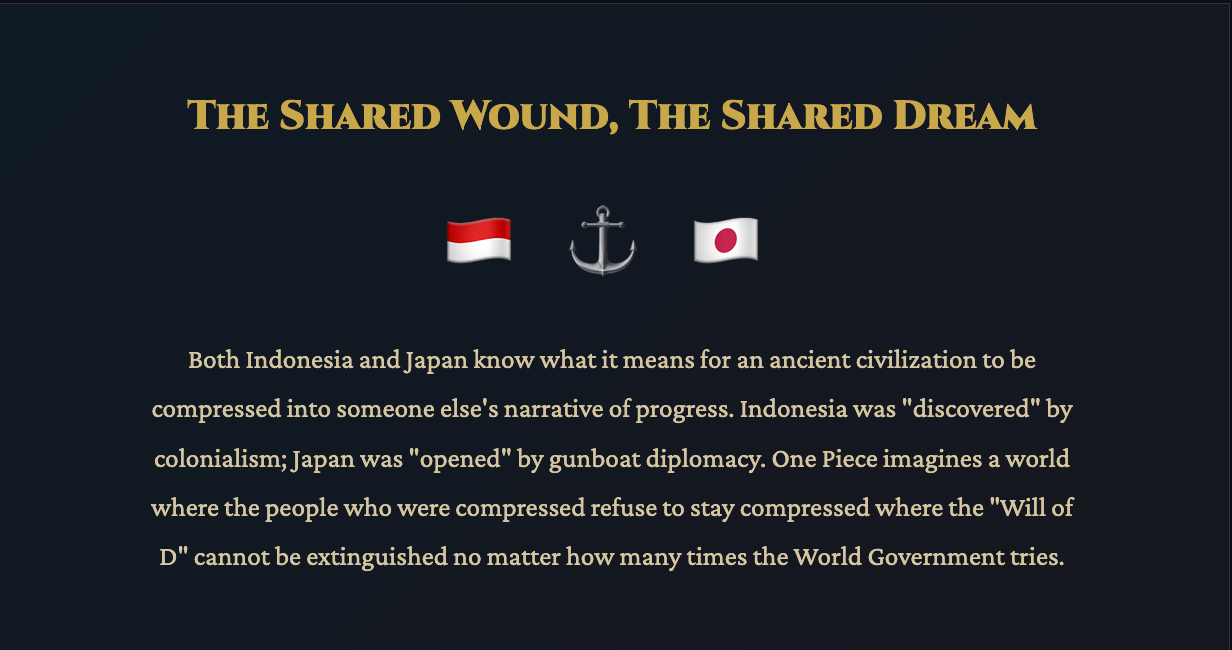
When Indonesian fans watch Luffy, they are watching something that resonates in a register that a purely Western viewer might miss. The rubber man from Dawn Island who has no family wealth, no political connection, only an unreasonable belief in freedom and an irrepressible will this is not just a shōnen protagonist. He is the Ratu Adil in Wrangler jeans and a straw hat. He is Joy Boy returned, as Jayabaya was expected to return.
And when Japanese creators including Oda, including those who built the global One Piece community encounter the Indonesian historical context described here, they may discover that what they created was not merely fantasy. It was a recovery. A re-membering of something the sea remembers even when land-based history forgets.
The sea does not keep secrets forever. What sinks to the bottom eventually resurfaces carried by current, by tide, by the unreasonable insistence of those who remember. The shared logic of Sriwijayan archaeology and One Piece's Void Century
Indonesia is the world's largest archipelago nation over 17,000 islands, over 700 languages, a civilization that predates the nation-state by over a thousand years. Japan is an island nation that built one of history's most extraordinary cultural export machines. Both nations understand what it means to be surrounded by sea, to be defined by the spaces between land rather than the land itself.
The conversation this article invites is not "did Oda copy Sriwijaya?" The conversation is: what does it mean that the same mythological needs the erased empire, the sleeping king, the indestructible truth written in stone arose independently in both traditions? What does that tell us about the universal human need to believe that what was stolen can be recovered? That the Void Century does not have the final word?
The Will of the Sea People
Ridwan Saidi called Sriwijaya a pirate kingdom. Mainstream historians called it a maritime empire. Oda, perhaps without knowing it, called it the Ancient Kingdom the civilization whose will cannot be erased, whose promise will be fulfilled when the right person is born.
Perhaps all three are right. Perhaps that is what Sriwijaya was: not a palace, not a bureaucracy, not a pirate fleet but an idea. The idea that the sea cannot be owned. That freedom of passage is a right, not a privilege. That inscribed truth outlasts any empire that tries to suppress it.
Joy Boy made a promise he couldn't keep. But he wrote it down in stone, in a language that would survive because he believed that someday, someone would be born who could. In Java, they called that someone the Ratu Adil, and they said he was sleeping beneath the mountain.
In the waters between Sumatra and the Malay Peninsula, in the strait where Sriwijayan tollships once enforced the world's most lucrative chokepoint, the current still runs. The sea still connects. And somewhere in the archipelago, the stone still waits to be read.
ONE PIECE IS THE PROPERTY OF EIICHIRO ODA / SHUEISHA. THIS ARTICLE IS AN INDEPENDENT SCHOLARLY WORK OF CULTURAL ANALYSIS AND DOES NOT CLAIM AFFILIATION WITH OR ENDORSEMENT BY THE CREATORS OF ONE PIECE.
#Indonesia #Onepiece #Sriwijaya #JoyBoy #Jayabaya #NusantaraHistory #IndonesiaJapan #MaritimeHistory #CulturalDiplomacy #MangaCulture #EiichiiroOda #AncientKingdom #VoidCentury #Infraloka #ThoughtLeadership #IndonesiaTech #History #SoutheastAsiaHistory #Thalassocracy #RatuAdil