
Stone Posts: Srivijaya's Prasasti as Ancient Social Media By Rahmat Wibowo From InfraLoka
How a 7th-century maritime empire projected divine power, threatened enemies, and shaped public opinion through inscriptions sent like viral broadcasts across the archipelago.
Long before the era of algorithms and viral posts, the rulers of Srivijaya had already mastered the art of information warfare. They carved their messages in stone, anointed them with sacred authority, and dispatched them to the edges of their domain a networked broadcast system of divine propaganda, territorial warning, and psychological dominance.
Between the 7th and 13th centuries CE, the Srivijayan maritime empire centered in what is now Palembang, South Sumatra controlled the Strait of Malacca, the arteries of the Maritime Silk Road, and a vast thalassocratic network stretching from the Malay Peninsula to the islands of the Indonesian archipelago. At the heart of their political communication strategy were the prasasti: royal inscriptions chiseled in Pallava script, written in Old Malay mixed with Sanskrit, and placed at strategic points across their territory and at the boundaries of kingdoms they intended to absorb or intimidate.
The comparison to modern social media is neither frivolous nor anachronistic it is structurally precise. Each prasasti served as a broadcast to a defined audience (local lords, vassals, rival kingdoms). It carried a curated message of royal authority and supernatural legitimacy. It threatened consequences for disloyalty. And critically, identical or near-identical texts were replicated and distributed across multiple locations just as a post "goes live" in multiple feeds simultaneously. The Srivijayan prasasti functioned as a pinned announcement, an oath of allegiance form, a declaration of war and a permanent, indelible monument to royal brand identity.
"They did not merely record history they performed it. Each stone inscription was a live broadcast to every vassal, every merchant, every rival king who could hear or be told of its contents."
Contemporary Interpretation of Srivijayan Epigraphy
This article presents a deep examination of all known major prasasti of Srivijaya their original Sanskrit and Old Malay texts, Latin transliterations, Indonesian translations, and English renderings alongside an analysis of how these stone broadcasts functioned as instruments of imperial power, divine glorification, and psychological warfare.
The Architecture of Ancient Viral Content
Modern social media platforms share structural features with Srivijayan prasasti practice that become immediately visible once we articulate them. Both systems involve a central authority broadcasting to a distributed audience. Both leverage authority signals verified badges in the modern case, royal seals and Sanskrit invocations in the ancient one. Both use threats and rewards to maintain audience loyalty. And both are designed to be seen, shared, and feared.
The Viral Mechanism Explained
When Srivijaya sent a prasasti to the island of Bangka an inscription of pure political aggression declaring that Java would be punished for its defiance it functioned precisely as a viral threat post. The stone was not merely placed; it was encountered by sailors, traders, and local administrators. Word of its contents spread through networks of oral transmission, reaching audiences far beyond those who could read Pallava script. The stone was the post. The Musi River trade network was the algorithm.
Similarly, when a loyalty oath prasasti (such as Telaga Batu) listed every rank of official who was bound by it from princes to royal washermen it was designed to achieve total saturation. No member of the court could claim they had not seen the content. Today, we call that reach and impressions. In 683 CE, they called it sumpah: the sacred oath of binding.
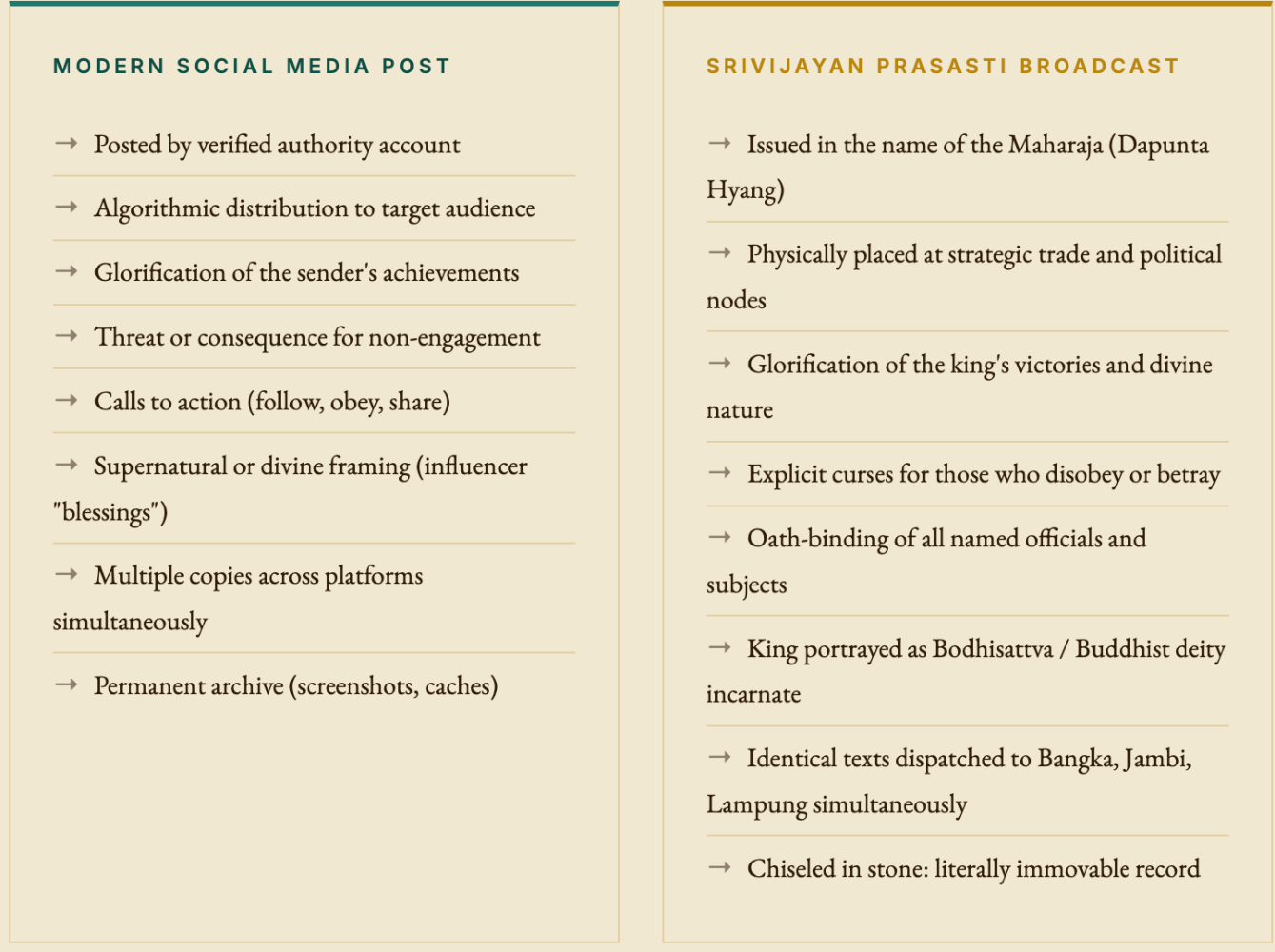
The glorification function deserves special attention. In the tradition of Sanskrit praśasti (praise inscription), Srivijayan kings claimed not merely political authority but cosmic legitimacy. Dapunta Hyang Sri Jayanasa is described in inscriptions as having completed a siddhayatra a sacred journey of spiritual attainment before his military campaigns. This framing transforms conquest into pilgrimage, army movements into religious processions, and the king himself into a walking Buddha. This is precisely what modern strongmen do when they stage their announcements with religious imagery, sacred language, and claims of divine mandate. The aesthetic has changed; the architecture has not.
All Known Prasasti of Srivijaya
Full texts, transliterations, and translations with analysis of each inscription's function as a political broadcast.
Prasasti Kedukan Bukit
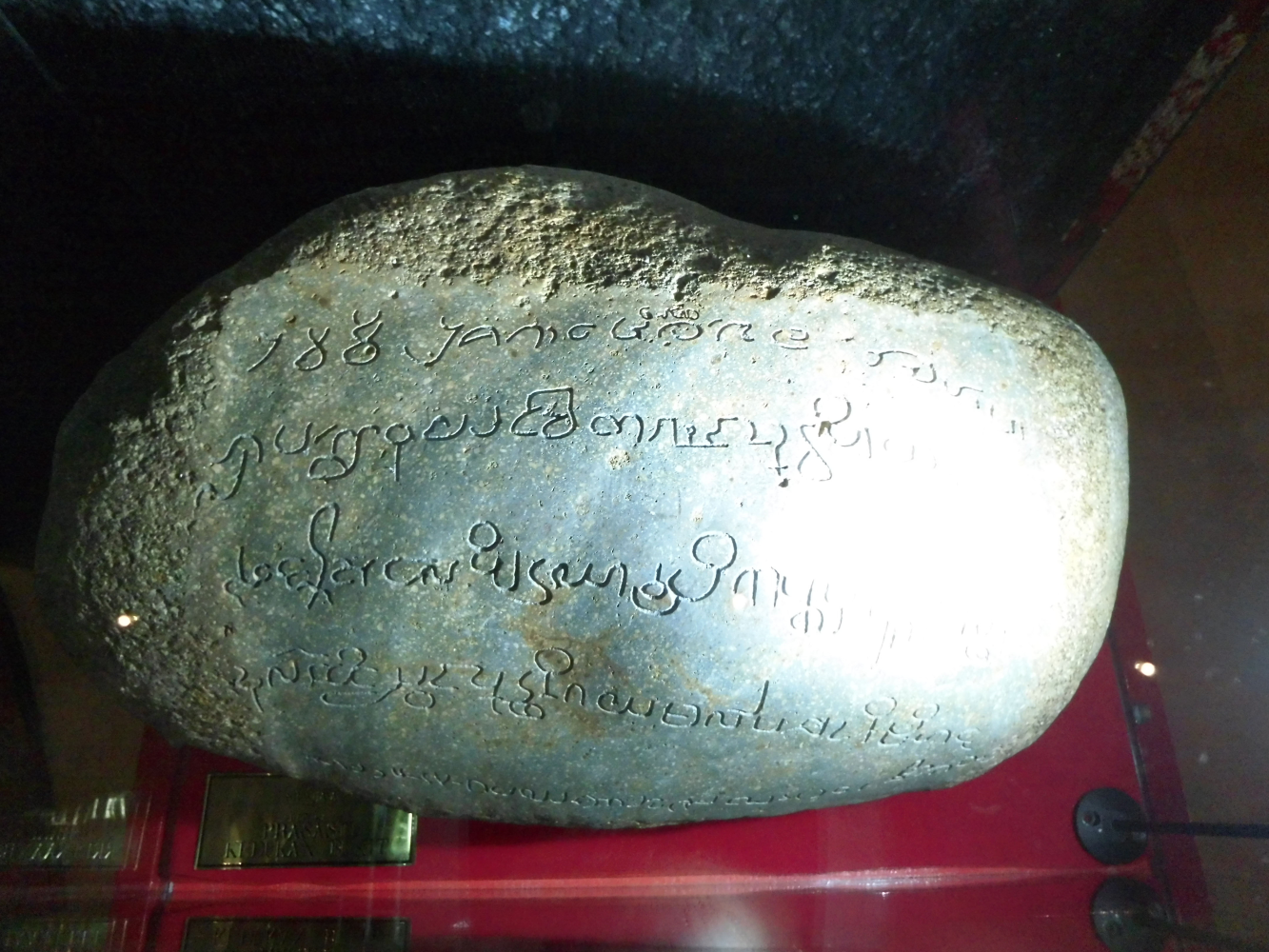
683 CE (Saka 605)Pallava Script, Old MalayKedukan Bukit, South SumatraNational Museum Jakarta, Inv. D.161
📡 Broadcast Type: Conquest Announcement & Divine Legitimation
Original Script (Old Malay in Pallava)
svasti śrī śaka varṣātīta 605 ekādaśī śukla- pakṣa vulan vaiśākha ḍapunta hiyaṃ nāyik di sāmvau maṅalap siddhayātra di saptamī śuklapakṣa vulan jyeṣṭha ḍapunta hiyaṃ marlapas dari mināṅa tāmvan mamāva yaṃ vala dua lakṣa daṅan kośa dua ratus cāra di sāmvau daṅan jālan sarivu tlu ratus sapulu dua vañakña dātaṃ di mukha upaṃ sukhacitta di pañcamī śuklapakṣa vulan āṣāḍha laghu mudita dātaṃ marṣiddha siddhayātra
Latin Transliteration (IAST)
svasti śrī śakavaṛṣātīta 605 ekādaśī śuklapakṣa vulan vaiśākha ḍapunta hiyaṃ nāyik di sāmvau maṅalap siddhayātra di saptamī śuklapakṣa vulan jyeṣṭha ḍapunta hiyaṃ marlapas dari mināṅatāmvan mamāva yaṃ vala dua lakṣa daṅan kośa dua ratus cāra di sāmvau daṅan jālan sarivu tlu ratus sapulu dua vañakña dātaṃ di mukha upaṃ sukhacitta di pañcamī śuklapakṣa vulan āṣāḍha laghu mudita dātaṃ marṣiddha siddhayātra
Terjemahan Bahasa Indonesia
Salam sejahtera. Tahun Saka 605 telah berlalu. Pada hari kesebelas paro terang bulan Waisaka, Dapunta Hyang naik ke perahu untuk memulai perjalanan suci (siddhayatra). Pada hari ketujuh paro terang bulan Jyestha, Dapunta Hyang berangkat dari Minanga Tamwan membawa bala tentara sebanyak dua laksa (20.000 orang) dengan dua ratus peti harta benda di atas perahu dan seribu tiga ratus dua belas orang berjalan kaki. Mereka tiba di muara (sungai) dengan hati yang gembira. Pada hari kelima paro terang bulan Asadha, dengan ringan dan suka cita, mereka berhasil menyelesaikan perjalanan suci tersebut.
English Translation
Hail, prosperity! In the year Saka 605, on the eleventh day of the bright fortnight of the month of Vaisakha, Dapunta Hyang embarked on a boat to undertake the sacred journey (siddhayatra). On the seventh day of the bright fortnight of the month of Jyestha, Dapunta Hyang departed from Minanga Tamwan, bringing a force of two laksa (20,000 warriors) with two hundred boxes of treasure by boat, and one thousand, three hundred and twelve men on foot. They arrived at the river mouth with joyful hearts. On the fifth day of the bright fortnight of the month of Asadha, with lightness and joy, they successfully completed the sacred journey.
Strategic & Media Function
The oldest surviving specimen of the Malay language, this inscription is the foundational broadcast of Srivijayan power. It announces the king's sacred journey framing a military campaign of 20,000 troops as a spiritual pilgrimage. The army is not described as a force of conquest but as participants in a religious quest. The dates given in the Saka calendar give the announcement divine timing, aligned with auspicious lunar phases. This is the ancient equivalent of a ruler launching a war by posting a prayer: the violence is real, but the framing is holy.
Prasasti Talang Tuo
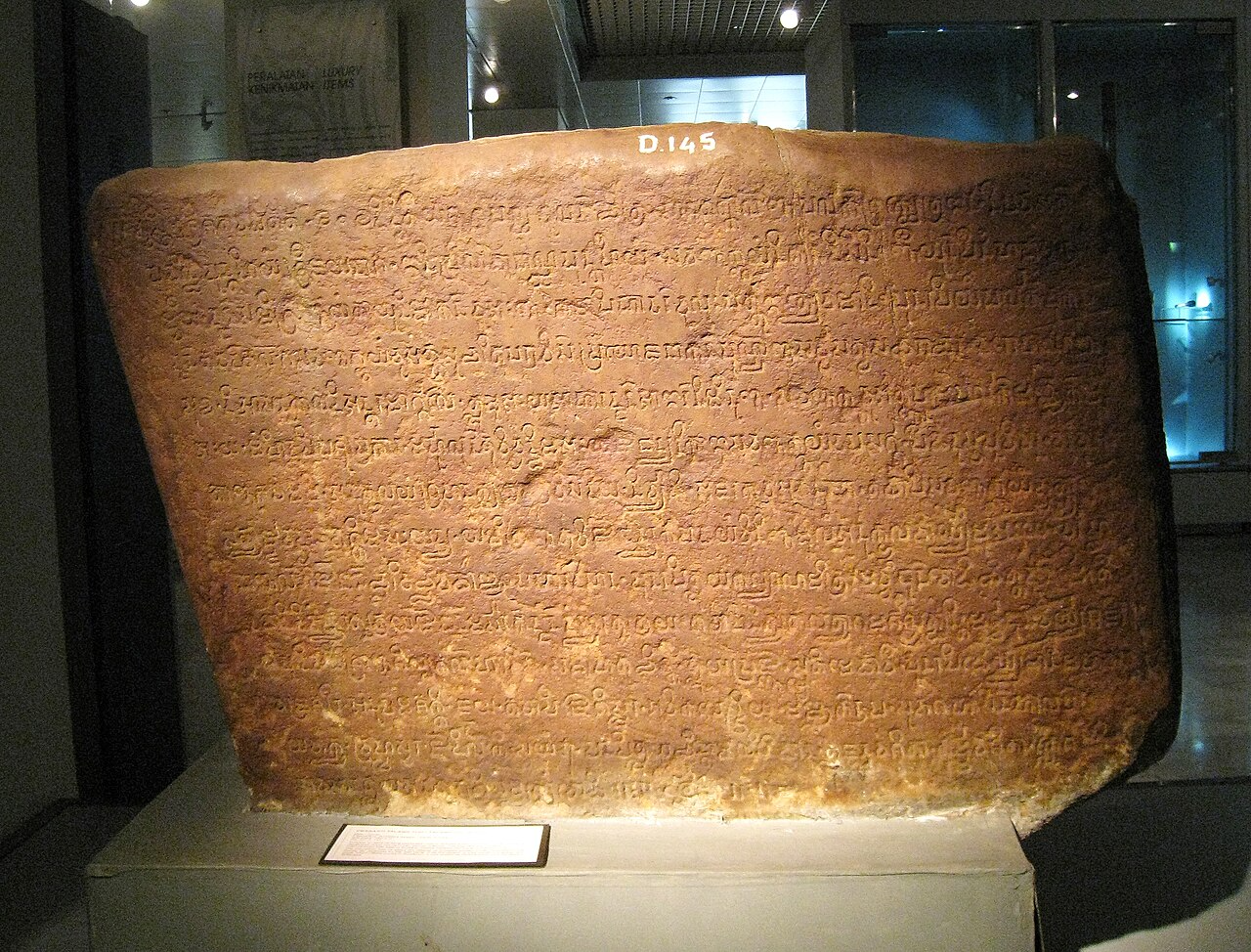
684 CE (Saka 606, 23 March)Pallava Script, Old MalayBukit Seguntang, PalembangNational Museum Jakarta, Inv. D.145
📡 Broadcast Type: Divine Benevolence & Royal Brand Identity
Original Script (Old Malay in Pallava, selected lines)
swasti śrī śakawarṣātīta 606 ding dwitīya śuklapakṣa wulan caitra sana tatkalañ parwānda punta hiyang śrī jayanāga ini pranidhānānda punta hiyang sawañakña yaṃ mwiya dnan samiśrāña yang kāyu nimākan wūahna tathāpi jadi laki swayambhu punara pi tmu ya cintāmani nidāna saṅ bodhisattwa sarwasattwa mudita hit
Latin Transliteration (IAST)
svasti śrī śakavaṛṣātīta 606 diṅ dvitīya śuklapakṣa vulan caitra sana tatkalañ parvvaṇḍa punta hiyaṃ śrī jayanāśa ini praṇidhānānda punta hiyaṃ savaṃñakña yaṃ mwiya dnan samiśrāña yaṃ kāyu nimākan vūahna tathāpi jadi laki svayambhu punar api tmu ya cintāmaṇi nidāna saṃ bodhisattva sarvasattva mudita hit
Terjemahan Bahasa Indonesia
Salam sejahtera! Tahun Saka 606, pada hari kedua paro terang bulan Caitra, pada saat itulah kemuliaan Dapunta Hyang Sri Jayanasa. Inilah niat suci Dapunta Hyang: semoga semua yang ditanam di sini pohon kelapa, areka, aren, sagu, dan segala jenis pohon berbuah yang bisa dimakan, juga bambu haur, waluh, dan pattum, dan seterusnya beserta semua tanaman lain dengan bendungan dan kolamnya, dan semua perbuatan baik yang telah aku persembahkan, dapat dinikmati untuk kebaikan semua makhluk, termasuk yang berada di neraka, hewan, manusia, dan para dewa. Semoga mereka semua berbahagia. Semoga inti sari Bodhisattva menyentuh hati semua makhluk.
English Translation
Hail, prosperity! The year Saka 606, on the second day of the bright fortnight of the month of Caitra on that occasion, the glory of Dapunta Hyang Sri Jayanasa. This is the vow of Dapunta Hyang: may everything planted here coconut, areca palm, sugar palm, sago, all fruit-bearing trees, also haur bamboo, waluh, and pattum together with all other plants, dams and ponds, and all the meritorious deeds I have dedicated, be enjoyed for the benefit of all creatures, including those in hell, animals, humans, and gods. May they all be happy. May the essence of the Bodhisattva touch the hearts of all beings.
Strategic & Media Function
The longest Srivijayan inscription and the only one focused entirely on ecological welfare and Buddhist virtue, Talang Tuo is the king's "benevolence post" the PR content designed to balance the threatening tone of the curse inscriptions. Sri Jayanasa frames himself explicitly as a Bodhisattva: a being who delays his own enlightenment to serve all creatures. The establishment of Sriksetra Park, with its environmental provisions covering food, water, and shelter for all living things, is a masterclass in soft power projection. It announces that the Srivijayan king cares for you whether you are a merchant, a farmer, or literally an animal in the forest. This is governance-as-content, compassion-as-brand.
Prasasti Telaga Batu
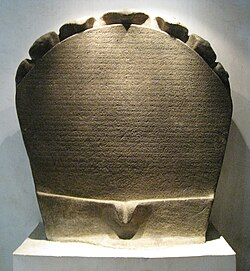
683 CE (Saka 605, undated)Pallava Script, Old MalaySabokingking, PalembangNational Museum Jakarta, Inv. D.155 Andesite, 118×148 cm
📡 Broadcast Type: Oath of Allegiance Total Loyalty Mandate
Original Script (Old Malay in Pallava, key section)
kamu vanyakmamu rājaputra prostara bhūpati senāpati nāyaka pratyaya hāji pratyaya dandanayaka murddhaka tuhā an vatak vuruh addhyāksi nījavarna vāsīkarana kumaramatya cātabhata adhikarana karmma kāyastha sthāpaka puhāvam vaniyāga pratisara kamu marsī hāji hulun hāji wanyakmamu urang niwunuh sumpah dari mangmang kamu kadaci tida bhakti di aku
Latin Transliteration (IAST)
kamu vaṃñakñamu rājaputra proṣṭhara bhūpati senāpati nāyaka pratyaya hāji pratyaya daṃḍanāyaka mūrdhaka tuhā an vatak vuruh adhyākṣi nījavarna vāśīkaraṇa kumārāmātya cātabhaṭa adhikaraṇa karma kāyastha sthāpaka puhāvaṃ vaṇiyāga pratisara kamu marsi hāji hulun hāji vaṃñakñamu uraṃg niwunuh sumpah dari maṃgmaṃg kamu kadāci tida bhakti di aku
Terjemahan Bahasa Indonesia
Kamu sekalian: putra-putra raja, menteri, bupati, panglima perang, pejabat tinggi, wakil raja, hakim, kepala pekerjaan, pengawas, penduduk biasa, ahli persenjataan, menteri junior, prajurit, pelaksana hukum, panitera, arsitek, nakhoda kapal, pedagang, kapten, kamu sekalian pelayan raja, hamba raja semua orang: kalian akan dibunuh oleh kutukan sumpah ini jika kalian tidak setia kepadaku.
English Translation
You all sons of kings, ministers, regents, commanders, lords, nobles, viceroys, judges, heads of labor corps, supervisors, commoners, weapons experts, junior ministers, soldiers, law enforcers, clerks, architects, ship captains, merchants, naval officers you, the king's servants, the king's slaves, all people: you shall be killed by the curses of this oath if you are ever disloyal to me.
Strategic & Media Function
The Telaga Batu inscription is mounted on a magnificent stone carved with seven nāga (serpent) heads the most visually imposing of all Srivijayan prasasti. The seven cobra heads frame the top of the stone like a crown, and the sacred water poured over the stone during the oath ceremony would flow through the nāga mouths and into a basin below. Officials were required to drink that water as they swore the oath. This is total-saturation media: visual spectacle, physical ritual, written text, and sacred threat combined. Every rank of society from princes to royal washermen is named a complete organizational directory of the empire publicly bound to the king by divine contract. No one could claim ignorance of the terms.
Prasasti Kota Kapur
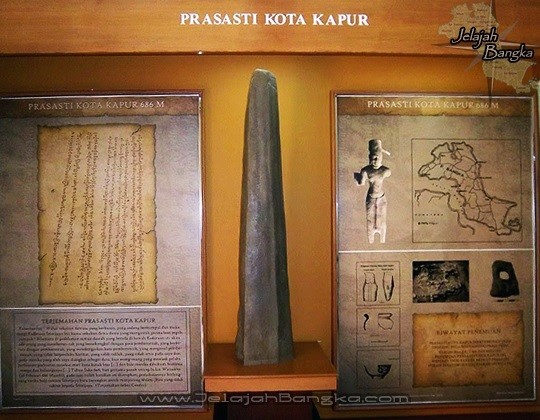
686 CE (Saka 608, 28 February)Pallava Script, Old MalayKota Kapur, Bangka IslandNational Museum Jakarta Six-sided stone obelisk
📡 Broadcast Type: War Declaration & Territorial Warning
Original Script (Old Malay in Pallava)
siddha titaṃ hamvan vari avai kandra kāyet nipaihumpaan namuha ulu lavan tandru umenteṃ bhaktī ni ulun haraki unai tuṅai kita savañakta devata maharddhika sann parāvis kadāci yaṃ uraṃ di dalaṃña bhūmi ājñāña kadatuan inī parāvis drohaka ha marppādaḥ tīda ya bhakti tīda ya tatvārjjava diy āku dṅan di iyaṃ nigalarku san jaya tālu muaḥ ya dṅan gotrasantānāña tathāpi savañakña yaṃ vuatña jāhat makala sarāmvat kasīhan vaśīkaraṇa ityevamādi jāṅan muaḥ ya siddha di dalaṃña bhūmi inī sarvvasat bhūmi jāva tida bhakti ka śrivijaya
Latin Transliteration (IAST)
siddha titaṃ hamvan vāri avai kandra kāyet nipaihumpān namuha ulu lavan tandru umentṃ bhaktī ni ulun haraki unai tuṃgai kita savañakta devatā mahārddhika sann parāvis kadāci yaṃ uraṃ di dalamña bhūmi ājñāña kadatuan ini parāvis drohaka ha marppadah tīda ya bhakti tīda ya tatvārjjava diyāku daṅan di iyaṃ nigalarku san jaya tālu muah ya daṅan gotrasantānāña tathāpi savañakña yaṃ vuatña jāhat makala sarāmvat kasīhan vaśīkaraṇa ityevamādi jāñan muah ya siddha di dalamña bhūmi ini sarvasat bhūmi jāva tida bhakti ka śrīvijaya
Terjemahan Bahasa Indonesia
Berhasil. Inilah kata-kata sumpah. Semua air dan tanah yang mengalir dan meluncur di sini: Semoga kalian semua, wahai para dewa yang agung, bersama dengan semua makhluk di dalam tanah ini, yang berada di bawah kekuasaan kerajaan ini jika ada orang yang berkhianat, yang tidak setia, yang tidak jujur kepadaku dan kepadanya yang aku angkat, maka orang itu bersama seluruh keturunan dan silsilahnya akan dikutuk. Dan apapun perbuatan jahat yang ia lakukan menyihir, memperdaya, merayu semua itu tidak akan berhasil di dalam tanah ini. Demikian pula seluruh bumi Jawa yang tidak tunduk kepada Srivijaya (akan dihukum).
English Translation
Success. These are the words of the oath. All waters and lands that flow and glide here: may you all, O mighty gods, together with all beings within this land, subject to the authority of this kingdom if there is anyone who commits treason, who is disloyal, who is dishonest to me and to those I have appointed, may that person, together with all their descendants and lineage, be cursed. And whatever evil deeds they perform sorcery, deception, manipulation none shall succeed within this land. And so too all the land of Java that is not loyal to Srivijaya (shall be punished).
Strategic & Media Function
This is the most geopolitically significant prasasti in the Srivijayan corpus: it contains the first direct declaration of war against Java. The final line "all the land of Java that is not loyal to Srivijaya shall be punished" is a public broadcast of imperial aggression, placed on the island of Bangka as a gateway post between Sumatra and the Java Sea. Scholars believe its placement was deliberate: any ship sailing from Srivijaya toward Java would pass Bangka and see or be told of this stone. The inscription also lists the most comprehensive menu of supernatural curses in Srivijayan epigraphy covering every form of betrayal and every supernatural countermeasure the rebels might attempt. This is psychological warfare codified in stone.
Prasasti Karang Berahi
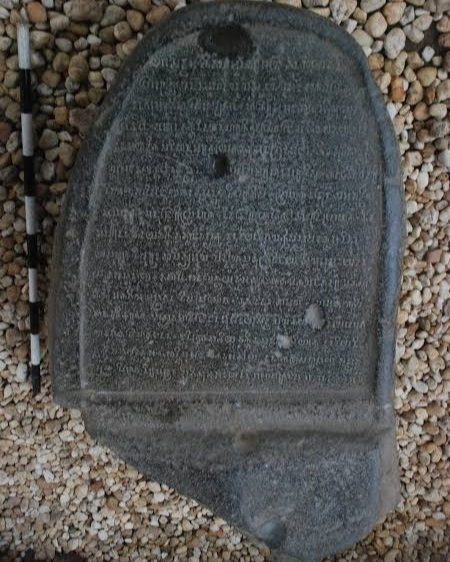
686 CE (Saka 608)Pallava Script, Old MalayBatang Merangin River, JambiDiscovered 1904 by L.M. Berkhout
📡 Broadcast Type: Territorial Conquest Jambi Campaign
Original Script (Old Malay in Pallava)
siddha titaṃ hamvan vari avai kandra kāyet nipaihumpaan namuha ulu lavan tandru umenteṃ bhaktī ni ulun haraki unai tuṅai kita savañakta devata maharddhika sann parāvis kadāci yaṃ uraṃ di dalaṃña bhūmi ājñāña kadatuan inī parāvis drohaka ha marppādaḥ tīda ya bhakti tīda ya tatvārjjava diy āku dṅan di iyaṃ nigalarku sanjaya tālu muaḥ ya dṅan gotrasantānāña
Latin Transliteration (IAST)
siddha titaṃ hamvan vāri avai kandra kāyet nipaihumpān namuha ulu lavan tandru umentṃ bhaktī ni ulun haraki unai tuṃgai kita savañakta devatā mahārddhika sann parāvis kadāci yaṃ uraṃ di dalamña bhūmi ājñāña kadatuan ini parāvis drohaka ha marppadah tīda ya bhakti tīda ya tatvārjjava diyāku daṅan di iyaṃ nigalarku sanjaya tālu muah ya daṅan gotrasantānāña
Terjemahan Bahasa Indonesia
Berhasil. Inilah kata-kata sumpah. Semua air dan tanah yang mengalir di sini, semoga kalian semua wahai para dewa yang agung beserta semua makhluk di dalam tanah kerajaan ini: jika ada orang yang berkhianat, tidak taat, tidak setia dan tidak jujur kepadaku dan kepadanya yang aku angkat maka orang itu bersama seluruh keturunannya akan ditimpa kutukan. (Ini adalah) pernyataan kekuasaan Srivijaya atas Jambi.
English Translation
Success. These are the words of the oath. All waters and lands that flow and run here, may you all, O greatly powerful gods, together with all beings within this royal domain: if there is anyone who commits treason, who fails to be loyal, who is dishonest and unfaithful to me and to those I have appointed that person and all their descendants shall fall under the curse. (This is the proclamation of Srivijaya's authority over Jambi.)
Strategic & Media Function
Karang Berahi is a near-identical copy of the Kota Kapur text which is precisely the point. It was dispatched to the Batang Merangin River in Jambi, hundreds of kilometers away, carrying the same oath-curse formula. This inscription proves that Srivijaya operated a broadcast strategy: standardized content, multiple simultaneous distributions, covering different territories. The repetition of the same formula is not laziness it is brand consistency. Every new territory received the same oath stone, binding local populations to the same terms. The scale of the Srivijayan prasasti network demonstrates sophisticated logistical and administrative infrastructure to match their political ambition.
Prasasti Palas Pasemah
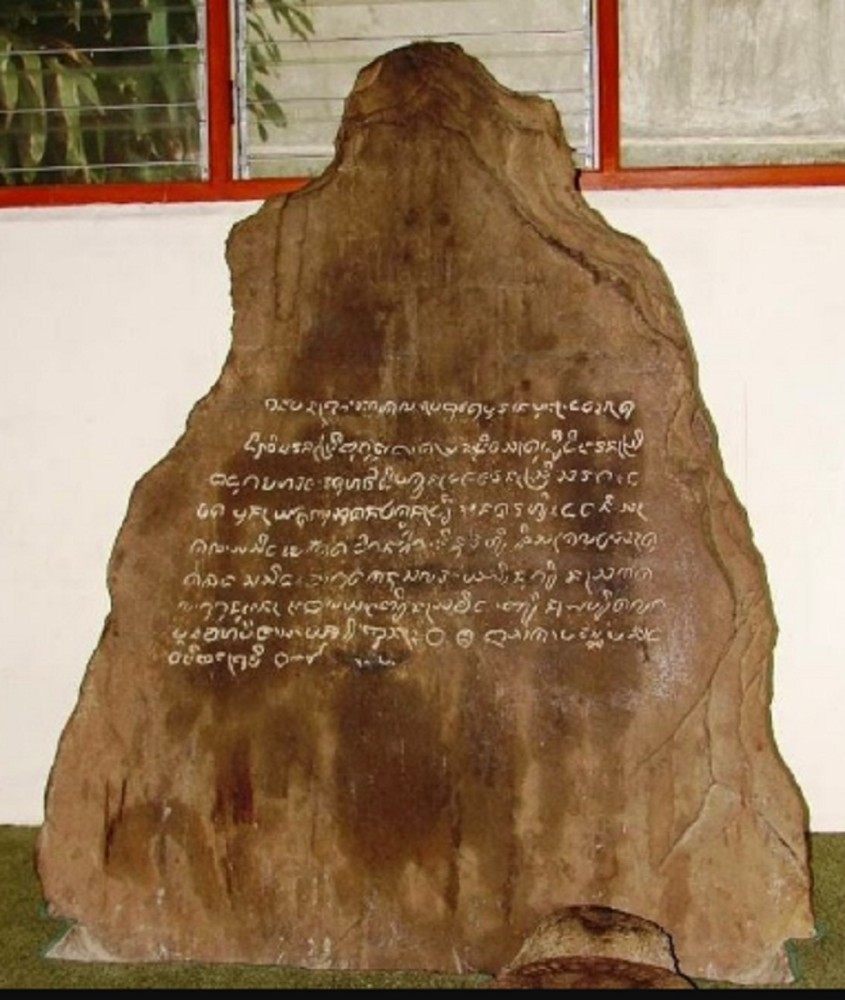
Late 7th Century CE (undated)Pallava Script, Old MalayWay Banana River, South LampungFound 1957 Still in situ
📡 Broadcast Type: Southern Boundary Claim Lampung Domination
Original Script (Old Malay in Pallava, 13 lines)
kitan siddha hamwan wari awai kandra kayet nipaihumpaan namuha ulu lavan tandru umentam bhakti ni ulun haraki unai tungai kita savanyakta devata maharddhika sann parāvis kadaci yam uram di dalamnya bumi ajnanya kadatuan ini parāvis drohaka ha marppadah tida ya bhakti tida ya tatvārjjava diy aku ngidam aku nigalarku sanjaya talu muah ya dangan gotrasantanannya tathapi savanyaknya yam vuatnya jahat sarambat kasihan vasikarana ityevamadi jangan muah ya siddha di dalamnya bumi ini
Latin Transliteration (IAST)
kitan siddha hamvan vāri avai kandra kāyet nipaihumpān namuha ulu lavan tandru umentaṃ bhaktī ni ulun haraki unai tuṃgai kita savañakta devatā mahārddhika sann parāvis kadāci yaṃ uraṃ di dalamña bhūmi ājñāña kadatuan ini parāvis drohaka ha marppadah tīda ya bhakti tīda ya tatvārjjava diyāku nigalarku sanjaya tālu muah ya daṅan gotrasantānāña tathāpi savañakña yaṃ vuatña jāhat sarāmvat kasīhan vaśīkaraṇa ityevamādi jāñan muah ya siddha di dalamña bhūmi ini
Terjemahan Bahasa Indonesia
Kami. Berhasil. Inilah kata-kata sumpah. Semua air dan tanah yang mengalir di sini, wahai para dewa yang agung: semoga semua yang ada di dalam tanah kerajaan ini, jika ada yang berkhianat, yang tidak setia dan tidak jujur kepadaku, orang itu dan seluruh keturunannya akan dikutuk. Apapun perbuatan jahat yang mereka lakukan sihir, bujuk rayu, tipu daya tidak akan berhasil di dalam tanah ini.
English Translation
We. Success. These are the words of the oath. All waters and lands that flow here, O greatly powerful gods: may all within this royal domain if any commit treason, fail in loyalty, are dishonest to me that person and all their descendants be cursed. Whatever evil they attempt sorcery, manipulation, deception shall not succeed within this land.
Strategic & Media Function
Placed at the southern tip of Sumatra along the Way Banana River in South Lampung, Palas Pasemah marked the furthest southern extension of Srivijayan territorial claims on the Sumatran mainland. Its placement was a geopolitical statement: this stone told the local population of Lampung that they were now inside Srivijaya's domain and subject to its divine covenant. The fact that this stone remains in situ still standing where it was originally placed over 1,300 years ago gives it a haunting quality: a message sent and never retracted, still broadcasting in silence.
Prasasti Ligor (Vat Sema Mueang)
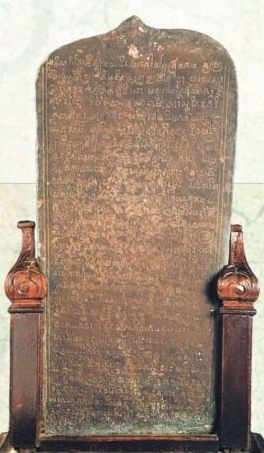
775 CE (Saka 697)Sanskrit & Old MalayNakhon Si Thammarat (Ligor), Southern ThailandNational Museum Bangkok Two-sided inscription
📡 Broadcast Type: International Expansion Malay Peninsula Dominion
Original Script Side A (Sanskrit)
śrīvijayendrasya śailendravarmaṇo dharmmaprakāśa mahārājaputrasya trailokyavijayanāmāpi rājasya śrīmahārājadhirājarājavṛndasya vijayarāja jayanta śrīvijayo cakravartti śrī dharmarāja
Latin Transliteration (IAST) Side A
śrīvijayendrasya śailendravarmaṇo dharmaprakāśa mahārājaputrasya trailokyavijayanāmāpi rājasya śrīmahārājadhirājarājavṛndasya vijayarāja jayanta śrīvijayo cakravarti śrī dharmarāja
Terjemahan Bahasa Indonesia Sisi A
Dari Sri Vijayendra, Sailendravarman, yang memancarkan dharma, putra Maharaja, raja yang bernama Trailokya Vijaya (Penakluk Tiga Dunia), dari Sri Maharajadhiraja (Raja Agung di Atas Semua Raja), raja pemenang kejayaan: Sri Vijaya, Cakravarti (Raja Pemimpin Alam), Sri Dharmaraja.
English Translation Side A
From Sri Vijayendra, Sailendravarman, who illuminates the dharma, son of the Maharaja, the king named Trailokya Vijaya (Conqueror of the Three Worlds), from the Sri Maharajadhiraja (Great King Above All Kings), the victorious king: Sri Vijaya, Chakravarti (Sovereign of the Universe), Sri Dharmaraja.
Terjemahan Bahasa Indonesia Sisi B
Sisi B: Prasasti ini mencatat pendirian pangkalan kekuasaan Srivijaya di Semenanjung Melayu dan pembangunan tiga buah bangunan suci (kemungkinan stupa Buddha) oleh raja Sailendra dari Srivijaya di wilayah Ligor (Nakhon Si Thammarat).
English Translation Side B
Side B records the establishment of a Srivijayan base of power on the Malay Peninsula and the construction of three sacred buildings (likely Buddhist stupas) by the Sailendra king of Srivijaya in the region of Ligor (Nakhon Si Thammarat).
Strategic & Media Function
The Ligor inscription is Srivijaya's most ambitious international broadcast placed not in Sumatra but on the Malay Peninsula itself, in what is now southern Thailand. The royal titles accumulated here reach peak glorification: the king is simultaneously a Sailendra (Lord of the Mountain), a Cakravarti (Universal Sovereign), a Trailokya Vijaya (Conqueror of the Three Worlds), and a Dharmaraja (King of Righteousness). Each title is a claim to cosmic authority piled upon the last. Modern equivalents would be a leader who simultaneously claims military supremacy, divine selection, legal authority, and moral righteousness all in a single post. The two-sided nature of the inscription (one side Sanskrit, the other Old Malay) demonstrates Srivijaya's mastery of bilingual communication for different audience segments.
Prasasti Nalanda
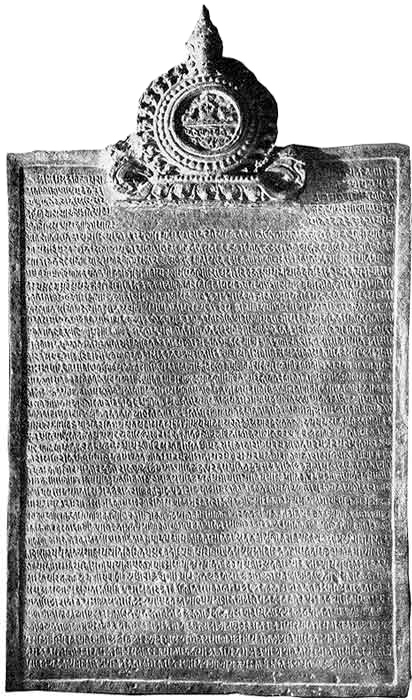
9th Century CE (c. 860 CE)SanskritNalanda, Bihar, IndiaArchaeological Museum, Nalanda
📡 Broadcast Type: International Diplomatic Prestige Buddhist Network Presence
Original Script (Sanskrit)
śrī bālaputradeva nāma mahārājo śailendravamśatilako bhūtvā śrī vijayādhi rājasya tanayo śrī viṣṇu nāmnā prakāśito nandanasya śaraṇam āgatya nalanda vihāre kārayām āsa sadānam uttamam
Latin Transliteration (IAST)
śrī bālaputradeva nāma mahārājo śailendravamśatilako bhūtvā śrī vijayādhirājasya tanayo śrī viṣṇu nāmnā prakāśito nandanasya śaraṇam āgatya nālandā vihāre kārayām āsa sadānam uttamam
Terjemahan Bahasa Indonesia
Raja Agung yang bernama Sri Balaputradewa, permata Wangsa Sailendra, putra dari Sri Vijaya Adhiraja (Raja Agung Srivijaya), yang termasyhur dengan nama Sri Wisnu, telah datang sebagai pengikut dan membangun sebuah asrama (biara/wisma) yang mulia di biara Nalanda.
English Translation
The Great King named Sri Balaputradeva, the crown jewel of the Sailendra dynasty, son of Sri Vijaya Adhiraja (Supreme King of Srivijaya), renowned by the name Sri Vishnu, having come as a devotee, caused the construction of a magnificent residence at the Nalanda monastery.
Strategic & Media Function
The Nalanda inscription is Srivijaya's most far-reaching broadcast placed not in Southeast Asia but at the greatest center of Buddhist learning in the ancient world, in Bihar, northern India. By constructing a residence for Srivijayan monks at Nalanda University and inscribing a commemorative stone there, King Balaputradeva planted a permanent brand presence in the very heart of the Buddhist intellectual network. It is the ancient equivalent of sponsoring a chair at Oxford or endowing a building at Harvard. Every monk who passed through Nalanda from China, Tibet, Central Asia, Korea would encounter evidence of Srivijayan patronage. The inscription simultaneously establishes royal genealogy (Sailendra dynasty), diplomatic credentials, religious devotion, and international prominence. It is diplomacy as content marketing.
Prasasti Sabokingking (Boom Baru)
Late 7th Century CE (undated)Pallava Script, Old MalaySabokingking, PalembangMost elaborate of the curse inscription series
📡 Broadcast Type: Supreme Oath Capital City Loyalty Binding
Original Script (Old Malay in Pallava)
anumodanam sarvasattva siddha ya vihāre rāja maṅhaturakam bhakti di śrī mahārāja kadatuan śrīvijaya ya sumpah ini mangmang ya kamu tida bhakti di śrīvijaya ya kamu dangan gotrasantānāña nikhāt sumpah mangmang
Latin Transliteration (IAST)
anumodanaṃ sarvasattva siddha ya vihāre rāja maṃghaturakam bhakti di śrī mahārāja kadatuan śrīvijaya ya sumpah ini maṃgmaṃg ya kamu tida bhakti di śrīvijaya ya kamu daṅan gotrasantānāña nikhāt sumpah maṃgmaṃg
Terjemahan Bahasa Indonesia
Pengakuan bagi semua makhluk. Berhasillah biara raja ini. Persembahan bakti kepada Sri Maharaja kerajaan Srivijaya. Inilah sumpah kutukan: kamu yang tidak setia kepada Srivijaya, kamu bersama seluruh keturunanmu akan terkena kutukan sumpah ini.
English Translation
Approval and merit for all beings. May this royal monastery prosper. Offering of devotion to the Sri Maharaja of the kingdom of Srivijaya. This is the oath of the curse: you who are not loyal to Srivijaya, you together with all your descendants shall be struck by the curse of this oath.
Strategic & Media Function
Scholars have described the Sabokingking inscription as the most sophisticated of all Srivijayan oath stones featuring not only the standard curse text but a more elaborate presentation integrated with the nāga serpent sculptural form. Placed at what appears to have been the administrative heart of Srivijaya (scholars identify Sabokingking as the governmental center, distinct from the religious center at Bukit Seguntang), this stone functioned as the permanent homepage of royal authority. All official business conducted in the capital happened in the shadow of this oath. It was the pinned post that never expired.
The Srivijayan Information Strategy: A Synthesis
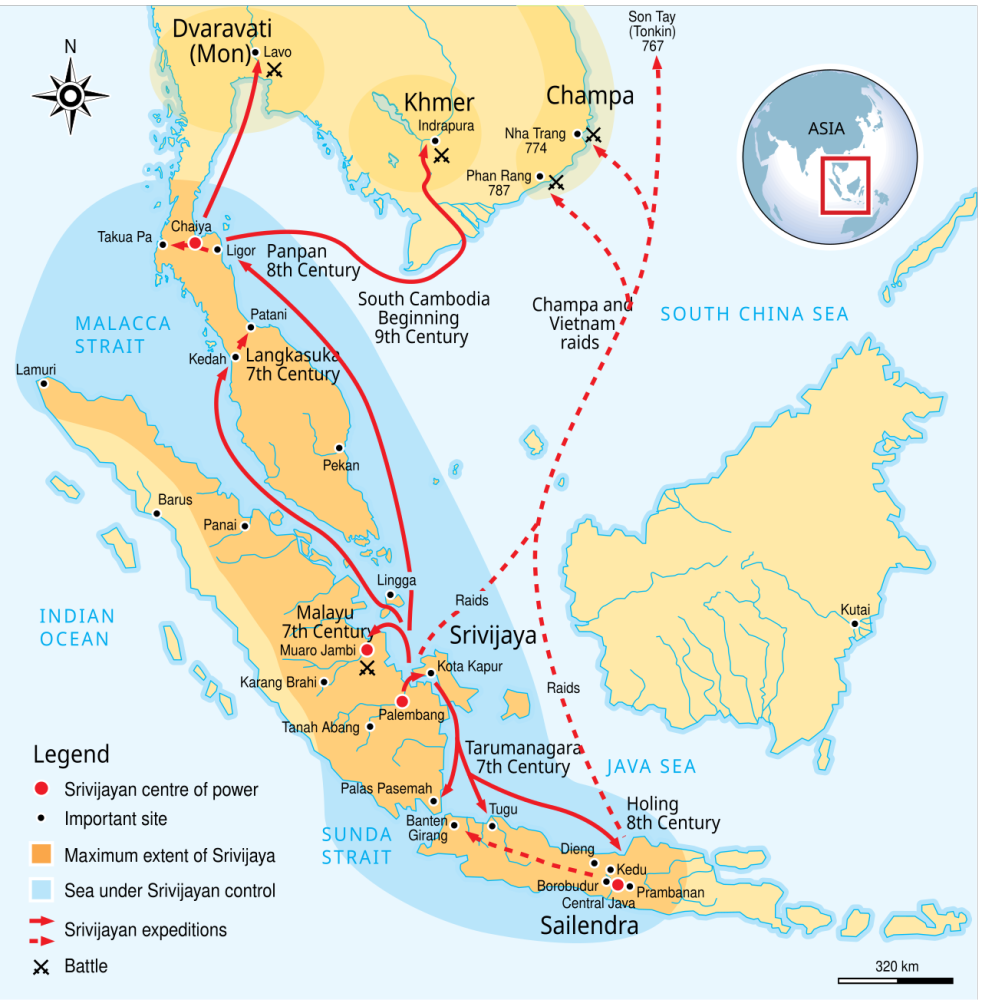
Surveying the complete corpus of Srivijayan prasasti, a sophisticated and coherent communication strategy emerges one that combined content diversity, geographic saturation, audience segmentation, and platform specificity in ways that would be recognizable to any modern communications director.
Content Diversification
Srivijaya produced at least three distinct content types: the conquest announcement (Kedukan Bukit), the benevolence broadcast (Talang Tuo), and the loyalty mandate with divine threat (Telaga Batu, Kota Kapur, Karang Berahi, Palas Pasemah, Sabokingking). Each served a different psychological function. The conquest announcements established awe. The benevolence content established love. The loyalty mandates established fear. Together, they created what modern political strategists call a full-spectrum engagement model: the king appears simultaneously as warrior, provider, and divine enforcer. No single emotional response is allowed to dominate.
Geographic Distribution as Network Architecture
The physical placement of prasasti across Bangka, Jambi, Lampung, the Malay Peninsula, and India was not accidental it mirrored the architecture of Srivijaya's trade network. Every major node in the maritime silk road received a stone. Merchants passing through Bangka encountered the Kota Kapur inscription. Those traveling up the Batang Merangin into Jambi encountered the Karang Berahi stone. Buddhist monks sailing to India would learn of the Nalanda inscription. The prasasti network was co-extensive with the trade network: every commercial relationship was also a political encounter with Srivijayan content.
The Supernatural Algorithm
Perhaps the most powerful feature of Srivijayan prasasti strategy was the deployment of cosmological consequence. Modern platforms use engagement algorithms to amplify certain content. Srivijaya used the mechanics of sacred oath the sumpah and its accompanying mangmang (magical curse) to create algorithmic amplification by another means. Once a population had participated in the oath ceremony (drinking the water that had flowed over the nāga stone), they were internally motivated to spread awareness of the terms. Every vassal who had sworn the oath became an ambassador of the king's message, because their survival depended on its propagation.
"The most durable social media platform ever invented was stone. Srivijaya's engineers understood this perfectly a post carved in andesite lasts a thousand years, reaches every generation who encounters it, and cannot be deleted by the person it threatens."
Contemporary Analysis, 2024
Divine Personal Branding
The king himself was the content. Across every inscription, the Srivijayan Maharaja accumulates titles of increasing cosmic magnitude. By the time of the Ligor inscription in 775 CE, a single king holds six distinct titles spanning military, cosmic, spiritual, and legal domains simultaneously. The Talang Tuo inscription explicitly identifies the king with the Bodhisattva ideal. The Kedukan Bukit inscription frames military campaigns as sacred pilgrimage. This is not mere vanity it is a carefully constructed personal brand: the king as the intersection of heaven, earth, and ocean, whose authority is indistinguishable from the cosmic order itself. Modern leaders who blend religious language with political power are operating from the same playbook, merely updated for different media channels.
Why This Matters Now
Srivijaya's prasasti strategy is not merely historical curiosity. It demonstrates that the fundamental mechanics of information warfare broadcast, glorification, threat, audience saturation, divine legitimation are not inventions of the digital age. They are features of organized political power at any scale, in any era. The stone inscription and the social media post are separated by thirteen centuries and radically different technologies, but they share the same underlying grammar: I am powerful, I am blessed, you belong to me, and if you are disloyal, you will be destroyed.
What makes Srivijaya remarkable is not that they used propaganda every empire does. What makes them remarkable is the sophistication of their system: the content diversity, the geographic precision, the ritual binding mechanism, the cosmological framing, and the material permanence. They understood something that digital-age communicators are only beginning to articulate: the most powerful broadcast is one that the audience internalizes as their own belief.
#Srivijaya #AncientHistory #Indonesia #MaritimeHistory #Leadership #ContentStrategy #SoutheastAsia #History #Epigraphy #Nusantara #DigitalStrategy #Prasasti #BuddhismHistory #SumatraHistory #Palembang
References & Further Reading
Scholarly sources on Srivijayan epigraphy, history, and political communications
- Coedès, George.*The Indianized States of Southeast Asia.*Translated by Susan Brown Cowing. Honolulu: University of Hawaii Press, 1968. [Foundation work identifying Srivijaya as a kingdom and providing early translations of all major prasasti.]
- de Casparis, J.G.*Selected Inscriptions from the 7th to the 9th Century A.D.*Bandung: Masa Baru, 1956. [Definitive scholarly transliterations and translations of the Srivijayan corpus, including the Telaga Batu and Kedukan Bukit inscriptions.]
- de Casparis, J.G.*Indonesian Palaeography: A History of Writing in Indonesia from the Beginnings to c.A.D. 1500.*Leiden: E.J. Brill, 1975. [Technical analysis of Pallava script development in the Malay world.]
- Wolters, O.W.*Early Indonesian Commerce: A Study of the Origins of Srivijaya.*Ithaca: Cornell University Press, 1967. [Seminal work on Srivijayan trade networks and political geography.]
- Wolters, O.W.*History, Culture, and Region in Southeast Asian Perspectives.*Revised edition. Ithaca: Cornell Southeast Asia Program, 1999. [Contextualizes Srivijayan mandala politics within broader Southeast Asian framework.]
- Kulke, Hermann.*"Srivijaya Revisited: Reflections on State Formation of a Southeast Asian Thalassocracy."*Bulletin de l'École française d'Extrême-Orient 102 (2016): 45–95. [Critical reassessment of Srivijayan political structures using epigraphic evidence.]
- Manguin, Pierre-Yves.*"The Archaeology of Early Maritime Polities of Southeast Asia."InSoutheast Asia: From Prehistory to History,*edited by Ian Glover and Peter Bellwood. London: RoutledgeCurzon, 2004. [Archaeological contextualization of Srivijayan capital at Palembang.]
- Poesponegoro, Marwati Djoened and Nugroho Notosusanto.*Sejarah Nasional Indonesia II: Zaman Kuno.*Jakarta: Balai Pustaka, 2010. [Indonesian-language standard reference on the Srivijaya era inscriptions and history.]
- Coedès, George.*"Le Royaume Srivijaya."*Bulletin de l'École française d'Extrême-Orient 18, no. 6 (1918): 1–36. [The founding article that established Srivijaya as a distinct kingdom, interpreting the name from the Kota Kapur inscription.]
- Wales, H.G. Quaritch.*"The Extent of Srivijaya's Influence Abroad."*Journal of the Malaysian Branch of the Royal Asiatic Society 51, no. 1 (1978): 4–11. [Traces the geographic reach of Srivijayan political culture through inscriptions and archaeological remains.]
- Wisseman Christie, Jan.*"Revisiting Early Srivijaya."InFruits of Inspiration: Studies in Honour of Prof. J.G. de Casparis,*edited by M.J. Klokke and K.R. van Kooij. Groningen: Egbert Forsten, 2001. [Reassesses the dating and content sequence of the earliest Srivijayan inscriptions.]
- Yijing (I-Tsing).*A Record of the Buddhist Religion as Practised in India and the Malay Archipelago (671–695 A.D.).*Translated by J. Takakusu. Oxford: Clarendon Press, 1896. [Primary Chinese source describing Srivijaya as a Buddhist learning center; key external corroboration for the prasasti accounts.]
- Schnitger, F.M.*Forgotten Kingdoms in Sumatra.*Leiden: E.J. Brill, 1939. [Early archaeological survey of Srivijayan heritage sites in South Sumatra.]
- Kartakusuma, Richadiana.*"Prasasti Telaga Batu: Sebuah Kajian Epigrafis."*Berkala Arkeologi (1993): 25–35. [Indonesian scholarly analysis of the Telaga Batu nāga inscription's semiotic structure.]
- Yenrizal.*"Makna Lingkungan Hidup di Masa Sriwijaya: Analisis Isi pada Prasasti Talang Tuwo."*ASPIKOM 3, no. 5 (2018): 833–845. [Environmental and communicative analysis of the Talang Tuo inscription's ecological content.]
- Musacchio, Fabrizio.*"Srivijaya: A Buddhist Maritime Empire in Southeast Asia."*Weekend Research Publication, October 2025. Available at fabriziomusacchio.com. [Contemporary synthesis of Srivijayan Buddhist identity and epigraphic sources.]
- Kern, Hendrik.*"De Wij-inscriptie op het Kota Kapur-steen."*Tijdschrift voor Indische Taal-, Land- en Volkenkunde 57 (1913): 384–410. [First scholarly reading of the Kota Kapur inscription; initial misidentification of Srivijaya as a king rather than a kingdom.]
- Andaya, Leonard Y.*Leaves of the Same Tree: Trade and Ethnicity in the Straits of Melaka.*Honolulu: University of Hawaii Press, 2008. [Contextualizes Srivijayan ethnic and commercial networks that the prasasti system was designed to bind.
- Parlindungan, Henryan and Mia Angeline.*"From Epigraphy to Historical Tourism: The Talang Tuo Inscription's Potential as a Heritage Tourism Resource."*Research publication, ResearchGate, November 2025. [Contemporary analysis of the inscription's political and cultural dimensions.]
- Ronkel, Ph.S. van, and F.D.K. Bosch.*"De Talang-Tuo-Inscriptie."*Acta Orientalia 1 (1923): 20–36. [First full scholarly publication of the Talang Tuo inscription with Dutch translation.]