
The Art of Playing Victim: A Field Guide to Manufactured Innocence
When the powerful cry the loudest, it pays to study the choreography behind the tears — and why AI is becoming the most dangerous prop in this performance.
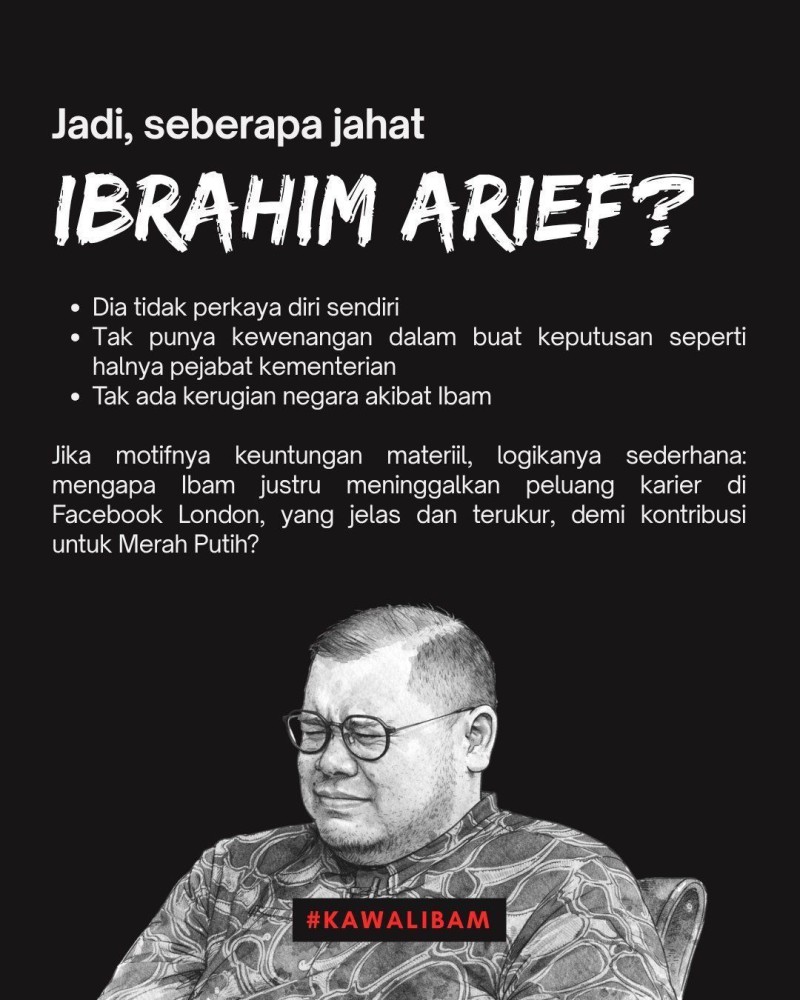
There is a particular kind of drama that plays out, almost ritually, whenever a powerful figure finds themselves facing serious legal consequences. It follows a script so consistent across cultures and contexts that it has become its own genre — one that mixes tears, theology, technology, and victimhood into a cocktail designed to do one thing: redirect public sympathy before a judge ever reads a verdict.
As someone building technology at Infraloka with the explicit mission of democratizing access to justice and truth in Indonesia, I think it's important we learn to read this script — not to condemn individuals, but to protect ourselves from being manipulated by it.
I. The Anatomy of Manufactured Innocence
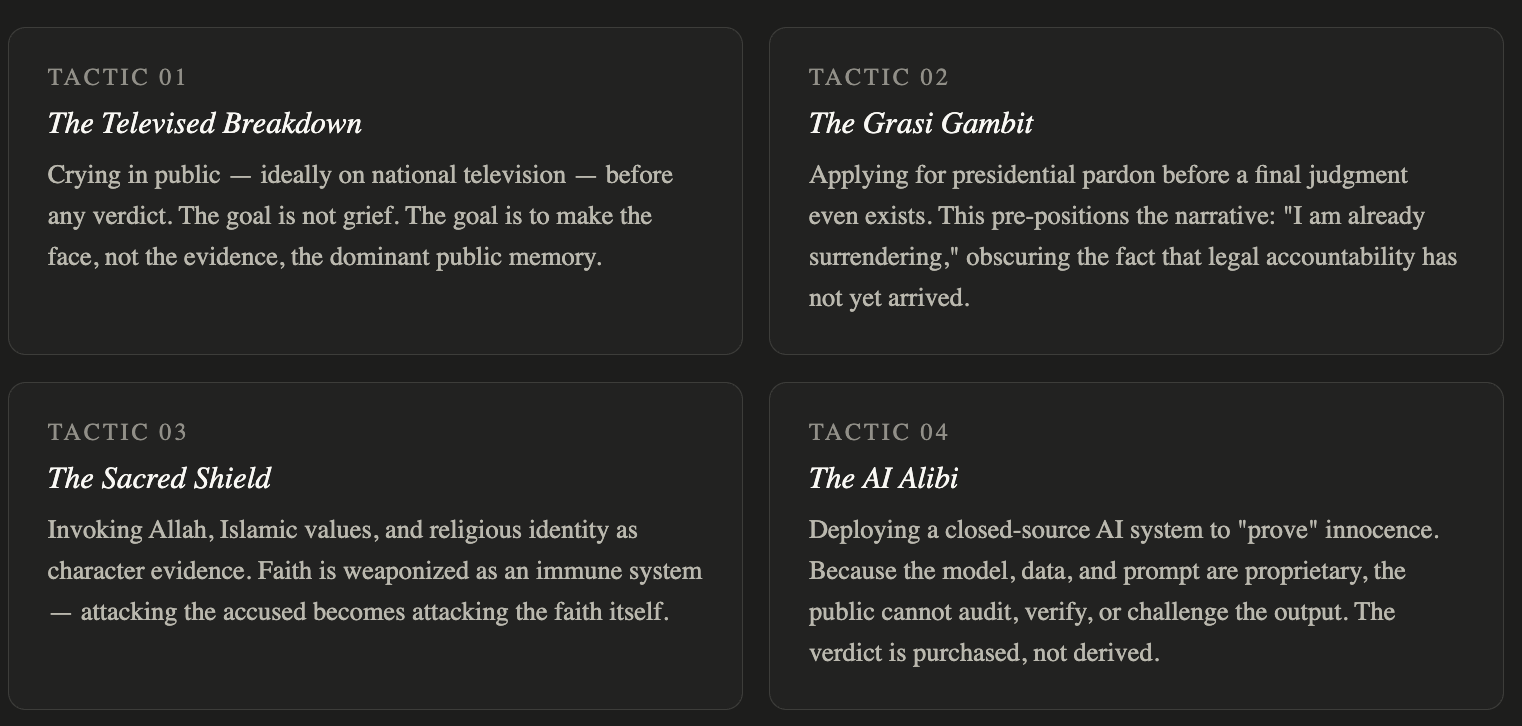
The playbook is remarkably predictable. It begins the moment accountability becomes unavoidable — not when the alleged wrongdoing occurred, but when the consequences become real. That timing tells you everything.
II. When AI Becomes a Prop, Not a Tool
The most disturbing evolution in this playbook is the weaponization of artificial intelligence. We are entering an era where a sufficiently funded legal defense can deploy an AI system that produces polished, authoritative-sounding analysis — and declare it independent evidence of innocence.
"An AI that cannot be audited is not a truth machine. It is a sophisticated mirror that reflects whatever its operator wants the public to see."
The critical detail is almost always the same: the system is closed source. The training data is proprietary. The prompts are confidential. The methodology is undisclosed. In any serious epistemic framework, this is not evidence — it is theater with a loading screen.
At Infraloka, we believe that AI deployed in high-stakes contexts — legal, medical, financial — must be auditable by design. The moment AI becomes a black box in service of power, it stops being a tool for justice and becomes an instrument of its subversion. Opacity in AI is not a technical limitation. In this context, it is a choice — and often, a revealing one.
III. The Hypocrite Who Prays Loudest
Perhaps the most psychologically complex element of this pattern is the use of religious identity. The figure who invokes Allah's name the most publicly is often the same figure with a long private record of behavior that contradicts every value they profess.
In the Indonesian context, this is particularly painful to observe. Our culture holds religious sincerity in deep regard. We are conditioned to extend benefit of the doubt to those who speak the language of faith. Exploiting that cultural conditioning is not piety — it is manipulation of the highest order.
A note on discernment: The Quran itself warns against this. The munafiq (hypocrite) is not defined by what they say in public, but by the gap between their public declarations and private conduct. "When they are alone with their evil companions, they say: 'We are really with you, we were only mocking.'" (Al-Baqarah: 14). The louder the performance, the more carefully we must look at the conduct it is designed to distract from.
IV. The Pattern That Never Makes the Headlines
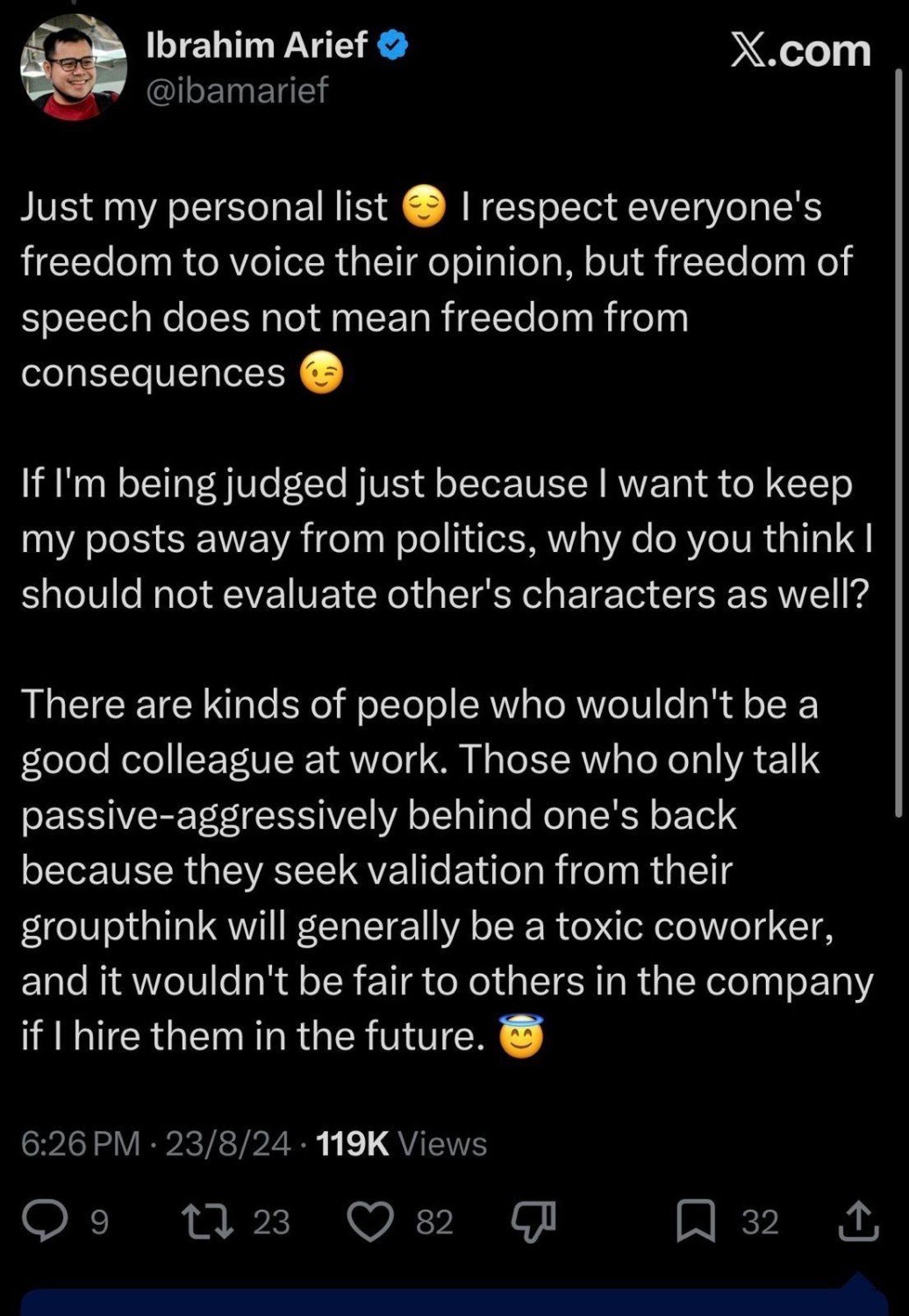
Behind the tears and the Twitter threads and the AI-generated exculpatory reports, there is often another story that receives almost no coverage: the careers quietly destroyed, the talented people blacklisted from entire industries, the social media callouts engineered to end someone's professional livelihood before they could ever become a threat or a witness.
The powerful person playing victim is rarely a first-time offender in the domain of power abuse. More often, they have spent years perfecting the art of quietly punishing those beneath them — discrediting competent staff, blocking promotions, orchestrating reputational campaigns against anyone who questioned them. These acts rarely leave documentary trails. They operate through networks, whispers, and the accumulated authority of someone who has spent years building leverage over institutions.
This is why accountability for the powerful is not merely about one corruption case. It is about the entire ecosystem of behavior that corruption enables and requires. The bribe is rarely the worst thing. The worst thing is what the person did to every human being who might have exposed them along the way.
V. What Media Literacy Requires of Us
I am not asking you to presume guilt. That is the court's role, not ours. What I am asking is that we stop allowing emotional performance to substitute for evidentiary reasoning.
When you see a powerful figure cry on television before their verdict, ask: what is this performance timed to coincide with? When you see an AI system deployed to declare innocence, ask: can this be audited? Who built it? Who wrote the prompts? When you hear religious language deployed as a character shield, ask: what is the conduct this language is designed to make you stop examining?
"Justice does not require cynicism. It requires attention — the disciplined, patient, detail-oriented attention that performance is specifically designed to exhaust."
At Infraloka, we are building toward a future where AI makes legal analysis more accessible to ordinary Indonesians — not more obscure. Where technology clarifies power, not protects it. Where the gap between a powerful person's public narrative and their private conduct becomes harder, not easier, to maintain.
That work begins with us learning to read the scripts being performed for our benefit. The art of playing victim is ancient. But our capacity to see through it — with rigor, with fairness, and with courage — is something we can choose to build.
Rahmatan lil alamin — a mercy for all creation. Not just for those with the resources to perform it on national television.
#MediaLiteracy #AIEthics #HukumIndonesia #Accountability #Infraloka #PublicInterest