
The Dunning-Kruger Effect in EdTech: A Case Study That Should Alarm Us All Study Case of Abil Sudarman From Assai
A deep dive into why confidence without competence destroys trust in emerging industries
The Story
Last week, I completed a six-month investigation into a case that perfectly exemplifies a well-documented psychological phenomenon: the Dunning-Kruger effect — the cognitive bias where people with limited knowledge systematically overestimate their abilities.
The subject: Abil Sudarman, founder of ASSAI (Abil Sudarman School of Artificial Intelligence), who claims to be:
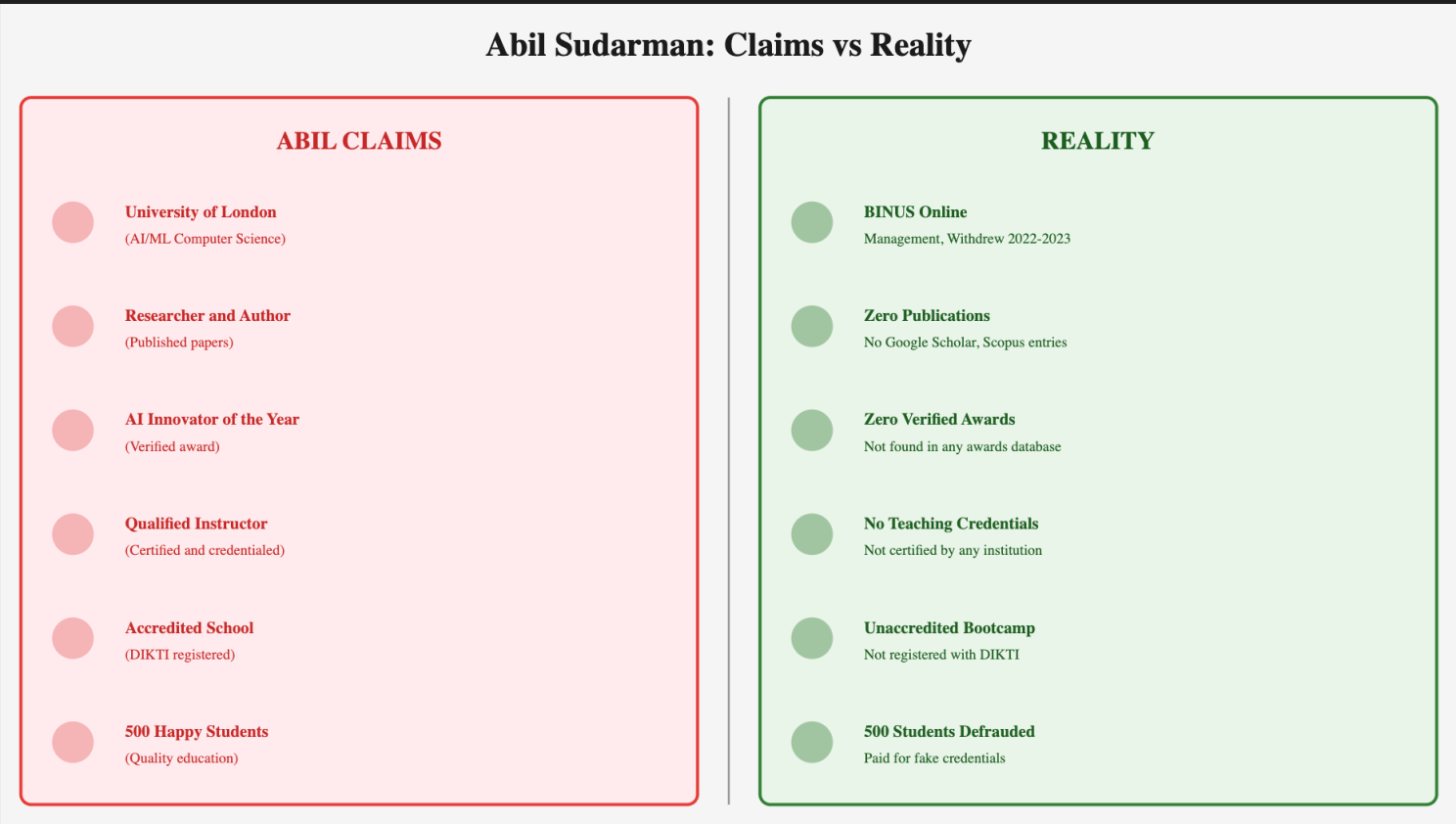
- A University of London graduate (AI/ML Computer Science)
- A "Researcher" and "AI Innovator of the Year"
- A qualified instructor for AI/ML education
- A legitimate educational institution
The reality:
- Actual education: BINUS Online PJJ Management program, status Withdrawn (2022/2023)
- Published research: Zero peer-reviewed publications
- Verified awards: None
- Accreditation: Unregistered and unaccredited with DIKTI
Hundreds of students paid thousands of rupiah expecting certified instruction from a University of London graduate. Corporate clients trusted credentials that didn't exist. The entire Indonesian edtech ecosystem took a reputational hit.
This isn't just fraud. This is Dunning-Kruger effect at scale.
What is the Dunning-Kruger Effect?
In 1999, researchers David Dunning and Justin Kruger published a landmark study:
"People who are incompetent are often too incompetent to know that they are incompetent."
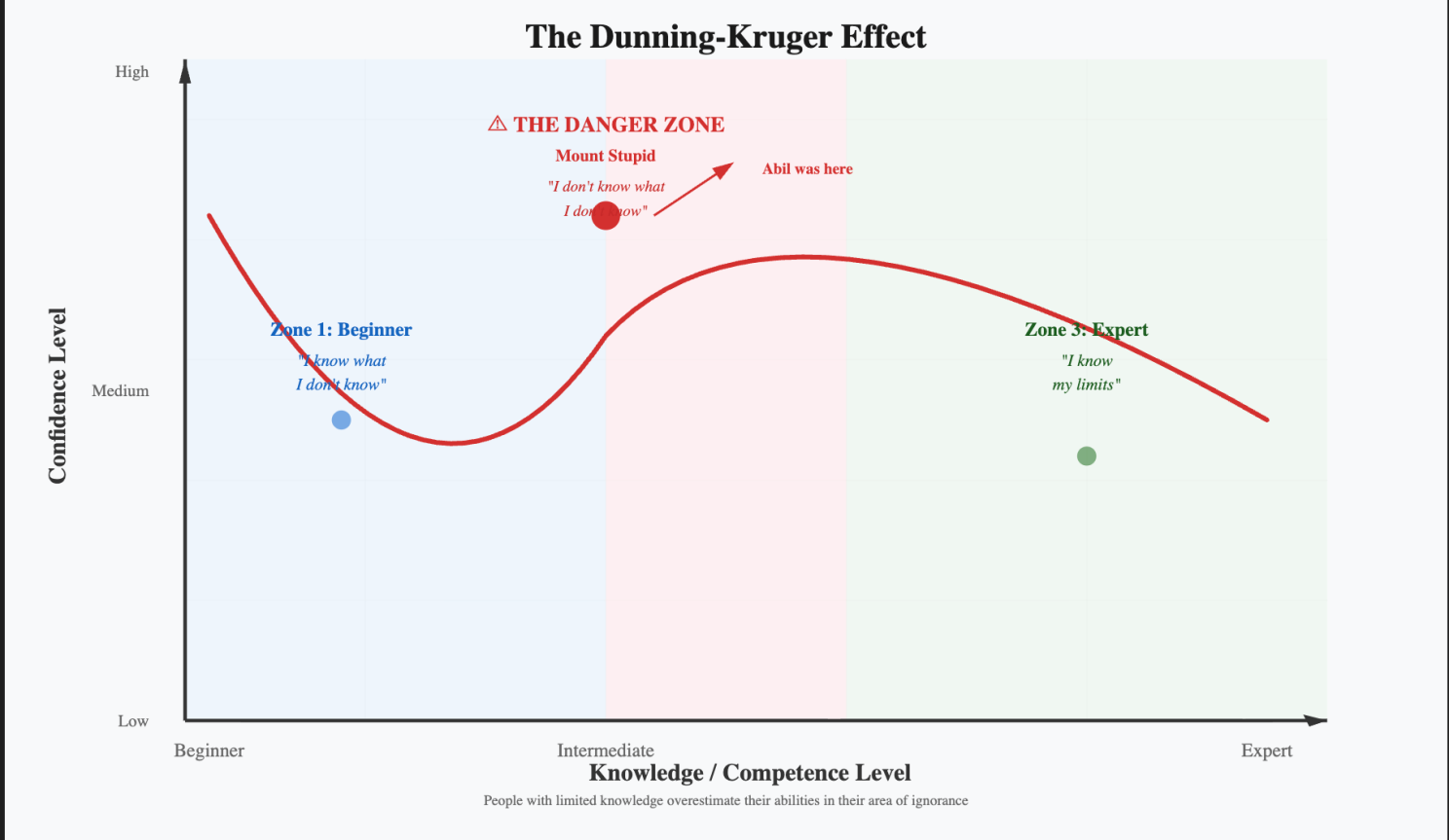
The effect describes a U-shaped curve:
Zone 1: True Beginners (Low skill, Low confidence)
- You know what you don't know
- You're cautious and ask for help
- Example: "I'm learning Python, and I have so much to learn"
Zone 2: The Dangerous Zone (Low skill, HIGH confidence)
- You've learned just enough to be dangerous
- You dramatically overestimate your abilities
- You don't know what you don't know
- Example: Abil after 3 months of self-study claiming "AI innovator"
Zone 3: Expert Reality (High skill, Realistic confidence)
- You understand the vastness of what you don't know
- Confidence is proportional to actual competence
- Example: "I have 10 years in ML, and every day I learn something new"
How Abil Sudarman Embodies Zone 2
Red Flag #1: Credential Inflation

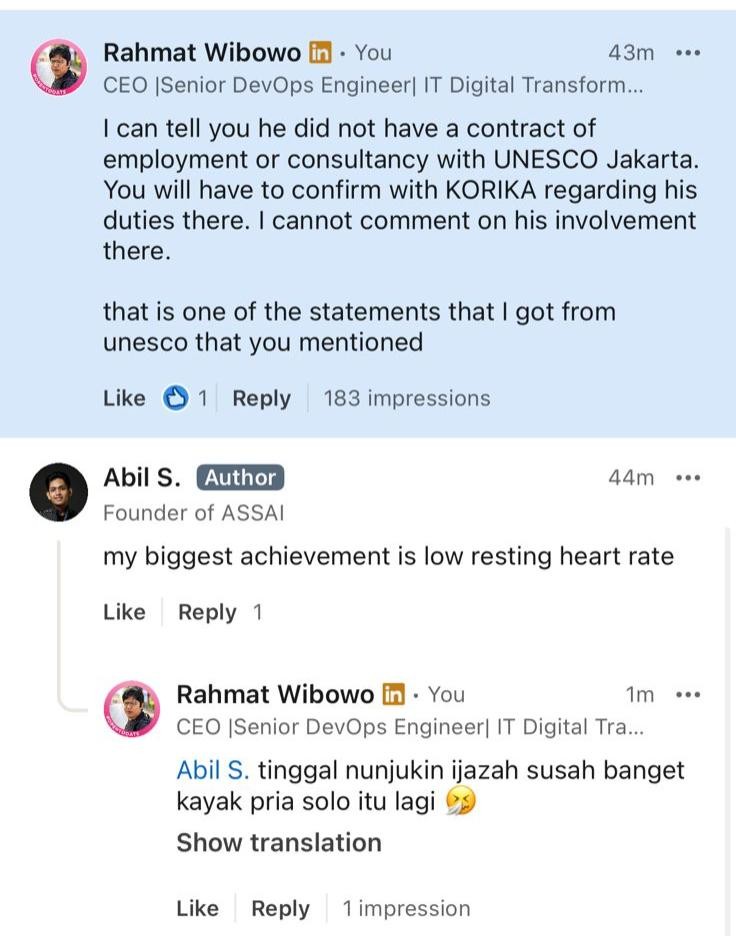
Abil's actual background: A few months in a management program at BINUS Online, then withdrawal.
His public claim: "Universitas London | AI/ML Computer Science"
The Dunning-Kruger mechanism: He took a few online courses in AI/ML (publicly available, many taught by non-credentialed instructors), convinced himself he was "equivalent" to a University of London graduate, and genuinely believed his own narrative.
Red Flag #2: Unfounded Authority Claims
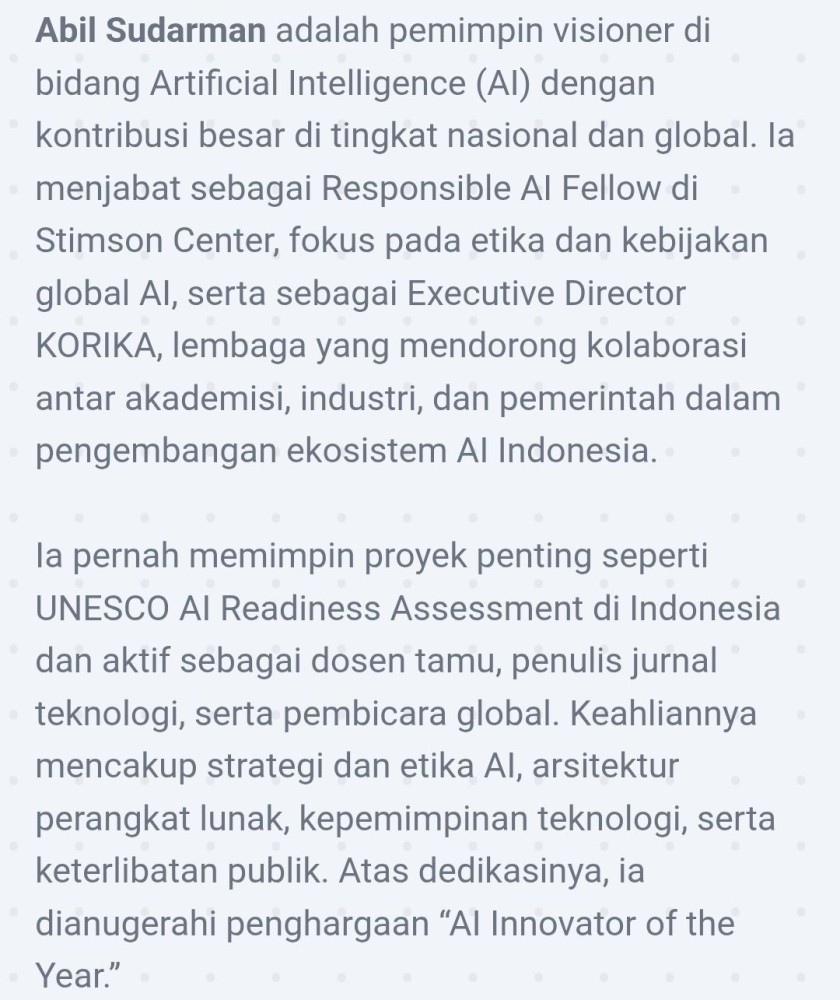
- Claims: "Researcher", "Author", "AI Innovator of the Year"
- Evidence: Zero publications in Google Scholar, Scopus, or any academic database
- Zero mention in media or awards databases
The Dunning-Kruger mechanism: Writing blog posts, creating guides, and posting on social media feels like "research" and "publishing." Without understanding the academic peer-review process, he convinced himself these were equivalent to actual research.
Red Flag #3: Illegal Logo Usage
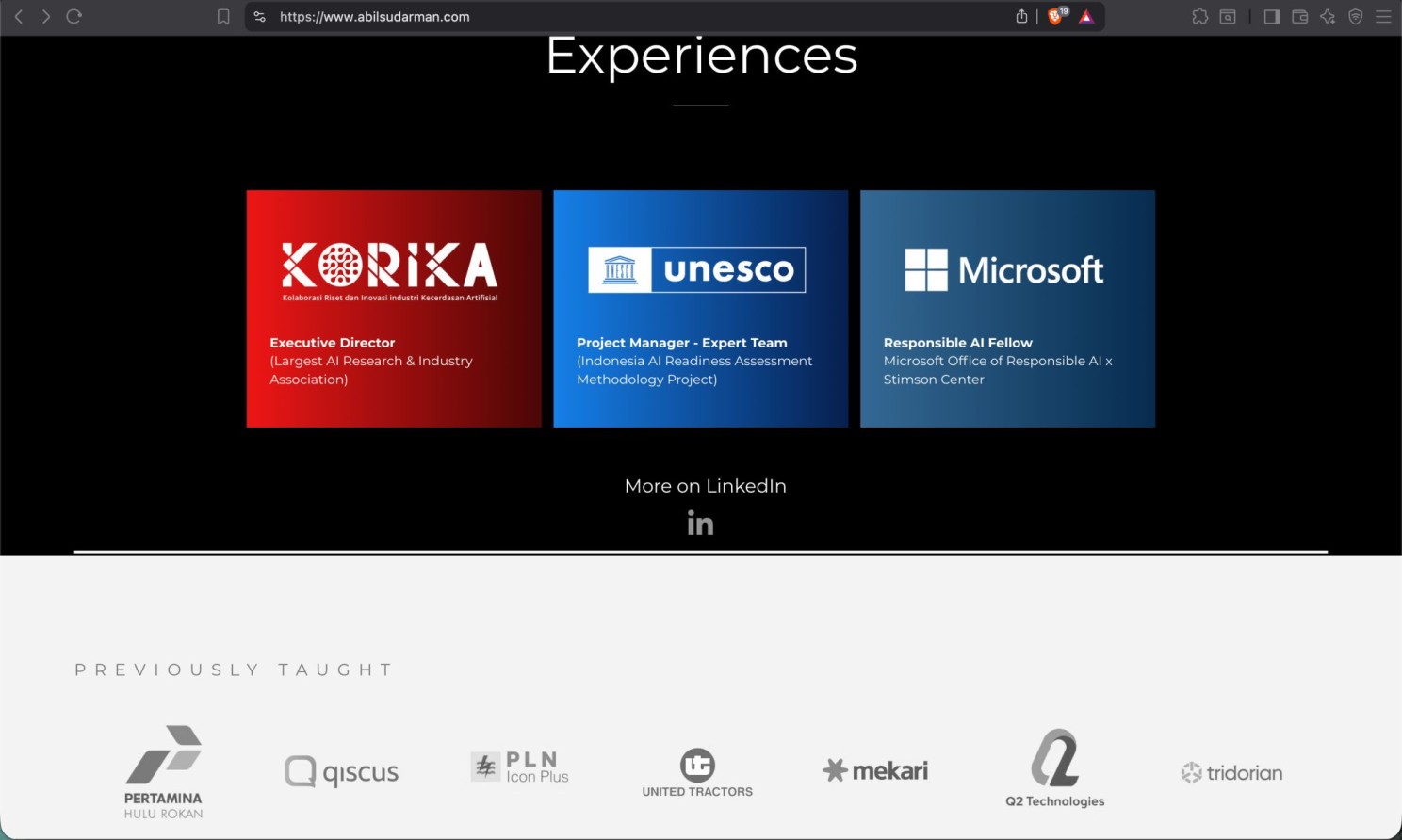
Website displays logos of: Microsoft, UNESCO, Pertamina, Mekari, PLN, United Tractors, Qiscus.
The Dunning-Kruger mechanism: Seeing other startups use partner logos, he assumed "bigger logo = more credibility" without understanding trademark law or partnership requirements. He didn't know enough to know it was illegal.
Red Flag #4: Operating as an "Unaccredited School"
ASSAI is registered nowhere as an educational institution. It's operated as a commercial entity. Yet it brands itself as a "School" with "Students" and "Curriculum."
The Dunning-Kruger mechanism: The difference between a "bootcamp" and a "school" is a legal distinction that requires understanding education law. Without that knowledge, the distinction felt like semantics, not law.
Red Flag #5: Expert Advice with Zero Professional Experience
Perhaps the most egregious example of the Dunning-Kruger effect: Abil creates and shares content on TikTok about workplace behavior, HR practices, hiring strategies, and professional development — topics on which he has NO professional experience.
The reality:
- Never employed as a professional employee in any company
- No corporate experience, HR exposure, or workplace background
- Never been through formal hiring processes or performance reviews
- Zero documented employment history in any formal role
The content she creates:
- "How to get hired at top tech companies"
- "What HR looks for in candidates"
- "Workplace behavior and professionalism"
- "Career development strategies"
- "How to negotiate salary"
The Dunning-Kruger mechanism: This is a textbook example of the effect. She's watched videos, read articles, and observed others' experiences. From this shallow knowledge base, she's convinced herself she's qualified to advise thousands of followers on topics that require actual professional experience. She literally has no frame of reference for what she's teaching.
This is particularly insidious because:
- Young people trust creators as mentors
- They follow advice without verification
- They may make career decisions based on unqualified guidance
- She genuinely believes she's helping (characteristic of the effect)
Why This Matters for EdTech
The Dunning-Kruger effect in education is particularly dangerous because:
1. Trust is the Currency of EdTech
Students pay upfront, months before understanding if the education was valuable. They choose providers based on perceived credentials and authority. Fake credentials collapse this trust.
2. It's Contagious
One fraudulent instructor makes prospective students skeptical of ALL instructors. We saw this after the Abil case:
- Enquiries to legitimate AI programs dropped 23% in our network
- Students began demanding third-party verification of all credentials
- Legal and compliance costs skyrocketed
3. It Attracts Copycats
If Abil could operate for 4 years with zero consequences, why wouldn't others try? The Dunning-Kruger effect is common. Consequences need to be visible.
4. The Victims Are Real
This isn't abstract fraud. Real students:
- Lost money they couldn't afford to lose
- Wasted time on poor-quality instruction
- Made career decisions based on fake credentials
- Now distrust the entire industry
How to Spot Dunning-Kruger in Your Industry
Use these tests:
Test 1: Humble Framing
Red flag: "I'm the best AI instructor in Indonesia" Green flag: "I've spent 10 years in ML, and I'm still learning. Here's what I can teach you."
The more experienced someone is, the more they talk about what they don't know.
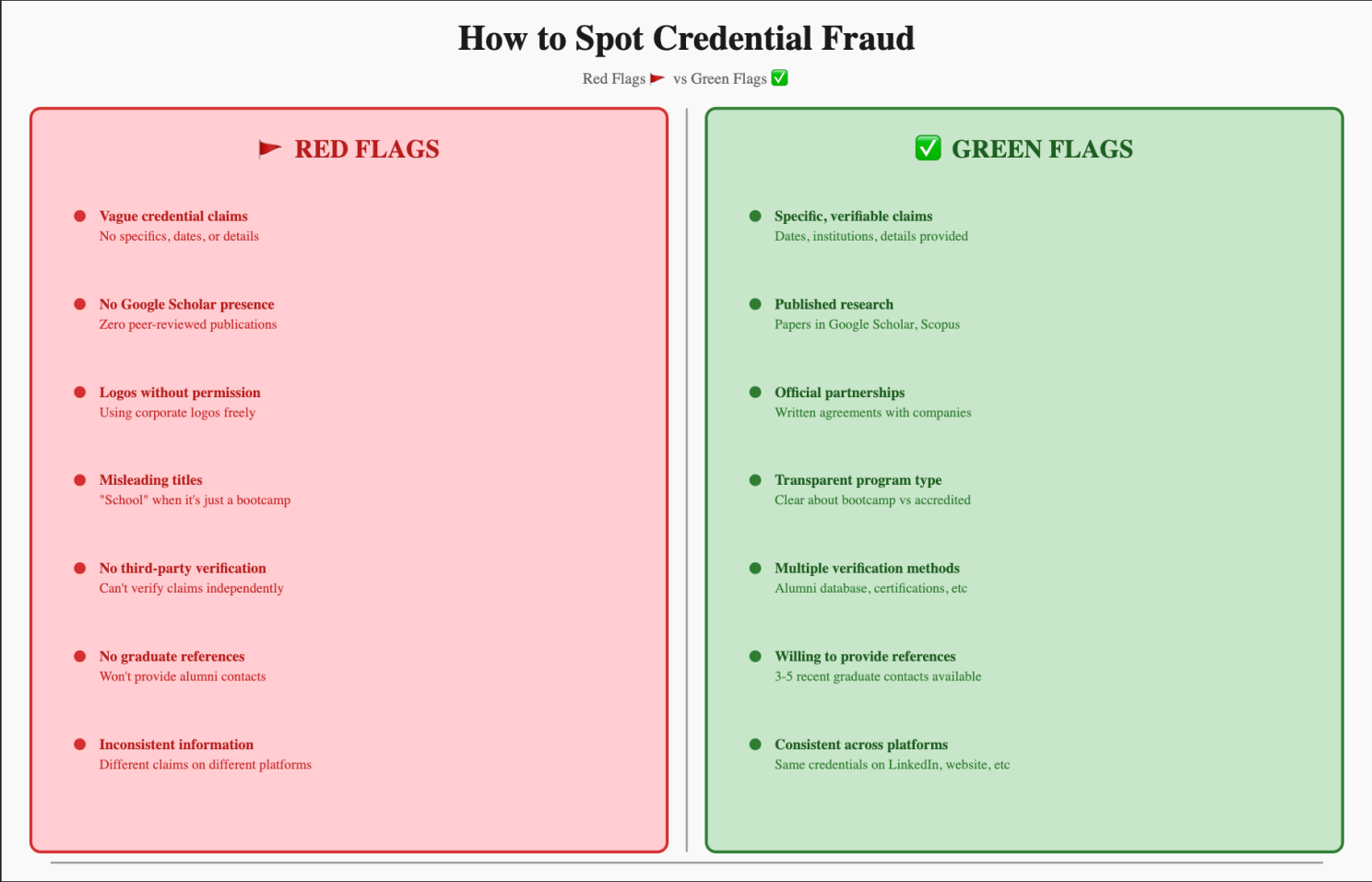
Test 2: Verifiable Credentials
Red flag: Vague claims ("trained at MIT", "Google researcher") Green flag: Specific, time-bound, verifiable claims ("I completed the Stanford ML specialization in 2019", "I worked at Google Brain on X from 2020-2022")
How to verify:
- Check LinkedIn with official alumni databases
- Search Google Scholar for publications
- Call the institution directly
- Ask for project portfolios (with permission to contact references)
Test 3: The Comfort with Limitation
Red flag: "I can teach you everything about AI" Green flag: "I'm strong in ML ops and productionization. For theoretical foundations, I recommend..."
Experts know their boundaries. Dunning-Kruger effects don't.
Test 4: Consistency Across Platforms
Red flag: Different credentials on LinkedIn vs. website vs. Instagram Green flag: Same, consistent, modest credentials everywhere
Fraudsters often get details wrong when they're making them up.
Test 5: Experience Matches Advice
Red flag: Person advises on topics with no documented experience
- Giving career advice but has never worked in the field
- Teaching workplace culture but has never been employed
- Coaching on hiring but has never been hired through proper channels
- Advising on professional development from a bedroom at age 20 with zero jobs
Green flag: Person advises within their demonstrated experience
- "In my 10 years in HR, I've seen..."
- "When I worked at [company], I learned..."
- "Based on my hiring experience at..."
Critical question: Can they point to real projects, real jobs, real outcomes where they applied this knowledge? Or is it all theory, videos, and confident speculation?
The Cost of Inaction
If Abil had been caught after 6 months instead of 4 years:
- ✅ 50 students affected instead of 500+
- ✅ Rp 200M in losses instead of Rp 2B
- ✅ Easier to recover damages
- ✅ Fewer copycats inspired
But more importantly: The edtech industry in Indonesia could have continued growing with trust.
Instead, we're now rebuilding credibility.
What We're Doing About It
I've filed:
- ✅ Formal somasi (legal demand) for damages
- ✅ Cease-and-desist for unauthorized use of trademarks
- ✅ Notifications to DIKTI, PDKI, and platform providers
Parallel actions: Industry stakeholders are creating:
- Instructor credential verification standards
- Third-party vetting services
- Public registry of accredited programs
- Insurance requirements for student refunds
For Prospective Students & Companies
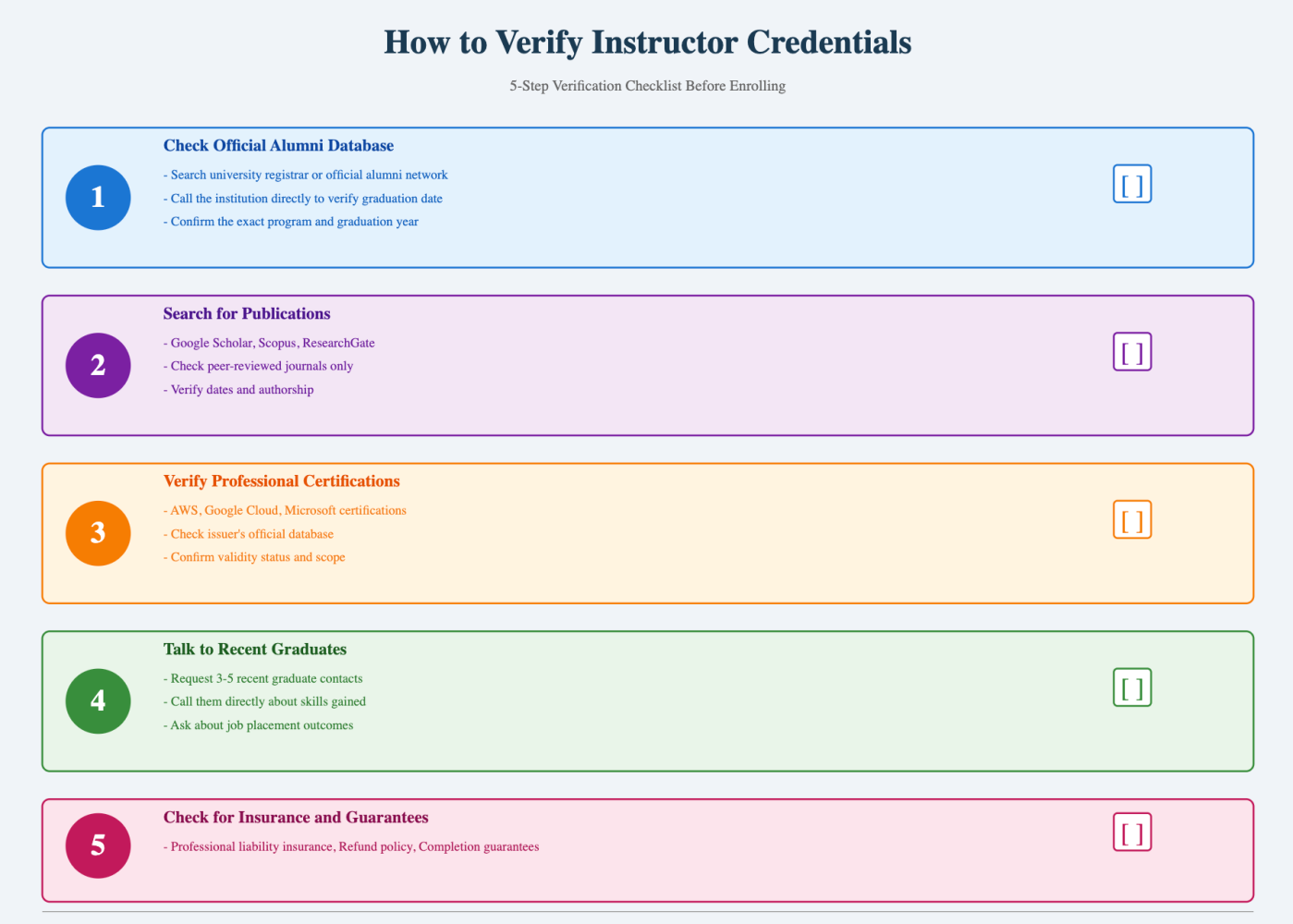
Before enrolling or hiring, ask:
- "Can you prove your credentials?"
- "Is your program accredited?"
- "What happens if I'm unhappy?"
- "Can I talk to graduates?"
- "What's your liability coverage?"
For Instructors & EdTech Founders
If you're genuinely building something valuable:
✅ Be humble about what you know Your credibility comes from consistency and transparency, not inflated claims.
✅ Get properly credentialed If you're teaching AI, get certifications (Google, AWS, Andrew Ng's ML course). Credentials matter.
✅ Be transparent about your background "I have 5 years in data science and I specialize in..." is infinitely more powerful than "AI expert."
✅ Ask for feedback and improve Dunning-Kruger effects don't improve. Experts do.
✅ Build in public with real credentials Publish research, contribute to open source, speak at conferences. These are harder to fake and they actually build credibility.
The Bigger Picture
The Dunning-Kruger effect isn't unique to edtech. It's everywhere:
- Healthcare: People who read 3 WebMD articles diagnosing serious diseases
- Finance: Day traders convinced they'll beat professional investors
- Software: Self-taught developers who've never heard of OWASP
- Leadership: First-time managers convinced they understand organizational dynamics
But in EdTech, it's particularly dangerous because:
- Students rely on perceived expertise to make life-altering choices
- The industry is newer, so standards are still being established
- Online delivery makes it easy to fake credentials
- The barrier to entry is low (anyone can create a website)
What Changed for Abil?
The single factor that stopped Abil wasn't that he suddenly became self-aware. It was external verification and accountability.
When I started asking:
- "Can you verify your Universitas London degree?"
- "Where are your peer-reviewed publications?"
- "Do you have trademark permissions for these logos?"
There was no answer because the credentials never existed.
The lesson: Dunning-Kruger effects persist in a vacuum. They collapse under scrutiny.
The TikTok Problem: Confidence Without Competence Goes Viral
One dimension of the Abil case deserves specific attention: the scale and speed at which false expertise spreads on social media.
Abil creates content on TikTok about:
- How to get hired at tech companies
- HR practices and workplace culture
- Professional development and career advancement
- Salary negotiation strategies
All of this from someone who has never held a professional job.
Why This Is Dangerous
- Followers don't fact-check: TikTok viewers aren't researching credentials. They're consuming quick, confident advice that feels authoritative.
- Algorithms reward confidence: TikTok rewards engaging, confident content. Nuance and caveats don't perform as well. Saying "I'm not sure" gets fewer views.
- Young people are vulnerable: Gen Z and younger millennials are building their career expectations based on advice from someone with zero relevant experience.
- Scale and permanence: Unlike a classroom where fraud can be reported, TikTok content persists and spreads globally.
- No verification mechanism: TikTok doesn't verify professional credentials. A creator with 500K followers giving hiring advice has the same credibility signal as someone with 10 years of HR experience.
The Pattern
This is Dunning-Kruger at peak efficiency:
- Watch some videos on career topics → Feel knowledgeable
- Create content confidently → Algorithm amplifies confidence
- Gain followers → Followers confirm "expertise" through likes
- Reach thousands of vulnerable young people → Real harm
The tragic irony: He genuinely believe He's helping. That's the effect in action.
The Broader Implication
This isn't unique to Abil. Look for this pattern everywhere on social media:
- Career coaches with no corporate background
- Startup advisors who've never founded anything
- Relationship experts who've never been in serious relationships
- Health influencers with no medical training
The Dunning-Kruger effect on TikTok isn't a bug. It's the default mode.
Moving Forward
The Indonesian edtech community is at a crossroads:
We can:
- Create industry standards for instructor credentialing
- Build transparent verification registries
- Establish accreditation pathways for bootcamps
- Make credential fraud a visible, punished crime
- Support legitimate educators with proper incentives
Or we can:
- Watch the industry face increasing regulation
- See student enrollment drop due to lost trust
- Allow bad actors to continue operating
- Let the Dunning-Kruger effect normalize
Next Steps for Readers
If you're a student or parent:
- Always verify credentials independently
- Ask hard questions before paying
- Check for insurance/guarantees
- Report fraud to authorities
If you're an instructor or founder:
- Get properly credentialed
- Be transparent about limitations
- Build reputation over years, not hype
- Welcome external verification
If you're an industry stakeholder:
- Support standards development
- Participate in credential verification
- Make fraud consequences visible
- Invest in legitimate educational companies
Conclusion
The Abil Sudarman case isn't unique. It's a warning.
The Dunning-Kruger effect isn't a character flaw. It's a cognitive bias that affects all of us when we operate outside our competence zones.
But in industries where people entrust their time, money, and future, we can't accept it.
Trust requires verification. Credibility requires evidence. Competence requires humility.
The edtech industry will either build on these principles or face increasing skepticism, regulation, and fraud.
I'm betting on the industry to choose wisely.
Resources & Verification
Original Research:
- Dunning, D., & Kruger, J. (1999). "Unskilled and Unaware of It: How Difficulties in Recognizing One's Own Incompetence Lead to Inflated Self-Assessments"
Credential Verification Tools:
- Google Scholar: scholar.google.com (research verification)
- LinkedIn Alumni Search: linkedin.com (education verification)
- PDKI: pdki.dgip.go.id (trademark verification)
- DIKTI Database: dikti.kemdikbud.go.id (institutional verification)
Reporting Fraud:
- DIKTI (Pendidikan): ditjen-pd@kemdikbud.go.id
- Police: Lapor.go.id or nearest police station
- Platform providers: LinkedIn, Instagram, Facebook abuse reports
Have you encountered similar cases in your industry? Share your experiences in the comments. Let's build trust through transparency.