
The First Shore Taiwan and the Austronesian Covenant By Rahmat Wibowo From InfraLoka
How a mountainous island in the western Pacific became the Jerusalem of half the world, and why the ancient testimony of language, blood, and stone demands that we never forget it.
A Small Island That Seeded Half the World
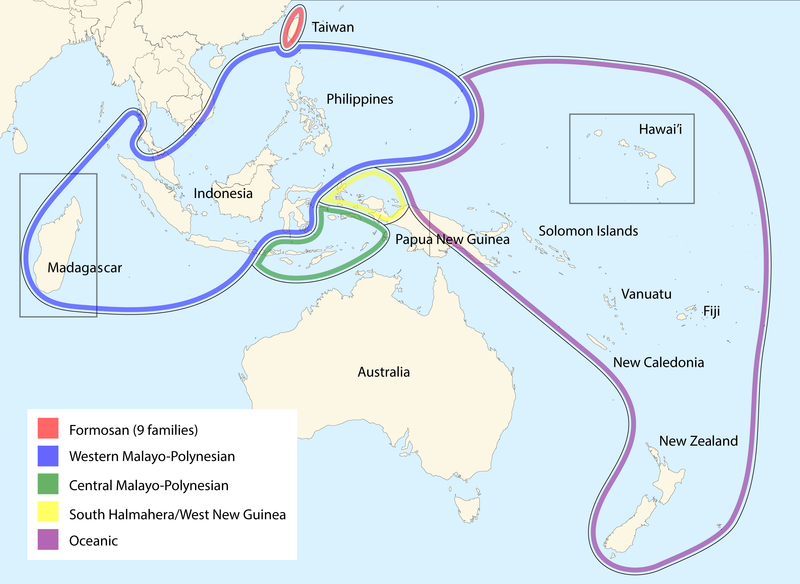
There is a city that every civilization calls holy. Jerusalem has its walls, Mecca its stone, Varanasi its river. But there is another sacred center, far older than any of these in human reckoning, that sent its children across a third of the planet's surface and yet today goes largely uncelebrated. That place is Taiwan, an island 394 kilometers long perched on the western edge of the Pacific. From its mountains and shores, roughly six thousand years ago, the ancestors of nearly half a billion people set out in double-hulled canoes to populate a world of islands stretching from Madagascar to Easter Island, from Hawaii to New Zealand.
To speak of Taiwan's role in Austronesian history is not to invoke mythology. It is to cite the convergence of three independent scientific disciplines, linguistics, archaeology, and genetics, all pointing to the same inescapable conclusion: Taiwan is the Urheimat, the homeland, the promised land of the Austronesian world. This article is both a record of that evidence and a meditation on why it matters today, not merely as history, but as a living claim and a sacred obligation.
The Holy Scripture: Language as Covenant
In Jerusalem, a sacred covenant was preserved in text written on parchment and stone. In the Austronesian world, the covenant was written into the grammar of the tongue itself, into the very architecture of how a people addressed the world. And nowhere on earth does that covenant speak more clearly than in the mountains of Taiwan.
The key insight belongs to the Bellwood-Blust Hypothesis, advanced independently by archaeologist Peter Bellwood and linguist Robert Blust beginning in the 1970s and 1980s. In an era before widespread genetic sequencing, these scholars made a radical argument: that Taiwan was not just one node of Austronesian culture but its absolute origin point. Blust spent his career reconstructing the branching tree of Austronesian languages and arrived at a conclusion of extraordinary weight.
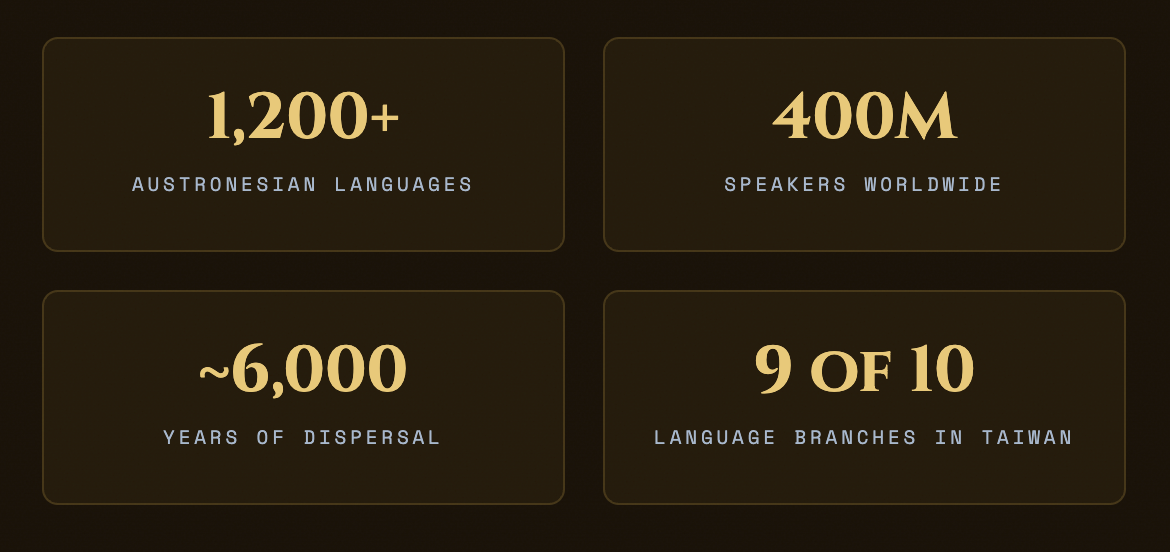
Of the ten principal divisions of the Austronesian language family recognized by linguists, nine, the entire Formosan collection, are found only within the borders of Taiwan. The one remaining branch, Malayo-Polynesian, contains nearly 1,200 languages spread across every ocean-facing horizon of the Indo-Pacific. Every Malay, every Tagalog, every Hawaiian chant, every Maori prayer, every Malagasy lullaby descends from that single branch that left the island of Taiwan.
Synthesized from Blust (1999), Bellwood (1991), and PNAS Nexus (2023)
In historical linguistics, when a language family shows its highest internal diversity in one geographic location, that location is identified as the homeland. This is known as the Sapir principle, and it is as rigorous as any scientific law. The concentration of nine separate primary subfamilies within Taiwan, while the entire remainder of the Pacific shares only one, is not a coincidence. It is a signature. Taiwan is the mother tongue of an ocean civilization.
Robert Blust himself called the Austronesian expansion from Taiwan "one of the greatest chapters in human history." And like all great chapters of human history, it began with a people who decided the sea was not a wall but a road.
The ancestor of all Austronesian languages is thought to have been spoken roughly 6,000 years ago on what is today Taiwan. The diversity of the Formosan languages strongly suggests that Taiwan's Indigenous languages are the homeland of the entire Austronesian family.
Endangered Language Alliance / Li (2008)
The Testimony of Dead Words
Blust's linguistic detective work went further than mere family trees. By reconstructing Proto-Austronesian vocabulary, the ancestor language itself, he could show that the original speakers knew millet, rice, dogs, pigs, and canoes. He could show they lived near the coast of an island with mountains visible from the shore. He could show their language bore structural similarities to Tai-Kadai and Sino-Tibetan languages spoken on the southeastern coast of mainland China. Every word they left behind is a witness for the prosecution of history, placing the cradle of a civilization firmly on Taiwan's ground.
Stone, Pottery, and the Trail of the Departed
Jerusalem does not exist only in scripture. It exists in the layers of the earth, in pottery sherds and foundation stones, in the accumulated material testimony of generations. So too does Taiwan's claim to Austronesian primacy rest on tangible, physical evidence that survives in the archaeological record across three ocean basins.
The Neolithic Launching Pad
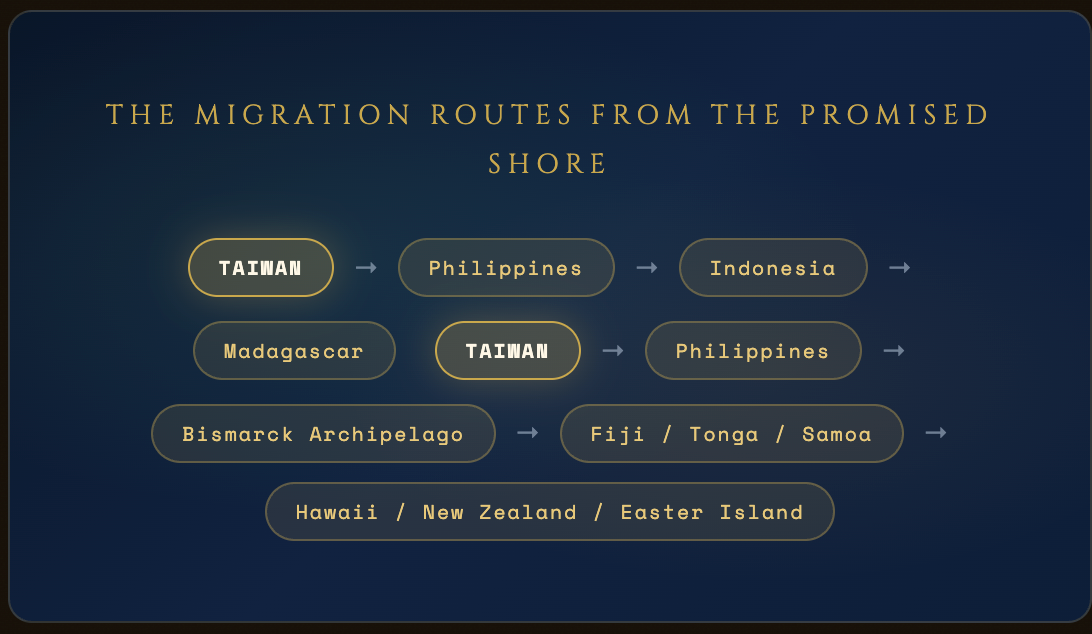
Approximately 4,800 years ago, the ancestors of Taiwanese Austronesians arrived on the island from the southeastern coast of mainland China. Archaeologists track their presence through the distribution of millet and rice in ancient sites. These were Neolithic farmers who had adapted to island life, developed maritime technology, and begun the process of diverging into the extraordinary linguistic tapestry that would become Formosan. Over the following centuries, they did not merely survive on Taiwan. They thrived, multiplied, and eventually looked south across the Luzon Strait with curiosity and extraordinary courage.
The Lapita: Missionaries of the Sea
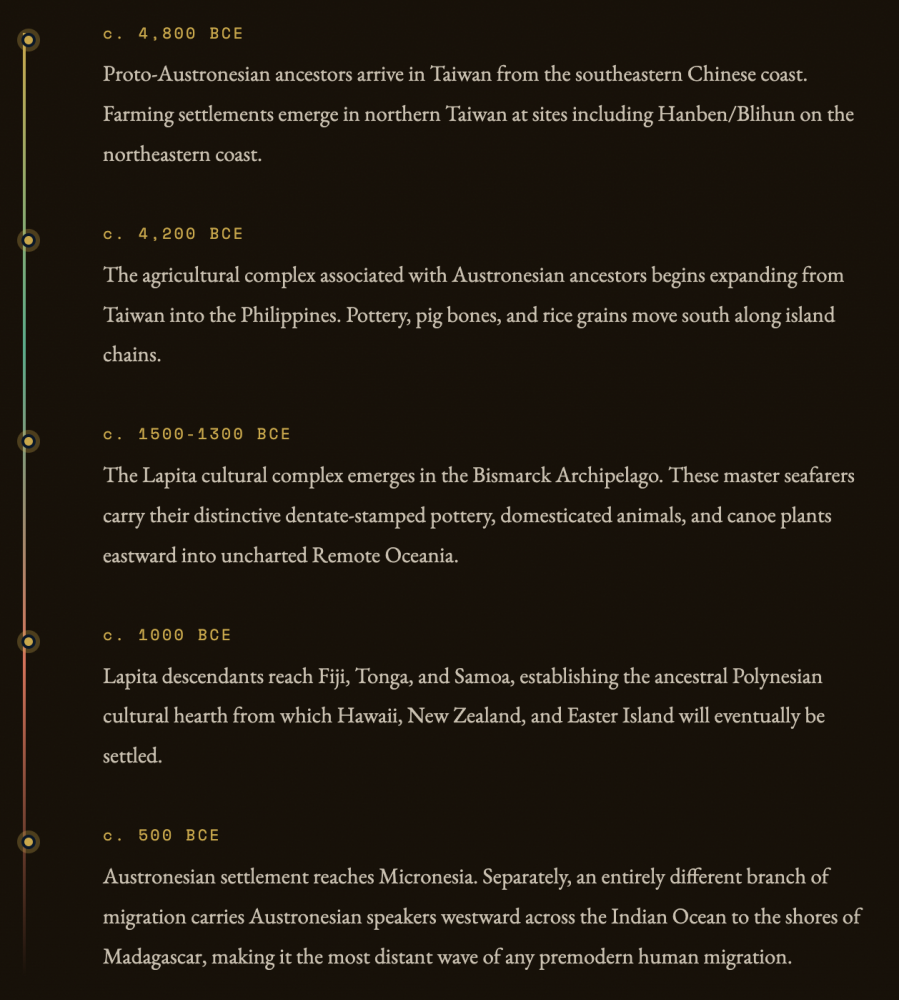
No discussion of Austronesian archaeology can bypass the Lapita people, who stand in relation to Pacific civilization as the early apostolic communities stand to the world's great religious traditions. Linked by Britannica and confirmed by ancient DNA to have "originated from the island of Formosa," these people carried what archaeologists call a "colonization kit": pigs, dogs, chickens, and a suite of canoe plants including taro, yams, and breadfruit. They brought not just genes and languages but entire ecosystems, reshaping every island they touched in Taiwan's image.
Blood Does Not Lie: The Genetic Covenant
If language is the Austronesian Torah, and archaeology is the Jerusalem Wall, then genetics is the DNA of the covenant itself, written in haplogroups and passed from parent to child across a hundred generations of ocean crossings. For decades, initial genetic studies of modern Pacific Island populations were frustratingly ambiguous, leading some to question the Out-of-Taiwan hypothesis. Then ancient DNA changed everything.
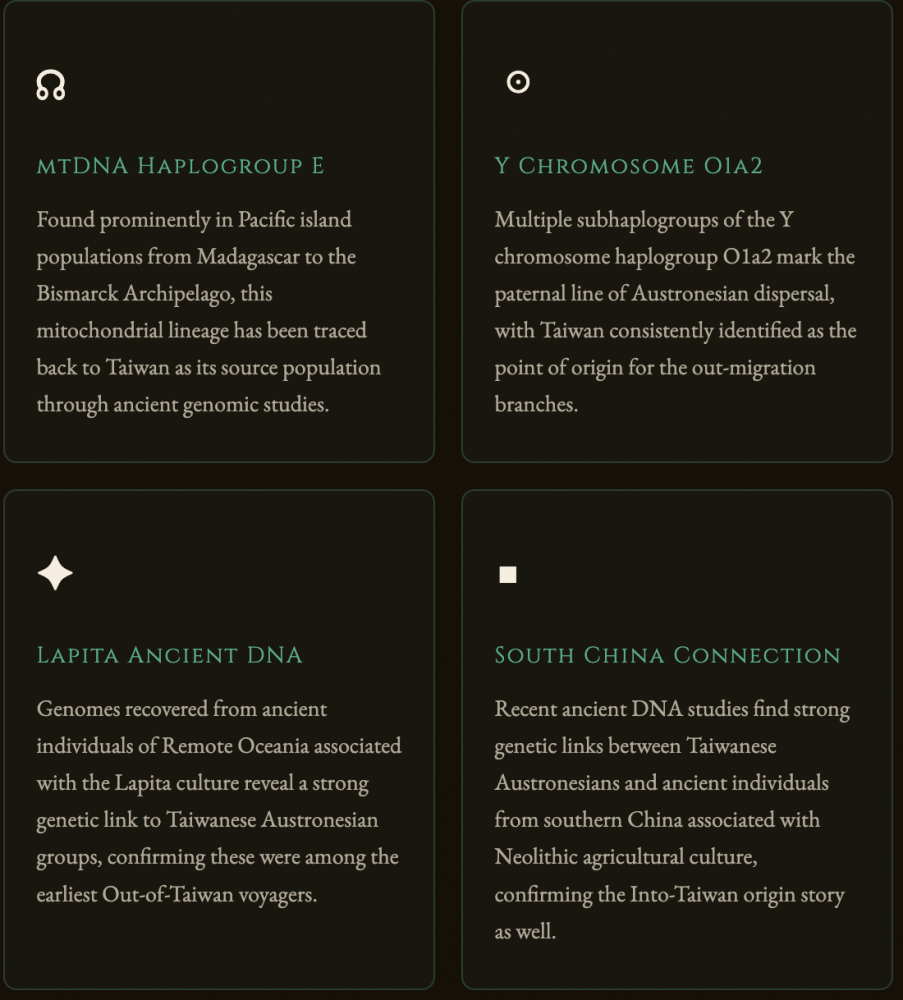
The 2023 landmark study published in PNAS Nexus conducted the most comprehensive genomic analysis of Taiwanese Austronesian groups yet assembled, covering both highland and lowland communities. Its admixture graph results confirmed the Out-of-Taiwan event "describes the migration of people from Taiwan to Island Southeast Asia and Oceania, coinciding with the spread of Austronesian languages and agriculture." The genetic dating ranges cluster between 4,000 and 8,000 years before present, aligning with the archaeological and linguistic evidence to within acceptable margins of scientific uncertainty.
Ancient DNA from Remote Oceania Lapita individuals showed a "strong genetic link to the Taiwanese Austronesian groups," suggesting these Lapita people were "among the earliest Out-of-Taiwan groups." The blood that flowed through the veins of those who raised the great moai of Easter Island, who navigated to Hawaii by starlight, who built the outrigger traditions of Madagascar, carried within it the biological signature of Taiwan's mountains and shores.
The Wayfinders: A Technology of the Sacred
Before Moses parted waters, there was another kind of miracle in the Pacific: men and women who parted the ocean with nothing but hand-built canoes, reading the sky and sea as a living scripture. The Austronesian navigators were among the greatest technologists in human history, and their methods were so sophisticated that modern scientists and sailors have spent decades trying to reconstruct and understand them.
Austronesians were the first people in human history to invent oceangoing sailing technologies, including double-hulled sailing canoes, outrigger boats, lashed-lug boat building techniques, and the crab claw sail. These were not primitive rafts. These were precision engineering achievements that made the Atlantic's later Age of Exploration possible only by centuries of delay.
Thousands of years before the Apollo mission, Austronesian sailors set out in canoes to find and settle all the tiny islands in the Pacific Ocean, reading the rising and setting points of hundreds of stars, the rhythm of the waves, the flight paths of seabirds, and even the color and shape of clouds to determine their position across millions of square miles of open water.
Cultural Survival / Ancient Seafarers Research (2026)
The Star Compass
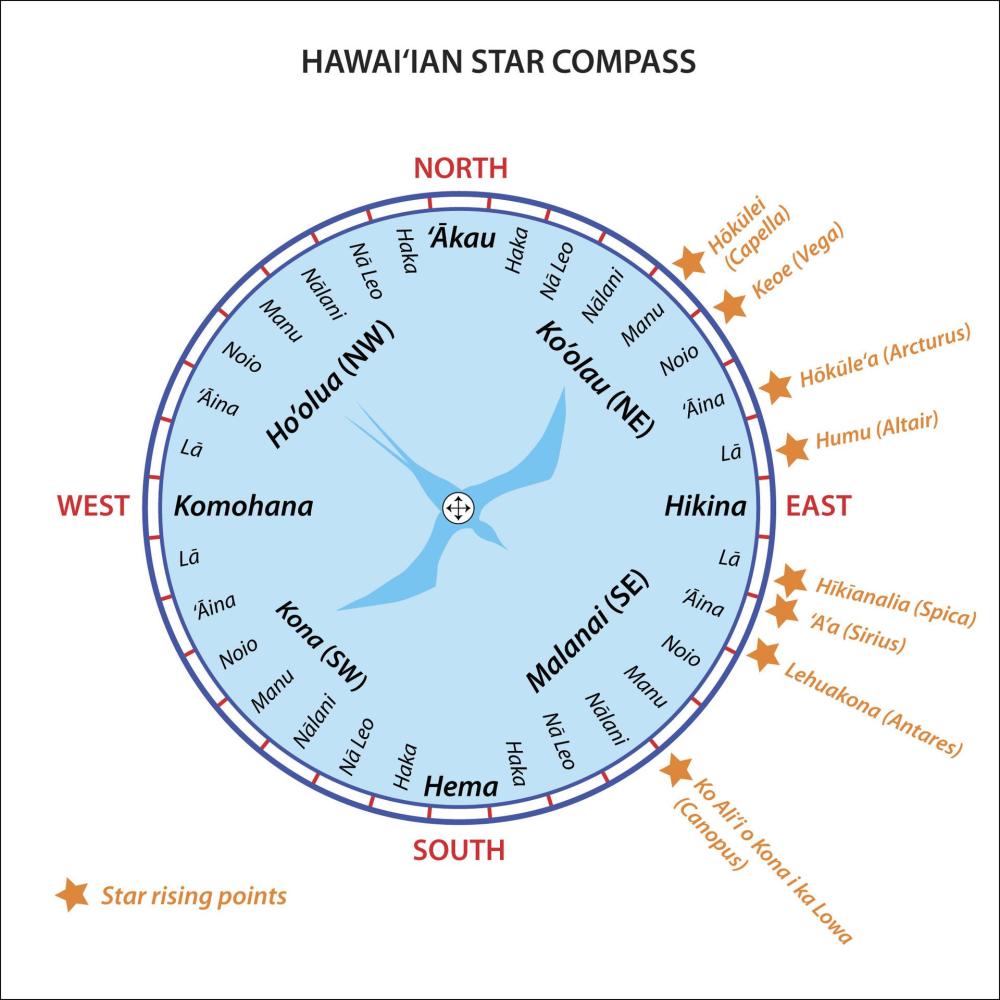
Austronesian navigators memorized the rising and setting points of hundreds of individual stars. To a trained navigator, the night sky was not a mystery but a rotating map of extraordinary precision. Combined with an intimate knowledge of ocean swell patterns, which can indicate a landmass from distances of up to 50 miles away, these wayfinders could locate tiny atolls in millions of square miles of open water with a reliability that defies modern expectation.
Their double-hulled vessels could carry up to 100 people along with entire ecosystems of domesticated animals and food plants. These were not scouting expeditions. These were deliberate, planned colonization voyages, carrying everything necessary to establish a new society on an uninhabited shore. Every departure from Taiwan's coast was an act of extraordinary faith in the knowledge of navigation, and in the certainty that there was land beyond the horizon worth finding.
The Canoe as Sacred Vehicle
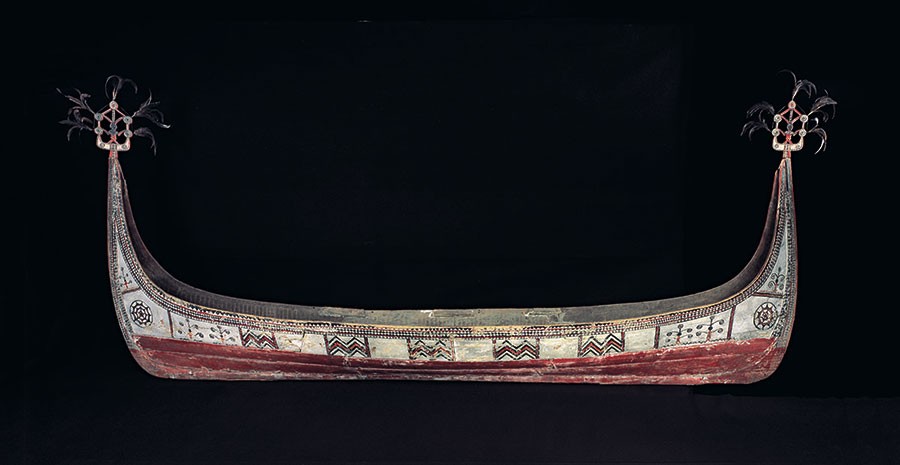
In 2025, the double-hulled canoe Alingano Maisu completed a voyage from Palau to Taiwan guided only by stars, wave patterns, and ocean swells, with no modern instruments of any kind. This was not a stunt. It was a homecoming. The navigator Sesario Sewralur, son of the legendary Mau Piailug who had revived Pacific wayfinding in the 1970s, brought a canoe back to the island that his ancestors had departed six thousand years before. The ocean is not a barrier in the Austronesian worldview. It is a covenant road, and Taiwan is where that road begins.
Why We Need the Ancient Script: On the Right to Protect Taiwan
The question of Taiwan's future is almost always framed in the language of geopolitics, of treaty obligations, of military deterrence, of democratic solidarity. These are real and important arguments. But they are not the deepest argument. And in a world where the deepest arguments carry the greatest moral weight, the Austronesian case for Taiwan's sacred status deserves to stand alongside the geopolitical one, not as a metaphor, but as a literal historical claim.
When religious communities have argued for the inviolability of Jerusalem, they have appealed not just to contemporary political realities but to ancient testimony: to texts, genealogies, and consecrated relationships between a people and a land that stretch back across millennia. They argue that some places carry a meaning that transcends present-day calculation, and that certain obligations endure beyond the life of any particular political arrangement.
The Austronesian case for Taiwan deserves to be understood in exactly these terms. Taiwan is not merely a democracy worth defending. Taiwan is the genetic and linguistic and cultural origin point of a civilization that spans from the eastern coast of Africa to the central Pacific, that gave the world its first true ocean-voyaging peoples, that encoded in its indigenous Formosan languages the most ancient testimony of half a billion human beings on earth.
Nine of the ten principal branches of the Austronesian language family are found only in Taiwan. This means that the entirety of the Austronesian world outside Taiwan, every Malay, Tagalog, Javanese, Cebuano, Malagasy, Fijian, Samoan, Hawaiian, and Maori speaker, descends from a single branch that departed these shores. The diversity that remains in Taiwan is irreplaceable. It is the original manuscript from which all other copies were made. To erase Taiwan's indigenous heritage is to destroy the master text of a civilization.
Editorial synthesis based on Blust (1999), Bellwood (1984), and PNAS Nexus (2023)
The Formosan Languages: An Endangered Holy Text
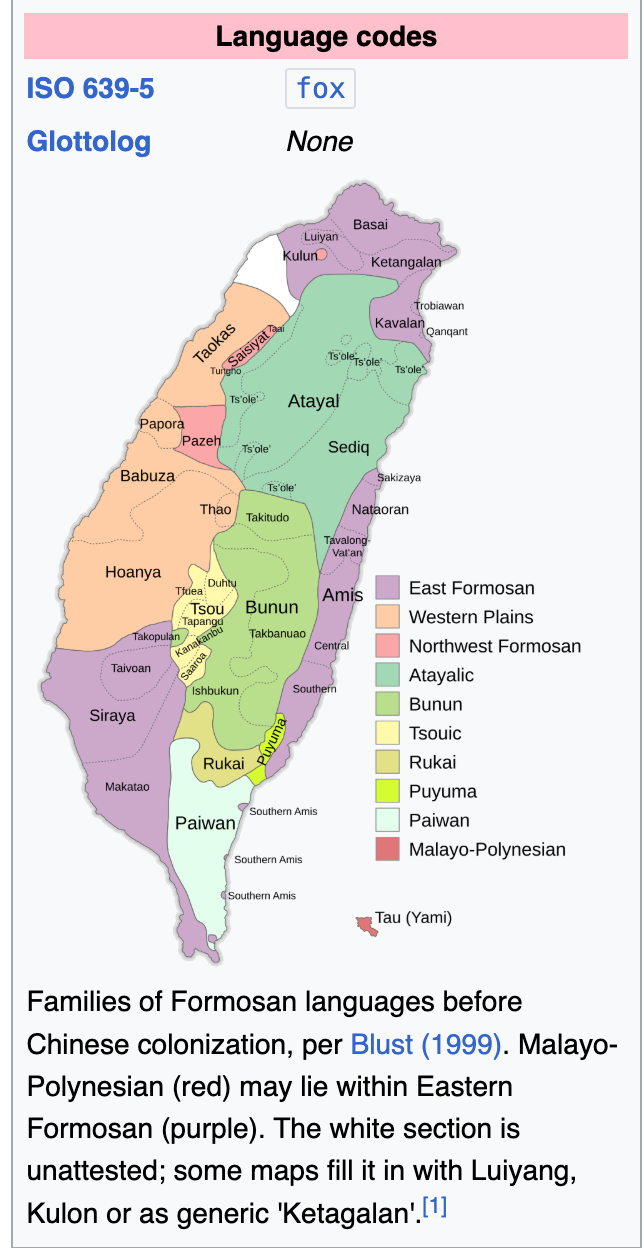
Today, Taiwan's 16 officially recognized indigenous languages are in varying states of crisis. According to UNESCO standards, five are classified as vulnerable and eleven are considered severely or critically endangered. Because of the overwhelming dominance of Mandarin Chinese since 1949, nearly all Formosan languages are experiencing decline in the number of proficient speakers. When the last speaker of a Formosan language dies, a branch of the world's oldest continuous linguistic tradition dies with them. It is the equivalent of burning the library of Alexandria, except that no copy exists anywhere else on earth.
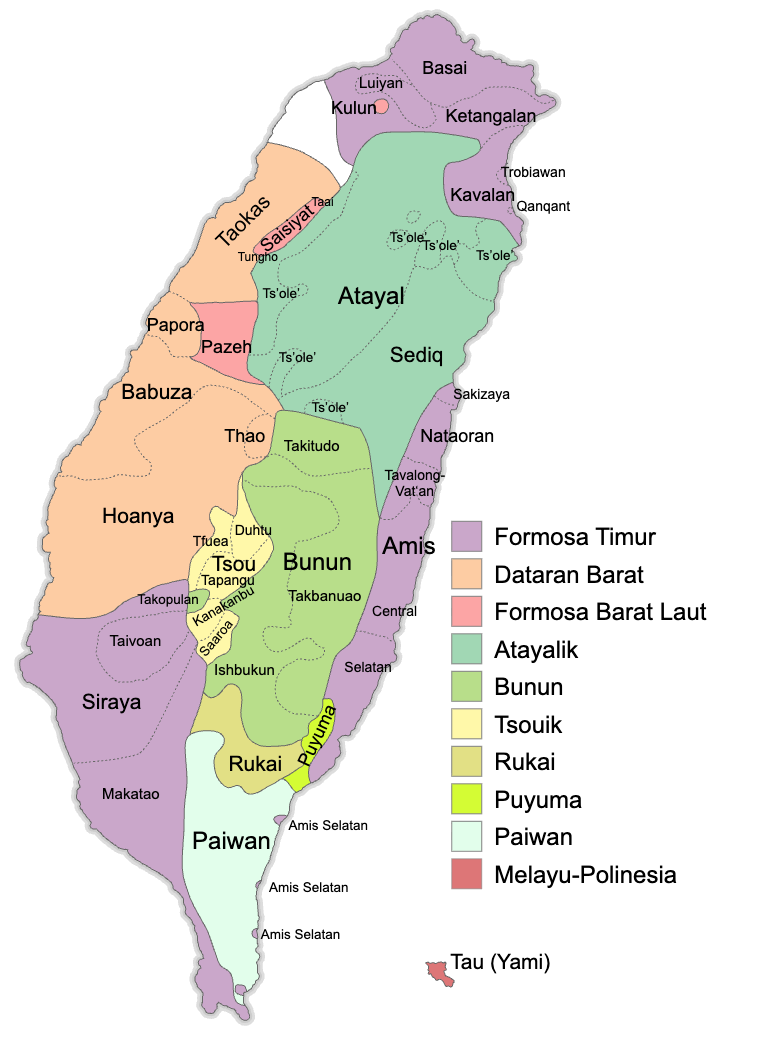
The comparison to Jerusalem is not rhetorical excess. When communities worldwide argue that Jerusalem's character must be protected, they are arguing that certain places hold within them a concentrated deposit of human meaning that belongs, in some sense, to all of humanity. Taiwan, as the Austronesian homeland, holds exactly such a deposit. The mountains and valleys of the island contain the living remnants of six thousand years of the most geographically far-ranging human civilization in history. The languages spoken by the Atayal, Bunun, Amis, Paiwan, Puyuma, Rukai, and Tsou peoples are not local curiosities. They are the root system of an entire world of human culture.
A Covenant Preserved in Script
Every sacred tradition maintains that its founding moment must not be forgotten, that the covenant between a people and their origin is a living obligation, not a historical footnote. The ancient script of the Austronesian covenant is written in three overlapping alphabets: the grammar of the Formosan languages, the potsherd assemblages of Neolithic Taiwan and Lapita-era Oceania, and the haplogroup markers in the genomes of 400 million living people. That script has been painstakingly decoded by linguists, archaeologists, and geneticists over the last half century. It says, with quiet and overwhelming clarity, that Taiwan is where the Austronesian world began.
To invoke this ancient script is not to make a territorial claim or to appeal to ethnic nationalism. It is to make a civilizational argument: that places of irreplaceable cultural and biological significance carry obligations for the living, obligations of preservation, of recognition, and of protection. We do not allow the burning of the Parthenon because it belongs to a specific vision of what human civilization can achieve. We do not allow the dynamiting of Buddhas of Bamiyan, even when they belong to no living tradition, because they represent a human heritage that cannot be replaced.
Taiwan's indigenous Formosan heritage is not yet gone. But it is endangered. And the case for protecting Taiwan, in all the dimensions of that protection, must include the argument that this island carries within it the most ancient continuous testimony of an oceanic civilization that shaped half the world. The wayfinders who read the stars to cross the Pacific left from these shores. The languages they carried are still, just barely, still spoken in these mountains. The obligation to honor and protect that living covenant belongs not just to the 23 million people of Taiwan, but to every Malay, Filipino, Javanese, Hawaiian, Maori, and Malagasy person alive today, every one of whom carries in their blood and tongue a covenant that traces back, across the water, to this first shore.
Return to the Shore
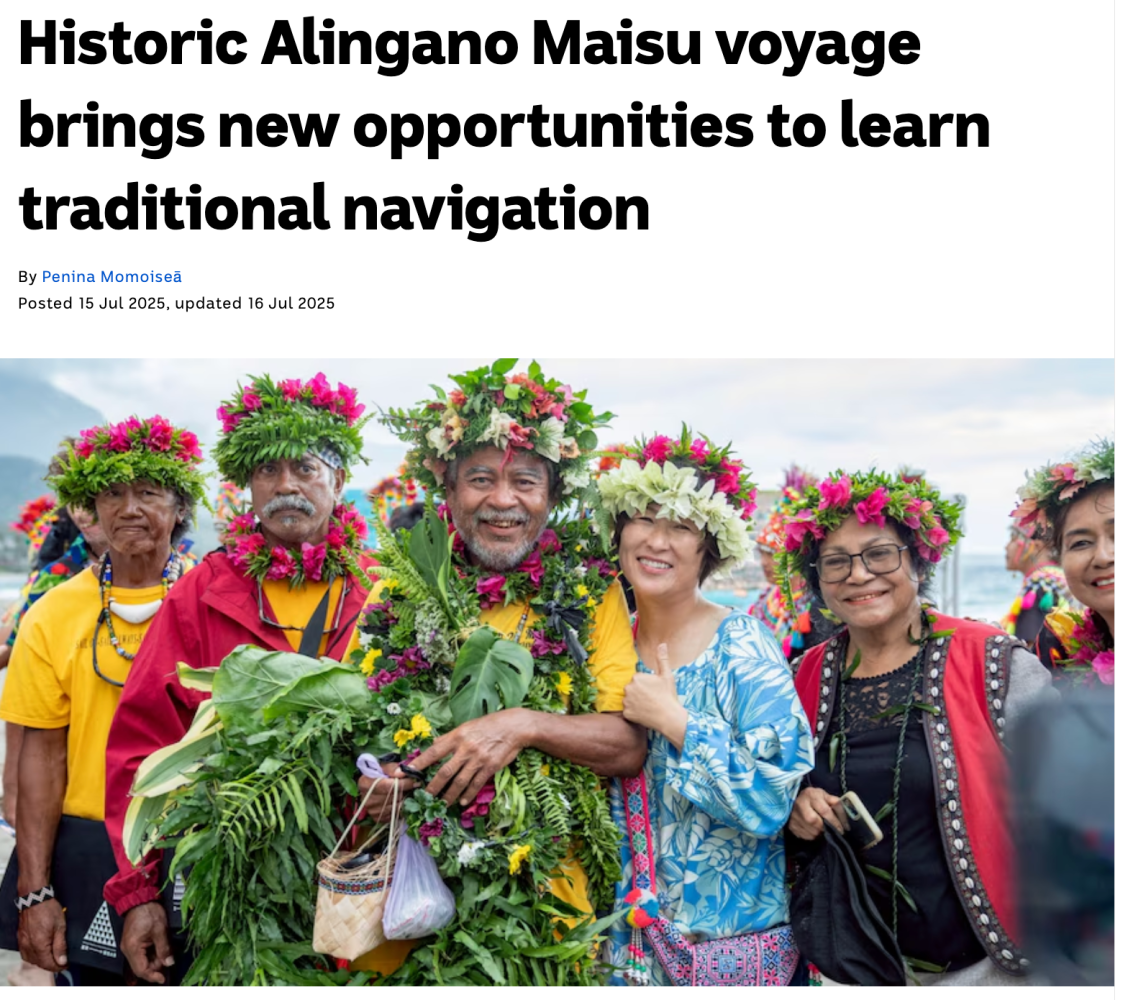
In 2025, when the Alingano Maisu made its instrument-free voyage from Palau back to Taiwan, its navigator said something that deserves to be remembered. He described the ocean not as a distance to be crossed but as a connection to be maintained. The "One Ocean, One Family" philosophy of Pacific wayfinding holds that the sea unites rather than separates, and that the obligation to return to one's origin is as natural as the obligation to depart in the first place.
Taiwan is where the Austronesian family began. The ancient script of language, DNA, and archaeology does not merely suggest this. It confirms it with a convergence of evidence so complete that Robert Blust, the world's leading Austronesian linguist, devoted his life to demonstrating it and described the dispersal from Taiwan as "one of the greatest chapters in human history." To know this is to understand Taiwan differently, not merely as a political question, not merely as a democratic society deserving of protection, but as a living site of extraordinary human meaning, as the Jerusalem of the Pacific world, as the shore from which half the ocean learned to speak.
The ancient testimony is clear. The covenant endures. And those who carry within them the traces of that first departure, whether in a Filipino village, a Maori meeting house, a Javanese gamelan circle, or a Malagasy fishing harbor, are reading, whether they know it or not, from a script that was written in Taiwan, six thousand years ago, before the first canoe pushed out from the shore and pointed south across the Luzon Strait toward a world that did not yet know it was waiting to be found.
#Taiwan #Austronesian #HumanHistory #IndigenousRights #Linguistics #Archaeology #Genetics #PacificHistory #Formosan #CulturalHeritage #Geopolitics #OutOfTaiwan #LapitaCulture #OceanicCivilization #Wayfinding #EndangeredLanguages #DeepResearch #ThoughtLeadership #Infraloka
References
- Bellwood, P. (1991). The Austronesian Dispersal and the Origin of Languages.Scientific American, 265(1), 88-93.
- Bellwood, P. (1984).The Austronesians: Historical and Comparative Perspectives. Australian National University Press, Canberra.
- Blust, R. (1999). The great diversity of Formosan languages.Language and Linguistics, Taipei: Institute of Linguistics, Academia Sinica.
- Blust, R. (1984-2019). Contributions to Austronesian Historical Linguistics. University of Hawaii, Department of Linguistics. Including "A Hypothesis for Austronesian Origins,"Asian Perspectives.
- Britannica Editors. (2000). "Lapita Culture."Encyclopaedia Britannica. Retrieved June 2026 from britannica.com.
- Chang, C.-S. et al. (2023). The genomic diversity of Taiwanese Austronesian groups: Implications for the "Into- and Out-of-Taiwan" models.PNAS Nexus, 2(5), pgad122. Oxford Academic / NIH PMC10187666.
- David, B., McNiven, I., Richards, T., and Connaughton, S.P. (2011). Lapita pottery-making and colonizers of the western Pacific.World Archaeology, December 2011. Monash University / Kwantlen Polytechnic University.
- Endangered Language Alliance. (n.d.). Austronesian Languages Project. Retrieved June 2026 from elalliance.org/projects/austronesian.
- Encyclopedia.com. (2008). Taiwan Indigenous Peoples. Adapted from: Rubinstein, M.A. (ed.)Taiwan: A New History. Armonk: M.E. Sharpe, 1999.
- EBSCO Research Starters. (n.d.). Lapita Culture.Anthropology Research Starters. Retrieved June 2026 from ebsco.com.
- Finney, B. (2003).Voyage of Rediscovery: A Cultural Odyssey Through Polynesia. University of California Press. Referenced in: A Comparative Study of Astronomical Navigation Between Ancient China and Pacific Austronesian, ResearchGate, October 2021.
- History Guild. (2022). What is the Austronesian Expansion? Retrieved June 2026 from historyguild.org.
- International Journal of Taiwan Studies. (2026). Introduction: The Austronesian Languages of Taiwan, Linguistic Heritage and Language Policies.IJTS, 9(1), p. 7. Brill Publishers.
- Ko, A. M.-S. et al. (2014). Early Austronesians: Into and Out Of Taiwan.American Journal of Human Genetics. Referenced on ResearchGate.
- Li, P.-J. (2008). The great diversity of Formosan languages.Language and Linguistics, 9(3), 523-546. Academia Sinica, Taipei.
- National Sun Yat-sen University (NSYSU). (2025). Navigating the island within: NSYSU experiences the philosophy of the Austronesian wayfinding guided by stars and waves. NSYSU News, November 2025. nsysu.edu.tw.
- Sapir, E. (1916). Time Perspective in Aboriginal American Culture: A Study in Method.Canada Department of Mines, Geological Survey, Memoir 90. Referenced in FormosanBench (2025) re: diversity-as-homeland principle.
- Taiwan Insight. (2023). An Interview with Professor Robert Blust: "Austronesian Expansion Out of Taiwan is One of the Greatest Chapters in Human History." August 2021 interview published August 2023. taiwaninsight.org.
- The Archaeologist. (2026). Ancient Seafarers: The Austronesian Expansion Across the Pacific. thearchaeologist.org, April 2026.
- UNESCO. (2003). Language Vitality and Endangerment Framework. Referenced in: International Journal of Taiwan Studies, 9(1), 2026 re: classification of Formosan languages.
- Wikipedia Contributors. (accessed 2026). Formosan Languages.Wikipedia: The Free Encyclopedia. en.wikipedia.org/wiki/Formosan_languages.
- Wikipedia Contributors. (accessed 2026). Austronesian Languages.Wikipedia: The Free Encyclopedia. en.wikipedia.org/wiki/Austronesian_languages.
- Wikipedia Contributors. (accessed 2026). Micronesian Navigation.Wikipedia: The Free Encyclopedia. en.wikipedia.org/wiki/Micronesian_navigation.
- DNAGENICS. (n.d.). Voyagers of Ocean: The Austronesian Reach. Spotlight article. dnagenics.com. Retrieved June 2026.
- Cultural Survival. (2010). The Art of Navigation.Cultural Survival Quarterly. culturalsurvival.org, June 2010.