
The Immortal Secret of the Whale By Rahmat Wibowo From Infraloka
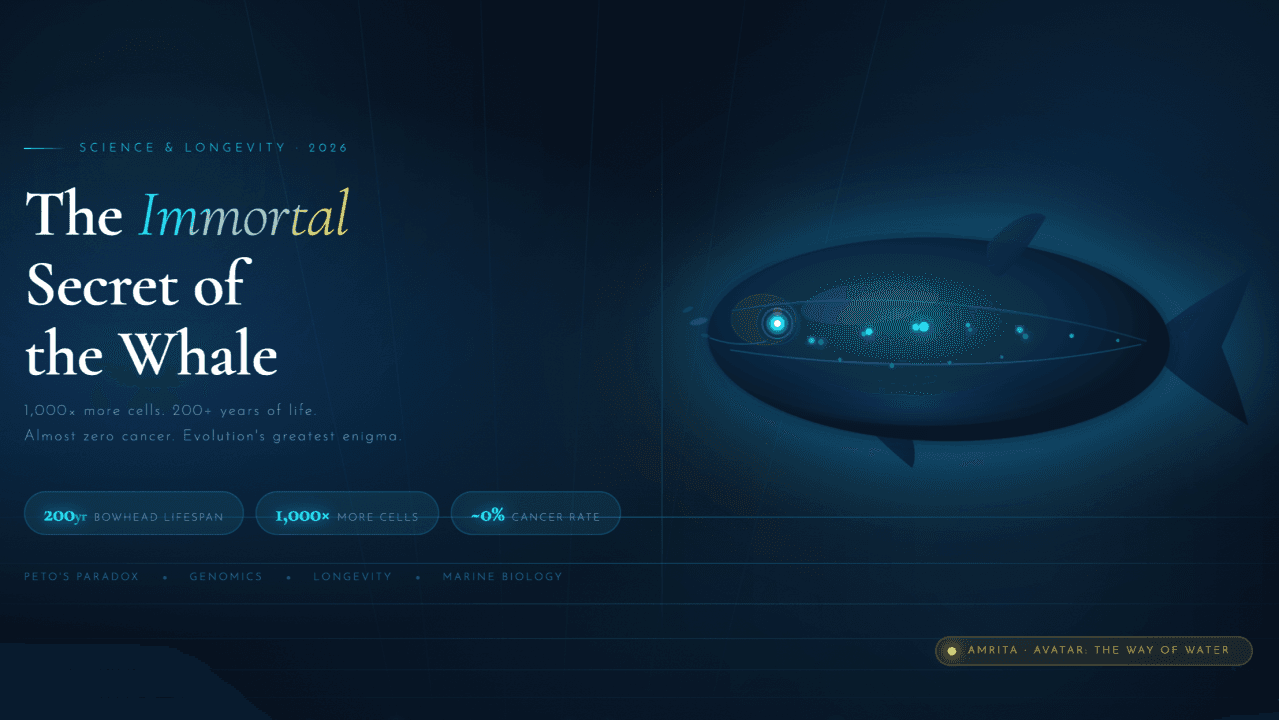
1000x more cells. 200 years of life. Almost zero cancer. Evolution's greatest enigma
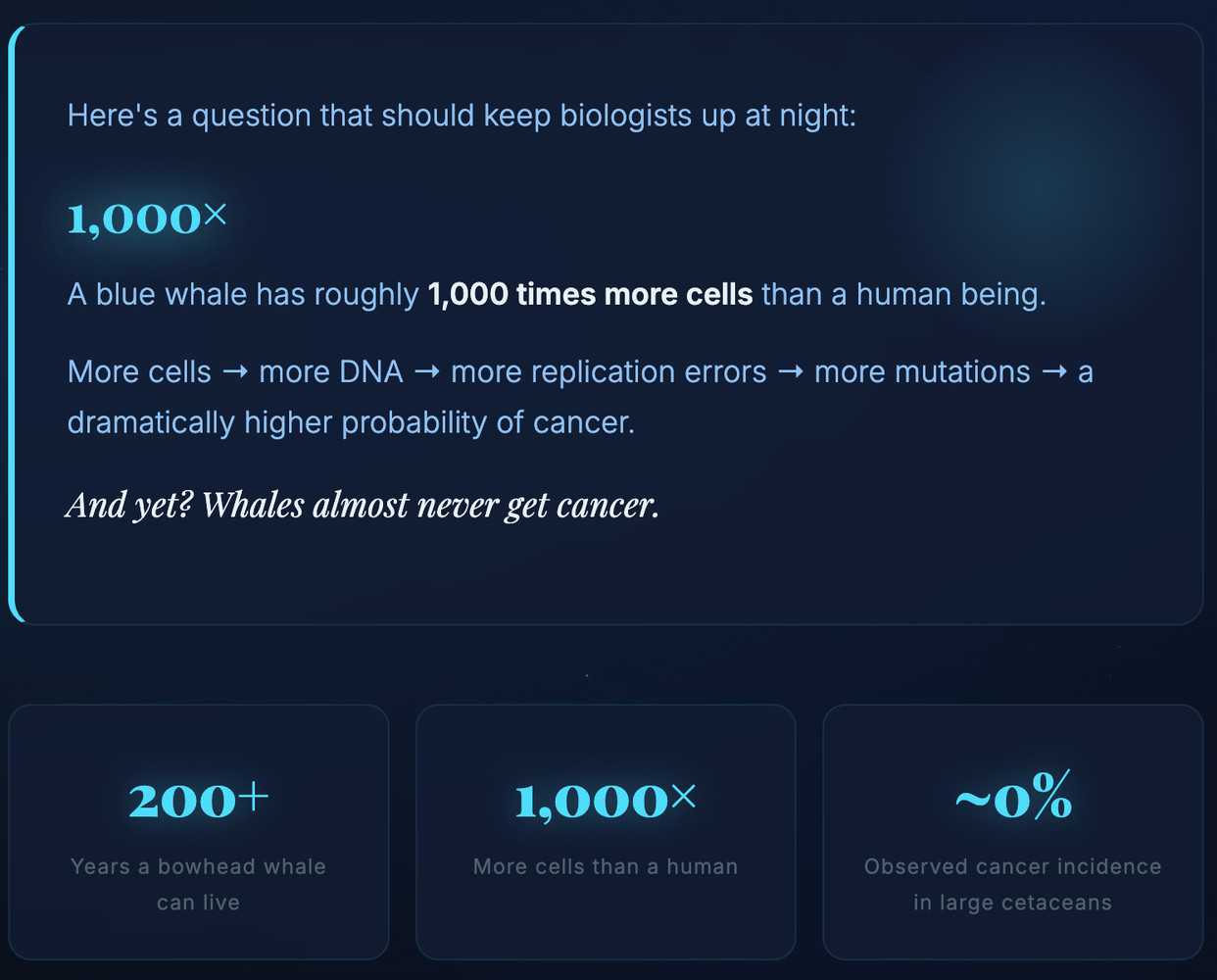
The Paradox That Rewrote Biology
1977 : Peto's Paradox
British epidemiologist Richard Peto noticed something strange: cancer rates don't scale with body size the way they should. A whale, by pure mathematics, should be riddled with tumors. An elephant should die of cancer before adulthood. They don't.
The numbers make it even more striking: the bowhead whale (Balaena mysticetus) can live for over 200 years. Two centuries of cellular division, UV exposure, metabolic stress — and their cancer rates remain remarkably, almost stubbornly, low.
So what do they know that we don't?
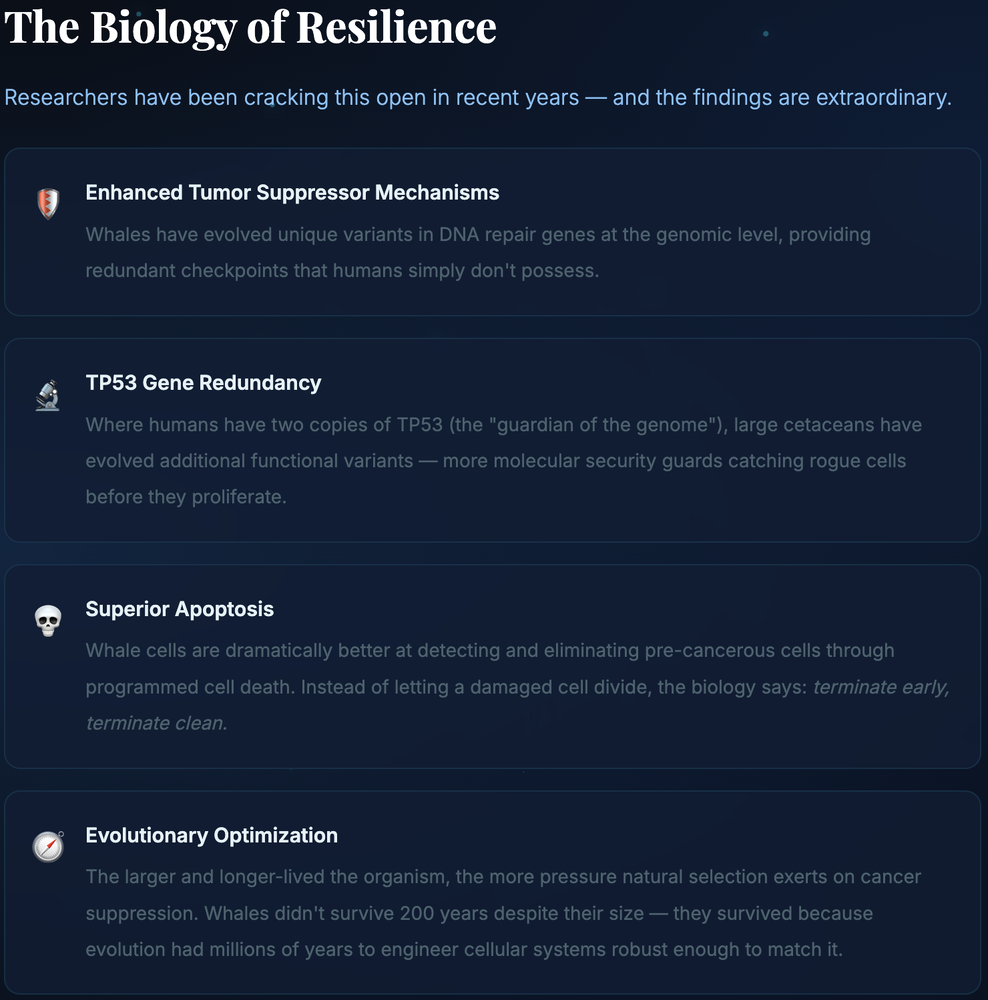
Avatar: The Way of Water
Enter Amrita — When Science Fiction Listens to Science
In James Cameron's Avatar: The Way of Water, the oceans of Pandora are home to the Tulkun — vast, sentient, whale-like beings of extraordinary intelligence and grace.
Within the Tulkun brain lies a substance: Amrita.
Amrita is harvested for its ability to halt human aging — a luminous fluid extracted from the neural tissue of these ancient creatures, capable of what no pharmaceutical compound on Earth has achieved: the reversal of cellular time.
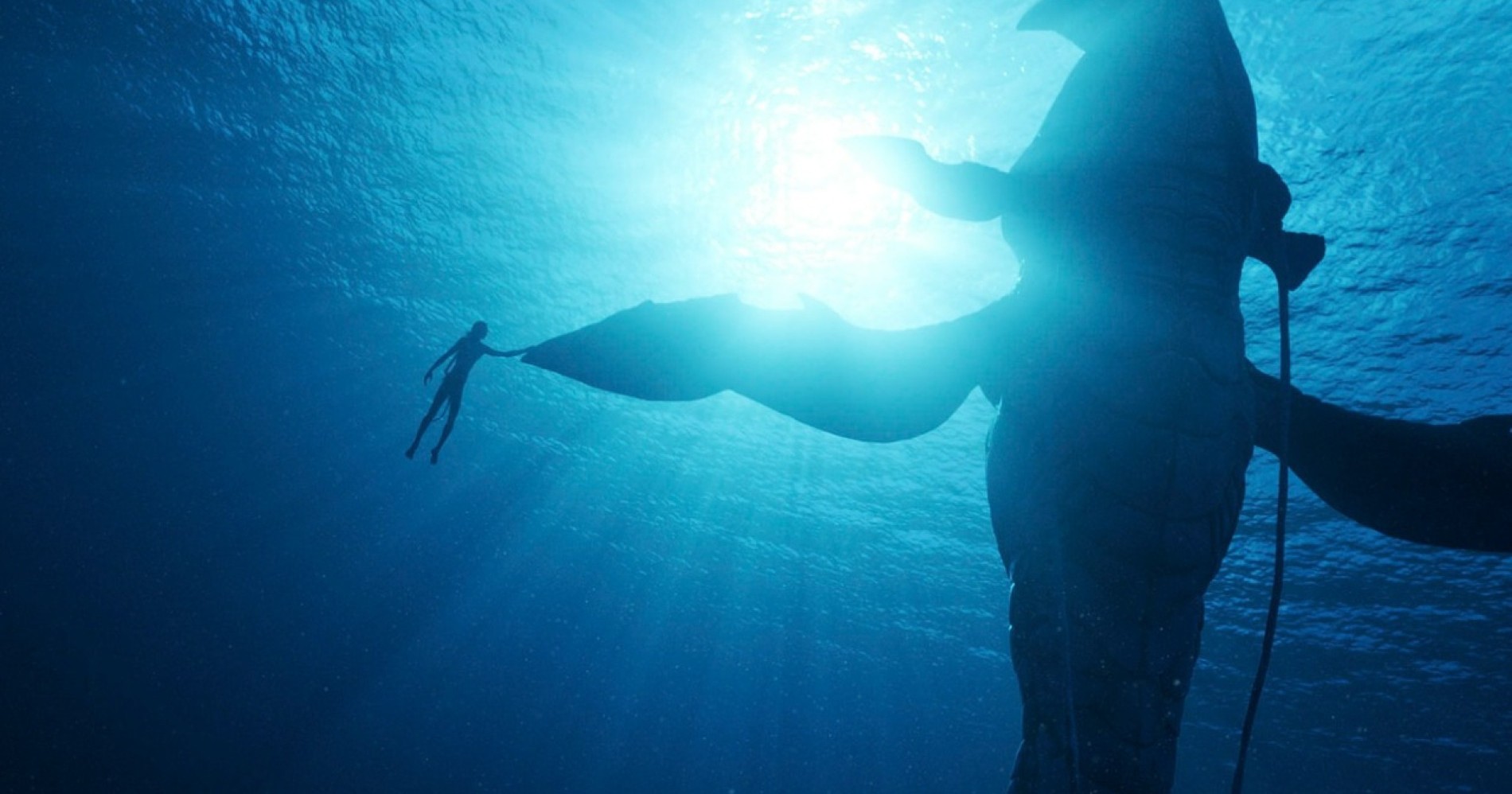
Cameron didn't pull this from thin air.
The premise of Amrita maps almost perfectly onto the real scientific frontier: the idea that the longevity mechanisms encoded in cetacean biology — the anti-cancer genes, the enhanced DNA repair pathways, the resistance to cellular senescence — could hold the molecular keys to human longevity.
Researchers are already working on this. Biotech companies and academic labs are studying whale genomes not as a curiosity, but as a blueprint. If we can understand how a whale suppresses tumor formation across 200 years and trillions of cell divisions, we might be able to engineer analogous mechanisms into human therapeutic frameworks.
The Tulkun are fiction. The principle behind Amrita is not.
What This Means for Medicine
We are at the beginning of a new era in longevity science — one that looks to the natural world not for inspiration, but for answers that evolution has already worked out.
Whales have been running a 50-million-year clinical trial in cancer suppression and longevity. The results are published — not in a journal, but in their genomes.
The translational questions now:
1Can we identify the specific genetic variants that confer whale-like tumor resistance?
2Can those mechanisms be introduced into human cell lines without unintended consequences?
3Is there something in the neural biochemistry of long-lived cetaceans — something that behaves like Amrita — that encodes resistance to neurodegeneration and aging?
The intersection of genomics, evolutionary biology, and longevity medicine is one of the most exciting frontiers in science today. And in a strange way, a blockbuster film about whale-hunting on an alien moon may have done more to bring public attention to this research than a decade of academic papers.
They didn't achieve it through luck. They achieved it through billions of years of relentless evolutionary optimization, encoded in every cell of their vast, remarkable bodies. We are just beginning to read the manual.
What do you think — is the future of human longevity hidden in the biology of the ocean's giants?
#Longevity#CancerResearch#MarineBiology#BioTech#PetosParadox#Avatar#ScienceAndCulture#FutureOfMedicine#Genomics