
The Last Missing Link: When God Rewrote the Genome By Rahmat Wibowo From Infraloka
How Chromosome 2, LUCA, Denisovans, Neanderthals, and Human Migration converge into the most extraordinary argument for divine intelligence in the history of science
Science and faith are not enemies. They are two lenses aimed at the same extraordinary truth. And nowhere is that truth more staggering than when you stand at the intersection of human genomics, paleoanthropology, ancient scripture, and evolutionary biology, and realize they are all telling the same story.
This is a long article. Read it to the end. Because by the time you finish, you will understand why the human genome itself is one of the most powerful arguments for the existence of a Creator that biology has ever accidentally produced.
Part I: Before the Beginning, There Was One
LUCA: The Last Universal Common Ancestor
Before Homo sapiens. Before the great apes. Before multi-cellular life. Before the Cambrian explosion. There was a single entity that all life on Earth traces back to. Scientists call it LUCA: the Last Universal Common Ancestor.
LUCA was not the first organism, nor was it necessarily simple. Based on genomic analyses published in Nature Microbiology (2016) by Weiss et al., LUCA already possessed a surprisingly complex biochemistry: a genetic code, ribosomal RNA, DNA replication machinery, and energy-producing membrane proteins. It lived approximately 3.8 to 4.0 billion years ago, likely in hydrothermal vents on the ocean floor, where geochemical gradients provided the energy to drive the first metabolic reactions.
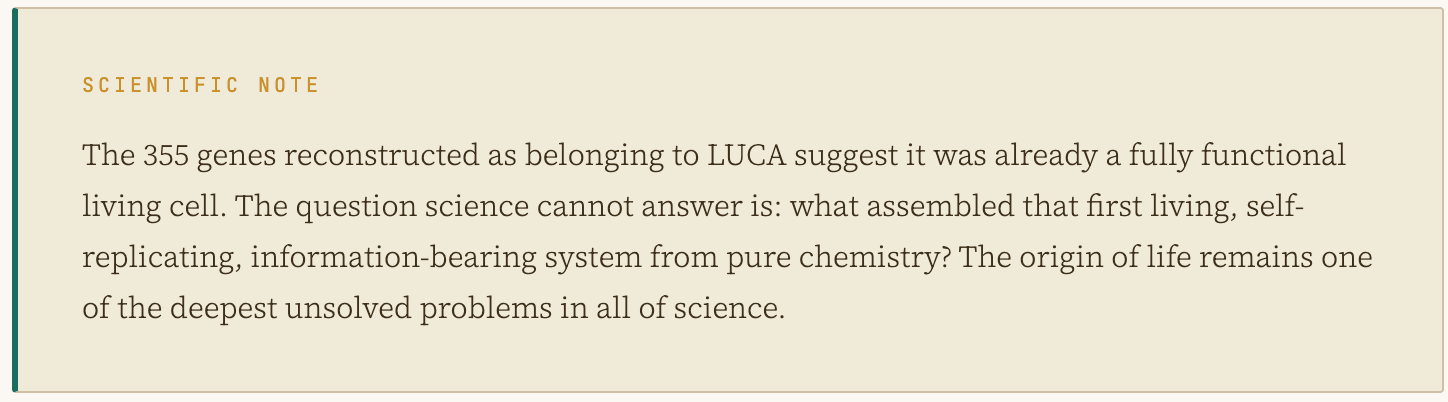
From LUCA came the three domains of life: Archaea, Bacteria, and eventually Eukarya. From Eukarya came the lineage that led to animals, then vertebrates, then mammals, then primates, then hominins, then us.
That entire 4-billion-year journey, compressed into a single sentence, obscures an almost incomprehensible chain of biological events, selective pressures, extinctions, duplications, and mutations. And at one specific moment in that chain, something happened that science can identify with precision but cannot fully explain. Something happened to chromosome 2.
Part II: The Chromosome 2 Problem
The Fingerprint of a Divine Intervention
Every great ape alive today, including chimpanzees, gorillas, orangutans, and bonobos, has 48 chromosomes, organized into 24 pairs. Humans have 46 chromosomes, in 23 pairs. This is a fundamental difference at the most basic level of genomic architecture.
For decades, creationists used this as evidence against common ancestry. If we evolved from apes, why do we have a different chromosome count? The answer that emerged from molecular biology in the 1980s and was definitively confirmed by genome sequencing in the 2000s is both scientifically elegant and, depending on your philosophical lens, theologically astonishing.
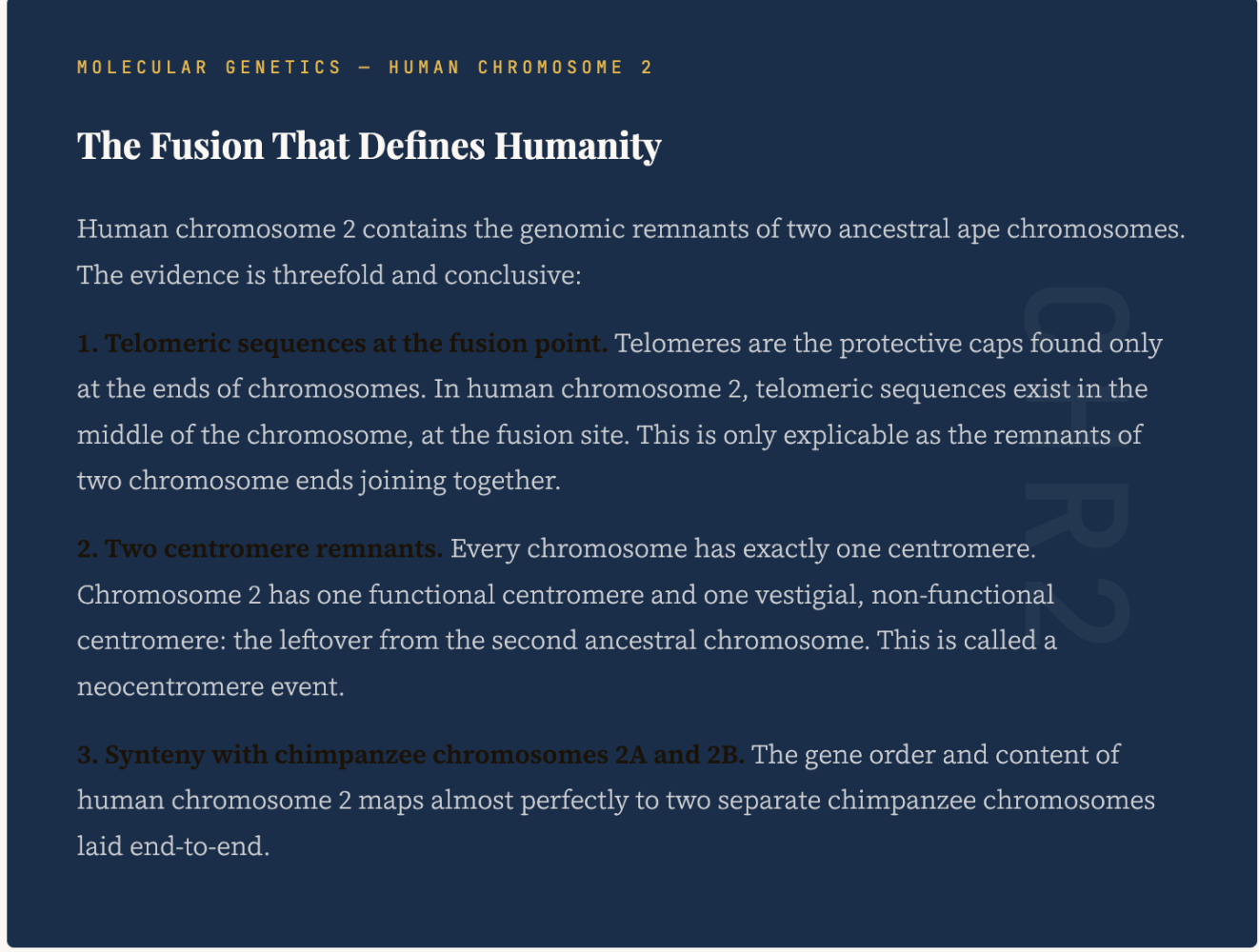
This is the "chromosome 2 problem" for strict anti-evolution theology. But here is where the theological narrative becomes far more interesting than the textbook science suggests.
The Probability Problem: Why This Could Not Have Been Random
Chromosomal fusions are extremely rare events. When they occur in a population, the fused individual has an odd number of chromosomes compared to mates, meaning reproductive isolation is an immediate barrier. A single individual with the fusion would, in almost all scenarios, fail to reproduce successfully with the wider population carrying 48 chromosomes.
For this fusion to become fixed in a population, multiple highly improbable things must have occurred simultaneously: the fusion event happening in a viable way, the carrier surviving and reproducing, the fusion spreading through a small bottleneck population rapidly enough to avoid being lost to genetic drift, and the new configuration being either selectively neutral or advantageous.
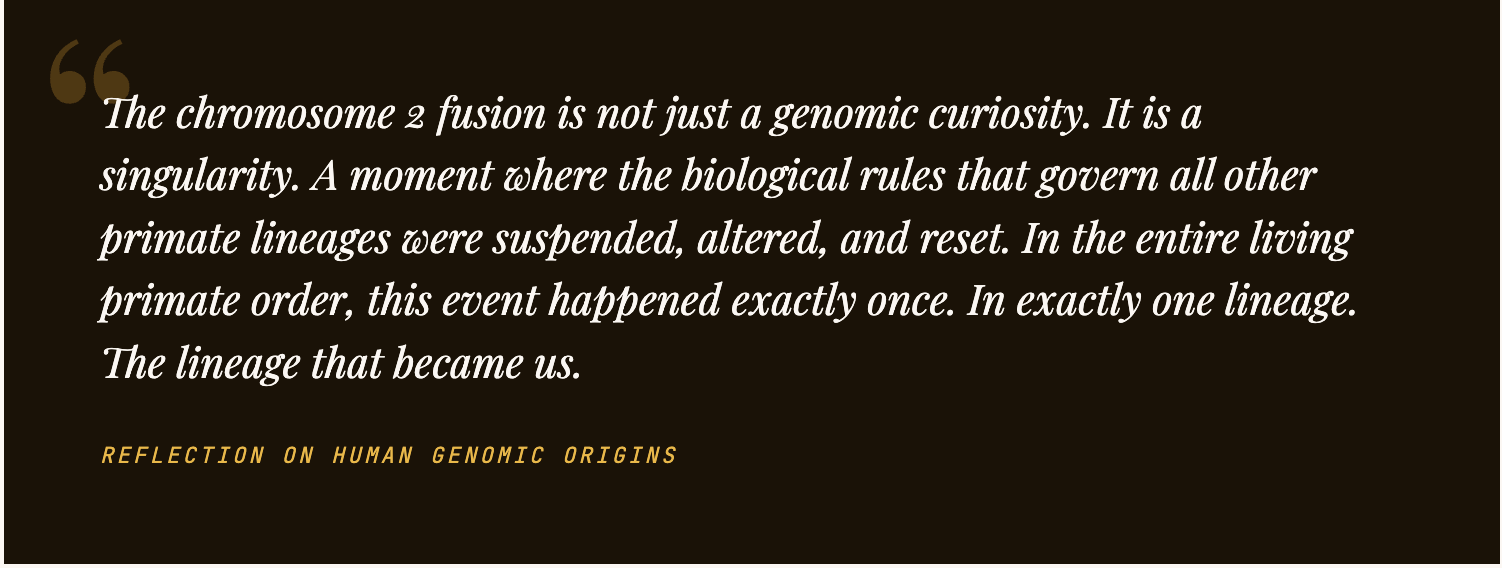
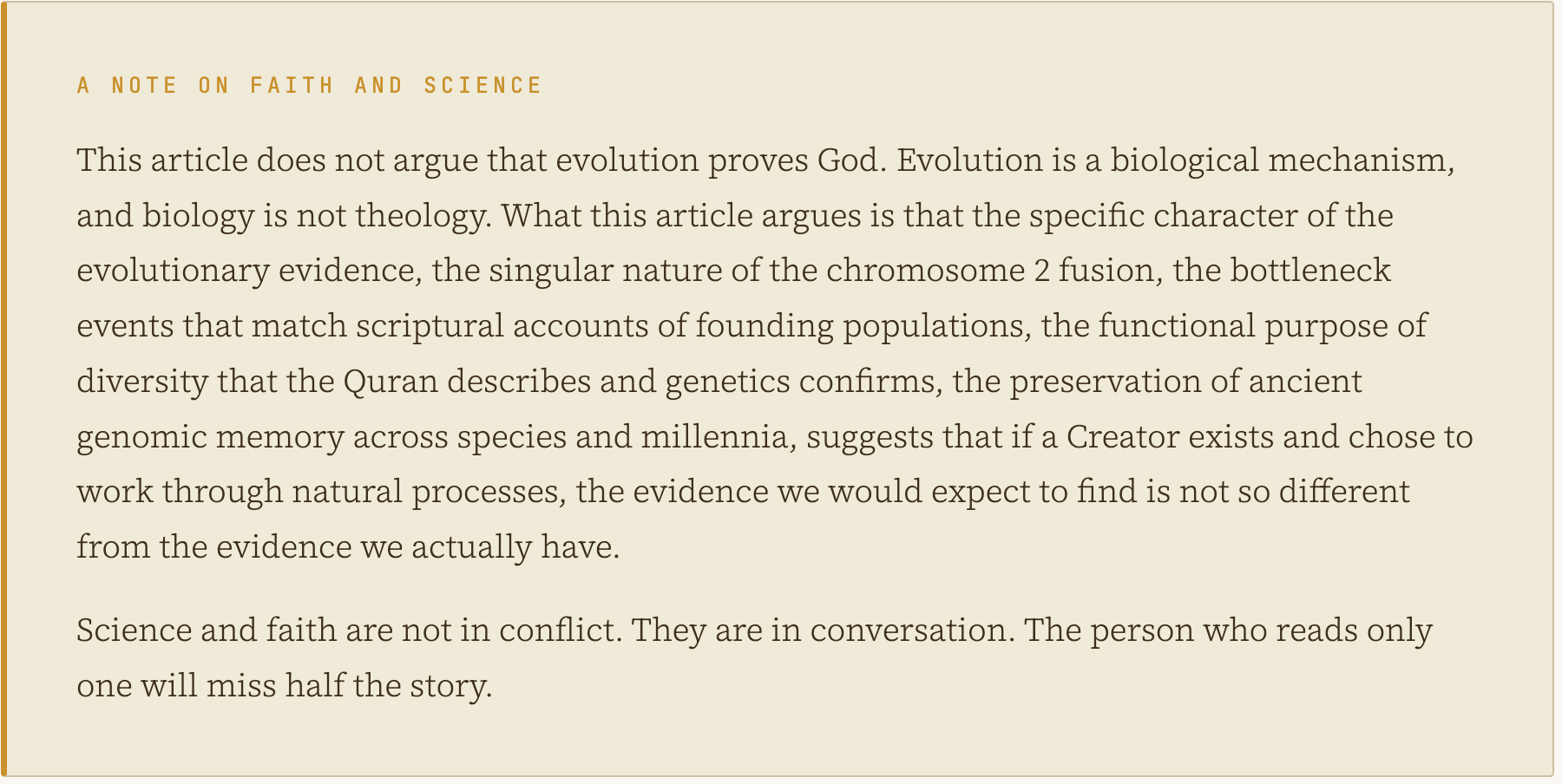
Consider this theologically: if the Abrahamic traditions hold that Adam was a special creation, a being distinct from, and elevated above, the animals that preceded him, then the genomic evidence for a single bottleneck event involving a chromosomal restructuring of unprecedented nature in the primate lineage is not a contradiction of faith. It is a description, in the language of molecular biology, of exactly what those traditions describe.
A creator who works through natural processes, who uses the machinery of evolution over billions of years, and then at a precise moment intervenes at the molecular level to restructure the genome of a small ancestral population and catalyze the emergence of a qualitatively new kind of being, is not a contradiction of science. It is a hypothesis that science, alone, cannot rule out.
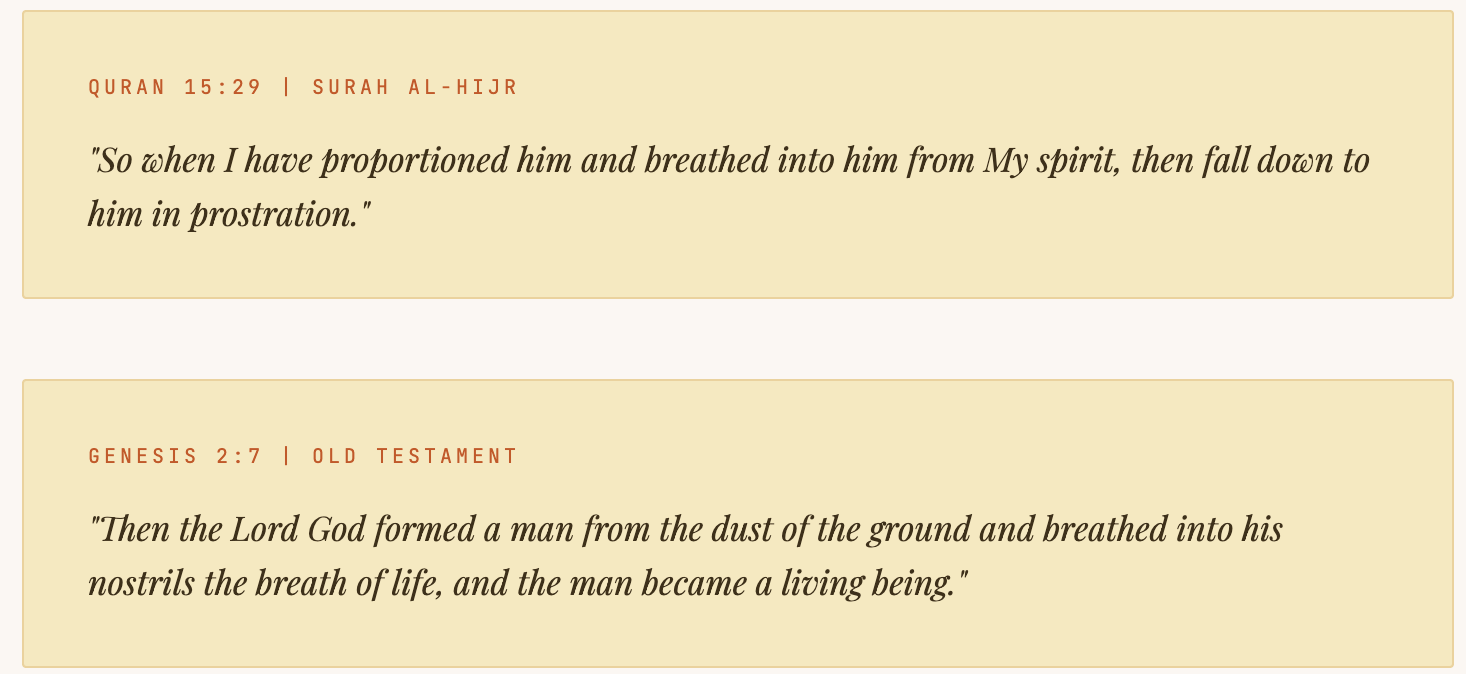
The "breath of life" that separated Adam from what came before: genomic, neurological, linguistic, and spiritual. The chromosome 2 fusion is, in this reading, the molecular scar of that divine breath.
Part III: The Other Humans
We Were Never Alone
One of the most profound revolutions in paleoanthropology over the last two decades is the realization that Homo sapiens did not emerge into an empty world. For most of our evolutionary history, multiple hominin species existed simultaneously, competed for resources, migrated across continents, and crucially, interbred.
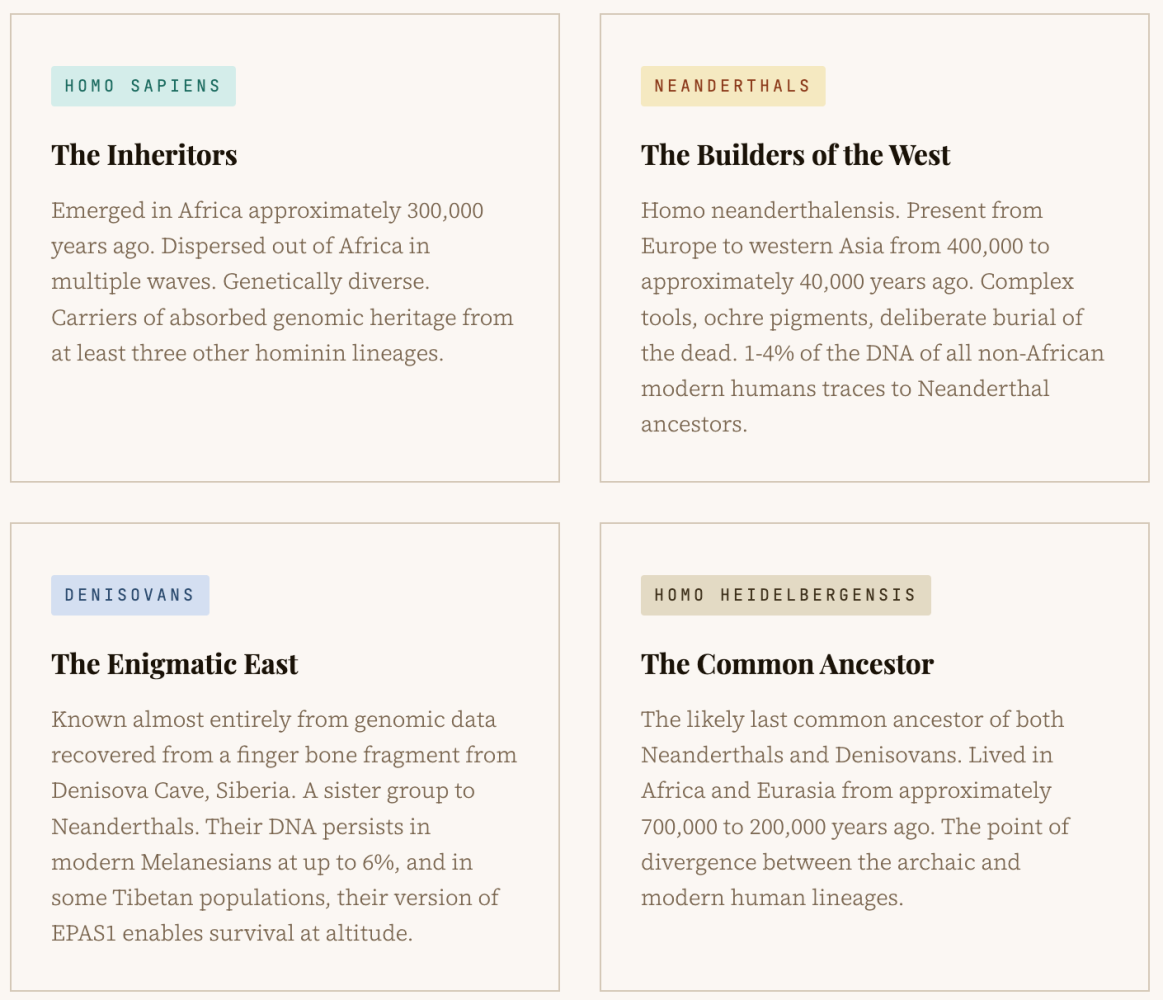
Neanderthals: The People of the Scripture's Periphery
Neanderthals were not the brutish cave-dwellers of popular imagination. Evidence from sites across Europe and the Middle East demonstrates intentional burial practices with offerings, symbolic use of color and pigment, the creation of jewelry and personal ornament, and control of fire for complex food preparation. They nursed their injured and elderly. They were, by any reasonable definition, people.
They interbred with Homo sapiens extensively. The mixing occurred most intensively in the Levant, the crossroads of the ancient world, the geographic heart of all three Abrahamic faiths. The populations described in the Old Testament narratives as "the peoples of the land," the various pre-Israelite cultures of Canaan and the surrounding regions, were the descendants of exactly these mixing events.
Denisovans: The Hidden Inheritance
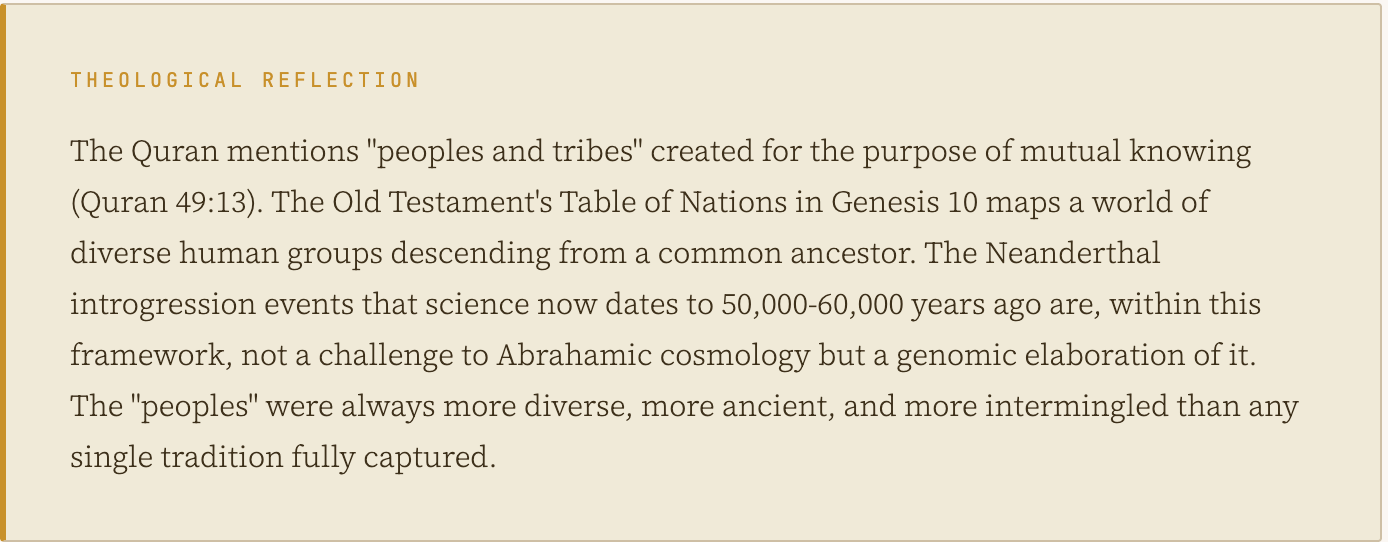
The Denisovans represent perhaps the most remarkable discovery in the history of paleoanthropology: a species identified almost entirely through its DNA, not its bones. Of all the physical evidence recovered from Denisovans, it amounts to fragments of three individuals. And yet their genome has been sequenced to higher coverage than many living humans.
The Denisovan story intersects with scripture in ways that are worth lingering on. The Book of Enoch, a text revered in Ethiopian Christianity and influential on both the Dead Sea Scrolls and early Islamic commentary, describes a pre-Flood world populated by hybrid beings, the Nephilim, born of the union between the "sons of God" and the "daughters of men." Whatever the original theological meaning of this passage, it preserves a cultural memory of a world where different categories of human-like being coexisted and produced offspring.
Denisovans and Neanderthals interbred not just with Homo sapiens, but with each other. The genome of the Denisova Cave individual known as "Denny" (Denisova 11) revealed she was the direct first-generation offspring of a Neanderthal mother and a Denisovan father. The "sons" and "daughters" of different lineages, creating children who carried genomic signatures from multiple worlds.
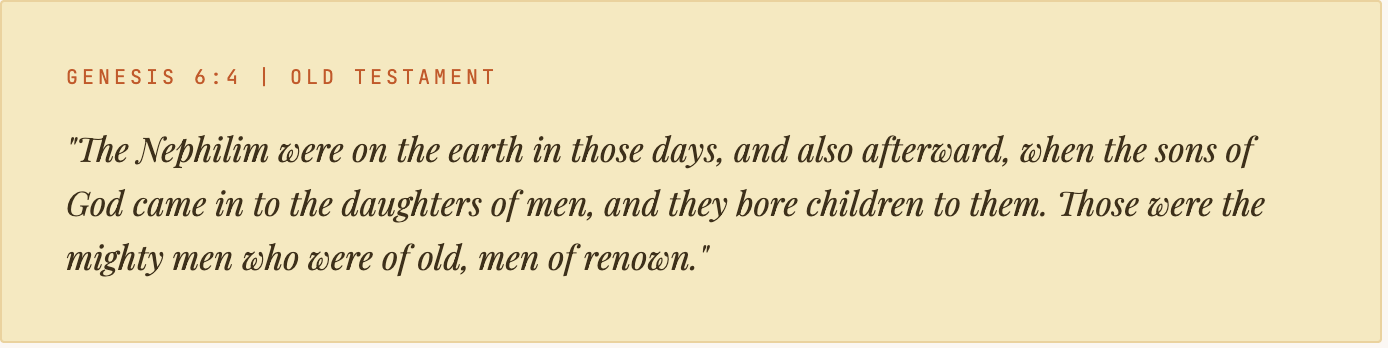
Modern Tibetans carry a Denisovan variant of the EPAS1 gene that allows their hemoglobin to function efficiently at altitudes above 4,000 meters. Without this gift from a people who vanished 50,000 years ago, the Tibetan plateau, home to one of the world's great civilizations and the roof of the world's spiritual traditions, may never have been inhabited at all. The Denisovans built the biological foundation upon which Buddhist monasteries would one day stand.
Part IV: Out of Africa, Into History
The Migration That Created the Modern World
The evidence from genomics, archaeology, and linguistics converges on a fundamental truth about our species: all living non-African humans descend from a relatively small group of Homo sapiens who left Africa sometime between 70,000 and 55,000 years ago, in what is called the Out of Africa migration or the Late Pleistocene dispersal.
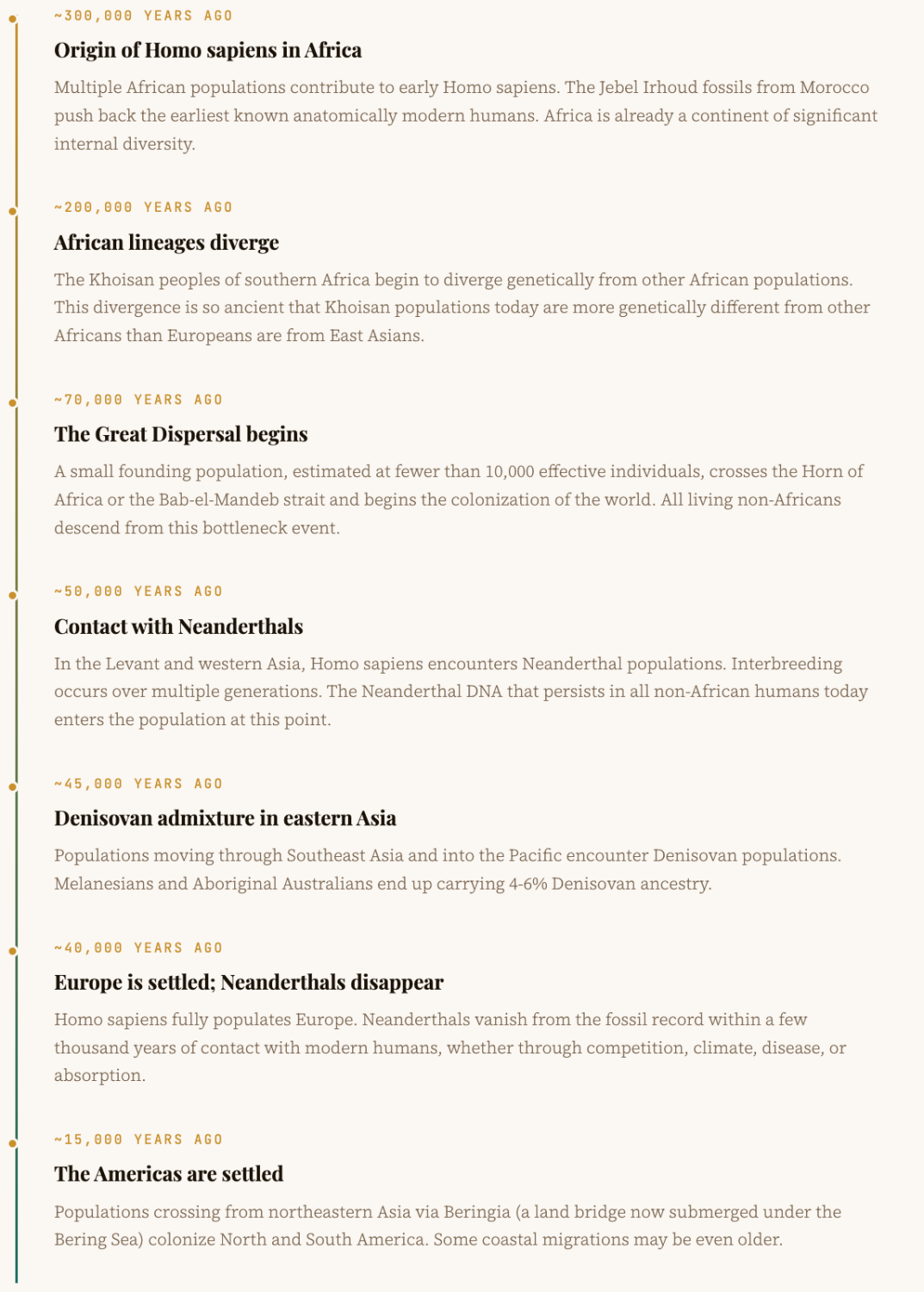
The African Diversity Paradox: Why We Are More Like Europeans Than Like Africans
One of the most counterintuitive findings of human population genetics is this: if you take a random person from Europe and a random person from East Asia and measure how genetically different they are, they will be far more similar to each other than either is to a randomly selected Khoisan person from southern Africa, or a member of the Hadza people of Tanzania.
This seems to contradict the historical intuition that "African" and "European" should be maximally different. The explanation reveals something profound about human history.
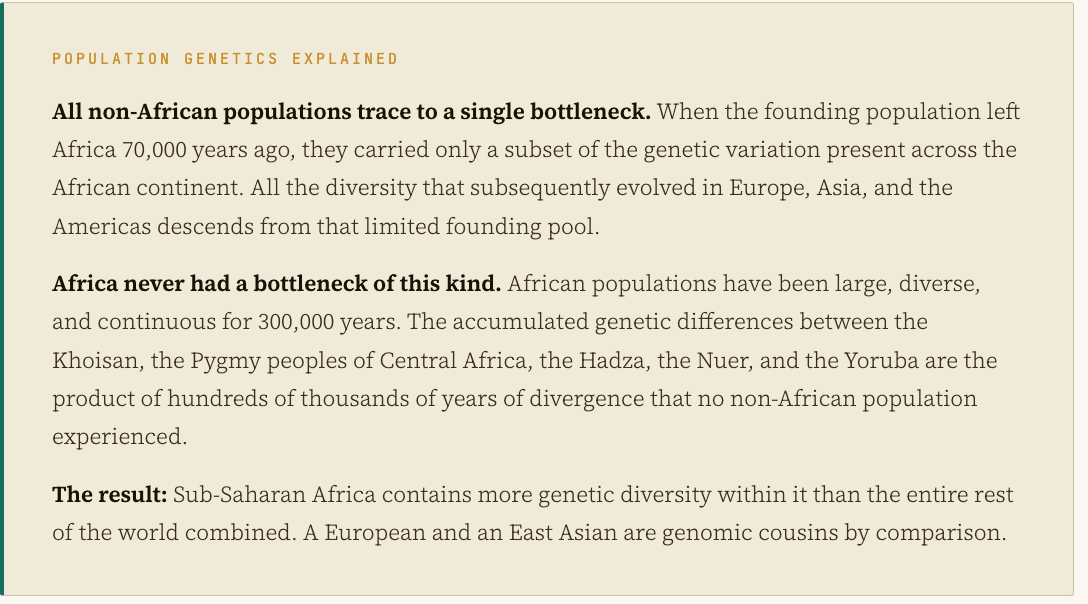
This is the genomic case against racism in its most literal biological form. The populations historically subjected to the worst racialized violence, Africans, represent the deepest, oldest, and most genetically diverse branch of humanity. They are not a branch. They are the root, the trunk, and most of the tree. Everyone else is a leaf.
Part V: Language as a Biological Calendar
When Words Become Data
Linguists have developed methods for using language as a chronometric tool, a way of estimating when populations diverged based on how much their languages have drifted apart. The most well-developed of these approaches, lexicostatistics and glottochronology, use the rate at which basic vocabulary changes over time to estimate the depth of divergence between related languages.
The core insight is that certain concepts are so fundamental to human cognition that every language independently develops words for them: mother, father, water, fire, hand, eye, death, eat, sleep. These words change at a roughly predictable rate. By comparing how many basic vocabulary items two languages share, linguists can estimate how long ago they diverged.
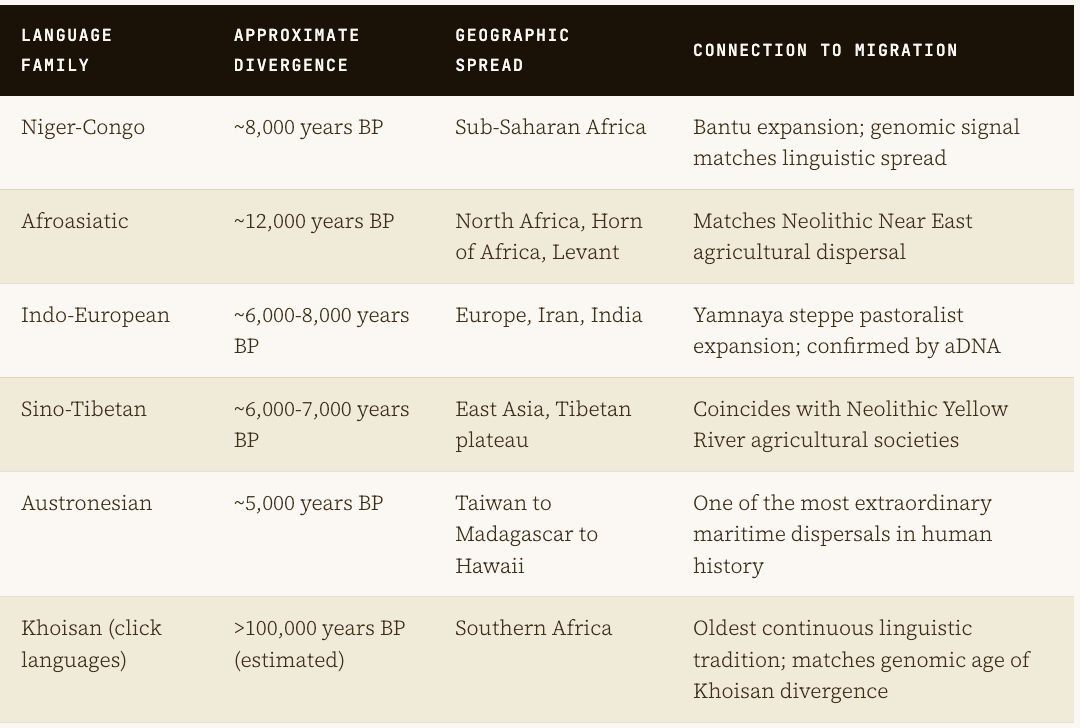
Language, genetics, and archaeology tell a mutually corroborating story. When an archaeological culture spreads, when farming techniques or tool technologies diffuse across a landscape, the genetic and linguistic data almost always show a corresponding movement of people. The story is not just cultural diffusion. It is human beings, carrying their children, their seeds, their words, and their genomes, walking across the face of the Earth.
The capacity for language itself is the most distinctive cognitive feature of Homo sapiens. No other animal has recursive syntax: the ability to embed clauses within clauses, to speak of hypotheticals, to discuss the past and imagine the future, to ask "why." The FOXP2 gene, often called "the language gene," was also carried by Neanderthals in a modern human form, suggesting they too may have had sophisticated vocal communication. But the full recursive complexity of human language appears to be ours alone.
In the Quran, the first divine act toward Adam after creation is an instruction in names: "And He taught Adam the names of all things" (Quran 2:31). Language as the inaugural gift of humanity. Language as the marker of a being that is not merely animal. The genomics of language evolution do not contradict this. They illustrate its biological substrate.
Part VI: The Price of Isolation
When a Population Closes Its Genome
Genetic diversity is not merely a metric. It is a survival resource. Populations that remain isolated for long periods lose genetic variation through a process called genetic drift: random fluctuations in allele frequencies that, over generations, cause certain variants to disappear entirely from the gene pool regardless of whether they were advantageous or not.
The consequences are not theoretical. They are visible in immune system diversity, in the capacity to resist new pathogens, in developmental variation, in the resilience that allows a population to respond to environmental change. A population that has been isolated for many generations becomes, in a genetic sense, brittle.
The Most Genetically Isolated Populations on Earth
- **Sentinelese (North Sentinel Island, Andaman Islands, India)**The most isolated human population on Earth. Estimated population: 50-400 individuals. Zero known admixture with outside populations for an estimated 50,000-60,000 years. Their genetic bottleneck is extreme. No known contact since the Out of Africa migration wave that settled the Andaman archipelago. Any future disease exposure they have not previously encountered carries catastrophic risk.
- **Andaman Islander populations (Great Andamanese, Onge, Jarawa)**Among the oldest isolated populations outside Africa. Descend from some of the earliest Out of Africa migrants. The Great Andamanese have experienced severe population collapse since contact with colonizers in the 19th century: from an estimated 10,000 to fewer than 100 today. Genomic isolation combined with population collapse creates extreme vulnerability.
- **Pirahã (Amazon basin, Brazil)**Remarkable for both genetic and cultural isolation. Their language is among the most linguistically unusual on Earth: no recursion, no numbers, no color terms beyond light and dark, no creation myth. Their extreme cultural insularity correlates with significant genetic isolation from surrounding Amazonian groups.
- **Yanomami (Venezuela and Brazil border)**One of the most studied isolated populations. Significant founder effects. When their blood was first sampled by geneticists, they lacked many of the antibodies present in most human populations globally. Contact with outsiders brought devastating epidemics that killed large proportions of entire villages within months.
- **Kalash (Chitral, Pakistan)**A small population of around 4,000 in the Hindu Kush mountains. Distinct phenotype, distinct religion (a form of pre-Islamic Indo-Iranian polytheism), and significantly reduced genetic diversity relative to surrounding South Asian populations. Their origin has been debated, with some analyses suggesting very ancient divergence from other South Asian populations, possibly pre-Aryan.
- **Tristan da Cunha islanders (South Atlantic, UK territory)**Founded by a small number of British settlers in the early 19th century. The entire population of approximately 300 descends from about 15 founders. Documented founder effect diseases including asthma, glaucoma, and retinitis pigmentosa occur at rates many times higher than in the general population.
- **Pitcairn Islanders (South Pacific, UK territory)**Descendants of the Bounty mutineers and their Tahitian companions. A population of fewer than 50 today with documented consanguinity effects. Without continued admixture from the outside world, the genetic trajectory of this population is concerning.
- Aboriginal Australians from geographically isolated communitiesWhile Aboriginal Australians as a whole represent the oldest continuous culture on Earth (~50,000+ years in Australia), specific communities in the most remote desert and island regions show significant differentiation even from other Aboriginal groups, representing tens of thousands of years of relative isolation.
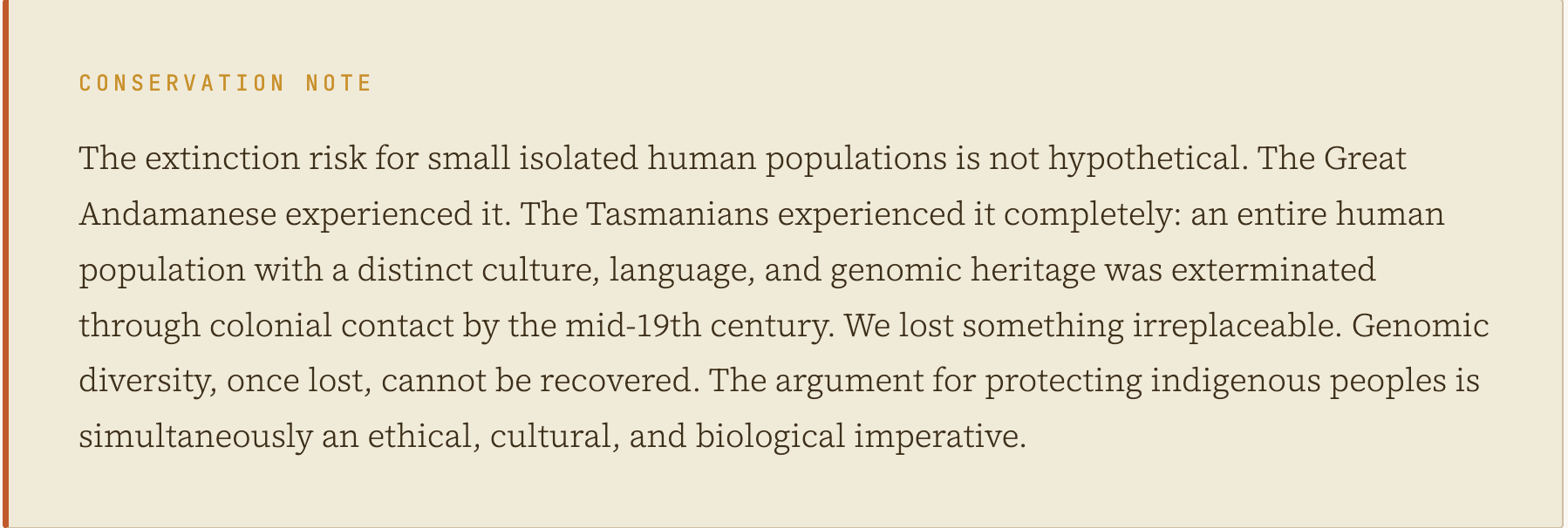
Part VII: The Genomic Case for Diversity
Why Racism is Scientifically Incoherent and Biologically Destructive
Racism as a system of thought rests on a claim that can be stated precisely: that human populations differ from each other in ways that are meaningful, hierarchical, and stable. That some groups are fundamentally more capable, more valuable, or more fully human than others.
Population genetics does not support this. What it does show is something more nuanced and more interesting: that human populations differ in the frequencies of certain genetic variants, that these differences reflect specific historical trajectories, adaptive pressures, and founder events, and that the variation between populations is trivially small compared to the variation within any population.
The famous estimate from Richard Lewontin's 1972 analysis, subsequently refined by many subsequent studies, holds that approximately 85-90% of all human genetic variation exists within populations, not between them. The genetic differences between a Yoruba person and a Norwegian person are, on average, smaller than the genetic differences between two randomly chosen Yoruba people.
But there is a deeper argument. Genetic diversity is the immune system of our species. The pathogen that kills a genetically homogeneous population may be deflected by a genetically diverse one. The environmental stress that wipes out a narrow-adapted lineage may be survived by a broadly-adapted one. The cognitive or behavioral trait that becomes maladaptive in one environment may be the salvation of the species in another.
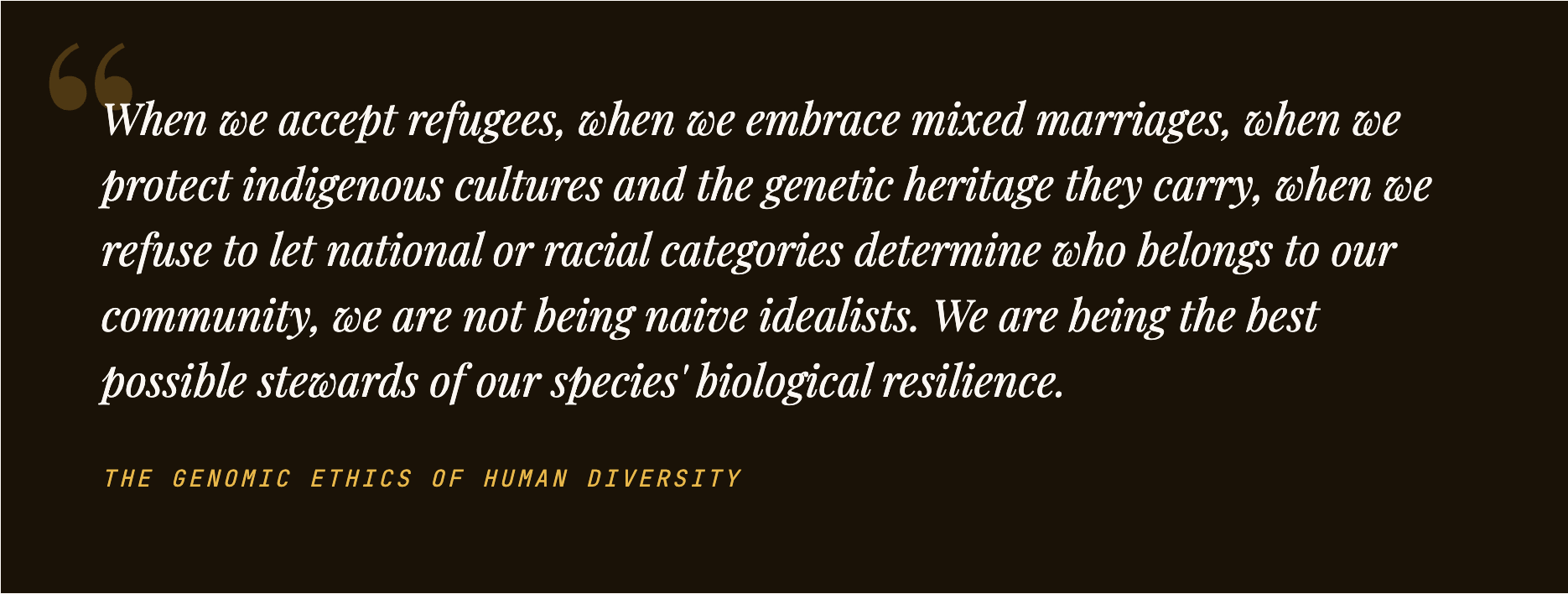
The Neanderthal genes that give Europeans and Asians better immune responses to certain pathogens are a gift from a people who were not Homo sapiens. The Denisovan gene that allows Tibetans to breathe at altitude is a gift from a people even further removed. Our species survived because it mixed. Because it absorbed. Because it did not refuse the biology of the stranger.
The tribes that closed themselves off genetically face extinction rates dramatically higher than those that remained open. The civilizations that drew on the widest genetic and cultural pools produced the deepest intellectual traditions. Athens drew on Egyptians, Persians, and Lydians. Baghdad under the Abbasids brought together Arab, Persian, Greek, Indian, and Central Asian traditions. The Malay world at its height was the most cosmopolitan crossroads on Earth. The United States, for all its historical sins, built its scientific and economic engine largely on the genius of immigrants who carried genetic and intellectual diversity from every corner of the world.
The Quranic Synthesis
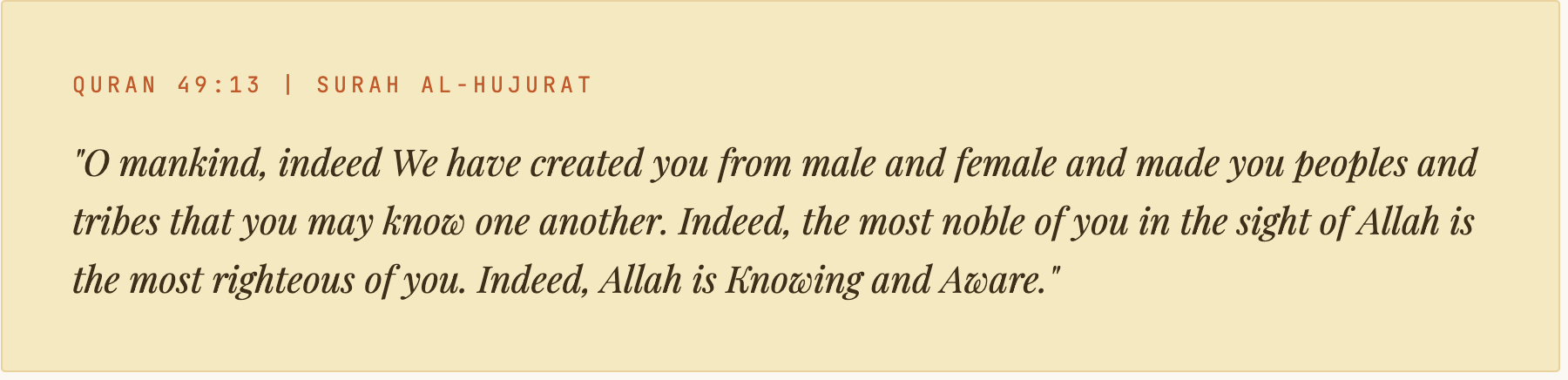
The Arabic verb used here for "peoples and tribes" is shu'uban wa qaba'il, encompassing both large ethnic groupings and smaller tribal subdivisions. The purpose of this diversity is explicitly stated: li ta'arafu, "so that you may know one another." Not so that some may dominate others. Not so that one may be deemed superior. But for the purpose of mutual knowing, mutual recognition, mutual exchange.
The Quran articulates, fourteen centuries before population genetics existed, the functional reason for human diversity. It is not an accident. It is not a curse. It is a design feature.
Part VIII: Synthesis
Reading the Genome as Sacred Text
Let us reassemble the narrative from LUCA to now.
Four billion years ago, in a hydrothermal vent, chemistry crossed the threshold into life. Whatever caused that first self-replicating molecule to form in the precise conditions necessary for life to emerge remains, after a century of biochemistry, unknown. From that moment, through billions of years of branching, diversifying, dying, and innovating, life populated every environment on Earth.
Somewhere between 6 and 8 million years ago, a lineage of African apes diverged. One branch became chimpanzees and bonobos. Another began the long hominid journey through Ardipithecus, Australopithecus, Homo habilis, Homo erectus, Homo heidelbergensis, Neanderthal, Denisovan, and finally, us.
At some point in that lineage, a chromosomal fusion occurred that restructured the genome in a way never seen in any other primate. A population of carriers of this new genomic configuration survived, reproduced, and diverged. That population eventually gave rise to Homo sapiens.
Two hundred to three hundred thousand years ago, in Africa, the species that would inherit the Earth emerged. It was diverse from its first moment. It mixed with archaic populations. It absorbed Neanderthal resilience, Denisovan altitude adaptation, and the accumulated genetic wisdom of lineages that had been adapting to different environments for hundreds of thousands of years.
Seventy thousand years ago, a small group left Africa and began walking toward every horizon. They were few. They were genetically bottlenecked. And they were, in a deep biological sense, the inheritors of everything that had come before them: LUCA's chemistry, the ape lineage's body plan, the chromosomal reorganization that made language and abstract thought possible, the Neanderthal immune architecture, and the Denisovan high-altitude toolkit.
They became us. Every person alive today carries this entire history in every cell of their body.
Conclusion: The Choice Before Us
We are a species that nearly went extinct multiple times. A species that survived by mixing, by absorbing, by refusing the genetic death of isolation. A species whose greatest cognitive gifts, language, abstract thought, symbolic reasoning, came bundled with a restructured chromosome in a founder population small enough that its entire lineage traces to what may have been a single individual or a handful of individuals in a single generation.
We are the descendants of migrations, interbreedings, absorptions, adaptations, and survivals that stretch back to the beginning of cellular life itself. Every time in our history that we have drawn hard lines around who counts as "us," we have diminished ourselves biologically, culturally, and morally.
The genomic evidence is unambiguous: diversity is survival. The theological evidence, across three of the world's great scriptural traditions, converges on the same point: humanity was made diverse so that we could know each other.
The tribes that closed their genomes are dying. The traditions that closed their minds to the findings of honest inquiry have produced nothing that the world will remember. The civilizations that mixed, debated, traded, and welcomed the stranger's biology and the stranger's knowledge are the ones that built the foundations on which we all stand.
Accept the science. Embrace the diversity. Read your genome as the sacred record it is: four billion years of continuous life, written in the chemical language of adenine, thymine, guanine, and cytosine, carrying within it the memory of every ancestor from the first cell in a hydrothermal vent to the last missing link that became the first full human.
The missing link was never missing. It was always there, in every chromosome of every cell of every human being who has ever drawn a breath and wondered why they were alive.
#HumanEvolution #Genomics #Evolution #Chromosome2 #Neanderthal #Denisovan #LUCA #PaleoAnthropology #PopulationGenetics #OutOfAfrica #HumanMigration #ScienceAndFaith #IslamAndScience #GeneticDiversity #Archaeology #EvolutionaryBiology #DNAHistory #HumanOrigins #AbrahimicFaith #Quran #Genesis #MolecularBiology #GeneticBottleneck #AncientDNA #IndigenousPeoples #GeneticHeritage #Biodiversity #HumanDiversity #AntiRacism #ScienceCommunication #BioAnthropology #HumanGenomeProject #EvolutionIsTrue #ScienceIsNotEnough #FaithAndReason #Indonesia #Infraloka #RahmatWibowo
This article draws on published research in molecular biology, paleoanthropology, population genetics, and comparative linguistics. All scientific claims reflect consensus positions in peer-reviewed literature as of mid-2025. Theological reflections are the author's own synthesis and do not represent official positions of any religious institution.