
The Report Against Tiyo Ardianto: A Standing Problem in BSD By Firdaus Oiwobo
Advocate Muhammad Firdaus Oiwobo filed a criminal complaint against former UGM student-body president Tiyo Ardianto over a viral video on the free-meals program. The case turns on a question few headlines asked: was Firdaus Oiwobo the right person to file it?
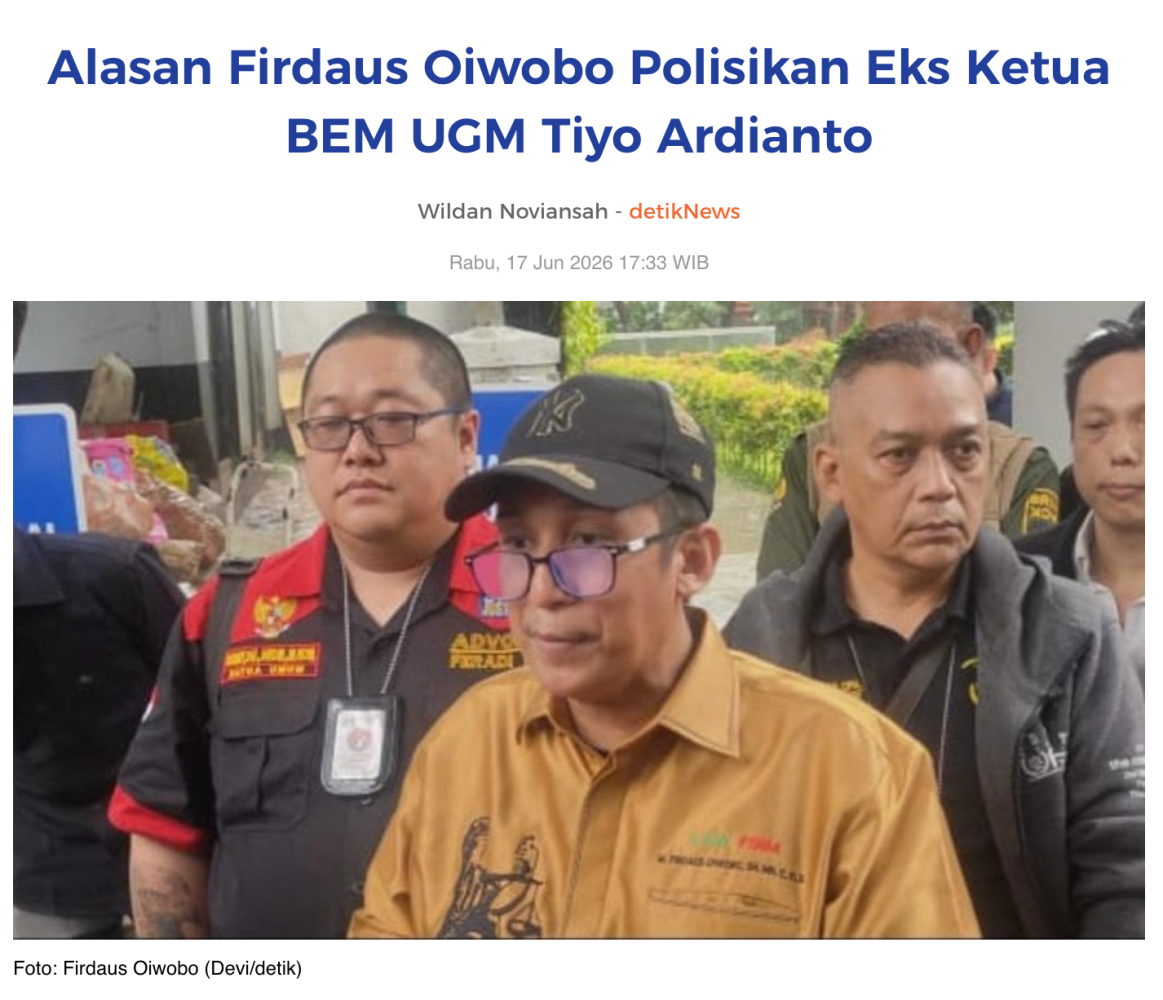
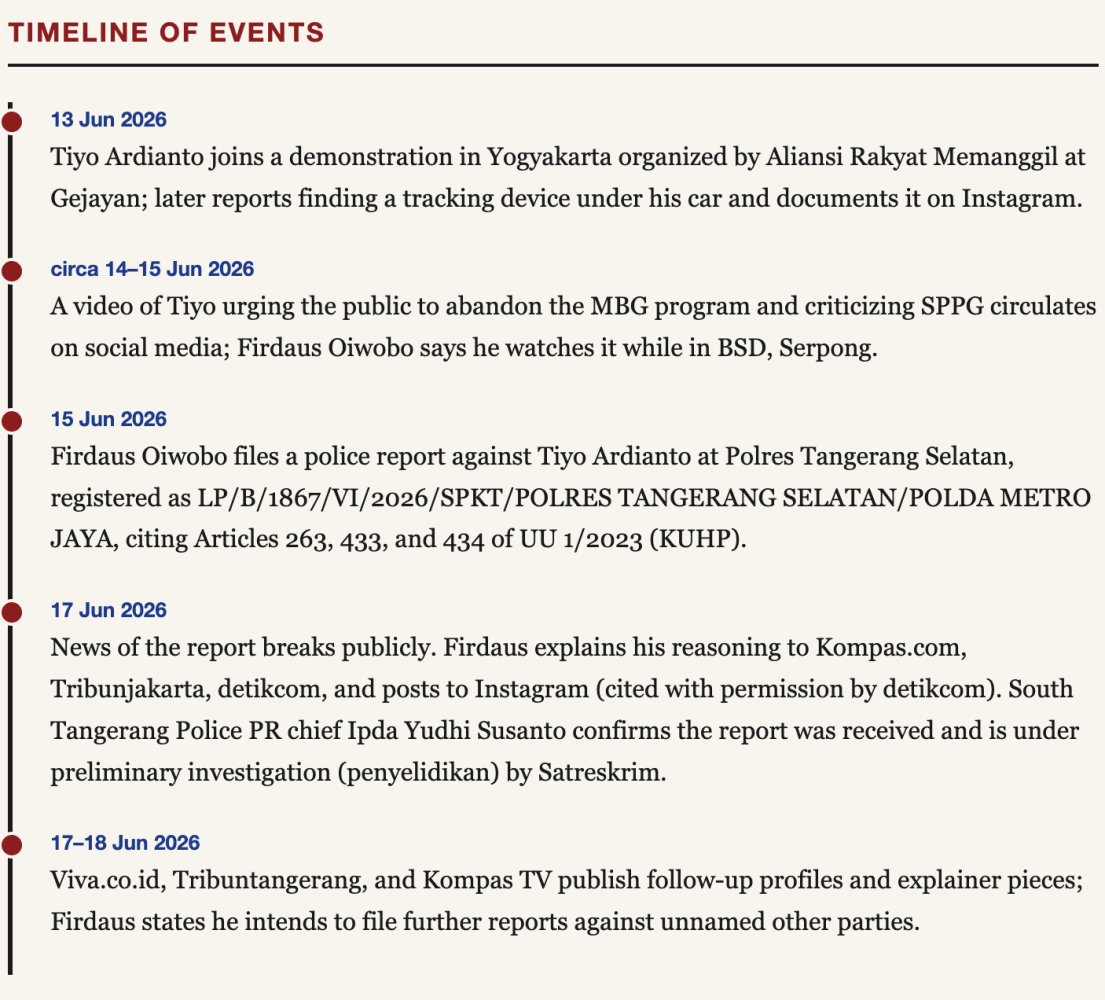
On Monday, 15 June 2026, a Jakarta-area advocate named Muhammad Firdaus Oiwobo walked into the South Tangerang Police Headquarters (Polres Tangerang Selatan) and filed a criminal report against Tiyo Ardianto, the 2025 chairman of UGM's Badan Eksekutif Mahasiswa (BEM) the university's main student executive body. The complaint, registered as LP/B/1867/VI/2026/SPKT/POLRES TANGERANG SELATAN/POLDA METRO JAYA, accused Tiyo of inciting the public to abandon the government's free nutritious meals program (Makan Bergizi Gratis, MBG) and of insulting President Prabowo Subianto and Vice President Gibran Rakabuming Raka in the process.
The story moved fast through Indonesian outlets Kompas, Tribun, detikcom, Liputan6, Kompas TV and Viva all carried versions of it within 48 hours. But buried beneath the procedural confirmations from the police press desk is a more interesting legal question: under Indonesia's new Criminal Code (KUHP, Law No. 1/2023), at least two of the three articles cited in the report are delik aduan complaint-only offenses that, by law, can only be set in motion by the victim. Firdaus Oiwobo is not Prabowo Subianto. He is not Gibran Rakabuming Raka. And the program he says was "slandered," SPPG, is a government body which the relevant article explicitly excludes from protection.
Background Who Filed the Report, and Why
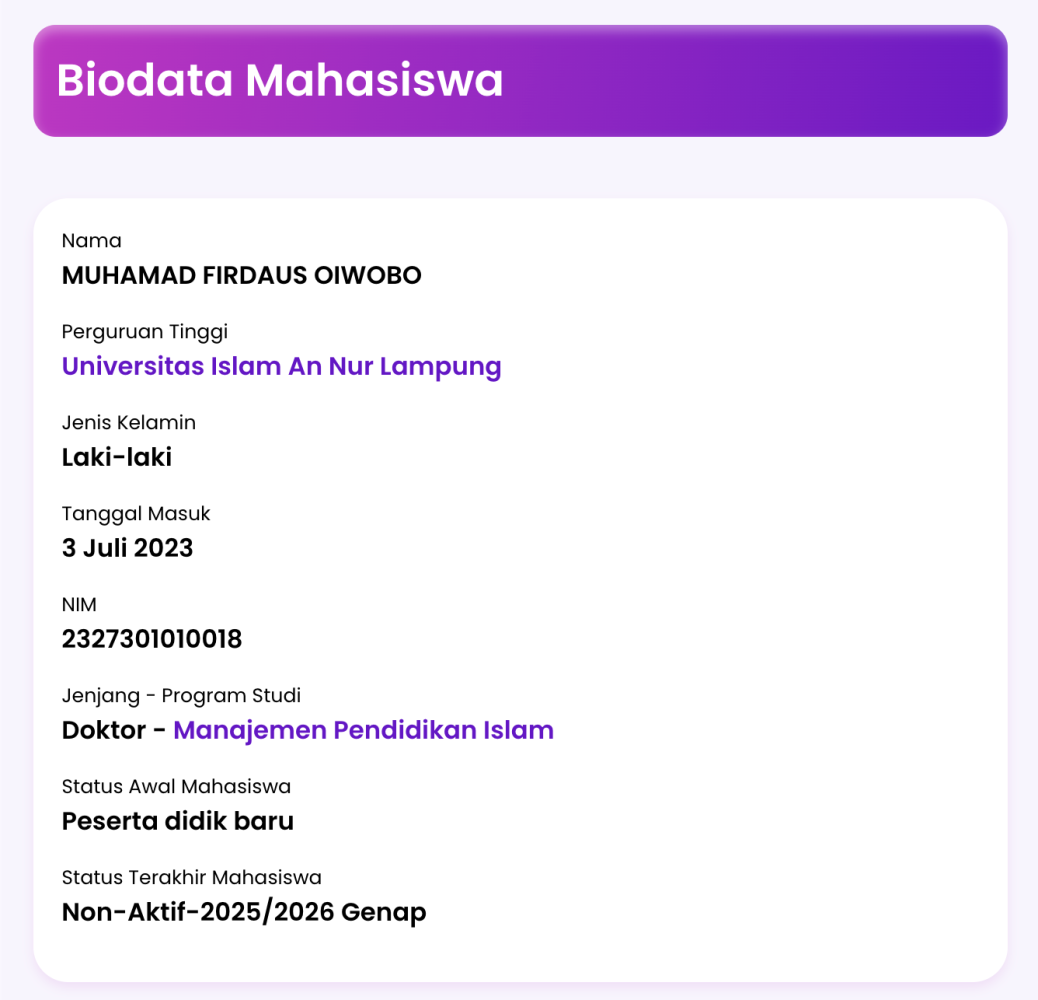
Firdaus Oiwobo identifies himself professionally as an advocate (advokat) and, according to Viva.co.id's profile published the same week, chairs a minor political organization (described in reporting as "Ketua Umum Termul"). He has periodically surfaced in Indonesian crime-and-politics coverage as a serial police-report filer against critics of the Prabowo–Gibran administration, a pattern several outlets noted in passing.
His account of events, given to Kompas.com via WhatsApp and corroborated across multiple outlets, is straightforward: he was in the BSD area of Serpong, South Tangerang his home neighborhood when he came across a video of Tiyo Ardianto circulating on social media. In it, Tiyo is shown urging the public to stop participating in the MBG program and describing SPPG, the Satuan Pelayanan Pemenuhan Gizi (Nutrition Fulfillment Service Unit) that operates MBG's kitchens, in terms reported as calling it Prabowo's "satuan penjilat" a "sycophant unit."
"Terlapor menghasut masyarakat untuk meninggalkan MBG, dan mengatakan SPPG adalah satuan penjilat Prabowo" "The reported party incited the public to abandon MBG, and said SPPG is a sycophant unit for Prabowo." Firdaus Oiwobo, to Kompas.com, 17 June 2026
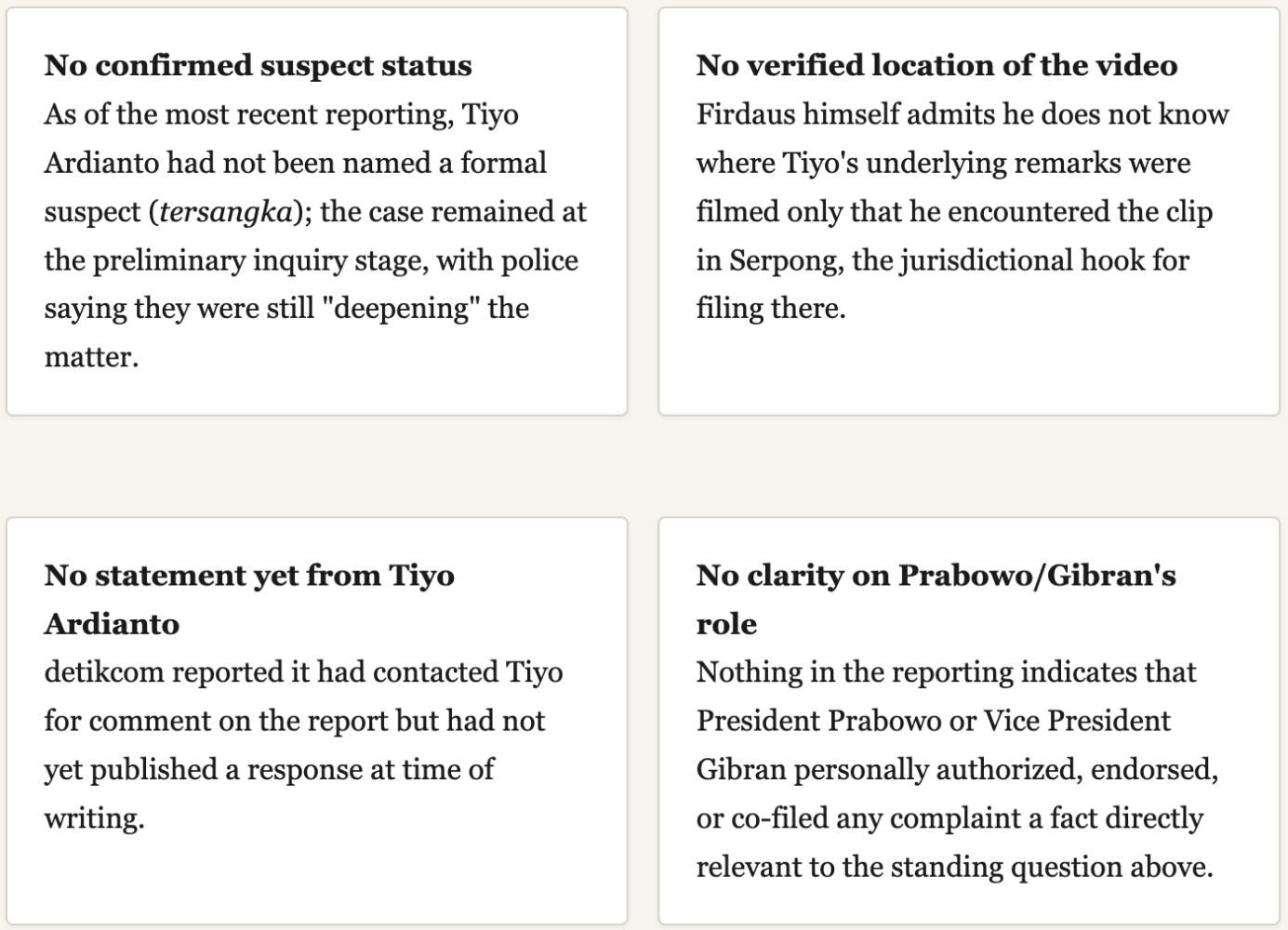
By his own account to Tribunjakarta and Tribuntangerang, Firdaus did not witness Tiyo's actions directly, did not know where the underlying footage was filmed, and could not confirm Tiyo's exact location when the video was made only that he, Firdaus, watched the clip while in Serpong. That detail is what gave Polres Tangerang Selatan, rather than a Yogyakarta precinct (where Tiyo is based and where UGM sits), territorial grounds to accept the complaint: Indonesian criminal procedure generally allows a report to be filed at the police post nearest to where the reporting party experienced or discovered the alleged offense.
"Saya nontonnya di videonya di Serpong. Dia ngelakunya di mana nggak tahu, di Jawa apa di mana." "I watched the video in Serpong. Where he actually did it, I don't know Java or wherever." Firdaus Oiwobo, to Tribuntangerang, 17 June 2026
On Wednesday, 17 June, Firdaus posted to his personal Instagram account later cited with his permission by detikcom spelling out his motive more bluntly: that Tiyo had insulted the head of state and the vice president, and had defamed both SPPG and MBG. South Tangerang Police's public-relations chief, Inspector Two (Ipda) Yudhi Susanto, confirmed to multiple outlets that the report had been received and was under investigation by the precinct's Criminal Investigation Unit (Satreskrim), describing the matter as still at the "penyelidikan" (preliminary inquiry) stage rather than a confirmed investigation ("penyidikan") of a named suspect.
Context the headlines under-explained: Tiyo Ardianto had, days earlier, drawn separate attention after reporting that a tracking device (a "PBX Finder") was found attached to the underside of his car following his participation in a 13 June 2026 demonstration in Yogyakarta organized by Aliansi Rakyat Memanggil at Gejayan. He documented the discovery on his Instagram account, @tiyoardianto_, raising his public profile as a critic of the administration just before Firdaus's report was filed.
The Articles Invoked And What Each Actually Requires
According to Kompas TV's report, Firdaus cited three provisions of the new Criminal Code, Law No. 1 of 2023 (UU 1/2023), which fully superseded the colonial-era KUHP in 2026:
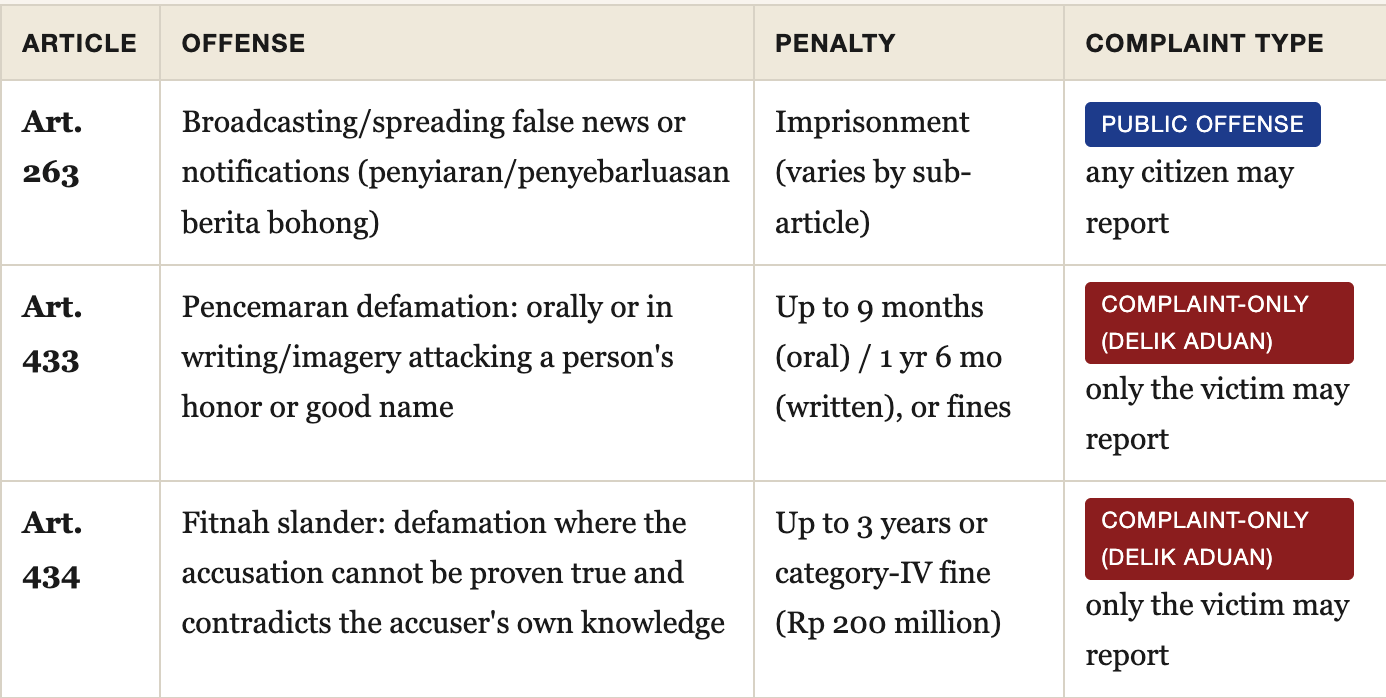
This is the crux of the legal-standing problem. Under Indonesia's official commentary (Penjelasan) to Article 433(1) of UU 1/2023, as summarized by Hukumonline's legal clinic, the defamation offense protects an individual person (orang perseorangan) only. The explanatory note is explicit that insults directed at government institutions or groups of people fall outside the article's scope, and that the offense cannot be prosecuted without a complaint filed by the victim personally.
Official commentary, Art. 433(1) UU 1/2023 (paraphrased): Defamation occurs where an accusation spoken, written, or pictorial attacks a specific individual's honor or good name to that person's detriment. The accused conduct need not itself be a crime. The object of protection is a natural person; insults against a government institution or a group of people are not covered. The offense is not prosecuted absent a complaint from the victim.
That single clause does most of the analytical work here. Two distinct objects are named in Firdaus's own public framing of the case: (1) President Prabowo and Vice President Gibran, as individuals, and (2) SPPG, the nutrition-service unit, as an institution. The second object is categorically excluded from Article 433/434 coverage under the law's own explanatory text an institution cannot be "defamed" under this provision, full stop. The first object, the two officials, can in principle be defamed under Article 433 but only they, not a third-party advocate from Serpong who saw a video, are empowered to delik aduan rige a state into the trigger.
Where the Legal Standing Actually Comes From
Firdaus's only secure procedural foothold among the three articles he cited is Article 263 spreading false information/notifications which Indonesian legal practice treats as a public offense (delik biasa/delik umum): any citizen who believes they witnessed the conduct, even indirectly via a circulated video, may lodge a report, and police are obliged to register and at least preliminarily examine it regardless of the reporter's personal stake. This is the same general rule that lets people report fraud, hoaxes, or incitement videos they merely saw online, which is consistent with Firdaus's own explanation that he filed because the content was "encountered" in his home jurisdiction of Serpong.
By contrast, his invocation of Articles 433 and 434 rests on considerably thinner ground. Both are complaint offenses limited to natural-person victims. Firdaus is neither Prabowo nor Gibran, and SPPG the entity he says was "slandered" is precisely the kind of institutional object the law's own explanatory note excludes. Indonesian criminal procedure does allow police to receive and register such a report at intake (which is procedurally what happened here, per Ipda Yudhi Susanto's confirmation), but receiving a report is not the same as it surviving scrutiny once a complaint-requirement defect is raised prosecutors and pretrial judges have in the past dismissed or returned cases on exactly this locus standi defect when the named "victim" never personally filed.
Why This Matters Beyond One Case
The pattern matters because it has recurred in Indonesian political-speech cases for years: a third party, often a self-identified supporter of the sitting government, files a complaint-offense report on behalf of officials who never personally lodge a complaint themselves. Legal aid organizations and press-freedom monitors have long flagged this maneuver as a way to weaponize the criminal process subjecting a critic to a police summons, an investigation, seized devices, and reputational damage even where the underlying charge is procedurally defective from the outset and likely to be dropped, downgraded, or contested at the pretrial (praperadilan) stage long before it ever nears a verdict.
"Receiving" a complaint is an administrative act. Standing to prosecute it is a legal one and on two of the three articles cited here, only Prabowo and Gibran themselves hold that standing.
What the Reporting Did Not Establish
Bottom Line
The procedural machinery worked exactly as designed: a citizen walked into a police station, cited statutory provisions, and the report was registered and assigned to investigators that part of the story is not in dispute. What deserves more scrutiny is the legal architecture underneath it. Article 263 gives Firdaus Oiwobo a plausible, if untested, public-offense basis to report what he characterizes as false content. Articles 433 and 434, by contrast, are complaint offenses reserved for the actual victim of a personal defamation and on the law's own terms, an institution like SPPG cannot be a "victim" of defamation at all, while Prabowo and Gibran, the only eligible individual victims named in this story, are not the ones who filed.
This brief synthesizes contemporaneous Indonesian press reporting (15–18 June 2026) and publicly available legal commentary on Indonesia's 2023 Criminal Code (UU 1/2023). It is a journalistic and legal-literacy analysis, not a legal opinion or formal pretrial filing, and does not purport to predict how the South Tangerang Police, prosecutors, or any court will ultimately characterize the report's procedural validity. Status of the investigation may have changed since publication.
#Indonesia #RuleOfLaw #PressFreedom #KUHP #LegalLiteracy #CivicSpace #BEMUGM #Defamation #CriminalLaw #PublicPolicy
References
- Kompas.com, "Firdaus Oiwobo Laporkan Eks Ketua BEM UGM Tiyo Ardianto ke Polisi," 17 June 2026. megapolitan.kompas.com
- Tribunjakarta.com, "Alasan Firdaus Oiwobo Polisikan Eks Ketua BEM UGM Tiyo Ardianto, Penyidik Masih Selidiki Laporan." jakarta.tribunnews.com
- Liputan6.com, "Alasan Firdaus Oiwobo Polisikan Mantan Ketua BEM UGM." liputan6.com
- Kompas.com, "Firdaus Oiwobo Polisikan Eks Ketua BEM UGM Tiyo Ardianto atas Dugaan Penghasutan Hentikan MBG," 17 June 2026. megapolitan.kompas.com
- Kompas.com, "Alasan Firdaus Oiwobo Laporkan Eks Ketua BEM UGM Tiyo Ardianto ke Polisi," 18 June 2026. megapolitan.kompas.com
- detikcom, "Alasan Firdaus Oiwobo Polisikan Eks Ketua BEM UGM Tiyo Ardianto." news.detik.com
- Viva.co.id, "Sosok Firdaus Oiwobo, Laporkan Eks Ketua BEM UGM Tiyo Ardianto Usai Kritik MBG, Ternyata Ketua Umum Termul." viva.co.id
- Tribuntangerang.com, "Ini Alasan Firdaus Oiwobo Laporkan Eks Ketua BEM UGM Tiyo Ardianto ke Polisi." tangerang.tribunnews.com
- Kompas TV, "Pengacara Firdaus Oiwobo Laporkan Eks Ketua BEM UGM Tiyo Ardianto ke Polisi, Ternyata Ini Alasannya." kompas.tv
- Hukumonline Klinik, "Bunyi Pasal 433 KUHP Baru tentang Pencemaran Nama Baik." hukumonline.com
- Hukumonline Klinik, "Bunyi Pasal Pencemaran Nama Baik KUHP Baru." hukumonline.com
- Mahkamah Konstitusi RI, "Meminta MK Perjelas Rumusan Subjek Korban Delik Pencemaran Nama Baik." mkri.id
- Badan Pembinaan Hukum Nasional (BPHN) Literasi Hukum, "Penghinaan atau Tuduhan Tanpa Bukti." literasihukum.bphn.go.id
- Lembaga Konsultasi (LSC BPHN), entry on delik aduan and Articles 433–434 UU 1/2023. lsc.bphn.go.id
- LEXone / LEXmedia, "Hadapi Somasi Pencemaran Nama Baik." lexone.id
- IBLAM, "Delik Aduan: Pengertian, Jenis, dan Proses Pengaduannya dalam Hukum Pidana." iblam.ac.id
- Kementerian Hukum (BPSDM Kemenkum), "Tindak Pidana Penghinaan dalam KUHP Baru." bpsdm.kemenkum.go.id