
The Silent Inheritance: What Cardiovascular Disease Is Doing to Your Family Right Now By Rahmat Wibowo From Infraloka
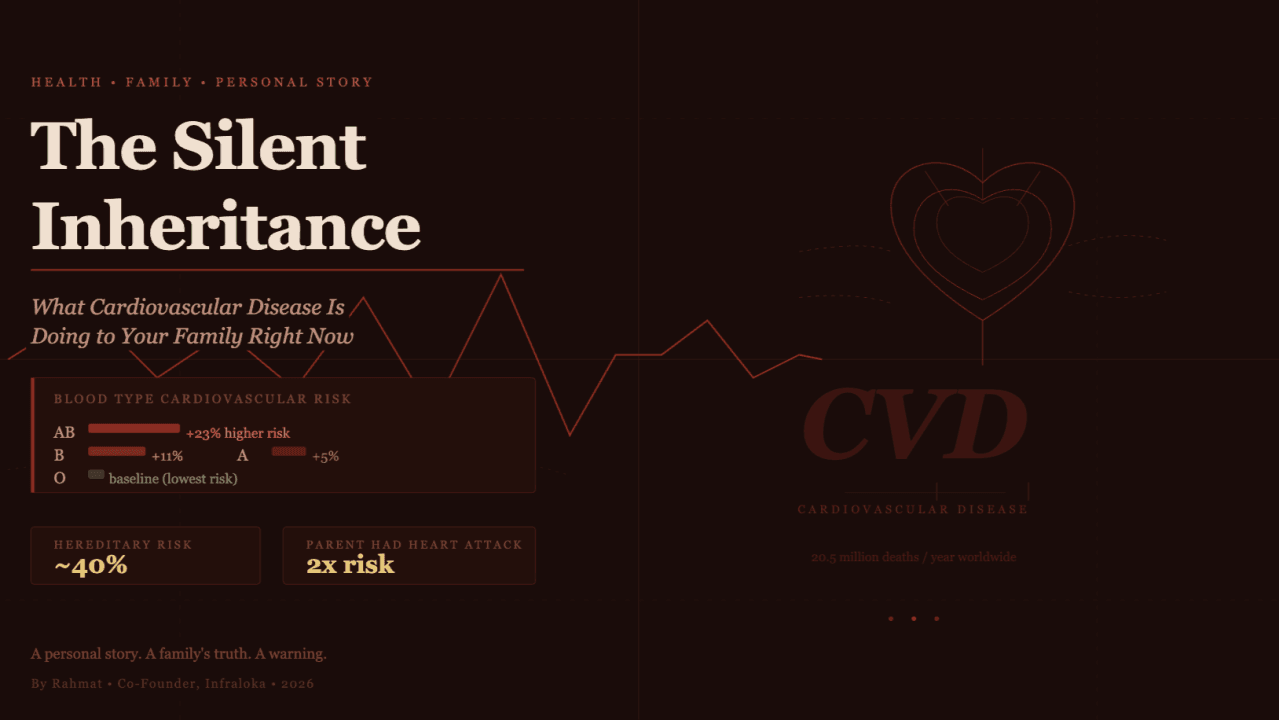
A decade after watching my father nearly die from a heart attack, I understand now what no one told us then. This is everything I wish we had known.
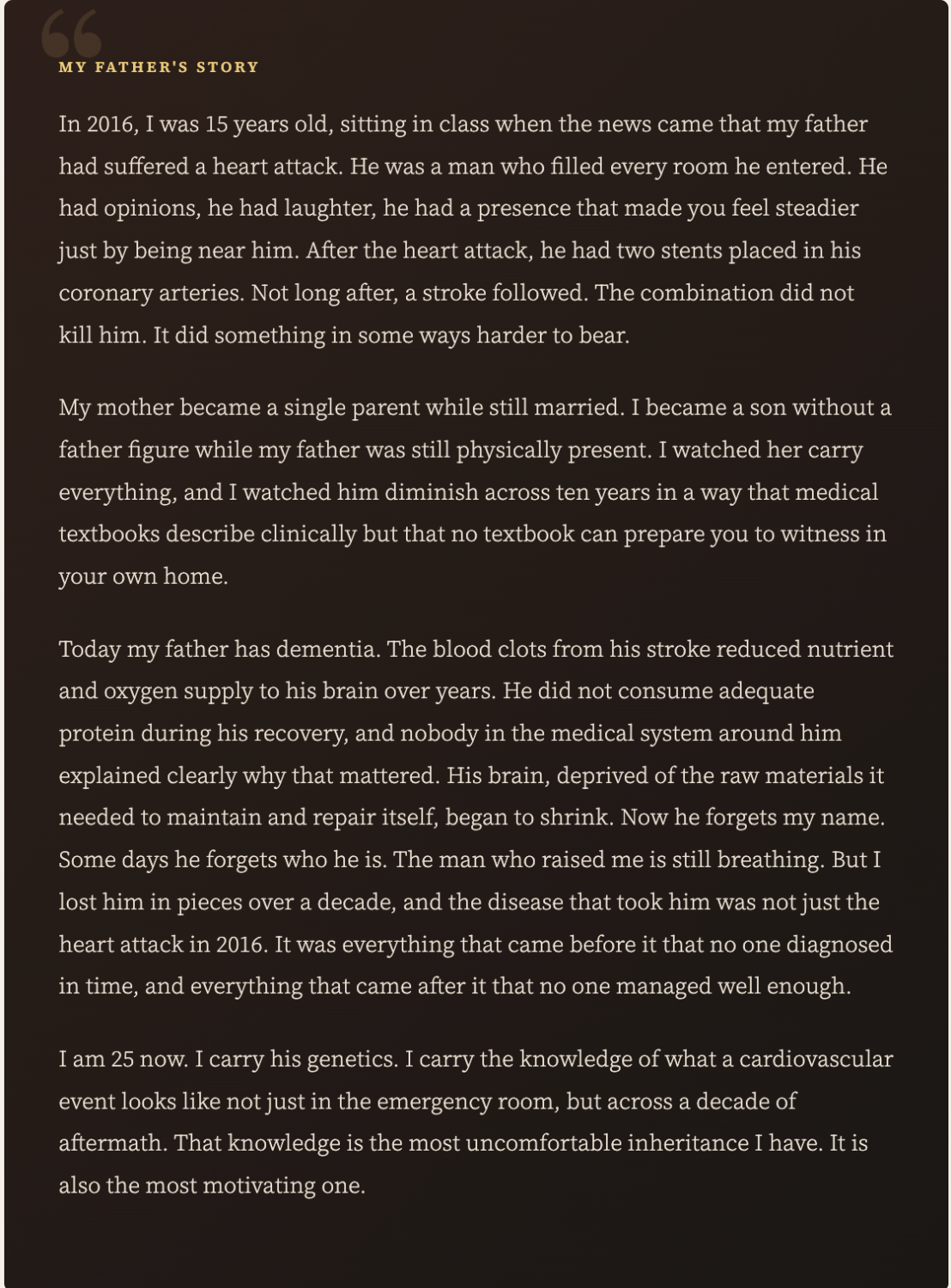
In 2016, I was a first-year senior high school student when my phone rang and everything changed. My father had suffered a heart attack. He would survive it, but he would never fully return to the man he was. Not long after, a stroke followed. Two rings installed on his heart. A brain slowly losing its fight against blood clots that cut off the nutrients it needed to keep him sharp, to keep him present, to keep him knowing my name.
Ten years later, my father has dementia. Some mornings he cannot remember who I am. He cannot carry a thought through a full sentence. His brain has literally shrunk, starved of blood and protein, eroded by years of inadequate nutrition and the accumulated damage of a cardiovascular system that had been quietly failing long before that phone call in 2016.
My mother became a single parent overnight. I lost my father figure while he was still alive. That is a grief that does not have a word in most languages.
I am writing this not for sympathy. I am writing this because cardiovascular disease is the world's leading killer, and the cruelest thing about it is how quietly it moves through families. It moves through blood. It moves through genes. It moves through the plates we set at dinner tables. And if you have a parent who suffered a heart attack or stroke, your own clock may already be ticking faster than your peers.
The Scale of What We Are Facing
Before we talk about secrets, let us acknowledge the scale of the problem so we do not make the mistake of thinking this is someone else's concern.
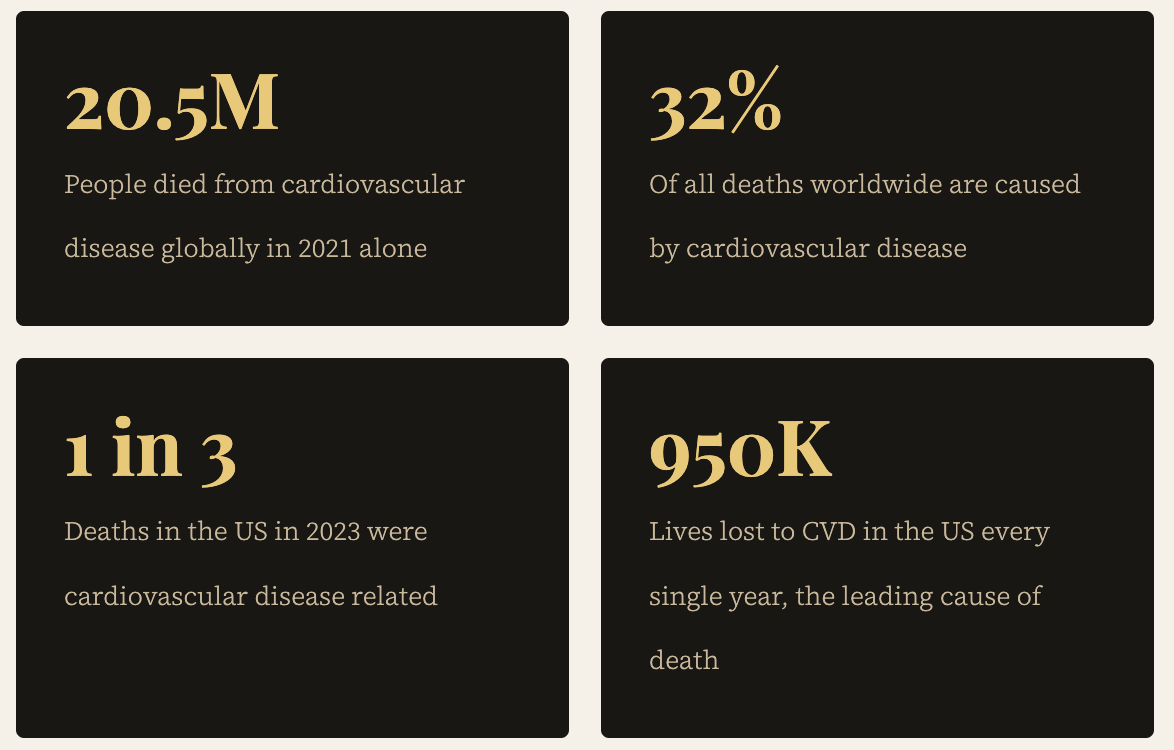
And the trajectory is not improving. By 2050, researchers project cardiovascular disease will affect up to 45 million US adults, up from 11.3 percent of the population today to 15 percent. Stroke prevalence is expected to double. Obesity, a major driver of cardiovascular risk, is predicted to climb past 60 percent of the American population. Indonesia is not immune to this trend. The country faces its own epidemic of hypertension, diabetes, and coronary artery disease driven by dietary transitions, sedentary work culture, and inadequate preventive healthcare access in rural areas.
The Five Secrets That Research Has Quietly Known for Years
The word "secret" here is not about conspiracy. It is about the gap between what scientists know and what most people walking into a doctor's office ever hear explained to them plainly.
Secret One: Five Modifiable Risks Cause Half of All Cases
The American Heart Association's most recent research confirmed what decades of data have been pointing toward. Five modifiable risk factors account for roughly half of the entire global burden of cardiovascular disease. They are: abnormal body mass index, high systolic blood pressure, excess non-HDL cholesterol levels, smoking, and diabetes. That word modifiable is the most important word in cardiology. It means changeable. It means something you can actually do something about, starting today.
Yet these five factors also converge to create what researchers now call Cardiovascular-Kidney-Metabolic syndrome, a newly defined condition affecting nearly 90 percent of adults that links heart disease, kidney disease, diabetes, and obesity in a cascade that is far more dangerous than any one condition in isolation.
Secret Two: Your Heart's Damage Reaches Your Brain
This is the connection that broke my heart when I finally understood it, because it describes exactly what happened to my father.
When your heart pumps inefficiently, your brain is starved. Not dramatically. Not all at once. Quietly, over years, the neurons that need oxygen-rich blood to fire and maintain themselves begin to suffer. The architecture of memory begins to erode before anyone notices.
Research published in the Journal of the American Heart Association confirmed that cardiovascular disease and Alzheimer's disease share a heart-brain axis: a set of interlinked biological pathways where damage in one system accelerates damage in the other. Heart disease causes a breakdown in a key brain function that links neural activity with blood flow, meaning the brain receives less blood for the same amount of activity. This happens before atherosclerosis in the brain itself develops, meaning the brain begins to suffer while conventional scans may still look relatively normal.
Blood clots formed by atrial fibrillation or coronary artery disease travel. They lodge in brain blood vessels. They cut off nutrient and oxygen supply to specific regions. The result, over years, is brain atrophy. Cognitive decline. Memory loss. In severe cases, dementia that causes a man to forget his own son's name.
My father's brain shrank. The doctors could see it on imaging. A combination of poor protein intake, persistent blood clots from his cardiovascular damage, and inadequate blood supply to critical brain regions had been quietly consuming him for years. This is not an unusual story. It is one of the most common and least-discussed consequences of untreated or poorly managed cardiovascular disease.
Secret Three: Your Genes Are Already Casting Votes
Approximately 40 percent of your cardiovascular risk is hereditary. Your genes determine how your body handles cholesterol, regulates blood pressure, manages inflammation, and responds to the fat and sugar in your food. You did not choose these settings. But you can know about them, and knowing changes everything.
The landmark Framingham Heart Study found that having a parent who experienced a heart attack or stroke before the age of 55 in fathers and before 65 in mothers was associated with a doubling of cardiovascular risk in sons and a 70 percent increased risk in daughters, even after accounting for cholesterol, hypertension, obesity, smoking, and diabetes. When both parents were affected, the risk climbed higher still.
If your father had a heart attack, you are not merely at some vague, elevated risk. You are living under a measurable, documented, statistically significant shadow that demands proactive management and monitoring, starting earlier than your peers without that history.
Secret Four: Cholesterol and Inflammation Begin Earlier Than We Think
Three separate studies highlighted by the American Heart Association in 2024 found that cholesterol, hypertension, and sedentary behavior, all major cardiovascular risk factors in adults, may begin doing damage earlier in life than previously understood. The plaque that causes a heart attack in your 50s may have begun accumulating silently in your 20s and 30s. The lifestyle choices made in early adulthood carry consequences that arrive decades later, often dramatically and without warning.
Secret Five: The Heart-Brain-Nutrition Triangle
Protein is not just a bodybuilder's concern. It is fundamental to cardiovascular repair, to neurological maintenance, to the brain's ability to sustain its architecture over time. Research increasingly links inadequate dietary protein with accelerated brain volume loss, impaired cognitive function, and reduced capacity for neural repair following stroke or ischemic events.
My father did not eat properly after his heart attack. Nobody sat with my family and explained the specific protein requirements of a brain trying to recover from vascular damage. That gap in guidance, that silence between medical procedure and nutritional follow-through, is one of the most preventable tragedies in post-cardiac care. The brain needs amino acids to rebuild. It needs blood flow to deliver them. When both are insufficient, the decline accelerates.
Your Blood Type Is Not Neutral
This is the part of the research that most people have never seen in a doctor's waiting room brochure, despite it having been published in major peer-reviewed journals for over a decade.
In 2012, a study published in Arteriosclerosis, Thrombosis and Vascular Biology analyzed more than 20 years of data from over 89,000 individuals and found a clear association between ABO blood type and coronary heart disease risk. The findings, later confirmed and extended by research from Harvard School of Public Health and the American Heart Association, paint a picture that every family with cardiovascular history needs to understand.
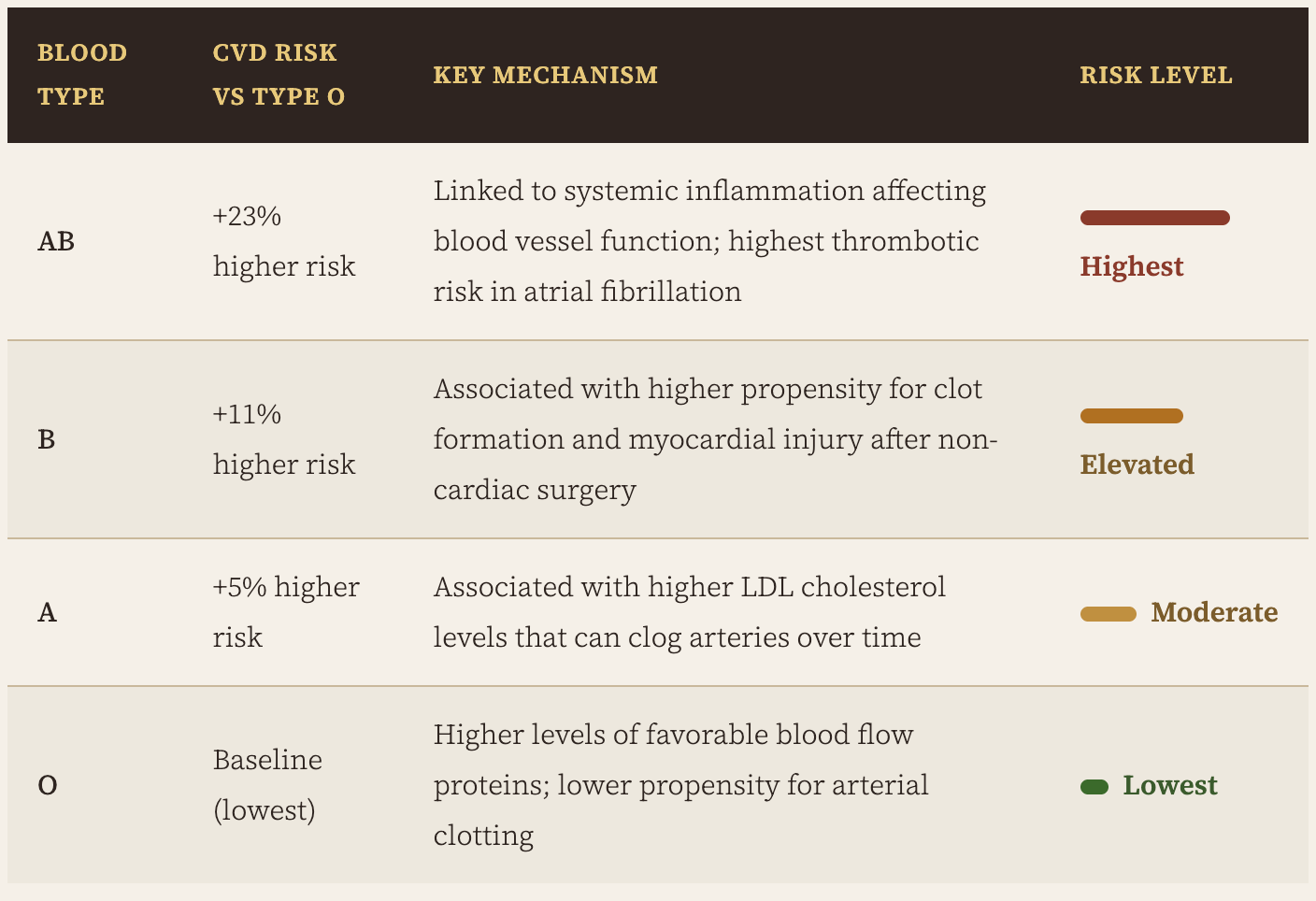
Type AB, the rarest blood type found in approximately 7 percent of the population, carries the highest cardiovascular risk among all blood groups. A retrospective study analyzing 1,170 atrial fibrillation patients found that AB blood type was associated with twice the rate of major adverse cerebrovascular events compared to non-AB blood types, independent of anticoagulation treatment or clinical scoring. The mechanism appears to involve both increased systemic inflammation and a higher thrombogenic tendency, meaning blood with AB type is more prone to clotting in ways that damage vessels.
Researchers at Cleveland Clinic further found that non-O blood types, particularly A, B, and AB, were twice as likely to experience adverse cardiovascular events following COVID-19 infection, compared to type O individuals. The pandemic, in other words, has added a new layer of cardiovascular risk that falls disproportionately on people with these blood types.
If you are blood type AB with a family history of heart disease or stroke: You carry two compounding risk factors that together place you in a population requiring proactive cardiovascular monitoring, potentially starting in your 30s rather than waiting for symptoms to appear in middle age. Know your numbers. Know your blood type. Tell your doctor your family history explicitly.
The Family Risk Nobody Talks About at Dinner
Families share more than holidays and last names. They share dietary patterns, sedentary habits, stress responses, sleep patterns, and deeply ingrained behaviors around food and exercise. When researchers study why cardiovascular disease runs in families, the answer is always a combination of genetic inheritance and shared environment. Both are working at the same time.
If your father smoked, you likely grew up in a home where secondhand smoke was normalized. If your mother cooked with high sodium and saturated fats, your palate and your arteries developed together in that kitchen. The cholesterol plaques that caused your grandfather's heart attack may have had their origins in recipes passed down through generations.
A 2016 study found that individuals with a high genetic risk for heart disease had a 91 percent higher chance of experiencing a heart attack or stroke compared to those with low genetic risk. But here is the finding that matters most: people with that same high genetic risk who incorporated at least three healthy lifestyle habits, including not smoking, regular exercise, a healthy diet, and maintaining a healthy weight, reduced their odds of a heart attack or stroke by nearly 50 percent.
Genes load the gun. Lifestyle pulls the trigger. And the reverse is also true: the right lifestyle can keep the gun holstered even when you were born holding it.
What We Did That Made a Difference
My father's condition is not where it would have been without intervention. Three specific things made a difference, and I want to name them clearly because they may matter to someone else's family.
- Protein intake, consistent and adequateOnce we understood that my father's brain was not just affected by blood clots but also starved of the amino acids it needed to function and repair, we made protein intake a daily priority. Eggs, fish, tempeh, tofu, lean chicken. Not in large quantities, but consistently, every day. The brain is approximately 60 percent fat and uses amino acids from protein to produce neurotransmitters, maintain myelin sheaths, and rebuild neural tissue. For a brain recovering from stroke and cardiovascular damage, adequate protein is not optional nutrition. It is medicine.
- Cognitive engagement, relentlesslyNeuroplasticity research consistently shows that the brain responds to use. We encouraged my father to read, to solve simple puzzles, to follow conversations, to engage with familiar music and stories. Keeping the brain actively processing is not a cure for vascular dementia, but it creates what researchers call cognitive reserve, a buffer of neural redundancy that can compensate for damage and slow the rate of functional decline. Some days he remembers more. The engagement matters.
- DSA therapy by Dr. TerawanWe sought treatment through Digital Subtraction Angiography as modified and practiced by Dr. Terawan Agus Putranto, the Indonesian neurologist and former Health Minister who developed what became known as brain flushing therapy. In Dr. Terawan's modified DSA approach, a catheter is used to deliver heparin, an anticoagulant, intra-arterially to the brain's blood vessels, clearing clots and improving regional cerebral blood flow. DSA itself is an established diagnostic tool for imaging blood vessels. Dr. Terawan's therapeutic modification applies it to restore perfusion in chronic ischemic stroke patients. The procedure is not without controversy in Indonesia's medical community, and it has not yet achieved the level of randomized clinical trial evidence that would satisfy conventional evidence-based medicine standards. What I can tell you is what I observed in my father: after receiving the treatment, his memory improved. He became more present. He recognized more faces and recalled more names. Whether that improvement was caused by the procedure, by the surrounding improvements in nutrition and cognitive engagement, or by a combination of all three, I cannot say definitively. But I am grateful, and I believe families dealing with post-stroke cognitive decline deserve to know this option exists, alongside its context and caveats, so they can make informed decisions with their physicians.
If You Are Reading This and Your Parent Had a Heart Attack
Your risk is elevated. Not your fate. Your risk. There is a difference, and that difference is where your agency lives.
Know your blood type. Know your cholesterol numbers, specifically your LDL, HDL, and non-HDL values. Know your blood pressure. Know your fasting blood glucose. These are not numbers for elderly people at annual checkups. They are numbers for you, right now, regardless of how young or healthy you feel. Coronary plaques build silently for decades. The heart attack that appears sudden has usually been in preparation for 20 or 30 years.
Eat protein, not occasionally but every single day. The brain and heart both require it. Move your body. Sleep enough. Do not smoke. Limit alcohol. These are not novel recommendations. They are the consistent, boring, evidence-backed interventions that can cut your genetic cardiovascular risk nearly in half. The difficulty is not in knowing them. The difficulty is in taking them seriously before you receive a phone call at 15 years old that rearranges the rest of your life.
And if your parent is recovering from a cardiovascular event right now, ask their care team explicitly: what protein intake should they maintain? How do we protect their cognitive function? What does the road ahead look like if we manage this aggressively versus passively? Do not leave those conversations unhad. The answers matter more than any of us were told in 2016.
My father forgot my name. But I have not forgotten anything he taught me before his heart betrayed him. The best tribute I can give him is to not let his suffering be silent, and to not let his family's story happen to another family without warning.
Take cardiovascular disease seriously before it gives you a reason to.
#CardiovascularDisease #HeartHealth #HeartAttack #StrokeSurvivor #Dementia #BrainHealth #FamilyHealth #BloodType #HereditaryRisk #DrTerawan #DSA #Indonesia #HealthAwareness #Prevention #Nutrition #ProteinIntake #MentalHealth #CognitiveHealth #PersonalStory #PublicHealth #Infraloka