
Two Rivers from One Source Hinduism in Bali and India By Rahmat Wibowo From InfraLoka
One faith left the Indian subcontinent two thousand years ago and put down roots on a volcanic island in the Java Sea. It never converted, never fully merged, and according to the Balinese themselves was never meant to be reconnected by a bridge.
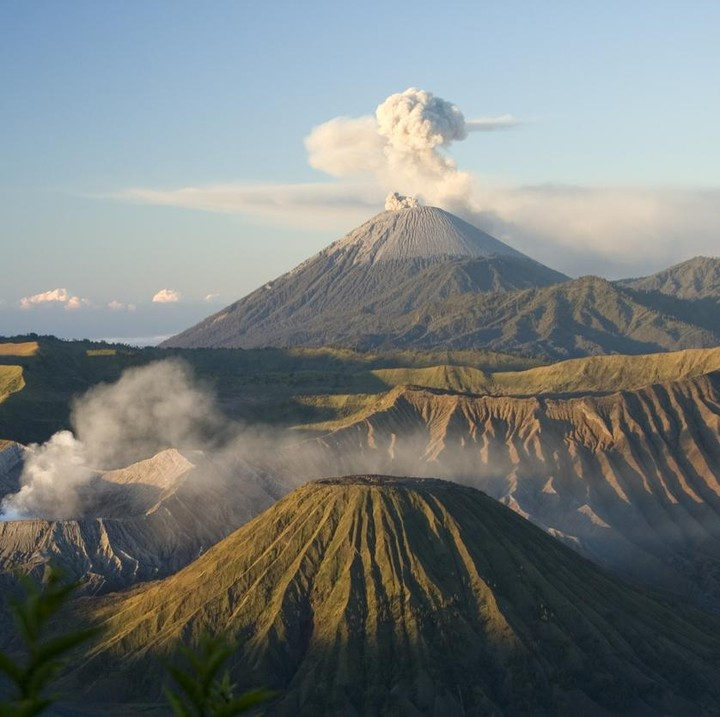
Mahameru Mountain
What actually separates Balinese Hinduism from Indian Hinduism
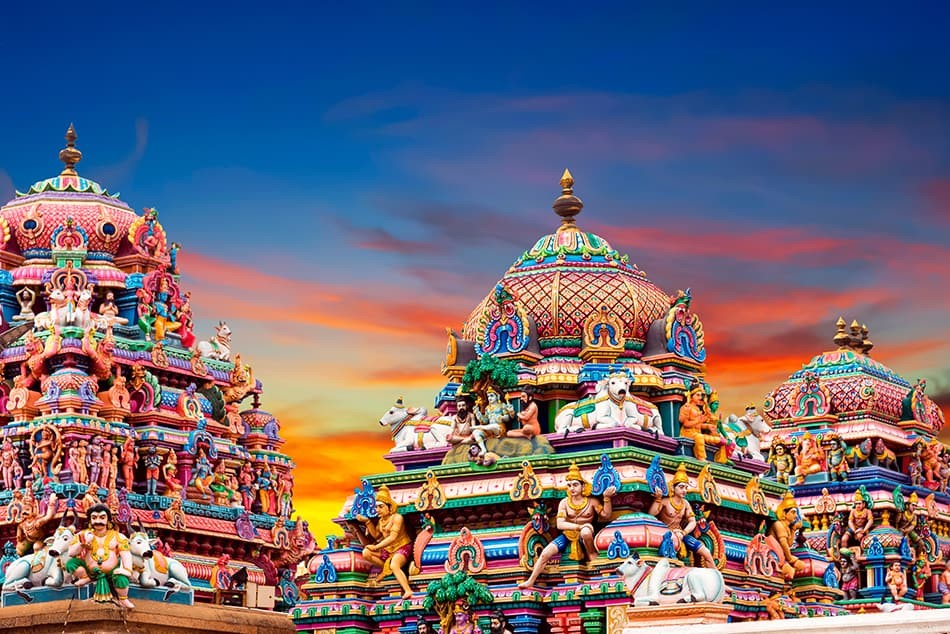
Indian Hindu Temple
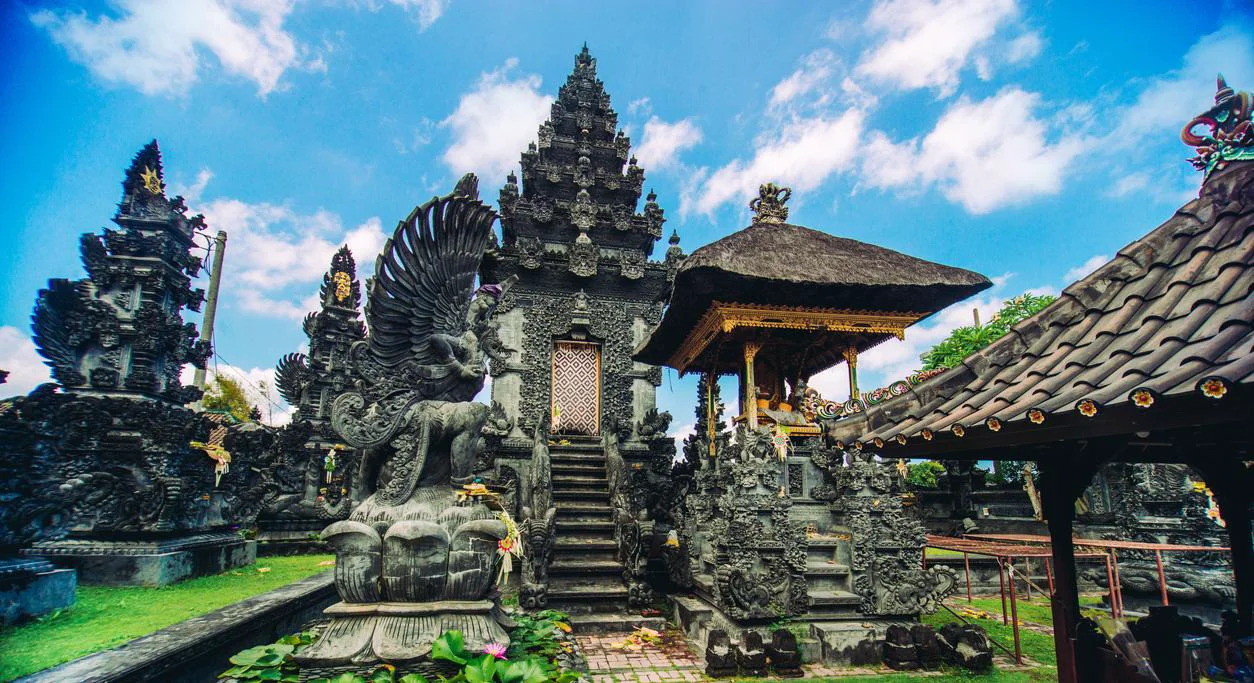
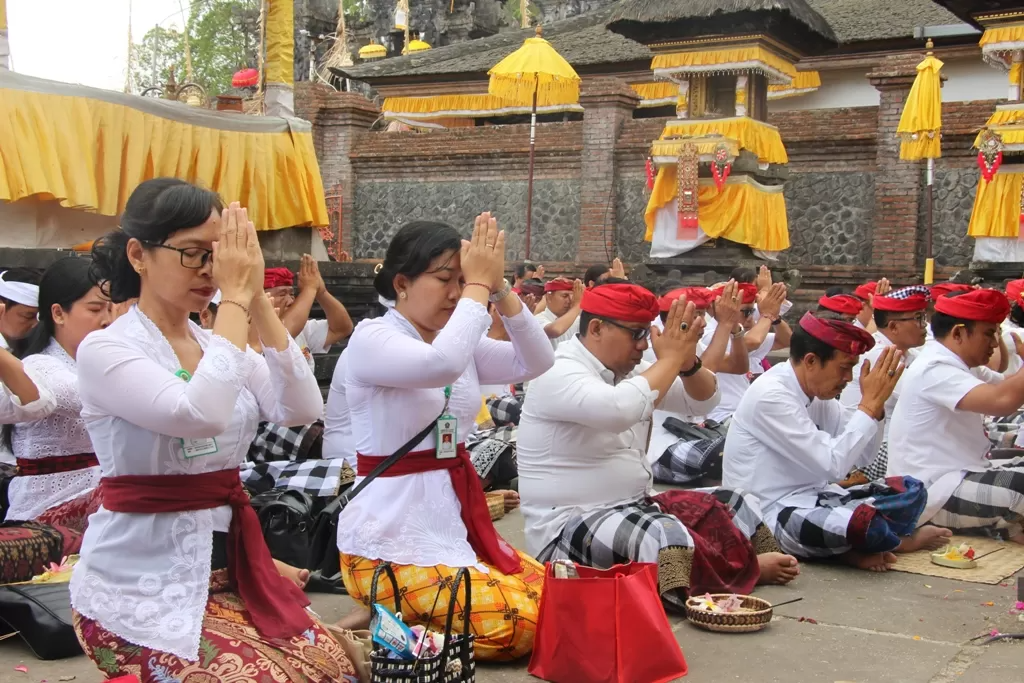
Balinese Pura
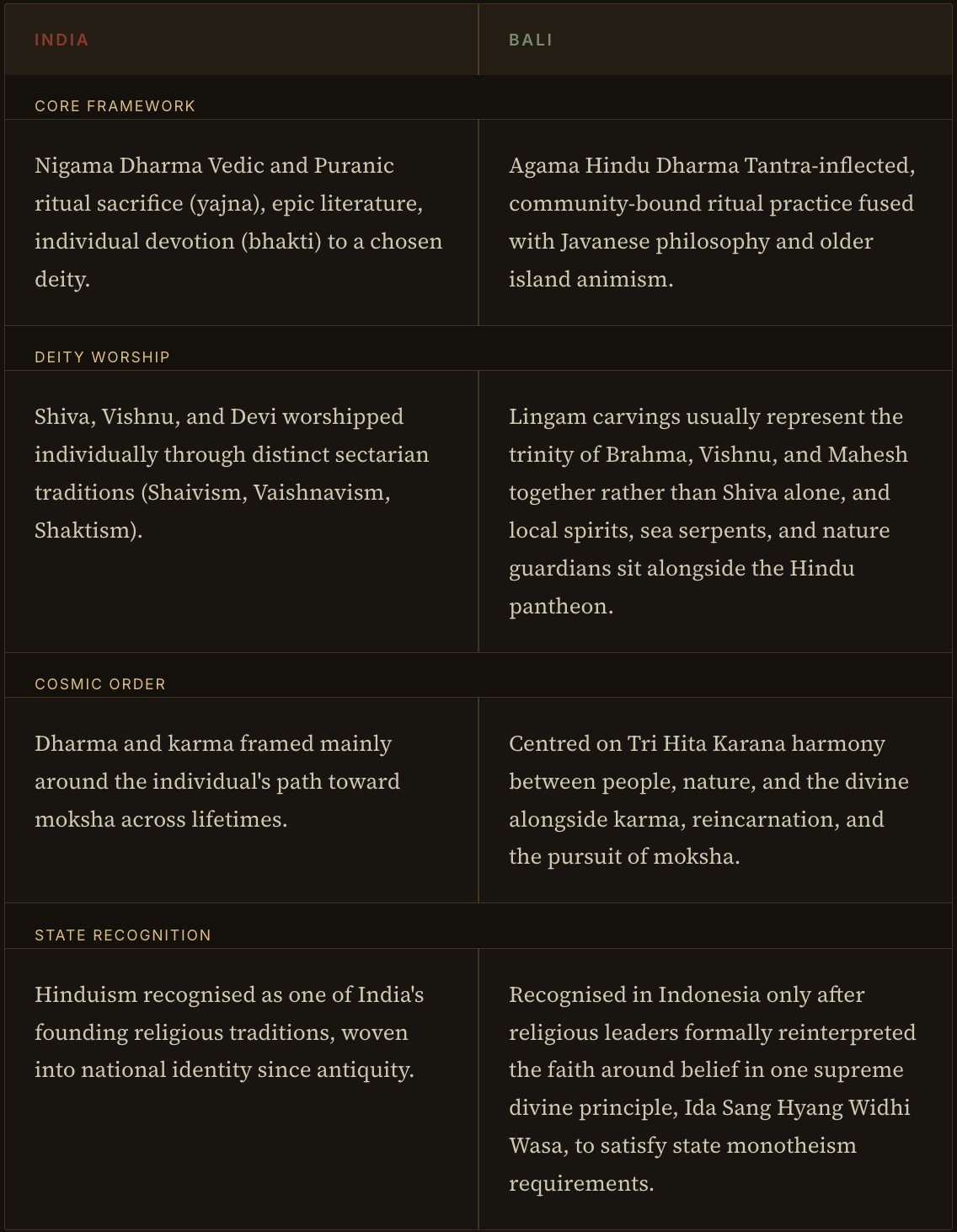
Both trace themselves to the same Sanskrit scriptures and the same gods. But ask a priest in Ubud and a pandit in Varanasi to define their religion, and you will get two different answers one built on Agama, the other on Nigama.
In Bali, the practiced philosophy is known as Agama Hindu Dharma a tradition shaped heavily by Tantric and Agamic currents: yoga, cosmology, and the worship of Shiva, Vishnu, and Shakti as channelled through ritual rather than scripture-first doctrine. Although the two traditions share common roots, the strict philosophy practiced in Bali is Agama Hindu Dharma while the one practiced in most of India is closer to Nigama Dharma, which is tied more directly to Vedic and Puranic sacrificial practice. In practice, that means Balinese Hinduism leans on ritual, offering, and temple choreography, while mainstream Indian Hinduism carries a denser scriptural and devotional apparatus built around the Vedas, Puranas, and epic literature.
The texture of daily worship diverges sharply too. Balinese Hinduism is also less scripturally rigid and more community-oriented than the individually focused devotional practices typical of Indian Hinduism, having absorbed Buddhist, Javanese, and older animist threads into a single system. Locally it is called Agama Hindu Dharma, and it blends Hindu, Buddhist, Javanese, and indigenous Balinese beliefs into one religion something closer to a total way of life than a discrete set of beliefs one opts into.
Even the festival calendar tells the story. Nyepi, Bali's New Year, is a full day of silence, fasting, and inward reflection almost the inverse of the loud, color-saturated New Year festivities common across India. Galungan and Kuningan, celebrated every 210 days on the Balinese Pawukon calendar, mark the victory of dharma over adharma and centre heavily on ancestor worship, a theme far less prominent in mainstream Indian festival life. Saraswati, goddess of knowledge, is one of the few figures both traditions celebrate on roughly equal terms.
The deep history of Hinduism in India
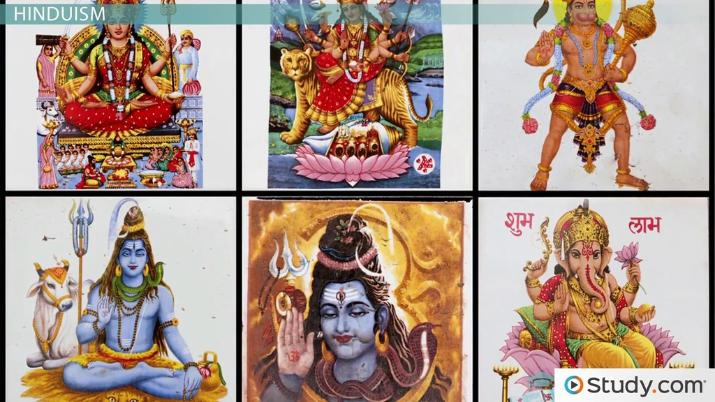
No religion this old has a single founder or founding date. Hinduism is better understood as a layering pre-Vedic belief, Indo-Aryan ritual, Upanishadic philosophy, and devotional reform, each stratum still visible beneath the next.
c. 2500 BCE
The Indus Valley substrate
The history of Hinduism overlaps with religious development across the Indian subcontinent going back to the Iron Age, with some elements possibly tracing to the Bronze Age Indus Valley Civilisation. Seals from Mohenjo-daro and Harappa hint at proto-Shiva figures and yogic postures, though their exact religious meaning remains debated.
c. 1500–500 BCE
The Vedic Period
The Vedas Rigveda, Samaveda, Yajurveda, and Atharvaveda were composed in this era, establishing a ritual-based religion centred on fire sacrifice (yajna) and hymns to deities such as Indra, Agni, and Soma. The historical Vedic religion arrived with Indo-Aryan migrations into northern India, beginning somewhere between 1900 and 1400 BCE.
c. 800–300 BCE
The Upanishads: ritual gives way to philosophy
The Upanishads shifted religious emphasis from external ritual toward inner knowledge, exploring Brahman as ultimate reality, Atman as the self, and the workings of karma and samsara. This is the philosophical bedrock that both Indian and Balinese Hinduism still draw on today.
c. 500 BCE–500 CE
Epic and Puranic Period
This era produced the great epics the Mahabharata and the Ramayana alongside the rise of devotional worship (bhakti) directed at Vishnu, Shiva, and Devi. The Bhagavad Gita, embedded within the Mahabharata, synthesised multiple strands of Hindu thought into a practical guide for living. These texts would later travel east with Indian traders and become the narrative backbone of both Javanese and Balinese temple art.
c. 500–1500 CE
The Medieval synthesis and the journey east
The medieval period of Hinduism ran roughly from 500 to 1500 CE, a span that overlaps almost exactly with Hindu-Buddhist civilisation's rise across maritime Southeast Asia. It was during this long medieval window not as a single missionary moment, but through centuries of trade, marriage, and court patronage that the religion took root in Java and, from there, in Bali.
On chronology: dates for the earliest layers of Hindu history are contested. Some scholars place Vedic civilisation as early as 4500 BCE based on astronomical references in the texts themselves, while colonial-era philology favoured a later, c. 1500 BCE start a reminder that "Hinduism" was never a single invention but an accumulation.
Why Bali never converted to Islam
By the early sixteenth century, every major court on Java had turned to Islam. Bali, alone among Indonesia's major islands, did not follow and the reasons are political as much as spiritual.
The turning point was the collapse of the Majapahit Empire, the last great Hindu-Buddhist power on Java, which fell to its own Muslim vassal around 1527. Majapahit had formally conquered Bali in 1343 under the general Gajah Mada, installing a more structured, Javanese-inflected form of Hinduism and drawing the island firmly into its cultural orbit. So when Majapahit itself fell two centuries later, Bali was already wired into the empire's religious and political networks which made it the obvious refuge when the empire's elite needed somewhere to go.
After Majapahit fell to the Demak Sultanate, a number of Hindu courtiers, nobles, priests, and artisans found refuge on the island of Bali, and the historian Ramesh Chandra Majumdar would later describe Bali as the last stronghold of Indo-Javanese culture and civilisation. This wasn't a trickle of refugees it was the relocation of an entire civilisation's priestly and artistic class. The Javanese Brahmin sage Dang Hyang Nirartha arrived in Bali in 1489 and never returned to Java, explaining simply that Hinduism there had been suppressed by Islam; he went on to found the major Brahmin priestly lineages that still lead Balinese ritual today.
Bali wasn't ignored it was too costly to take
Historians point to a combination of political strength, cultural continuity, and historical timing: Demak attempted diplomacy first, sending envoys under Sultan Trenggono to encourage conversion peacefully rather than by conquest, but Bali's ruler Dalem Waturenggong rejected Islamisation outright and instead expanded Gelgel's own influence into Blambangan, Lombok, and Sumbawa between 1512 and 1520. Java's Islamic powers were focused on maritime trade, and the cost of conquering and converting an already-consolidated Hindu stronghold like Bali likely seemed prohibitive while Bali's feuding kingdoms tended to unite against outside threats despite their internal rivalries.
1343 Majapahit conquers Bali
1489 Dang Hyang Nirartha flees to Bali
1512–20 Gelgel expands under Waturenggong
1527 Majapahit falls to Demak
Beyond politics, Balinese Hinduism was never a separate institution that could simply be banned or argued away it was embedded in how water moved through the rice terraces, in the timing of planting and harvest, in the architecture of every family compound, and in the small offering placed at every doorstep each morning. To convert Bali would have meant unbuilding the island's entire rhythm of life, not just changing a creed.
The legend that split Java from Bali

Long before colonial maps drew a line through the water, Balinese cosmology already had one carved by gods, a turtle, and three sacred serpents.
According to the fifteenth-century Javanese manuscript Tantu Pageleran, the island of Java was once unstable, thrashing wildly in the sea. Brahma and Vishnu used a fragment of the cosmic mountain Mahameru to pin Java down, placing it on the island's east side, where it stands today as Mount Semeru. Bali's own chronicle, the Babad Pasek, picks up where Java's story leaves off.
The story continues that Bhatara Pasupati a manifestation of Shiva residing atop Mount Semeru saw that Bali, too, was floating unanchored in the sea, and ordered the cosmic turtle Badawangnala along with three sacred serpents, Anantaboga, Basuki, and Taksaka, to carry a piece of the mountain across to stabilise the island. In this telling, the middle section of Mahameru became Bali's active volcano Mount Batur, the topmost peak became Mount Agung, and the remaining base was carried onward to become Mount Rinjani on neighbouring Lombok. The mountain that anchors Bali, in other words, is not native rock it is borrowed from the same cosmic peak that anchors Java, which is itself a fragment of a mountain whose original home is described as India.
But how did the water get there the strait that now physically separates the two islands? That story belongs to a gambler, a dragon, and a stolen bell.
"I will give you the treasure you desire, but you must promise to change your ways. You must never gamble again. Remember the law of karma."Naga Besukih, addressing Manik Angkeran Balinese oral tradition
The legend centres on a powerful priest in Java, Dang Hyang Siddhimantra, and his son Manik Angkeran, a young man known for gambling away the family's wealth. To teach his son a lesson, Siddhimantra led him to Mount Agung in Bali, home of the mystical dragon Naga Besukih, who guarded vast underworld treasure and using a sacred mantra, the priest summoned the dragon, who released gold and jewels from his own body.
Manik Angkeran, however, could not resist temptation. While his father slept, he stole a sacred bell, climbed back up the mountain alone, and having never learned the proper mantras himself resorted to cutting off the dragon's tail to steal more treasure outright. In the chaos that followed, water suddenly burst from the line he had cut, rising faster and faster until Mount Agung and its surrounding land were severed from the mainland the flood that became what is known today as the Bali Strait.
The myth does double duty. It explains a geographic fact why a narrow, fast-flowing strait sits between two islands that are visually almost continuous and it encodes a moral one: greed, broken trust, and the violation of a sacred boundary are what put the water there in the first place. That second meaning is precisely why the legend still matters today.
Why Java and Bali are still not connected by a bridge
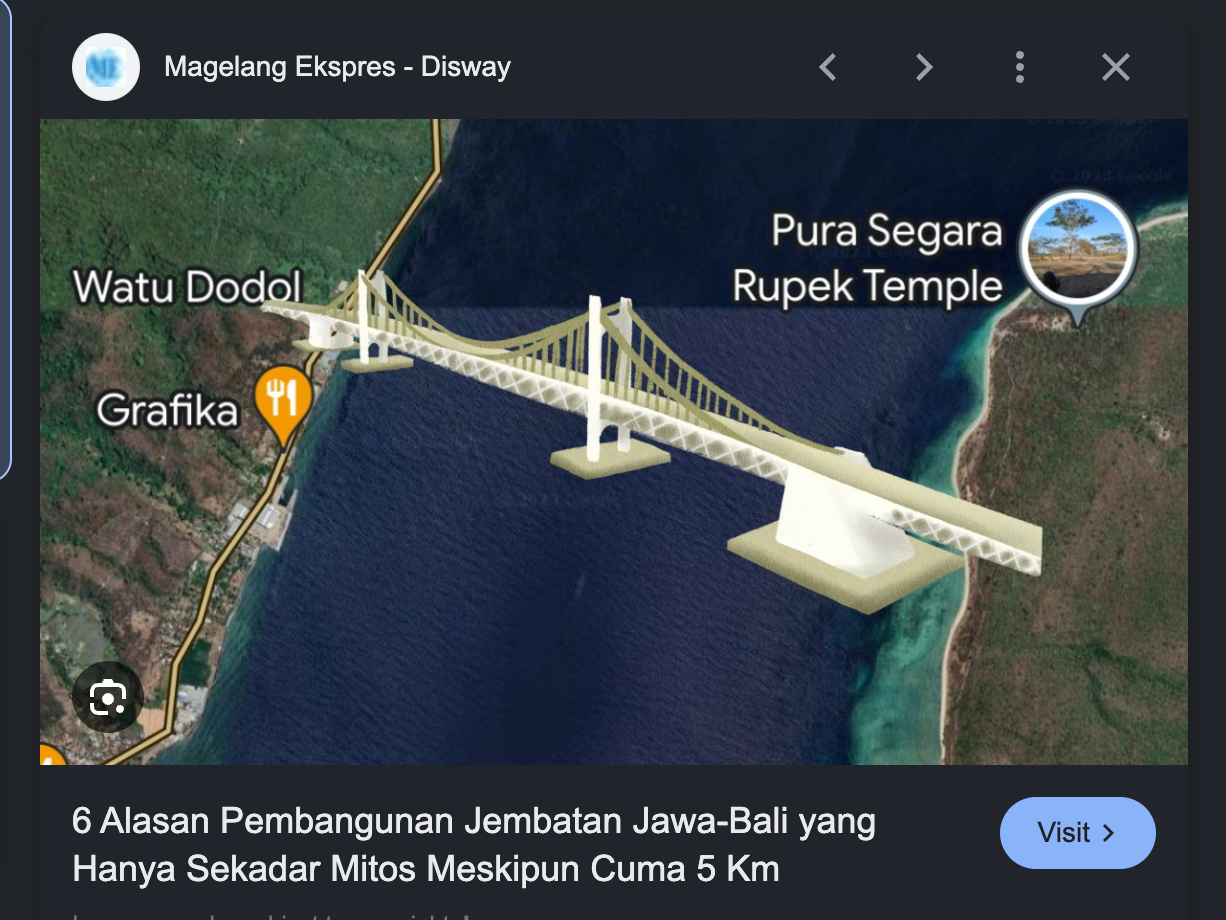
The Bali Strait is barely 2.4 kilometres wide at its narrowest shorter than many bridges built elsewhere in Indonesia. Engineering has never been the obstacle.
The first serious proposal dates back further than most people assume. The earliest plan for a Bali Strait crossing goes back to 1960, under the "Tri Nusa Bimasakti" concept intended to link Sumatra, Java, and Bali by road, and a formal bridge design was later commissioned in 1996 by engineering firm Brown Beech & Associates. Proposals resurfaced repeatedly afterward in 2012, 2016, and again in 2020 each time driven by the same practical complaint: trucks backed up for hours at the Ketapang–Gilimanuk ferry crossing.
Each time, the proposal met the same wall of resistance, and not primarily an engineering one.
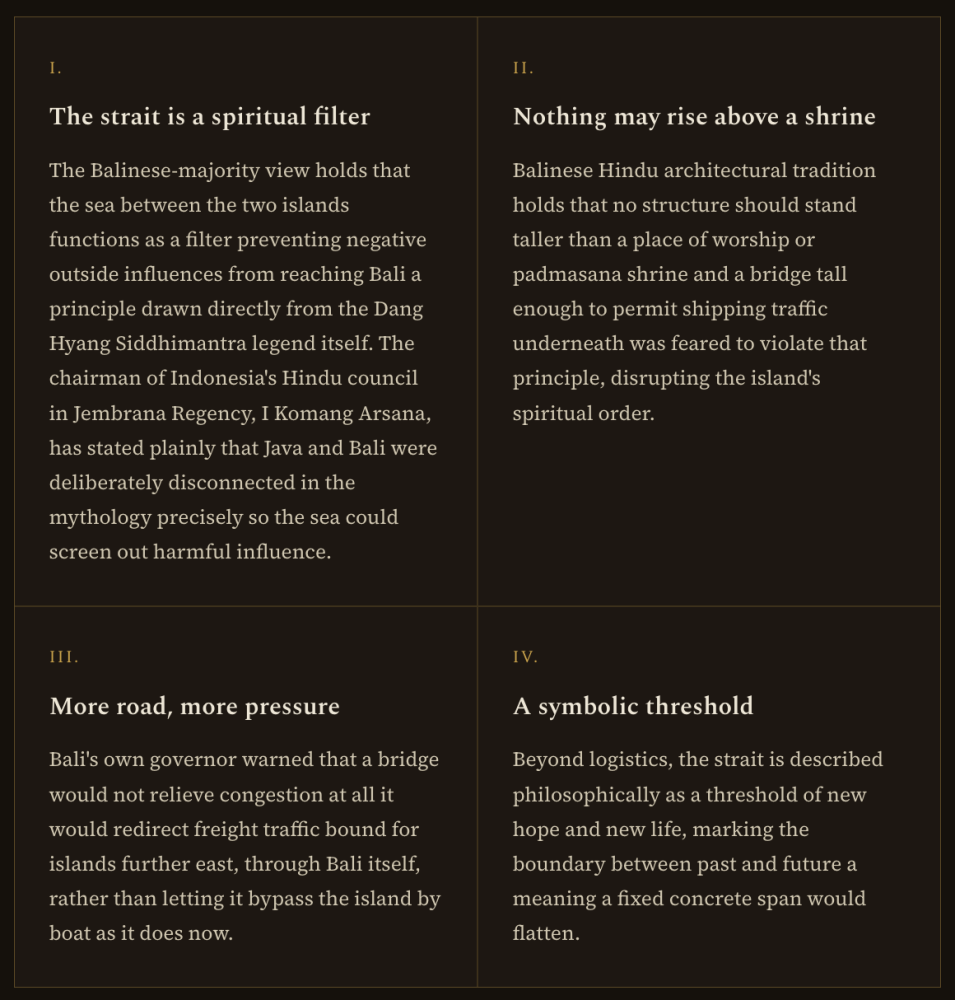
So the ferries keep running, year after year, queue after queue not because Indonesia lacks the engineering to span 2.4 kilometres of water, but because a meaningful share of the people living on the Bali side have never stopped believing the water belongs exactly where the dragon's tail put it.
Javanese Hindus in Bali the Majapahit legacy
Bali's Hinduism today is not a pure continuation of some original island faith. It is a layered settlement older Bali Aga animism, overwritten by a Javanese court civilisation that arrived as refugees and never left.
Before Majapahit, Bali already had its own Hindu-Buddhist kingdoms reaching back centuries, alongside the island's indigenous Bali Aga communities. The Bali Aga, sometimes called Bali Mula, are considered descendants of the island's original inhabitants from before the Hindu-Javanese migration wave, and they still practise a folk Hinduism with notable differences from mainstream Balinese Hinduism in Trunyan village, for instance, bodies are laid out beneath a Taru Menyan tree rather than cremated.
What changed everything was the scale and prestige of the Majapahit migration. The arrival of Majapahit's nobility, priests, and artists deepened Hindu ritual, social structure, and artistic tradition on the island, turning Bali into a sanctuary for the preservation of Majapahit Hindu culture itself. The result was not the simple introduction of Hinduism by Indian traders, but the fusion of that earlier Indian-origin layer with the highly organised Hindu-Javanese form the Majapahit refugees brought with them Indian deities, Javanese philosophy, and Balinese animism combined into one cohesive system.
The fingerprints of that migration are still visible everywhere on the island. Temple design, royal ceremony, and even the structure of the Balinese language itself still carry the Majapahit Empire's imprint, more than five centuries after the empire's fall. Court dance forms, the architecture of the family compound, the literary use of Old Javanese Kawi in religious texts all of it descends from people who arrived not as conquerors of a new land, but as refugees rebuilding their old one on borrowed ground.
A telling vocabulary: descendants of Majapahit nobility came to be seen as privileged "insiders" in Bali's precolonial kingdoms, while the Sudra majority were known as jaba "outsiders" a linguistic trace of who arrived later and who was already there.
The origin of the caste system in Bali
Bali's caste system shares its names with India's Brahmana, Satria, Wesia, Sudra but its origin story, function, and social weight are genuinely different.
The system did not arrive fully formed with the earliest Indian traders. It only took its final shape in the fifteenth century, following the settlement of high priests who left Java during its rapid Islamisation most famously Dang Hyang Nirartha, whose children by various wives founded the Shaivite Brahmin clans of Bali, alongside Dang Hyang Astapaka, founder of the Buda priestly clan. Those who refused to convert to Islam alongside the Majapahit royal family are generally credited with introducing the caste structure to the island in the first place.
What resulted is officially called Catur Warna or Caturwangsa four lineages, ranked, and inherited at birth.
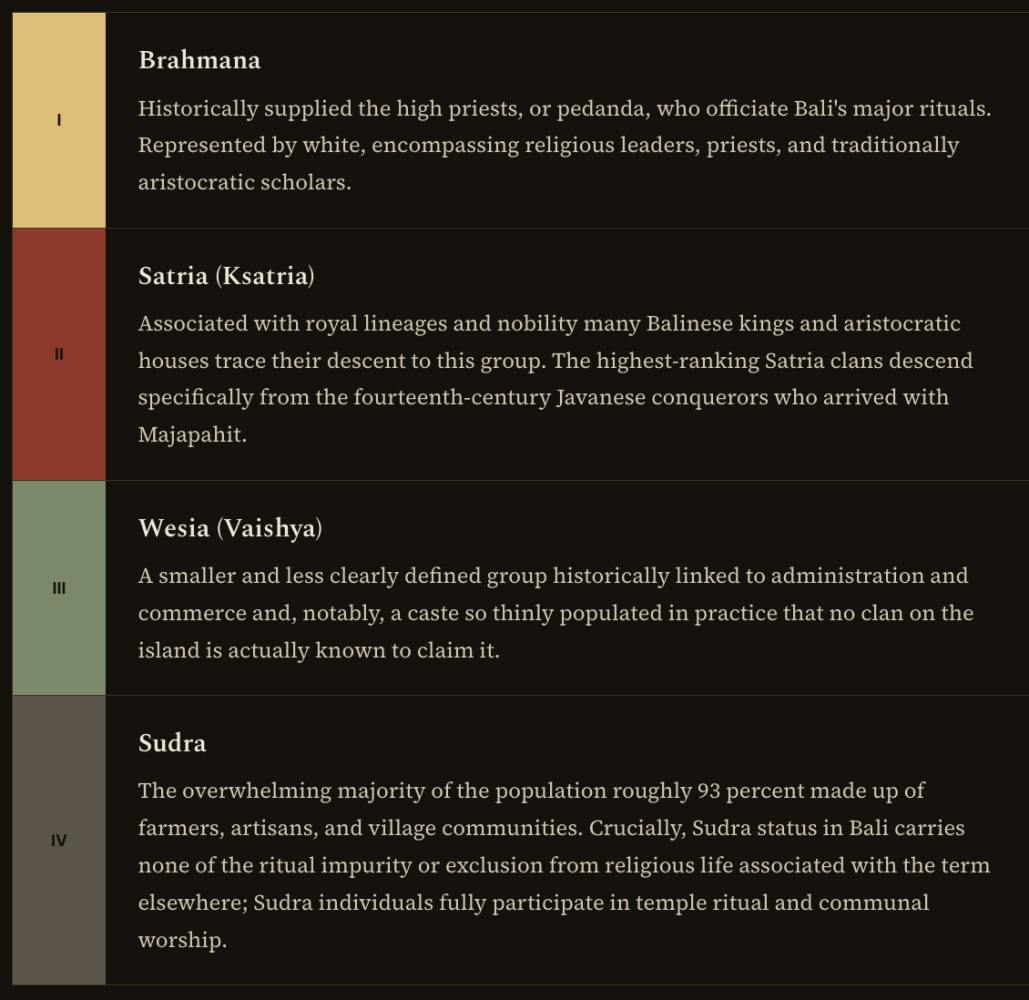
The top three Brahmana, Satria, and Wesia are together called the Triwangsa, set against the Sudrawangsa, or jaba, the outsiders. As much as ninety percent of the island's population belongs to this commoner majority, themselves further subdivided into many clans, sub-clans, and a layered network of village temples.
One detail separates Bali's caste structure from India's most sharply: avoidance. Unlike in India, social interaction between castes in Bali was never primarily governed by a logic of ritual "impurity" a Sudra is not untouchable, and the boundaries that exist are about hierarchy and address, not contamination. That distinction shows up even in conversation. Balinese itself is spoken in four registers low, medium, high, and sacred and a Sudra will typically address a Satria, Brahman, or Wesia in the high register, while the higher-caste listener answers back in the low register, a daily linguistic ritual that affirms rank without implying defilement.
Some contemporary Balinese intellectuals go further, arguing the whole system is a historical misreading of its own Vedic source. In their reading, the Vedic concept of caturwarna describes four roles power, religion, commerce, and labour achieved through the fruits of past-life karma rather than fixed at birth by bloodline, making the Balinese caturwangsa, with its inherited lineage logic, almost the symmetric opposite of what the Veda itself describes.
Caste in modern Bali no longer governs livelihood by law caste-based discrimination is now legally prohibited, and many Sudra families have become doctors, teachers, and business owners through education rather than birthright but the names persist, encoded directly into how a Balinese person is addressed from the day they are born.
In Balinese naming traditions, certain name elements can indicate a person's traditional caste (wangsa) or family lineage. However, it is important to note that names alone are not definitive proof of caste, because modern families may use names differently, people may inherit names through family traditions, and legal identity documents do not always reflect traditional social status.
Based on the names provided:
1. Gde Anantha Priharsena

Likely caste indicator: Gde
- "Gde" (or "Agung/Gusti Agung" in some families) is commonly associated with the Ksatria (Satria) nobility in Bali.
- If "Gde" is being used as a traditional title rather than simply a personal name, the person is likely from a Ksatria lineage.
Probable traditional caste: Ksatria (Satria)
2. Ida Bagus Raditya Avanindra Mahaputra

Likely caste indicator: Ida Bagus
- "Ida Bagus" is a very strong and widely recognized indicator of the Brahmana caste.
- Men from Brahmana families traditionally use "Ida Bagus."
- The female equivalent is usually "Ida Ayu."
Probable traditional caste: Brahmana
3. Ni Putu Ayu Kartika Diva Putri

Likely caste indicators: Ni, Putu, Ayu
- "Ni" indicates female.
- "Putu" traditionally indicates the first-born child.
- "Ayu" is a common female name element in Bali and does not by itself prove noble status.
- There is no clear Brahmana title (such as Ida Ayu) or clear Ksatria title (such as Anak Agung, Cokorda, Dewa Ayu, etc.) in the name.
Probable traditional caste: Most likely Jaba (commoner/non-triwangsa), though the name alone is insufficient to determine with certainty.
References
Sources consulted
- Wikipedia History of Hinduismen.wikipedia.org/wiki/History_of_Hinduism
- History and Culture Hinduism Timelinehistoryandculture.org
- HISTORY.com Hinduism: Origins, Beliefs, Gods & Customshistory.com/articles/hinduism
- Vedas AI When Did Hinduism Originate?vedasai.com
- Wikipedia Balinese Hinduismen.wikipedia.org/wiki/Balinese_Hinduism
- Virgin Australia Religion & Culture in Balivirginaustralia.com
- Bali.com Balinese Hinduism: History and Sourcebali.com
- Bali.com Brief History of Bali & the Balinesebali.com
- B2B Bali Differences Between Bali's and India's Hinduismb2bbali.com
- Bali Rescentre Balinese Hinduism vs Indian Hinduismbalirescentre.com
- Wikipedia Bali Kingdomen.wikipedia.org/wiki/Bali_Kingdom
- Wikipedia Bali Agaen.wikipedia.org/wiki/Bali_Aga
- History Collection Bali Hindu History: 1,000 Yearshistorycollection.com
- Bodha Research Islamization of Indonesiabodharesearch.in
- Radar Tulungagung How Bali Preserved Its Hindu Identityradartulungagung.com
- Balitra Why Only Bali Remains Hindubalitra.com
- NOW! Bali Mt. Agung: Home of Myths and Legendsnowbali.co.id
- Britannica Mount Agungbritannica.com
- Bali Padma Bhuwana Mount Agung: the Balancing Forcebudayabali.com
- Bali Padma Bhuwana Legend of the Bali Straitbudayabali.com
- Bali Padma Bhuwana Sapta Linggasari, Palace of the Godsbudayabali.com
- Visitbali.id Manik Angkeran: The History of the Bali Straitvisitbali.id
- Ijen Geopark Historygeopark.netlify.app
- BaliTrekker Java & Bali's Separation, History, and the Bridge Controversybalitrekker.com
- Coconuts Bali Bridge Connecting Java and Bali?coconuts.co
- Future Southeast Asia Bali Strait Bridgefuturesoutheastasia.com
- Wikipedia Bali Strait Bridgeen.wikipedia.org/wiki/Bali_Strait_Bridge
- Suhendra, E.A. Re-emerging Issue of Bali Strait Connecting Bridge, Bali Tourism Journal 4(1), 2020balitourismjournal.org
- Wikipedia Balinese Caste Systemen.wikipedia.org/wiki/Balinese_caste_system
- Facts and Details Balinese Society: Groups, Caste, the Subak Systemfactsanddetails.com
- Bali.com Caste System in Balibali.com
- NOW! Bali The Caste System in Today's Balinowbali.co.id
- NOW! Bali Balinese Caste Systems: Changes in Modern Timesnowbali.co.id
- Balipedia A Look into the Caste System in Bali and Modern Lifebalipedia.com
- Cinchy Life The Caste System in Balicinchy.life
- Balitra The Caste System: Social Hierarchy and Names in Balibalitra.com