
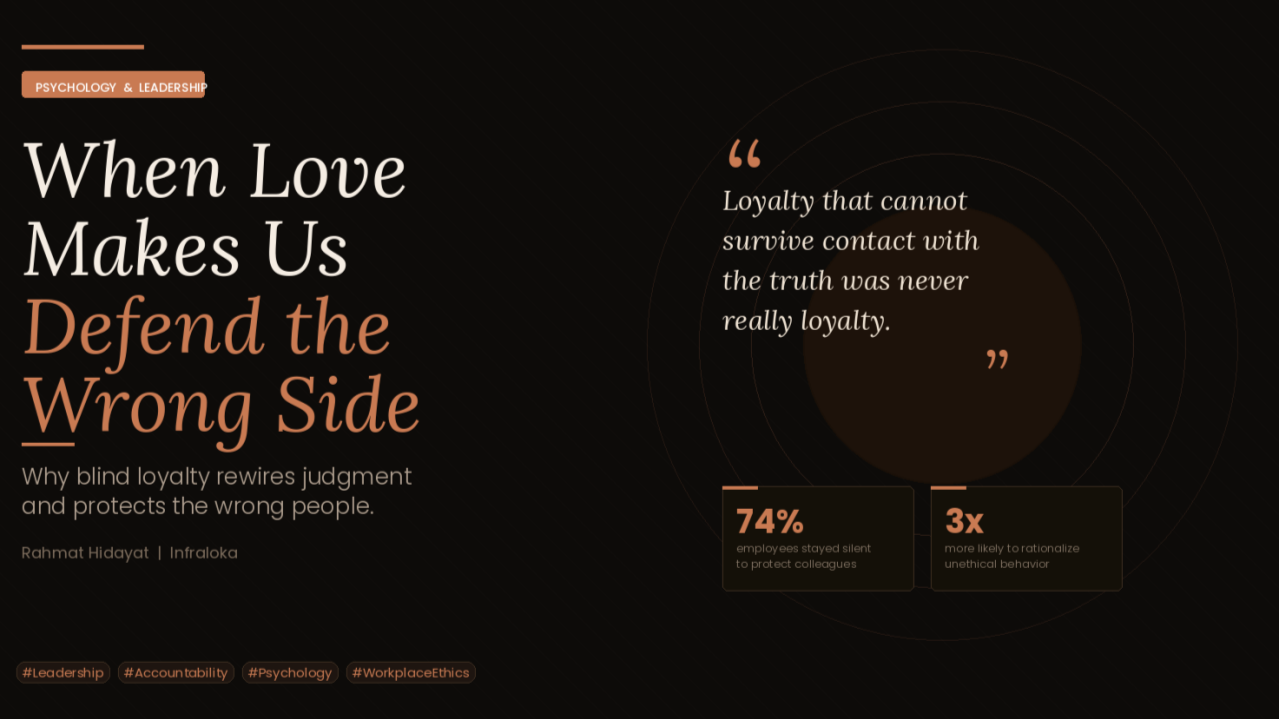
When blind love makes us defend the wrong side : Case Study of Fadel Muhammad & Ainun Najib
There is a specific kind of silence that settles in a room when someone challenges a beloved leader, a close colleague, or a longtime mentor who has clearly done something wrong. It is not the silence of careful thought. It is the silence of people calculating whether loyalty costs less than honesty.
This is the operating environment of blind love, or in Indonesian we call it cinta buta: an emotional attachment so strong that it filters out contradicting evidence, suppresses doubt, and recruits its host to actively defend the very person or institution causing harm.
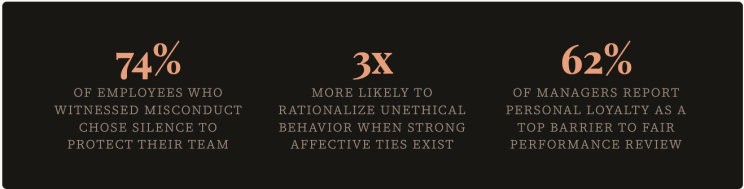
The neuroscience of loyalty over logic
The brain does not treat loyalty and rational assessment as parallel processes. Research in affective neuroscience shows that strong emotional bonds activate the same reward circuits stimulated by monetary gain. When someone we love is threatened by criticism, we experience it as a threat to ourselves.
Tali Sharot's research at University College London on motivated reasoning demonstrates that when we are emotionally invested in a belief or a person, the brain actively seeks confirming evidence while suppressing disconfirming data, before we are even consciously aware of doing so. Blind love is therefore not a character flaw. It is a cognitive default that requires deliberate effort to override.
"Motivated reasoning is not a bug in human cognition. It is a feature designed for social bonding. The problem arises when that feature runs without an override switch."Tali Sharot, The Influential Mind, 2017
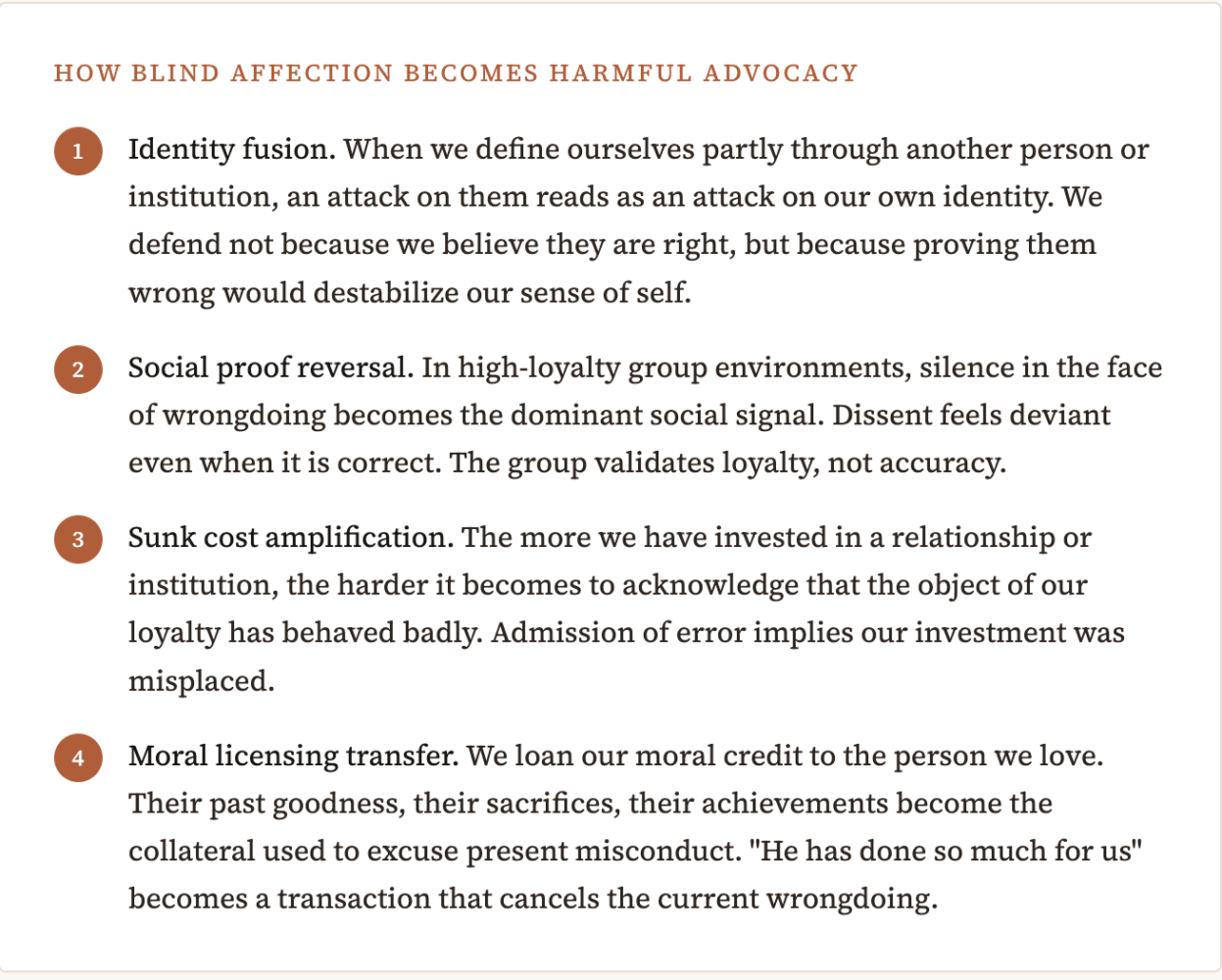
Four mechanisms that turn cinta buta into active defense
The organizational cost
In professional environments, blind love toward a senior leader or a founding team produces a specific and well-documented dysfunction. Harvard Business Review has documented that organizations with high affective loyalty to founders experience significantly slower course-correction after strategic mistakes, precisely because the feedback loops required to identify errors are suppressed by interpersonal affection.
In Indonesia specifically, this dynamic intersects with cultural values around hormat (respect for hierarchy) and rukun (group harmony). These are genuinely important social values. The problem is when they are weaponized, consciously or not, to silence legitimate concern. A culture that frames disagreement as disrespect has not elevated loyalty. It has weaponized it.
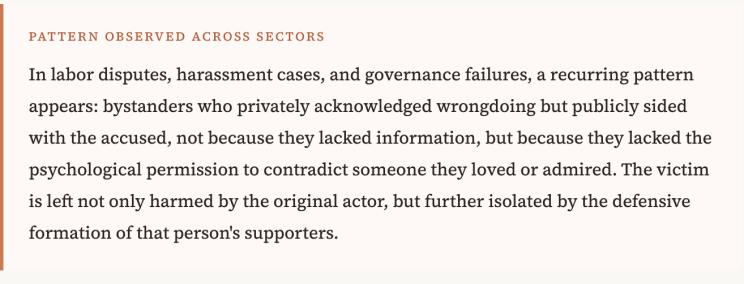
Blind love in public life: when fandom becomes a shield
The same mechanism operates at scale in political and public discourse. Research from MIT's Media Lab on political polarization shows that affective partisan identity, the sense that "my side" represents who I am, predicts defensive behavior toward party members accused of misconduct more reliably than any ideological variable.
The supporters are not, in most cases, uninformed. They often know the facts. What they are experiencing is the same identity fusion and sunk cost pressure that operates in personal relationships, scaled to a collective level. The platform changes. The psychology does not.
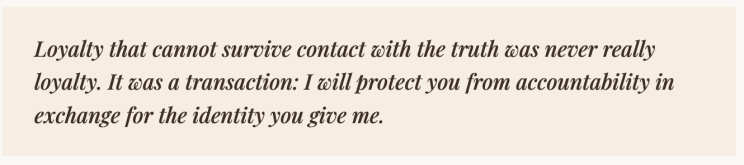
The difference between loyalty and complicity
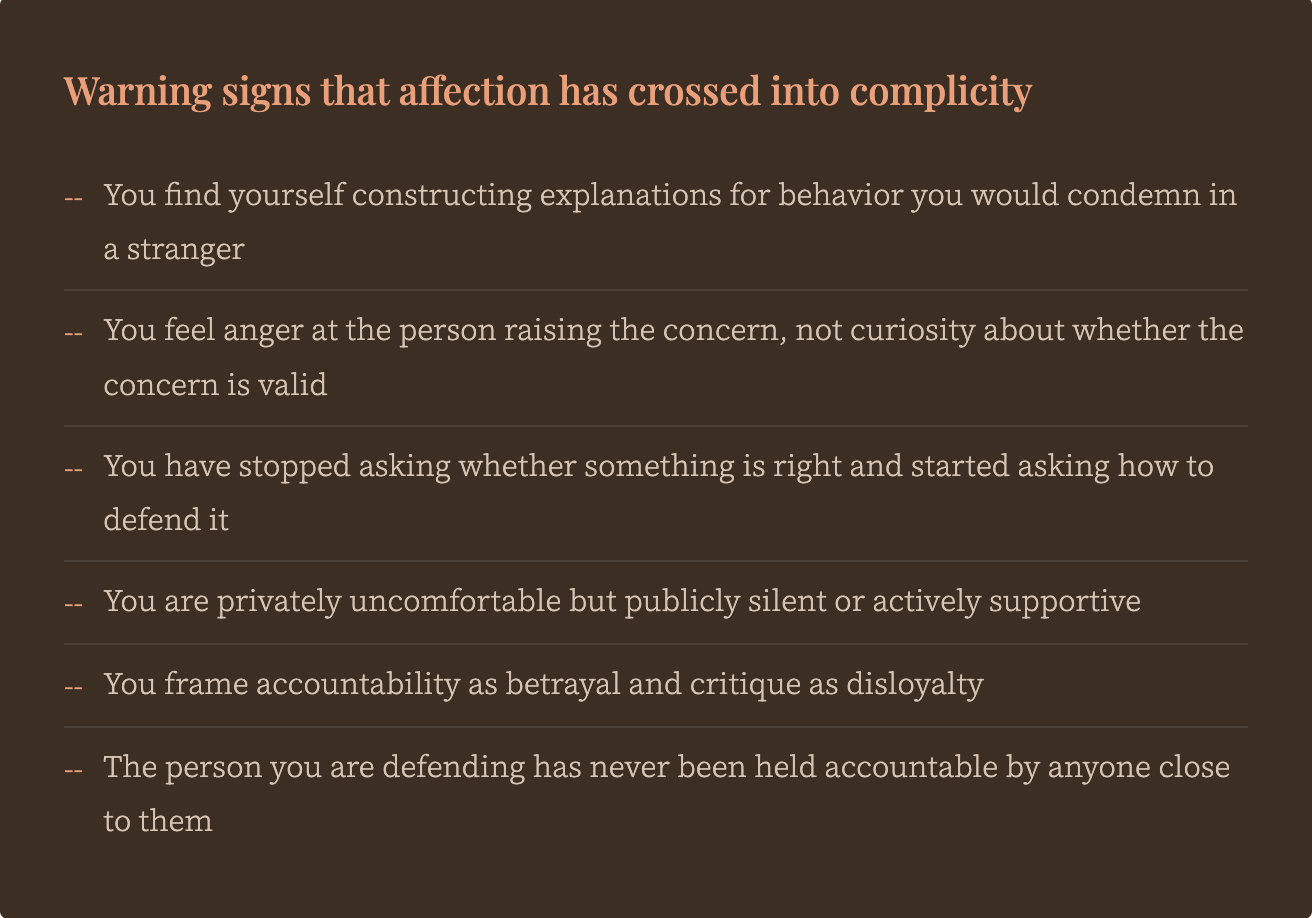
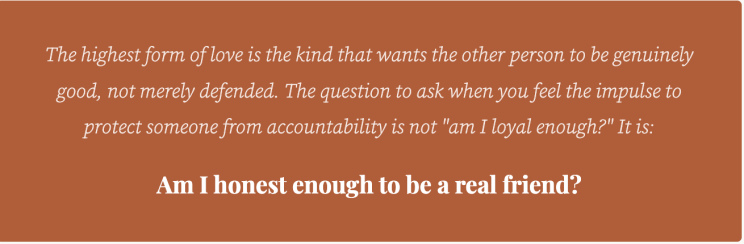
This is the critical distinction that blind love collapses. Genuine loyalty includes the willingness to tell someone they are wrong. It includes accountability, correction, and the occasional uncomfortable conversation. It is what distinguishes a true ally from a yes-person.
Complicity, by contrast, is unconditional defense that requires suppressing one's own judgment. It is corrosive to the person giving it, to the person receiving it, and to every bystander watching the standard of acceptable conduct be quietly revised downward.
What clear-eyed love actually looks like
The antidote is not the elimination of loyalty or affection. Strong relational bonds are essential for human flourishing and organizational cohesion. The antidote is what psychologists call differentiated loyalty: the capacity to hold genuine care for someone alongside honest assessment of their actions.
This requires, first, the internal permission to separate a person's worth from the rightness of their specific act. Someone can be genuinely admirable and still be wrong. A beloved leader can have built something remarkable and also have harmed someone. These things are not mutually exclusive, and the refusal to hold them simultaneously is the core mechanism of blind love.
It requires, second, a community that rewards honesty over solidarity. Organizations that treat internal dissent as disloyalty will reliably produce blind defenders of wrongdoing, not because of individual character failures, but because they have structured the incentives to make silence the rational choice.
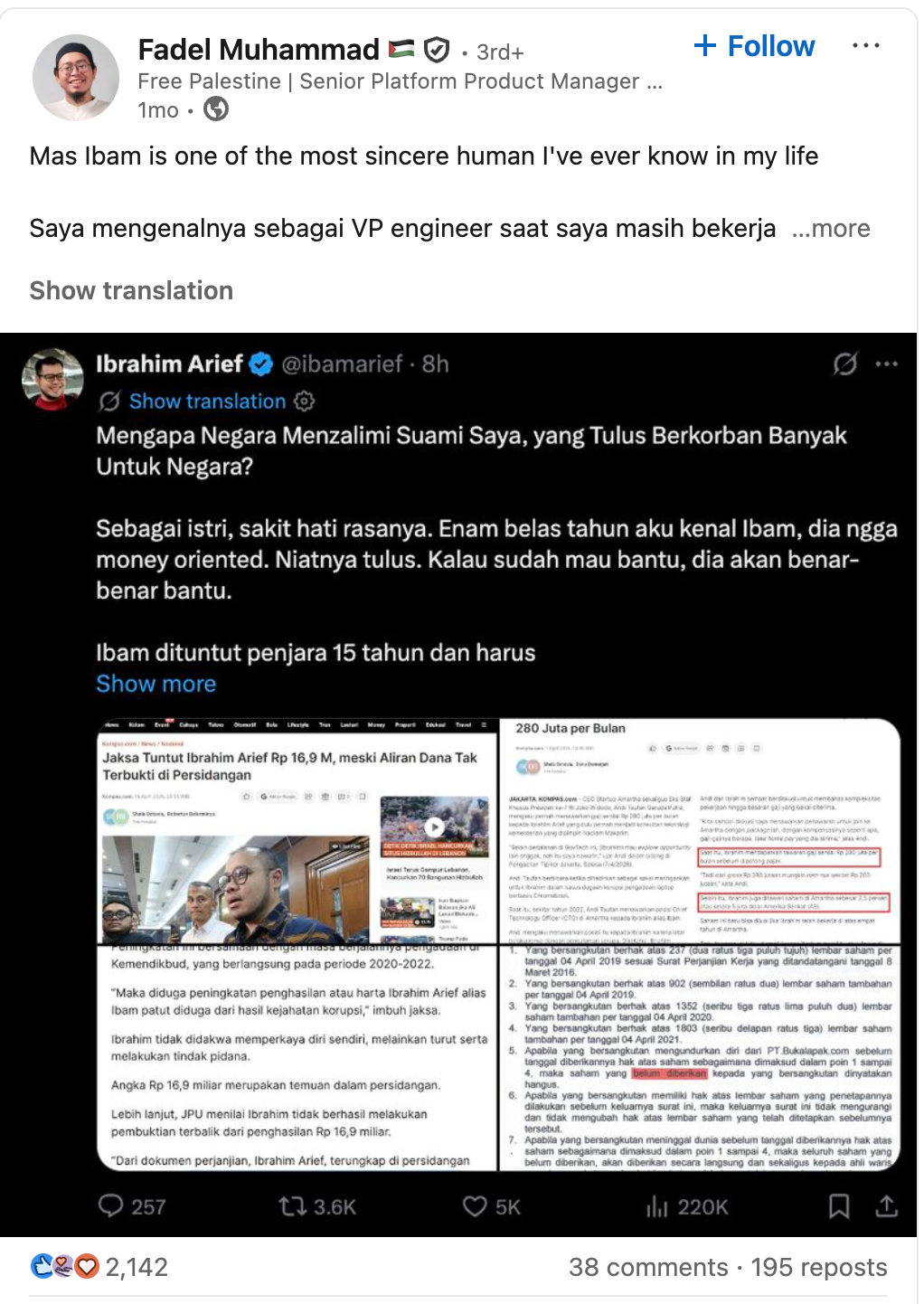
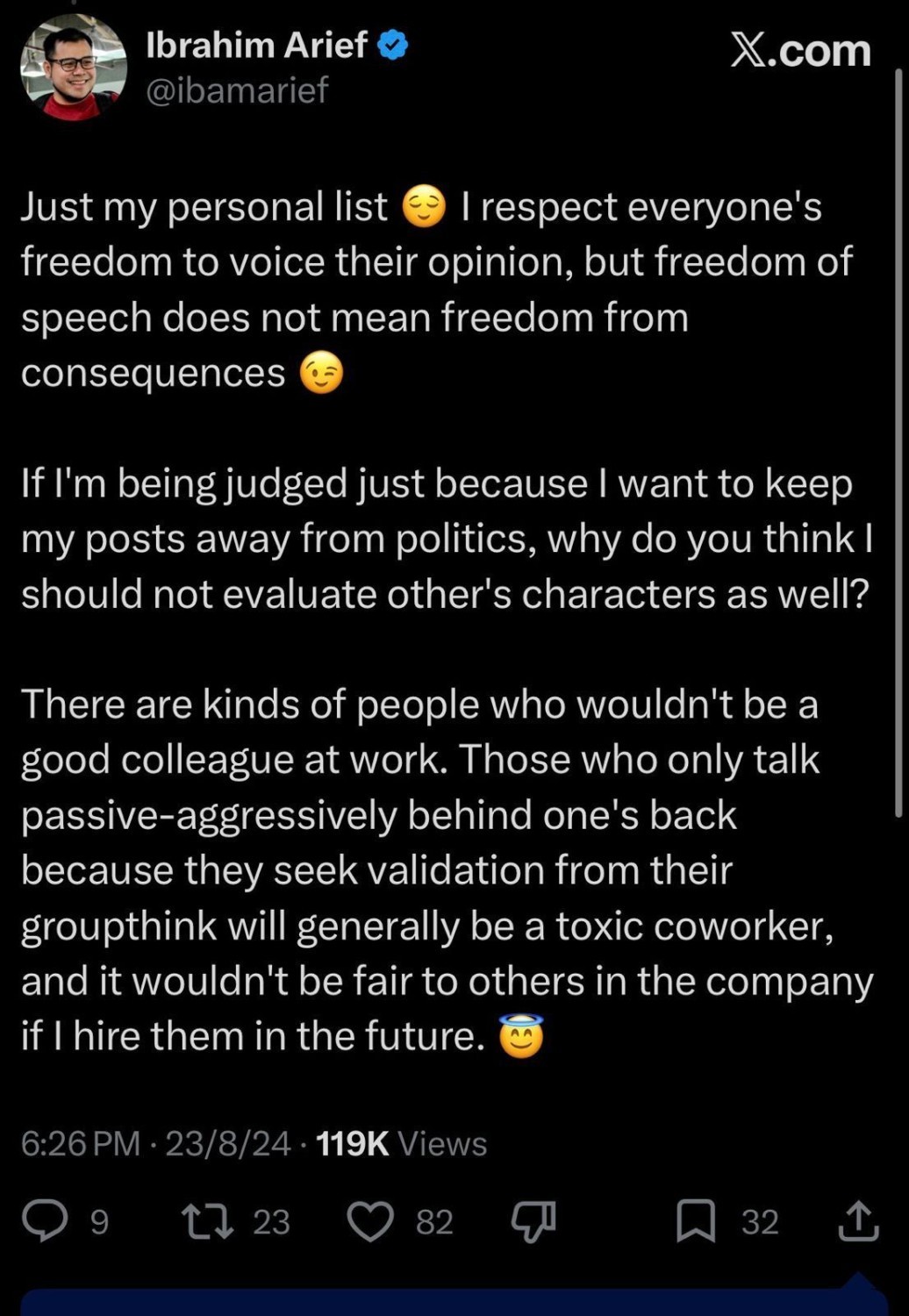
Dedicated to my Harasser : Ibrahim Arief aka Ibam
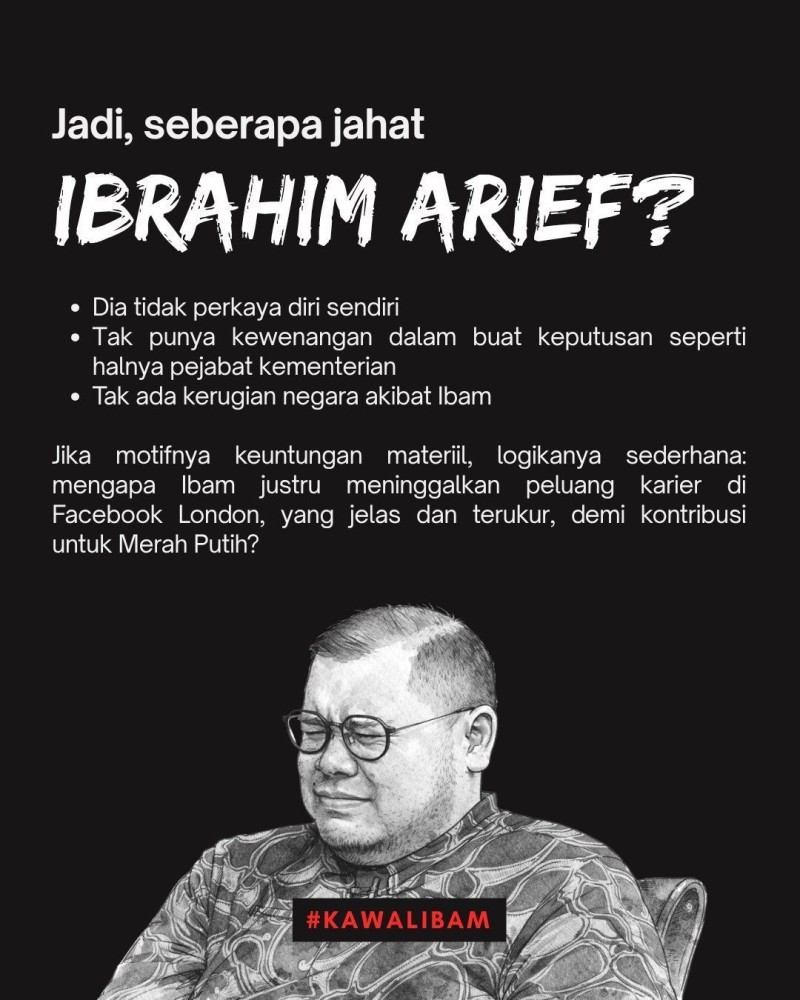
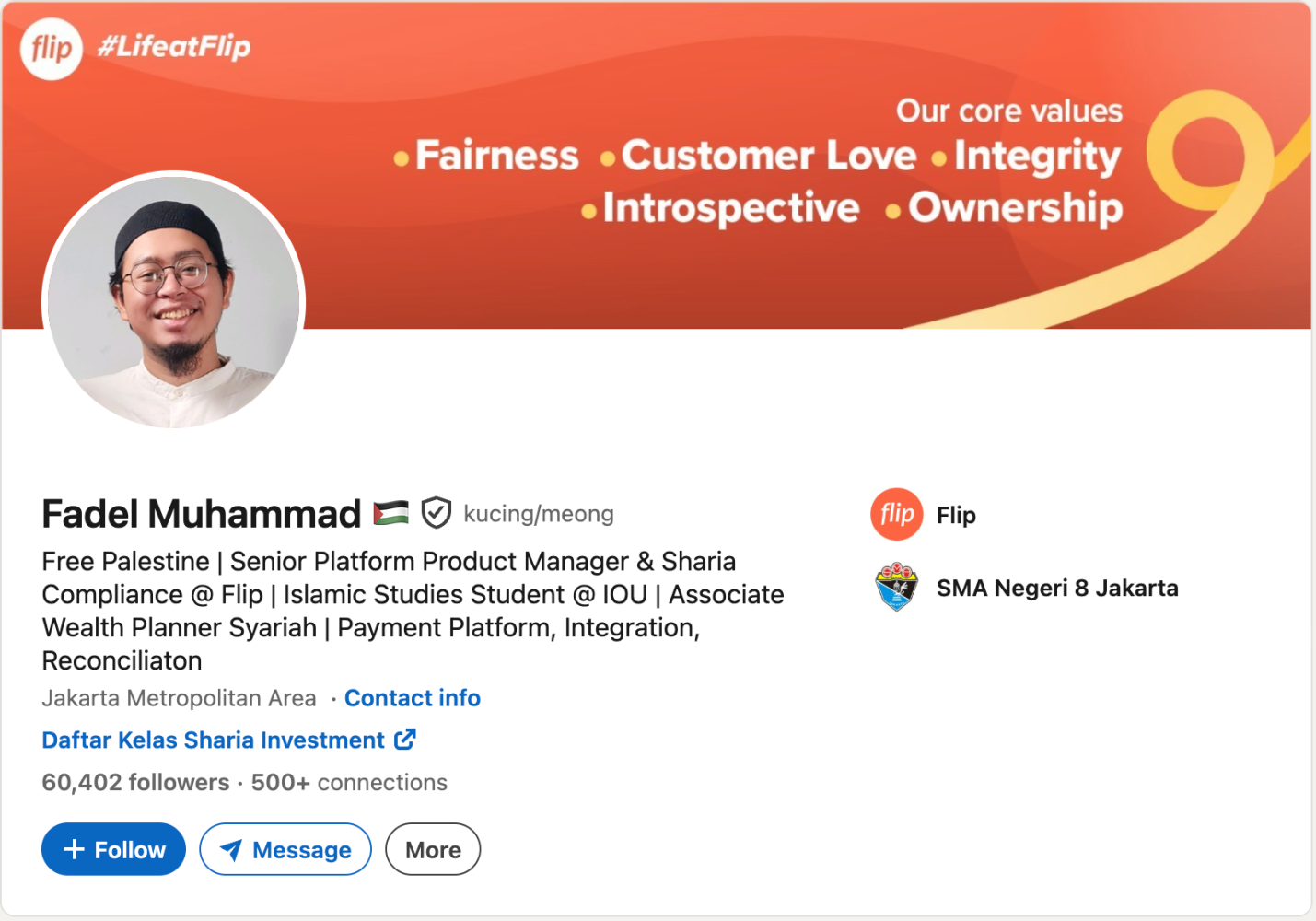
His loyal Friends: Fadel Muhammad
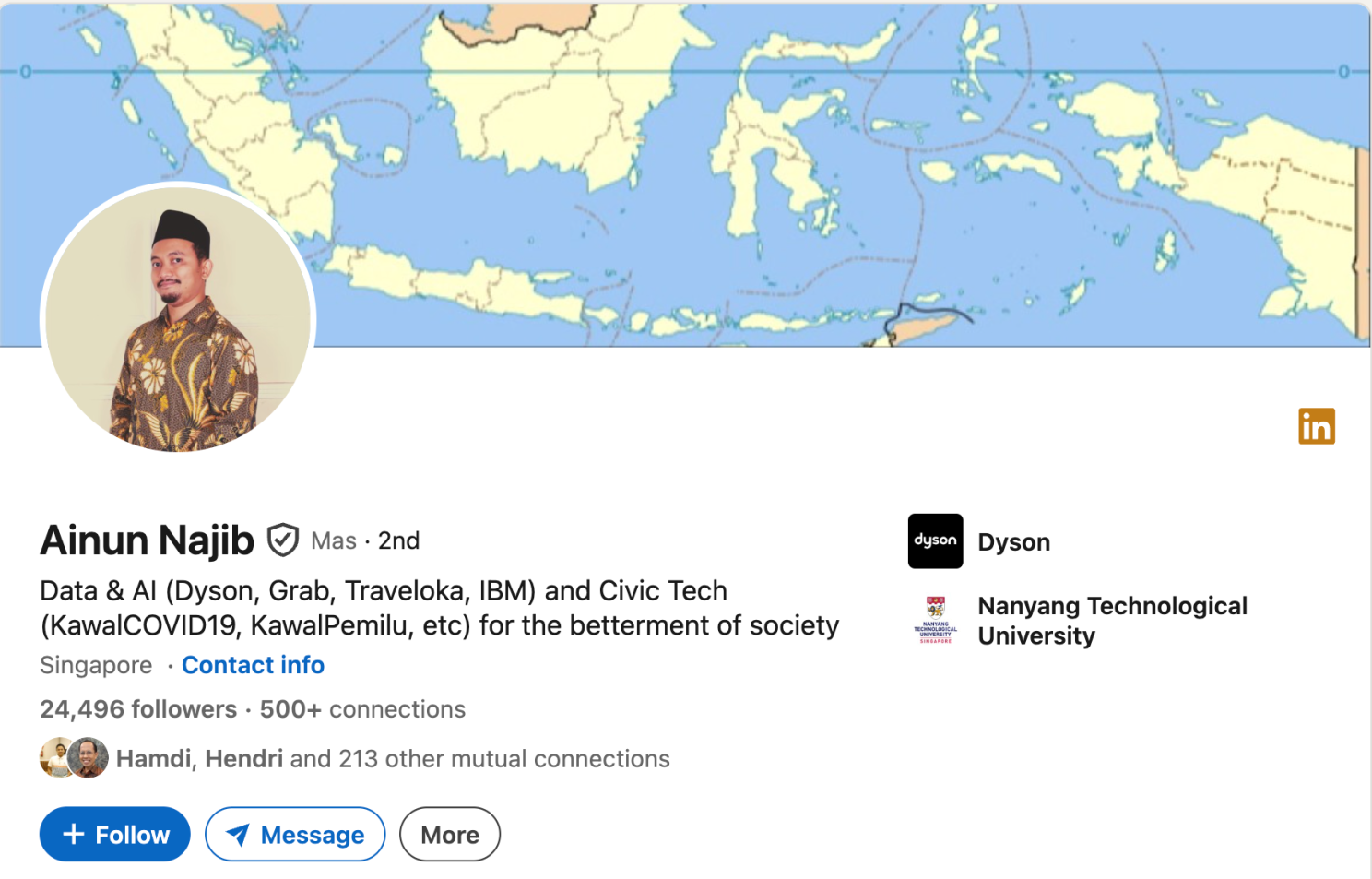
Ainun Najib
This article draws on research in affective neuroscience, organizational behavior, and social psychology. The author writes from the intersection of technology leadership, legal advocacy, and professional culture in Indonesia and Southeast Asia.
#Leadership#Psychology#ProfessionalCulture#CriticalThinking#Accountability#OrganizationalBehavior#Indonesia#WorkplaceEthics#HumanBehavior#Loyalty#MentalModels#ThoughtLeadership#Infraloka