
When the Servant Becomes the Lord: Sufism and Moksha By Rahmat Wibowo From InfraLoka
Manunggaling Kawula Gusti, Ana al-Haqq, and the Moksha of Nusantara's Greatest Souls a meditation on the invisible bridge between Java and the cosmos.
The River That Carries Two Waters

In the dense spiritual soil of the Nusantara archipelago, two rivers met and merged so completely that scholars still debate where one ends and the other begins. One river flowed from the Arabic deserts and the Persian highlands the river of Islamic mysticism, of Sufism, of the annihilation of the self in the ocean of God. The other river arose from the subcontinent's ancient highlands Hinduism and its summit teaching of moksha: liberation from the endless wheel of rebirth, union with Brahman, the dissolution of the individual soul into the universal one.
These rivers met in Java, Sumatra, and across the Nusantara from roughly the 13th to 16th centuries, producing a spiritual tradition so syncretistic, so layered, and so mystically daring that it gave birth to some of the most controversial saints in Islamic history and some of the most luminous legends of sovereign self-dissolution ever recorded anywhere on earth.
This is an investigation into that meeting through the teachings of Syech Siti Jenar and the martyred Persian mystic al-Hallaj, through the Hindu concept of moksha and how it saturated Javanese political and spiritual imagination, and through the legendary figures Gajah Mada, Sabdo Palon, Prabu Jayabaya, Prabu Siliwangi, and Prabu Brawijaya V who, when the world as they knew it came to an end, chose not to die but to disappear.
"The soul that knows itself fully knows its Lord."
The Teaching: Manunggaling Kawula Gusti
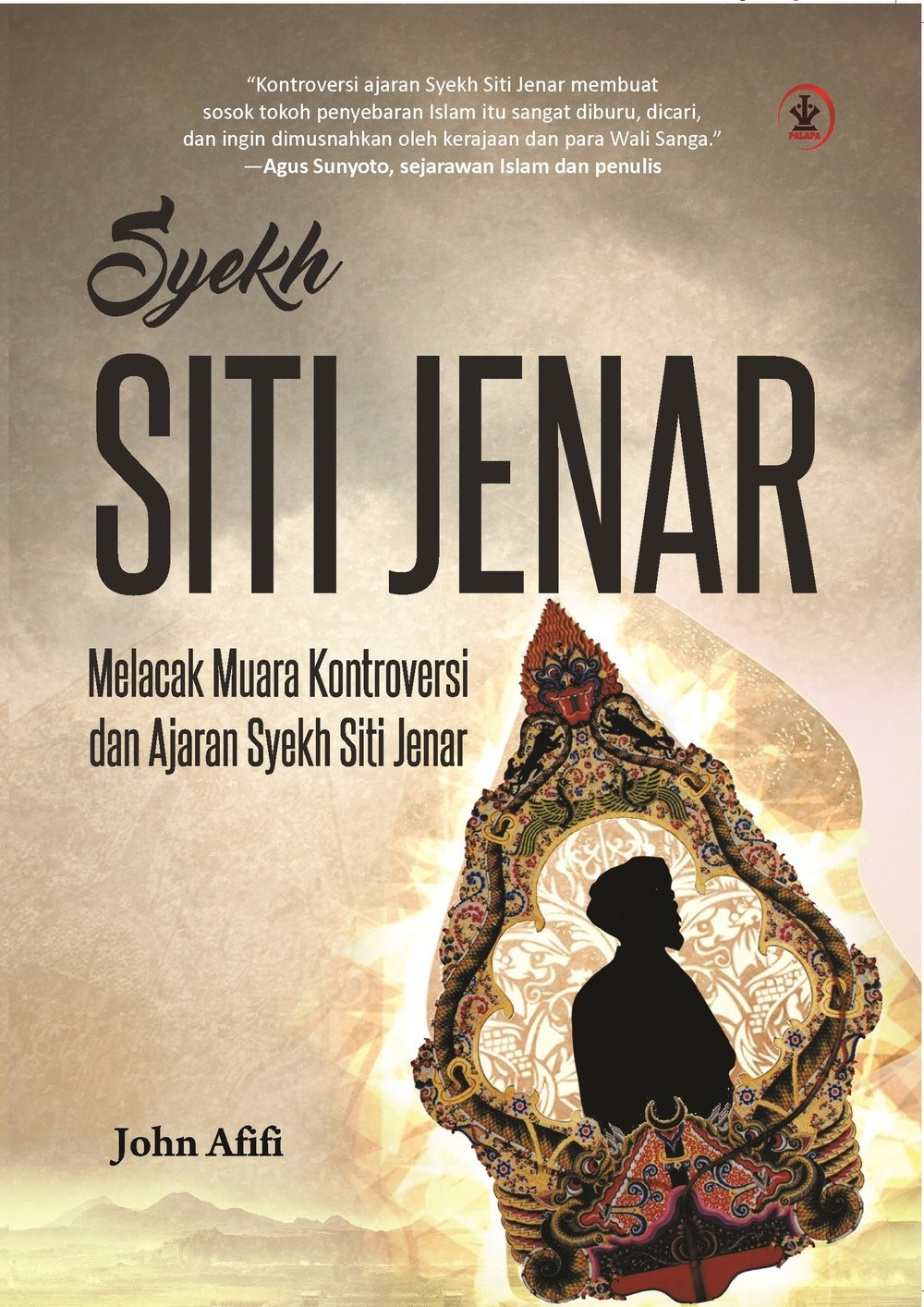
The phrase Manunggaling Kawula Gusti is Old Javanese for "the merging of the servant with the Lord." It is perhaps the most radical teaching ever to emerge from the soil of Java and it is, at its core, a philosophy that sits precisely at the crossroads of Sufi wahdat al-wujud (Unity of Being) and the Hindu Vedantic concept of Atman-Brahman unity, the recognition that the individual self is not separate from the universal Self.
The teaching is inseparable from its most famous teacher: Syech Siti Jenar (also known as Lemah Abang, Sitibrit, or Sheikh Abdul Jalil), a Sufi mystic who lived in early 16th-century Java during the transition from the Hindu-Buddhist Majapahit era to an Islamic-influenced Demak Sultanate. His origins remain debated some traditions hold he was of Arab descent, others that he was Javanese but his intellectual lineage is unmistakably a synthesis of the Islamic mystical tradition and the Javanese spiritual cosmology he inhabited.
What Siti Jenar Actually Taught
Syech Siti Jenar's understanding of God was not pantheistic in a naive sense. His followers were careful to clarify that he never claimed to be God. Rather, Manunggaling Kawula Gusti was understood as the recognition that the Creator is the ultimate place of return of all beings that in returning to God, a human being becomes one with Him, not by replacing God, but by ceasing to exist as a separate entity.
This is the doctrine of fana in Sufi terms annihilation of the ego-self and it is indistinguishable in essence from the Hindu-Vedantic teaching of jivan-mukti: liberation achieved while still alive, where the practitioner recognises that the individual Atman is identical with the cosmic Brahman.
What made Siti Jenar controversial was his insistence on teaching this directly to ordinary people, and his inversion of Javanese Islamic orthodoxy: he called ordinary life mati (death), and called the post-death state urip (life). In his view, this earthly existence was the prison; the return to God was the liberation. This mirrors precisely the Hindu teaching that samsara the cycle of birth, death, and rebirth is suffering, and that moksha, liberation from that cycle, is the supreme goal.
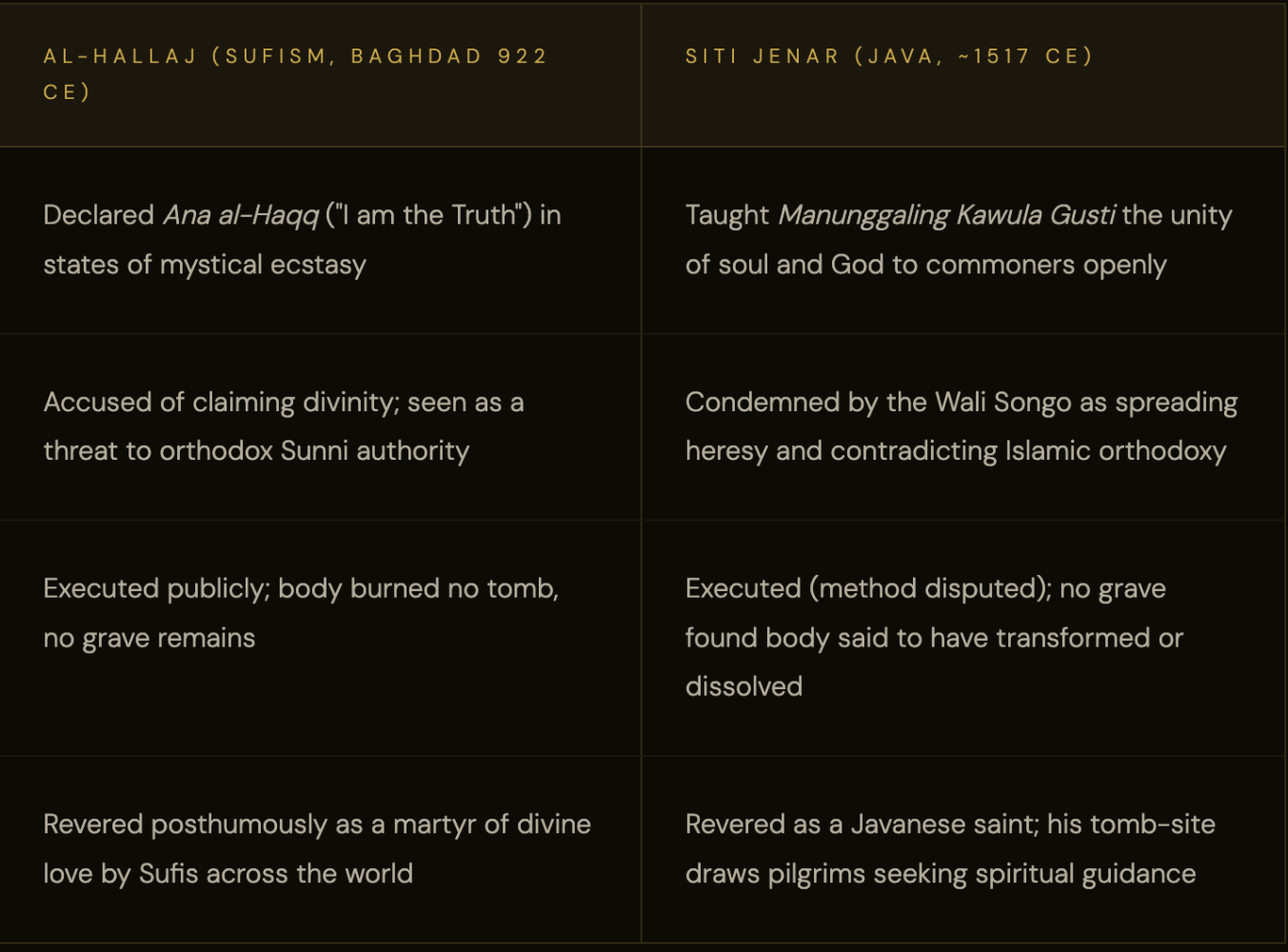
Siti Jenar was brought before the Wali Songo the nine guardian saints of Java's Islamization and executed, likely around 1517, though accounts vary. The manner of his execution varies between accounts, but almost all agree: no grave was ever found. In some tellings, his body transformed into flowers; in others, he simply dissolved. In the Javanese imagination, this is itself a form of moksha.
Ana al-Haqq: The Martyr Who Preceded Him

To understand Siti Jenar fully, we must look westward across centuries to 9th-century Baghdad, where a Persian mystic named Abu Mansur al-Hallaj (857–922 CE) uttered words that would echo across the Islamic world for a thousand years: Ana al-Haqq "I am the Truth," or more precisely, "I am the Real."
Al-Haqq is one of the ninety-nine names of Allah. When Hallaj said "I am the Truth," he was heard by the Abbasid establishment as claiming divinity and this led to his arrest, eleven years of imprisonment, a long trial, and finally his brutal public execution in 922 CE: his hands and feet were cut off, he was crucified, decapitated, and his body burned.
Yet Hallaj himself explained his utterance more carefully. "If you do not recognize God," he said, "at least recognize His sign I am the creative truth, because through the truth, I am eternal truth." He was not claiming to replace God. He was claiming to have so completely annihilated his ego-self that only the divine remained. There was no longer a "Hallaj" making the statement only God, speaking through the vessel that had once been Hallaj.
"I have seen my Lord with the eye of my heart. I said: 'Who are You?' He said: 'You.'"
Scholars have directly placed Siti Jenar in the intellectual lineage of al-Hallaj, alongside Abu Yazid al-Bistami, Ibn Arabi, Jalaluddin Rumi, Hamzah Fansuri, and Shams al-Din al-Sumaterani all mystics who explored the territory of divine unity and paid social prices for it.
The Conceptual Triangle: Sufism, Hinduism, Kejawen
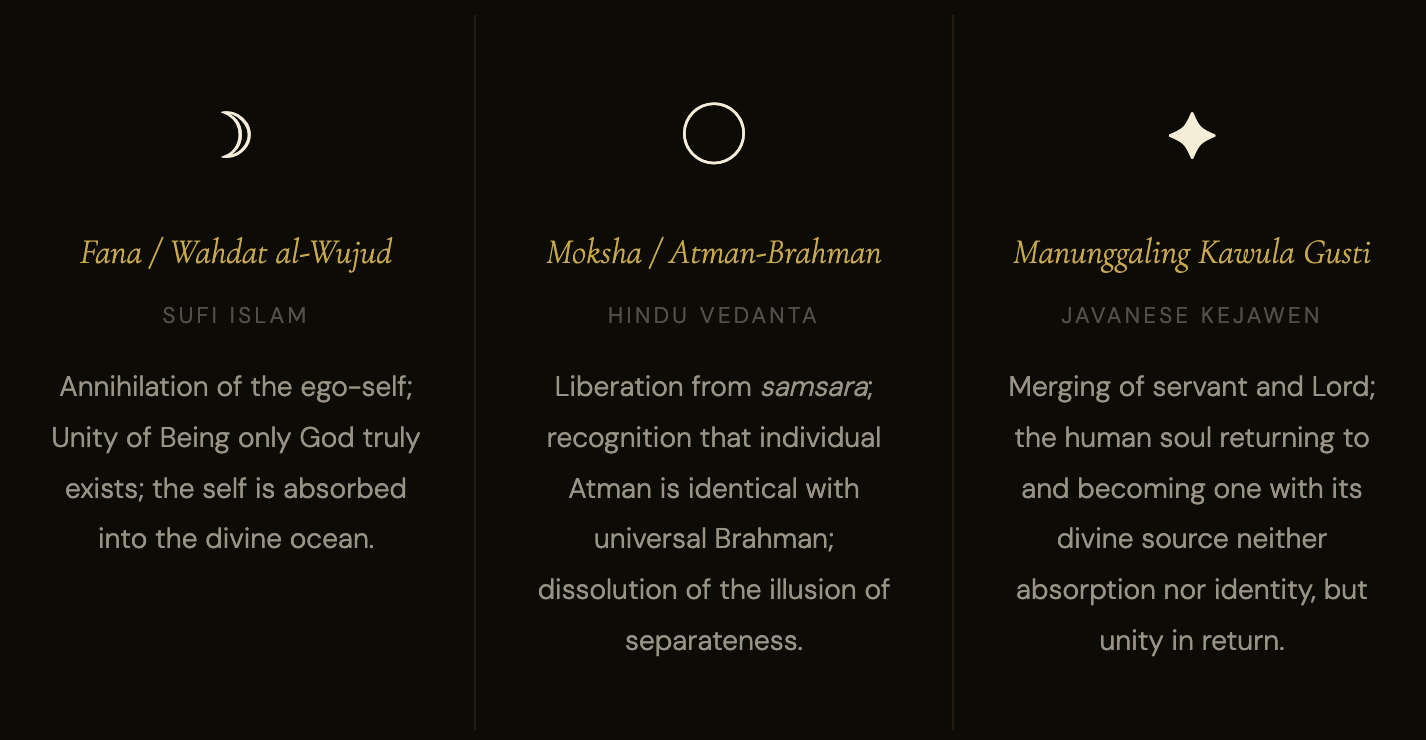
The comparison between al-Hallaj's Hulul (divine infusion) and the Hindu concept of Brahman-Atman unity has been explicitly noted by scholars. The Islamic scholar Sumit Paul has pointed to the striking parallel between Ana al-Haqq and the Sanskrit declaration Aham Brahmasmi ("I am Brahman") one of the four Mahavakyas, the "great sayings" of the Upanishads noting that both reflect the universal mystical experience of self-dissolution into the divine, which transcends the particular religious form that carries it.
Moksha: Liberation Without a Grave

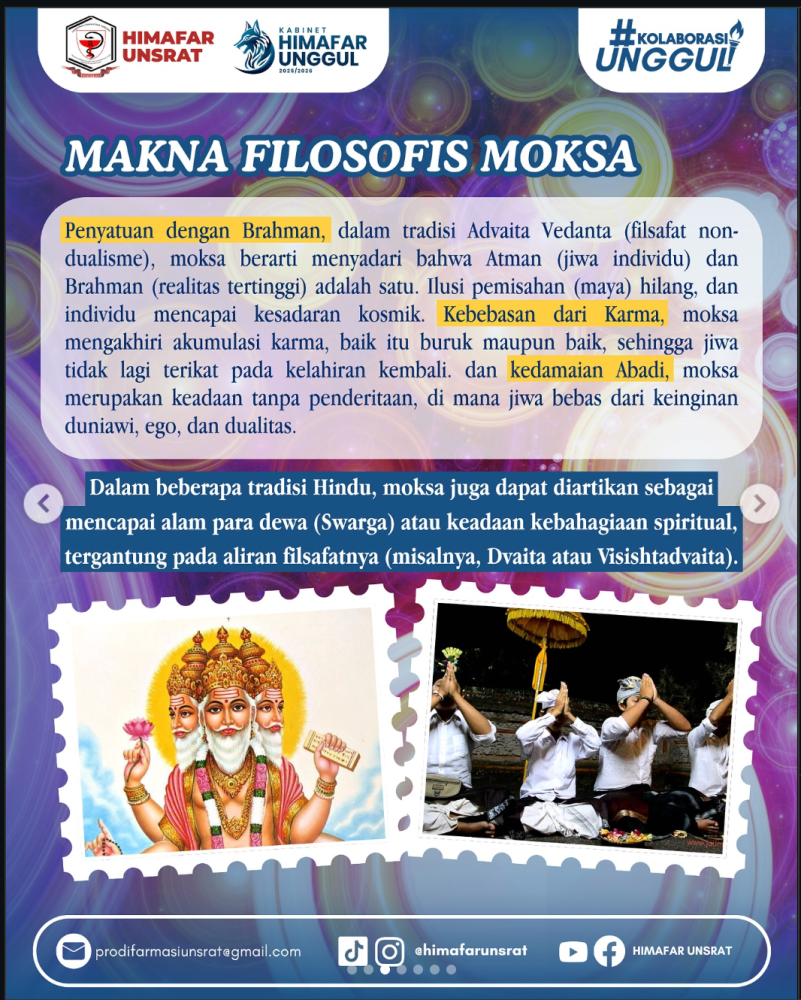
The Sanskrit word moksha derived from the root muc, meaning "to release" or "to free" entered Nusantara spiritual culture along with the first waves of Hindu-Buddhist influence around the 2nd–5th centuries CE. In its classical Hindu meaning, it refers to liberation from the cycle of samsara (death and rebirth), the cessation of karma, and the union of the individual Atman with the cosmic Brahman.
In the Javanese tradition, moksa took on an additional, vivid, and distinctly Nusantara character: the complete physical disappearance of the body. Where ordinary mortals leave corpses and tombs, those who achieve moksa leave nothing no bones, no grave, no trace. The body dissolves, transforms, or simply ceases to exist in this material plane. In Javanese cosmology, this is the ultimate sign of spiritual achievement a confirmation that the practitioner was not merely an ordinary human being but had transcended the limitations of material existence entirely.
This understanding perfectly parallels the concept of fana in Sufism: when the mystic is so completely annihilated in God that even their physical form no longer belongs to the material world. It is, in essence, the same experience narrated in two different cosmological languages.
What follows is a catalogue of Nusantara's legendary figures who, according to tradition, chose this path or were chosen by it.
Legends of the Vanishing
These are the great souls of Nusantara who entered moksa each carrying a different reason, a different grief, or a different calling. Their graves were never found because, tradition holds, the earth could not contain them.
Mahapatih Gajah Mada
Majapahit · c. 1290–1364 CE
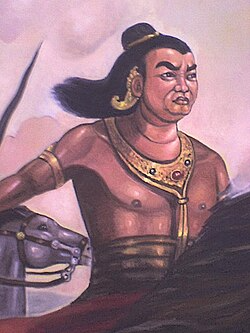
The greatest military mind and political architect of Majapahit swore the Sumpah Palapa refusing to taste earthly pleasure until all of Nusantara was united under one realm. He nearly fulfilled it. But the catastrophic Battle of Bubat (1357 CE), in which a Sundanese royal delegation was massacred and the princess Dyah Pitaloka died, left Gajah Mada politically disgraced, blamed for engineering a tragedy that cost Majapahit its most promising alliance. According to the Sunda Pupuh (Book of Sunda), after being surrounded by Majapahit's own elite forces demanding he answer for Bubat, Gajah Mada chose neither surrender nor flight. He disappeared. According to tradition, he achieved moksa at Madakaripura waterfall in East Java a place of deep spiritual retreat. He had long declared his wish: "Let Gajah Mada disappear moksa without trace, turns to air." In his life, he had sacrificed everything worldly: no wife, no children, no family only the oath. In his death, he surrendered what remained: the body itself.
Moksa at Madakaripura · No grave found
Prabu Jayabaya
Kediri Kingdom · r. 1135–1159 CE
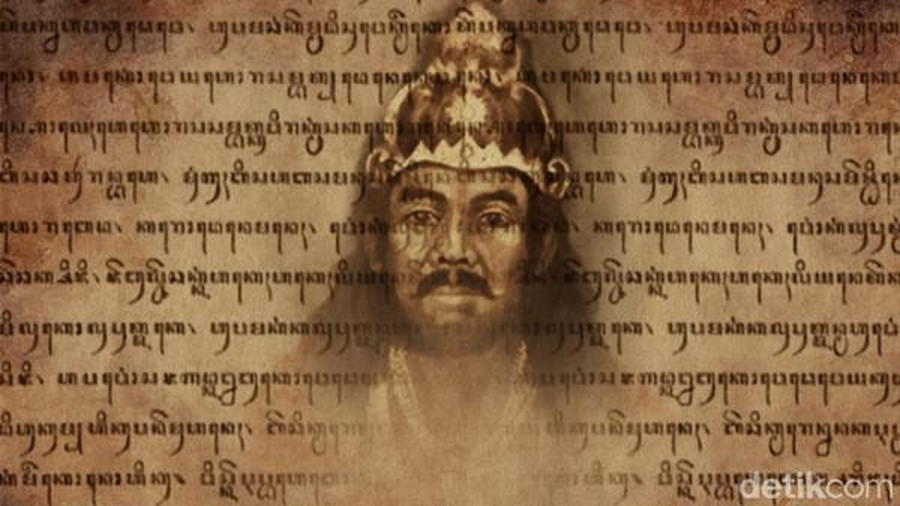
The seer-king of Kediri was reputed to be an incarnation of Vishnu himself and his prophecies, the Jangka Jayabaya, are still consulted in Java today. Jayabaya reunified the Kediri kingdom after defeating his brother Jayasaba a fratricidal victory that, despite its political necessity, haunted him for the rest of his life. The guilt of having killed his own blood drove Jayabaya into deep spiritual retreat. He abdicated and became a Hindu recluse, practicing tapa moksa (meditative dissolution) in the village of Menang in Pagu, Kediri Regency. He disappeared without a trace. The site remains a sacred pilgrimage destination; both Sukarno and Suharto meditated there seeking his blessing and the legitimacy of kingship. Jayabaya himself was the archetypal Ratu Adil the Just Ruler and his disappearance was the ultimate enactment of that archetype: a king whose justice extended even to releasing himself from power entirely.
Moksa at Desa Menang, Kediri · Petilasan Sri Aji Jayabaya remains
Prabu Siliwangi
Sunda Kingdom (Pajajaran) · r. 1482–1521 CE

Sri Baduga Maharaja Prabu Siliwangi governed the Sunda Galuh kingdom for 39 years, bringing Pakuan Pajajaran to its zenith. He was a Hindu king of legendary spiritual power, associated with the White Tiger of Mount Salak, whose presence was said to be felt as a sudden stillness in the deep forest. When Islam spread through Java and his own son, Raden Kian Santang, embraced the new faith and urged his father to convert, Siliwangi refused not out of rigidity, but out of sovereignty. He left a final message granting his family the freedom to choose their own faith, then withdrew. He did not die in battle. He did not convert. He disappeared into the forest-mountain landscape of West Java, and by Sundanese tradition this withdrawal was not defeat but the highest act of a king: returning to the essence of the land itself. It is believed that he spiritually merged with the guardian force of the mountain, becoming the White Tiger present without ruling, vigilant without being seen.
Moksa into the forests of West Java · Body never found
Prabu Brawijaya V
Majapahit (last king) · r. 1474–1498 CE
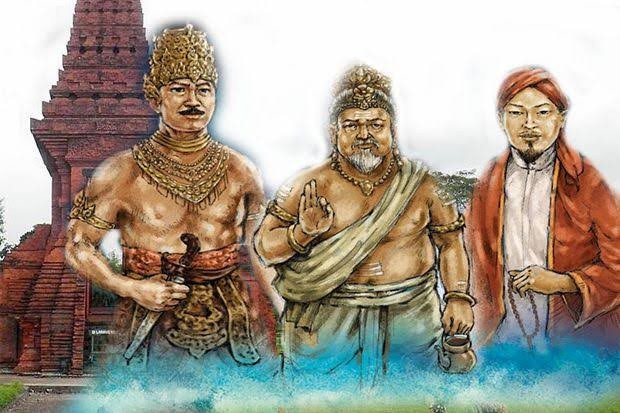
Bhre Kertabumi, the last king of Majapahit, presided over the twilight of a civilization. As the Demak Sultanate rose and Islamization accelerated, Brawijaya V found himself at the center of a seismic cultural transition. The most popular tradition holds that he achieved moksa on Mount Lawu a volcano on the border of modern Central Java and East Java retreating there as Demak forces advanced and after a fateful encounter with Sunan Kalijaga, one of the Wali Songo. Other versions say he died and was buried, or passed away on the coast after a burning ritual. The multiplicity of stories itself testifies to his symbolic power: the Javanese imagination could not accept that the last great Hindu king simply died. He had to dissolve, to transcend, to become part of the sacred geography. His disappearance marks not only a personal spiritual event but the moksa of an entire civilization the end of Hindu-Buddhist Majapahit, the vanishing of a world.
Moksa on Mount Lawu (primary tradition) · Multiple accounts
Sabdo Palon
Majapahit Advisor · fl. late 15th century CE

Of all Nusantara's moksha figures, Sabdo Palon is the most mythologically charged and the most prophetically alive. He was the spiritual advisor and pamomong (guardian-counsellor) of Prabu Brawijaya V, and according to the Serat Darmagandhul, when Brawijaya converted to Islam, Sabdo Palon could not follow. His name encodes his essence: Sabdo (the one who teaches truth) and Palon (truth that resonates through the universe). Some traditions identify him with Semar, the divine clown-god of Javanese wayang, the hidden Maha Guru who descends from heaven to guide kings. When Brawijaya V accepted Islam and Demak forces closed in, Sabdo Palon departed not through death, but through moksa. He promised to return.
Moksa upon Brawijaya's conversion · Promised return in 500 years
Syech Siti Jenar
Demak Era · fl. early 16th century CE
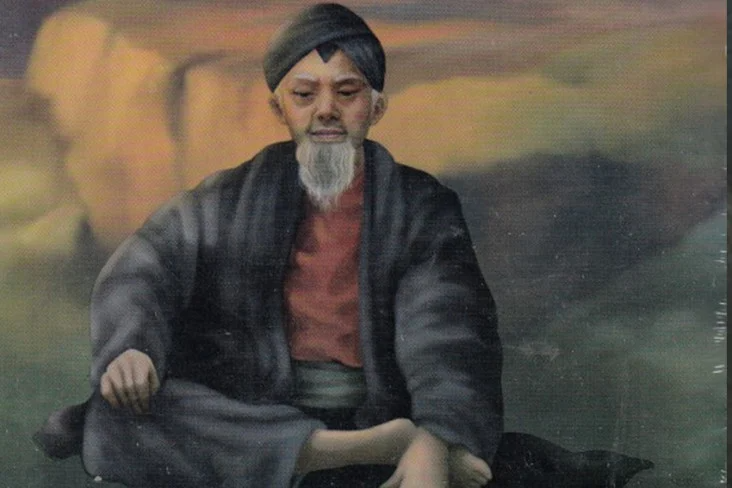
Though not a king, Siti Jenar belongs in this company because his execution ordered by the Wali Songo for his teaching of Manunggaling Kawula Gusti left no body to bury. In the Javanese imagination, a man whose body leaves no trace has not been killed. He has been released. He has achieved what he taught. The irony is elegant: the orthodox authorities who executed him for claiming union with God thereby confirmed his claim, because a man who has truly merged with the divine cannot simply die. His tomb-site in Cirebon, West Java, draws pilgrims to this day people who come not to mourn but to connect, sensing that what was Siti Jenar is still somehow present, resonating in the space where the teaching was lived to its ultimate conclusion.
Executed by Wali Songo · No corpse recovered · De facto moksa
Jayabaya's Vision: The Ratu Adil and the Age of Madness
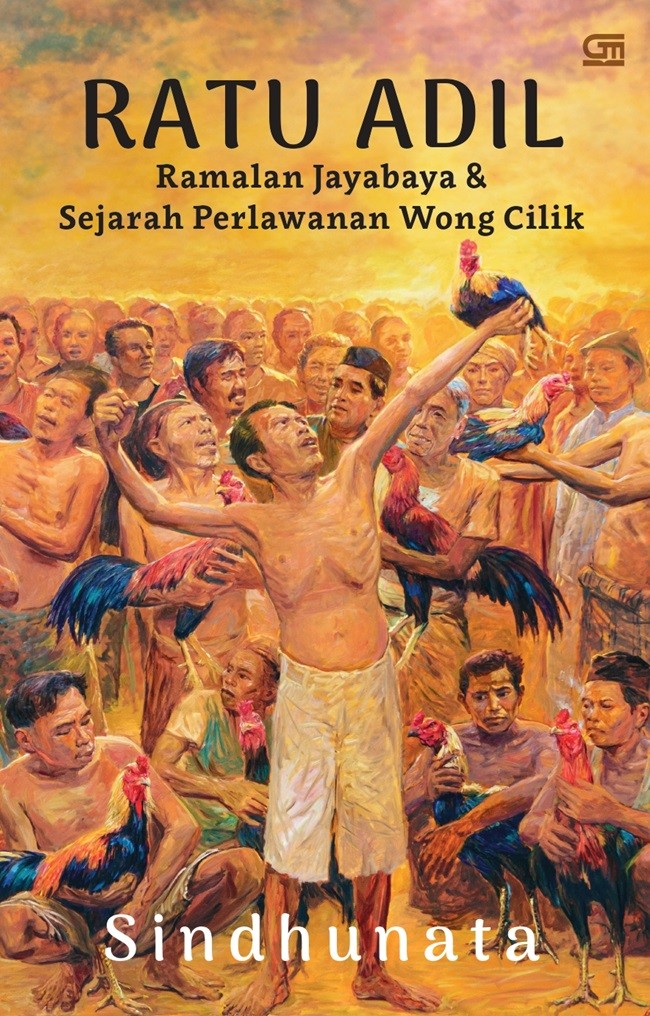
King Jayabaya was not merely a king who achieved moksa he was the originating prophet of Java's most enduring political theology. His prophecies, compiled in the Serat Jangka Jayabaya and related texts (later elaborated by the 19th-century royal poet Pangeran Wijil I and the polymath Ranggawarsita), constitute a complete eschatological vision of Javanese history: cycles of prosperity (Jaman Raharja) and madness (Jaman Edan), ending always in the arrival of a savior-king.
That savior the Ratu Adil (Just Ruler), also called Satrio Piningit (the Hidden Knight) would arrive during the darkest age, when Java had forgotten itself, when leaders lacked moral authority, when the land groaned under spiritual emptiness. The Ratu Adil is described in terms directly evoking the Hindu deity Vishnu "shining like Batara Krishna, having a character like Balarama, armed with a trident" and is simultaneously a messianic figure parallel to the Islamic Mahdi, the Buddhist Maitreya, and the Jewish-Christian Messiah.
Jayabaya's most famous prophecy predicted that Java would be ruled by "whites for three centuries" and then by "yellow dwarfs for the lifespan of a maize plant" a prediction many Javanese interpreted as the Dutch colonial era and then the three-and-a-half-year Japanese occupation of 1942–1945. When Japanese forces arrived in 1942, crowds reportedly danced in the streets, seeing the fulfillment of Jayabaya's prophecy. Within precisely the predicted timeframe, Indonesia declared independence in 1945.
"Wong Jawa wis ilang Jawane" "The Javanese have lost their Javaness." This is Jayabaya's sign that the age of Sabdo Palon's return is near.
The concept of the Ratu Adil resonates deeply with the Sufi tradition of the Insan al-Kamil the Perfect Human who embodies divine attributes and acts as the axis of the cosmic order. Siti Jenar himself was in some traditions considered a manifestation of this principle: a being so aligned with the divine will that ordinary social and religious categories no longer applied to him.
The 500-Year Promise: Sabdo Palon Nagih Janji
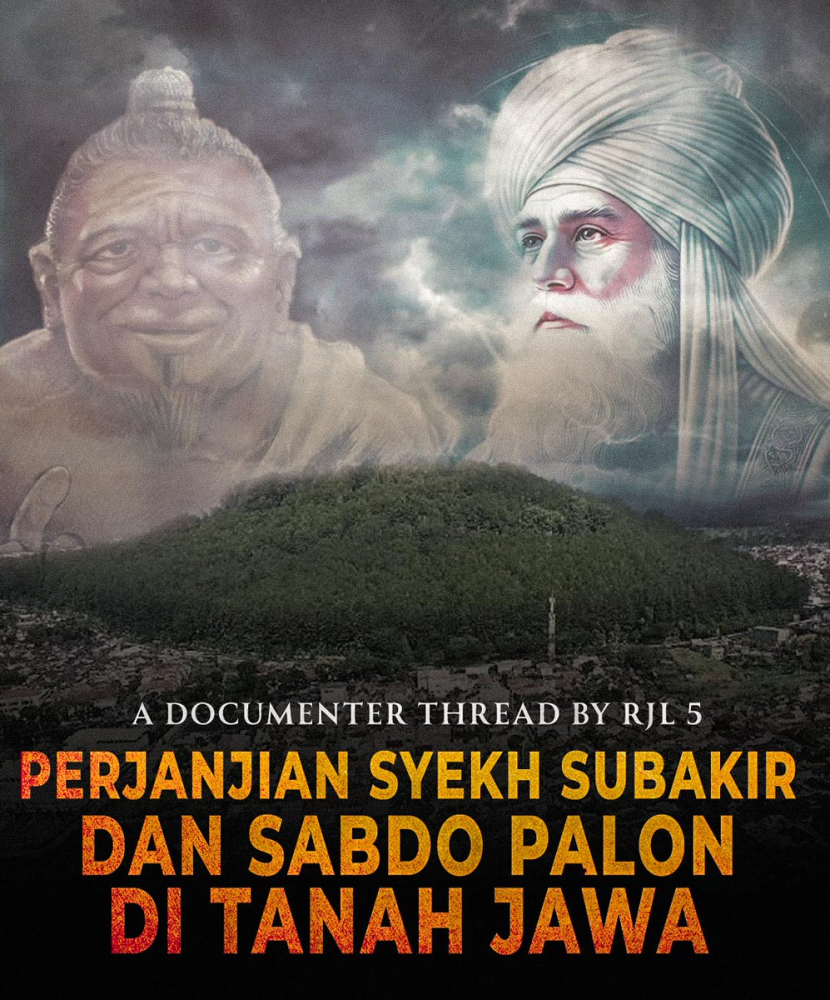
Of all the prophecies that run through Nusantara's spiritual history, none has the visceral, living quality of Sabdo Palon's oath because unlike Jayabaya's abstract predictions about colonial regimes and golden ages, Sabdo Palon's promise is personal, emotional, and attached to an almost exact date.
According to the Serat Darmagandhul (a 19th-century Javanese text by Ki Kalamwidi, believed to record oral traditions far older) and the Jangka Sabdo Palon, when Prabu Brawijaya V accepted Islam at the urging of the Wali Songo with the Demak Kingdom's forces closing in on Majapahit in 1478 CE Sabdo Palon refused to follow his king into the new faith. He was a devotee of Agama Budi, the ancestral Javanese-Hindu-Buddhist spiritual tradition, and he would not abandon it.
Before departing through moksa, Sabdo Palon made his famous oath preserved in Pupuh 4 of the Serat Jangka Jayabaya:
Sumpah Sabdo Palon The Oath of Sabdo Palon
"Pepesthene nusa tekan janji, yen wus jangkep limang atus warsa, kepetung jaman Islame, musna bali marang ingsun, gami Budi madeg sawiji."
"The fate of this land has reached its covenant when five hundred years of the Islamic era are complete, it shall dissolve back to me. The Religion of Budi shall stand as one."
Sabdo Palon also gave signs of his return (Pupuh 5): he would make himself known through the eruption of a great mountain, sending forth its lava as a mark of his presence. He promised he would return as Pamomong Tanah Jawa the Guardian of the Land of Java to restore spiritual equilibrium.
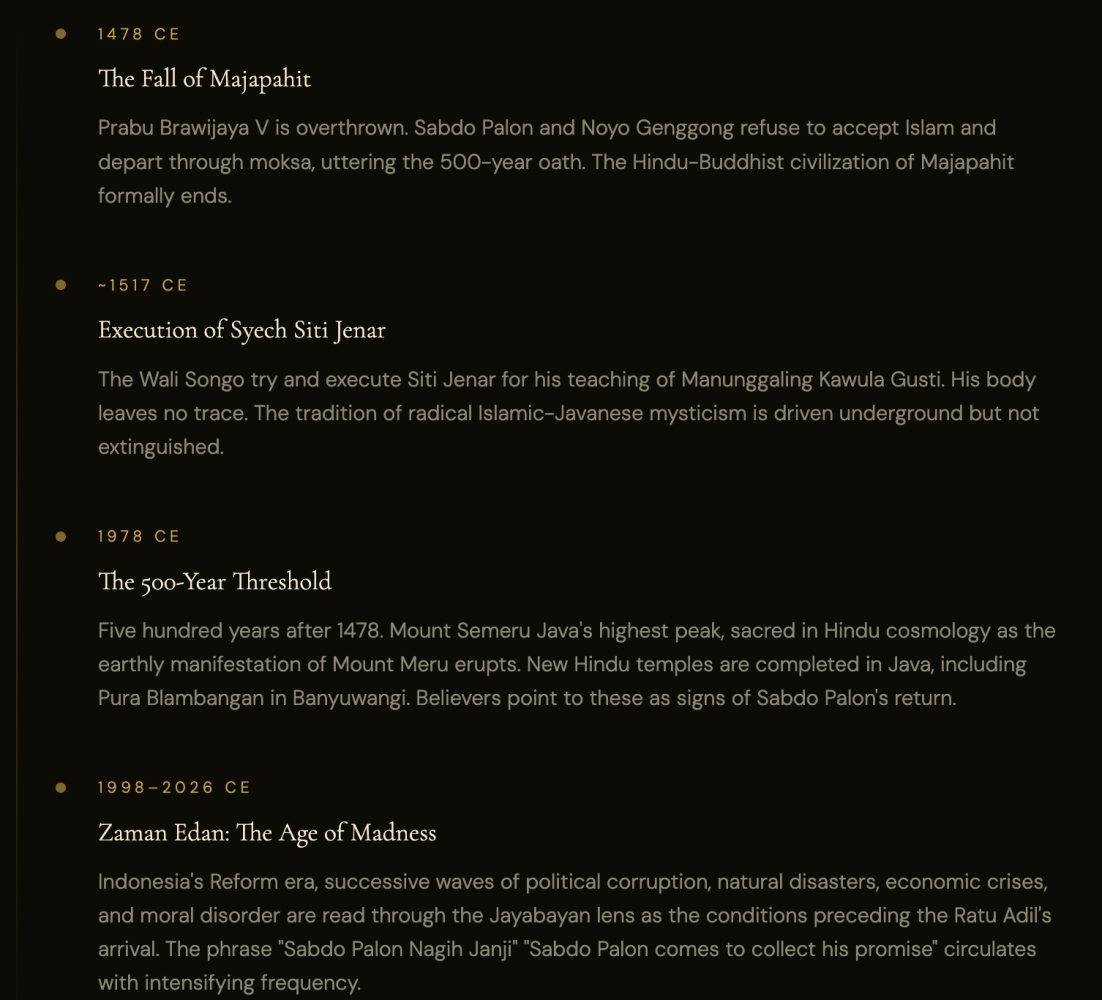
Historians note that the Serat Darmagandhul is likely a 19th-century literary composition rather than a contemporaneous historical document, and that Sabdo Palon as a figure may be largely allegorical a personification of Javanese cultural identity resisting the erasure of its pre-Islamic heritage. The anthropologist Paul Stange, writing in 1988, described Sabdo Palon as an embodiment of the divine clown-figure Semar, the Maha Guru of Java who descends from heaven to become the hidden guide of kings.
Whether literal or allegorical, the promise carries enormous cultural weight. The philosopher embedded in it is essentially Javanese: that the soul of a civilization, like the soul of a saint, cannot truly die. It goes into moksa. It waits. It returns.
The Single Teaching Across All the Names
Seen together, the teaching of Siti Jenar, the utterance of al-Hallaj, the concept of moksha, and the tradition of Nusantara's vanishing kings all point toward the same interior horizon. What separates them is language, culture, and historical context. What unites them is the direct experience of a consciousness that has recognized itself as inseparable from its divine source.
In the Sufi tradition, this recognition produces fana annihilation. In Vedantic Hinduism, it produces moksha liberation. In Kejawen, it produces manunggal merging. In the Javanese-Nusantara mythos of the vanishing kings, it produces literal physical disappearance: the ultimate symbol that a being has transcended the material order entirely.
The crossing of these streams in Nusantara was not accidental. It was the result of a remarkably fertile civilizational encounter: a Hindu-Buddhist culture of extraordinary depth and sophistication meeting a Sufi-inflected Islam that came not as a conquering ideology but as a collection of mystics, traders, and wandering teachers who found in Javanese cosmology not enemies to defeat but a landscape already hospitable to their deepest insights.
The Wali Songo themselves were deeply syncretic. Sunan Kalijaga the most culturally Javanese of the Nine Saints spread Islam through the wayang (shadow puppet) theater, through batik, through Javanese poetic forms. His confrontation with Brawijaya V and his indirect role in Siti Jenar's condemnation does not make him an enemy of synthesis; it makes him an agent of its institutional negotiation, the painful work of determining which forms of unity are permissible and which are too dangerous to broadcast to the unready.
The tragedy of Siti Jenar and of al-Hallaj is not that they were wrong. It is that they were right too loudly, too publicly, too soon.
"In my turban is wrapped nothing but God. There is nothing inside my cloak but God."
The Javanese kings who achieved moksa understood something related but different: that power, when fully lived and fully served, must eventually be released. Gajah Mada's disappearance was not a defeat but the completion of his oath he had given everything, and the giving itself was his moksa. Prabu Siliwangi's withdrawal into the mountain-forest was not surrender but the ultimate sovereignty: a king whose kingdom was the cosmos itself needed no earthly throne. Brawijaya V's vanishing into Gunung Lawu was the final act of a civilization choosing dignity over dissolution.
And Sabdo Palon's promise to return after five hundred years, in the age of corruption and madness is perhaps the most Nusantara teaching of all: that the soul of a culture, like the soul of a mystic, does not cease. It goes into moksa. It waits in the mountain, in the forest, in the waterfall, in the resonance of a name. And one day, when the conditions are right, it comes back not with armies or proclamations, but as a stillness that arrives suddenly in the midst of noise, a recognition that what was always true has simply become visible again.
#Sufism #Hinduism #Nusantara #JavaneseHistory #Majapahit #Mysticism #Indonesia #SiteJenar #AlHallaj #SabdoPalon #Infraloka
Sources
- Sholikhin, Muhammad (ed.). Manunggaling Kawula-Gusti: Filsafat Kemanunggalan Syekh Siti Jenar. 2008. ISBN 9789791680769. [PhilPapers: BP188.8.I52.S56]
- Mulkhan, Abdul Munir. Ajaran dan Jalan Kematian Syekh Siti Jenar. Kreasi Wacana, 2006.
- Mulkhan, Abdul Munir. Pergumulan Islam-Jawa. Bentang Budaya, 1999.
- Muryanto, Sri. Ajaran Manunggaling Kawula-Gusti: Belajar Makrifat dari Syekh Siti Jenar, al-Hallaj, dan Jalaluddin Rumi. 2004.
- Chodjim, Achmad. Syech Siti Jenar: Makna Kematian. Serambi Ilmu Semesta, 2007.
- Utomo, Agus Himawan. "Tauhid Al-Wujud Syeikh Siti Jenar dan Unio Mystica Bima." Jurnal Filsafat 16, no. 2 (2017): 116–127.
- Afrianti, Dwi. "Transformation of the Spread of the Manunggaling Kawula lan Gusti Concept in Javanese Society from the 16th Century AD to the 21st Century AD." International Journal of Islamic Khazanah 9, no. 1 (2020): 29–34.
- Kresna, Ardian. Manunggaling kawula Gusti: Tuhan dalam pandangan Jawa. Lontar Mediatama, 2023.
- Ramli, Yusri Mohd. "Martyrdom of al-Hallaj and Unity of the Existence: the Condemners and the Commenders." International Journal of Islamic Thought (IJIT) 3 (2013). University Kebangsaan Malaysia.
- Paul, Sumit. "Understanding Mansur Al-Hallaj's Ana'l-Haqq in These Megalomaniac Times." New Age Islam, 2021.
- Al-Hallaj, Mansur. Kitab al-Tawasin. Trans. Aisha Abd al-Rahman al-Tarjumana. Diwan Press, 1974.
- Susilo, Agus, and Andriana Sofiarini. "Gajah Mada Sang Maha Patih Pemersatu Nusantara di Bawah Majapahit Tahun 1336 M–1359 M." Kaganga 1, no. 1 (2018): 62–71. DOI: 10.31539/kaganga.v1i1.233.
- Prapanca, Mpu. Nagarakertagama (Desawarnana). Composed 1365 CE. Trans. Stuart Robson. KITLV Press, 1995.
- Wardayati, K. Tatik. "Sabdapalon." Wikipedia Indonesia (sourced article), 18 November 2021.
- Ki Kalamwidi. Serat Darmagandhul. 19th-century Javanese manuscript. Multiple scholarly editions.
- Serat Jangka Jayabaya Sabdo Palon (attributed). Multiple manuscript traditions, 18th–19th century.
- Stange, Paul. "Legitimate Mysticism in Java." Review of Indonesian and Malaysian Affairs 20, no. 2 (1986): 76–117. [1988 fieldwork referenced].
- Mardiyono, Peri. Sejarah Kelam Majapahit. Indonesian scholarly publication, 2021.
- Danasasmita, S. Nyukcruk Sajarah Pakuan Pajajaran jeung Prabu Siliwangi. Girimukti, 2003.
- Ekadjati, E.S. Kebudayaan Sunda: Suatu Pendekatan Sejarah. Pustaka Jaya, 1984.
- Coedes, George. The Indianized States of Southeast Asia. University of Hawaii Press, 1968.
- Achmad, Sri Wintala. Jayabaya: Biografi, Karya, Ramalan, dan Pengaruhnya. Araska, 2015.
- "Ratu Adil." Wikipedia (English). Accessed June 2026. en.wikipedia.org/wiki/Ratu_Adil
- "Jayabaya." Wikipedia (English). Accessed June 2026. en.wikipedia.org/wiki/Jayabaya
- "Sabdapalon." Wikipedia (English). Accessed June 2026. en.wikipedia.org/wiki/Sabdapalon
- "The Mystery of Gajah Mada's Death." Keluarga Soedono Wonodjoio, 2020. soedonowonodjoio.family
- "Misteri Moksa: Kisah Para Raja Nusantara yang Diyakini Menghilang." Merdeka.com, February 2025.
- "Prabu Siliwangi Legend and the White Tiger of Mount Salak." Salak Halimun Mountain Official Tour Guide, April 2026. salakhalimunmountain.com
- Setiawan, et al. "From King to People: Jayabaya's Prophecy and Its Evolution in Javanese Political Culture." ResearchGate, March 2026.
- "Jayabaya The Seer King of Java." Ancient Origins, April 2016. ancient-origins.net