
Wings of Humanity: 31 Years of the N-250, Habibie at 90, and the Generation That Carries the Dream
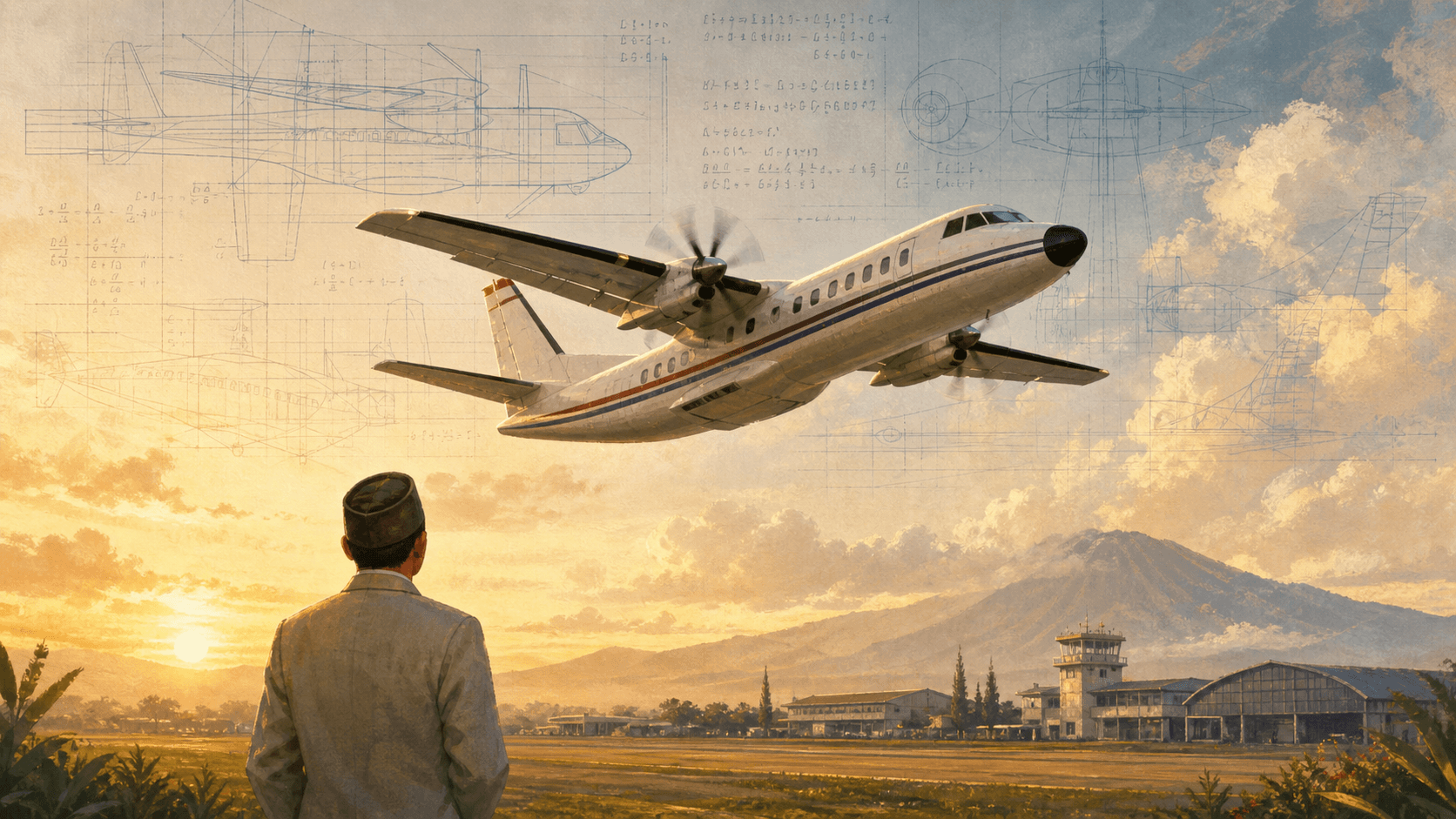
Original commemorative illustration created for this 10 August 2026 edition.
10 August 2026 — 31 years after the N-250 Gatotkaca's first flight, and in the year of B.J. Habibie's 90th birthday.
On 10 August 1995, the N-250 Gatotkaca rose from Husein Sastranegara Airport in Bandung. Its first flight became one of Indonesia's defining technological milestones and is commemorated every 10 August as Hari Kebangkitan Teknologi Nasional. Today, exactly 31 years later, its meaning remains larger than one aircraft: it is proof that Indonesian engineers can turn knowledge into sovereignty.
Bacharuddin Jusuf Habibie was born on 25 June 1936. He would have turned 90 on 25 June 2026; this 10 August commemoration therefore joins two milestones in one year—the N-250 at 31 and Habibie's 90th birth year.
From a dreamer in Andalusia who leapt from a mountain, to Habibie's national aerospace vision, to a self-taught engineer in Jawa Barat building the next Indonesian sky, this is the unbroken thread of humanity reaching upward.
The anniversary is not merely a reason to remember the aircraft. It is a call to rebuild the conditions that made the aircraft possible: disciplined science, courageous institutions, and faith in Indonesian talent.
A History Written in Wind & Wing
c. 875 CE — Al-Andalus, Iberian Peninsula
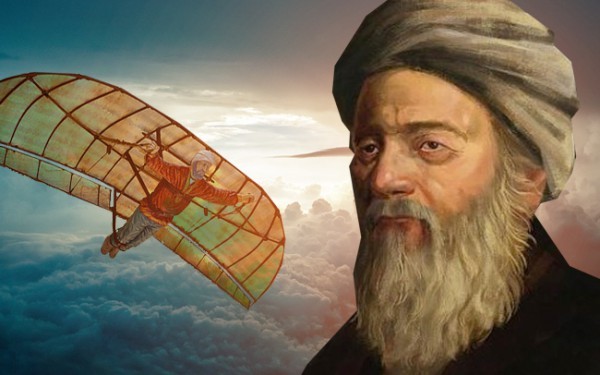
Abbas Ibn Firnas عباس بن فرناس — The First Aviator
A Berber polymath of Andalusian Córdoba ,engineer, poet, musician, astronomer — Abbas Ibn Firnas is the first recorded human to attempt controlled flight. Around 875 CE, at the age of approximately 65, he constructed a glider-like apparatus with silk, wood, and real feathers, ascending from the Jabal al-'Arus mountain near Córdoba before a crowd of onlookers.
He flew successfully for several minutes before landing, injuring his back due to the absence of a tail mechanism a flaw he reflected upon with the intellectual humility of a true scientist. The crater Ibn Firnas on the Moon and an airport in Baghdad bear his name. His legacy is the first evidence that the sky was not beyond the reach of the human mind.
"He flew a considerable distance, but in alighting again on the place whence he had started, his back was very much hurt." — Al-Maqqari, Nafh al-Tib, 17th century
c. 1480–1505 CE — Florence & Milan, Italy
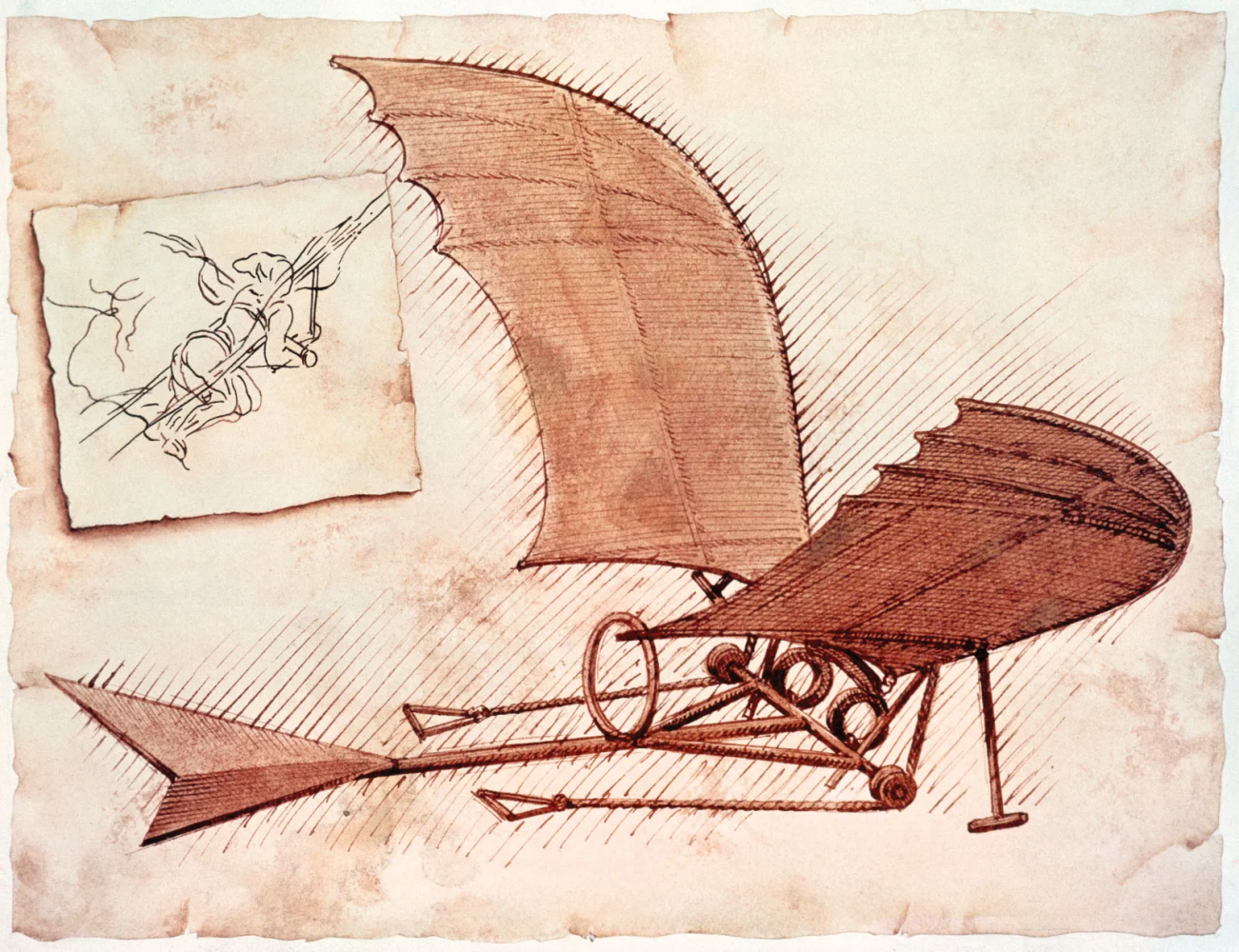
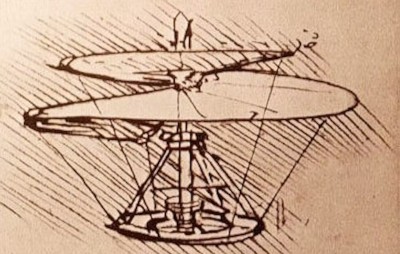
Leonardo da Vinci The Engineer of Impossible Dreams
Half a millennium before powered flight, Leonardo da Vinci filled more than 35,000 words and 500 sketches across the Codex on the Flight of Birds and the Atlantic Codex with aeronautical visions: the ornithopter, a hang glider, a helical aerial screw (proto-helicopter), and a parachute , all designed with anatomical study of birds and rigorous geometric reasoning.
None flew in his lifetime. But his notebooks, rediscovered centuries later, revealed a mind that understood the relationship between lift, air pressure, and wing geometry with astonishing foresight. He wrote: "Once you have tasted flight, you will forever walk the earth with your eyes turned skyward." His work is the philosophical foundation of every aircraft that followed.
"The human bird shall take his first flight, filling the world with amazement, all writings with his fame, and bringing eternal glory to the nest where he was born." — Leonardo da Vinci, Codex on the Flight of Birds
17 December 1903 — Kitty Hawk, North Carolina, USA
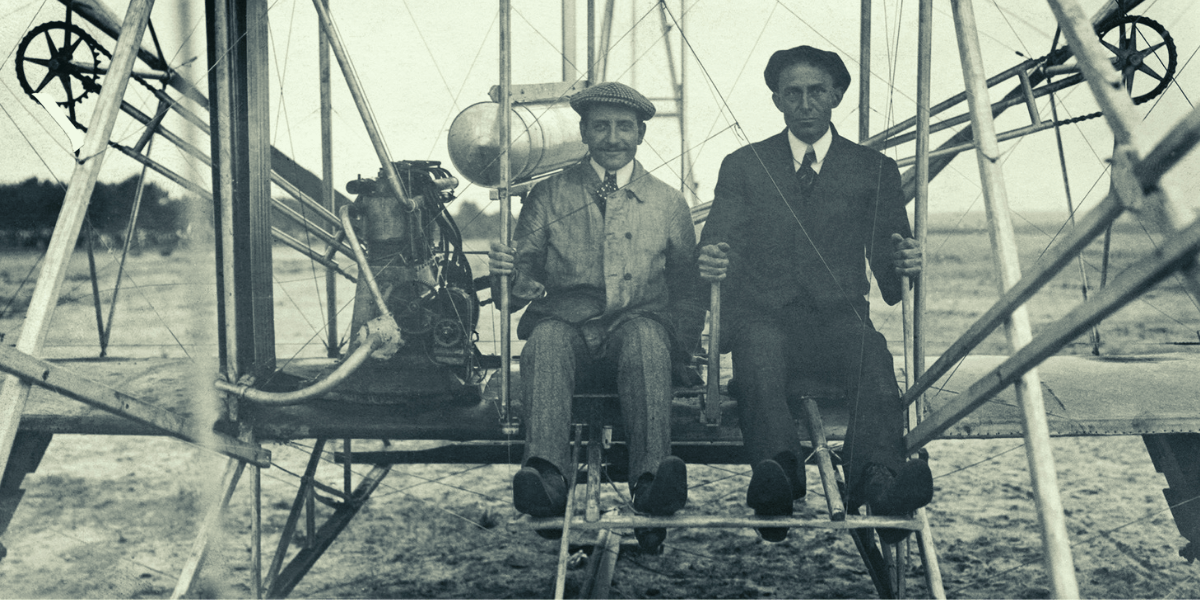
Orville & Wilbur Wright 12 Seconds That Changed Everything
At 10:35 AM on a cold December morning at Kill Devil Hills, North Carolina, Orville Wright piloted the Flyer I for 12 seconds and 120 feet the first sustained, controlled, powered heavier-than-air flight in history. That same day, Wilbur flew 852 feet in 59 seconds. Two bicycle mechanics from Dayton, Ohio had solved what kings, scientists, and inventors across centuries could not.
Their method was methodical and scientific: wind tunnel experiments to test 200+ wing shapes, a custom 12-horsepower engine, and the invention of three-axis control roll, pitch, and yaw still the foundational principle of every aircraft today. They filed US Patent No. 821,393 in 1906. Within a decade, the world was at war in the air.
"It is possible to fly without motors, but not without knowledge and skill." — Wilbur Wright
20 July 1969 — Sea of Tranquility, the Moon
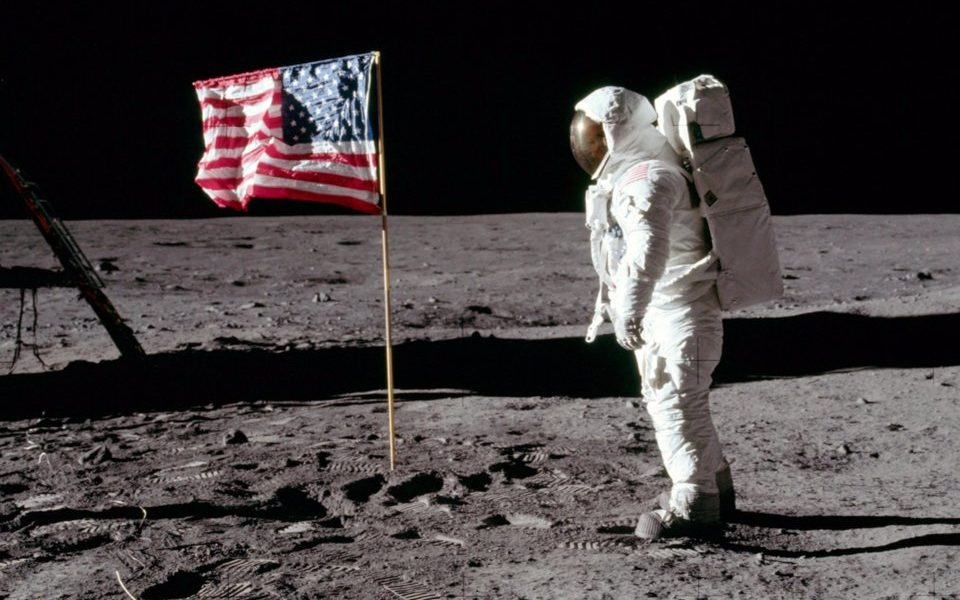
Apollo 11 & the Lunar Landing One Small Step — 240,000 Miles
At 20:17 UTC on July 20, 1969, NASA's Eagle lunar module touched down on the Moon's Sea of Tranquility. Six hours later, Commander Neil Armstrong descended the ladder and placed the first human footprint on another world watched live by an estimated 600 million people, nearly one fifth of Earth's population at the time.
The Saturn V rocket that launched Apollo 11 remains the most powerful operational launch vehicle ever built: 363 feet tall, 6.5 million pounds of thrust. The mission united the entire arc from Ibn Firnas's hill-jump to this moment the culmination of the human instinct to transcend the horizon, now applied to space itself. Buzz Aldrin described the lunar surface as "magnificent desolation." Armstrong called the landing "one small step for a man, one giant leap for mankind."
"That's one small step for a man, one giant leap for mankind." — Neil Armstrong, 20 July 1969
2002–Present — Cape Canaveral, Boca Chica, California
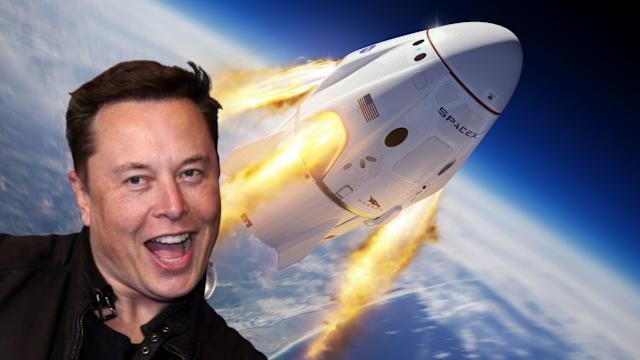
SpaceX & Elon Musk Making Humanity Multiplanetary
Founded in 2002 by Elon Musk with the stated goal of reducing space transportation costs and enabling the colonization of Mars, SpaceX achieved what many thought impossible: reusable orbital rockets. On December 21, 2015, the Falcon 9's first stage booster returned and landed vertically at Cape Canaveral — the first orbital-class rocket ever to do so — fundamentally rewriting the economics of space access.
SpaceX's Falcon 9 has since completed over 200 successful launches. The Crew Dragon capsule restored American crewed spaceflight capability in 2020. And Starship — the largest and most powerful rocket ever built, fully reusable — is designed to carry 100 passengers to Mars on a single flight. SpaceX has compressed a decade of NASA development into a startup timeline, setting the stage for an era where private citizens, nations, and eventually humanity as a species becomes a spacefaring civilization.
For Indonesia — an equatorial nation ideally positioned for rocket launches — SpaceX's revolution is not only inspiration but strategic opportunity. Indonesia's location near the equator provides maximum rocket efficiency; aerospace sovereignty, Habibie's dream, is being reborn in a new generation.
"I want to die on Mars — just not on impact." — Elon Musk
B.J. Habibie & the Spirit of Indonesian Aerospace
1950s–1998 — Germany, Indonesia
Prof. Dr. Ing. B.J. Habibie The Man Who Made Indonesia Fly
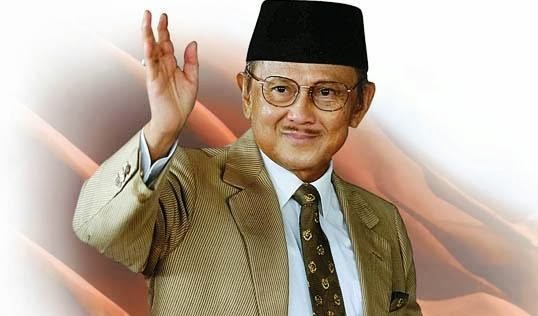
Bacharuddin Jusuf Habibie studied aeronautical engineering at RWTH Aachen, Germany, earning his doctorate in 1965 with a dissertation on thermodynamics and structural dynamics. He rose to become Vice President for Research and Technology at Messerschmitt-Bölkow-Blohm (MBB), becoming the first non-German and non-European in that position pioneering the "Habibie Factor," a revolutionary formula for calculating crack propagation in aircraft structures that is still used in aerospace engineering globally.
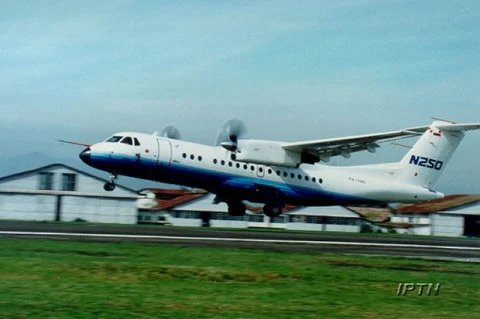
Recalled by President Soeharto in 1974, he founded IPTN (Industri Pesawat Terbang Nusantara) in 1976 in Bandung. Indonesia's national aircraft manufacturer. Under his leadership, IPTN produced the N-250 turboprop, the first fly-by-wire aircraft developed by a developing nation, and the CN-235 in partnership with CASA Spain an aircraft that is still flown by over 30 countries today. Habibie's vision was that aerospace technology was not a luxury of the wealthy world, but the instrument of national sovereignty and human dignity.
The Habibie Doctrine: Technology as Sovereignty
Habibie believed that mastering high technology not merely consuming it was the only path to true national independence. He saw the aircraft industry as a multiplier: each aerospace engineer creates, on average, 1,800 jobs in supporting industries. His philosophy of "leap-frog development" skipping intermediate stages to compete directly at the technology frontier was controversial at the time and visionary in hindsight. He later became Indonesia's Third President in 1998.
"What is the most strategic investment for the future? It is technology and human resources." — B.J. Habibie
The Next Generation of Habibie's Legacy
In a garage-workshop in Indonesia, engineer and aviation enthusiast Widodo S.W. has done what most assume requires billion-dollar factories and government programs: he designed, built, and flew his own aircraft — from scratch. His work channels the same spirit that drove Habibie, the same courage that moved the Wright brothers, the same obsession with flight that Ibn Firnas carried up a Andalusian hillside over a thousand years ago.
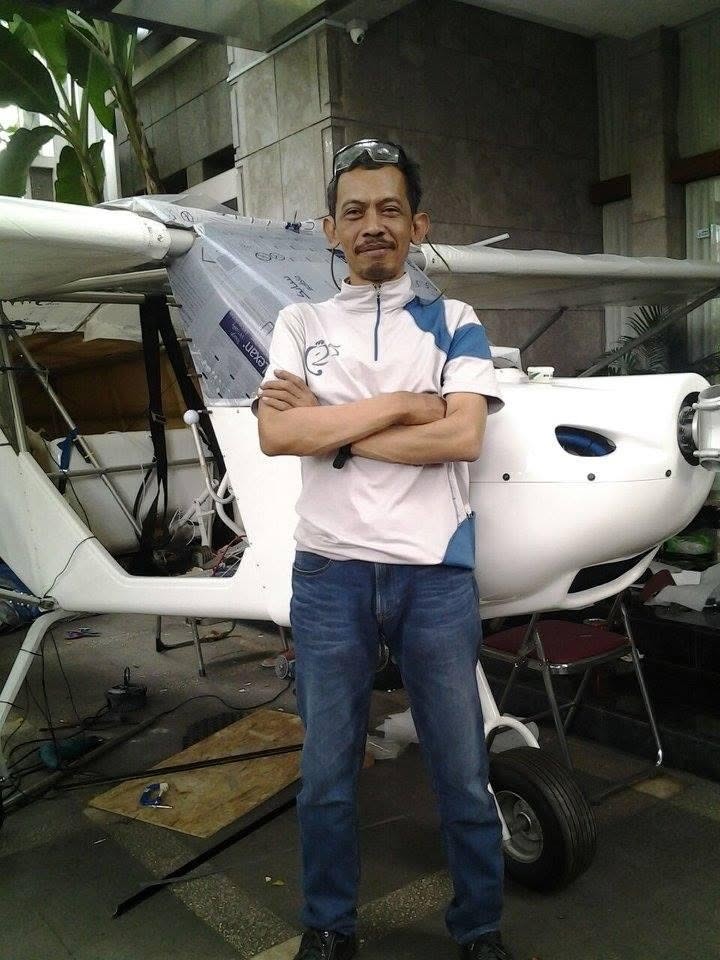
The Builder's Profile: Widodo S.W.
Widodo S.W. is an Indonesian self-taught aircraft builder who has dedicated years to constructing a light experimental aircraft entirely by hand designing the airframe, fabricating wooden wing spars, assembling the fuselage, installing the engine and avionics, and ultimately achieving flight. His aircraft bears the Indonesian experimental registration prefix PK-ST, documented with support from local aviation authorities.
His project represents the grassroots, citizen-led aviation innovation that Indonesia's aerospace ecosystem needs: proof that the knowledge, the will, and the skill to build an aircraft can emerge from individuals not only institutions anywhere in the archipelago. Follow his journey on Facebook: facebook.com/widodo.sw

The Builder's Profile: Rahmat Wibowo from InfraLoka part of Aksantara ITB Alumni of Institut Teknologi Bandung
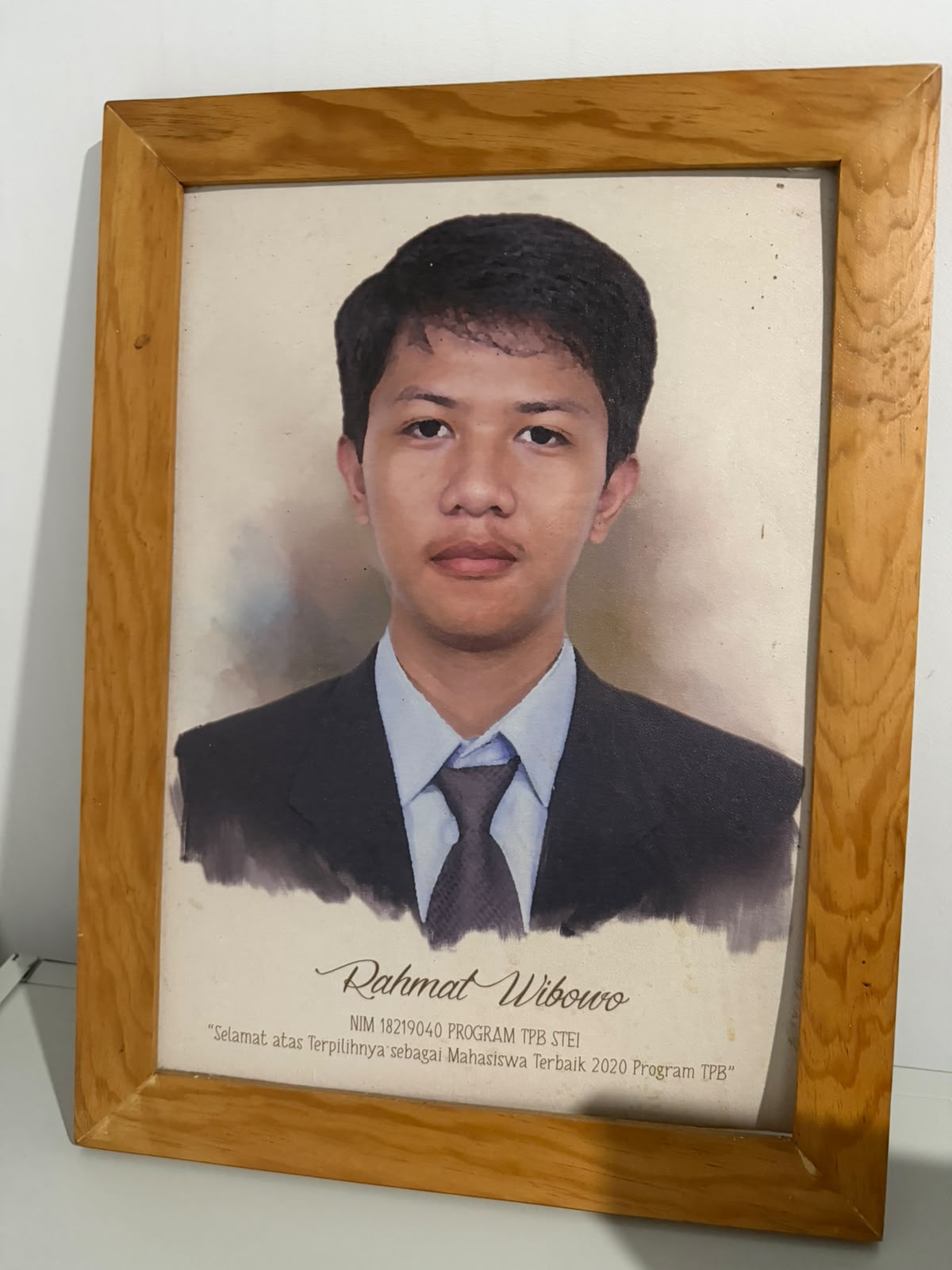
Rahmat Wibowo's recognition as Mahasiswa Terbaik 2020 Program TPB—an early milestone in a journey shaped by disciplined study, engineering, and service.
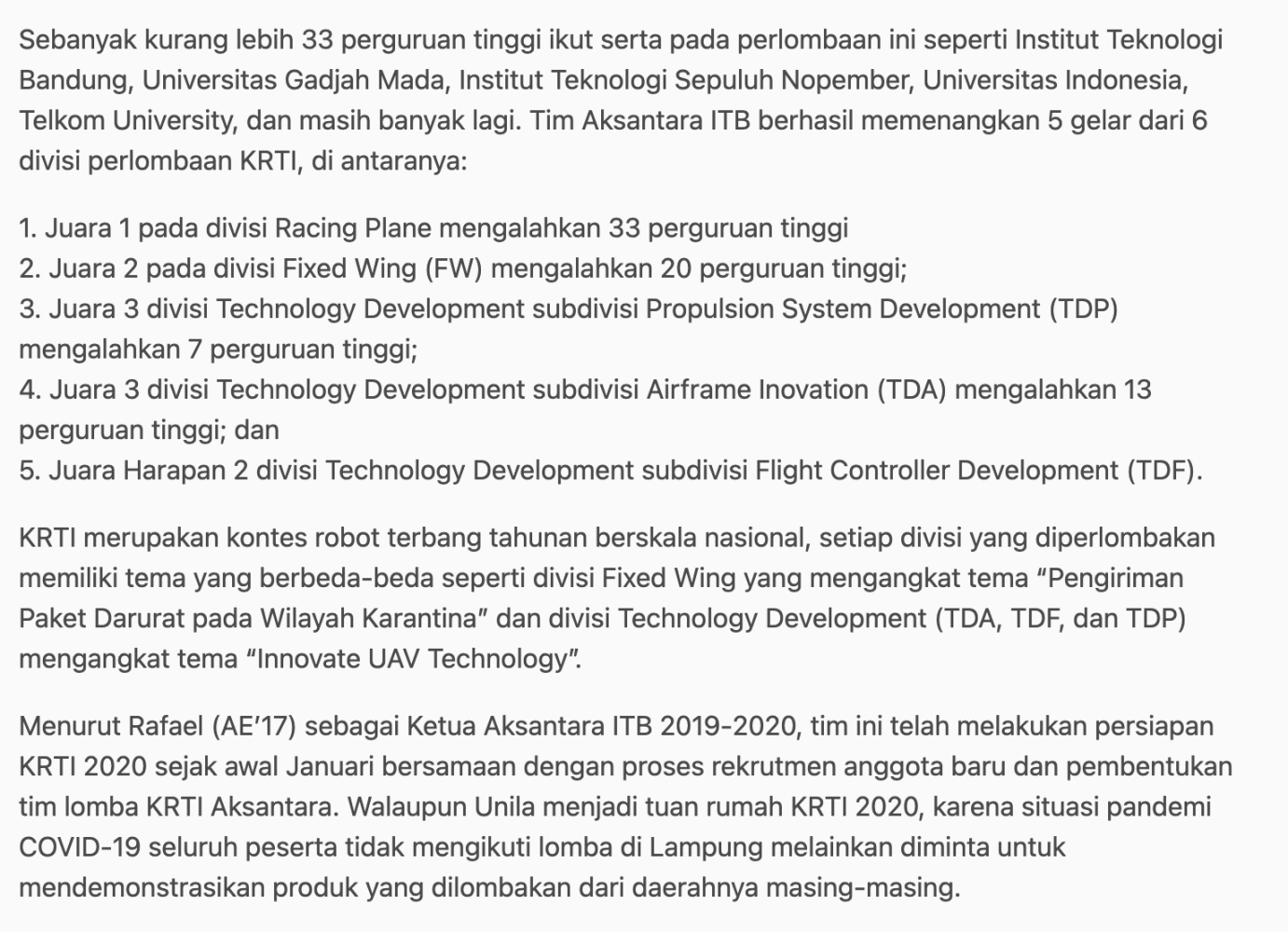
As a member of Aksantara ITB during the KRTI 2020 championship year, Rahmat Wibowo ITB Information Systems & Technology alumnus (Class of 2019), Djarum Beasiswa Plus Scholar, and now Co-Founder & CEO of Infraloka (PT. Infrastruktur Digital Nusantara) was part of the historic team that swept 5 awards from 6 divisions, the strongest single-year KRTI result in Aksantara's history to that point, achieved remotely under pandemic lockdown.
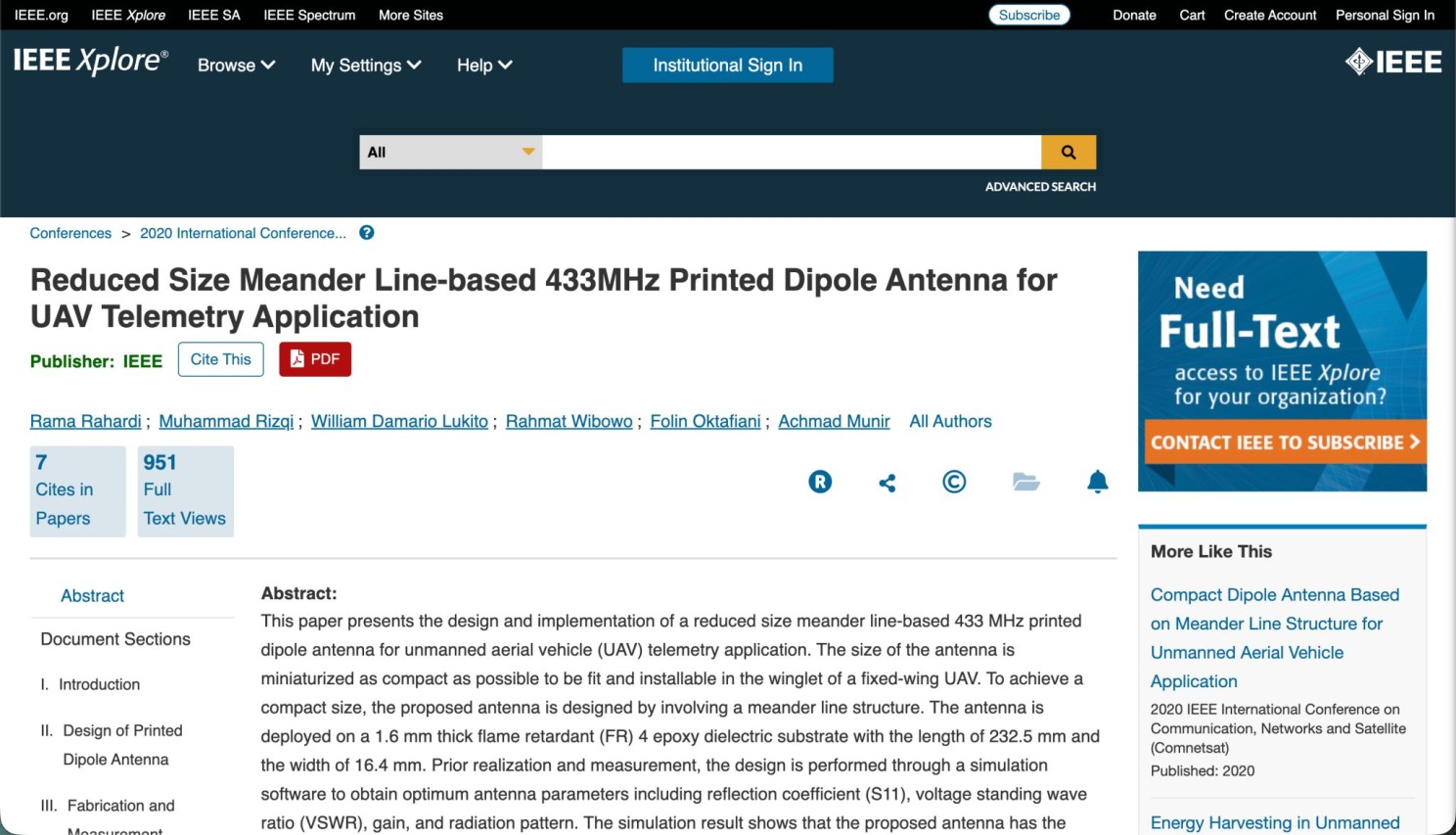
His published research during this period "Reduced Size Meander Line-based 433MHz Printed Dipole Antenna for UAV Telemetry Application" https://ieeexplore.ieee.org/document/9298675 directly reflects the telemetry and communication engineering work that underpins UAV competition readiness. It is one of a body of papers Aksantara produced across the 2019–2023 period at major IEEE and international aerospace venues.
Rahmat graduated with First Class Honours (GPA 3.91), was a Bangkit Academy top performer, and went on to hold engineering roles at AWS Singapore, Grab, Xendit, and Pertamina Marine Solution (SRE) before co-founding Infraloka in March 2026 — a cloud infrastructure, AI, and legal tech company with a mission of Rahmatan lil Alamin (mercy for all creation through technology).
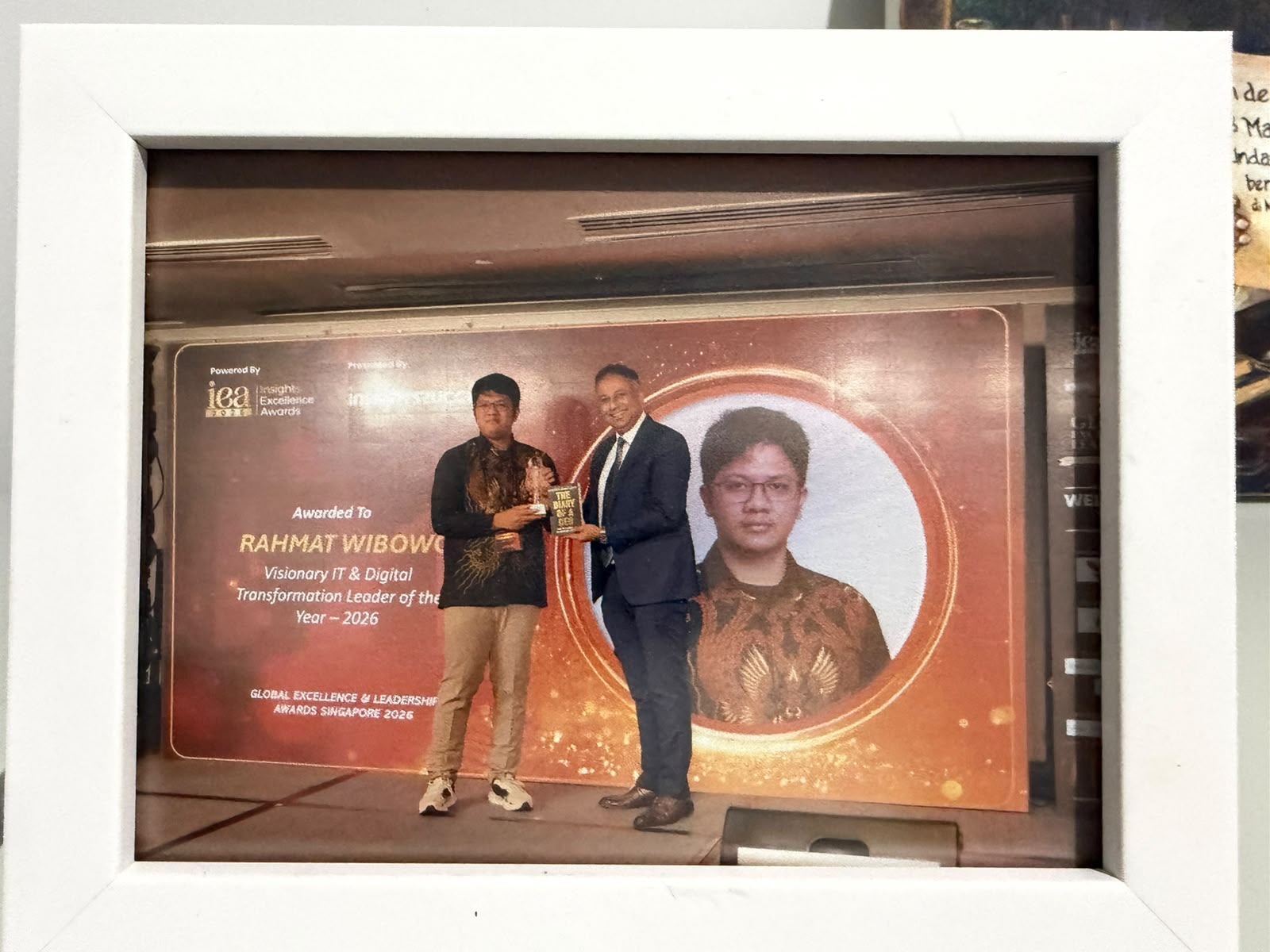
Rahmat Wibowo receiving the Visionary IT & Digital Transformation Leader of the Year 2026 recognition at the Global Excellence & Leadership Awards in Singapore.
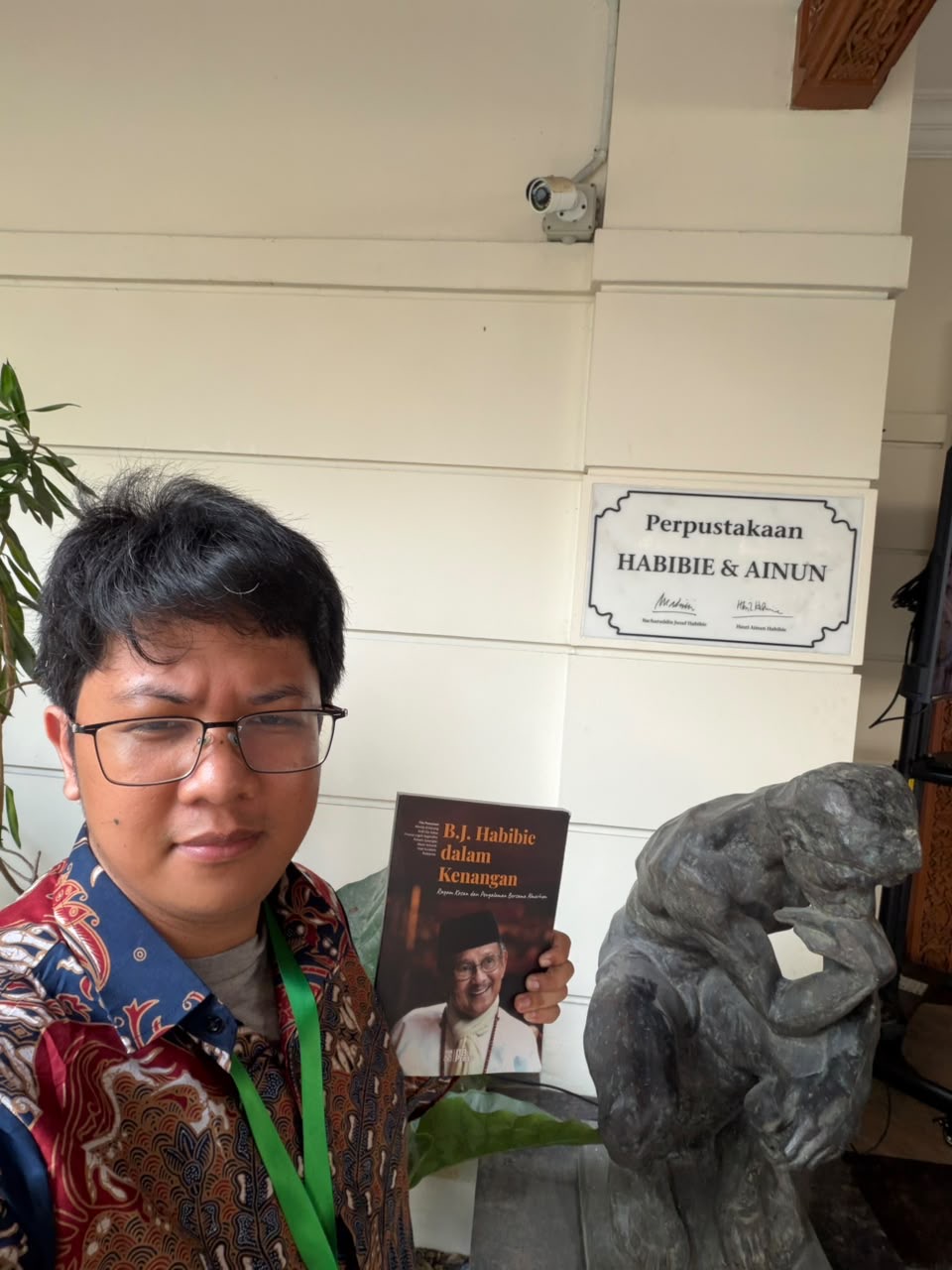
Rahmat Wibowo at Perpustakaan Habibie & Ainun, holding B.J. Habibie dalam Kenangan. Personal photograph, 2026.
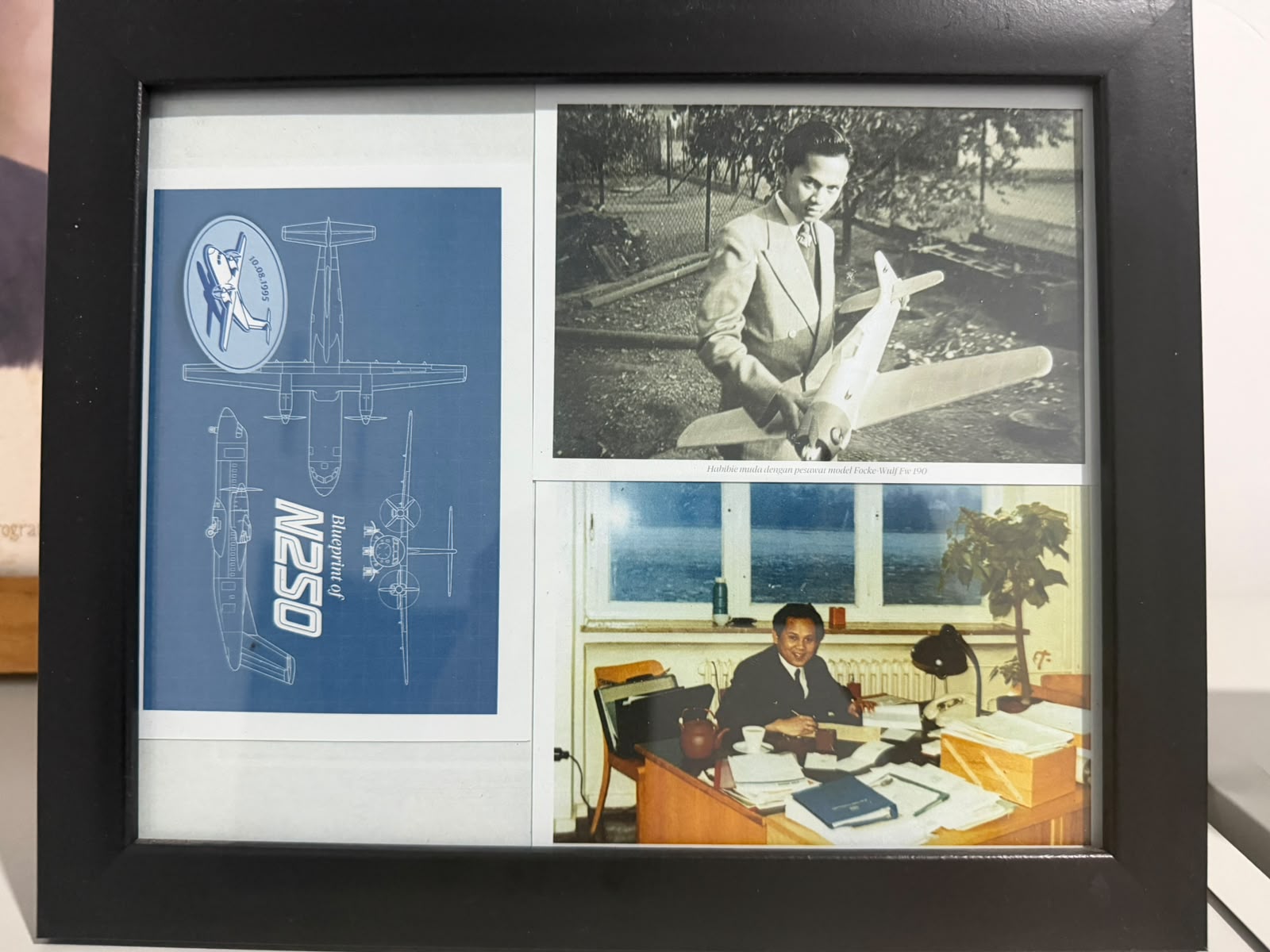
The B.J. Habibie and N-250 display in Rahmat Wibowo's room: Habibie as a young aircraft modeller, Habibie at his engineering desk, and the blueprint of the N-250—a daily reminder that national technological dreams begin with study and design.
Cucu Intelektual Habibie — A Legacy Chosen Through Work
I call myself a cucu intelektual Habibie—an intellectual grandson of Habibie. This is not a claim of blood, office, or inherited authority. It is a declaration of intellectual lineage: to study deeply, build seriously, unite faith with science, and place technology in the service of Indonesia.
Standing at Perpustakaan Habibie & Ainun made that lineage tangible. A library is where admiration must become study, and where memory must become responsibility. Habibie's legacy cannot survive as nostalgia alone. It has to live in laboratories, codebases, aircraft, companies, institutions, and young people who are willing to attempt difficult things for the nation.
I intend to be one of the people who carries that legacy forward. Through InfraLoka, aerospace-rooted engineering, sovereign digital infrastructure, AI, research, and the formation of the next generation, I will work to translate Habibie's central conviction into the conditions of this century: Indonesia must master strategic technology, not merely consume it.
To carry Habibie's legacy is not to imitate his biography or appoint oneself his replacement. It is to accept the obligation behind his example—competence before applause, evidence before slogans, service before status, and the courage to build what Indonesia has been told it cannot build.
I am Rahmat Wibowo, a cucu intelektual Habibie. I do not inherit his legacy by name; I earn the right to carry it through work.
#Indonesia #Aerospace #UAV #Aksantara #ITB #KRTI #Habibie #Danantara #WismaHabibie #FlightHistory #AviasiIndonesia #Infraloka #RahmatWibowo #DigitalTransformation #CloudIndonesia #RahmataLilAlamin #Innovation #SovereignWealth #AviationHistory #NextGenLeaders #IndonesiaEmas2045
References & Further Reading
- Al-Maqqari, Ahmad ibn Muhammad.Nafh al-Tib min Ghusn al-Andalus al-Ratib. Cairo, 1700s (compiled from earlier sources). [Primary source for Ibn Firnas's flight account]
- Viegas, Jennifer. "Abbas Ibn Firnas: The First Aviator."Discovery News/ Smithsonian Air and Space Museum Archives, 2009.
- Giacomelli, R. "The Aerodynamics of Leonardo da Vinci."Journal of the Royal Aeronautical Society, Vol. 34, No. 239, 1930, pp. 1068–1099.
- Da Vinci, Leonardo.Codex on the Flight of Birds (Codice sul volo degli uccelli). c. 1505. Royal Library of Turin, Italy.
- Crouch, Tom D.The Bishop's Boys: A Life of Wilbur and Orville Wright. W.W. Norton & Company, 2003. ISBN 978-0-393-30695-7.
- Wright, Orville & Wilbur. US Patent No. 821,393: "Flying Machine." Filed March 23, 1903. Issued May 22, 1906. United States Patent Office.
- NASA. "The Apollo 11 Mission." NASA History Division.nasa.gov/mission_pages/apollo/apollo11.html
- NASA. "Apollo 11 Press Kit." NASA Release No. 69-83K. July 6, 1969. NASA Technical Reports Server.
- Schwarz, Adam.A Nation in Waiting: Indonesia's Search for Stability. Routledge, 2000. ISBN 978-0-813-33370-3. [Contains analysis of Habibie's IPTN and technology policy]
- Habibie, B.J.Detik-Detik yang Menentukan: Jalan Panjang Indonesia Menuju Demokrasi. THC Mandiri, 2006. ISBN 978-979-9472-15-2.
- Wibowo, Susetyo Hari et al. "Indonesia's N-250 Gatotkaca: A Technological Leap."Journal of Indonesian Aerospace Technology, LAPAN, 1995.
- IPTN / PT. Dirgantara Indonesia. "CN-235 Program History." Official company documentation.indonesian-aerospace.com
- SpaceX. "Falcon 9 User's Guide." SpaceX, Rev 2.0, 2020.spacex.com
- Berger, Eric.Liftoff: Elon Musk and the Desperate Early Days That Launched SpaceX. William Morrow, 2021. ISBN 978-0-06-297997-3.
- Vance, Ashlee.Elon Musk: Tesla, SpaceX, and the Quest for a Fantastic Future. Ecco Press, 2015. ISBN 978-0-06-230123-9.
- SpaceX. "Falcon 9 First Stage Landing — Mission Summary." SpaceX Press Kit, December 21, 2015.spacex.com
- Institut Teknologi Bandung. "Aksantara ITB Borong Juara di Kontes Robot Terbang Indonesia 2020." ITB Official News, November 6, 2020.itb.ac.id/berita/...
- Pusat Prestasi Nasional, Kemendikbud. "Kontes Robot Terbang Indonesia (KRTI) 2020 — Hasil Kompetisi." Kementerian Pendidikan dan Kebudayaan Republik Indonesia, Oktober 2020.
- Widodo S.W. Facebook Profile & Photo Documentation.facebook.com/widodo.sw
- Direktorat Jenderal Perhubungan Udara. "Registrasi Pesawat Udara Eksperimental PK-." Kementerian Perhubungan Republik Indonesia.hubud.dephub.go.id
- Wibowo, Rahmat, et al. "UAV Telemetry System."IEEE Proceedings ICITSI 2020. DOI:10.1109/ICITSI.2020.9298675
- Infraloka — PT. Infrastruktur Digital Nusantara. Company profile and mission statement. Incorporated March 2026, Indonesia.infraloka.com
- Anderson, John D. Jr.Introduction to Flight. 8th ed. McGraw-Hill Education, 2015. ISBN 978-0-07-802767-3. [Standard aeronautical engineering reference]
- Institut Teknologi Bandung. "Profil Aksantara ITB: Terbang Tinggi untuk Indonesia." ITB Official News, August 27, 2024. Reporter: Helga Evangelina.itb.ac.id/berita/profil-aksantara-itb...
- Institut Teknologi Bandung. "Aksantara ITB Won 2nd Place in Indonesia Aerial Robot Contest." ITB Official News, November 16, 2018.itb.ac.id/news/read/56890
- Fakultas Teknik Mesin dan Dirgantara ITB. "Aksantara ITB Meraih 4 Gelar Juara pada Kontes Robot Terbang Indonesia Tingkat Nasional." FTMD ITB, December 6, 2021.ftmd.itb.ac.id
- Fakultas Teknik Mesin dan Dirgantara ITB. "Brilliant Achievements of the ITB Aksantara Team in the 2023 Indonesian Flying Robot Contest." FTMD ITB, November 22, 2023.ftmd.itb.ac.id/en/...
- Institut Teknologi Bandung. "Tim Aksantara ITB Siap Terbang Tinggi di Kontes Robot Terbang Indonesia 2024." ITB Official News, July 19, 2024.itb.ac.id/berita/...
- Aksantara ITB. "Aksantara Research Publications 2019–2023." Official unit research compilation.aksantara.kemahasiswaan.itb.ac.id
- Aksantara ITB. "UAV Wing Structure with 3D Printed PLA Filament Wing Spar." International Conference on Design, Mechanical and Electrical Engineering (DMEE), 2019.
- Aksantara ITB. "Performance Comparison Analysis of Flattened Whitcomb Winglet Using CFD." International Seminar on Aerospace Science and Technology (ISAST), 2020.
- Aksantara ITB. "Reduced Size Meander Line-based 433 MHz Printed Dipole Antenna for UAV Telemetry Application." ICRAMET 2020.
- Aksantara ITB. "A Low Cost, Compact, and Easy to Set Up 4G Telemetry Module for UAV Application." Telecommunication Systems, Services, and Applications (TSSA) 2021.
- Aksantara ITB. "Biplane Wing Gap Influence Study Of UAV With Wing-Shaped Fuselage Using CFD." IEEE ICARES 2021.
- Aksantara ITB. "Analysis and Simulation of Axial Flux Permanent Magnet Synchronous Motor for Hybrid UAV Propulsion." IEEE ICARES 2022.
- Aksantara ITB. "Parametric Study of Sawtooth Serration Geometry for Noise Reduction in HTOL Propellers." IEEE ICARES 2023.
- Institut Teknologi Bandung. "Berkarya dengan Ground Control Station, Mahasiswa ITB Juara 2 Nasional KRTI 2023." ITB Official News.itb.ac.id/berita/...
- PT Dirgantara Indonesia. "PTDI Resmikan Auditorium B.J. Habibie dalam Rangka Hakteknas 2023." Confirms the N-250 Gatotkaca's first flight on 10 August 1995 and its connection to Hari Kebangkitan Teknologi Nasional. indonesian-aerospace.com
- Sekretariat Kabinet Republik Indonesia. "President Jokowi Sends Condolences for Passing of Former President BJ Habibie." Records Habibie's birth on 25 June 1936 in Parepare. setkab.go.id
- Perpustakaan Nasional Republik Indonesia. "Penerus Nurtanio itu Kini Telah Tiada." On Habibie's role in advancing Indonesia's capability to build aircraft and defend national dignity and sovereignty in the air. perpusnas.go.id