
Your Master's Degree From a Top University Does Not Proof You a Smart Leader: A Stupid Story From Irham Muhammad Fadhil
Indonesia is producing more credentialed professionals than ever. The startup ecosystem keeps hiring them on the strength of a logo. It is time we talked honestly about the gap between what a diploma signals and what competence actually requires.
We Have Confused the Certificate With the Capability
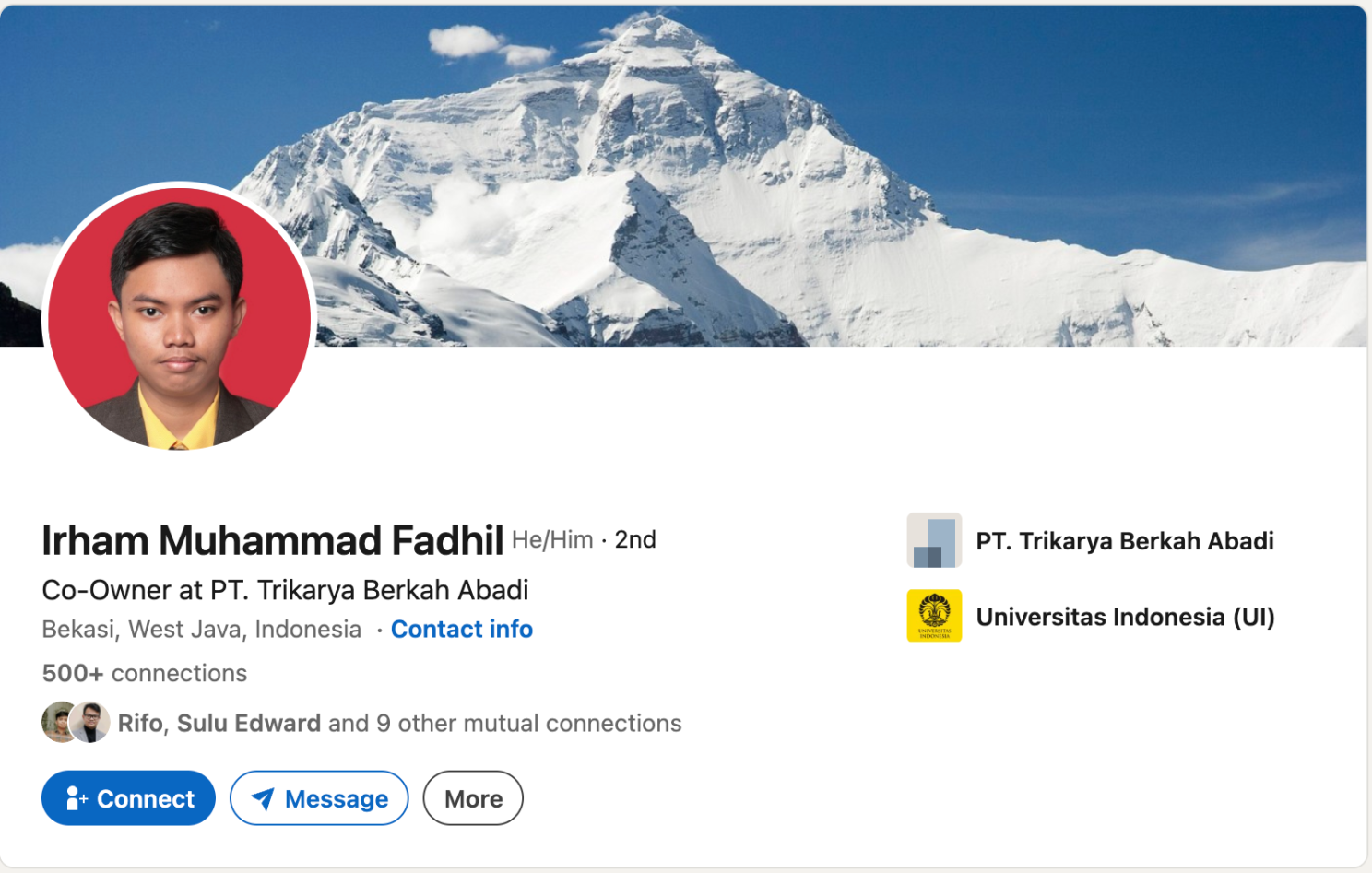
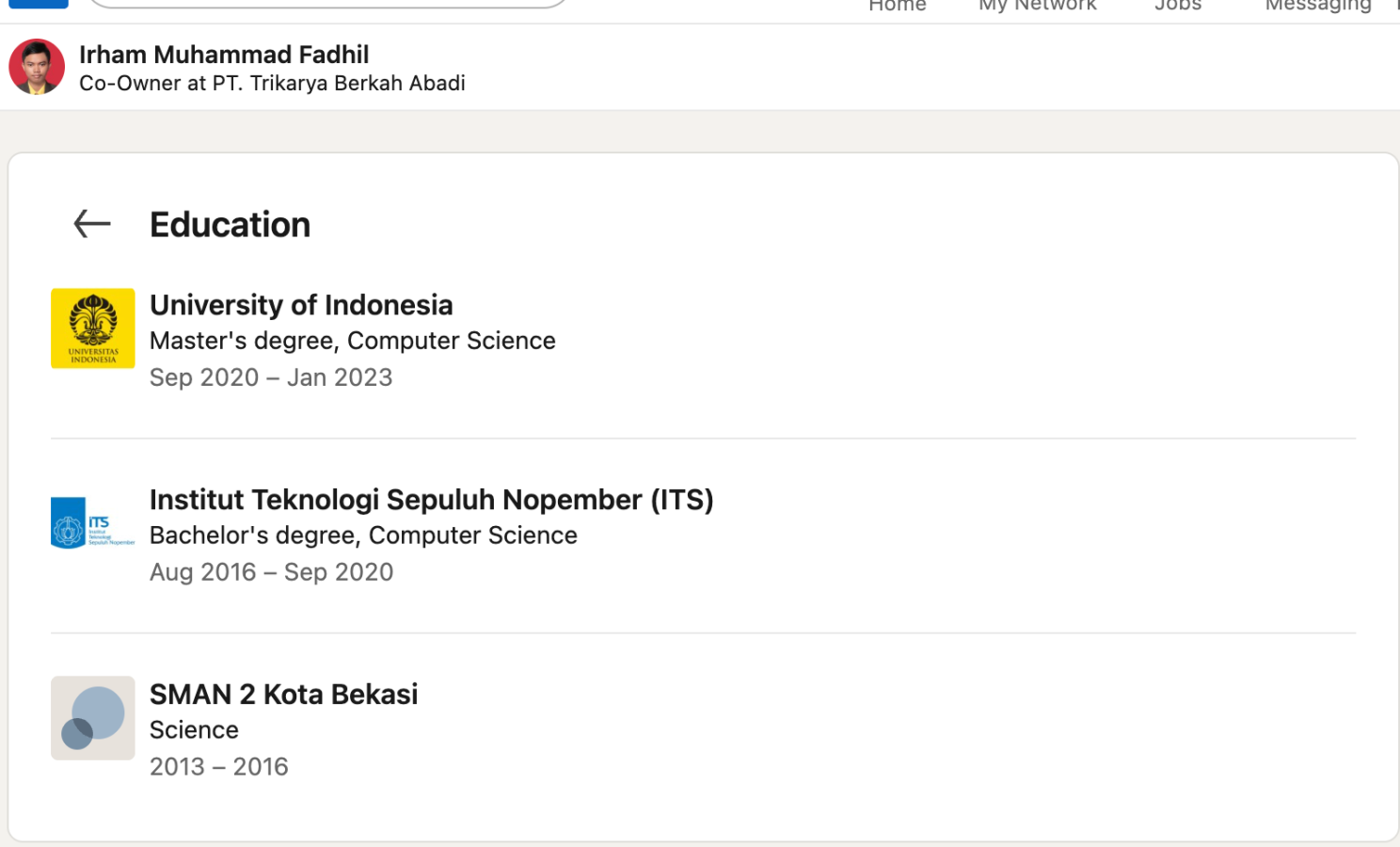

In Indonesia, we celebrate academic pedigree with a reverence that few other cultures can match. The name of a university sits in a LinkedIn headline like a coat of arms. S2 UI. S1 ITS. Lulusan ITB. These signals carry social weight, open doors in hiring, and attract the confidence of investors who have done no other due diligence.
This is understandable. Getting accepted into Universitas Indonesia, ITS Surabaya, or ITB Bandung is a genuine competitive achievement. The entrance exams are brutal, the peer networks are real, and the institutional reputations are earned over decades. None of that is in dispute.
The problem is not the universities. The problem is what happens when we treat the degree as a proxy for everything that comes after it.
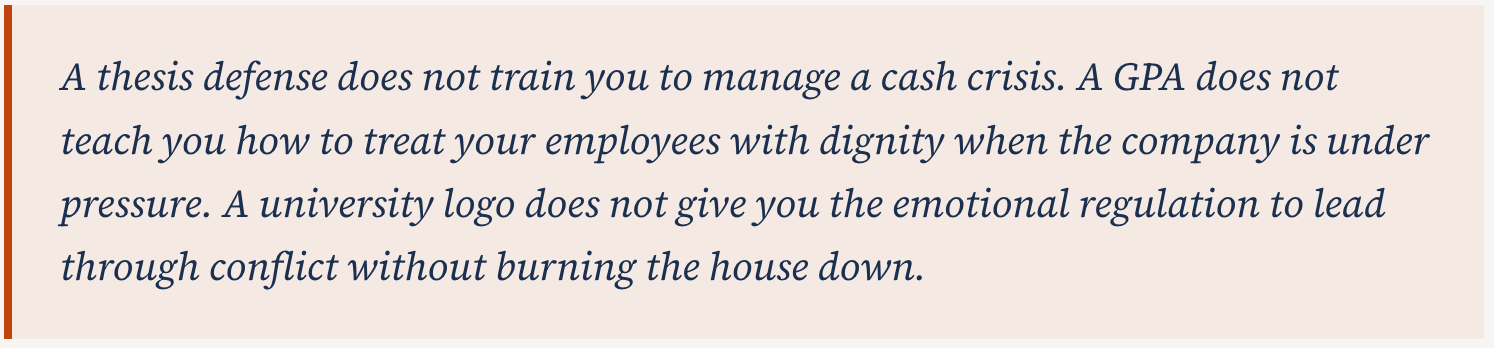
Academic rigor and operational maturity are entirely different muscles. One is trained inside a structured institution with clear feedback loops, defined rubrics, and a final grade. The other is forged in ambiguity, under pressure, with real people and real consequences. The confusion between the two is not a minor misunderstanding. It is costing the Indonesian startup ecosystem real money and real people.
What the Research Actually Shows
This is not a feeling. The evidence has been accumulating for years and the Indonesian academic literature has been documenting it with increasing clarity.
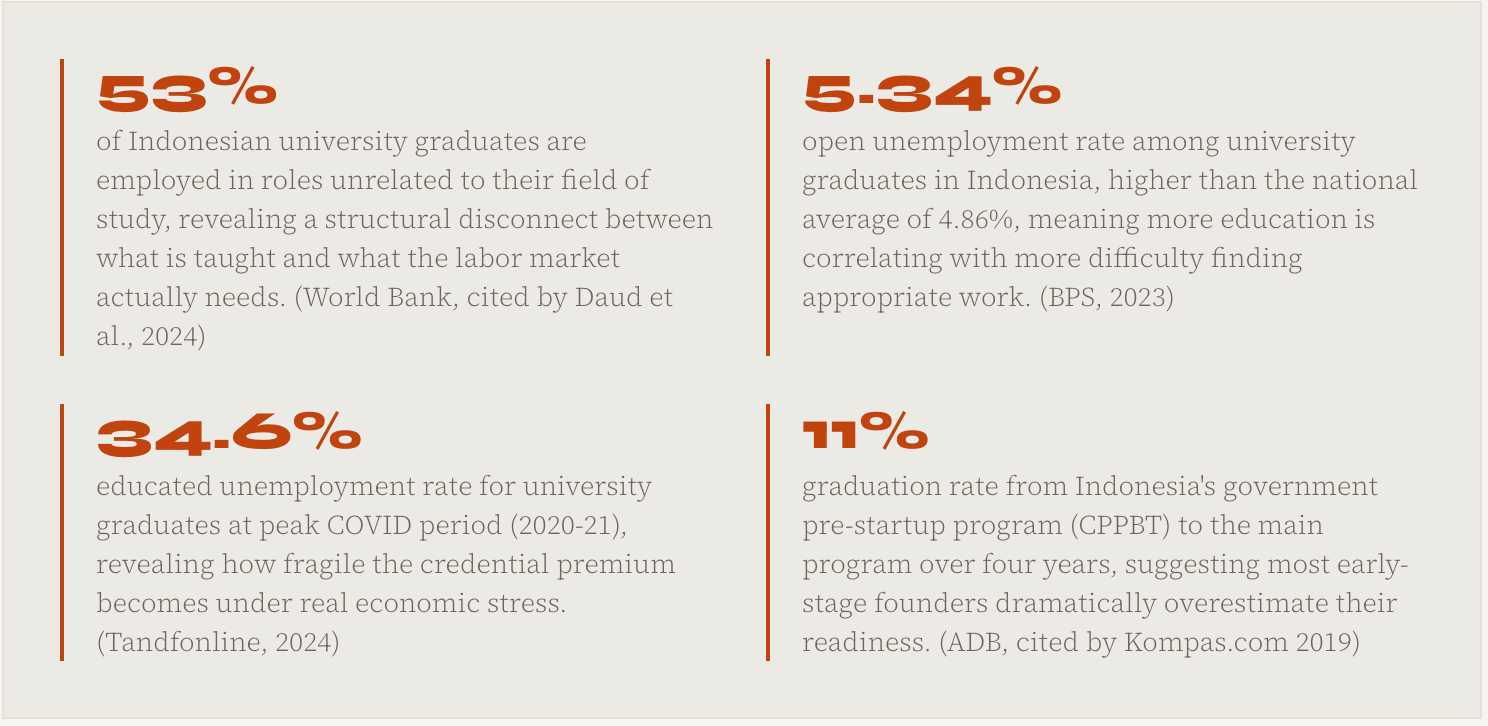
A 2025 study in the Aletheia Journal on Indonesian higher education unemployment between 2019 and 2025 found that higher education expansion had not been matched by the absorptive capacity of high-skill labor markets, and explicitly identified credential inflation, vertical mismatch, and declining economic returns to degrees as confirmed patterns.
In plain language: we are producing more credentials than the system can absorb, and the credentials themselves are becoming less predictive of actual capability.
Why Credentials Amplify Overconfidence in Founders
There is a well-documented cognitive phenomenon that becomes especially dangerous in early-stage founders. In 1999, psychologists David Dunning and Justin Kruger at Cornell published a paper titled "Unskilled and Unaware of It." Their finding: people with limited competence in a domain systematically overestimate their ability, precisely because they lack the meta-cognitive skills needed to recognize their own gaps.
Now add a prestigious master's degree to that person. The credential does not resolve the gap. It legitimizes the overconfidence. It provides social proof that silences doubt, both internal and external. Investors stop asking hard questions. Co-founders defer. Employees assume the person knows what they are doing.
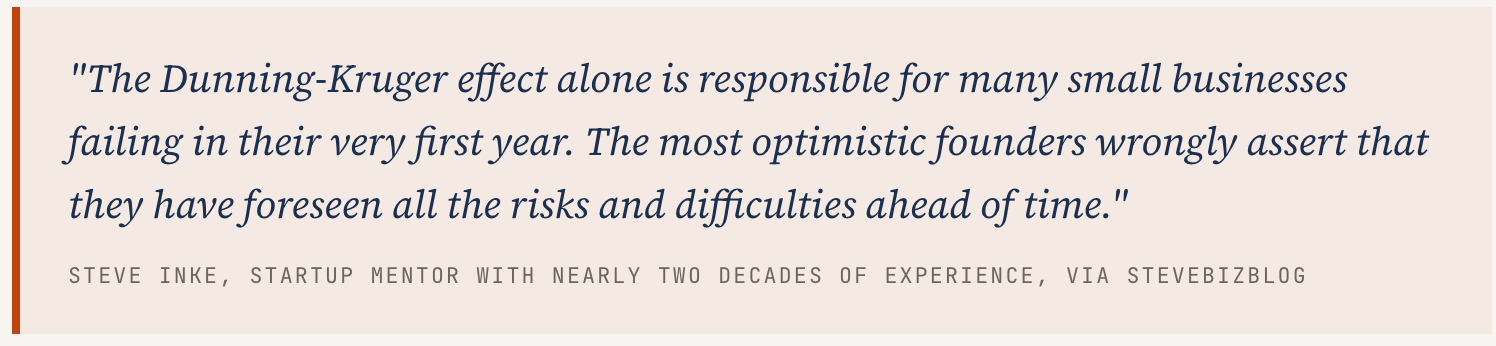
In the startup context specifically, overconfident founders tend to be less open to feedback, more likely to create team dynamics built around loyalty to a vision rather than honest assessment of reality, and more likely to mistake boldness for competence when things start to deteriorate.
A credential-heavy founder who has never managed a real payroll, never navigated an employee dispute, and never had to apologize professionally to a client is not an untested leader. They are a founder with all the signaling of authority and none of the scar tissue that makes leadership real.
The Competence Framework Nobody Teaches in Graduate School
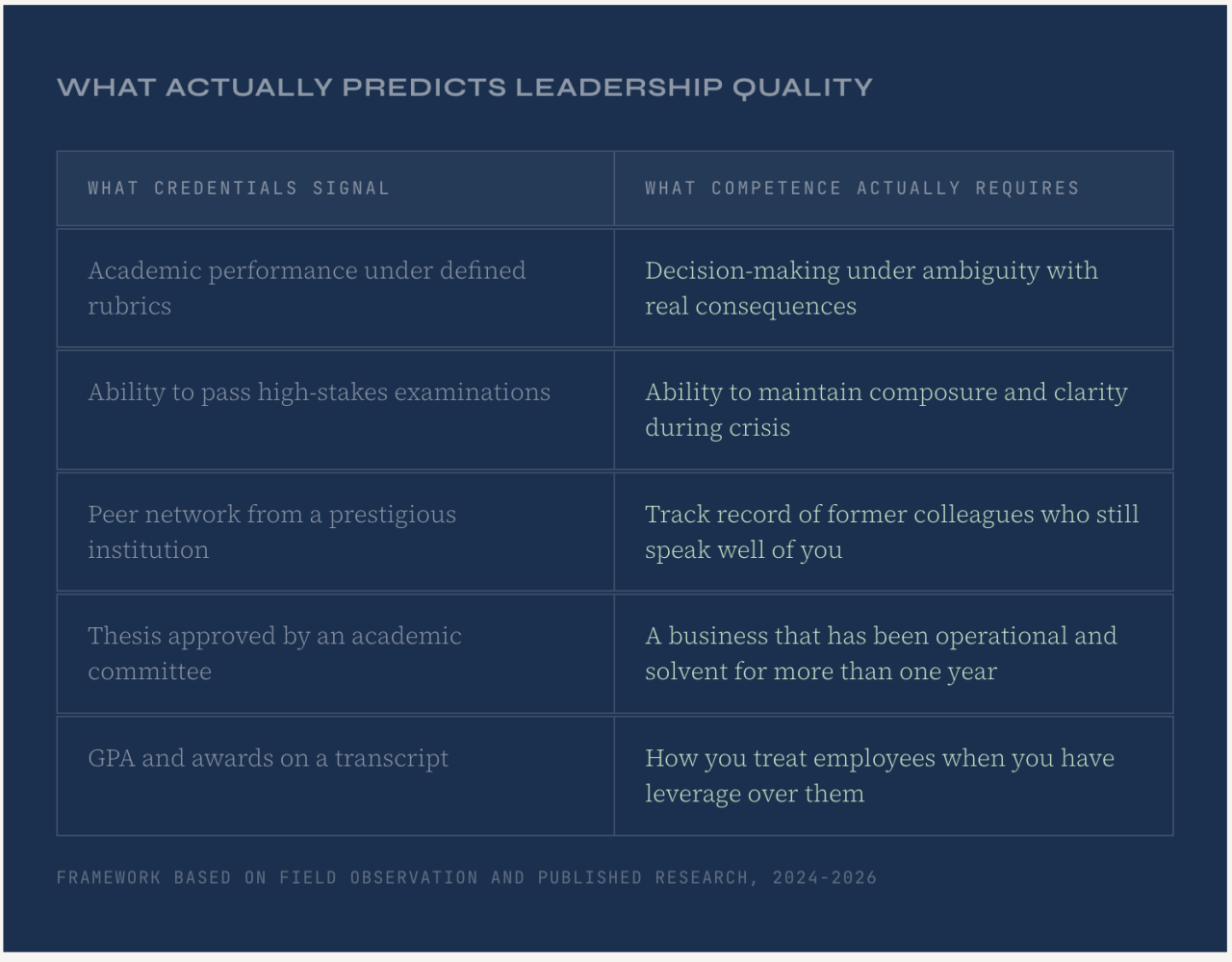
Daniel Goleman's research on emotional intelligence, brought to global attention through the Harvard Business Review, demonstrated that emotional intelligence accounts for nearly 90 percent of what separates high performers from their peers when technical skills are roughly equivalent. Harvard's own executive education program now explicitly states that emotional intelligence is what truly sets leaders apart, and that IQ and technical skills, however strong, remain only entry-level requirements for senior roles.
The Indonesian startup research literature is converging on the same conclusion from a different direction. A 2024 study published in SDGs Review, the first to empirically investigate CEO competency in Indonesian startup performance, found that leadership competencies and business networks were the primary drivers of startup outcomes, not academic credentials.
Research on why Indonesian startups fail points consistently to the same root causes: unavailable or unimplemented human resource competency standards, poor performance management, and leadership that cannot translate vision into sustained operational reality.
A Practical Message to Founders, Investors, and Hiring Managers
If you are investing in or hiring Indonesian startup founders, the most dangerous thing you can do is let a university logo replace your due diligence.
Reference check properly. Not their professors. Their former direct reports, vendors, and co-founders. Ask what happened to the last team. Ask whether the ventures they claim to have led are still operational. Ask what the people who worked closest to them, not for them, actually experienced.
Look for patterns across time, not snapshots in a bio. One impressive internship at a global tech company does not constitute a track record. A leadership track record is revealed by consistency: how someone behaves when they have leverage, how they respond when things break, and whether the people who trusted them once would trust them again.
Be skeptical of the performance of expertise. There is a specific subspecies of credentialed professional that has become expert at performing competence: the right vocabulary, the right affiliations, the right self-presentation. Social media has made this easier than ever. The performance is not the thing. Dig until you find the thing.
Indonesia's top three universities produce exceptional graduates every year. They also produce people who peaked at the SNBP exam and have been coasting on the institutional prestige ever since. Your job, as a founder, investor, or collaborator, is to figure out which one is sitting across from you. A diploma cannot tell you. Only their actual record can.
The ecosystem Indonesia deserves is built on substance. Not on stickers from prestigious campuses, not on the performance of ambition, and not on the social authority that an S2 title temporarily confers.
Real leaders are visible in their operational record. In how long their ventures survive under genuine pressure. In whether their teams grow or scatter. In whether the people they managed would follow them again, freely, knowing what they now know.
The credential is the beginning of a conversation, not the conclusion of one. Stop treating it as both.
Indonesia is too consequential an economy, and this generation of founders has too important a role to play, to keep letting a transcript substitute for judgment.
#Leadership #IndonesianStartup #CredentialInflation #EkosistemDigital #StartupIndonesia #TechIndonesia #EmotionalIntelligence #FounderMindset #DunningKruger #Infraloka #HRIndonesia #GenZLeadership #SoutheastAsia #PendidikanIndonesia #AccountabilityMatters #BuildingInPublic