
Letter of Demand No. 020/SOMASI/RW/VIII/2026: Abu Hanif Muhammad Syarubany (English Edition)
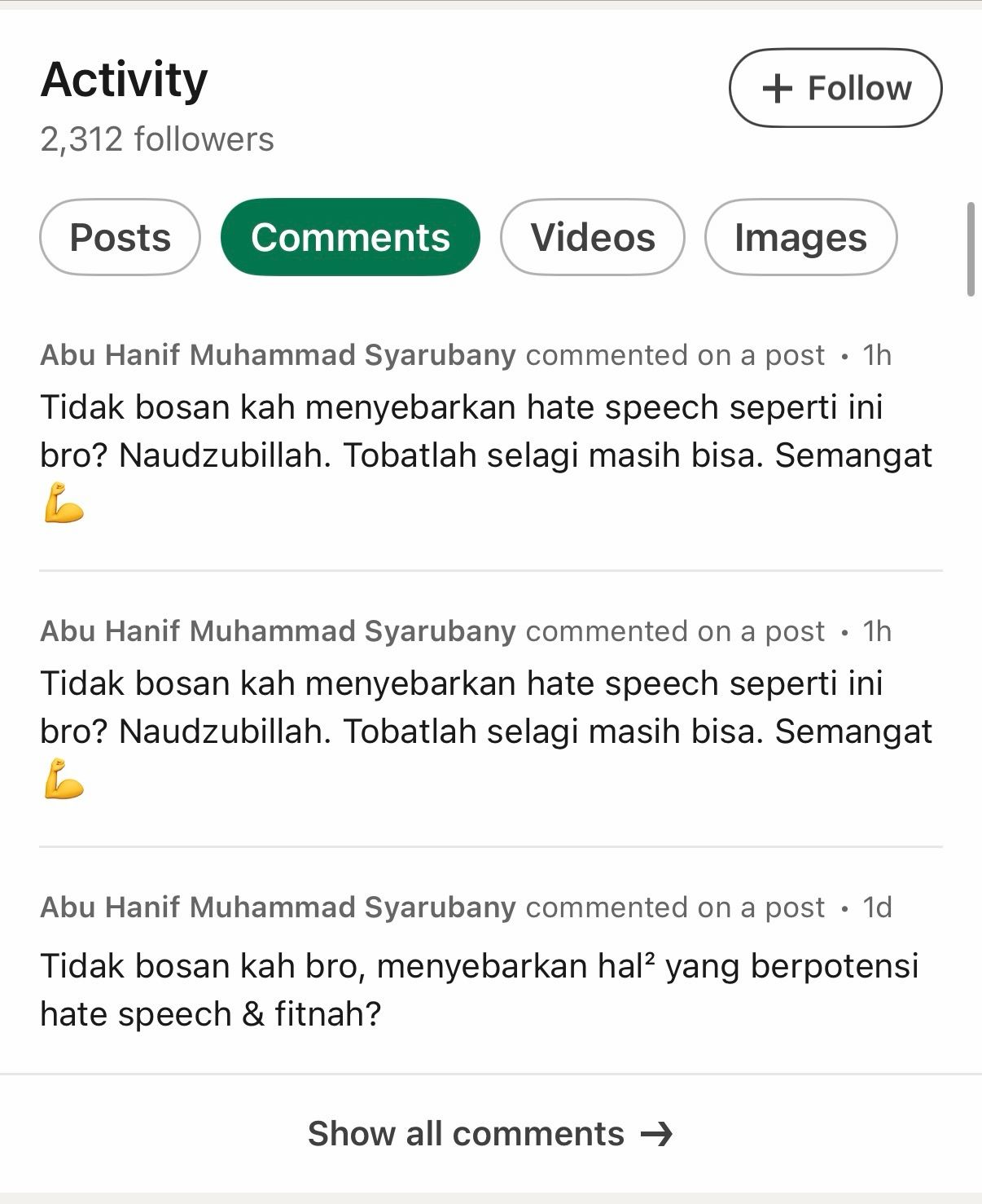
This post summarises Somasi No. 020/SOMASI/RW/VIII/2026, a formal legal notice I sent on 29 August 2026 to Mr. Abu Hanif Muhammad Syarubany over LinkedIn comments I believe accused me, without evidence, of "hate speech" and moral wrongdoing. It is a demand letter, not a police report, court filing or finding. Mr. Syarubany has not responded here, and I do not assert that he is guilty of any offence.
What the letter is about
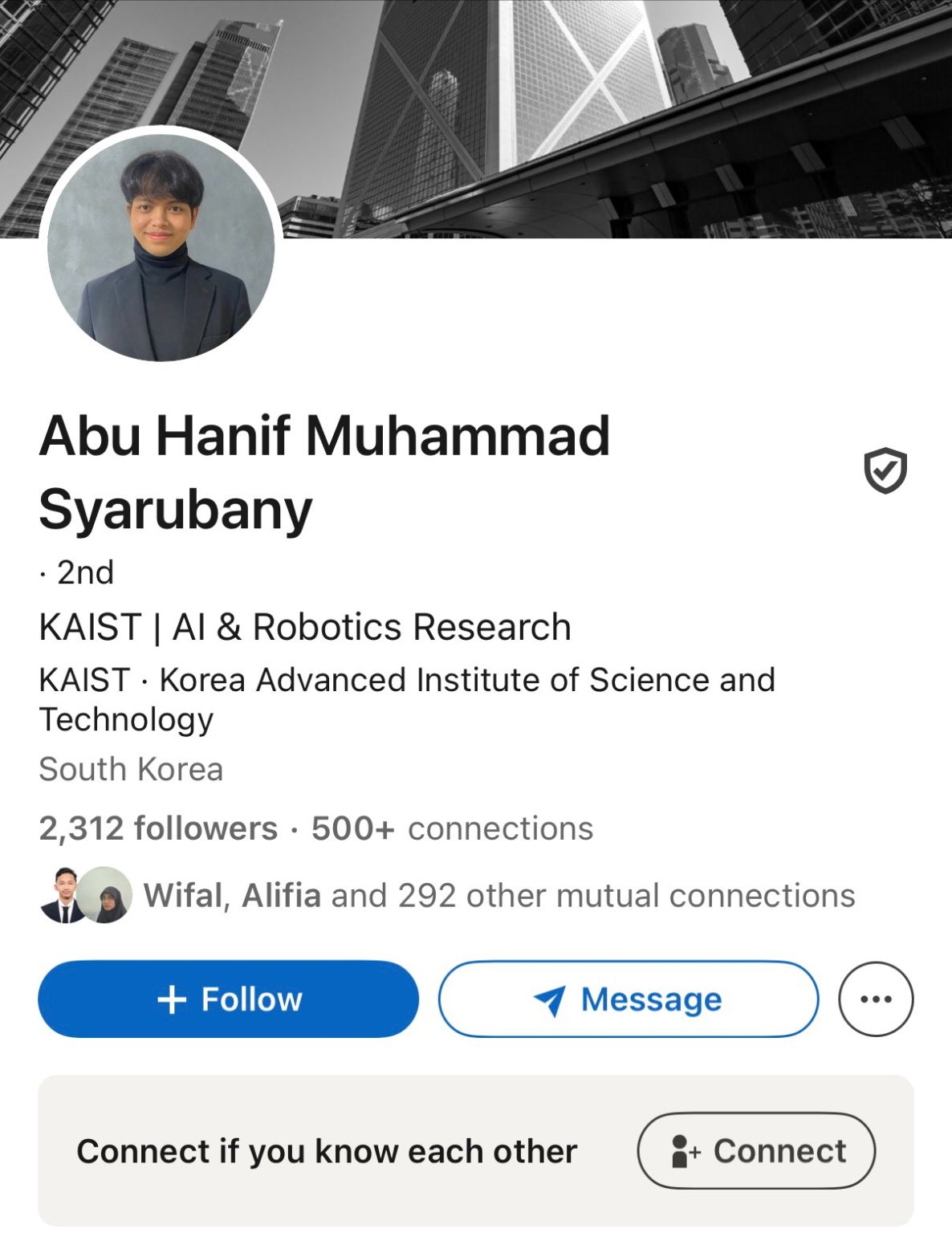
Mr. Syarubany is an Indonesian citizen whom I know from the Bandung Institute of Technology (ITB) alumni circle. His public LinkedIn profile lists KAIST (Korea Advanced Institute of Science and Technology), "AI & Robotics Research", and South Korea as his place of study.
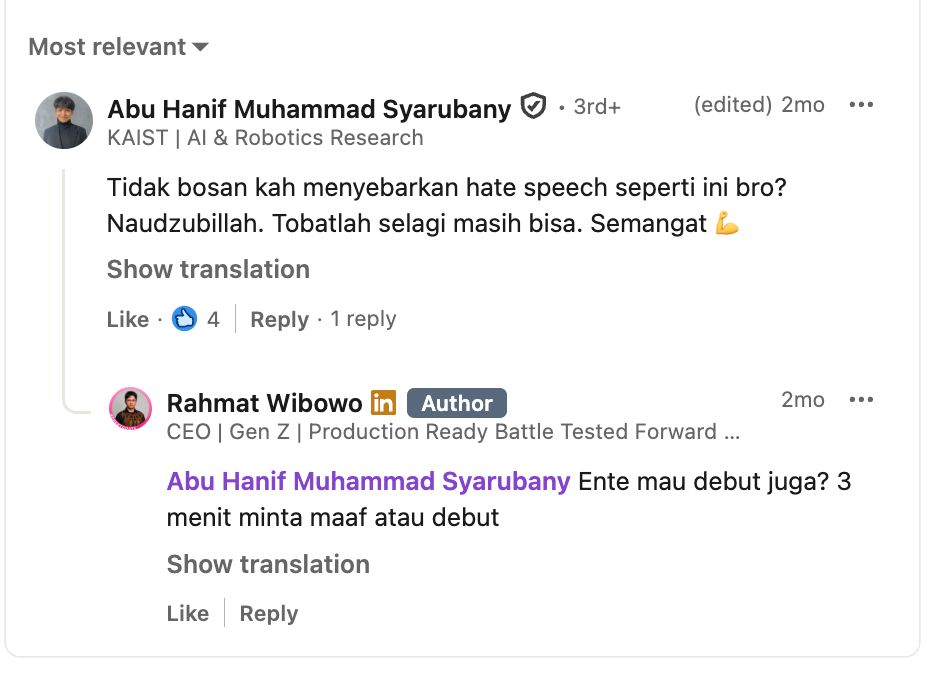
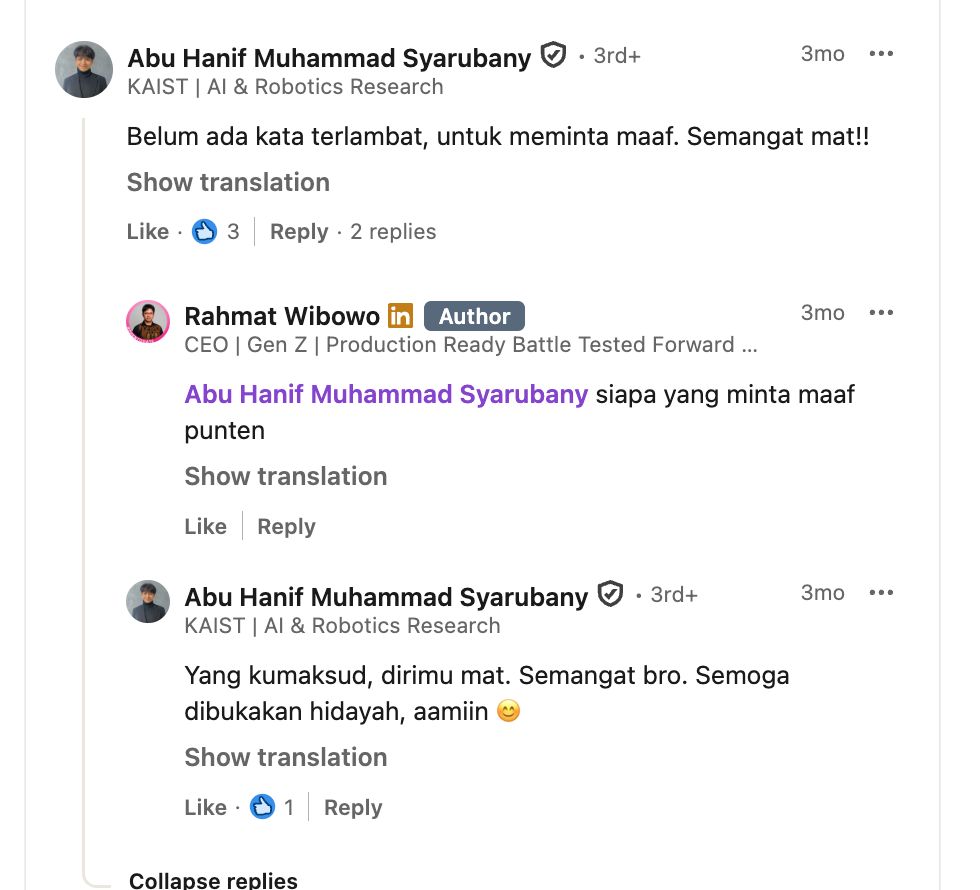
My letter describes three public comments he posted on posts concerning me between roughly May and August 2026:
- About three months earlier: "It is not too late to apologise. Keep it up, mat!!" When I asked who was supposed to apologise, he replied: "I mean you, mat. Keep it up, bro. May you be granted guidance, amen."
- About two months earlier, edited and re-published several times, including twice within an hour before the letter: "Aren't you tired of spreading hate speech like this, bro? Naudzubillah. Repent while you still can. Keep it up."
- About one day earlier: "Aren't you tired, bro, of spreading things that are potentially hate speech & defamation?"
In my reading, these comments accuse me of unlawful conduct ("hate speech," "defamation") and imply that I am morally or religiously at fault, in the public space of a professional network that I use to build my reputation. I state in the letter that no concrete fact or proof accompanied the accusations.
After I replied to the comments, I found I could no longer reach his content; some links showed "This page doesn't exist," which is consistent with being blocked. I described that as closing the victim's channel of reply after attacking in public.
I also wrote that his comments drew supportive likes and replies from other accounts and fit a repeated pattern by several people from the same alumni circle. That is my characterisation; the letter does not name those other people.
Legal basis I relied on
I wrote and served the letter myself, without a lawyer. It rests on:
- Art. 433 and Art. 434 of the new Criminal Code (Law No. 1 of 2023), defamation and slander, with Art. 441(1) for the one-third aggravation when information technology is used;
- Art. 27A jo. Art. 45(4)/(6) of the 2024 ITE Law, as a normative reference;
- Civil Code Arts. 1365, 1366, 1372 and 1373 for an unlawful-act claim.
I analysed each element and the required state of mind, and I acknowledged that these are complaint offences (Art. 442 KUHP; Art. 45(5) ITE Law), so the letter and any police report serve as my formal complaint.
The cross-border angle: Indonesia and South Korea
Because he lives and studies in South Korea, the letter included a jurisdiction analysis:
- Indonesian jurisdiction: Art. 4(c) KUHP (effects felt in Indonesia), Art. 8 KUHP (Indonesian citizens abroad, subject to double criminality), and the extraterritorial reach of the ITE Law.
- Korean law: defamation (Criminal Act Art. 307) and insult (Art. 311) are offences in Korea too, so double criminality is met. I noted that Korean defamation cannot be prosecuted if the victim expressly declares no wish to prosecute, so my will as the victim matters.
- Enforcement routes: the Indonesia–Korea Extradition Treaty (signed in Jakarta 28 November 2000, ratified by Law No. 42 of 2007), mutual legal assistance (Law No. 8 of 2014), and a direct criminal complaint or civil action in Korea. I described these as available mechanisms; whether any authority would use them is not something I can promise.
A note addressed to KAIST
Part VII of the letter was addressed to KAIST's leadership in English, Indonesian and Korean. I said I was not asking KAIST to impose sanctions, only to take note of the notice and possible cross-border proceedings, to remind him of academic-ethics and responsible-social-media obligations, and to consider the relevance of this record to future academic, research, scholarship or admission processes. I offered to supply evidence on a formal request.
What I demanded
By Tuesday, 1 September 2026, 17:00 WIB (three calendar days), I asked him to:
- Remove the comments and replies on LinkedIn and elsewhere that attack me, with proof;
- Stop all accusations and insinuations, give a written undertaking not to repeat them, and lift the block so I could verify compliance;
- Publish a public apology on his LinkedIn account for at least 30 days;
- Pay IDR 1,500,000,000 in non-material compensation, calculated as twice the IDR 750,000,000 maximum fine under Art. 45(6) of the 2024 ITE Law.
I said I was open to an amicable settlement in good faith by email. If he did not comply, I stated I would report to the Indonesian National Police Cyber Crime Directorate, request an Interpol Red Notice and mutual legal assistance or extradition, sue for an unlawful act, pursue parallel complaints under Korean law, and publish the notice with its evidence.
Limits of this record
- This is my account and my legal reading; no court or authority has made a finding.
- The comments are quoted as I captured them on 29 August 2026 and may have been edited since.
- The compensation figure is a demand, not an assessed loss.
- I am not a lawyer, and this post is not legal advice.
Right of reply and correction
Mr. Abu Hanif Muhammad Syarubany is invited to respond, correct, or add context. A substantive reply may be published alongside this article, edited only for privacy, safety and relevance. If reliable evidence shows any statement here is wrong, I will correct it and note the change.
This letter also exists in a bilingual English and Korean edition: Letter of Demand No. 020 (English + 한국어).
#Somasi #Defamation #ITELaw #LegalNotice #DigitalConduct
Rahmat Wibowo, Founder & CEO, InfraLoka — infraloka.co.id